

3.22 ct SODALITE – AFGHANISTAN
EXPERT VERIFIED
- Expert Verified Gemstone
- Fast Handling & Shipping
- Secure Vault Packaging
$ 190 Original price was: $ 190.$ 120Current price is: $ 120.
Offer amount Feild


Smart Collector Choice


Pay with Crypto & Get 10% Automatic Discount

Availability: 1 in stock
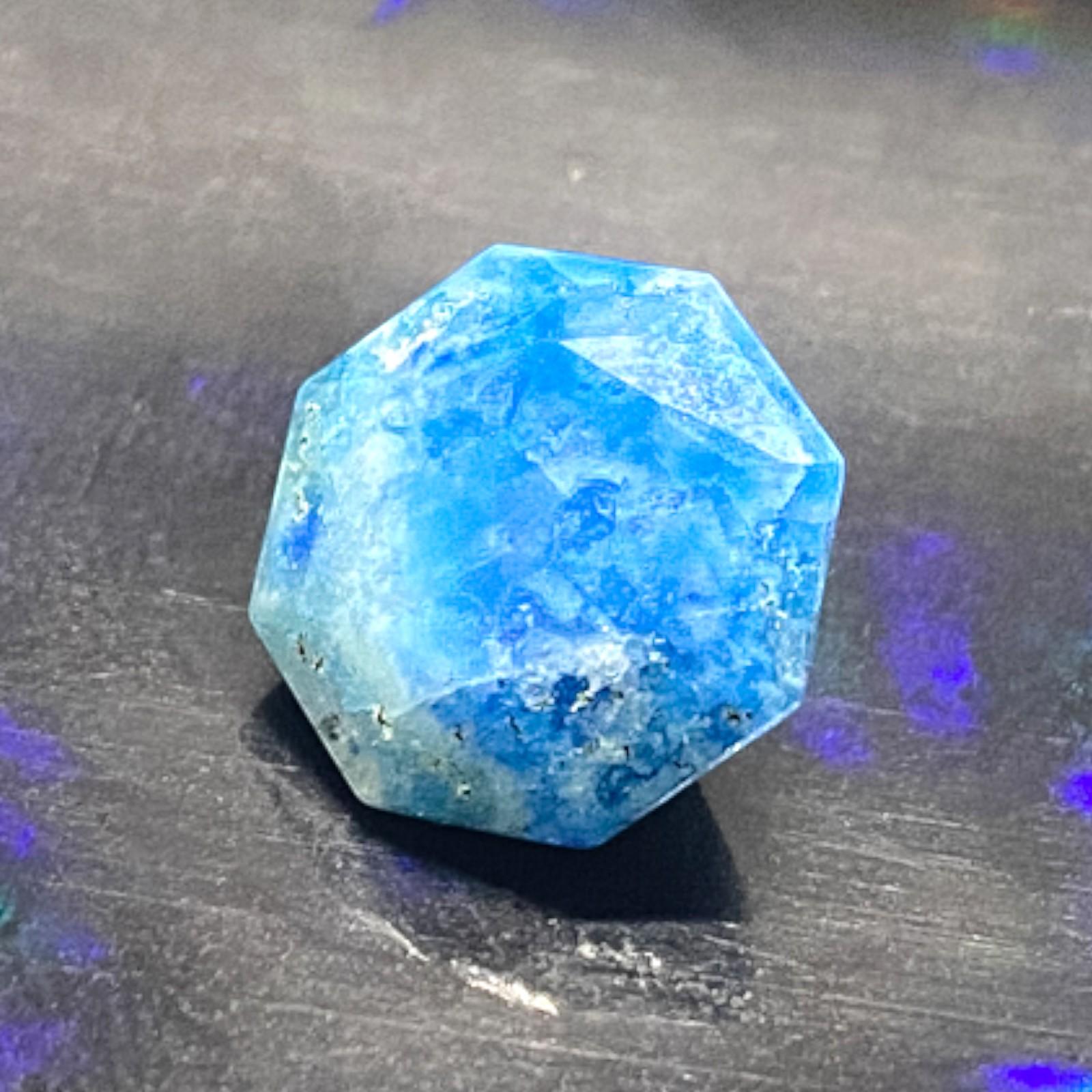
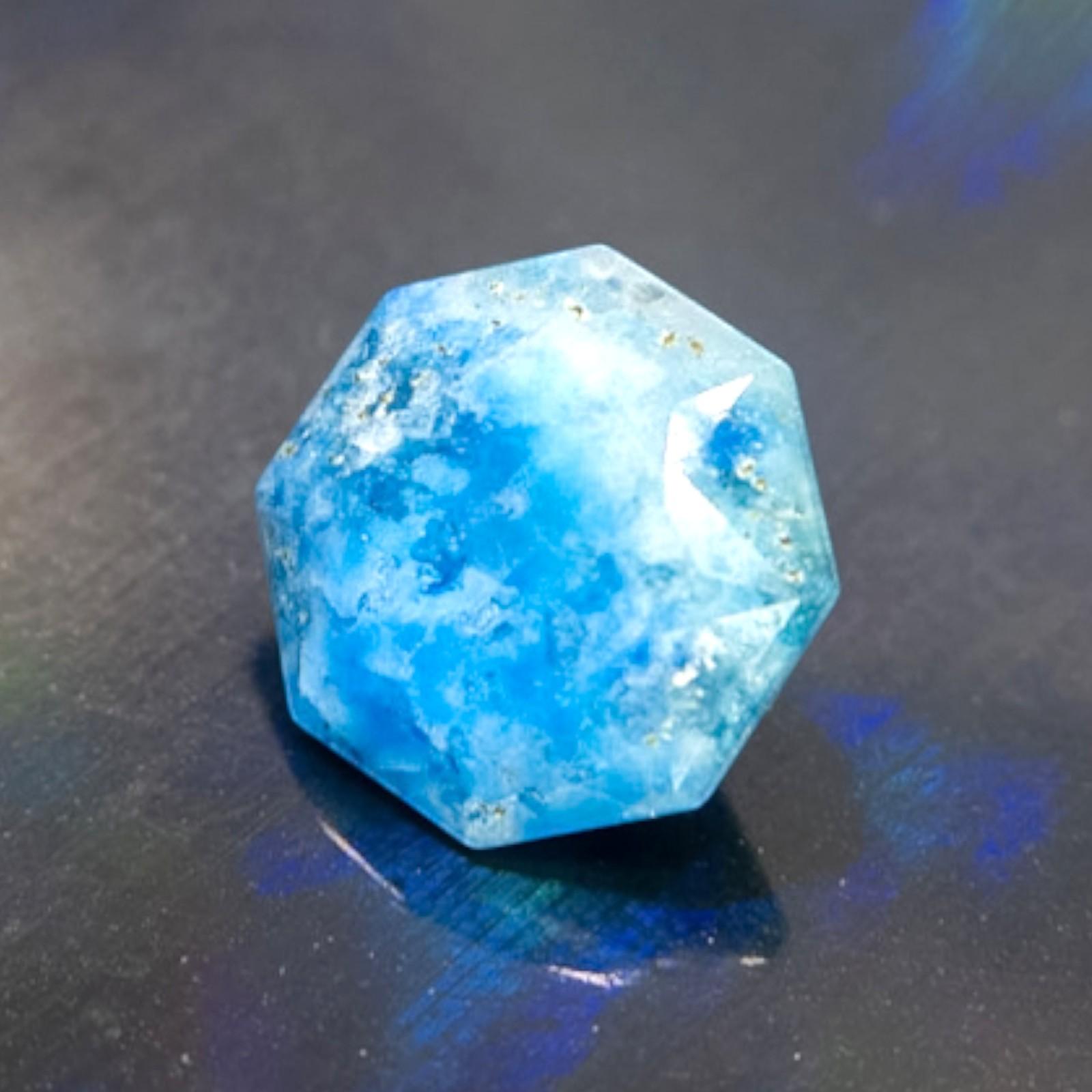
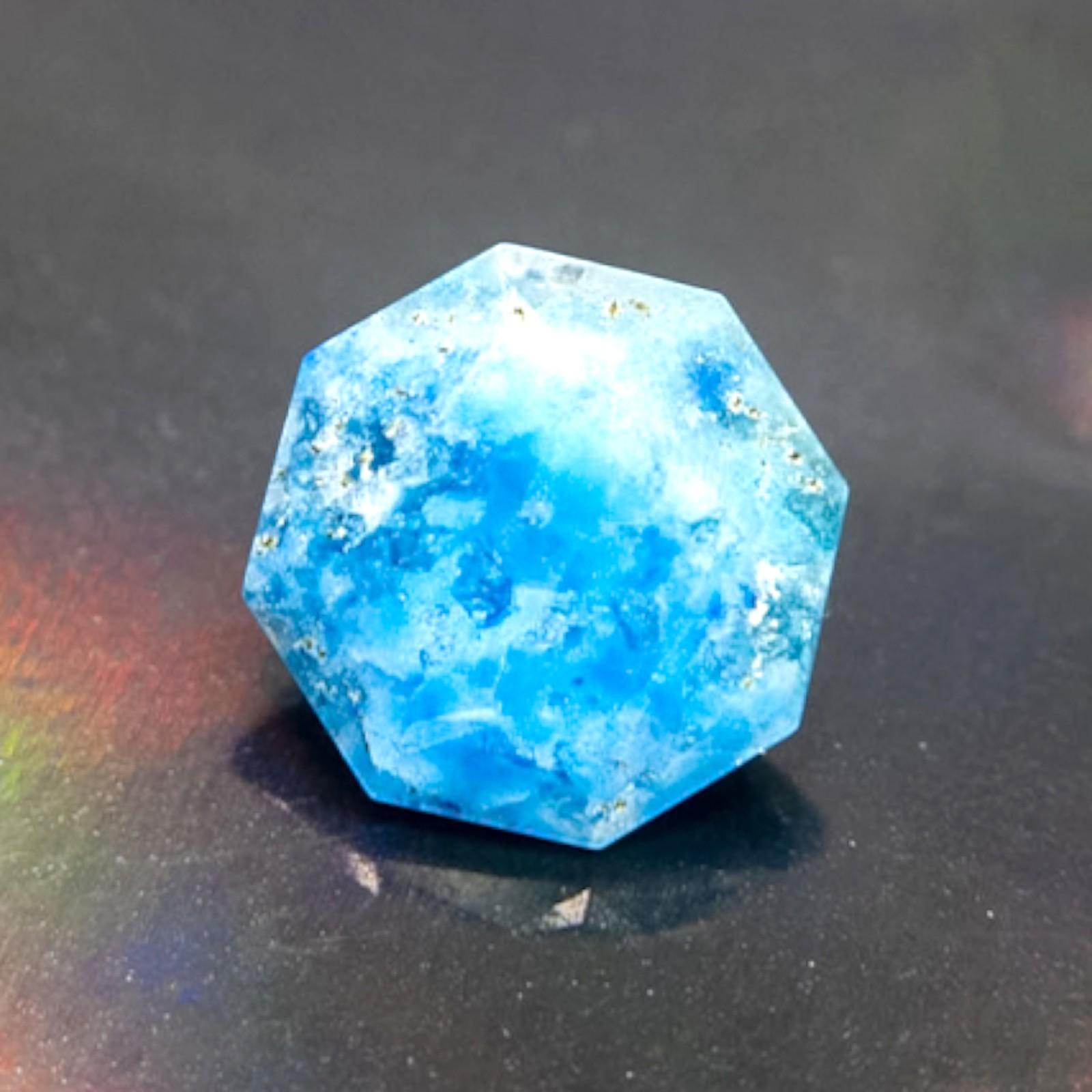
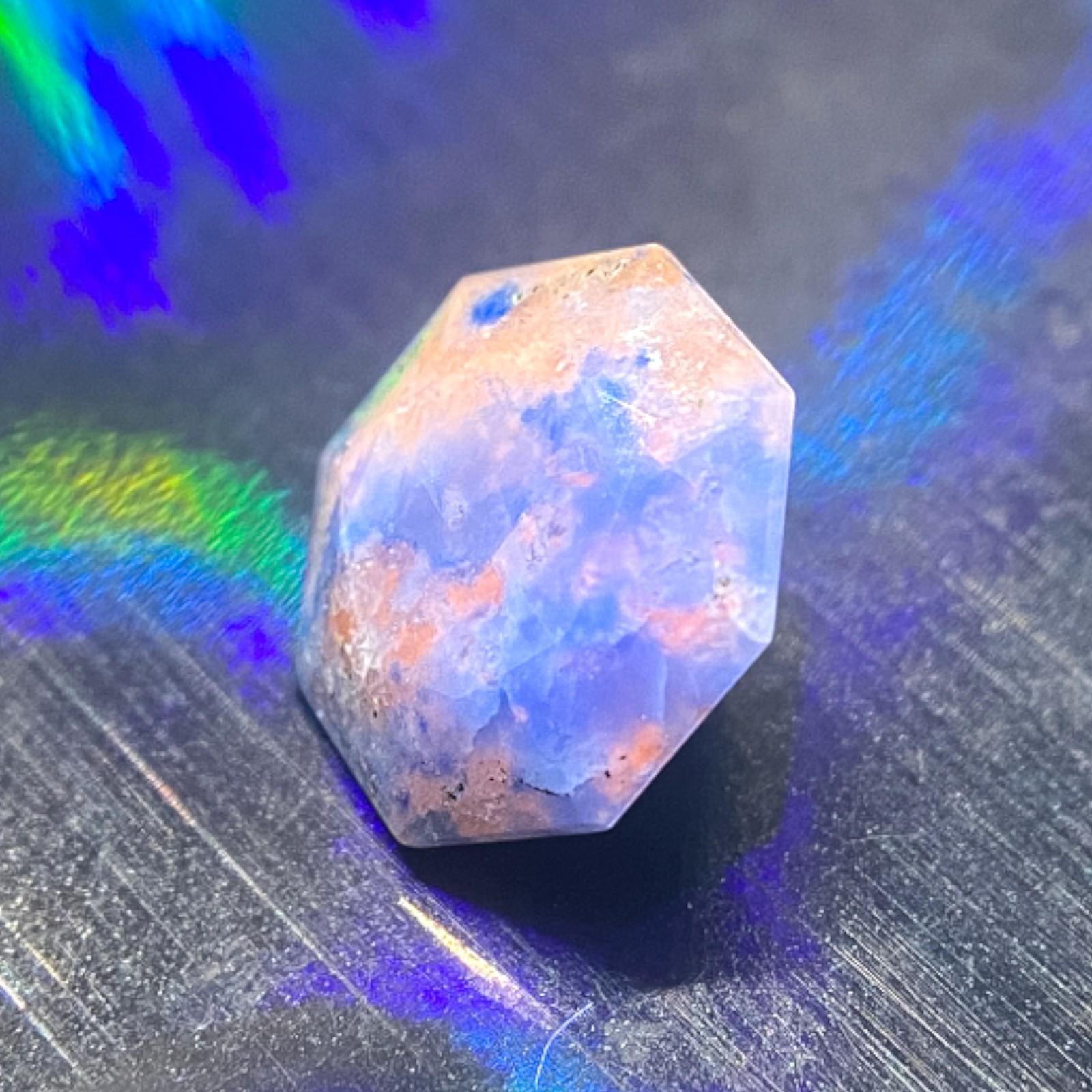


- Freakingcats Gemstone Database
Sodalite (Afghanistan)
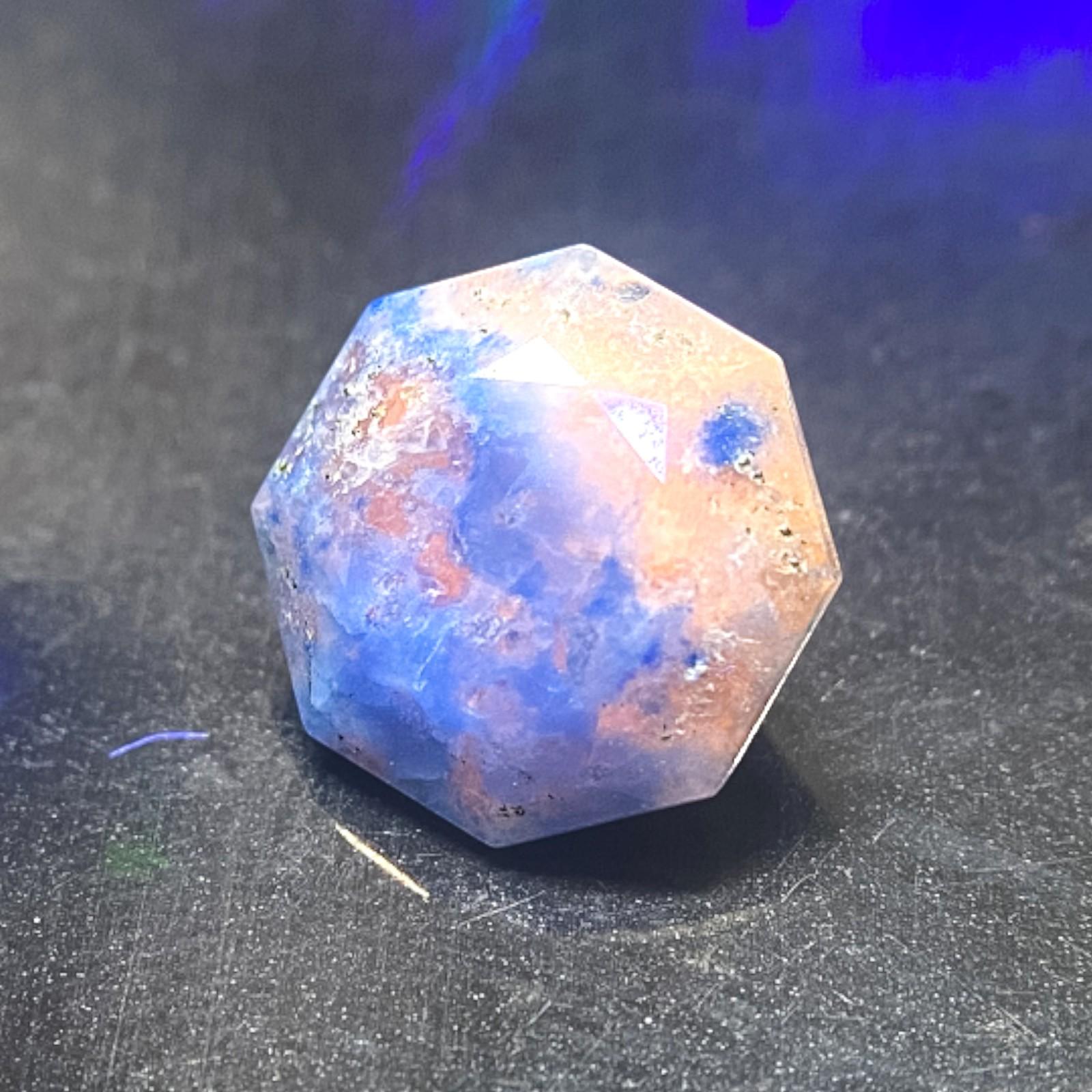
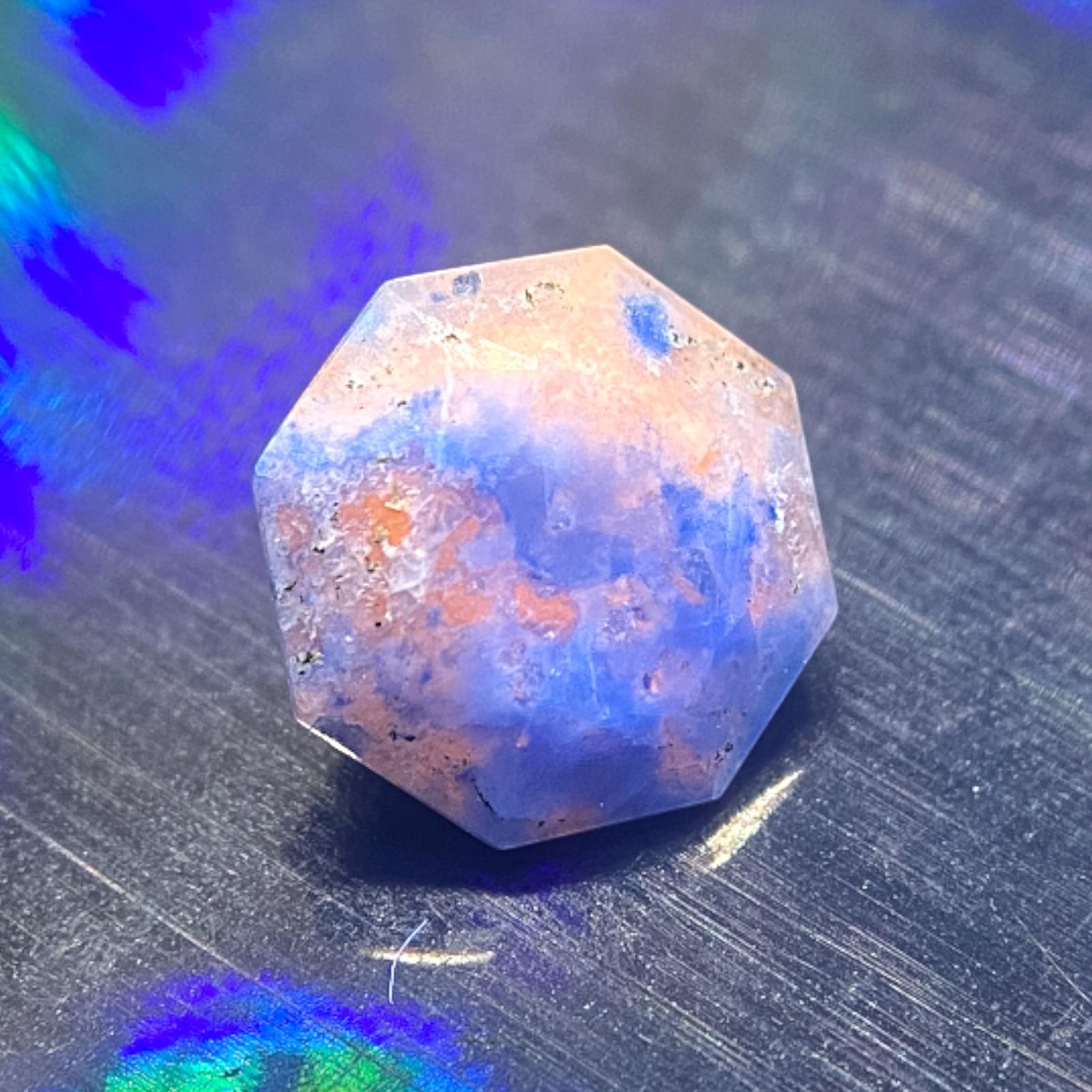
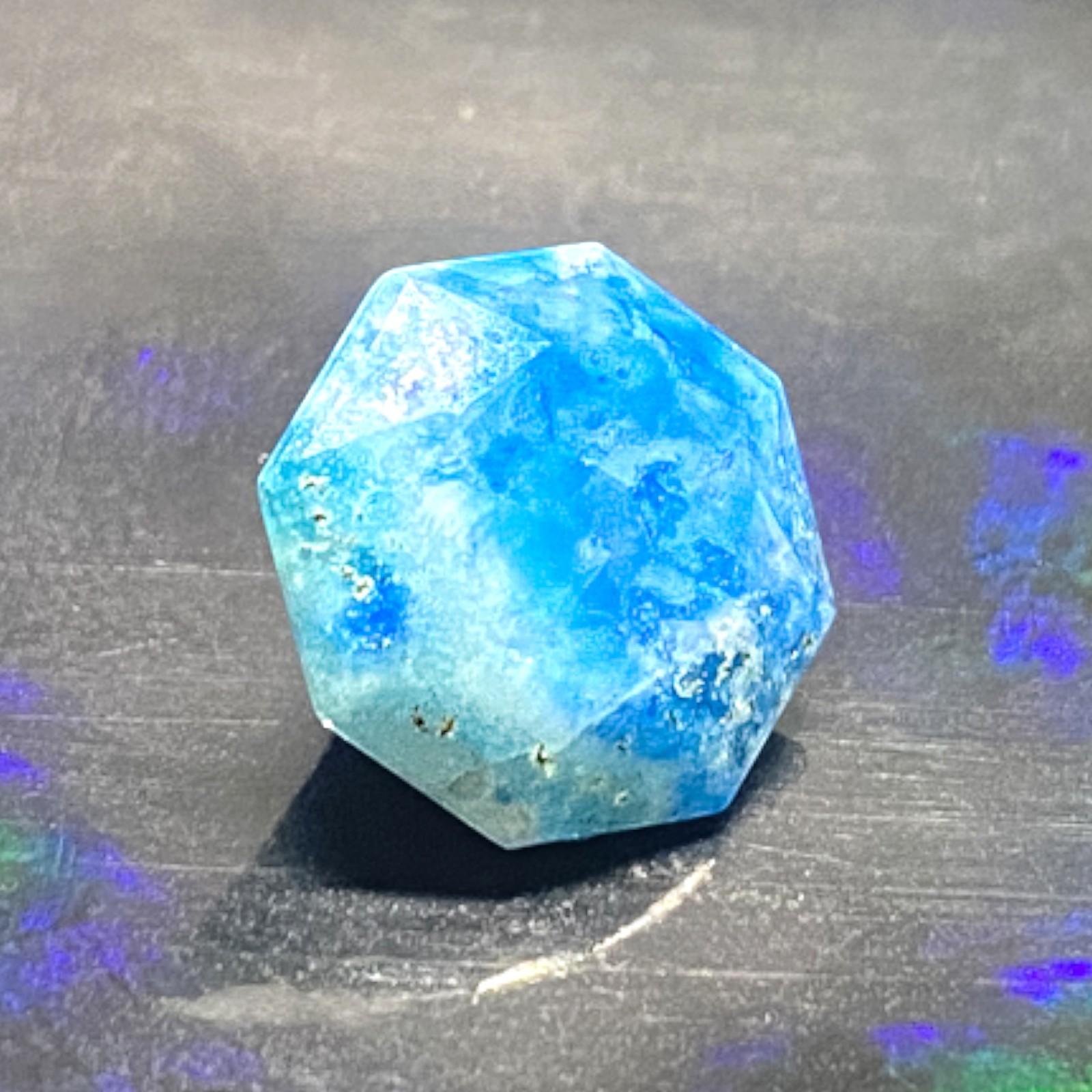
Sodalite from the high-altitude metamorphic terrains of the Hindu Kush represents the “chlorine-sodium” peak of the feldspathoid world. A sodium aluminum silicate chloride, it is a species I have always respected for its “deep-royal-blue” to “ghostly-white” saturation and its status as the world’s premier example of tenebrescence (reversible photochromism). For the specialist, an Afghan Sodalite—specifically the variety known as Hackmanite—is a prize of photonic structural focus; it offers a vitreous to greasy luster and a “radiant” presence that makes it a true “high-vibration” asset for the systematic vault. As an artist, I find the “hidden-spectrum” depth and the “razor-sharp” color shift from pale white to “saturated-violet” under UV light to be one of nature’s most sophisticated and “alive” palettes.
The Heritage & Discovery
Historical Significance Sodalite is a vital species for understanding the mineralogy of silica-undersaturated alkaline rocks. Historically, it was named in 1811 in reference to its high sodium content. In the world of fine minerals, its presence in the legendary Lapis Lazuli mines of Afghanistan is celebrated for its natural, “spectral-neon” brilliance, which stands as a symbol of transformation and structural integrity. It serves as a reminder that the same geological “womb” that produces Lapis can also produce extraordinary crystalline results when chlorine and sodium are organized into a perfect cubic framework.
Discovery While Sodalite is found globally, the “gem-grade” discoveries in Afghanistan redefined the mineralogical benchmark for Hackmanite, the sulfur-rich variety that exhibits a “sharp” color change. Scientifically, it is a member of the sodalite group. Its discovery in the Badakhshan province provided mineralogists with the first clear look at the species’ potential for “water-clear” to “vivid-violet” transparency. My own respect for this material grew from observing its “tenebrescent” depth; specifically, the way a crystal “charges” under UV light—shifting its physical color in daylight—is a visual impact that is unmistakable to the trained eye.
Important Mines The undisputed world capital for the finest “fluorescent” Sodalite is the Sar-e-Sang Mine in the Kokcha Valley, Badakhshan, Afghanistan. This is the same legendary site where Lapis Lazuli has been mined for over 6,000 years. These specimens set the global benchmark for color purity and “sharp” crystal architecture, often appearing in a marble matrix. I also have a high regard for the spectacular finds from the Ladjuar Medam area. For the vault, I prioritize the Sar-e-Sang material for its unmatched “neon-violet” response and its status as a rare-location masterpiece of Afghan mineralogy.
Mineralogical Profile
Description Sodalite is a sodium aluminum silicate chloride that crystallizes in the isometric system. It sits at a 5.5 to 6 on the Mohs scale, making it a durable mineral, though its “brittle” nature means it must be handled with care to preserve its “razor-sharp” edges and vitreous surfaces. It is characterized by its vitreous to greasy luster and its unmistakable, “royal-blue to colorless” color palette.
One of its most identifying traits is its strong orange fluorescence under long-wave ultraviolet light and its tenebrescent ability to darken in color after exposure to UV. It has a low refractive index and a specific gravity (SG approx 2.2 to 2.3) that reflects its light, framework silicate structure. Because it forms in silica-deficient environments, it is often found in association with Lazurite, Calcite, and Pyrite. When I select a piece for the collection, I look for “pure” transparency and the most “intense” color-shift response, as these highlight the sophisticated, three-dimensional geometry of the mineral’s growth. It is a light, high-vibration mineral that offers a unique, “aqueous-neon” beauty unlike any other silicate variety.
Chemical Formula Na8(Al6Si6O24)Cl2
Related products
- Sale!Suggest a Price
![1.05 ct ANHYDRITE - MEXICO]()
- Sale!Suggest a Price
![1.25 ct ANDALUSITE - BRAZIL]()
- Sale!Suggest a Price
![12.75 ct AMAZONITE - USA]()
- Sale!Suggest a Price
![5.85 ct AERINITE - SPAIN]()


