
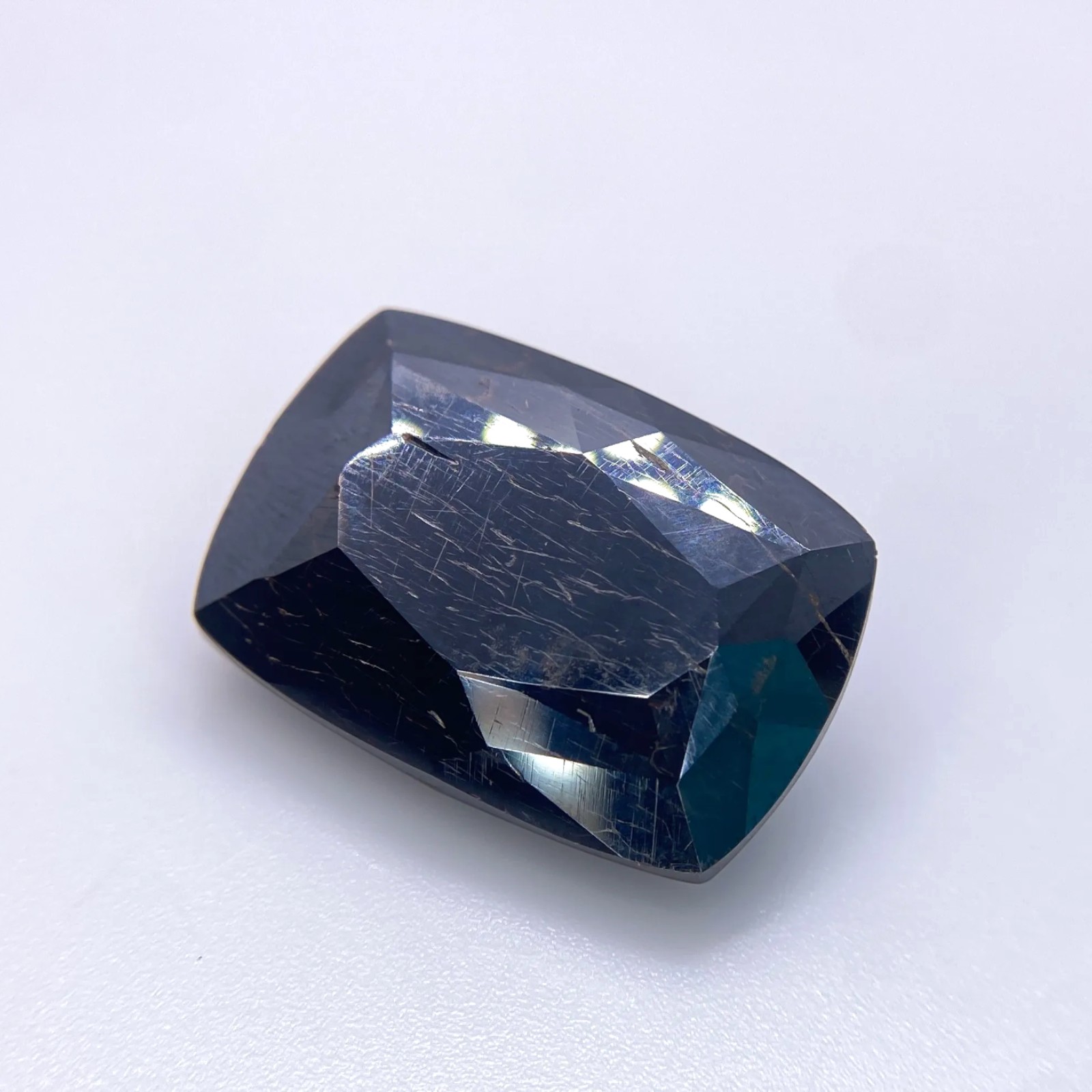
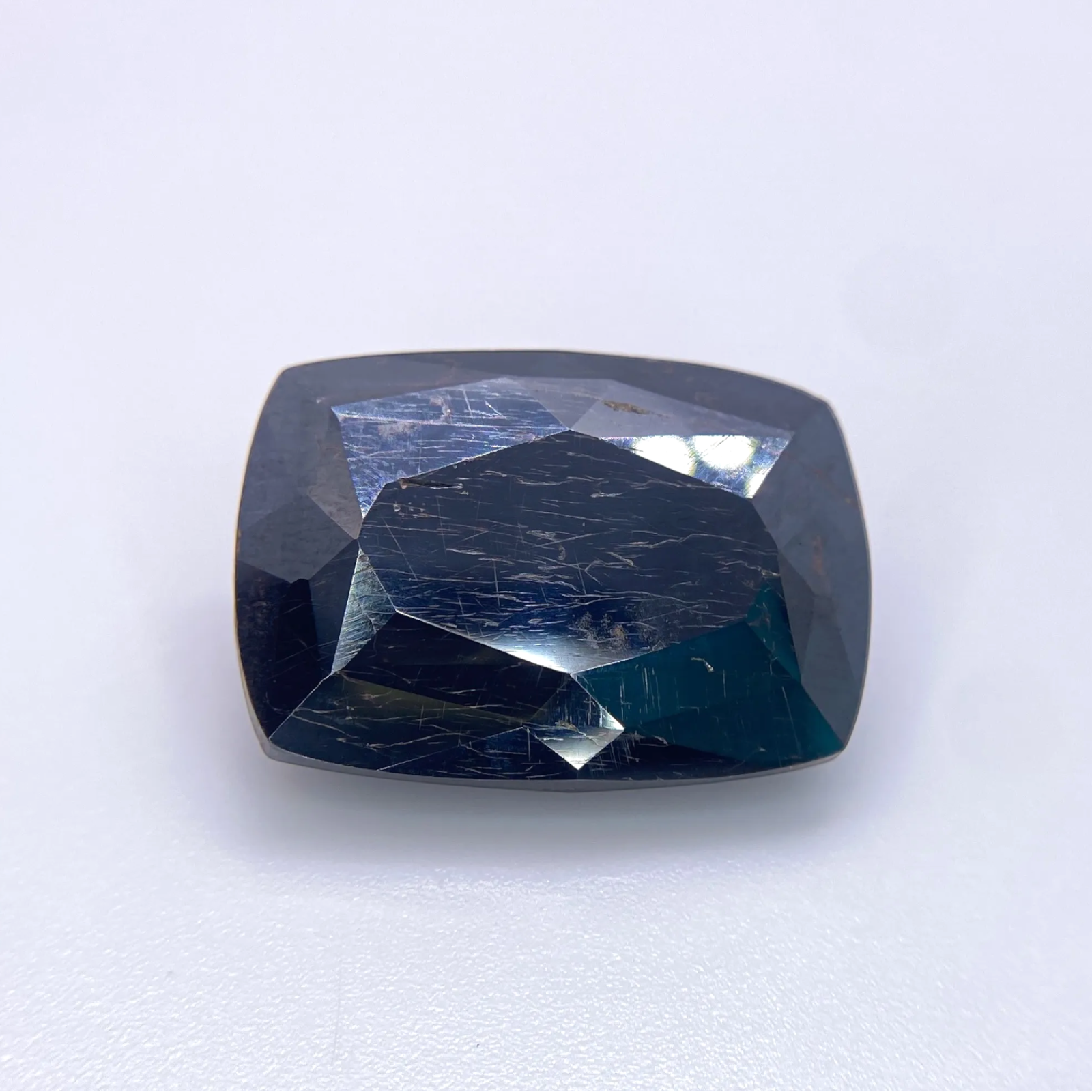
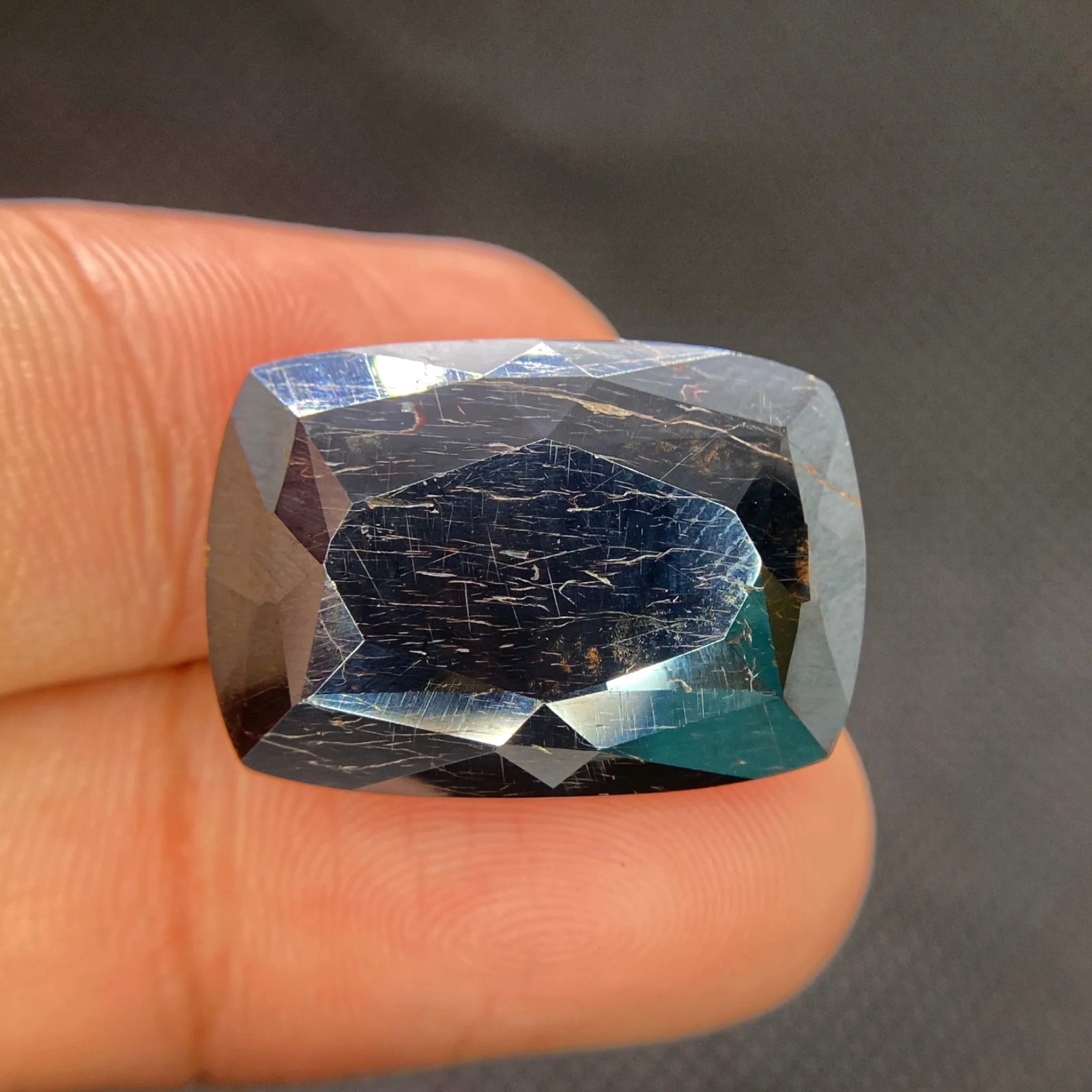
35.25 ct HEMATITE – USA
EXPERT VERIFIED
- Expert Verified Gemstone
- Fast Handling & Shipping
- Secure Vault Packaging
$ 290
Offer amount Feild


Smart Collector Choice


Pay with Crypto & Get 10% Automatic Discount

Availability: 1 in stock
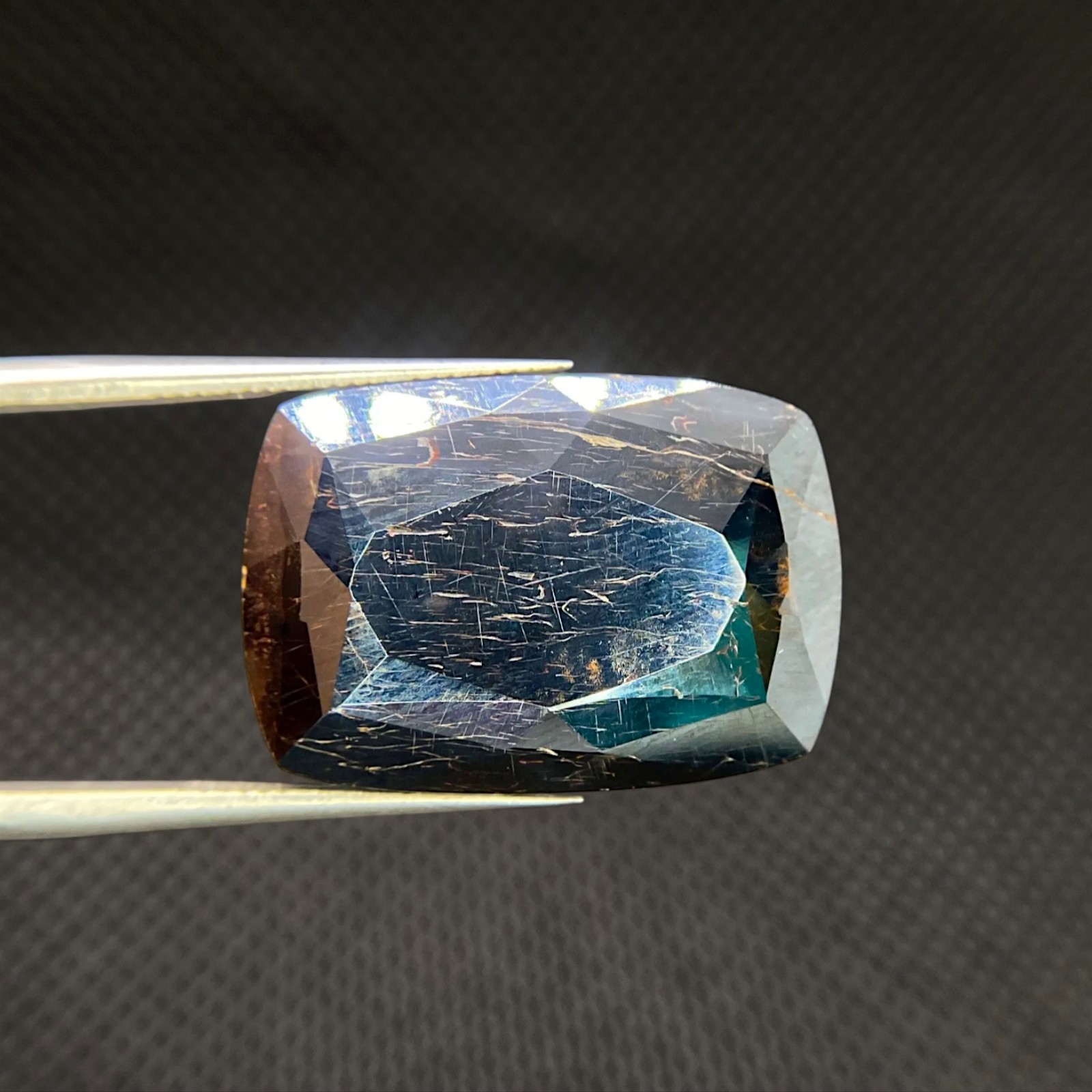
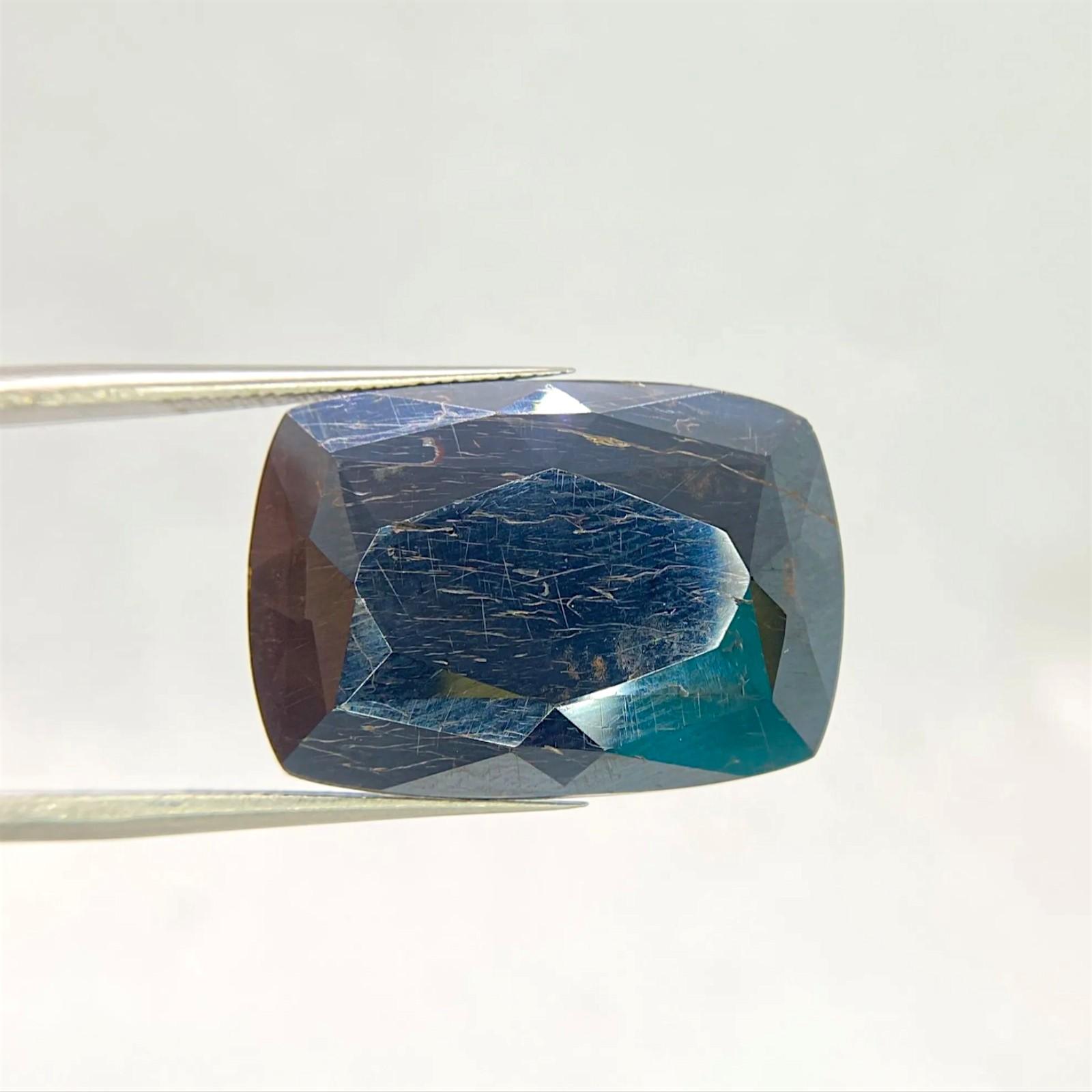
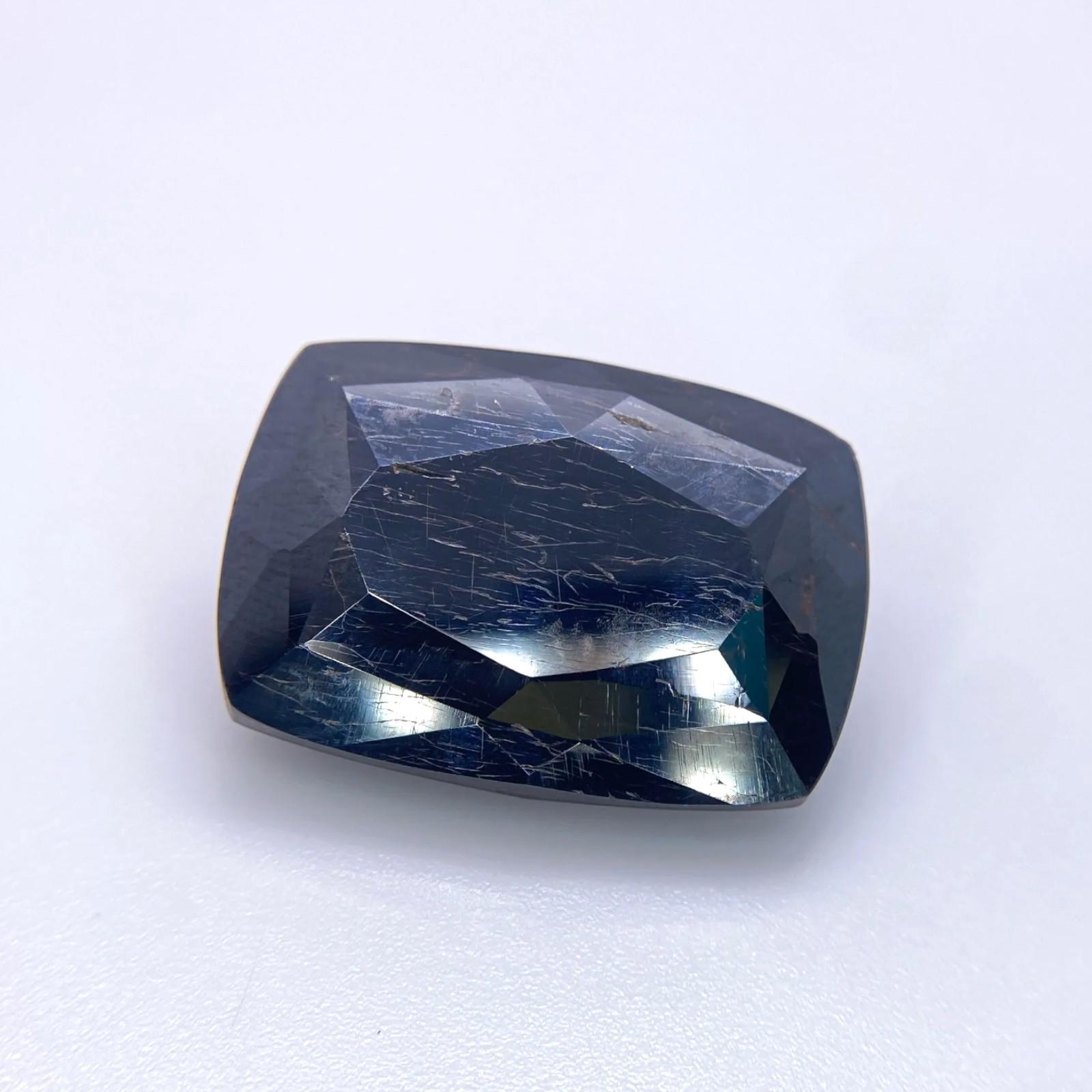
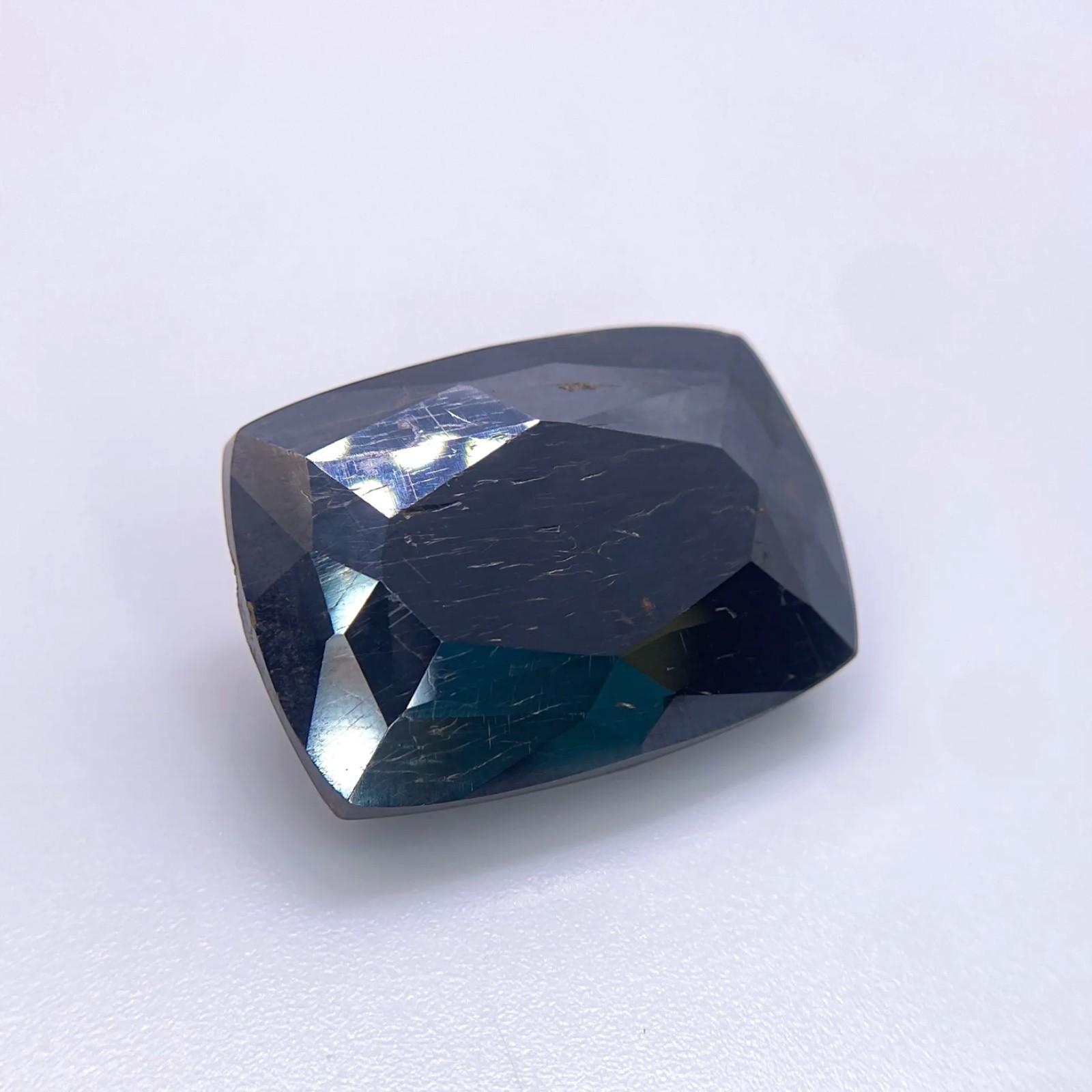


- Freakingcats Gemstone Database
Hematite (USA)
Hematite from the diverse geological provinces of the United States—spanning the mirror-faced, tabular rosettes of the Thomas Range in Utah to the iconic botryoidal “kidney ore” and specular sheets of the Lake Superior iron ranges—represents an authoritative masterclass in ferric iron oxide crystallization. An iron oxide mineral of fundamental economic and systematic importance, it is a species I have always respected for its “gunmetal-silver” to “mirror-black” metallic surface and its status as a pinnacle of “trigonal” structural discipline. For the specialist, a fine American Hematite—whether presenting as an intricate, stepped “iron rose” nestled on sparkling topaz-bearing rhyolite, a cluster of razor-sharp tabular plates, or a smooth, lustrous botryoidal mass—is a prized trophy of intense hydrothermal and sedimentary iron precipitation; it offers an intense metallic to splendent sub-metallic luster and an anchoring, dense presence that makes it an essential staple for the systematic vault. As an artist, I find the stark geometric reflections of its mirror-like plates contrasting against frosted lithophysal cavities or snowy quartz matrix to be one of nature’s most sophisticated and visually commanding monochromatic palettes.
The Heritage & Discovery
Historical Significance
Hematite is an indispensable index species for decoding the planet’s atmospheric oxygenation events, large-scale sedimentary iron deposition, and high-temperature volcanic vapor-phase migrations. Historically, the United States holds an extraordinary position in the legacy of hematite extraction; the vast Banded Iron Formations (BIFs) of the Lake Superior district fueled the American industrial revolution throughout the 19th and 20th centuries. Beyond its economic role, classic American mineral localities have supplied world-class aesthetic specimens to royal cabinets and modern museum vaults for over a century, standing as enduring symbols of mineralogical density, symmetry, and structural resilience.
Discovery
The documentation of aesthetic, macrocrystalline hematite across the United States expanded alongside both industrial iron mining and geological exploration of Tertiary volcanic fields. Scientifically, Hematite is the alpha phase of iron(III) oxide. In volcanic lithophysae—such as those in western Utah—hematite crystallized directly from high-temperature pneumatolytic (vapor-phase) fluids, forming razor-thin, hexagonal tabular plates that stacked into classic “iron rose” rosettes. In hydrothermal veins and metamorphic zones, it developed as mirror-smooth rhombohedrons or dense, fibrous botryoidal masses. My own respect for this material grew from analyzing its diagnostic physical paradox; specifically, observing how a seemingly impervious, jet-black, metallic crystal produces an unmistakable, blood-red to rust-brown streak on an unglazed porcelain plate remains one of the most reliable and captivating diagnostic proofs in systematic mineralogy.
Important Locations
Outstanding expressions of collector-grade hematite within the United States are documented across several premier localities. World-famous aesthetic specimens occur in the Thomas Range of Juab County, Utah, where sharp, metallic-black hematite rosettes and tabular crystals perch inside volcanic rhyolite cavities alongside sherry topaz, bixbyite, and pseudobrookite. Historic macro-crystals and lustrous rhombohedrons have emerged from the Champion Mine and various iron ranges of Marquette County, Michigan, as well as the Sterling Mine in Jefferson County, New York. Additionally, the altered metamorphic terrains of Arizona and volcanic clefts in Colorado have yielded superb platy and iridescent specular hematite. For the systematic vault, I prioritize specimens that exhibit mirror-bright face luster, sharp, undamaged crystal edges, clean tabular or rosette geometry, and an active presentation perched high on contrasting matrix.
Mineralogical Profile
Description
Hematite is an iron(III) oxide mineral belonging to the corundum-hematite group that crystallizes in the trigonal system. It sits at a robust 5.5 to 6.5 on the Mohs scale, meaning its highly reflective metallic faces possess good surface durability, though its brittle tenacity and lack of true cleavage (exhibiting basal and rhombohedral parting) require careful archival handling to protect its thin, platy edges and delicate rosette petals from physical shock or edge chipping. It is characterized by its brilliant metallic to splendent sub-metallic surface luster and an unmistakable, commanding color palette dominated by steel-gray, mirror-black, gunmetal-silver, and reddish-brown in weathered or fibrous expressions.
One of its most identifying traits is its habit diversity, routinely forming thin tabular hexagonal plates, stepped “iron rose” clusters, stout rhombohedrons, or dense, rounded botryoidal crusts (“kidney ore”). It possesses an exceptionally high refractive index running from approximately 2.87 to 3.22, giving its surfaces near-metallic light reflectivity, paired with a dense, heavy average specific gravity ranging between 5.20 and 5.30 that reflects its tightly packed iron-oxygen architecture (approximately 70% elemental iron by weight). Because it forms across wide geological environments—from volcanic vapor clefts to hydrothermal veins and sedimentary horizons—it is commonly found in close association with Quartz, Magnetite, Topaz, Bixbyite, Rutile, Siderite, Calcite, and Goethite. When I select an example for documentation, I look for mirror-like surface reflection, sharp crystal boundaries, and strong relief against its host rock, as these emphasize the sophisticated, iron-rich chemistry of the mineral’s subterranean birth.
Chemical Formula Fe2O3


