
SKU: RUTI0009
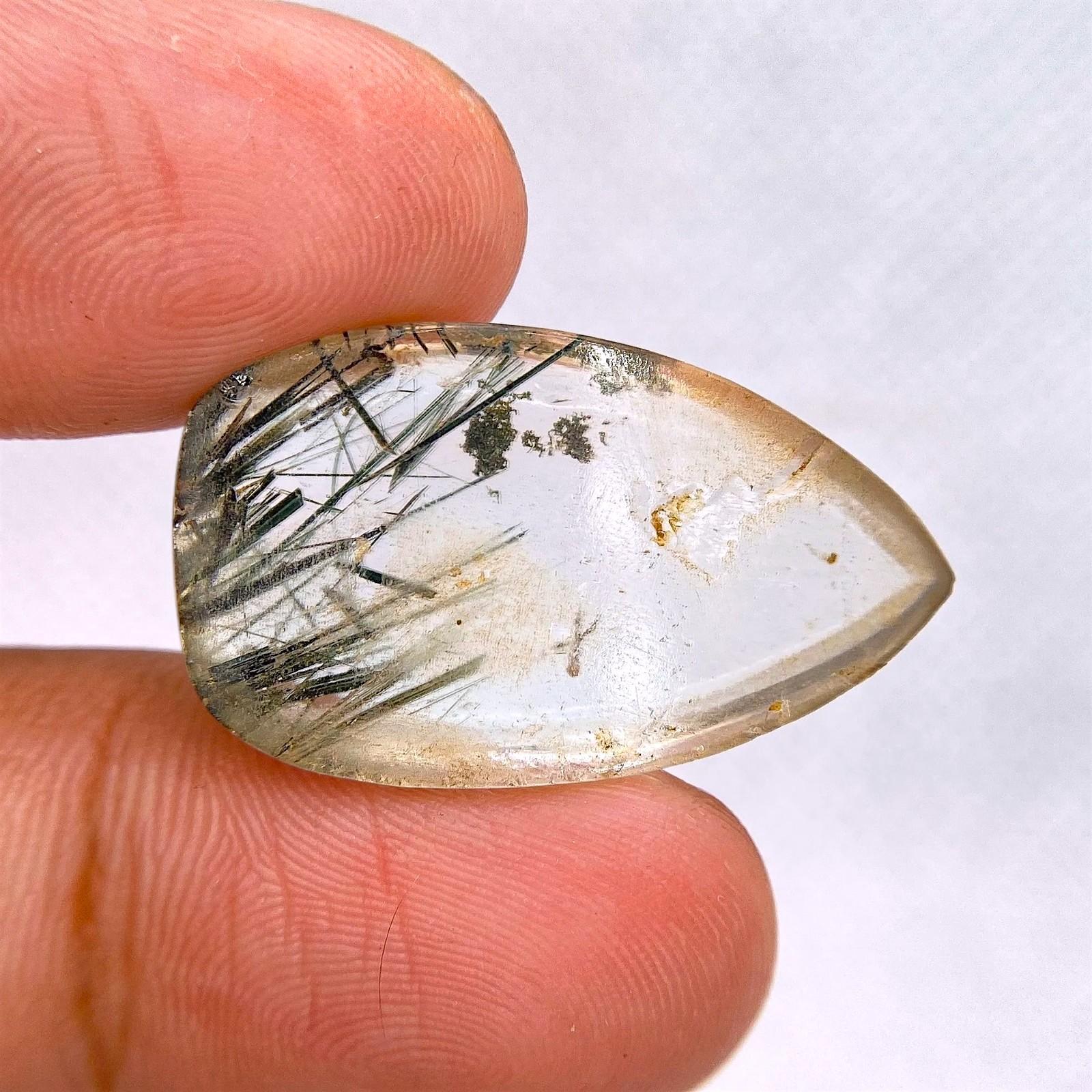
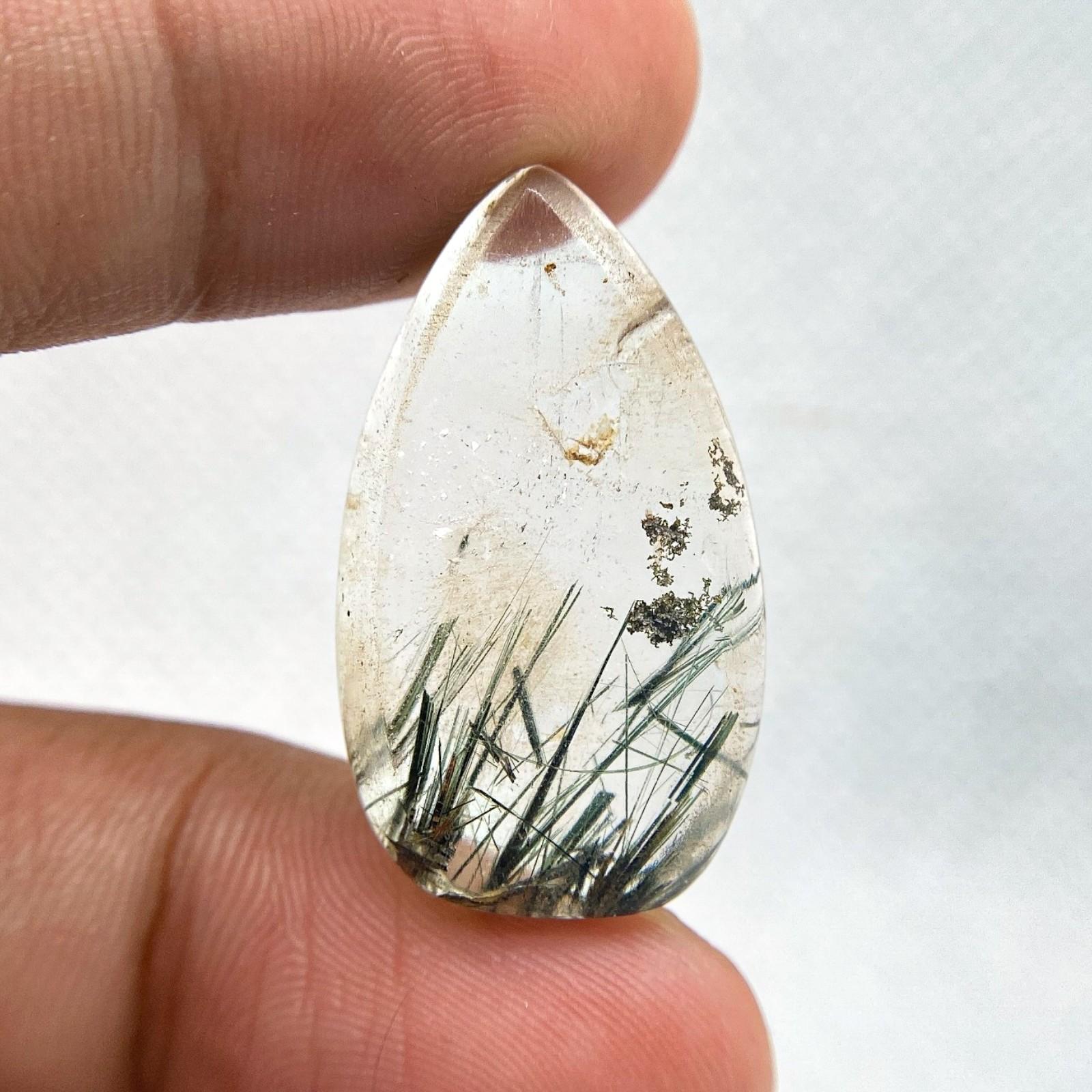
25.00 ct RUTILE IN QUARTZ – BRAZIL
EXPERT VERIFIED
- Expert Verified Gemstone
- Fast Handling & Shipping
- Secure Vault Packaging
$ 80
Offer amount Feild


Smart Collector Choice


Pay with Crypto & Get 10% Automatic Discount

Availability: 1 in stock
Gemstone Details
Gem Variety:
Rutile in Quartz
Origin:
Brazil
Carat Weight:
25.00
Length (mm):
30.70
Width (mm):
17.80
Depth (mm):
5.10
Shape:
Pear
Color
Bi-Color/Multicolor
Treatment:
No Treatment
Certificate:
On Request
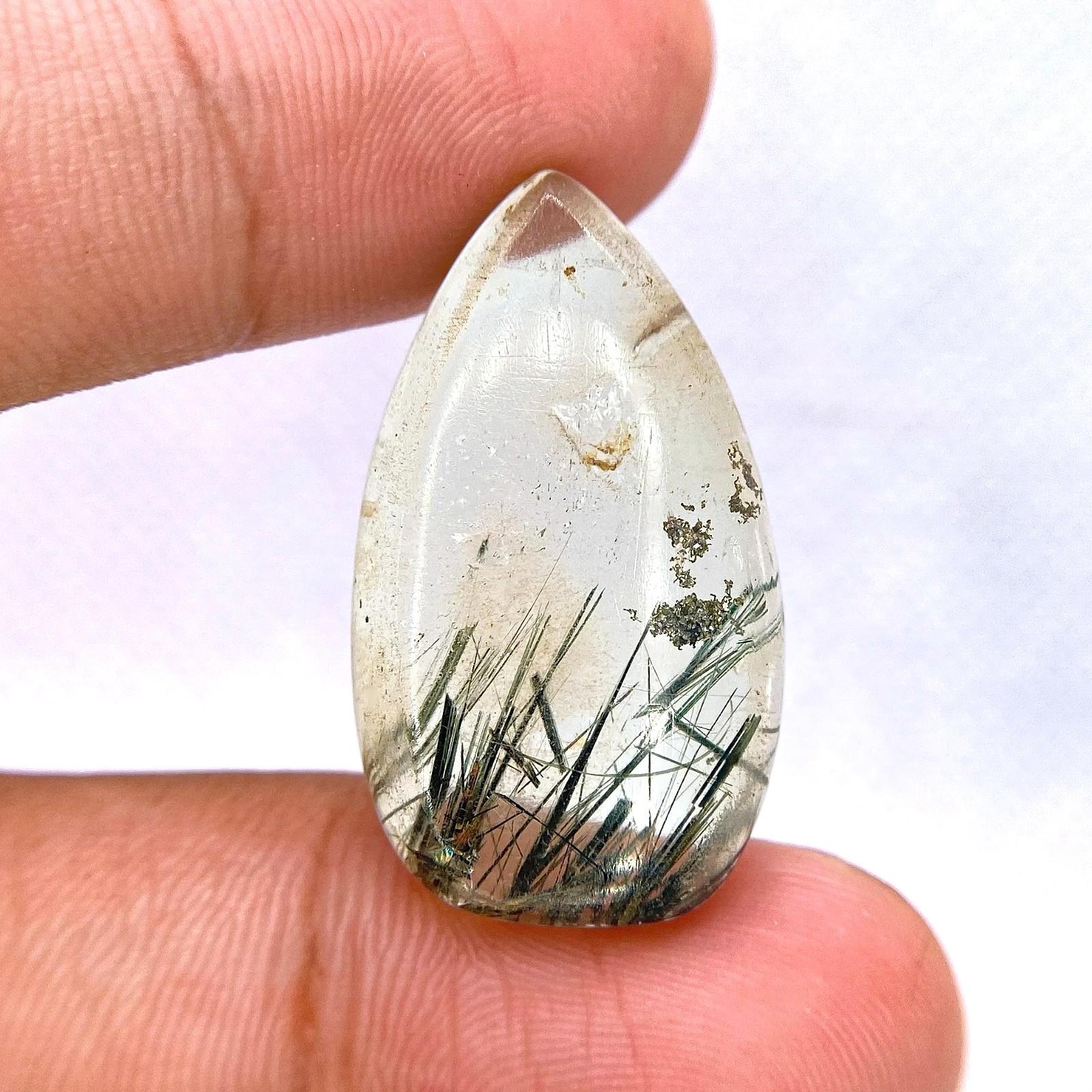
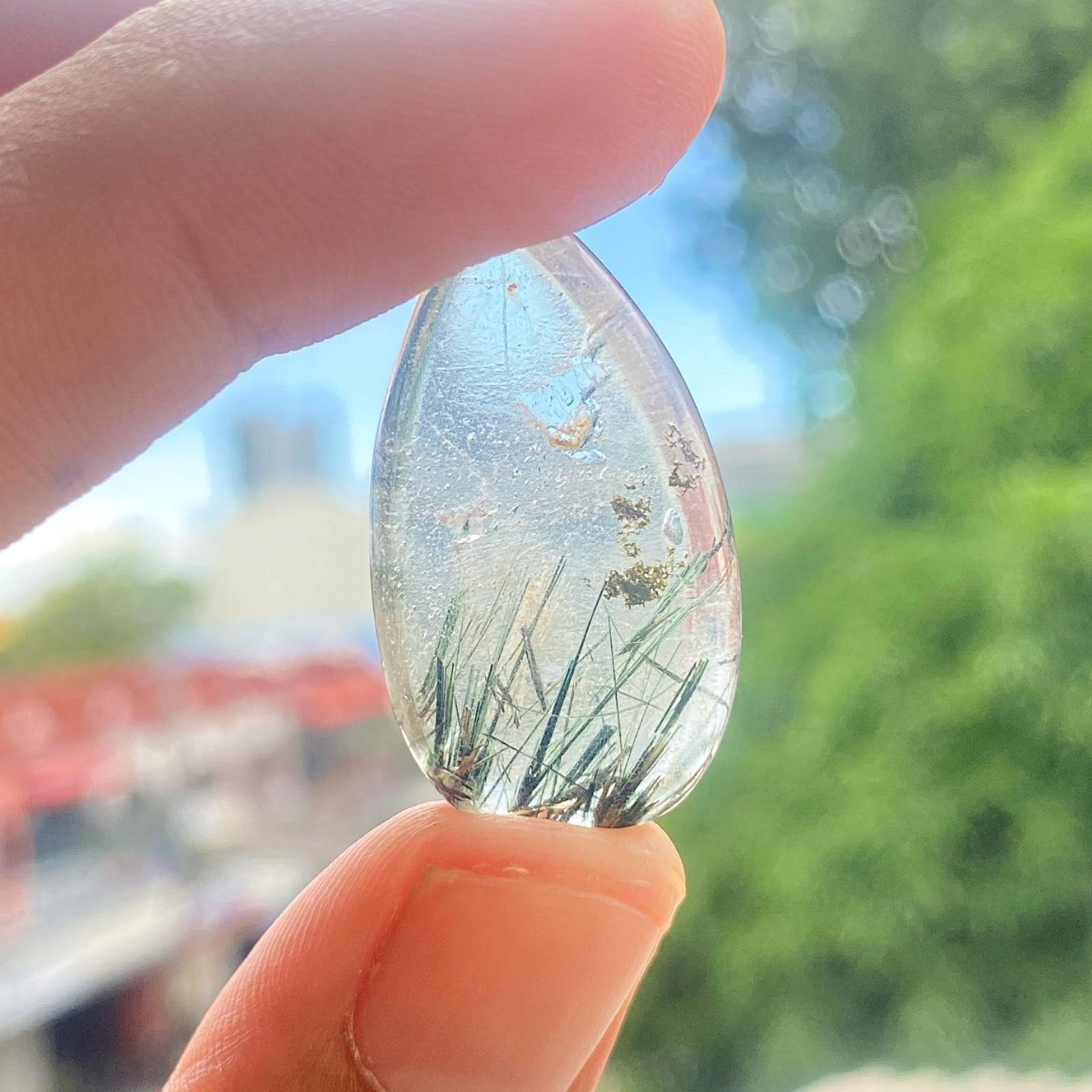
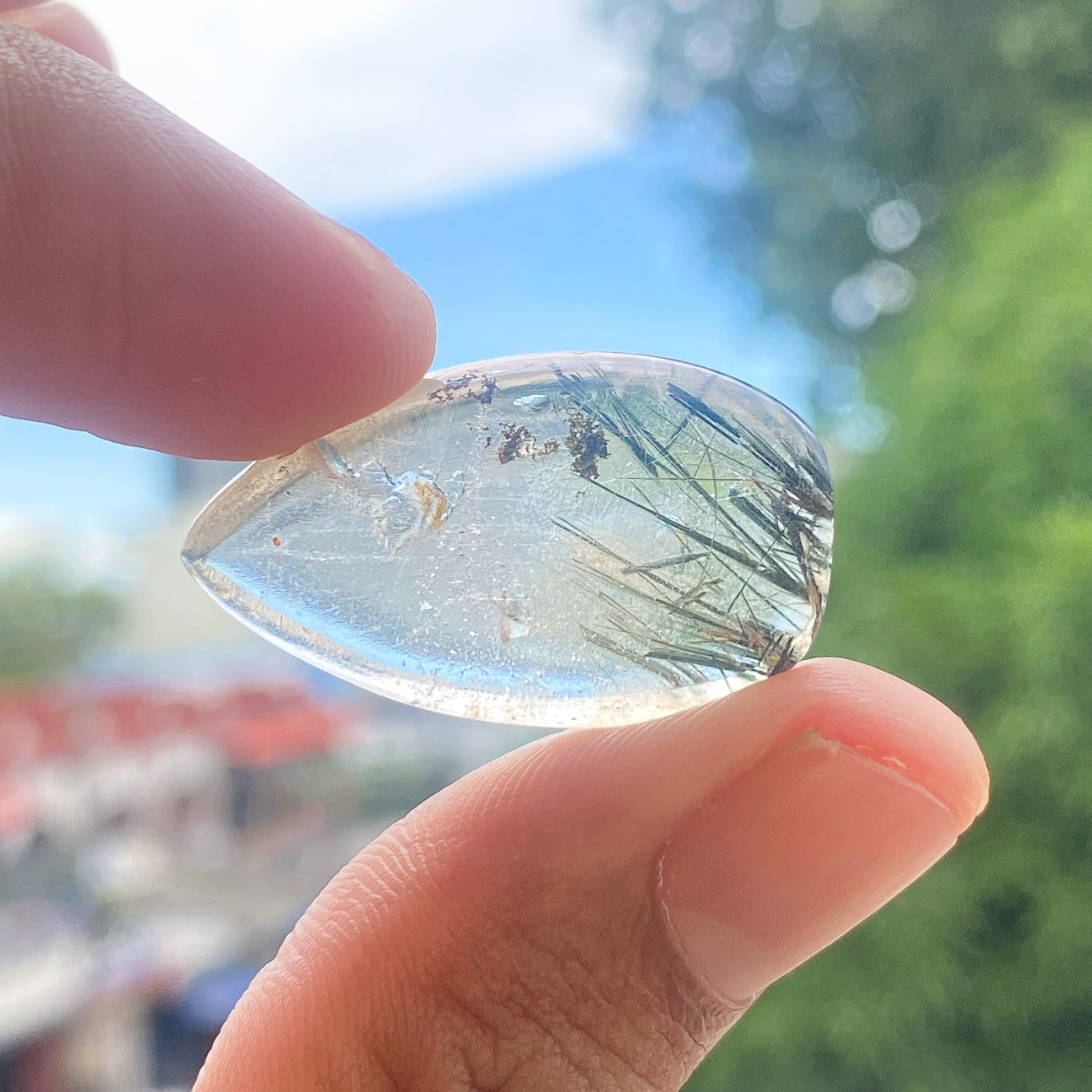
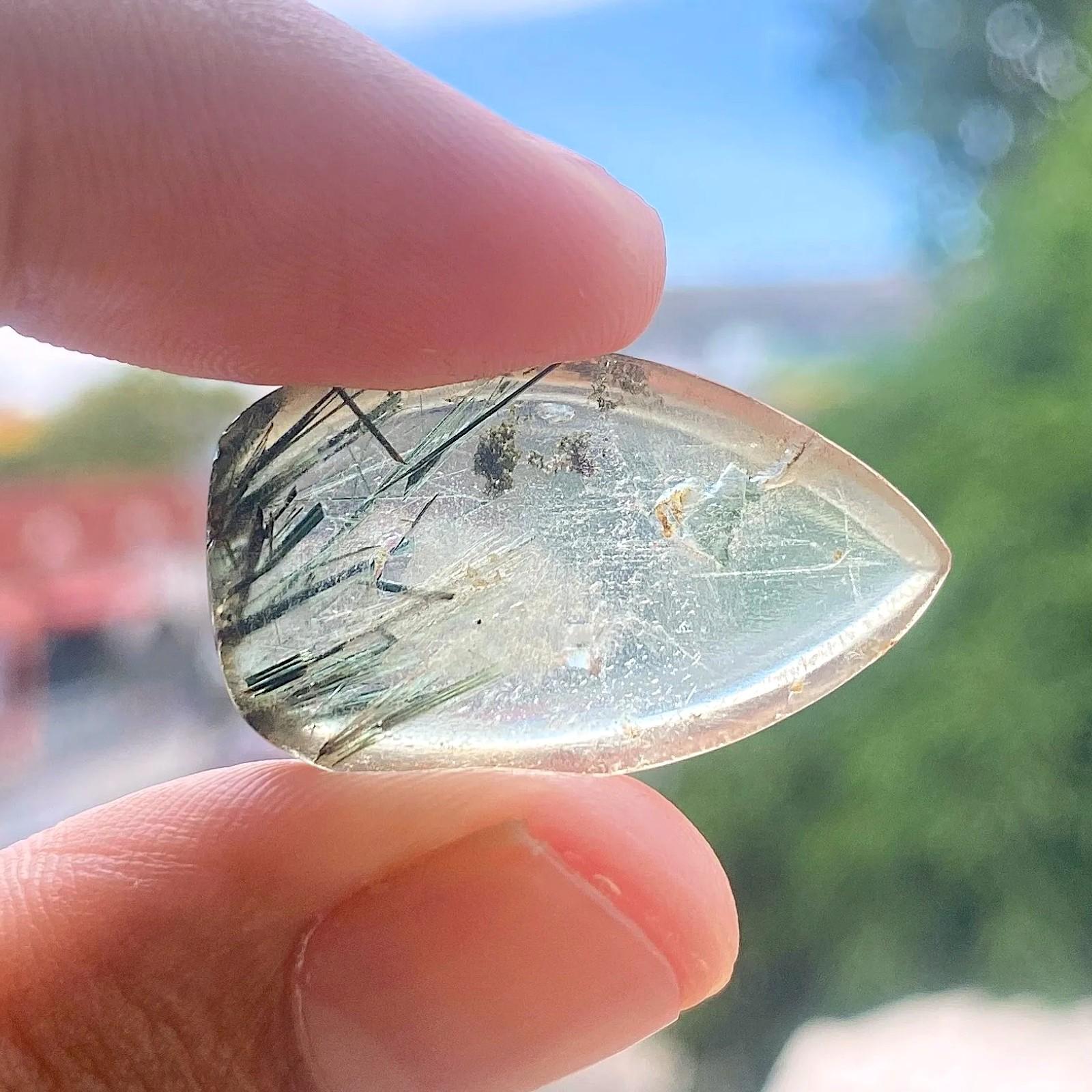


- Freakingcats Gemstone Database
Rutile in Quartz (Brazil)
Rutile in Quartz—internationally celebrated as “Rutilated Quartz” or the evocative “Flèches d’Amour” (Arrows of Love)—from the prolific granitic pegmatites, hydrothermal quartz veins, and metamorphic shear zones of Minas Gerais and Bahia in Brazil represents the undisputed international gold standard for inclusion mineralogy, macro-epitaxial star formations, and three-dimensional lapidary architecture. A composite mineral occurrence comprising acicular titanium dioxide (rutile) needles encased within macrocrystalline silicon dioxide (quartz), it is a material I have always respected for its “liquid-gold” to “blazing-copper-bronze” metallic fire suspended in water-clear silica, its spatial depth, and its status as a textbook benchmark for crystal growth synchronization. For the specialist, a top-tier Brazilian specimen—whether presenting as an unblemished, water-clear polished prism encasing delicate “angel hair” golden threads, an intricate six-rayed epitaxial “rutile star” radiating outward from a central hematite nucleus, or a monumental natural crystal cluster from Novo Horizonte—is a prized trophy of multi-phase hydrothermal fluid evolution; it offers a splendent sub-metallic to adamantine luster from the inclusions, framed by the bright vitreous clarity of its host quartz, creating a commanding presence that makes it an indispensable cornerstone for the systematic vault. As an artist, I find the breathtaking, three-dimensional suspension of razor-sharp golden needles frozen within flawless liquid glass to be one of nature’s most sophisticated and visually electrifying kinetic sculptures.
The Heritage & Discovery
Historical Significance
Rutile in Quartz is an indispensable index composite for decoding multi-stage fluid temperatures, titanium solubility in silica-saturated hydrothermal systems, and the crystallographic rules governing oriented epitaxial mineral growth. Historically, while included quartz has been documented across Alpine clefts in Europe since antiquity, the systematic opening and exploration of the Brazilian interior in the 18th and 19th centuries forever transformed collector and lapidary standards worldwide. Brazil emerged as the preeminent global source for monumental, museum-caliber rutilated quartz, providing naturalists, gemologists, and systematic collectors with specimens of unmatched optical clarity, needle density, and morphological complexity, standing as an enduring symbol of Brazilian mineralogical preeminence.
Discovery
The unearthing of macrocrystalline rutilated quartz across Brazil occurred during widespread exploration for alluvial gold, diamonds, and industrial piezoelectric quartz. Scientifically, the genesis of this inclusion pairing requires a precise two-stage hydrothermal history: titanium-rich, high-temperature fluids first precipitate rutile as delicate, needle-like tetragonal prisms, often nucleating epitaxially on the {0001} basal pinacoid or edges of earlier hematite plates. Subsequently, a massive influx of silica-saturated fluids at lower temperatures encapsulates the delicate titanium needles without dissolving, crushing, or displacing them, freezing the needles within a protective trigonal quartz matrix. In Brazilian deposits, trace iron within the rutile crystal lattice (substituting for titanium) drives the color spectrum of the needles, producing a palette ranging from radiant straw-gold and rich honey-amber to fiery copper-red and deep mahogany-bronze. My own respect for this material grew from analyzing its diagnostic optical interplay under directional spotlighting; specifically, observing a dense cluster of brilliant metallic golden needles catch the light simultaneously while encased within an optically flawless quartz crystal demonstrates a spatial harmony that is deeply satisfying to the trained eye.
Important Mines
The undisputed international capitals for collector-grade, crystallized rutile in quartz within Brazil span two legendary states. Foremost among them is the world-renowned Novo Horizonte area in Bahia, universally celebrated for producing the finest six-rayed “rutile stars” on Earth, where golden rutile needles radiate outward at precise 60-degree angles from flat, metallic-black hematite discs encased in water-clear or smoky quartz. In Minas Gerais, the prolific pegmatites and hydrothermal quartz veins of the Jequitinhonha and Doce valleys—including classic localities around Diamantina, Curvelo, Conselheiro Pena, and Teófilo Otoni—have yielded monumental crystals and flawless gem rough hosting dense, sweeping sprays of golden “angel hair” and thick copper-red needles. Additional notable occurrences are found in the Serra do Espinhaço mountain range. For the systematic vault, I prioritize specimens that exhibit pristine host quartz with high optical clarity, undamaged crystal terminations, well-defined golden or coppery metallic needles with intense reflectivity, and, when present, complete six-rayed epitaxial star formations centered on intact hematite crystals.
Mineralogical Profile
Description
Rutile in Quartz is a composite mineral specimen consisting of tetragonal titanium dioxide inclusions (Rutile) completely encased within trigonal silicon dioxide (Quartz). On the Mohs scale, the quartz host sits at a durable baseline 7, providing a tough, abrasion-resistant shell that shields the softer, more brittle internal rutile needles (which sit at 6 to 6.5 with distinct cleavage parallel to {110}) from mechanical shock, chipping, or external degradation, requiring standard archival care to protect the quartz faces and natural terminations from abrasive contact. It is characterized by a dual luster: the splendent, mirror-like adamantine to metallic surface luster of the enclosed rutile needles contrasting against the bright, reflective vitreous luster of the hosting quartz, with an expansive color palette dominated by straw-gold, honey-amber, fiery copper-red, and bronze needles suspended within water-clear, pale citrine, or smoky-brown quartz.
One of its most identifying traits is its acicular and epitaxial habit, routinely forming hair-thin straight fibers, cross-hatched reticulated lattices (“sagenite”), thick prismatic needles, or six-rayed radial star clusters oriented crystallographically along the basal planes of hematite. Quartz exhibits a refractive index of approximately 1.544 to 1.553, while the internal rutile features an exceptionally high refractive index of 2.613 to 2.909, creating extreme internal optical relief and a dramatic brilliance that makes the inclusions appear to float in liquid space. The average specific gravity ranges between 2.65 for quartz-dominated material and up to 2.75 or higher depending on the volume of dense rutile needles (rutile possessing a specific gravity of 4.23). Because it forms within complex hydrothermal veins, miarolitic pegmatites, and metamorphic quartzites, it is commonly found in close association with Hematite, Ilmenite, Albite, Muscovite, Tourmaline (Schorl), Kaolinite, and Pyrite. When I select an example for documentation, I look for water-clear silica transparency, high needle density with brilliant metallic luster, and crisp, undamaged crystal form, as these emphasize the sophisticated, multi-phase fluid chemistry of the composite’s dramatic subterranean birth.
Chemical Formula
SiO2 (Host: Quartz) enclosing TiO2 (Inclusion: Rutile, with minor Fe3+/Fe2+ substitutions)


