
SKU: CALC0023
4.46 ct CALCITE UV – PAKISTAN
EXPERT VERIFIED
- Expert Verified Gemstone
- Fast Handling & Shipping
- Secure Vault Packaging
$ 90
Offer amount Feild


Smart Collector Choice


Pay with Crypto & Get 10% Automatic Discount

Availability: 1 in stock
Gemstone Details
Gem Variety:
Calcite UV
Origin:
Pakistan
Carat Weight:
4.46
Length (mm):
11.00
Width (mm):
11.00
Depth (mm):
6.10
Shape:
Hexagon
Color
Bi-Color/Multicolor
Treatment:
No Treatment
Certificate:
On Request
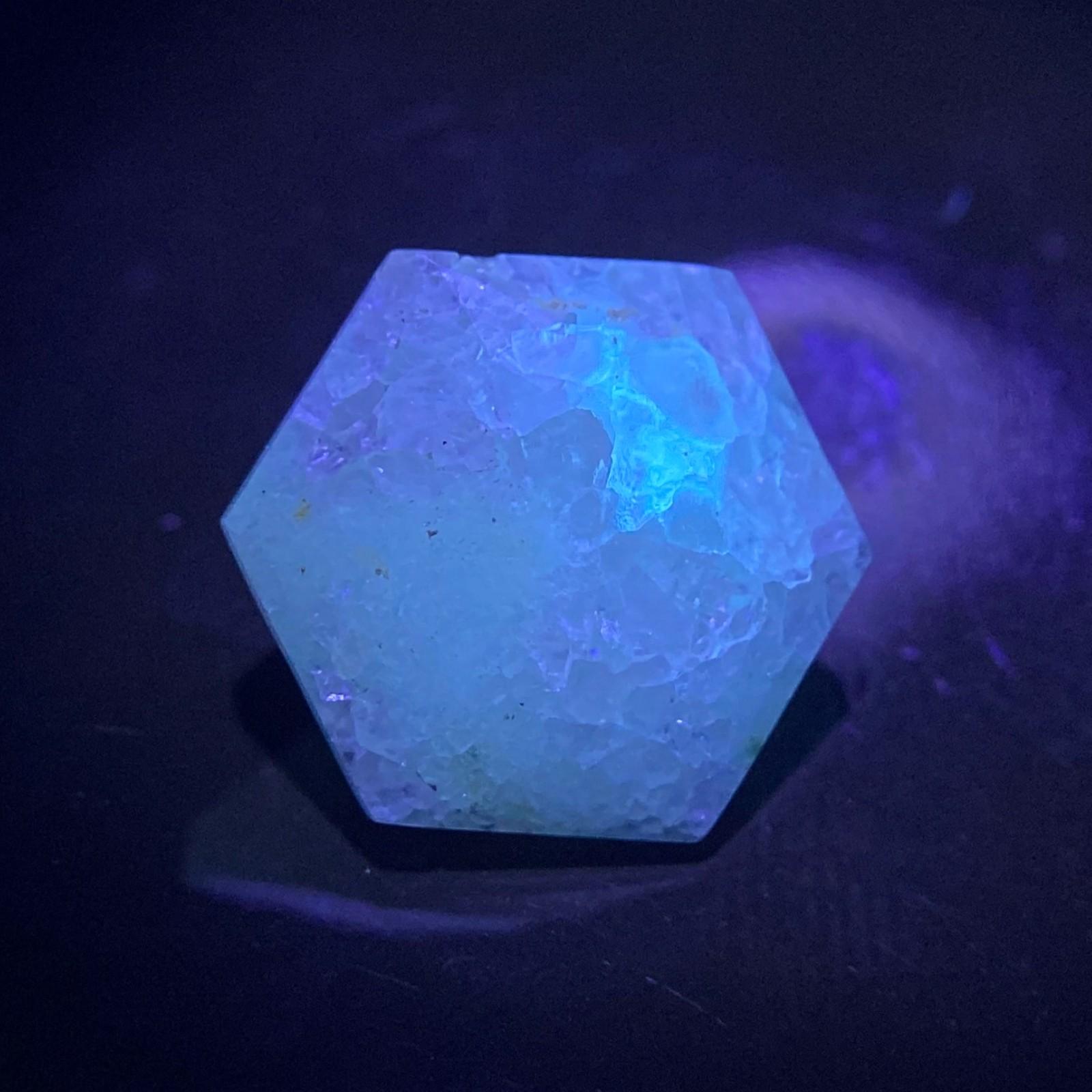
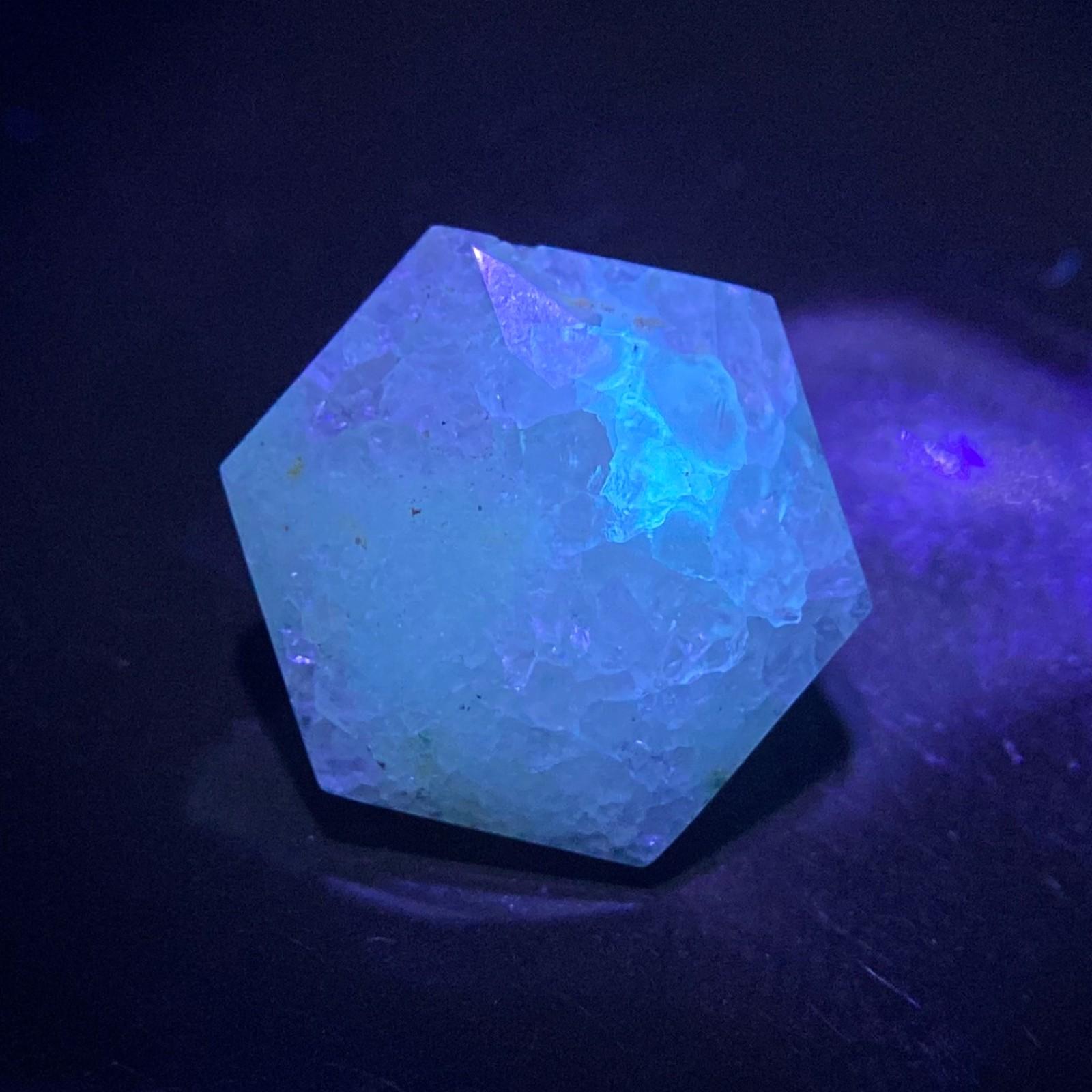
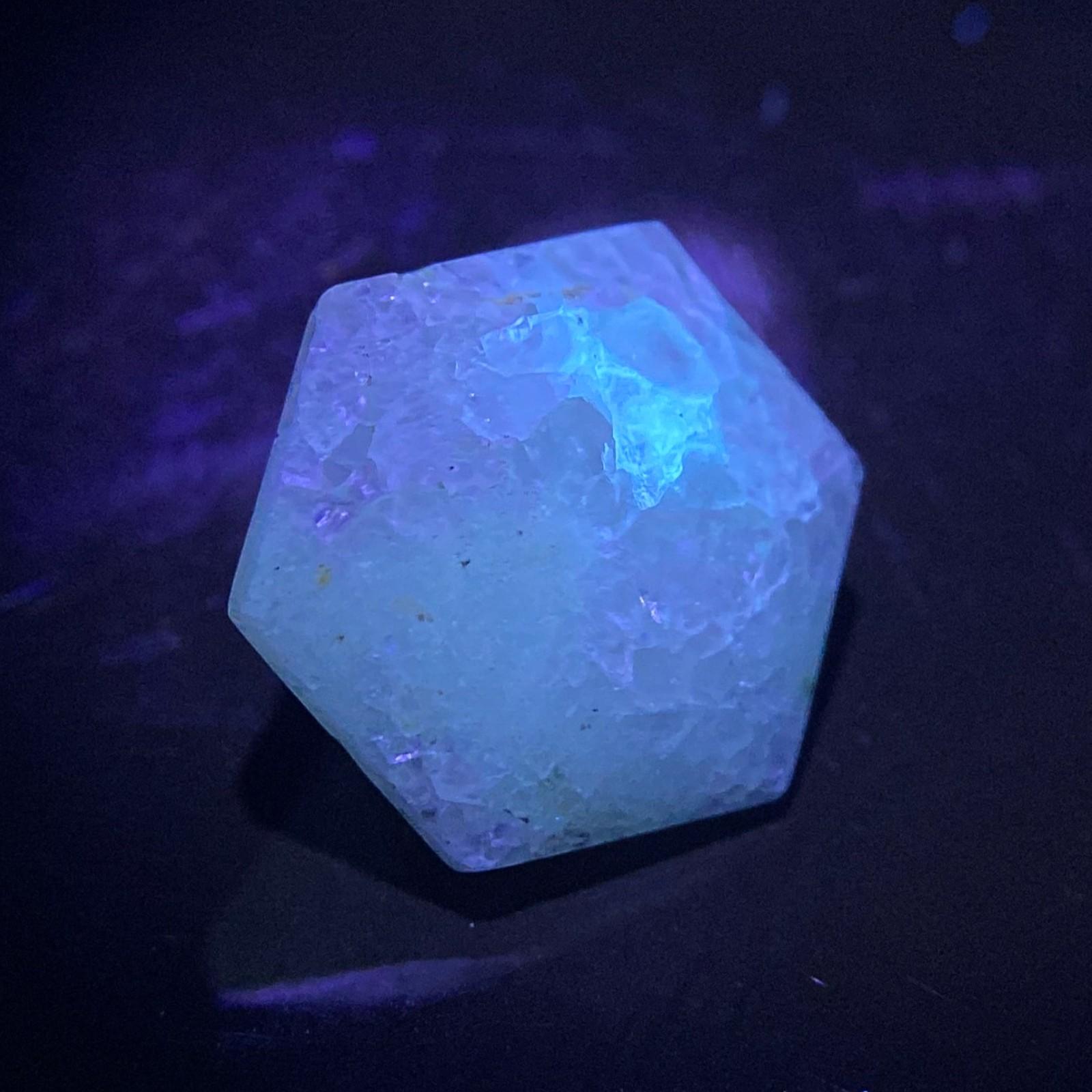
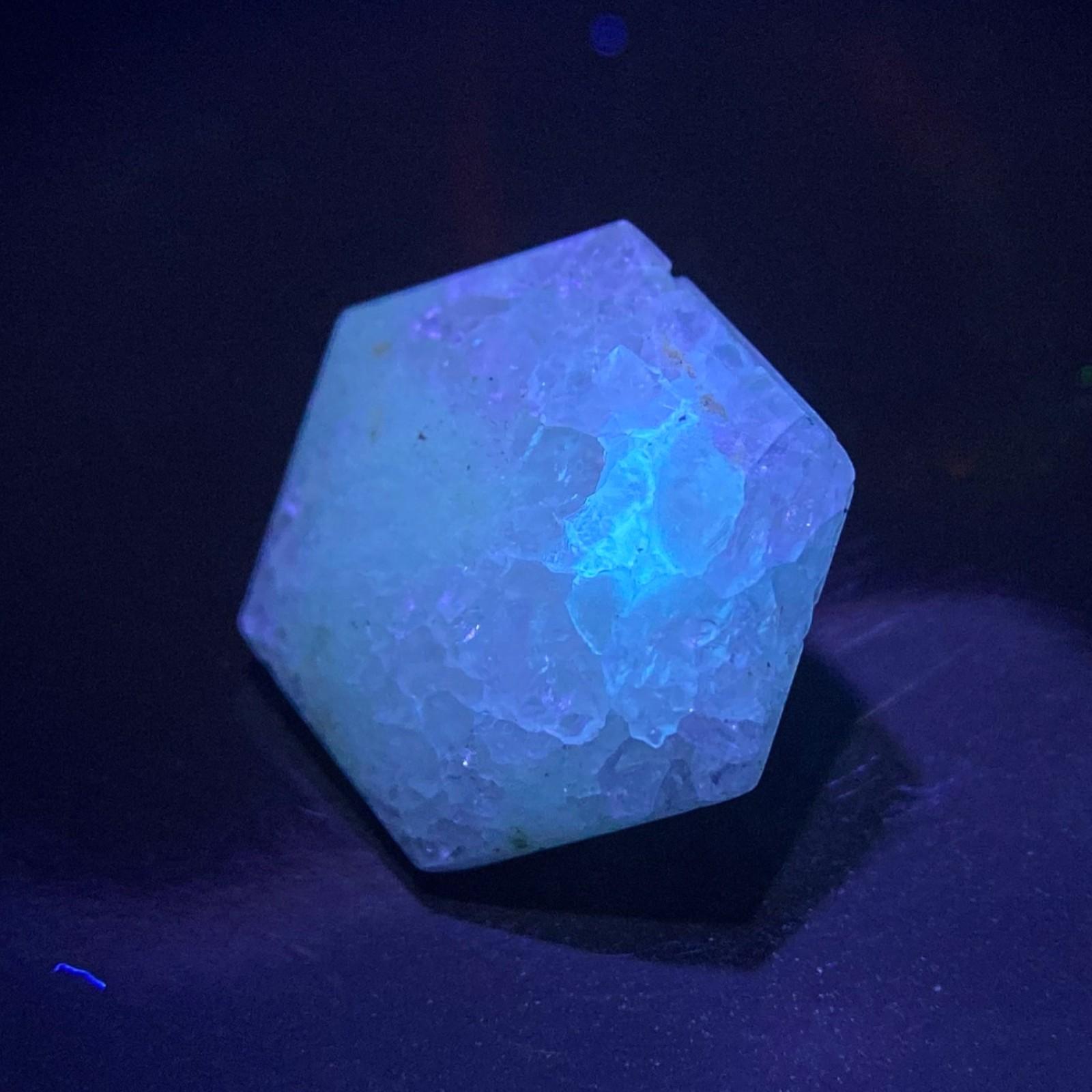
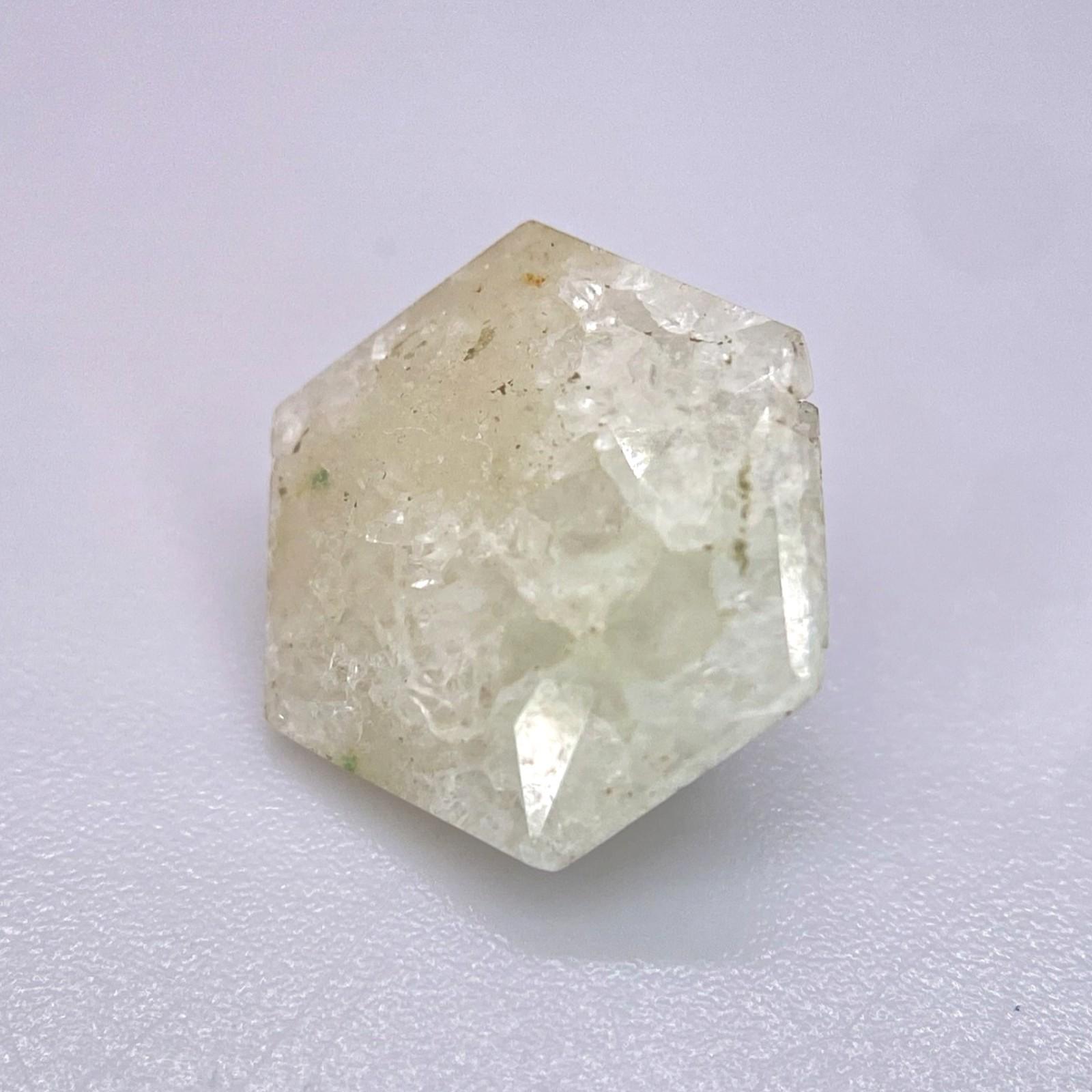
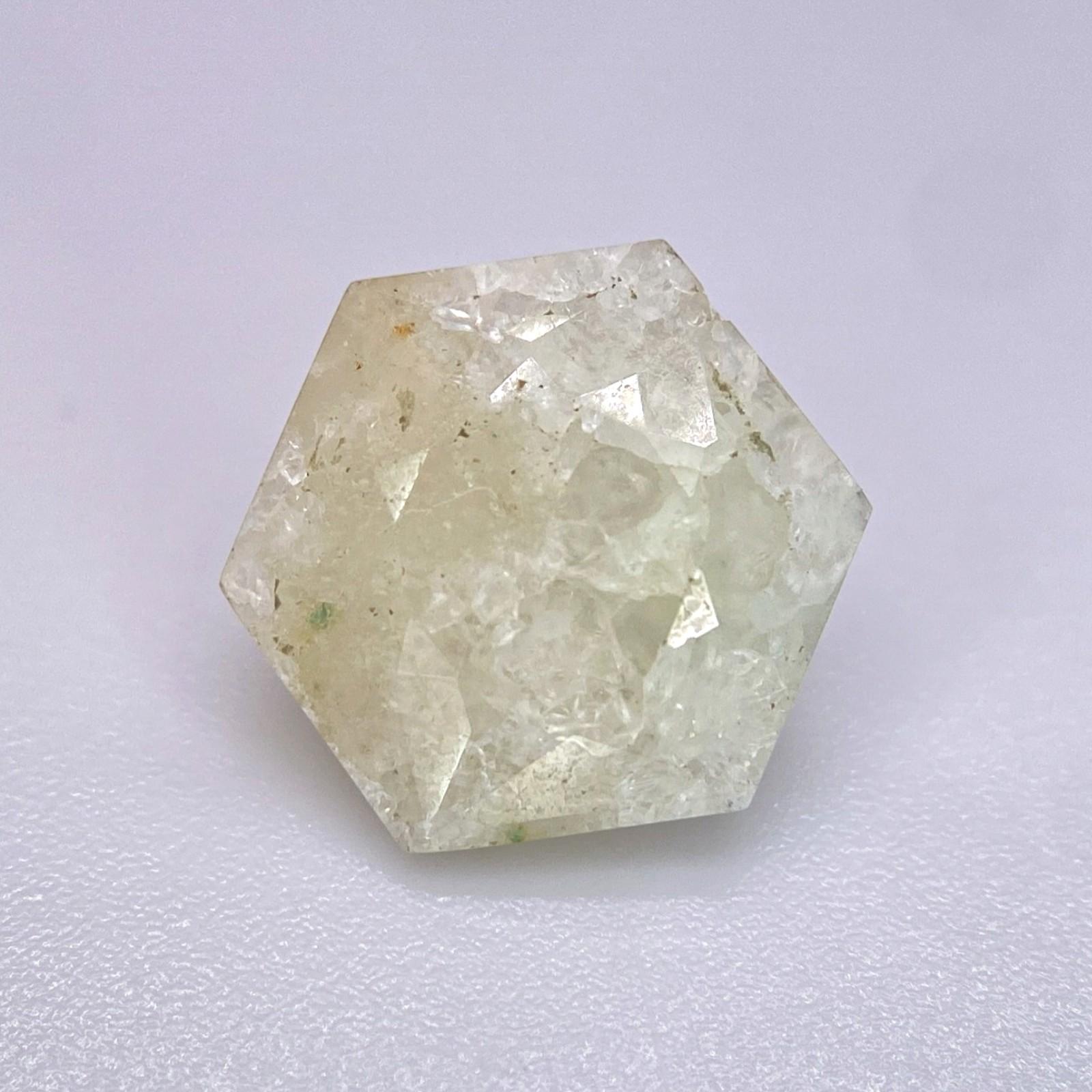
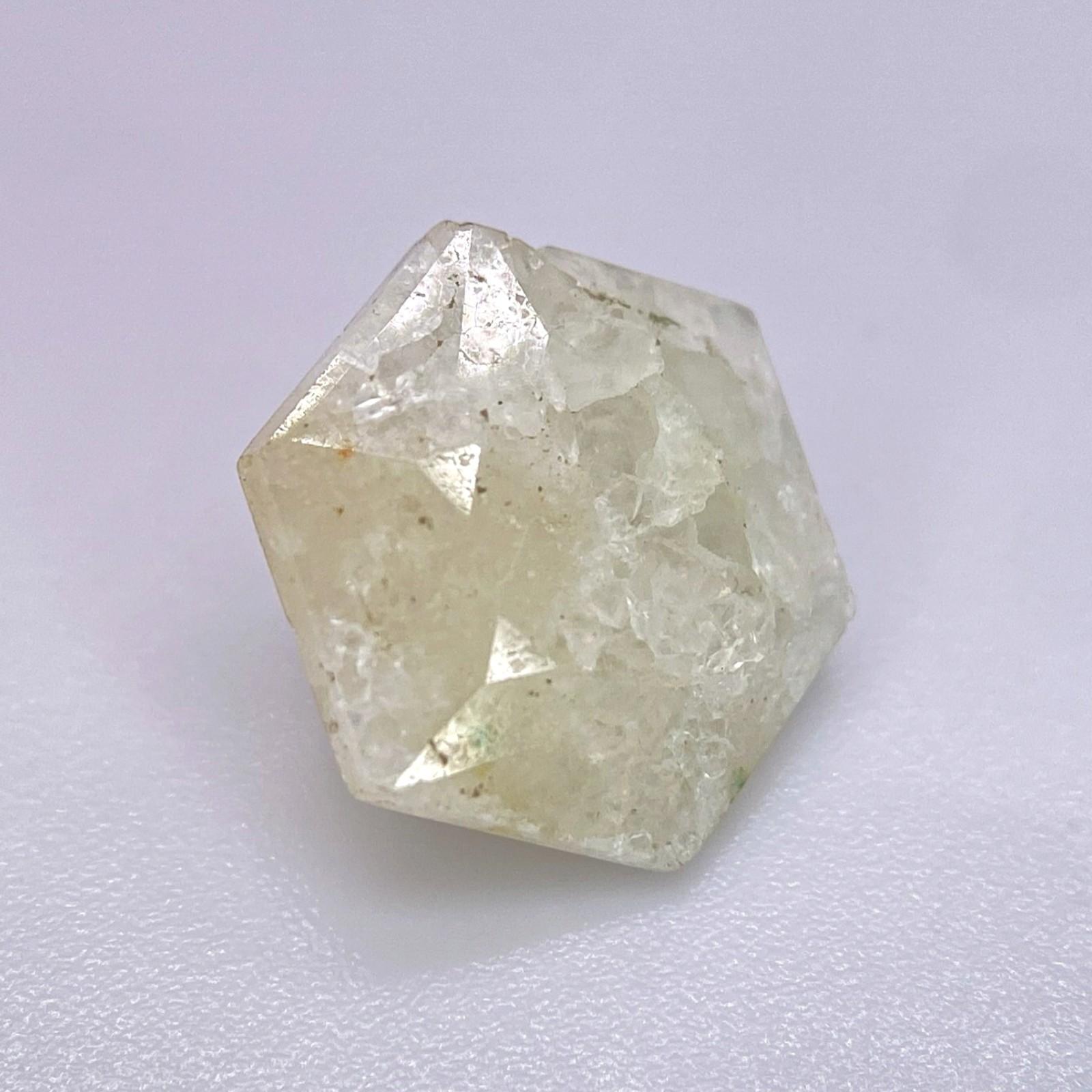


- Freakingcats Gemstone Database
Calcite (Pakistan) – UV Fluorescence
Calcite from the rugged alpine clefts, hydrothermal veins, and mineralized skarns of Pakistan—particularly the famed high-altitude pegmatite and metamorphic zones of the Gilgit-Baltistan region and the tribal belts of Khyber Pakhtunkhwa—represents a magnificent, structurally pristine expression of trigonal carbonate crystallization, celebrated for its dynamic ultraviolet reactivity. A calcium carbonate mineral of fundamental geological significance, it is a species I have always respected for its “ice-water” clarity, sharp geometric symmetry, and its status as a textbook benchmark of “trigonal-rhombohedral” structural discipline. For the specialist, a fine Pakistani Calcite—whether presenting as an elongated, lustrous “scalenohedral dogtooth” crystal, a stepped rhombohedron, or a cluster perched on contrasting matrix with species like fluorite, tourmaline, or epidote—is a prized trophy of hydrothermal fluid percolation; it offers a bright vitreous luster, remarkable optical birefringence, and a commanding, luminous presence that makes it an essential anchor for the systematic vault. As an artist, I find the spectacular nocturnal transformation—when an unassuming, water-clear or pastel crystal suddenly ignites into a blazing, electric red, vivid pink, or warm orange under ultraviolet excitation—to be one of nature’s most sophisticated and visually captivating light performances.
The Heritage & Discovery
Historical Significance
Calcite is an indispensable index species for decoding hydrothermal fluid dynamics, regional metamorphic contact zones, and trace-element activator partitioning in complex tectonic terrains. Historically, while Pakistan’s northern territories gained international prominence primarily for world-class gem pegmatites producing tourmaline, aquamarine, and topaz, the region’s diverse carbonate-bearing vein systems and skarns have yielded some of the finest aesthetic calcite associations known. Sourced from the collision zones between the Indian and Eurasian tectonic plates, Pakistani calcites set an enduring standard for crystal sharpness, crystallographic variety, and vivid fluorescence, standing as a celebrated testament to Himalayan and Karakoram mineral wealth.
Discovery
The unearthing of macrocrystalline, UV-reactive calcite across northern and western Pakistan accompanied the intensive exploration of alpine clefts, ruby-bearing marbles, and hydrothermal lead-zinc veins over recent decades. Scientifically, Calcite is simple calcium carbonate, but its optical response under ultraviolet light is governed entirely by specialized trace-element activator-sensitizer dynamics within the crystal lattice. In Pakistani deposits, divalent manganese ions (Mn2+) frequently substitute into calcium sites, functioning as the primary luminescence activator. When paired with trace lead (Pb2+) or trivalent rare-earth elements (REEs) that act as energy sensitizers, the mineral absorbs UV radiation and undergoes rapid electronic transitions. Under short-wave UV (254 nm) and mid-wave UV (312 nm), these crystals flash an intense, saturated cherry-red, raspberry-pink, or fiery orange-red, while long-wave UV (365 nm) can evoke deep orange, cream-yellow, or lavender-pink responses with distinct phosphorescence. My own respect for this material grew from analyzing its diagnostic optical cleavage and fluorescence; specifically, observing an optically transparent scalenohedron ignite with uniform, laser-like red luminescence under targeted UV lamps demonstrates an internal lattice order that is deeply satisfying to the trained eye.
Important Mines
The primary international localities for collector-grade, fluorescent calcite within Pakistan include the high-altitude valleys of Gilgit-Baltistan (such as the Shigar, Skardu, and Hunza valleys), where calcites occur in tectonic clefts and marble horizons alongside famous gem species. Additionally, the Kohistan and Swat districts, as well as the hydrothermal mineral belts of Balochistan (notably around the Lasbela and Khuzdar regions), frequently produce fine fluorescent specimens associated with quartz, siderite, and base-metal sulfides. For the systematic vault, I prioritize specimens that exhibit sharp, undamaged crystal terminations, high daylight transparency, complete freedom from cleavage bruises, and an immediate, saturated red-to-orange response across all UV wavelengths.
Mineralogical Profile
Description
Calcite is a calcium carbonate mineral that crystallizes in the trigonal system (hexagonal scalenohedral class). It sits at a baseline 3 on the Mohs scale, serving as the universal defining benchmark mineral for that hardness level; its smooth, highly lustrous crystal faces possess three directions of perfect rhombohedral cleavage at approximately 75-degree angles, requiring careful archival handling to protect its crisp crystal edges, delicate terminations, and cleaved facets from physical impact, abrasion, or contact with acidic solutions. It is characterized by its bright vitreous surface luster transitioning to a soft pearly sheen along cleavage steps, and a diverse daylight color palette dominated by water-clear, honey-yellow, champagne-amber, pale straw, delicate pink, and snow-white.
One of its most identifying traits is its extreme morphological versatility, routinely forming elongated, pointed scalenohedrons (“dogtooth spar”), flat tabular prisms, blunt rhombohedrons, and complex twinned crystals. It possesses a moderate refractive index running from approximately 1.486 to 1.658, giving it extreme optical birefringence (double refraction) where text viewed through a clear cleavage rhomb appears distinctly doubled, paired with a light average specific gravity of approximately 2.71 that reflects its carbonate architecture. Because it forms in diverse hydrothermal veins, metamorphic contact skarns, and alpine clefts, it is commonly found in close association with Quartz, Fluorite, Pyrite, Siderite, Epidote, and Dolomite. When I select an example for documentation, I look for crisp crystal geometry, high internal clarity, and a vivid, high-contrast red-to-orange fluorescent glow under ultraviolet illumination, as these emphasize the sophisticated, activator-rich chemistry of the mineral’s subterranean birth.
Chemical Formula
CaCO3 (with trace Mn2+, Pb2+, and REE activator substitutions)


