
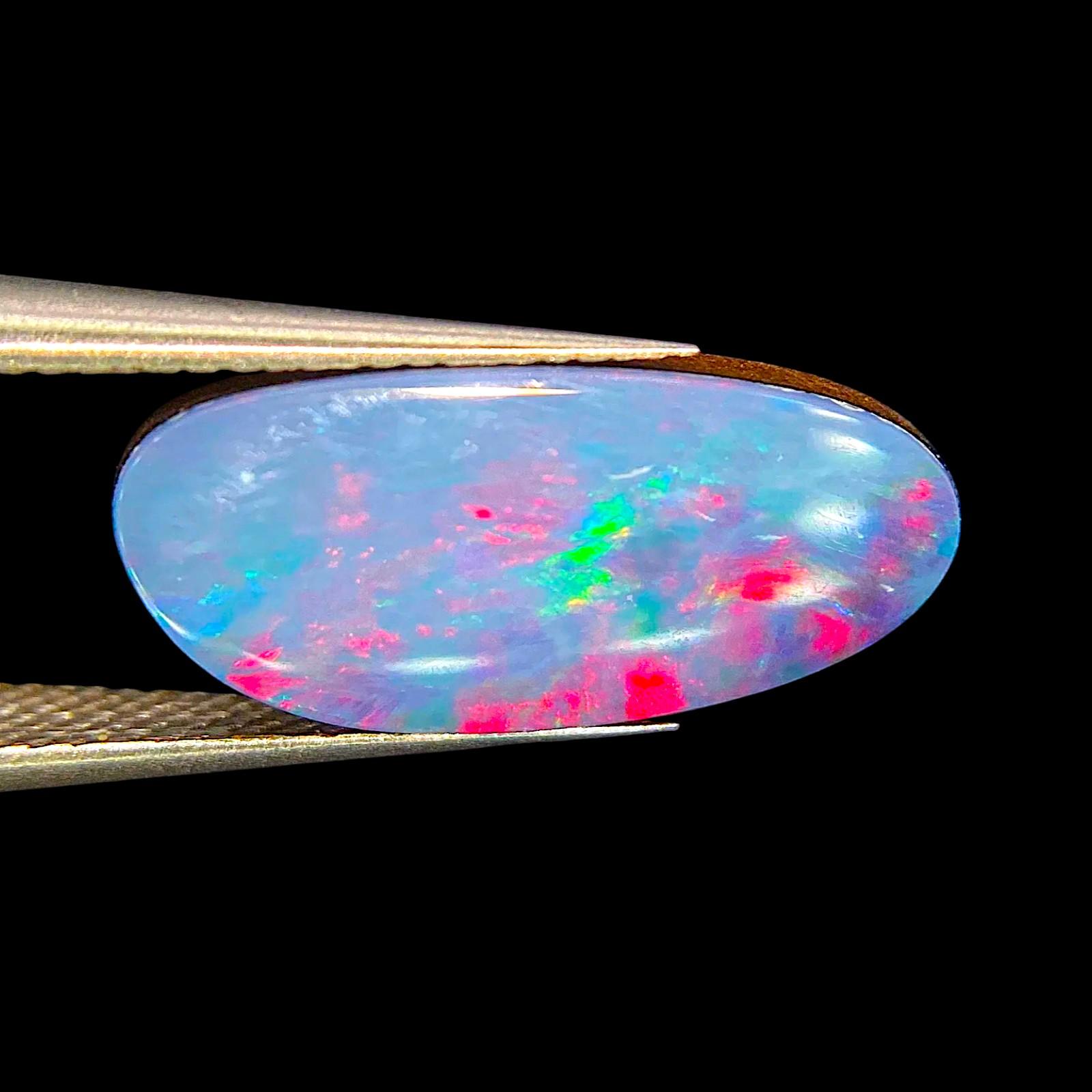
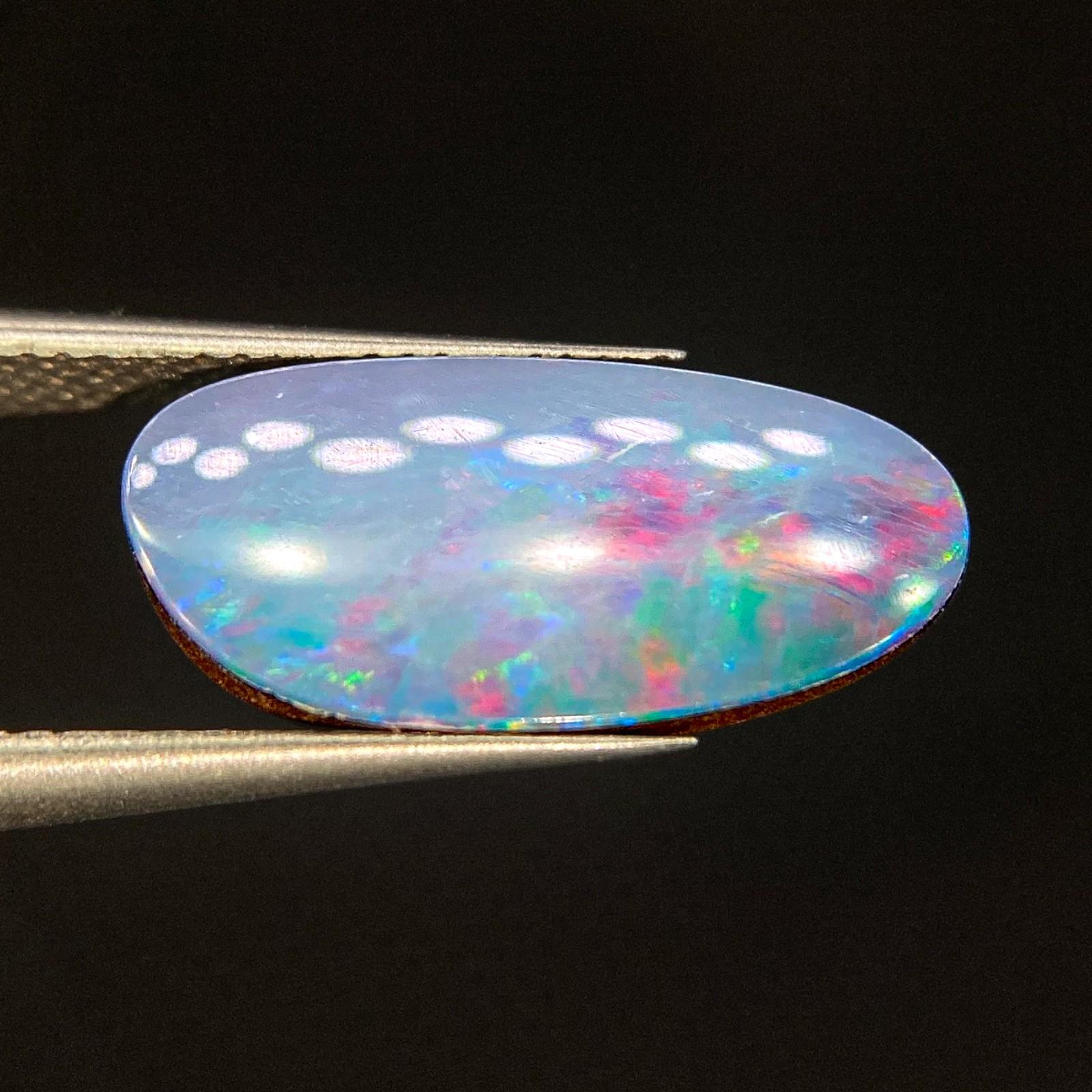
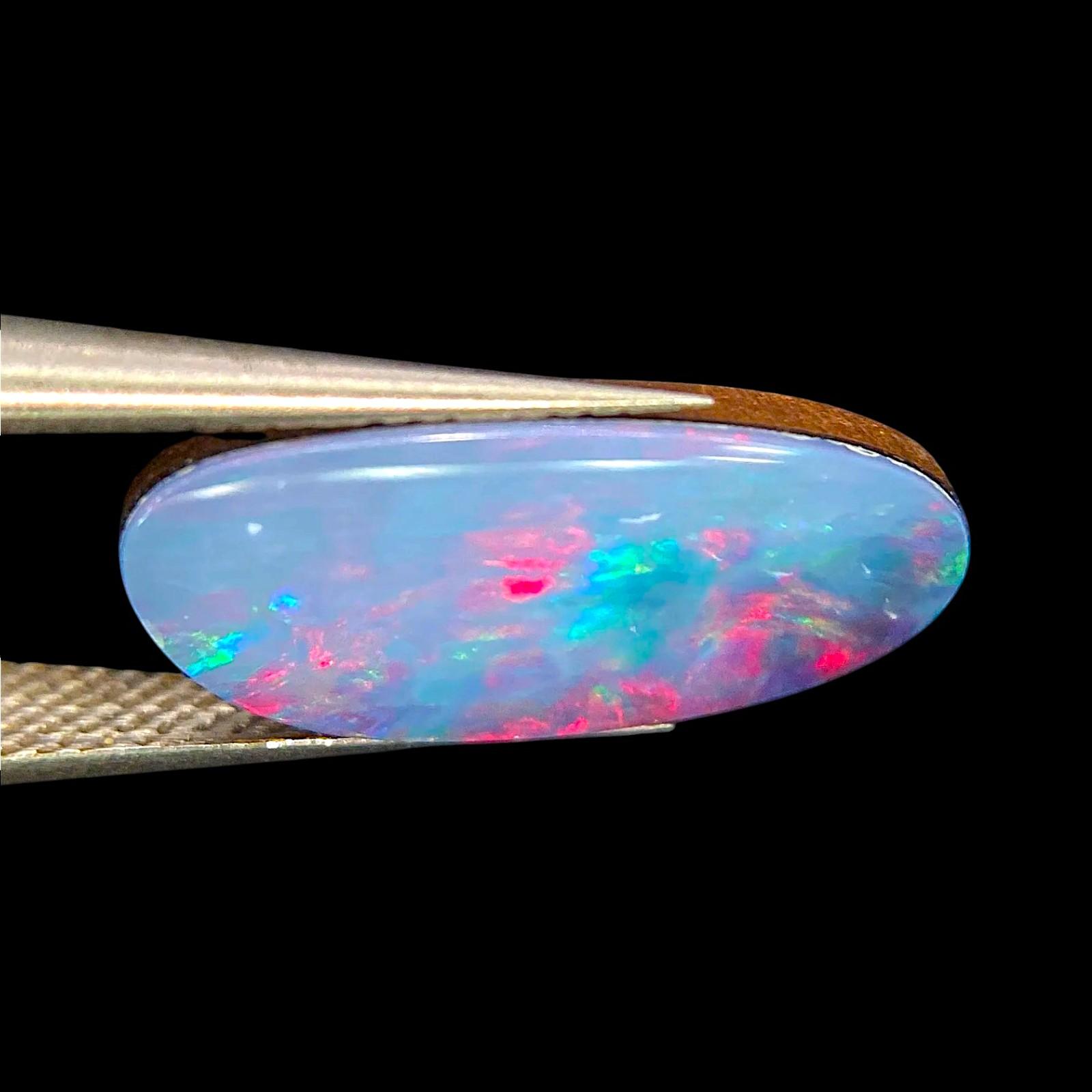
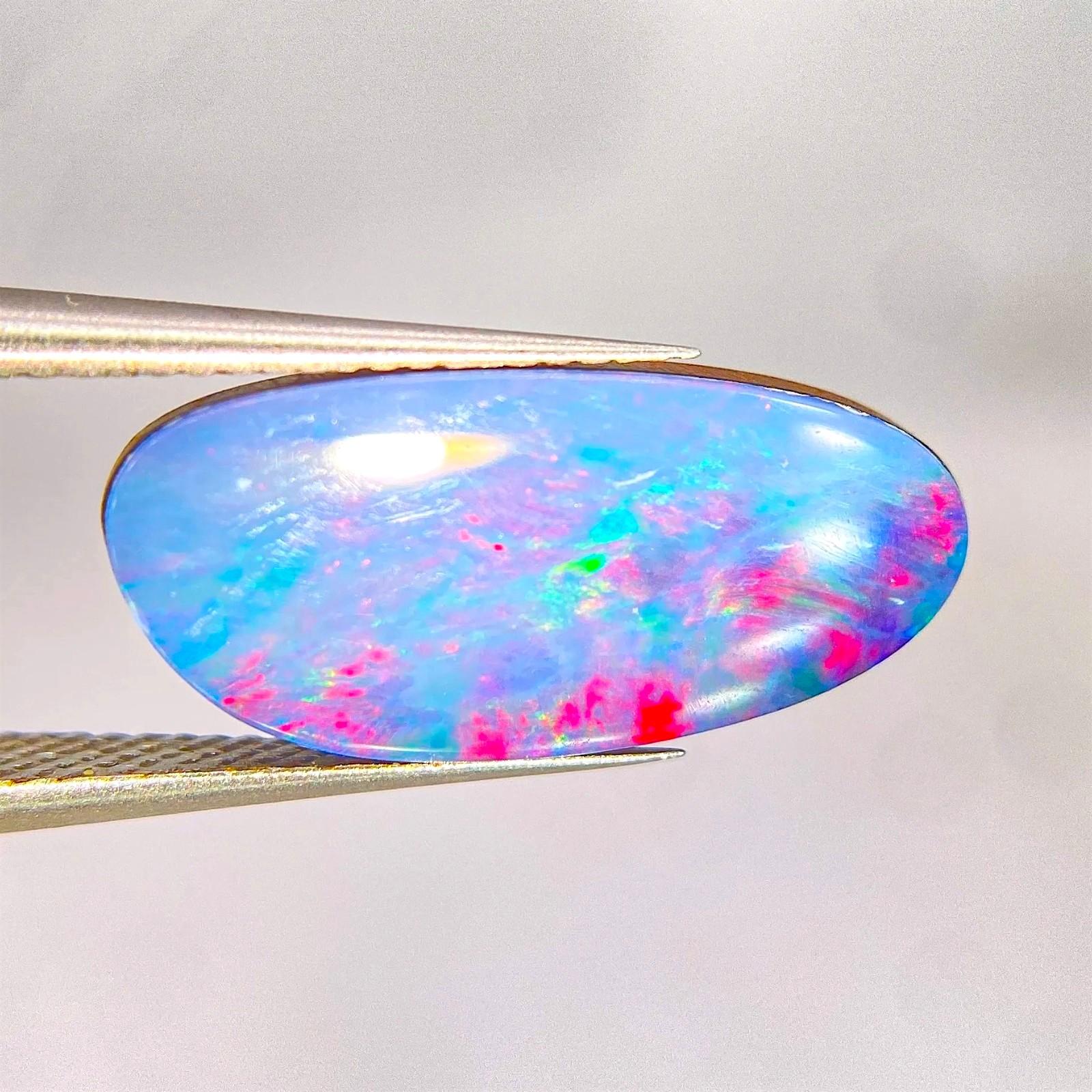
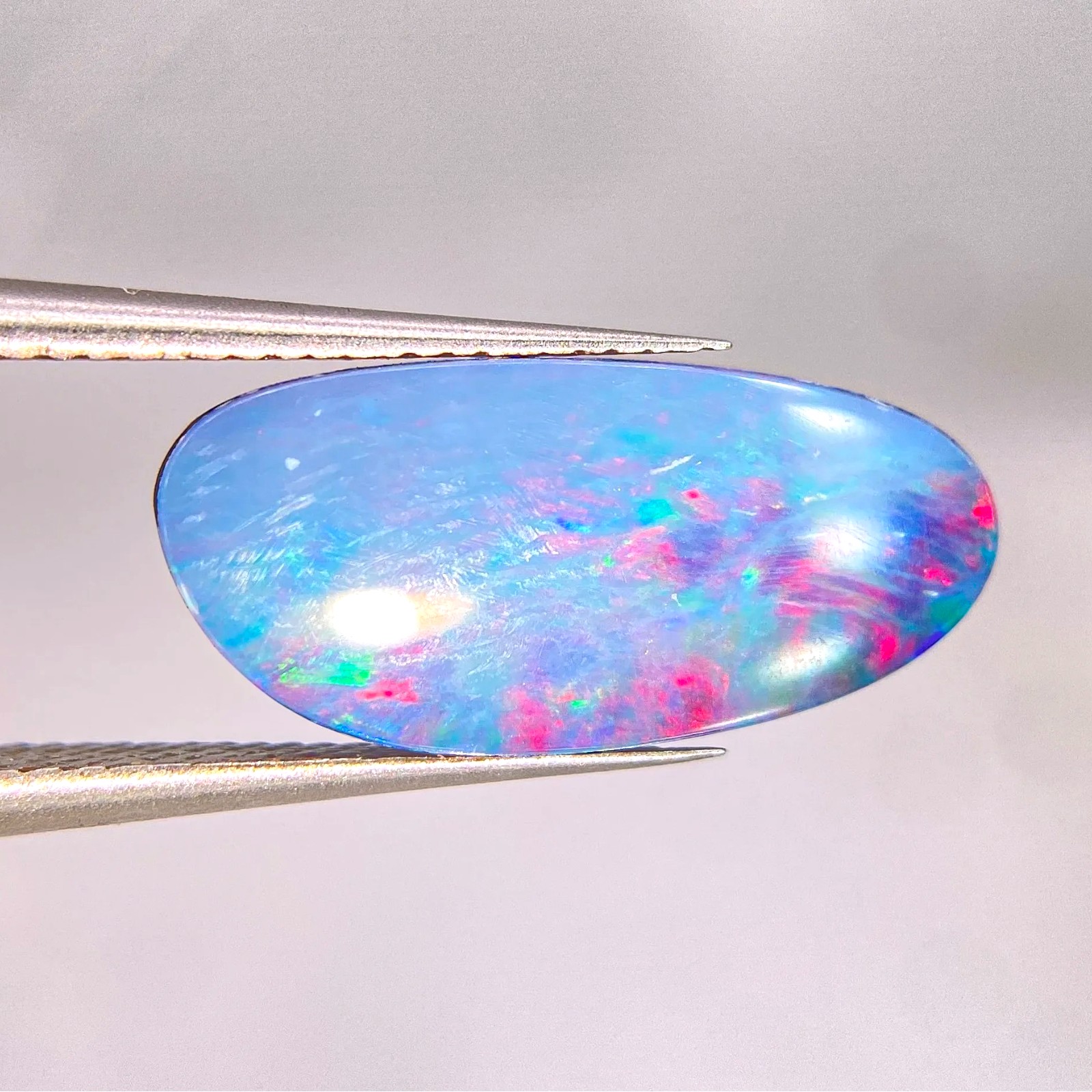
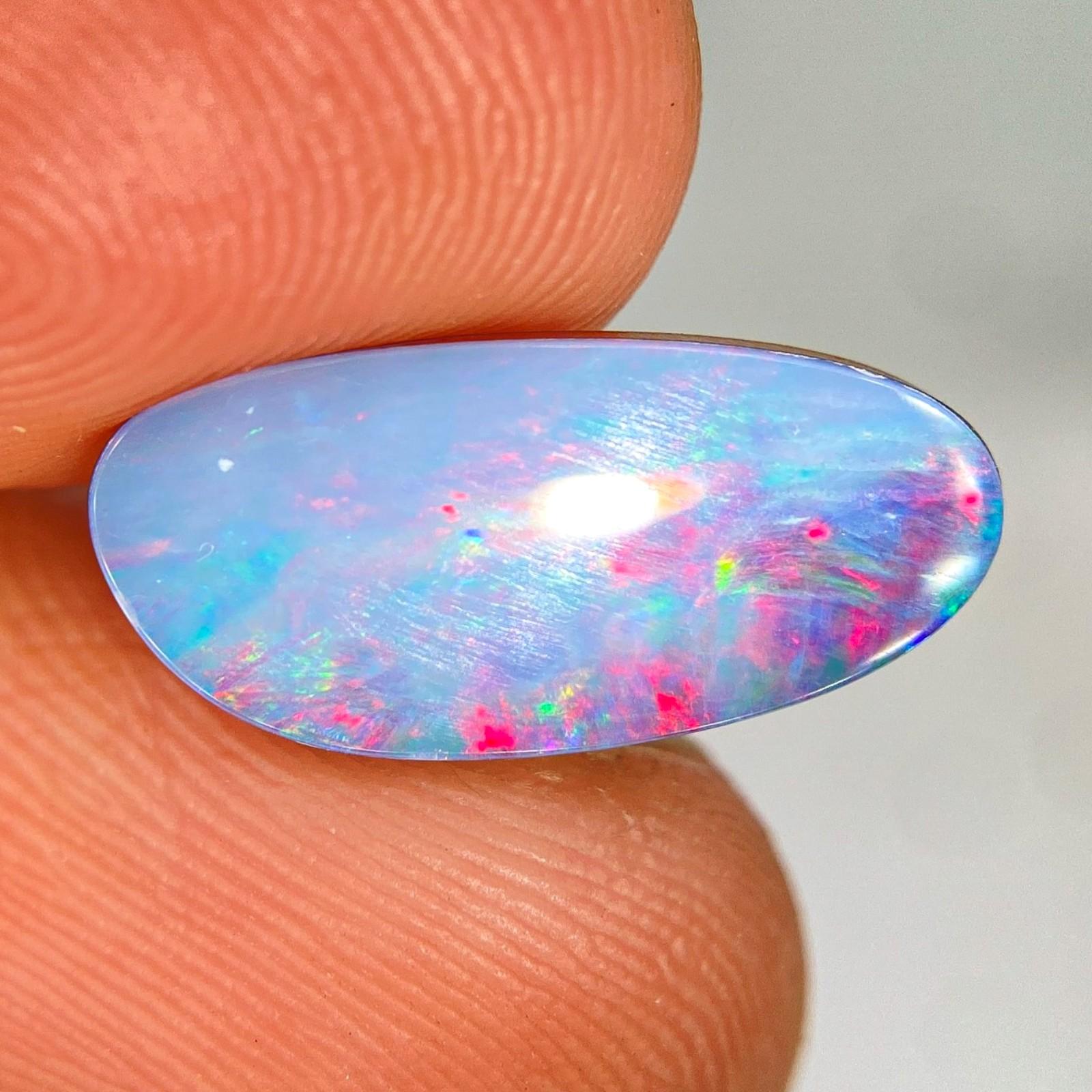
2.89 ct OPAL DOUBLET – AUSTRALIA
EXPERT VERIFIED
- Expert Verified Gemstone
- Fast Handling & Shipping
- Secure Vault Packaging
$ 150
Offer amount Feild


Smart Collector Choice


Pay with Crypto & Get 10% Automatic Discount

Availability: 1 in stock


- Freakingcats Gemstone Database
Australian Opal Doublets
Opal doublets are one of the most beautiful ways of presenting Australian precious opal. They are created by taking a relatively thin layer of genuine precious opal and carefully attaching it to a darker supporting base. This backing gives strength to the thin opal layer and, just as importantly, provides contrast that can dramatically intensify the natural play-of-color. The result can be spectacular: brilliant flashes of green, blue, orange, yellow and red moving across a dark background with an appearance sometimes approaching that of fine black opal.
The doublets in my collection are particularly attractive because they show strong, lively play-of-color across the stone rather than depending on one very precise viewing direction. As the stone moves, different areas illuminate and different colors appear. This makes them extremely enjoyable gemstones to handle and wear—the color is constantly changing rather than presenting itself from only one ideal angle.
The Heritage & Discovery
Historical Significance: The development of opal doublets is closely connected with the Australian opal industry. Precious opal can occur in extremely thin seams and layers that are too shallow to cut into a conventional solid cabochon. Yet these thin layers may contain extraordinary color. Lapidaries therefore developed methods of preserving and presenting this material by mounting it onto a supporting base.
This allowed beautiful precious opal that might otherwise have been impossible to cut as a durable gemstone to become part of jewelry and collections. A fine doublet is therefore not an imitation of opal: its visible upper layer is natural precious opal, with the backing serving as support and contrast.
Construction: A traditional opal doublet consists of two components. The upper layer is precious opal containing the natural play-of-color. Beneath it is a darker backing material, which may vary considerably depending on the period, maker and material available. Traditional backing materials can include dark potch opal, ironstone and other dark natural or manufactured materials.
In some older doublets, unusual backing materials were also used. Because the backing can vary, it should not automatically be described as wood unless this is known for the individual stone. What defines the doublet is the basic construction: a layer of precious opal permanently joined to a supporting base.
This distinguishes a doublet from a triplet. A doublet has the opal and backing, while a triplet adds a transparent protective cap above the opal.
Australian Tradition: Australia became the world’s great source of precious opal following the development of its major opal fields during the late nineteenth and twentieth centuries. Fields such as Coober Pedy, Andamooka, Lightning Ridge and others produced an extraordinary variety of opal material, including seams and color bars ideally suited to doublet manufacture.
Opal doublets became an established part of Australian lapidary tradition because they allowed cutters to use particularly beautiful but thin precious-opal layers intelligently. Rather than grinding away valuable color in an attempt to produce a thick solid stone, the cutter could preserve the best portion and mount it onto a stable backing.
Gemological Profile
Description: The precious-opal component of a doublet is hydrated silica, conventionally represented by the formula SiO₂·nH₂O. Opal is not crystalline in the conventional sense. Its internal structure consists of microscopic silica spheres, and when these are arranged with sufficient regularity they interact with visible light to create the phenomenon known as play-of-color.
The dark backing of a doublet can make this phenomenon considerably more dramatic. By reducing distracting light from behind the opal and increasing visual contrast, greens can become more electric, blues deeper, and orange and red flashes more pronounced.
A particularly attractive doublet may show broad areas of color rather than isolated pinpoints. Some display rolling flashes, patches or complex mosaic-like patterns that change continuously as the stone moves. Stones with strong non-directional play-of-color are especially appealing because their color remains active through a wide range of viewing positions.
Good Australian opal doublets can therefore be extraordinarily beautiful gemstones in their own right. Their attraction lies not in pretending to be something they are not, but in the skillful combination of genuine precious opal, intelligent lapidary construction and the extraordinary optical phenomenon produced by natural opal itself.
Chemical Formula of the Opal Layer: SiO₂·nH₂O


