
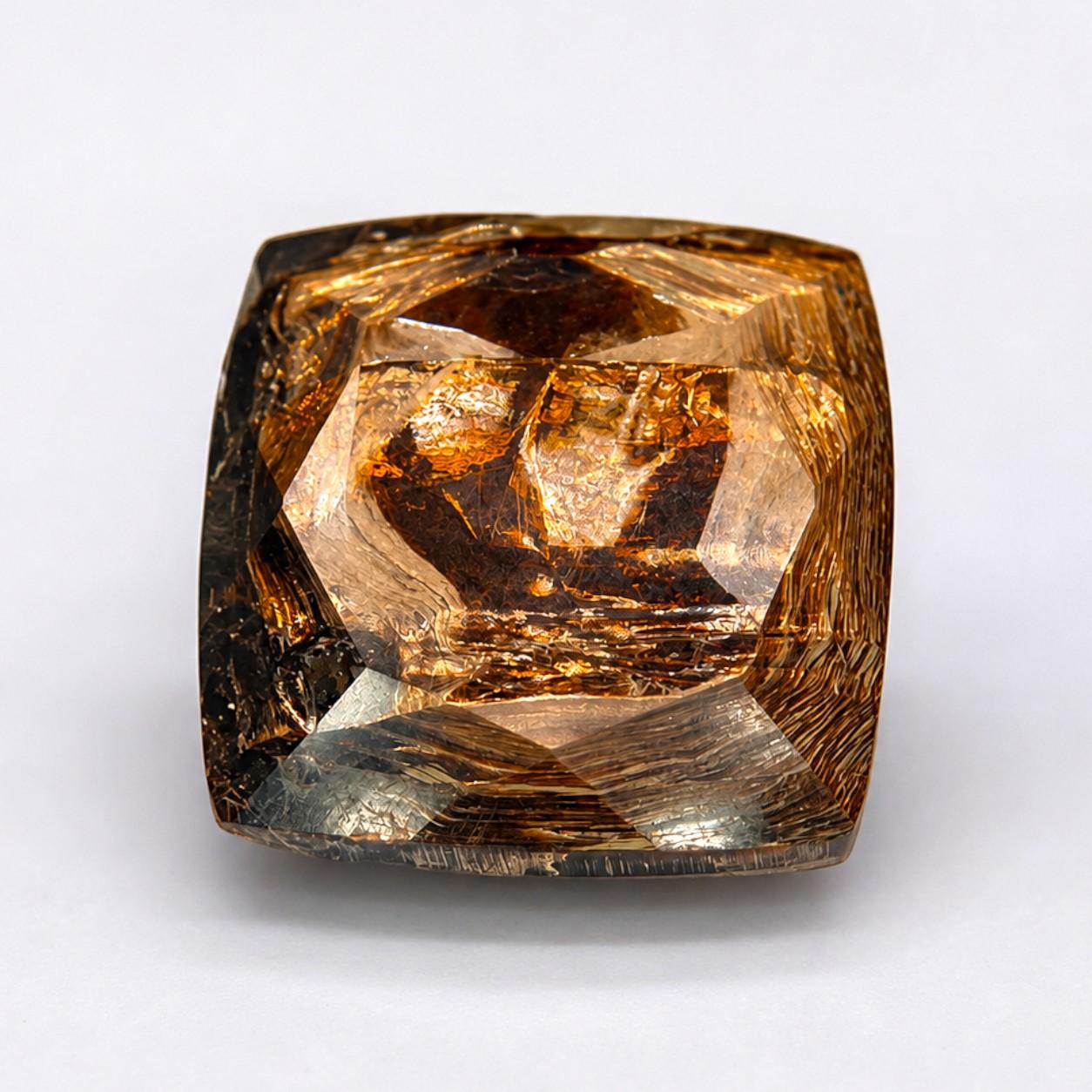
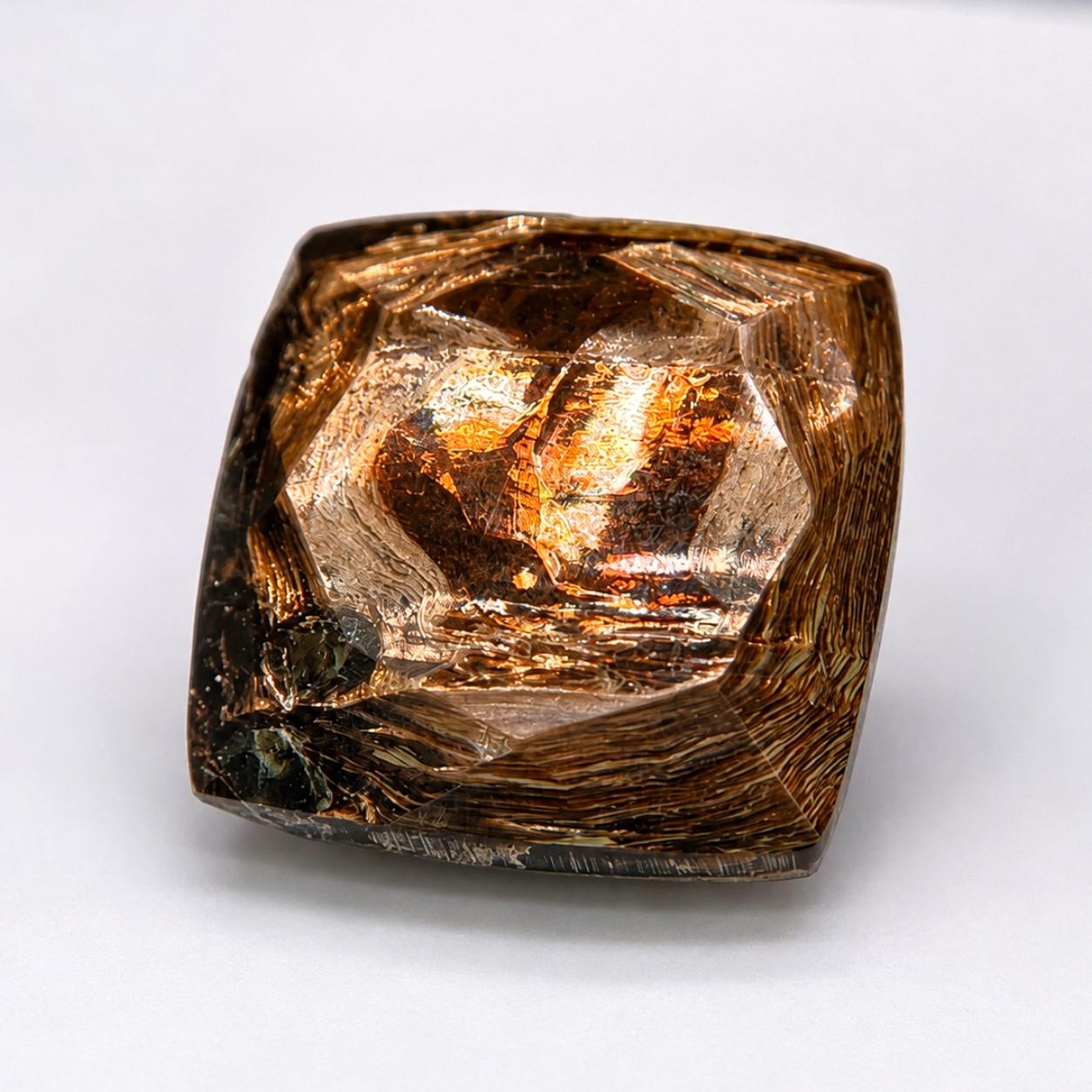
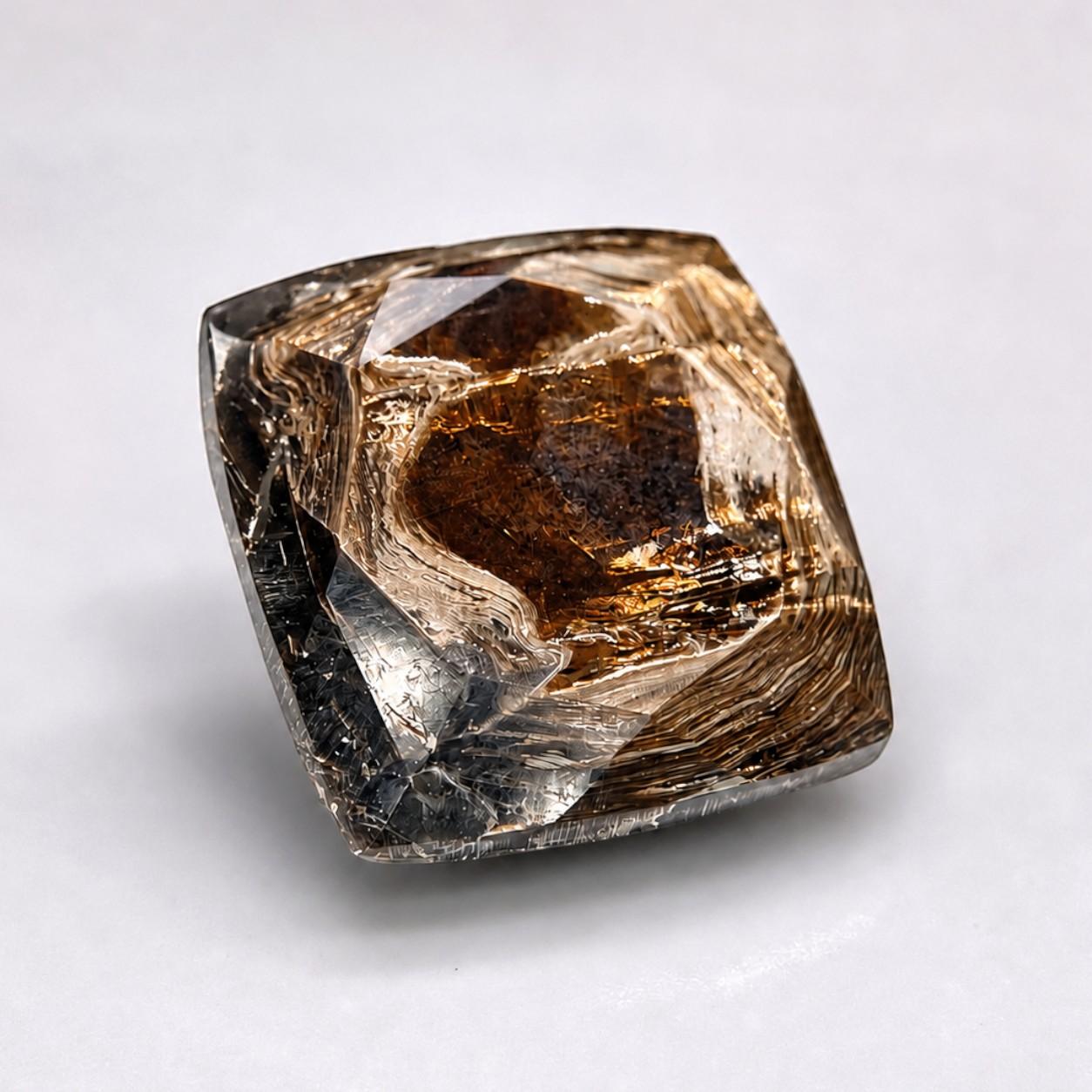
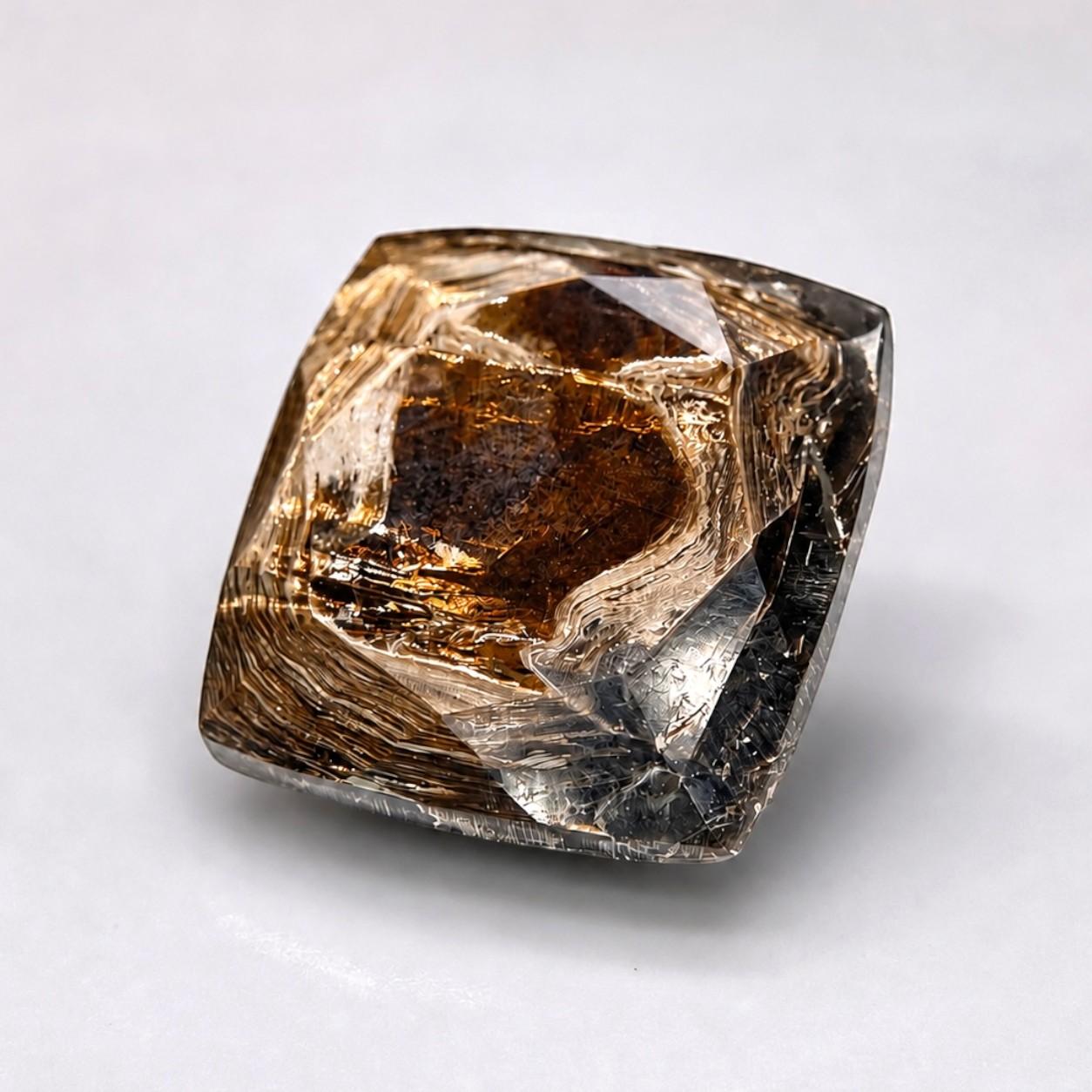
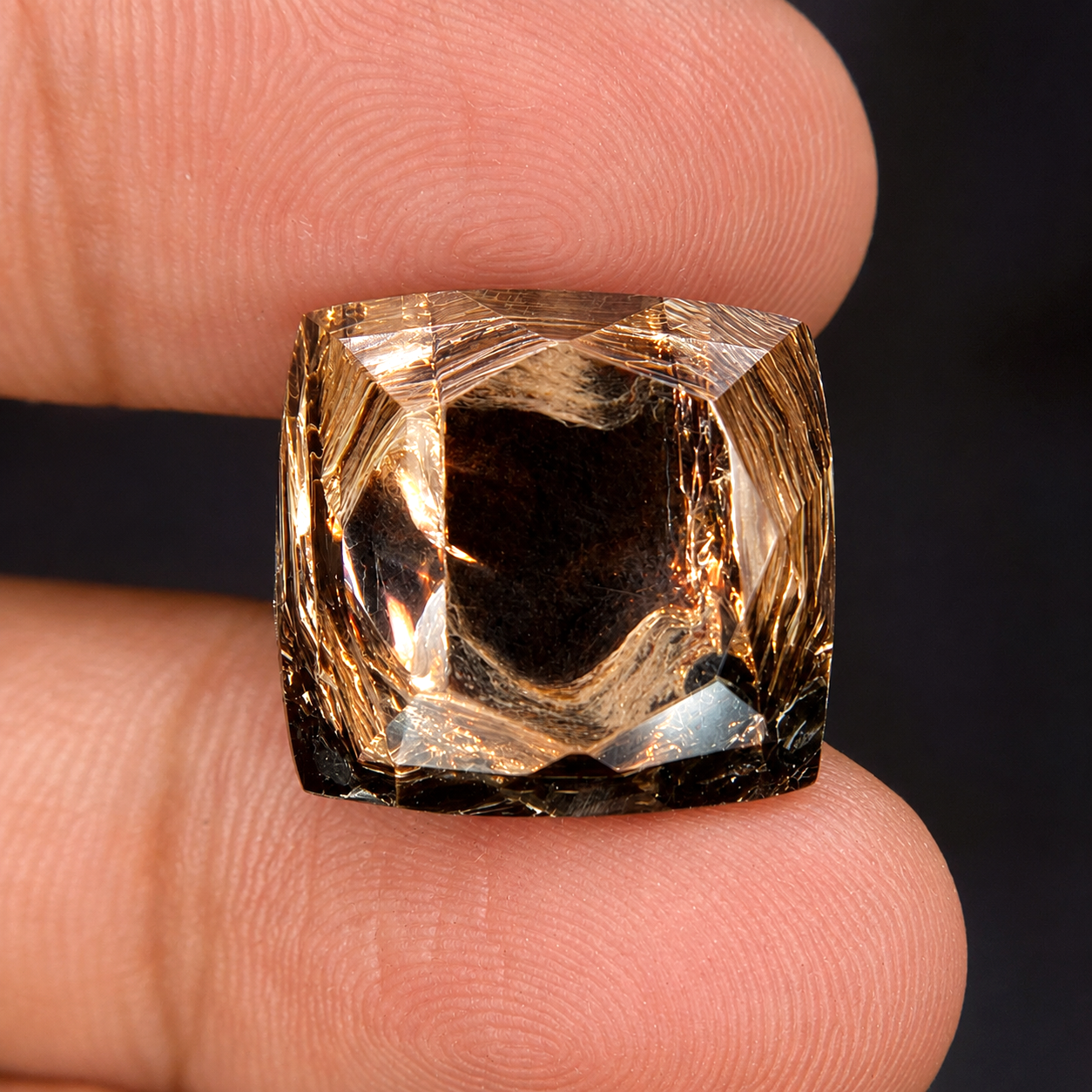
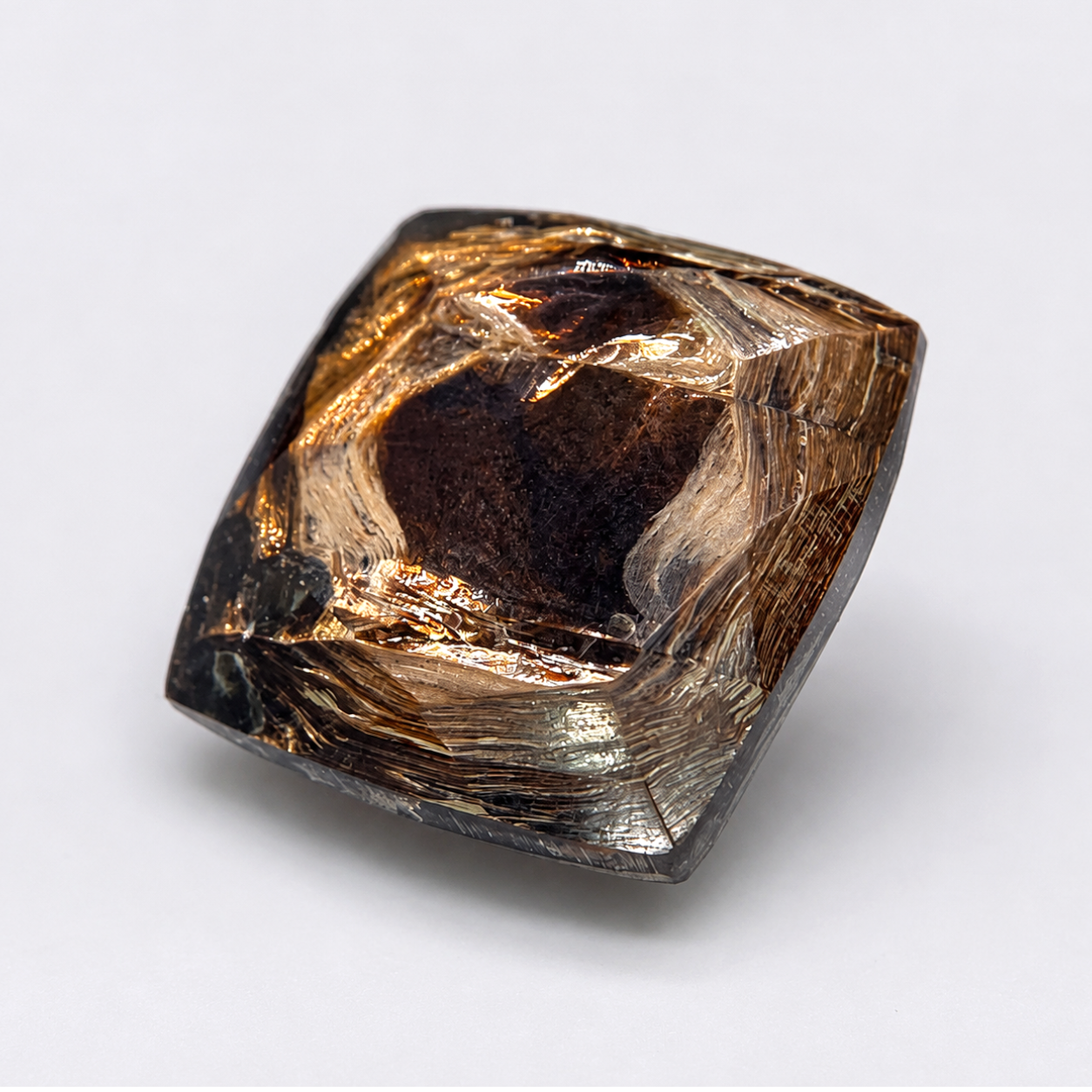
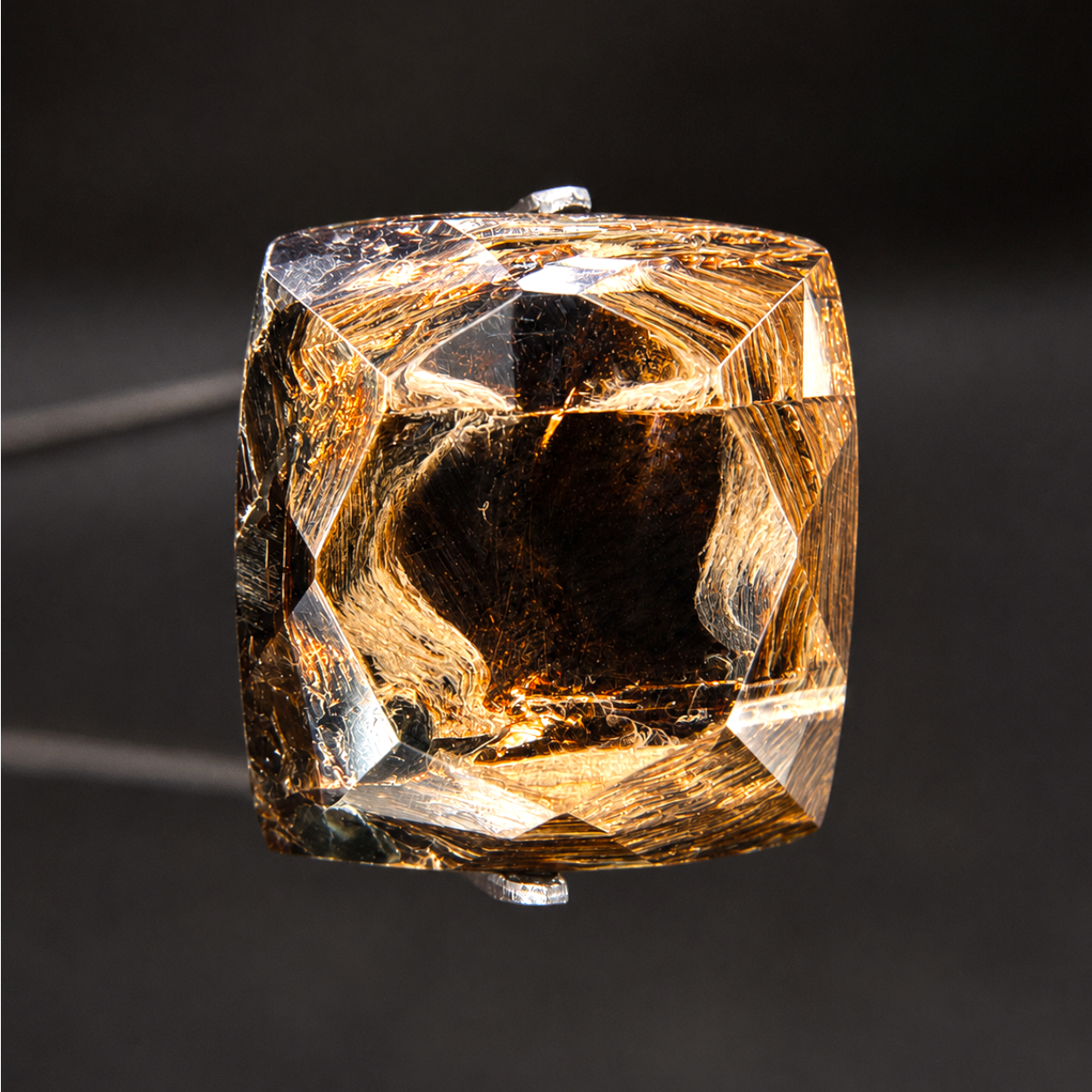
21.00 ct PHLOGOPITE – MYANMAR
EXPERT VERIFIED
- Expert Verified Gemstone
- Fast Handling & Shipping
- Secure Vault Packaging
$ 150
Offer amount Feild


Smart Collector Choice


Pay with Crypto & Get 10% Automatic Discount

Availability: 1 in stock


- Freakingcats Gemstone Database
Phlogopite
Phlogopite is a member of the Mica family, and whoever knows Mica knows it consists of nothing more than crispy, thin layers of material held together by almost nothing. I’ve always been fascinated by its “bronze” personality; unlike its cousin Muscovite, Phlogopite has a rich, metallic-looking brown to reddish-gold hue that can look like solidified honey or aged parchment. We did our best to give it some form of cut, which is a monumental task given that the layers want to peel apart at the slightest touch. A crazy and unusual collector’s gem, a faceted Phlogopite is a testament to what can be achieved when you treat a delicate, “book-like” mineral with the precision of a jeweler. It’s a stone that captures the golden warmth of the earth in a unique, shimmering structure.
The Heritage & Discovery
Historical Significance: Phlogopite is an essential rock-forming mineral, typically found in magnesium-rich environments like dolomitic marbles and ultramafic rocks. Historically, it has been prized for its incredible thermal and electrical insulation properties, much like other micas, but its distinct chemistry sets it apart. It represents a specific geological intersection where potassium, magnesium, and aluminum meet under metamorphic pressure. In the world of fine specimens, it is the “golden mica,” sought after for its large, well-defined “books” and its ability to show a beautiful, waxy luster that feels ancient and grounded.
Discovery: The mineral was named in 1841 by August Breithaupt. The name is derived from the Greek word phlogopos, meaning “fire-like” or “resembling flame,” a direct reference to the reddish-brown or yellowish tints that seem to glow when the stone catches the light. Its classification helped mineralogists distinguish the magnesium-rich end of the biotite series, providing a clearer map of how mica chemistry changes based on the surrounding rock.
Important Mines: Some of the most spectacular, large-scale Phlogopite crystals come from Slyudyanka near Lake Baikal in Russia and various localities in Madagascar. These regions are famous for producing massive “books” of mica that can be split into transparent sheets. I also have a deep appreciation for the material from the Kola Peninsula in Russia and the classic Canadian deposits in Ontario and Quebec. I look for the most “metallic” and least-included sections from Madagascar for our specialized cutting projects, as they offer the best structural integrity for a faceted result.
Mineralogical Profile
Description: Phlogopite is a magnesium-rich potassium aluminum silicate and a member of the mica group, crystallizing in the monoclinic system. It sits at a 2 to 3 on the Mohs scale, making it extremely soft and flexible. It is characterized by its sub-metallic, pearly, or vitreous luster and its perfect basal cleavage.
One of its most identifying traits is its “flexible” nature; thin sheets can be bent and will spring back to their original shape. Because of its sheet-like structure, it often forms in “books” where thousands of layers are stacked together. When we attempt to facet it, we have to fight against this perfect cleavage, but the result is a stone that exhibits a unique, directional shimmer known as “asterism” or “schiller” in certain lights. It is a light, delicate mineral that carries the golden, fiery hues of the Greek flame it was named after.
Chemical Formula: KMg3(AlSi3O10)(OH)2


