

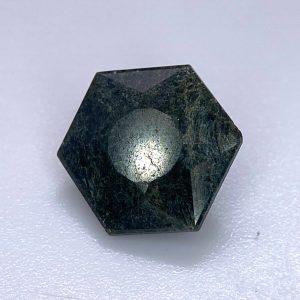
27.80 ct THENARDITE – USA
EXPERT VERIFIED
- Expert Verified Gemstone
- Fast Handling & Shipping
- Secure Vault Packaging
$ 590 Original price was: $ 590.$ 550Current price is: $ 550.
Offer amount Feild


Smart Collector Choice


Pay with Crypto & Get 10% Automatic Discount

Availability: 1 in stock
Gemstone Details
Gem Variety:
Thenardite
Origin:
USA
Carat Weight:
27.80
Length (mm):
19.4
Width (mm):
19.1
Depth (mm):
11.1
Shape:
Emerald
Color
White
Treatment:
No Treatment
Certificate:
On Request
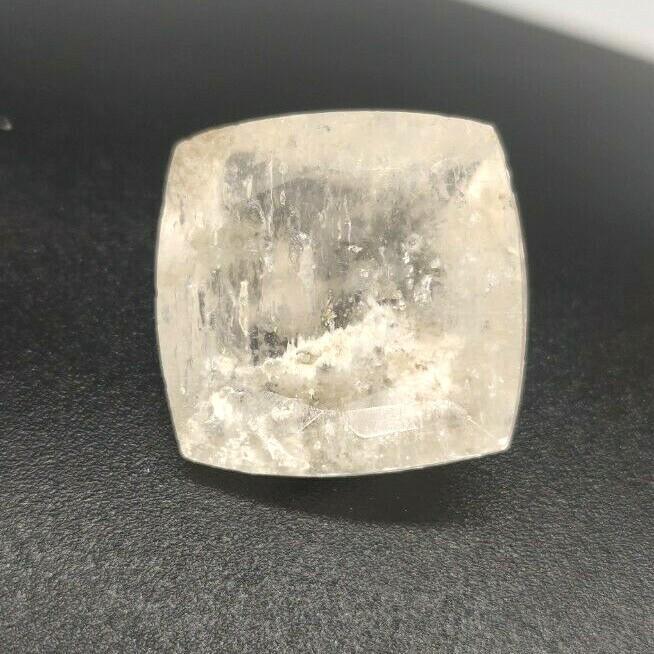
- Freakingcats Gemstone Database
Thenardite Thenardite is a gemstone that occupies a unique, almost ethereal niche in the mineral kingdom. An anhydrous sodium sulfate, it typically forms in the harsh, evaporating environments of salt lakes and arid "playas." I have always been fascinated by its clean, "ice-like" appearance; it often forms in sharp, orthorhombic crystals that are colorless or a ghostly, translucent white. In the trade, it is known for being a bit of a "phantom" mineral because it can easily hydrate into Mirabilite when exposed to moisture. To find a stable, well-formed crystal of Thenardite is a rare win for the collector. It is a stone of purity and evaporation, representing the final, crystalline remains of ancient, mineral-rich waters. While it is too soft for jewelry, its architectural crystal forms make it a sophisticated centerpiece for any specialist's vault. The Heritage & Discovery Historical Significance: Thenardite is a vital mineral for understanding the chemical cycles of evaporite deposits. Historically, it has been a significant source of sodium sulfate, used for centuries in the production of glass and detergents. Geologically, it represents the absolute end-point of water evaporation in alkaline environments. In the world of fine minerals, it is celebrated for its sharp "dipryamidal" crystals, standing as a favorite for those who appreciate the geometric perfection of sulfate species. It serves as a beautiful reminder of the hidden treasures that remain after the great desert lakes have long since vanished. Discovery: The mineral was first described in 1826 and was named in honor of the French chemist Louis Jacques Thénard (1777–1857). Thénard was a giant of 19th-century science, famous for discovering hydrogen peroxide and his work on boron. Naming this clean, sodium-rich mineral after him was a fitting tribute to his contributions to chemical analysis and the understanding of basic elements. Since its naming, it has remained the definitive anhydrous sodium sulfate for mineralogists globally. Important Mines: While found in saline lakes worldwide, some of the most spectacular crystals come from the Sears Lake in California, USA, and the Wadi El Natrun in Egypt. I also have a high regard for the material found in the Atacama Desert of Chile and the volcanic fumaroles of Mount Vesuvius in Italy. For the vault, I prioritize the Sears Lake specimens, as they often produce the largest, most "glassy" and well-defined dipyramidal crystals ever recorded. Mineralogical Profile Description: Thenardite is an anhydrous sodium sulfate that crystallizes in the orthorhombic system. It sits at a 2.5 to 3 on the Mohs scale, making it a very soft and delicate mineral that must be kept in a dry environment to prevent it from absorbing moisture. It is characterized by its vitreous luster and its colorless, white, or light grey-brown appearance. One of its most identifying traits is its solubility and taste—it has a faint, salty-bitter taste, though I never recommend tasting vault specimens. It features a distinct "salt-like" feel and can show a beautiful fluorescence under UV light in certain localities. It has a low refractive index ($n \approx 1.46$ to $1.48$), giving it an "ice-like" or "watery" brilliance. Because it is anhydrous, it is chemically unstable in high humidity, where it will slowly turn into Mirabilite. When I select a piece for the collection, I look for "fresh" crystals with sharp edges and no signs of white, powdery dehydration, ensuring that the stone's delicate, geometric soul is perfectly preserved. Chemical Formula: Na2SO4
Related products
- Sale!Suggest a Price
![2.52 ct AMAZONITE - USA]()
- Sale!Suggest a Price
![1.63 ct CATS EYE ALEXANDRITE - INDIA]()
- Sale!Suggest a Price
![5.85 ct AERINITE - SPAIN]()
- Sale!Suggest a Price
![3.90 ct AERINITE - SPAIN]()


