
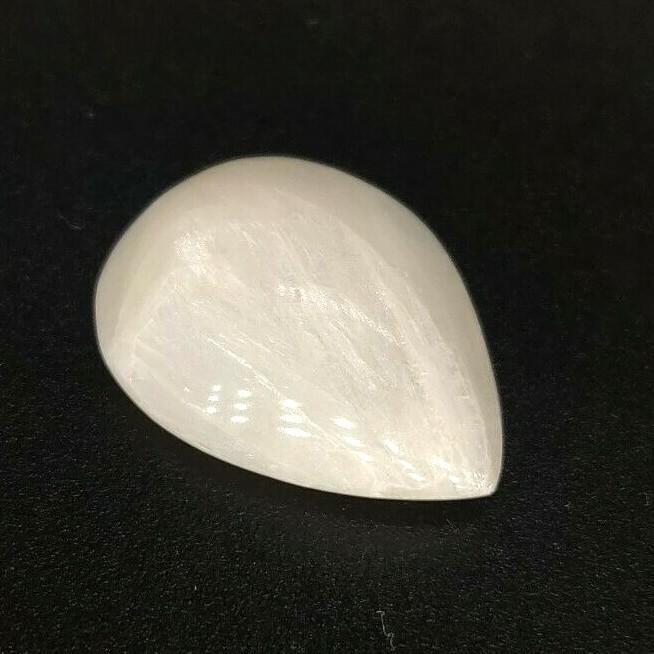
9.85 ct YUGAWARALITE – INDIA
EXPERT VERIFIED
- Expert Verified Gemstone
- Fast Handling & Shipping
- Secure Vault Packaging
$ 150
Offer amount Feild


Smart Collector Choice


Pay with Crypto & Get 10% Automatic Discount

Availability: 1 in stock
- Freakingcats Gemstone Database
Yugawaralite
Yugawaralite is a gemstone that represents the absolute “aristocracy” of the rare zeolites. A hydrated calcium aluminum silicate, it is a mineral I have always held in high regard for its sharp, “crystal-clear” geometry and its extreme rarity compared to its more common cousins like Stilbite or Heulandite. It typically presents as colorless to snow-white, forming beautiful, tabular monoclinic crystals that possess a vitreous luster. For the specialist, Yugawaralite is a prize of high-temperature hydrothermal precision; it forms in the deep, hot “veins” of geothermal areas. It is a stone of the “hidden” depths, offering a sophisticated, mirror-like transparency that makes it a true “connoisseur’s zeolite” for the systematic vault.
The Heritage & Discovery
Historical Significance: Yugawaralite is a vital species for understanding the thermal limits of the zeolite group. Historically, it was a major discovery in the mid-20th century, providing mineralogists with a rare example of a calcium-pure zeolite that remains stable at higher temperatures than most of its peers. In the world of fine minerals, it is celebrated for its tabular morphology and its tendency to form as “isolated” crystals on a matrix, rather than dense, chaotic crusts. It stands as a symbol of clarity and thermal resilience, bridging the gap between common volcanic minerals and the elite world of rare, high-symmetry collector gems. It serves as a reminder that even within the scalding heat of a geothermal vent, nature can crystallize structures of immense purity and calm.
Discovery: The mineral was first described in 1952 and was named after its type-locality: the Yugawara Hot Springs in Kanagawa Prefecture, Japan. Scientifically, it is a calcium aluminum silicate. Its discovery in the “baked” volcanic rocks of Japan provided mineralogists with the first clear look at this specific structural arrangement, helping to map the chemical diversity of the zeolite family. Since its formal identification, it has become a “must-have” for collectors of rare Japanese and Indian minerals.
Important Mines: While the type-locality in Japan is historic, the undisputed world capital for the largest and most aesthetic Yugawaralite crystals is the Khandivali Quarry in Mumbai, India. These Indian specimens set the global standard for size and transparency. I also have a high regard for the rare, sharp crystals found in the Hvalfjörður region of Iceland. For the vault, I prioritize the Indian material for its unmatched “water-clear” transparency and the Japanese specimens for their historical pedigree and cultural significance.
Mineralogical Profile
Description: Yugawaralite is a hydrated calcium aluminum silicate that crystallizes in the monoclinic system. It sits at a 4.5 to 5 on the Mohs scale, making it a relatively soft mineral that requires careful handling to preserve its high-gloss faces. It is characterized by its vitreous luster and its absolute lack of color in its purest state.
One of its most identifying traits is its tabular habit—it often forms as thin, “book-like” plates or sharp, four-sided prisms. It has a low refractive index ($n \approx 1.49$ to $1.50$), which contributes to its “icy,” low-relief appearance and its remarkable clarity. Because it is a zeolite, its structure contains “cages” and “channels” that can host water molecules. When I select a piece for the collection, I look for “razor-sharp” edges and a “liquid-clear” interior, as these highlight the sophisticated, three-dimensional geometry that makes Yugawaralite a standout for the systematic specialist. It is a light, high-vibration mineral that offers a unique, “liquid” beauty unlike any other zeolite species.
Chemical Formula: CaAl2Si6O16·4H2O


