

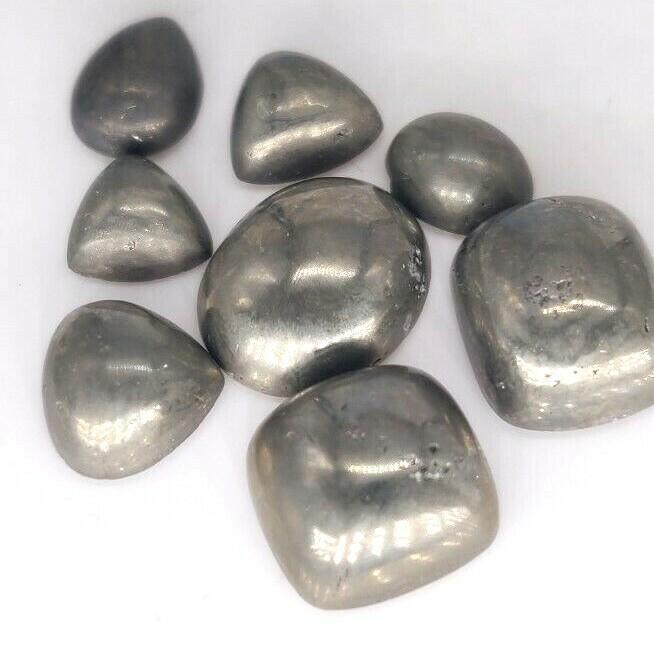
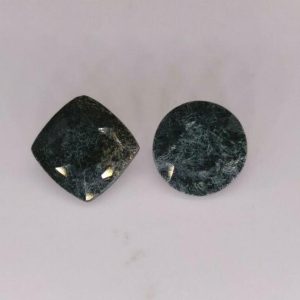
LOT 8 pc 40 ct PYRITE – SPAIN
EXPERT VERIFIED
- Expert Verified Gemstone
- Fast Handling & Shipping
- Secure Vault Packaging
$ 180 Original price was: $ 180.$ 108Current price is: $ 108.
Offer amount Feild


Smart Collector Choice


Pay with Crypto & Get 10% Automatic Discount

Availability: 1 in stock
- Freakingcats Gemstone Database
Pyrite
Pyrite is a gemstone that represents the perfect marriage of metallic strength and geometric precision. Known popularly as “Fool’s Gold”—or, as I have heard it affectionately called, “Cat’s Gold”—it is a mineral I have always respected for its “stubborn” brilliance. It typically forms as brassy-yellow, high-luster crystals, often achieving a level of natural perfection in its cubic and pyritohedral shapes that seems almost artificial. While it is abundant in nature, faceting Pyrite is an entirely new level of craftsmanship. For the specialist, a faceted Pyrite is a study in “liquid metal” optics; it moves from being a common sulfide to a sophisticated, mirror-like gem that commands attention through its weight and its sharp, golden reflections. It is a mineral of the fire, representing the Earth’s ability to forge gold-like beauty from iron and sulfur.
The Heritage & Discovery
Historical Significance: Pyrite has been a companion to human civilization since we first learned to strike fire; its name is derived from the Greek pyr (fire), because it produces sparks when struck against steel or flint. Historically, it was used by the Incas and Aztecs as polished mirrors and was a popular “marcasite” jewelry staple in the Victorian era. In the world of fine minerals, it represents the absolute peak of isometric symmetry. It stands as a symbol of vitality and willpower, bridging the gap between raw industrial sulfur ore and the elite world of “metallic” collector gems. It serves as a reminder that true value is often found in the structure and luster of a stone, not just its rarity.
+1
Discovery: Pyrite is found in nearly every geological environment, from sedimentary coal beds to high-temperature hydrothermal veins. Scientifically, it is an iron disulfide. Its discovery as a distinct species helped early mineralogists define the “Pyrite Group” and understand the cubic crystal system. While its brassy color led many a prospector to mistake it for gold, its brittle nature and dark streak quickly reveal its true identity. For me, the real discovery lies in the perfectly formed cubes from Spain, which remain one of nature’s most baffling and beautiful geometric achievements.
Important Mines: The undisputed world capital for the “perfect” Pyrite cube is Navajún in La Rioja, Spain. These specimens are legendary for their razor-sharp edges and mirror-like faces. I also have a high regard for the spectacular, high-luster pyritohedrons from the Huanzala Mine in Peru and the historic “Sun” pyrites from Illinois, USA. For the vault, I prioritize the Spanish cubes for their unmatched geometry and the Peruvian material for its incredible size and “wet-look” metallic luster.
Mineralogical Profile
Description: Pyrite is an iron disulfide that crystallizes in the isometric (cubic) system. It sits at a 6 to 6.5 on the Mohs scale, making it quite durable, though its metallic nature makes it sensitive to heat and moisture (which can cause “pyrite disease” in lesser specimens). It is characterized by its brilliant metallic luster and its pale brass-yellow color.
One of its most identifying traits is its conchoidal to uneven fracture and its high density ($SG \approx 5.0$). When faceted, Pyrite presents a unique challenge to the lapidary; its metallic structure requires a specific polishing technique to avoid “scratching” the mirror-like surfaces. The result is a gemstone with a metallic-adamantine brilliance that reflects nearly 100% of the light hitting its surface. Unlike transparent gems that rely on internal refraction, faceted Pyrite relies on surface reflectivity, creating a “shield of gold” effect. When I select a faceted piece for the collection, I look for “razor-sharp” facet junctions and a surface free of pits, as these represent the species in its most elite and sophisticated form.
Chemical Formula: FeS2
Related products
- Sale!Suggest a Price
![0.40 ct ANTHRACITE - USA]()
- Sale!Suggest a Price
![LOT 6.90 ct AFGHANITE - UV Colorchange]()
LOT 6.90 ct AFGHANITE – UV Colorchange
$ 240Original price was: $ 240.$ 144Current price is: $ 144. - Sale!Suggest a Price
![0.31 ct ADAMITE - MEXICO]()
- Sale!Suggest a Price
![6.80 ct 2 pc AERINITE - SPAIN]()


