
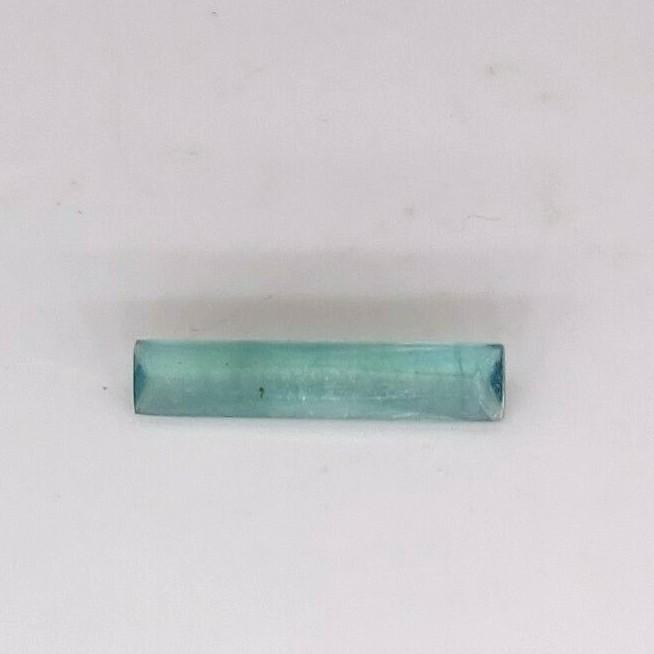
0.15 ct GRANDIDIERITE – BOLIVIA
EXPERT VERIFIED
- Expert Verified Gemstone
- Fast Handling & Shipping
- Secure Vault Packaging
$ 150
Offer amount Feild


Smart Collector Choice


Pay with Crypto & Get 10% Automatic Discount

Out of stock
- Freakingcats Gemstone Database
Grandidierite
It’s easy to get caught up in the “top ten rarest” lists you see online, but anyone who has spent time with this mineral knows the real story. For over a century, Grandidierite was practically a ghost. However, the massive 2014 discovery in southern Madagascar changed everything. While it’s still an incredible find, the market is now quite saturated with translucent, “seafoam” material. The real challenge—the thing that still gets me excited—is finding those rare, truly transparent crystals that survived the geological chaos.
The Heritage & Discovery
Historical Significance: Grandidierite doesn’t have the ancient myths of rubies or emeralds because, frankly, it was too hard to find. In the modern era, it has become a fascination for those of us who appreciate the outliers of the mineral kingdom. It represents a bridge between extreme rarity and the sudden shifts that occur when a new vein is finally unearthed.
Discovery: It was first identified in 1902 by Alfred Lacroix at Cap Andrahomana, Madagascar. He named it after the explorer Alfred Grandidier. For the next hundred years, it was mostly a laboratory curiosity rather than something you could actually hold in your hand.
Important Mines: The cliffs of Cap Andrahomana are the historical heart, but the Tranomaro deposit is what actually brought the stone to the world. While you might hear of occurrences in Sri Lanka or Norway, Madagascar remains the only place producing the characteristic neon-teal material that defines the species.
Mineralogical Profile
Description: This is a complex magnesium-aluminum borosilicate. What really sets it apart is its trichroism. If you take a high-quality stone and rotate it under a Loupe, you’ll see it shift through three distinct colors: a piercing blue-green, a ghostly colorless (or pale yellow), and a deep, forest green. It sits at a 7.5 on the Mohs scale, making it quite durable, but it has a “brittle” personality due to its cleavage. That signature “alien” teal comes from trace amounts of iron substituting for magnesium in the crystal lattice.
Chemical Formula: (Mg,Fe2+)Al3(BO3)(SiO4)O2


