
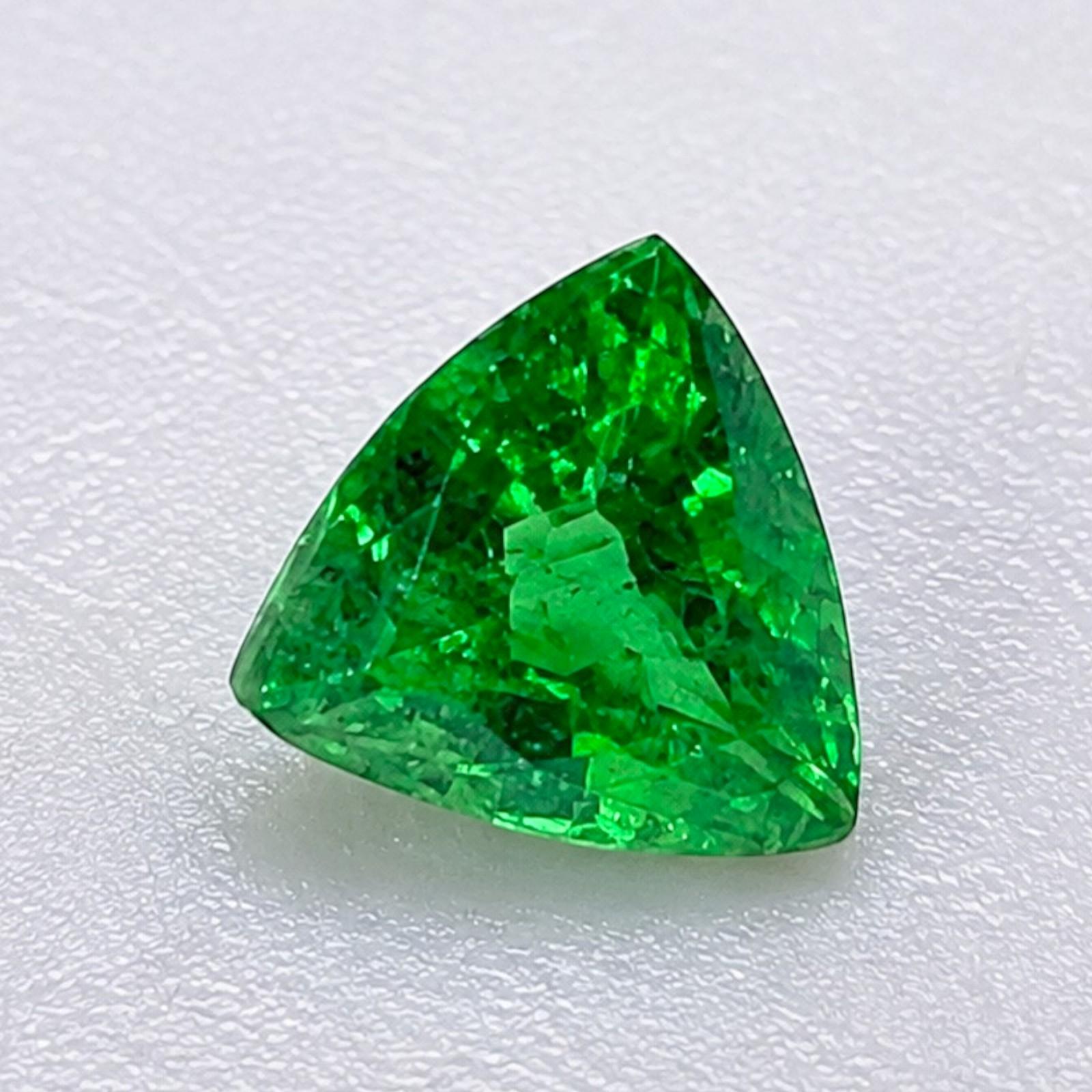
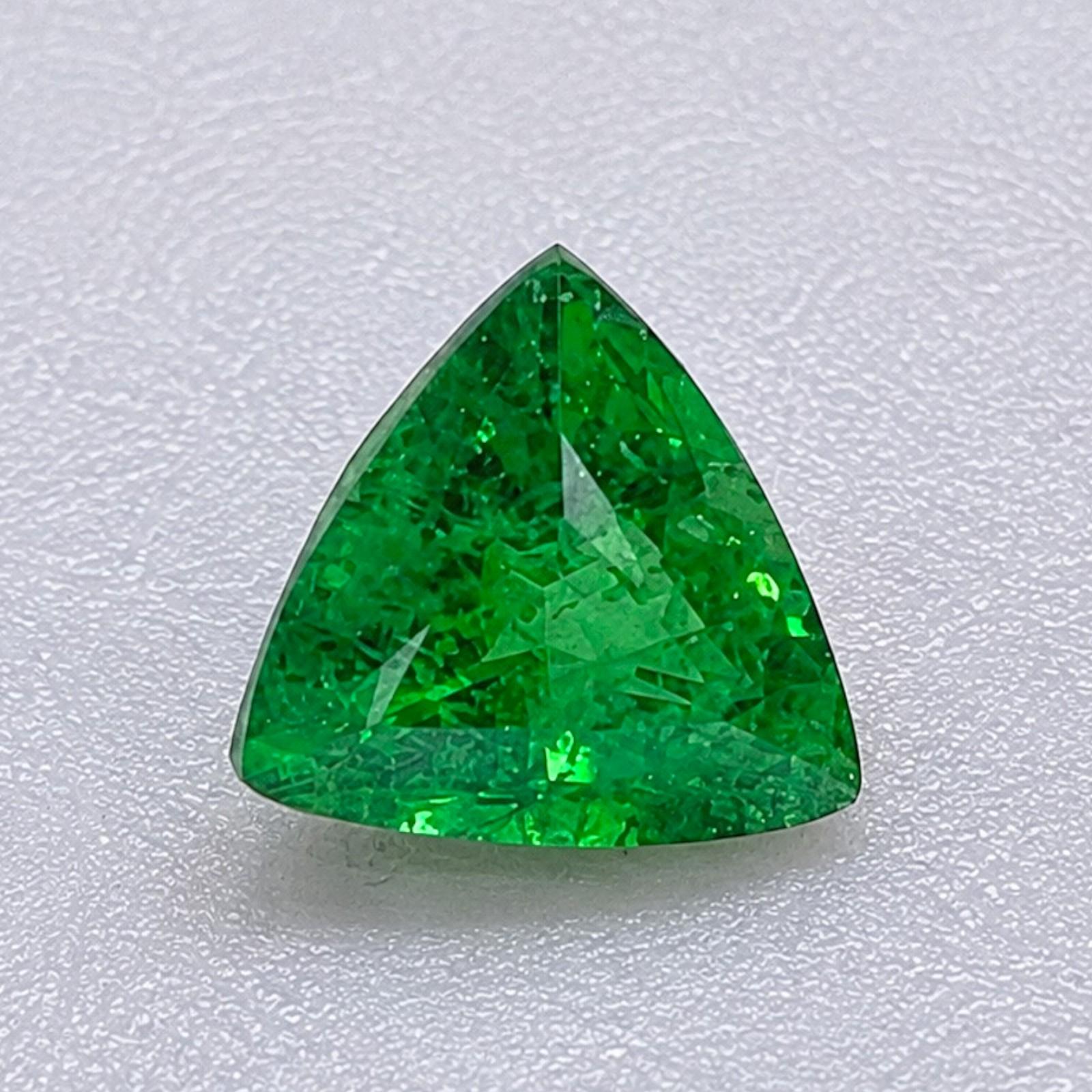
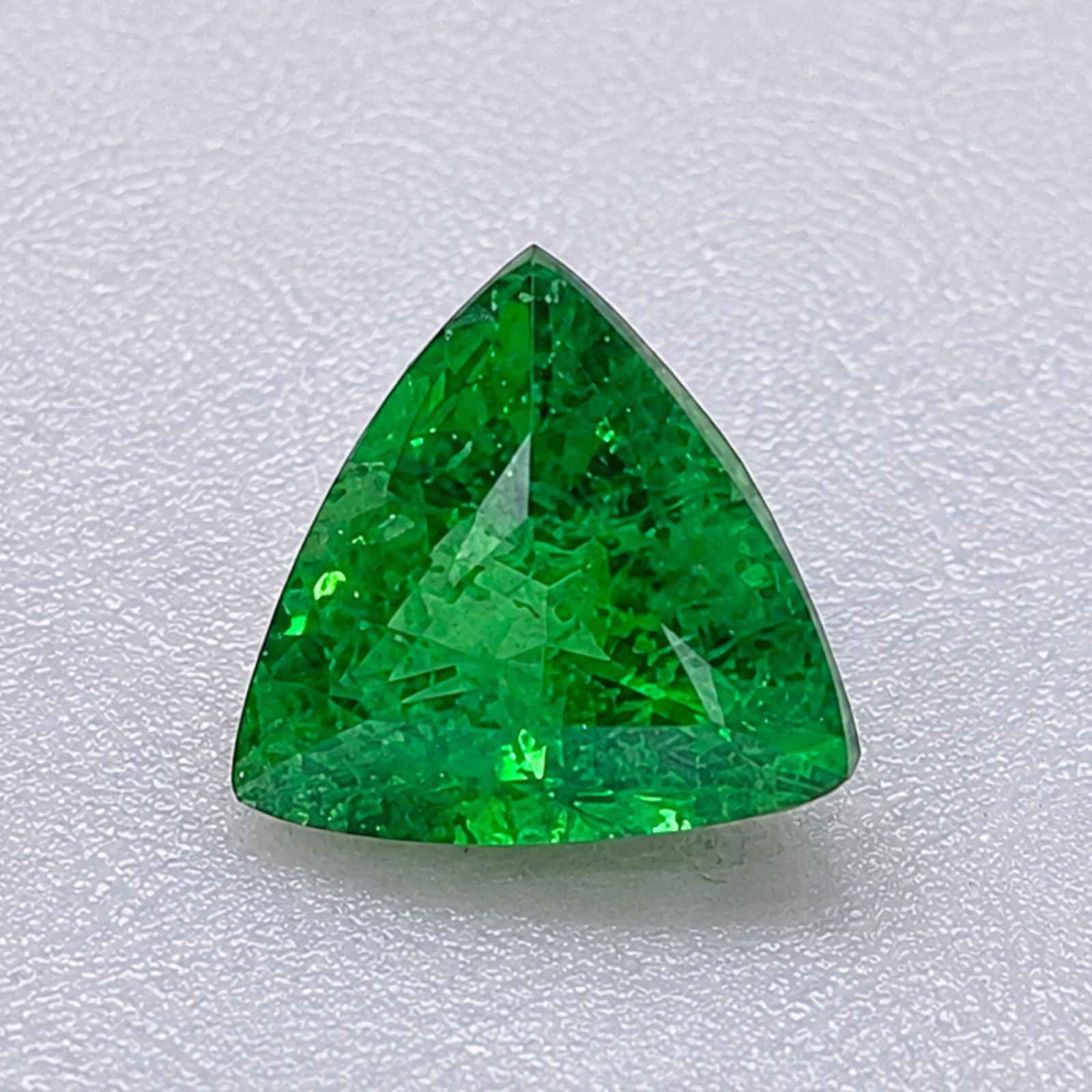
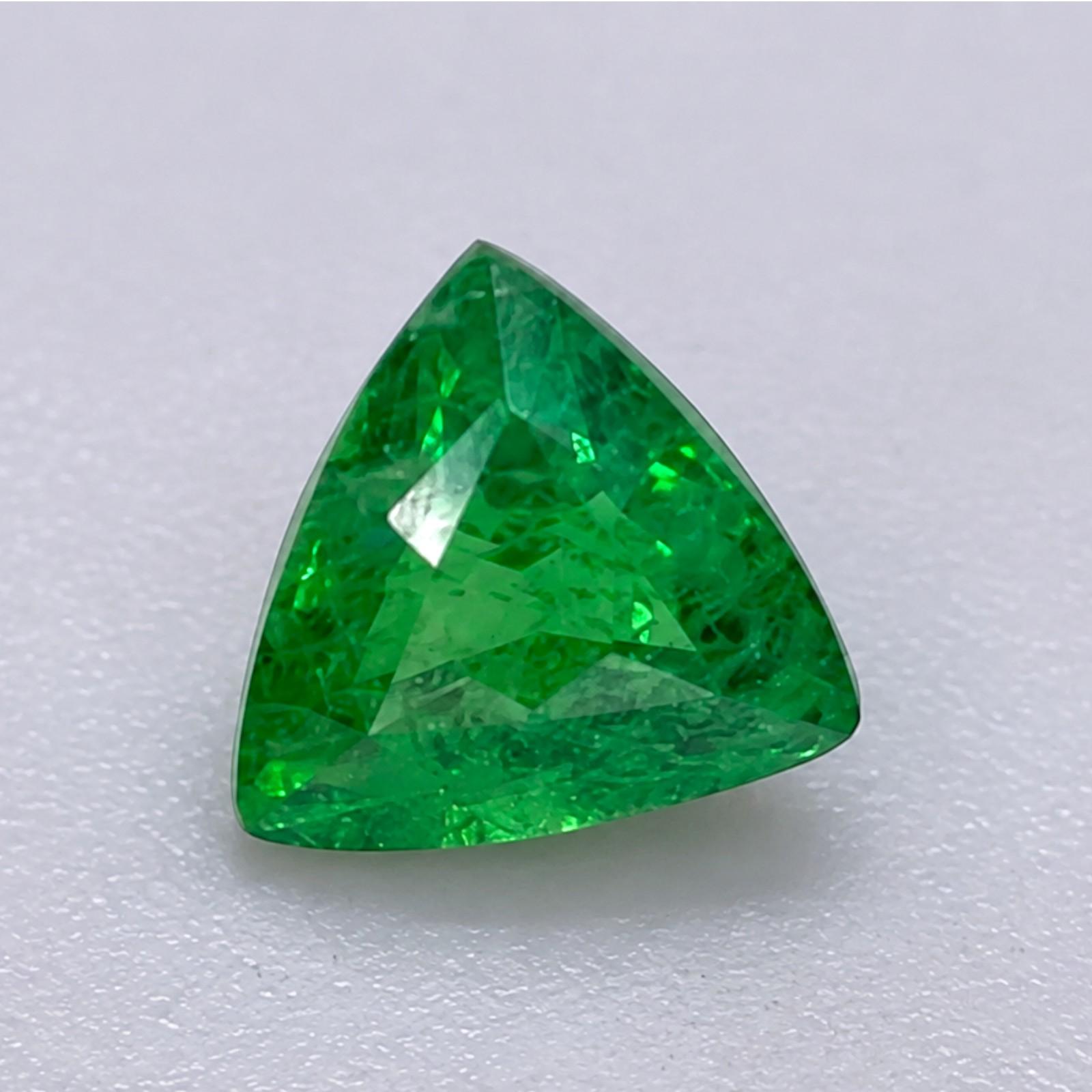
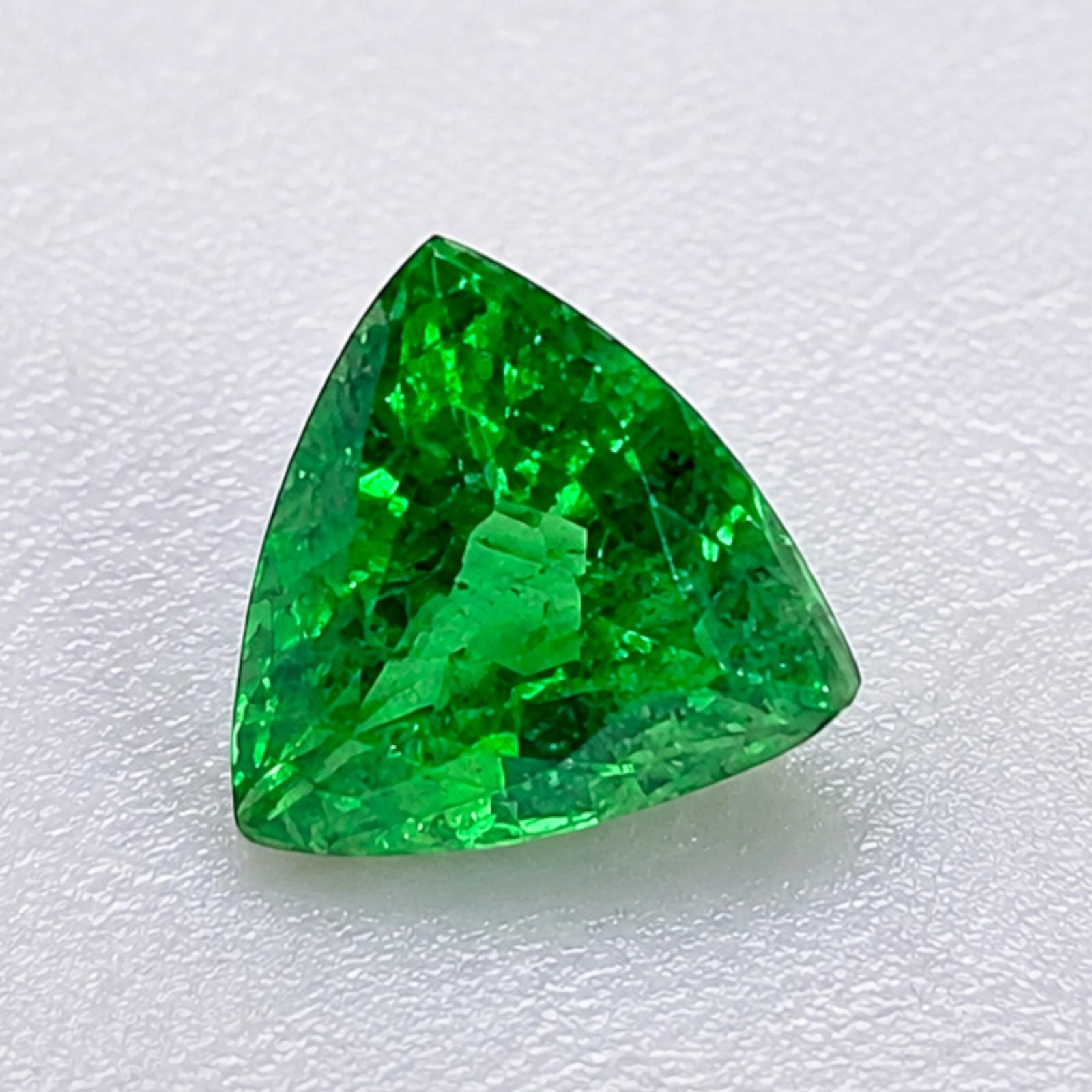
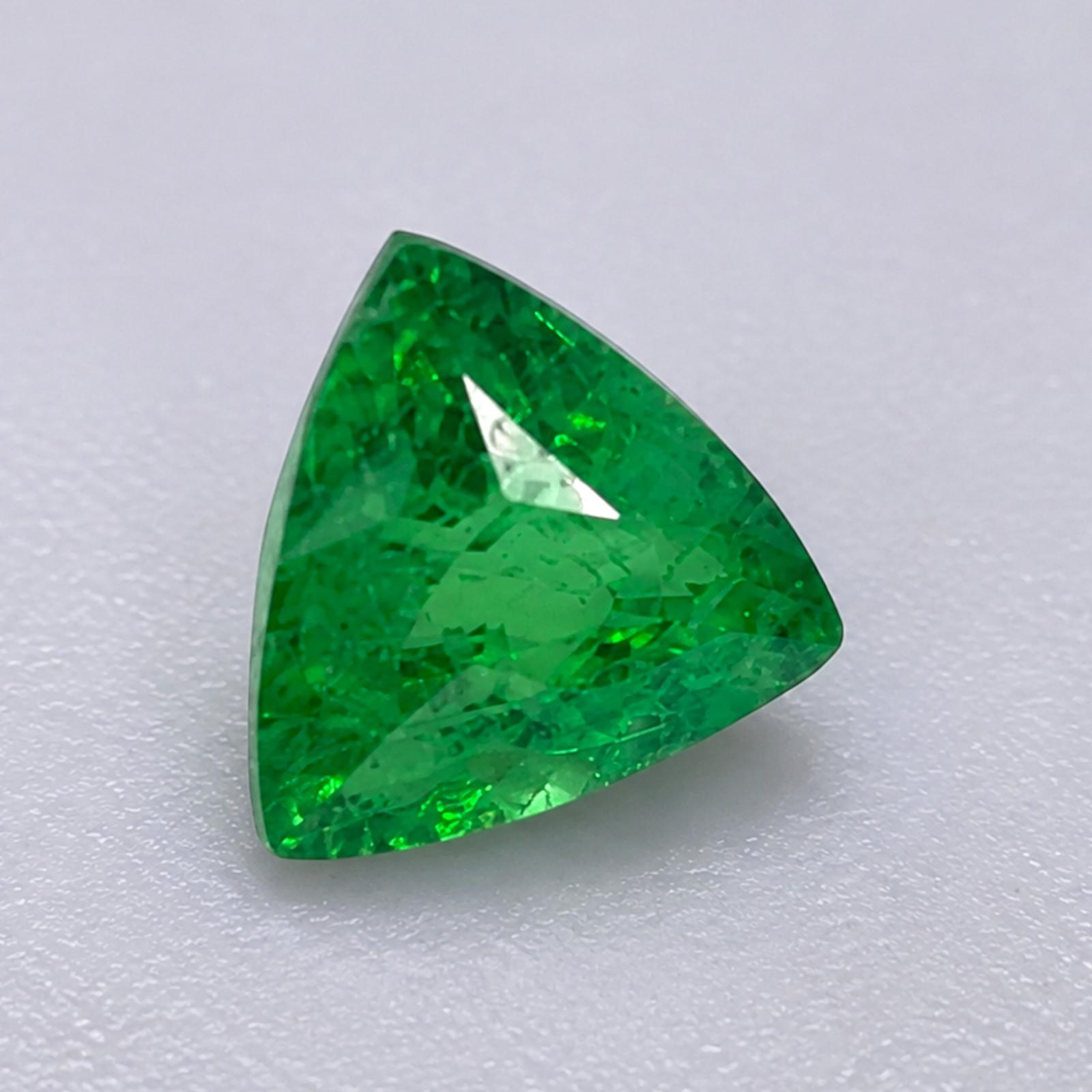
0.45 ct TSAVORITE GARNET – KENYA
EXPERT VERIFIED
- Expert Verified Gemstone
- Fast Handling & Shipping
- Secure Vault Packaging
$ 120
Offer amount Feild


Smart Collector Choice


Pay with Crypto & Get 10% Automatic Discount

Availability: 1 in stock


- Freakingcats Gemstone Database
Tsavorite Garnet (Kenya)
Tsavorite Garnet from the rugged bushland of East Africa represents the “vanadium-chromium-emerald-green” peak of the garnet world. A rare calcic-aluminum variety of the Grossular species, it is a gemstone I have always respected for its “electric-forest-green” to “vivid-mint-neon” saturation and its status as a masterpiece of “isometric” structural discipline. For the specialist, a top-tier Kenyan Tsavorite is a prize of extreme metamorphic focus; it offers a high-vitreous to sub-adamantine luster and a “luminous” presence that makes it a true “high-vibration” asset for the systematic vault. As an artist, I find the “aqueous-neon” depth and the “spectral” brilliance of these crystals to be one of nature’s most sophisticated and “vibrant” palettes.
The Heritage & Discovery
Historical Significance Tsavorite is a vital species for understanding the mineralogy of high-grade metamorphic rocks and the mobilization of transition metals under extreme crustal pressure. Historically, it was named in 1974 by Tiffany & Co. after the Tsavo National Park in Kenya, following its discovery by legendary British geologist Campbell Bridges. In the world of fine minerals, it is celebrated for its natural, “vanadium-neon” pigment, which stands as a symbol of growth and structural focus. It serves as a reminder that the intense tectonic folding of the Mozambique Belt can produce extraordinary optical results when calcium and aluminum are doped with the perfect trace ratios of vanadium and chromium.
Discovery While initially tracked across the border in Tanzania, the “gem-grade” discoveries in Kenya during the early 1970s redefined the mineralogical benchmark for the species’ transparency and color intensity. Scientifically, it is a vanadian/chromian grossular garnet. Its discovery in the Taita-Taveta district provided mineralogists with the first clear look at the species’ potential for “water-clear,” facet-grade nodes that exhibit a brilliant, rich green that does not require heat treatment or oiling. My own respect for this material grew from observing its “chromatic” depth; specifically, the way its high refractive index handles daylight—often projecting a “sharp” internal fire that easily rivals the finest Emeralds—is a visual impact that is unmistakable to the trained eye.
Important Mines The undisputed world capital for the finest “aesthetic” Tsavorite Garnet in Kenya is the Scorpion Mine (Bridges’ original find) and the surrounding operations in the Mgama-Mwatate Hills, located within the Taita-Taveta District, Kenya. These specimens set the global benchmark for color purity and “sharp” crystalline nodules, often found trapped within a contrasting white calcite matrix or graphitic schists. I also have a high regard for the spectacular finds from the Kuranze area near the Tanzanian border. For the vault, I prioritize the Kenyan material for its unmatched “poison-green” saturation and its status as a rare-location masterpiece of East African gemstone history.
Mineralogical Profile
Description Tsavorite is a calcium aluminum silicate that crystallizes in the isometric system. It sits at a 7 to 7.5 on the Mohs scale, making it a highly durable mineral that maintains its “razor-sharp” edges and high-vitreous surfaces for eons without the fragility inherent to other green gemstones. It is characterized by its vitreous to sub-adamantine luster and its unmistakable, “emerald-green to rich-yellowish-green” color palette.
One of its most identifying traits is its lack of cleavage, breaking with a conchoidal fracture, and its close association with highly deformed metamorphic host rocks. It possesses a high refractive index running from approximately 1.74 to 1.75, which explains its immense internal brilliance and high dispersion. Because it forms in specialized graphitic schists and marble silicates, it is often found in association with Quartz, Calcite, and Pyrite. When I select a piece for the collection, I look for “pure” transparency and the rarest “electric-green” saturation, as these highlight the sophisticated, three-dimensional geometry of the mineral’s growth. It is a dense, high-vibration mineral that offers a unique, “aqueous-neon” beauty unlike any other garnet variety.
Chemical Formula Ca3Al2(SiO4)3 (with trace V3+ and Cr3+)


