
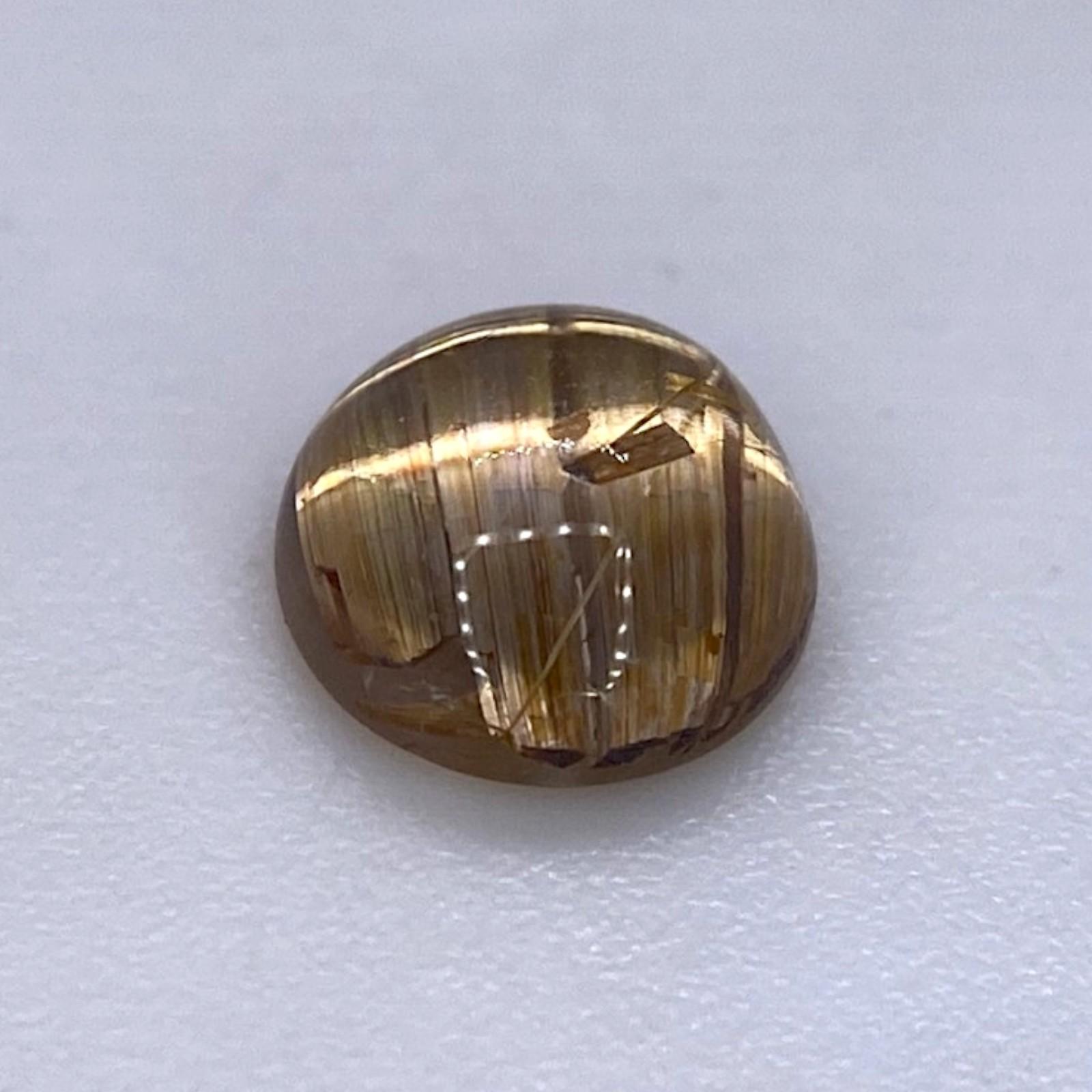
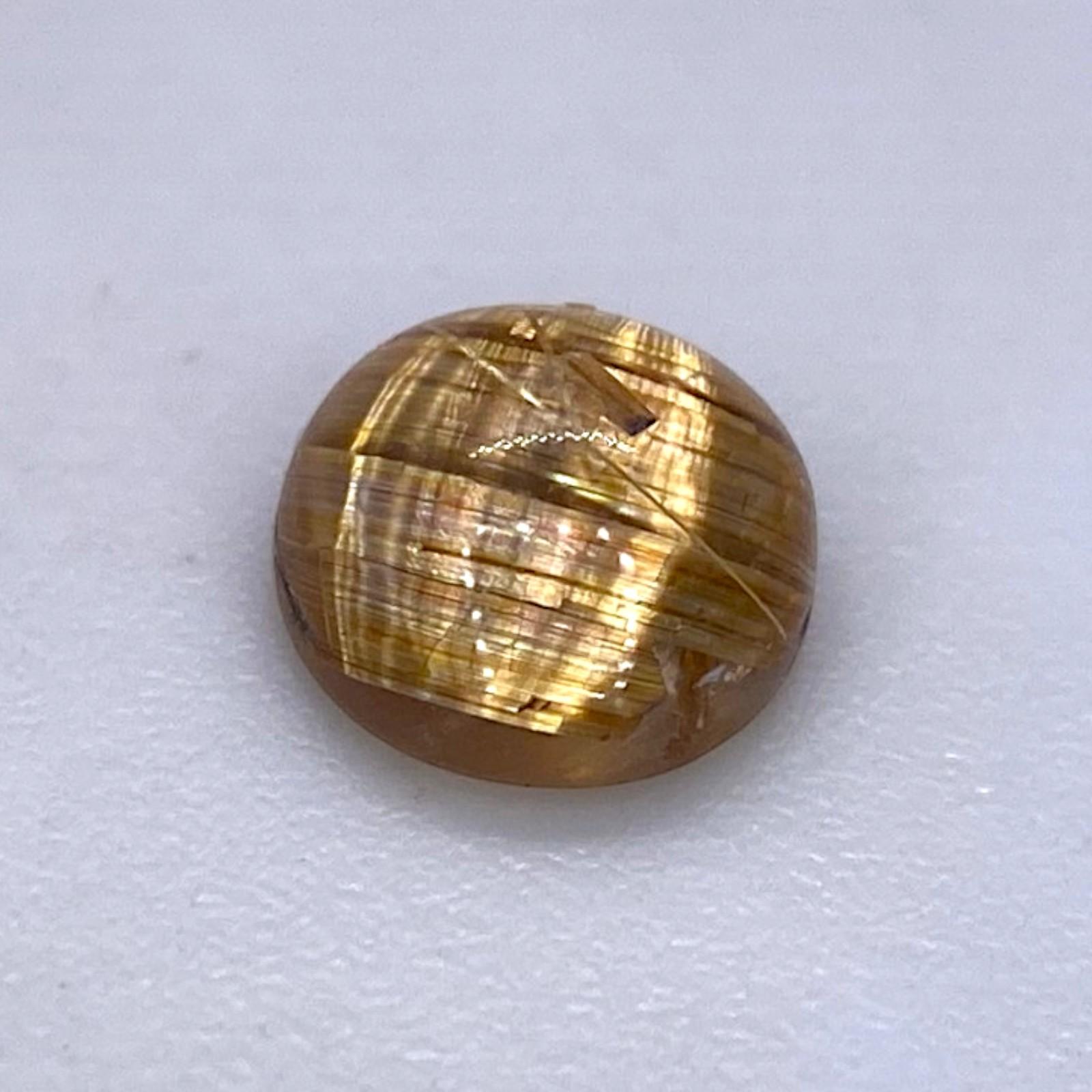
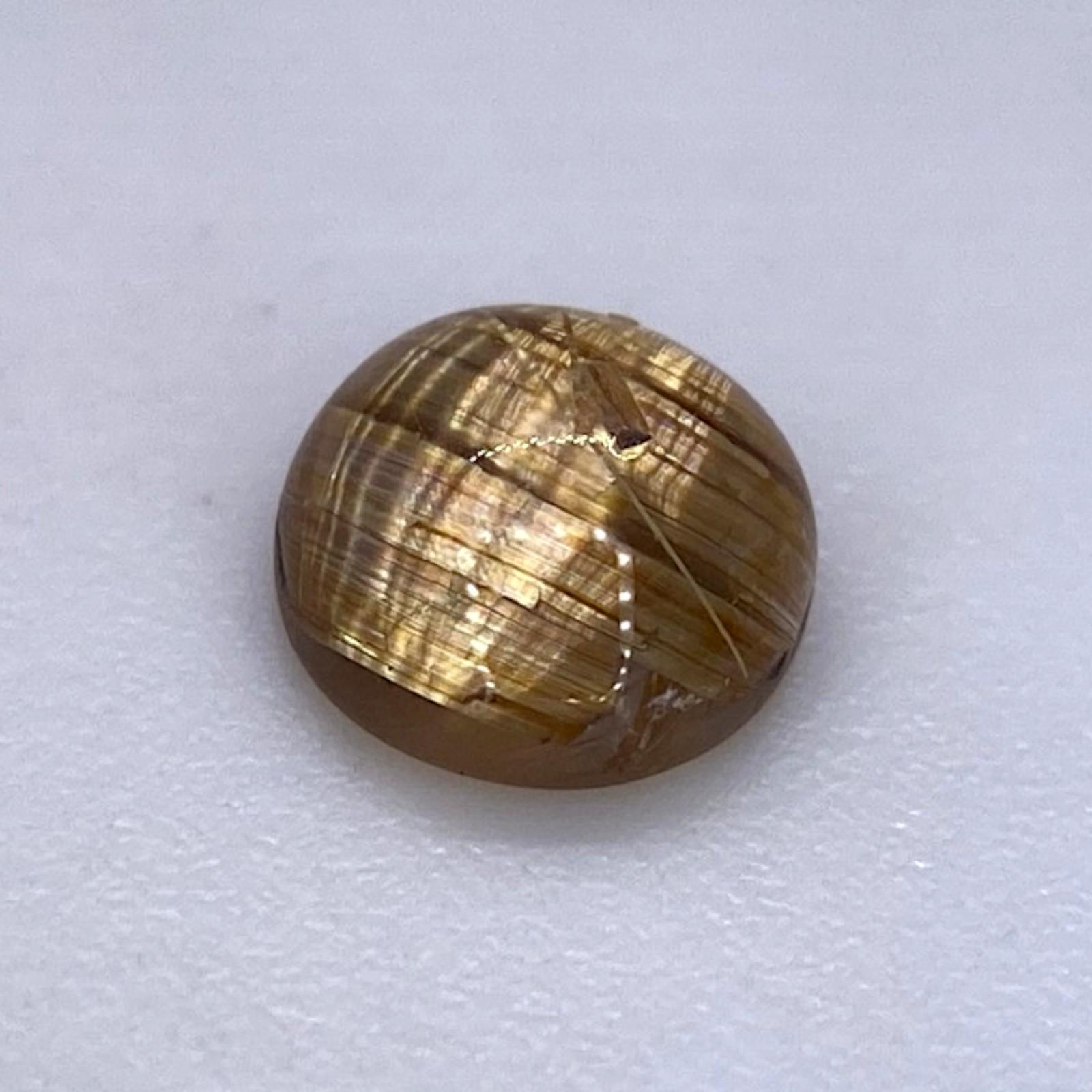
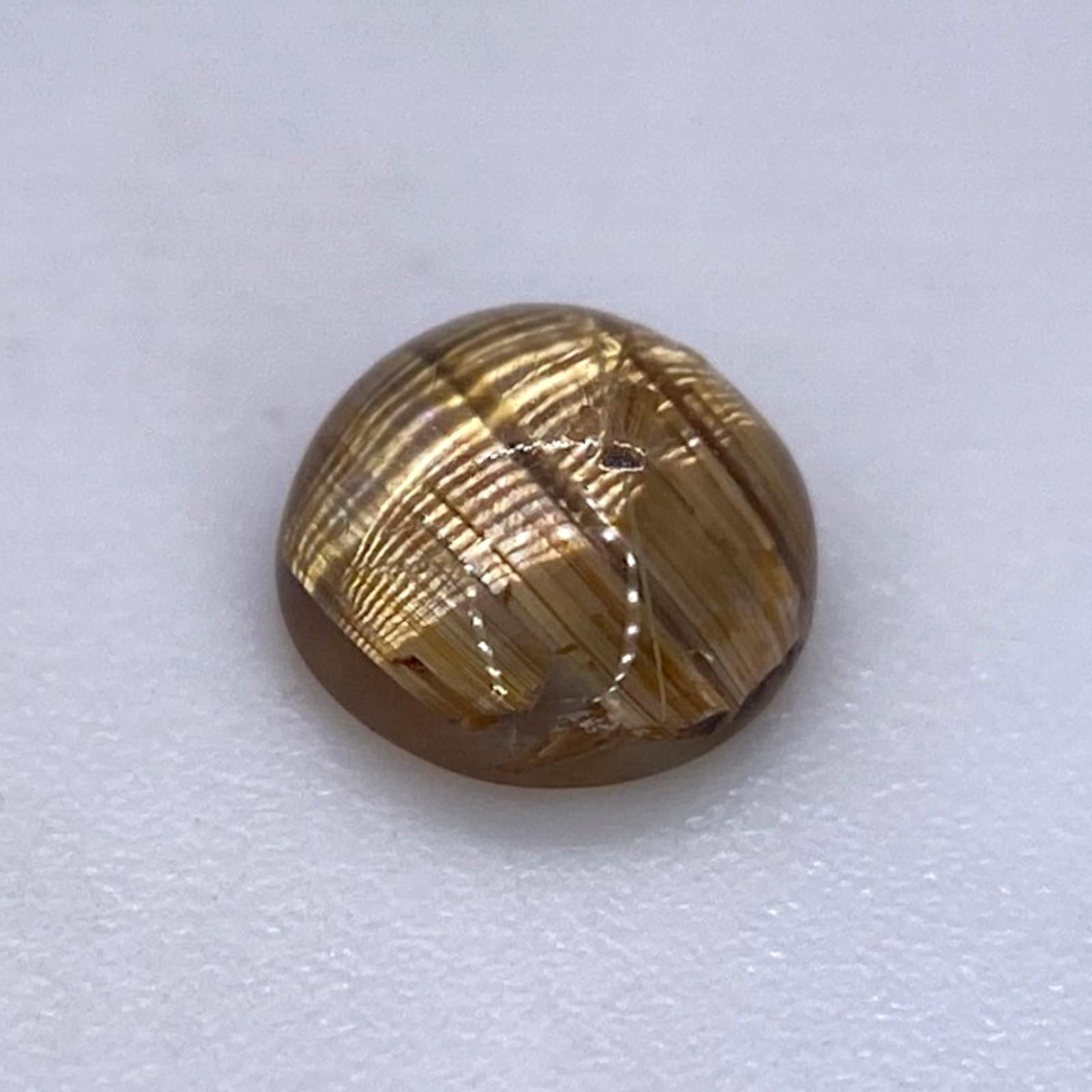
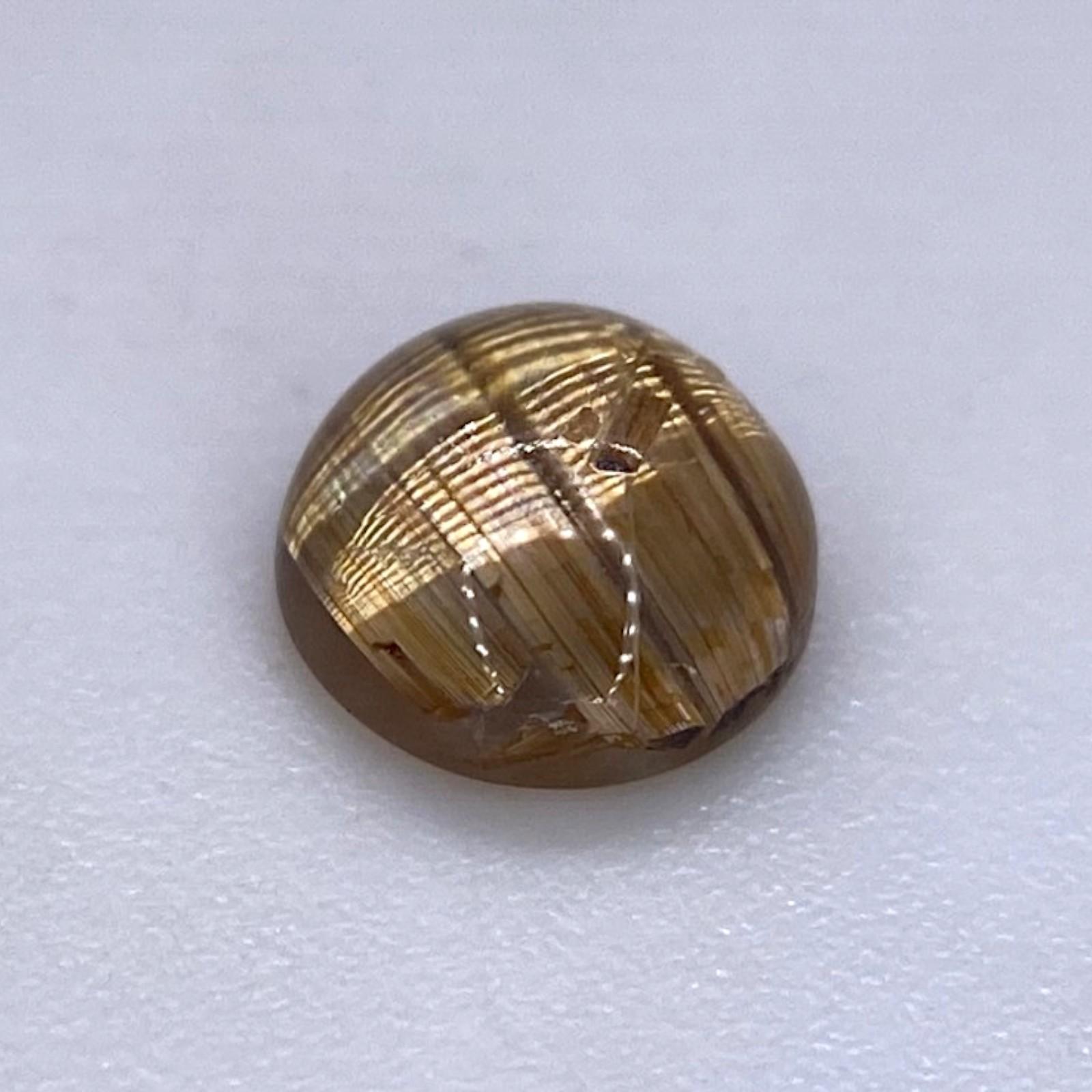
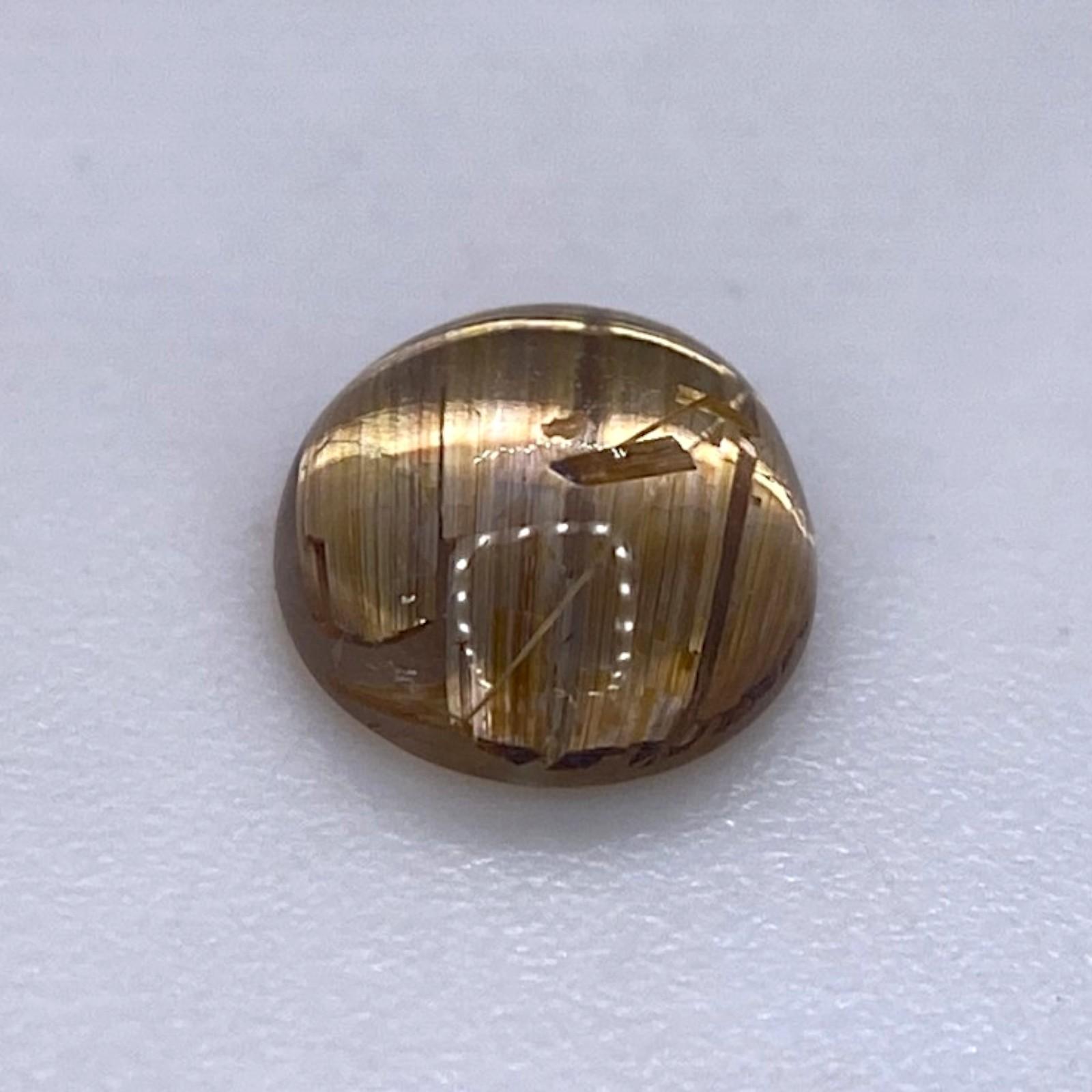
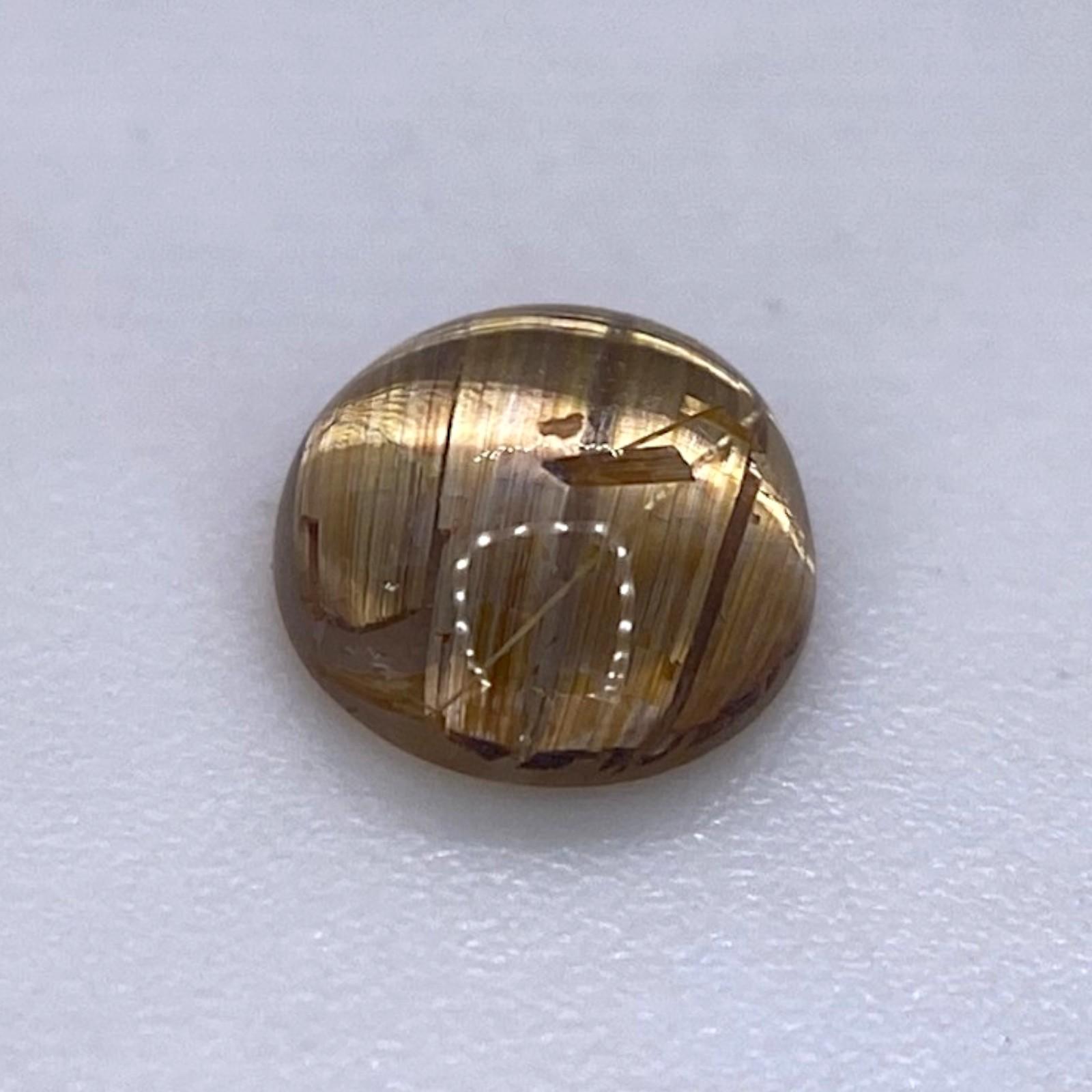
0.84 ct RUTILE CATS EYE – BRAZIL
EXPERT VERIFIED
- Expert Verified Gemstone
- Fast Handling & Shipping
- Secure Vault Packaging
$ 90
Offer amount Feild


Smart Collector Choice


Pay with Crypto & Get 10% Automatic Discount

Availability: 1 in stock


- Freakingcats Gemstone Database
Rutile Cat’s Eye
Sorry, terrible picture which doesnt show the Cats eye properly.
Rutile Cat’s Eye represents the “titanium-oxide-reflective” peak of the oxide world. A titanium dioxide mineral exhibiting sharp chatoyancy, it is a species I have always respected for its “metallic-bronze” to “honey-golden” saturation and its status as a masterpiece of “parallel-alignment” structural discipline. While Rutile is most famous as an inclusion within quartz, pure, macrocrystalline gem-grade Rutile that is thick enough to be cut into a chatoyant cabochon is an extraordinary rarity. For the specialist, a top-tier Rutile Cat’s Eye is a prize of extreme metallic crystal evolution; it offers a sub-metallic to high-adamantine luster and a “radiant” presence that makes it a true “high-vibration” asset for the systematic vault. As an artist, I find the contrast between the deep, reflective body color and the “razor-sharp,” silver-golden “eye” moving across the dome to be one of nature’s most sophisticated and “hypnotic” palettes.
The Heritage & Discovery
Historical Significance Rutile is a vital species for understanding the mineralogy of high-pressure, high-temperature metamorphic rocks and pegmatites. Historically, it was named in 1803 by Abraham Gottlob Werner from the Latin rutilus (red), in reference to the deep red color observed in some transmitted-light specimens. In the world of fine minerals, a chatoyant Rutile elevates a standard oxide to a natural, “optical-phenomenon” brilliance, which stands as a symbol of alignment and structural integrity. It serves as a reminder that when titanium dioxide fibers align with flawless parallelism along a specific crystallographic axis, they can turn a dense, opaque mineral into a dynamic, light-channeling masterpiece.
Discovery While microcrystalline rutile silk is responsible for the cat’s eye effect in many other gemstones (like Chrysoberyl or Quartz), independent crystals of Rutile that exhibit their own intrinsic chatoyancy are exceptionally scarce. Scientifically, it is a polymorph of titanium dioxide. Discoveries of facet- and cabochon-grade crystals in Sri Lanka, Brazil, and the Mogok region of Myanmar redefined the mineralogical benchmark for the species’ optical potential. My own respect for this material grew from observing its “reflective” depth; specifically, the way its extraordinarily high refractive index cooperates with the internal needle-like twins to project a “sharp,” unbroken line of light across the gemstone’s surface—a visual impact that is unmistakable to the trained eye.
Important Locations The undisputed world capitals for the finest “aesthetic” chatoyant Rutile specimens are the historic gem gravels of the Ratnapura District, Sri Lanka and the specialized metamorphic fields of Minas Gerais, Brazil. These specimens set the global benchmark for color purity, adamantine polish, and “sharp” line definition. I also have a high regard for the rare, classic finds from Mogok, Myanmar. For the vault, I prioritize the Sri Lankan material for its unmatched “honey-metallic” depth and its status as a rare-phenomenon masterpiece of elemental oxide mineralogy.
Mineralogical Profile
Description Rutile is a titanium dioxide that crystallizes in the tetragonal system. It sits at a 6 to 6.5 on the Mohs scale, making it a durable mineral, though its distinct cleavage means it must be fashioned with expert lapidary care to avoid fracturing the stone. It is characterized by its exceptionally high, sub-metallic to adamantine luster and its unmistakable, “reddish-brown, bronze, to black” color palette.
The defining trait of a Rutile Cat’s Eye is its intense chatoyancy, caused by light reflecting off densely packed, parallel oriented microscopic tubes or acicular twin channels within the crystal lattice. It possesses one of the highest refractive indices in the entire mineral kingdom, running from approximately 2.62 to 2.90, vastly exceeding even that of diamond, which gives the gemstone an unparalleled, almost metallic brilliance. It has a high specific gravity (SG approx 4.2 to 4.3) reflecting its dense titanium structure. Because it forms in high-grade metamorphic environments, it is often found in association with Quartz, Hematite, and Ilmenite. When I select a piece for the collection, I look for a perfectly centered, “razor-sharp” eye that opens and closes seamlessly under a single light source, highlighting the sophisticated, three-dimensional geometry of the mineral’s growth. It is a dense, high-vibration mineral that offers a unique, “aqueous-metallic” beauty unlike any other oxide variety.
Chemical Formula TiO2


