
1.13 ct XENOTIME – PAKISTAN – CERTIFIED
EXPERT VERIFIED
- Expert Verified Gemstone
- Fast Handling & Shipping
- Secure Vault Packaging
$ 1,295
Offer amount Feild


Smart Collector Choice


Pay with Crypto & Get 10% Automatic Discount

Availability: 1 in stock
Gemstone Details
Gem Variety:
Xenotime
Origin:
Pakistan
Carat Weight:
1.13
Length (mm):
8.01
Width (mm):
3.82
Depth (mm):
2.90
Shape:
Octagon
Color
Orange
Treatment:
No Treatment
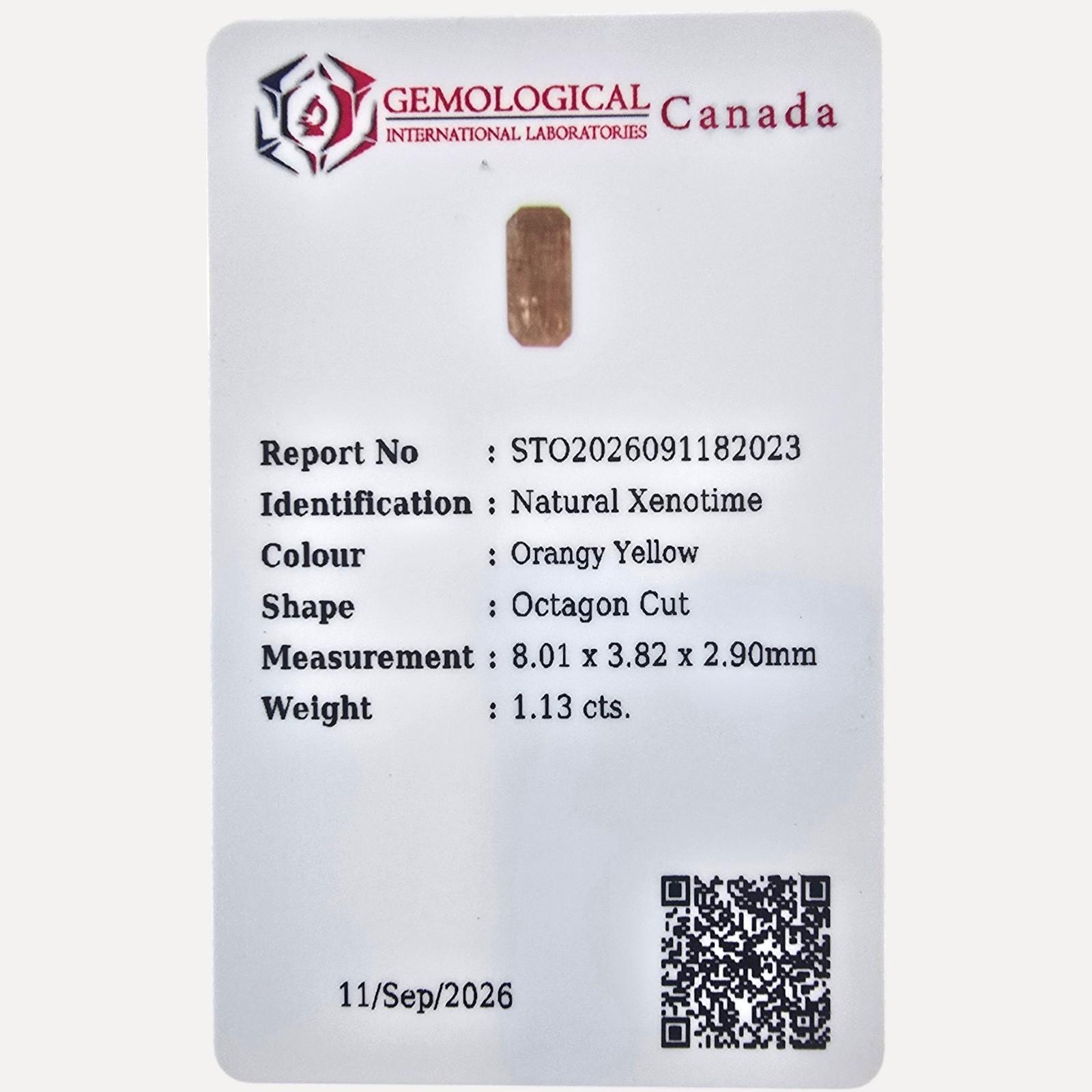
Certificate:
GIL Lab Bangkok
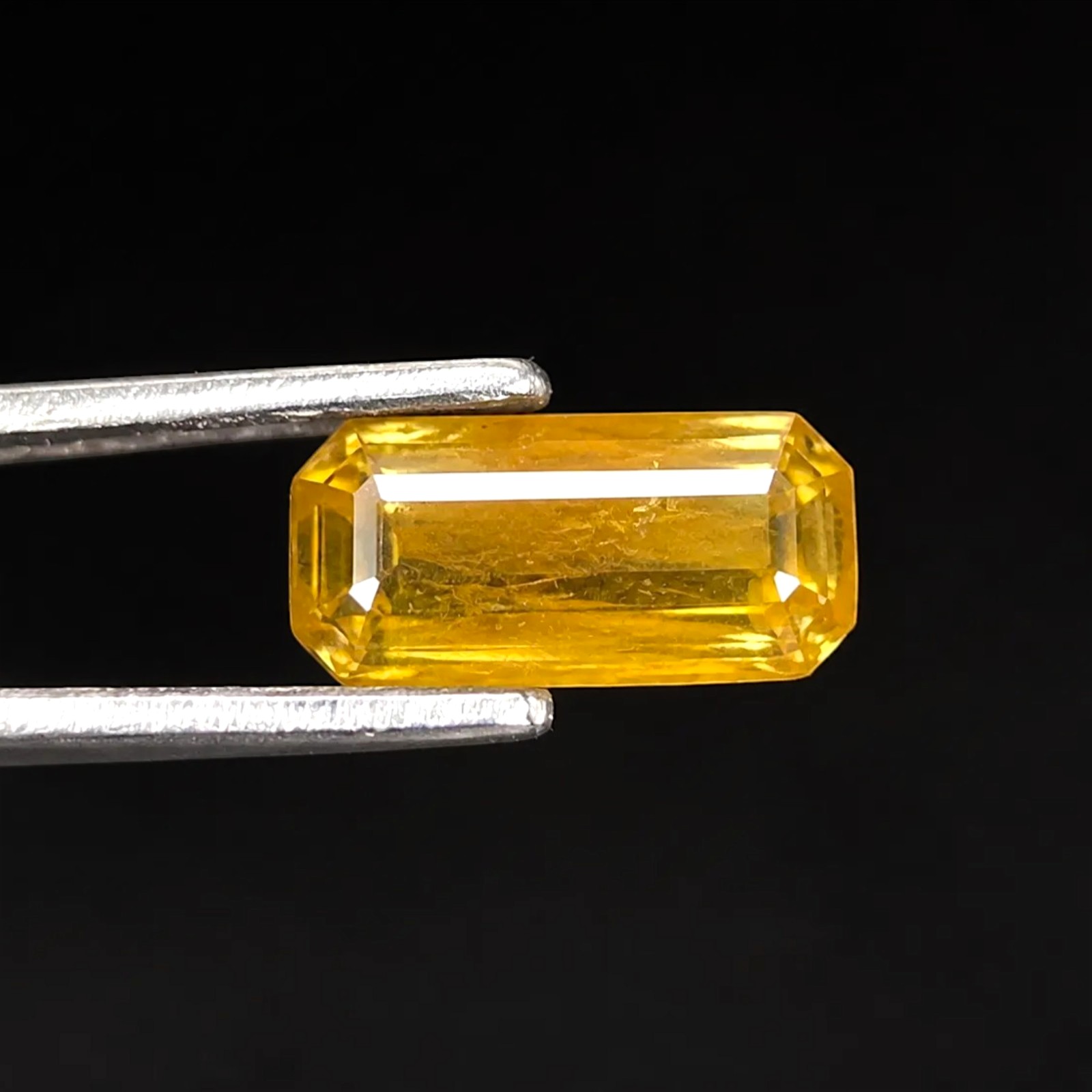
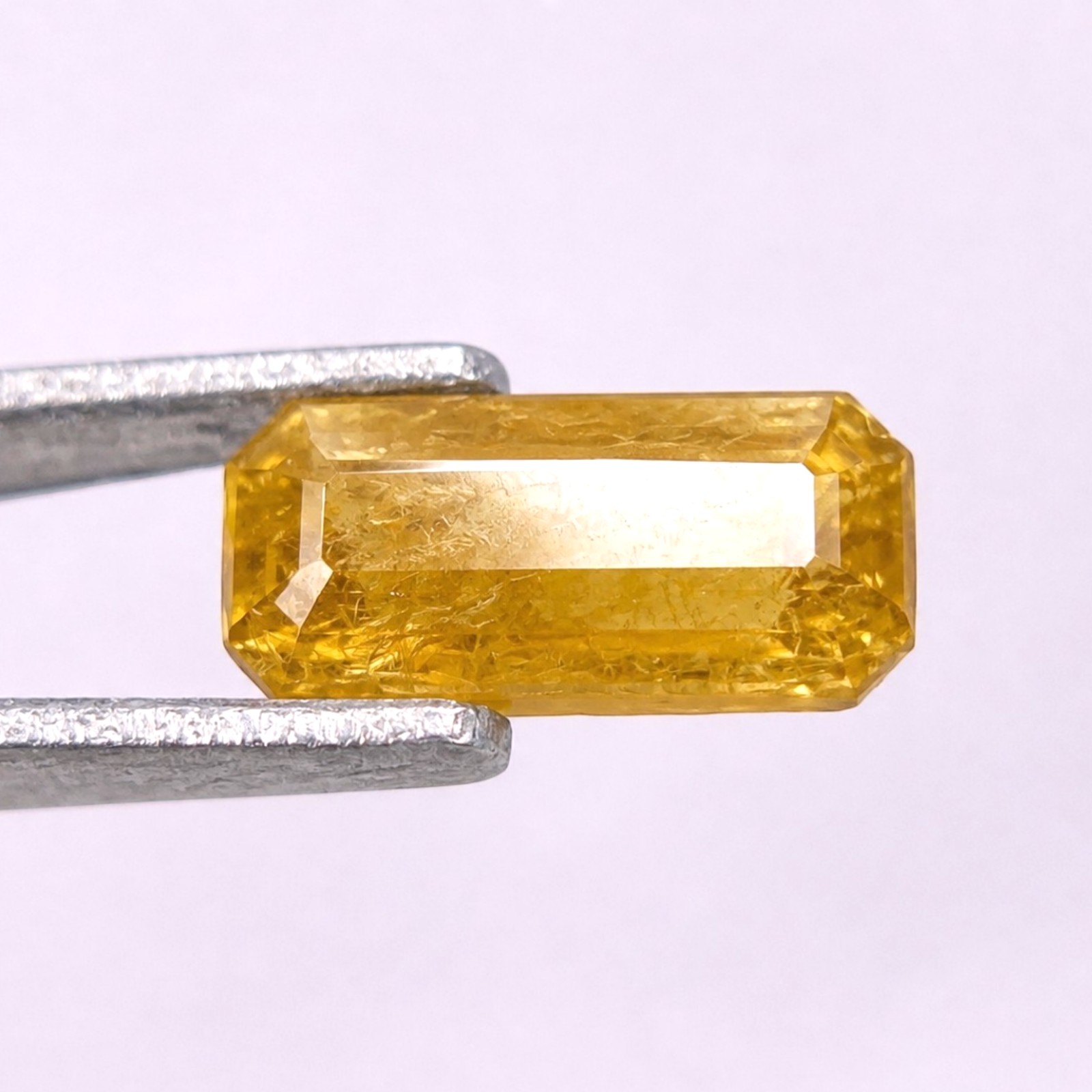
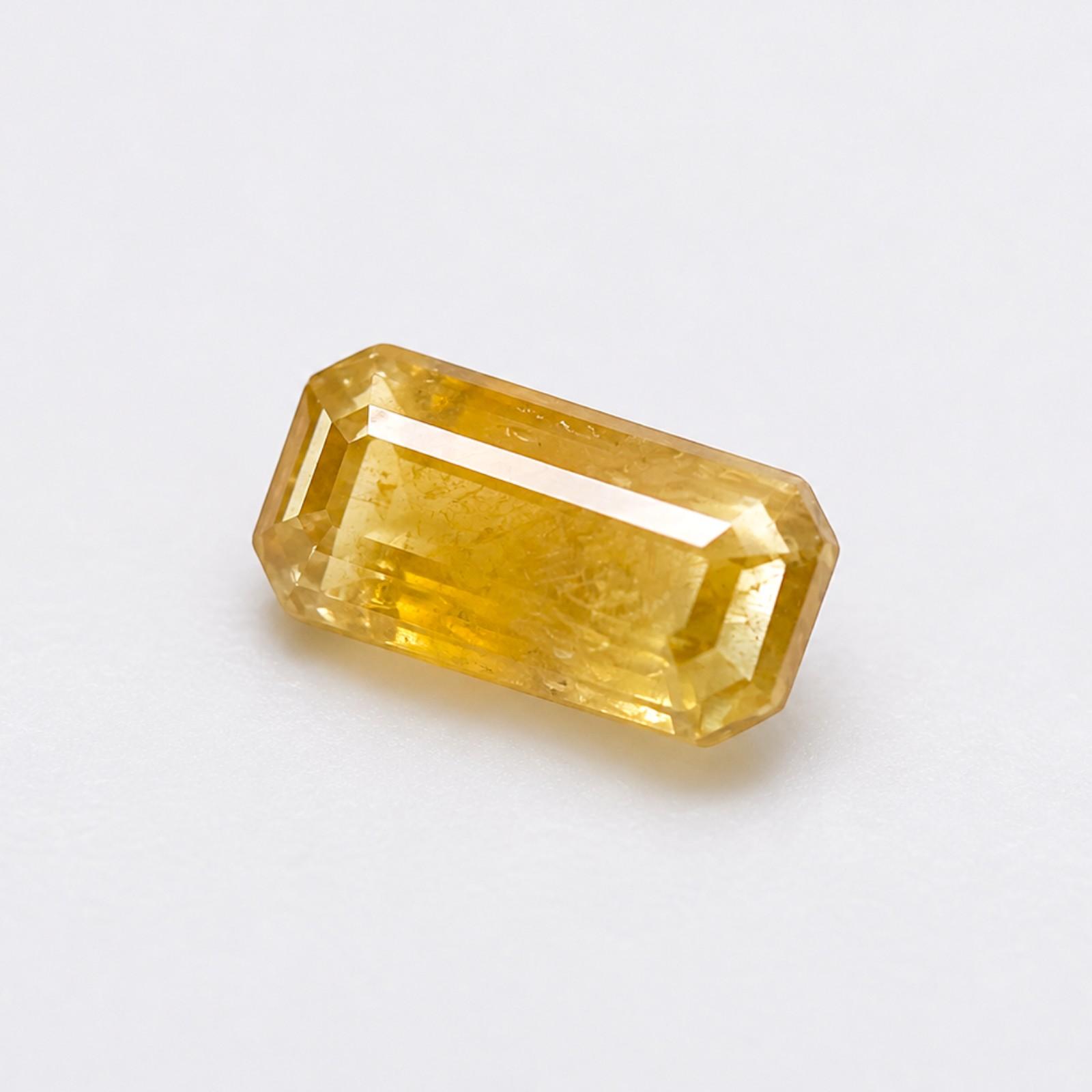
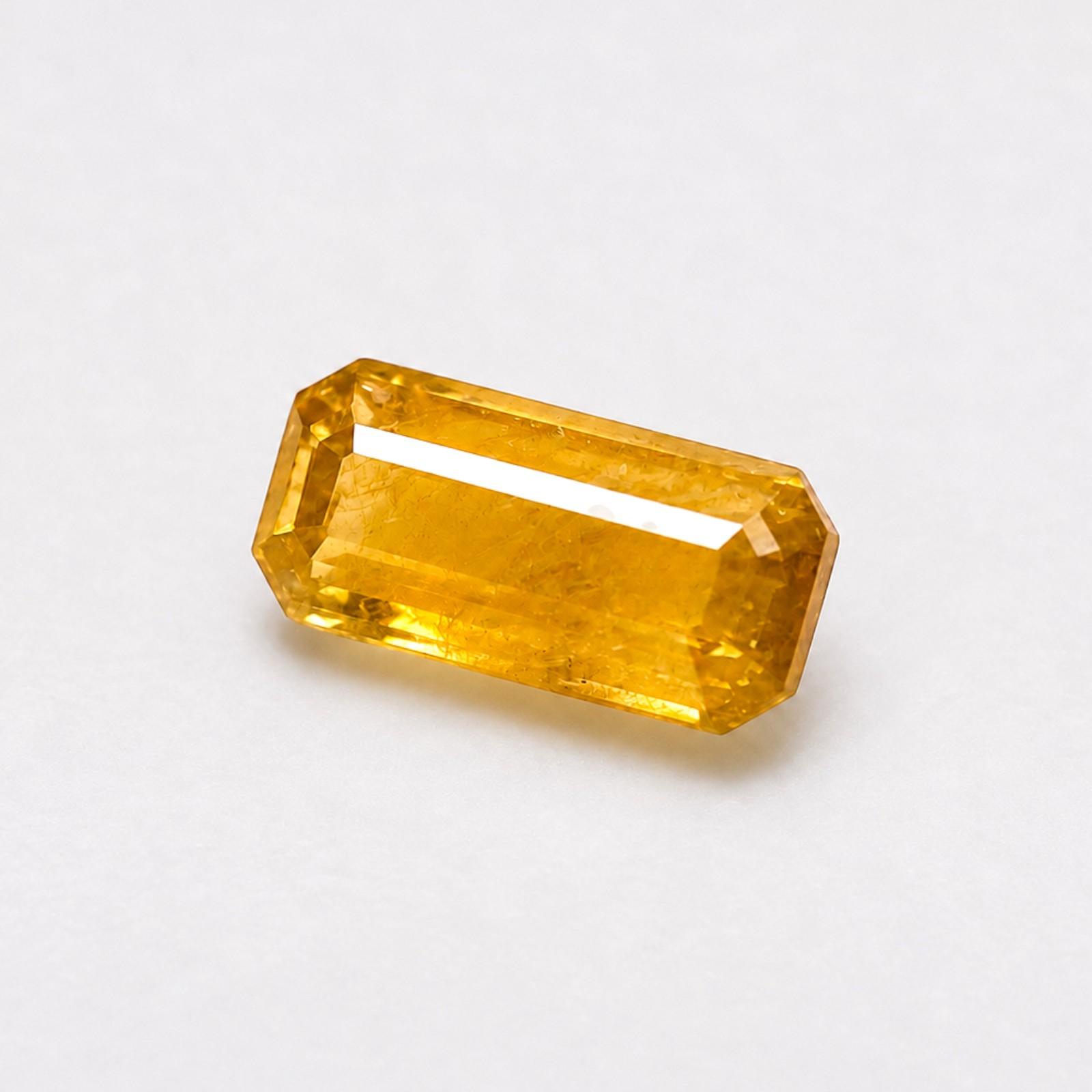
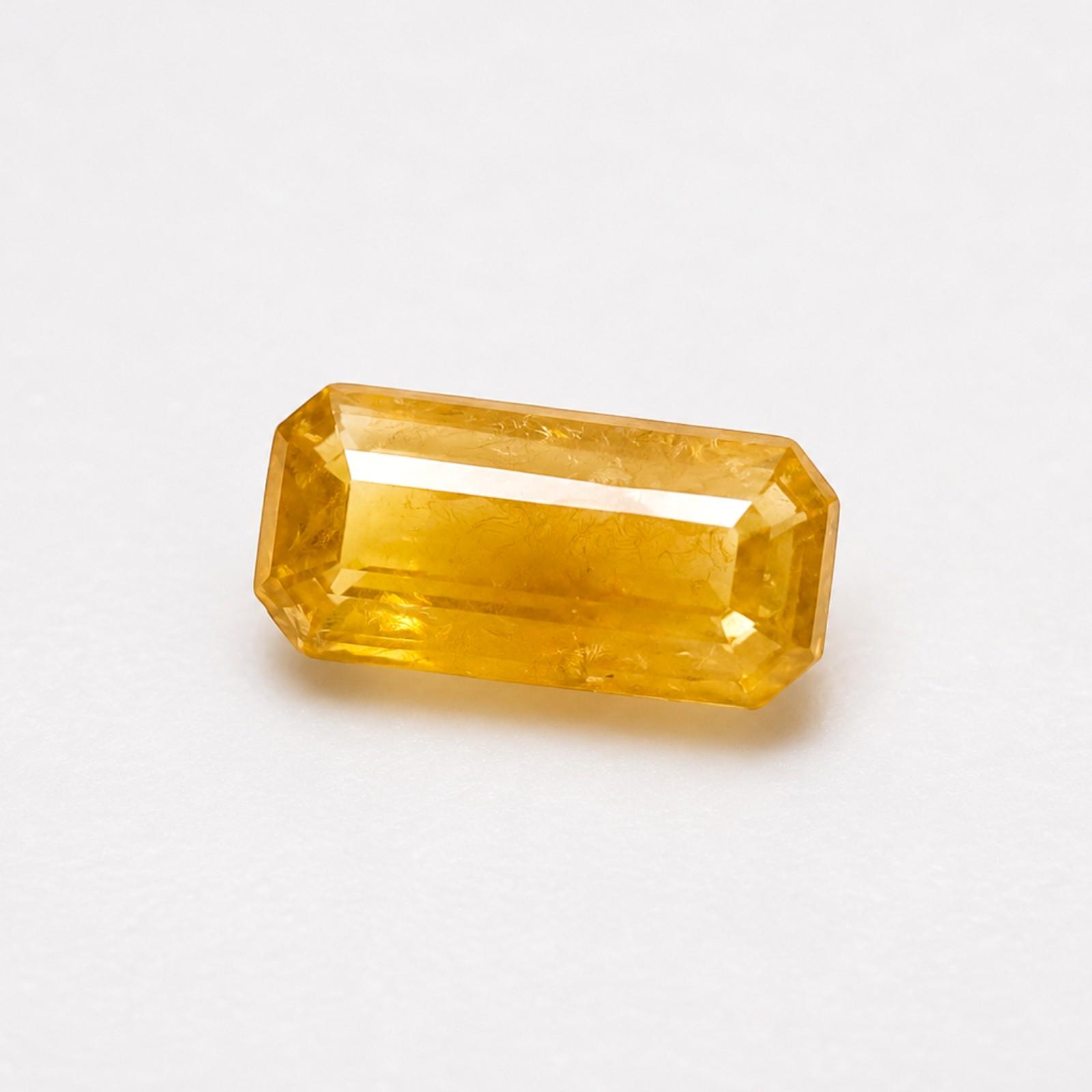
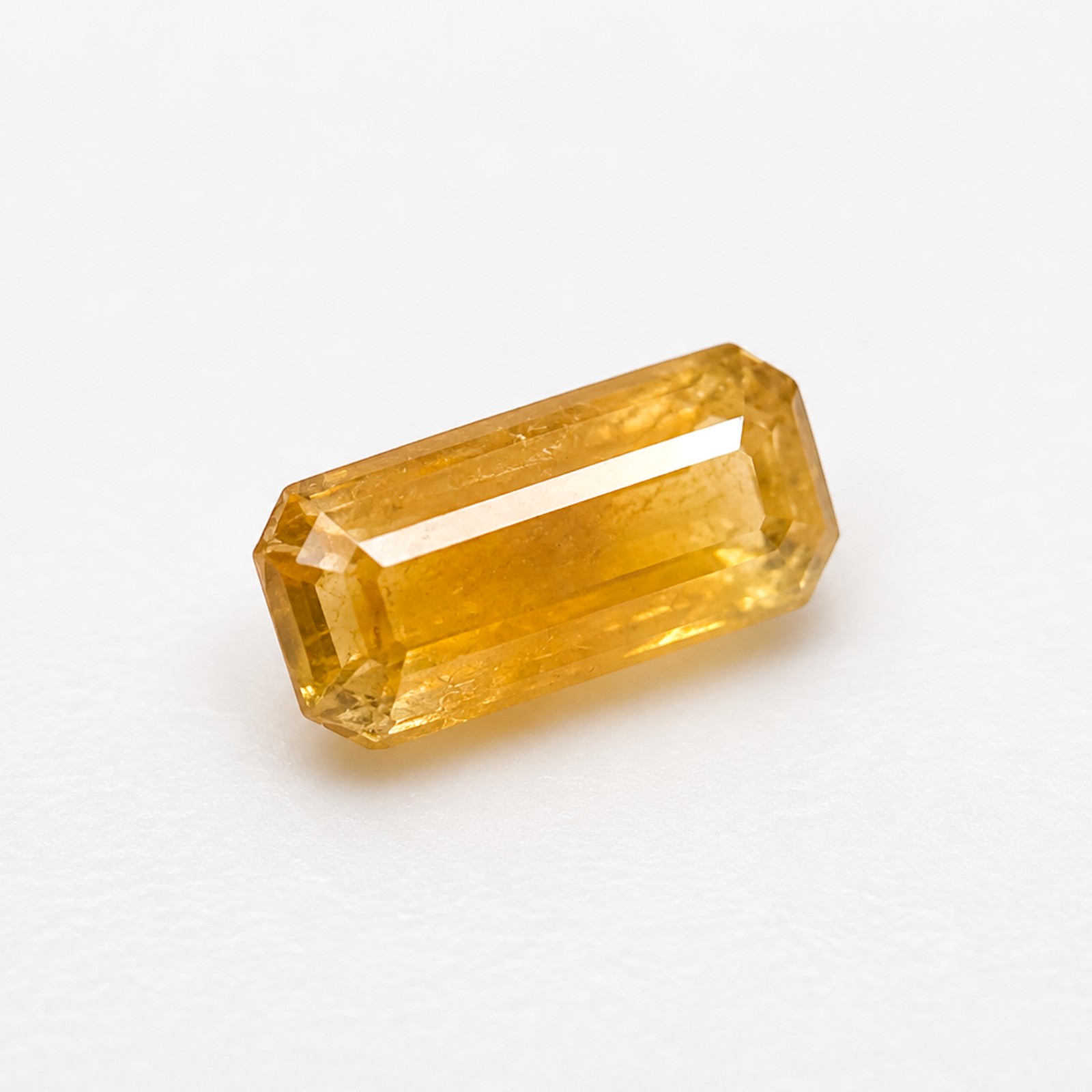
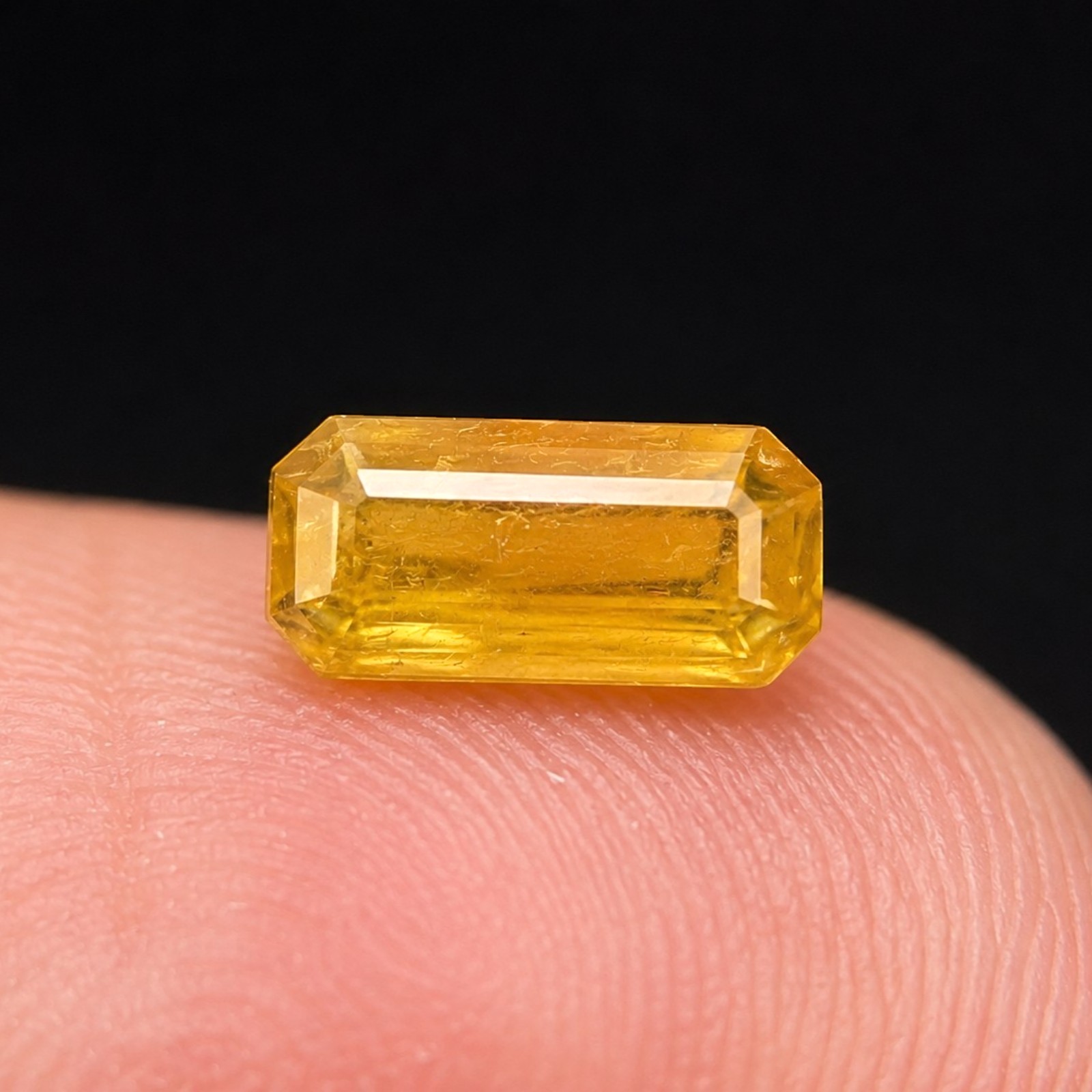


- Freakingcats Gemstone Database
Xenotime (Pakistan)
Certified on 11/09/26 by GIL Lab Bangkok
Xenotime from the rugged, high-altitude pegmatite fields and carbonatite complexes of northern Pakistan—particularly within the Gilgit-Baltistan and Khyber Pakhtunkhwa regions—represents one of the most crystallographically sharp and chemically significant heavy rare-earth phosphate minerals on Earth. Predominantly occurring as the yttrium-dominant species Xenotime-(Y), it is a mineral I have always respected for its “clove-brown” to “honey-amber” and “resinous-bronze” tonal elegance, razor-sharp dipyramidal geometry, and its status as a premier textbook benchmark of “tetragonal-dipyramidal” structural discipline. For the specialist, a top-tier Pakistani Xenotime—whether presenting as an isolated, mirror-faced tetragonal prism with steep pyramidal terminations perched on snowy albite, a crystalline spray nestled among muscovite books, or a lustrous accessory crystal associated with gem tourmaline or beryl—is a prized trophy of rare-element pegmatitic fractionation; it offers a bright vitreous to adamantine and resinous luster, and an authoritative, highly ordered presence that makes it an indispensable rare-earth anchor for the systematic vault. As an artist, I find the stark geometric purity of its sharply faceted pyramids contrasting against sparkling white cleavelandite or smoky quartz to be one of nature’s most sophisticated and visually grounding palettes.
The Heritage & Discovery
Historical Significance
Xenotime is an indispensable index species for decoding the petrogenesis of highly evolved granitic pegmatites, geochemical heavy rare-earth element (HREE) fractionation, and uranium-lead geochronology in collisional tectonic regimes. Historically named in 1832 by French mineralogist François Sulpice Beudant from the Greek kenotime (vain honor / empty estimation), in allusion to the fact that the yttrium content had initially been mistaken for a new element, xenotime has long held a crucial place in systematic mineralogy. While historic European and Scandinavian pegmatites provided early scientific type material, the opening of northern Pakistan’s extreme Karakoram and Himalayan pegmatite fields in the late 20th and early 21st centuries yielded some of the sharpest, most lustrous, and most aesthetically matrix-borne macrocrystals ever brought to light.
Discovery
The unearthing of world-class xenotime crystals across northern Pakistan took place as artisanal and commercial miners ventured deep into high-altitude alpine pegmatite pockets seeking aquamarine, topaz, and tourmaline. Scientifically, Xenotime is isostructural with zircon (ZrSiO4), adopting a tetragonal framework where isolated phosphate tetrahedra (PO43-) link directly with eight-coordinated yttrium cations. In the geochemically extreme pegmatite fields of Pakistan, residual granitic melts reached extraordinary concentrations of heavy lanthanides and phosphorus, allowing xenotime to crystallize as sharp, euhedral tetragonal prisms rather than microscopic accessory grains. In addition to primary yttrium, it preferentially sequesters heavy rare-earth elements—including dysprosium, erbium, ytterbium, and lutetium—alongside minor structural substitutions of thorium and uranium. My own respect for this material grew from analyzing its structural symmetry; specifically, observing a pristine, lustrous brown tetragonal prism displaying steep, mirror-bright pyramidal facets set against white cleavelandite reveals a crystallographic balance that is deeply satisfying to the trained eye.
Important Mines
The undisputed capitals for collector-grade, crystallized xenotime within Pakistan are centered in the prolific pegmatite districts of Gilgit-Baltistan and Khyber Pakhtunkhwa. Outstanding, sharp prismatic and dipyramidal crystals have historically emerged from the complex pegmatite zones of the Shigar Valley, the Bache pegmatite field, and the round formations of the Shengus and Dassu areas in Skardu District. Highly aesthetic specimens also occur in the pegmatitic horizons of the Stak Nala region, Haramosh Mountains, and select carbonatite-associated alkaline deposits around Koga in the Swat District. For the systematic vault, I prioritize specimens that exhibit razor-sharp, undamaged dipyramidal terminations, rich honey-amber to clove-brown translucency, splendent sub-adamantine luster, and an active presentation perched high on contrasting matrix alongside quartz, albite, or mica.
Mineralogical Profile
Description
Xenotime is an yttrium phosphate mineral belonging to the xenotime group that crystallizes in the tetragonal system (dipyramidal class). It sits at a robust 4 to 5 on the Mohs scale, meaning its highly lustrous crystal faces possess moderate hardness, though its brittle tenacity and perfect prismatic cleavage parallel to {100} require careful archival handling to safeguard its crisp crystal edges, razor-sharp pyramidal terminations, and slender prism faces from mechanical shock or surface abrasion. It is characterized by its bright vitreous to adamantine and resinous surface luster and an earthy, refined color palette dominated by clove-brown, honey-amber, reddish-brown, pale yellowish-green, and grayish-bronze.
One of its most identifying traits is its crisp tetragonal habit, routinely forming elongated to equant tetragonal prisms terminated by sharp four-sided pyramids, or occurring as radially fibrous rosettes and rosettes of dipyramids that cleanly map out late-stage fluid cooling pathways. It possesses an exceptionally high refractive index running from approximately 1.720 to 1.827, giving its crystal faces and translucent edges strong internal fire and adamantine surface reflectivity, paired with a dense average specific gravity ranging between 4.40 and 5.10 that reflects its heavy rare-earth phosphate architecture. Because it forms primarily in highly fractionated granitic pegmatites, peralkaline igneous rocks, and metamorphic schists, it is commonly found in close association with Albite (Cleavelandite), Quartz (Smoky Quartz), Muscovite, Zircon, Monazite, Topaz, Beryl (Aquamarine), Schorl, and Columbite-Tantalite. When I select an example for documentation, I look for crisp tetragonal geometry, intense amber-to-brown translucency under focused light, and strong aesthetic relief against its host matrix, as these emphasize the sophisticated, rare-element chemistry of the mineral’s dramatic alpine subterranean birth.
Chemical Formula
YPO4 (predominantly Xenotime-(Y), with extensive substitution by HREEs like Dy, Er, Yb, and minor Th, U)


