
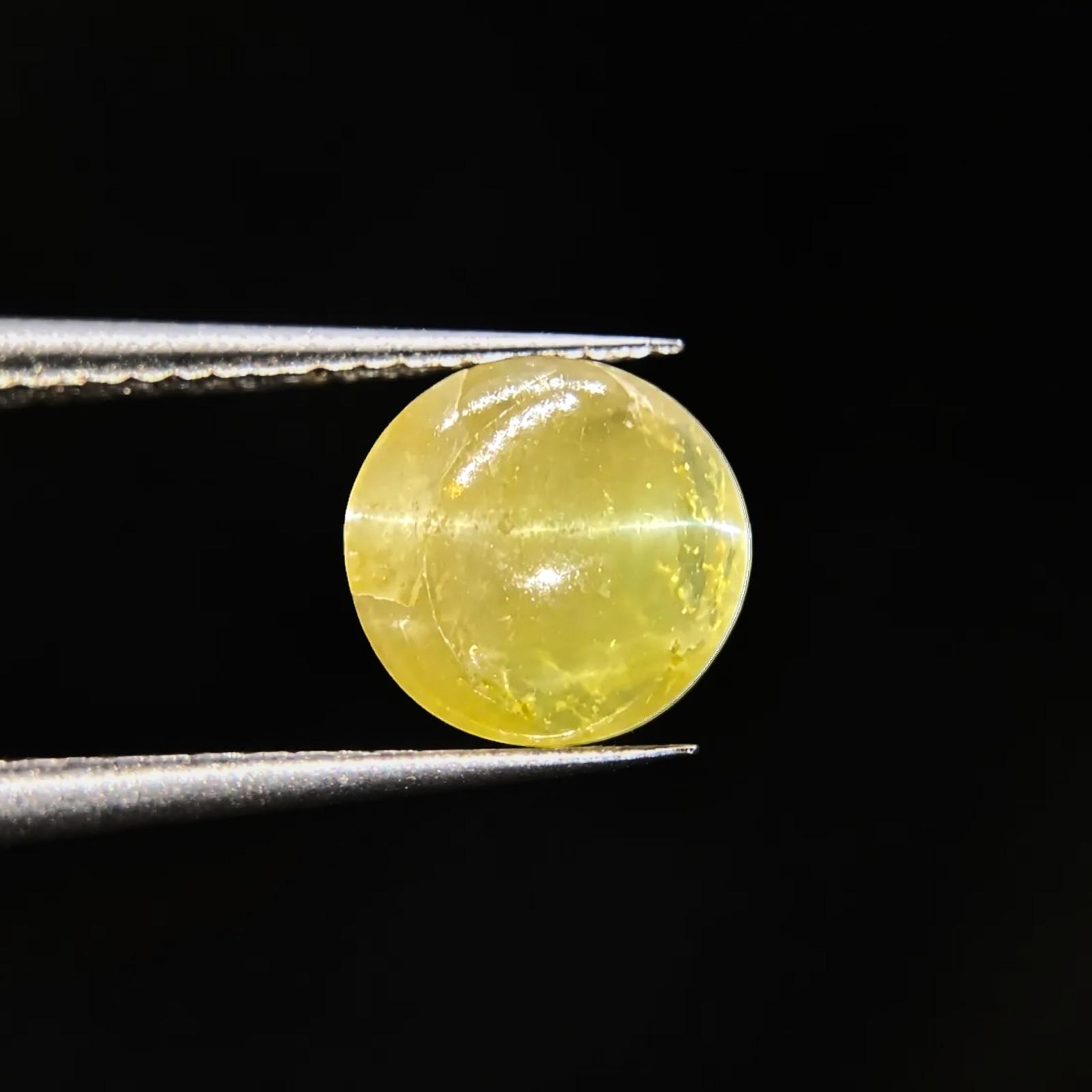
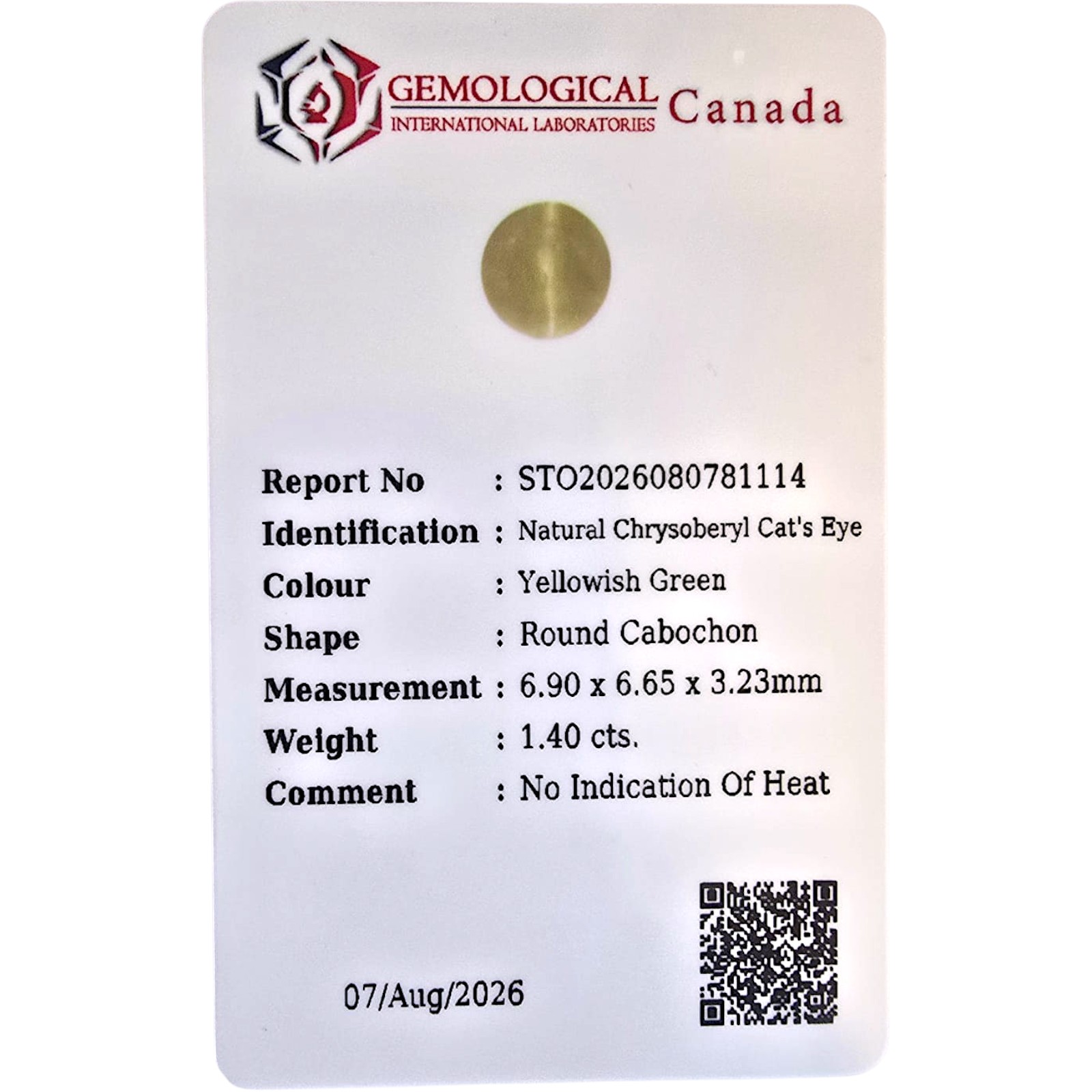
1.40 ct CHRYSOBERYL CATS EYE – SRI LANKA – CERTIFIED
EXPERT VERIFIED
- Expert Verified Gemstone
- Fast Handling & Shipping
- Secure Vault Packaging
$ 250
Offer amount Feild


Smart Collector Choice


Pay with Crypto & Get 10% Automatic Discount

Availability: 1 in stock
Gemstone Details
Gem Variety:
Chrysoberyl
Origin:
Sri Lanka
Carat Weight:
1.40
Length (mm):
6.90
Width (mm):
6.65
Depth (mm):
3.23
Shape:
Cabochon
Color
Yellow
Treatment:
No Treatment
Certificate:
On Request
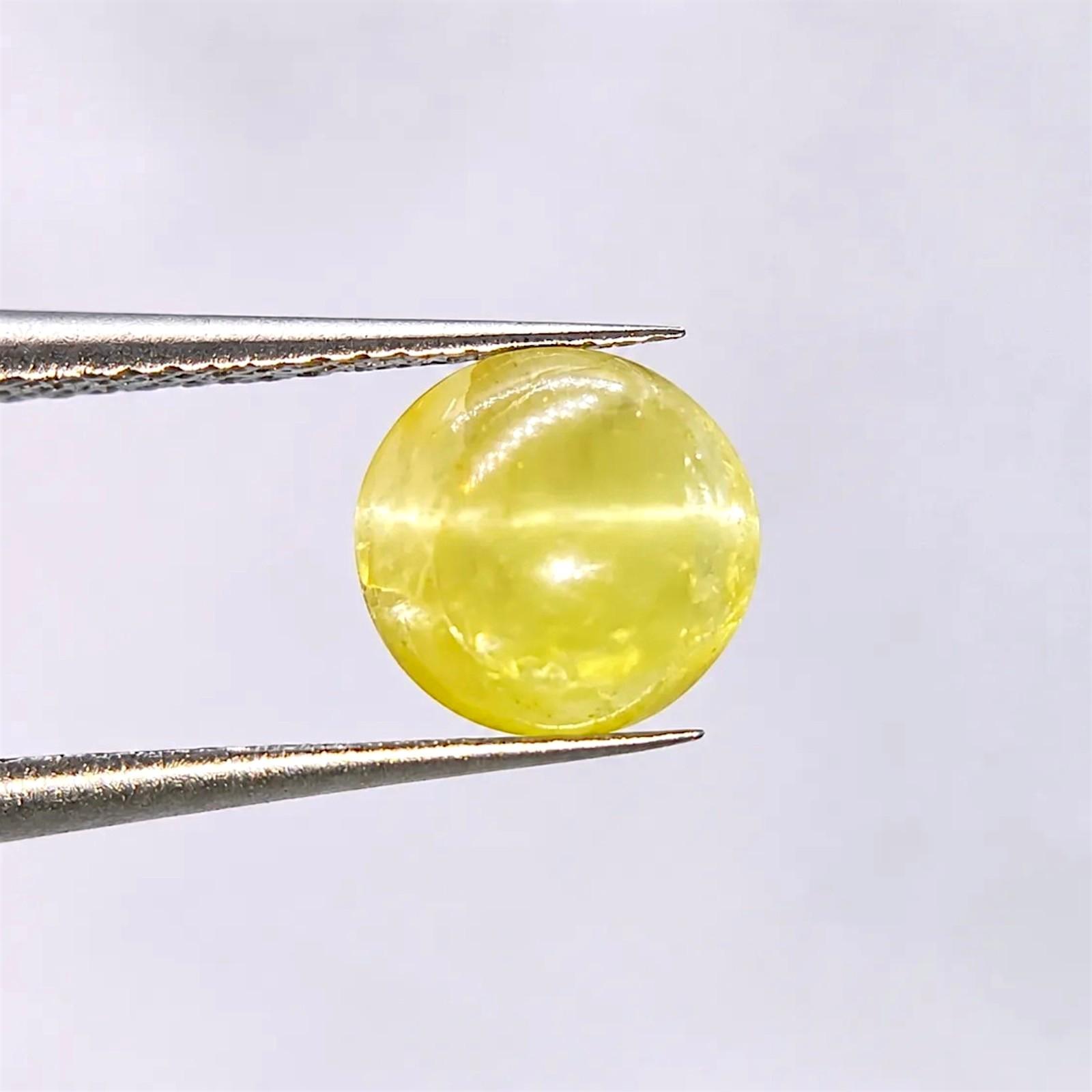
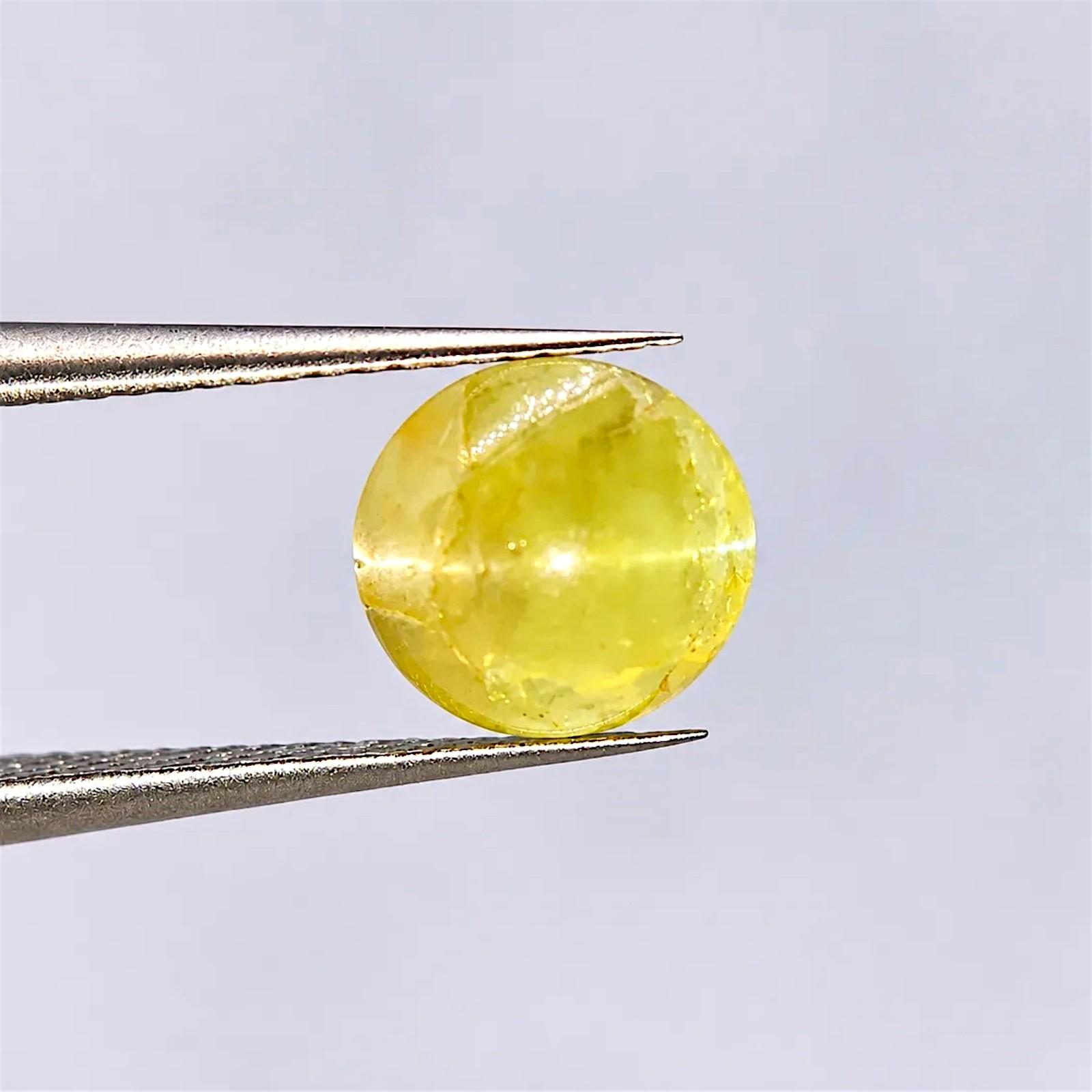
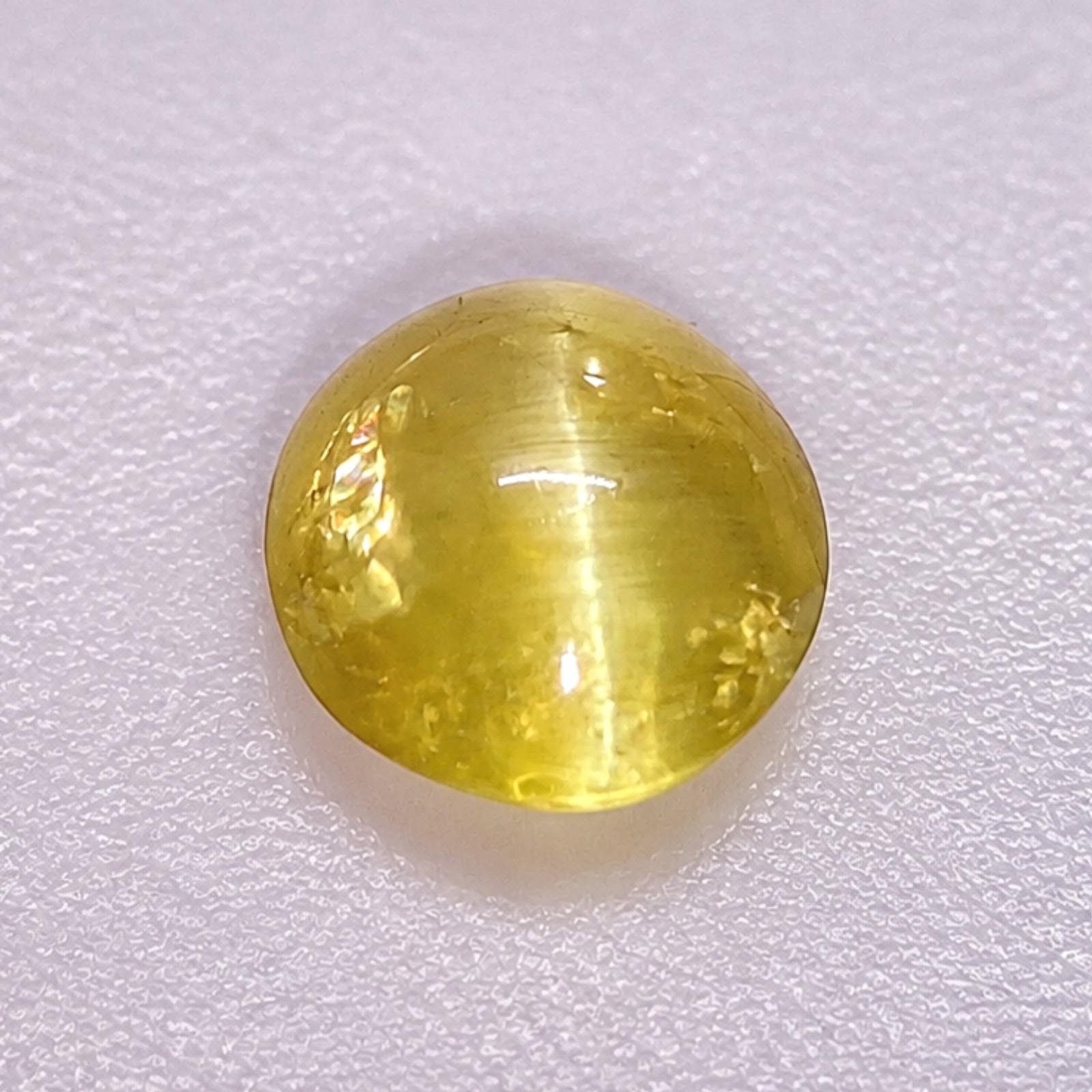
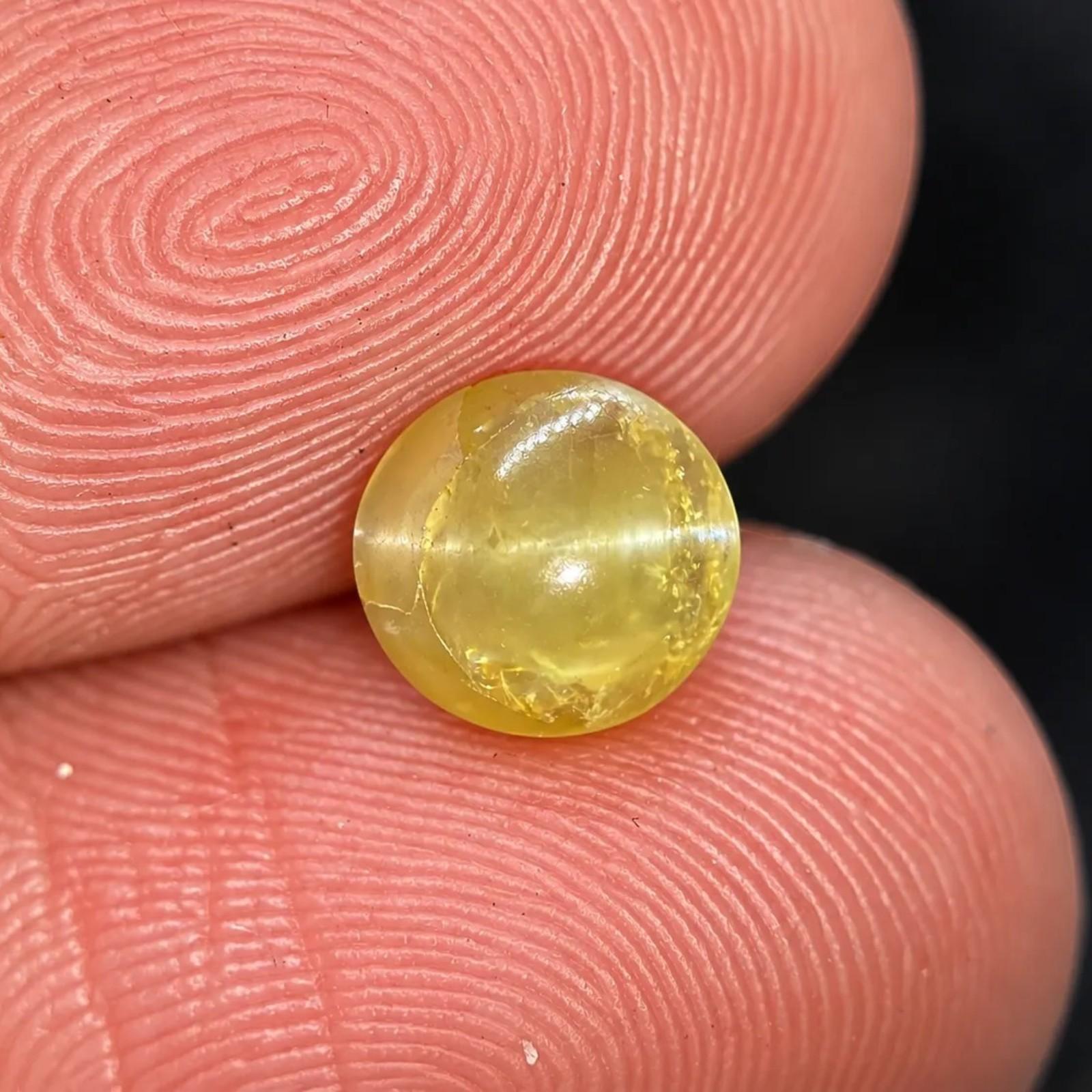


- Freakingcats Gemstone Database
Chrysoberyl Cat’s Eye (Sri Lanka)
Chrysoberyl Cat’s Eye—internationally celebrated under the exclusive gemological title “Cymophane” (from the Greek for “wavelike appearance”) and revered in historical literature as the true, original “Cat’s Eye”—from the ancient alluvial gem gravels (illam) of Sri Lanka represents the absolute global sovereign of natural chatoyant phenomena and orthorhombic oxide crystallization. A beryllium-aluminum oxide mineral of premier gemological prestige, it is a species I have always respected for its “liquid-honey” to “rich-apple-gold” daylight saturation, intense vitreous fire, and its status as a masterclass in structural inclusion orientation. For the specialist, a top-tier Sri Lankan Chrysoberyl Cat’s Eye—whether presented as a high-domed, flawlessly polished cabochon displaying a razor-sharp, rolling silver-white light band, an intact natural crystal from the Highland Complex, or a historic collector gemstone—is a prized trophy of deep-seated metamorphic pegmatitic interaction; it offers a bright vitreous to sub-adamantine surface luster, extraordinary physical hardness, and an authoritative presence that makes it an indispensable cornerstone for the systematic vault. As an artist, I find the mesmerizing “milk-and-honey” optical effect—where tilting the stone splits its body into translucent golden honey on one side of the eye and concentrated milky white on the other—to be one of nature’s most sophisticated and visually hypnotic achievements.
The Heritage & Discovery
Historical Significance
Chrysoberyl Cat’s Eye is an indispensable index species for decoding beryllium-rich fluid metasomatism within aluminum-saturated, high-grade granulite-facies terrains. Historically, the island of Sri Lanka—revered throughout antiquity as the legendary Ratna-Dweepa (“Island of Gems”)—has served as the premier, unmatched global provenance for the finest chatoyant chrysoberyls known to human history. Prized in Eastern and Western royal courts for millennia, it occupied an exalted role in traditional Indian lapidary traditions as Vaidurya, the sacred gem of the descending lunar node (Ketu) in the Navaratna talismanic setting. In the late 19th century, a gift of a Sri Lankan chrysoberyl cat’s eye to the Duke of Connaught ignited an aristocratic fashion across Europe, cementing Sri Lanka’s place as the enduring international benchmark against which all other phenomenal chatoyant gems are measured.
Discovery
The unearthing of macrocrystalline gem chrysoberyl across Sri Lanka takes place primarily through the traditional artisanal extraction of the illam, the ancient secondary alluvial gravels blanketing river valleys and floodplains. Scientifically, Chrysoberyl crystallizes in the orthorhombic system (space group Pnma), featuring a tightly packed, hexagonal close-packed oxygen framework with aluminum and beryllium occupying octahedral and tetrahedral sites. The extraordinary cat’s eye phenomenon is generated by dense, parallel networks of microscopic, needle-like inclusions of rutile (TiO2) or hollow structural growth tubes oriented strictly parallel to the c-axis of the host crystal. When a gem is expertly shaped into a cabochon with its base oriented parallel to these inclusions, incoming light reflects across the curved dome, concentrating into a crisp, bright, silver-white line of chatoyancy perpendicular to the needles. Sri Lanka’s iconic color spectrum—ranging from greenish-gold and yellowish-green to deep cognac-honey—is primarily governed by trace concentrations of structural iron (Fe3+) substituting for aluminum within the oxide lattice. My own respect for this material grew from analyzing this optical band under a single directional beam of light; specifically, watching the razor-sharp chatoyant eye glide effortlessly across the stone while the body demonstrates the classic “milk-and-honey” transition confirms an internal structural precision that is deeply satisfying to the trained eye.
Important Mines
The undisputed international capital for world-class chrysoberyl cat’s eye within Sri Lanka is the legendary gem-bearing district of Ratnapura (“The City of Gems”) in Sabaragamuwa Province. In the rich alluvial plains around Ratnapura, Pelmadulla, Balangoda, and Kuruwita, traditional deep-pit mining into the waterlogged gravels continues to yield unheated alluvial pebbles and euhedral crystals of world-record clarity and phenomenon. Exceptional specimens have also historically emerged from the Elahera gem corridor in the Central Province, famed for producing fine chatoyant chrysoberyls alongside sapphire and spinel, as well as the southern alluvial basins near Kataragama, Okkampitiya, and Tissamaharama. For the systematic vault, I prioritize specimens that exhibit a razor-sharp, unbroken chatoyant eye centered across the dome, rich natural honey-gold or greenish-amber daylight color saturation, a pronounced “milk-and-honey” effect, and high body translucency free from cloudy interior flaws.
Mineralogical Profile
Description
Chrysoberyl is a beryllium aluminum oxide mineral belonging to the chrysoberyl group that crystallizes in the orthorhombic system within the dipyramidal crystal class. It sits at an exceptional 8.5 on the Mohs scale, ranking as one of the hardest known natural minerals, making its polished surfaces extraordinarily resistant to scratching, surface abrasion, and daily wear, though its brittle tenacity, conchoidal to uneven fracture, and distinct cleavage parallel to {011} and {010} require careful archival care to safeguard its delicate cabochon edges and crystal faces from sharp, violent mechanical shocks. It is characterized by its bright, reflective vitreous to sub-adamantine surface luster and an elegant, warm color palette dominated by honey-amber, golden-yellow, greenish-gold, chartreuse, olive-brown, and brownish-amber.
One of its most identifying traits is its sharp tabular to prismatic habit in unweathered crystals, frequently exhibiting cyclical trilling (“sixling”) contact twinning on {130} that mimics hexagonal symmetry, while alluvial gem material typically presents as smooth, water-worn rolled pebbles retaining high internal clarity. It possesses a high refractive index running from approximately 1.745 to 1.757 with low optical birefringence (0.009), which produces a dense, jewel-like internal fire, paired with a substantial average specific gravity ranging between 3.70 and 3.75 that directly reflects its tightly packed oxide architecture. Because it forms in beryllium-bearing granitic pegmatites intruding into aluminum-rich metamorphic rocks, desilicated contact skarns, and secondary placers, it is commonly found in close association with Corundum (Sapphire and Ruby), Spinel, Zircon, Tourmaline, Garnet (Almandine-Spessartine), Quartz, and Beryl. When I select an example for documentation, I look for a razor-sharp, mobile chatoyant eye, vivid natural color saturation, exceptional internal translucency, and the diagnostic “milk-and-honey” reaction, as these emphasize the sophisticated, metamorphic chemistry of the mineral’s dramatic Precambrian birth.
Chemical Formula
BeAl2O4 (with trace Fe3+ chromophore substitutions and oriented TiO2 rutile inclusion networks)


