
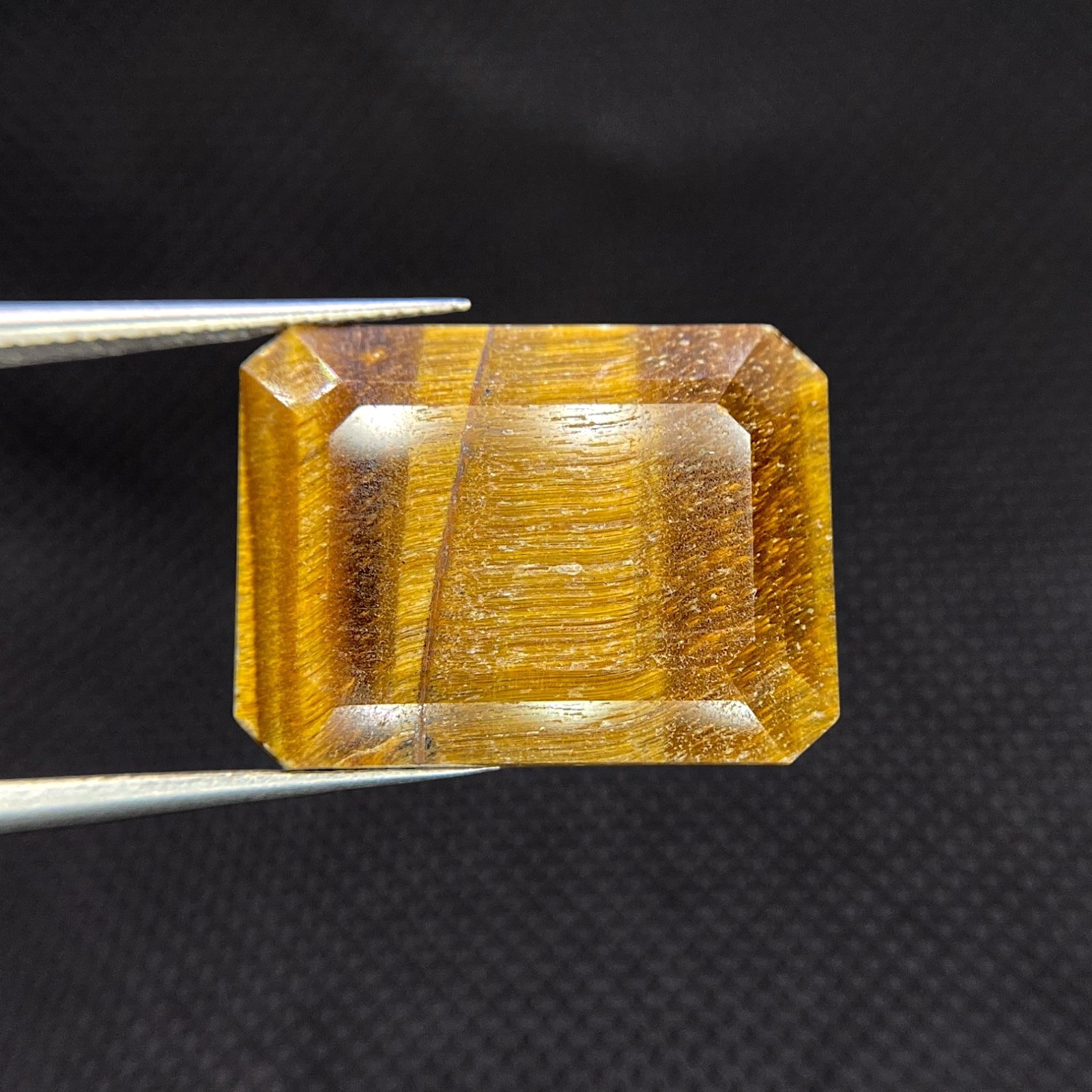
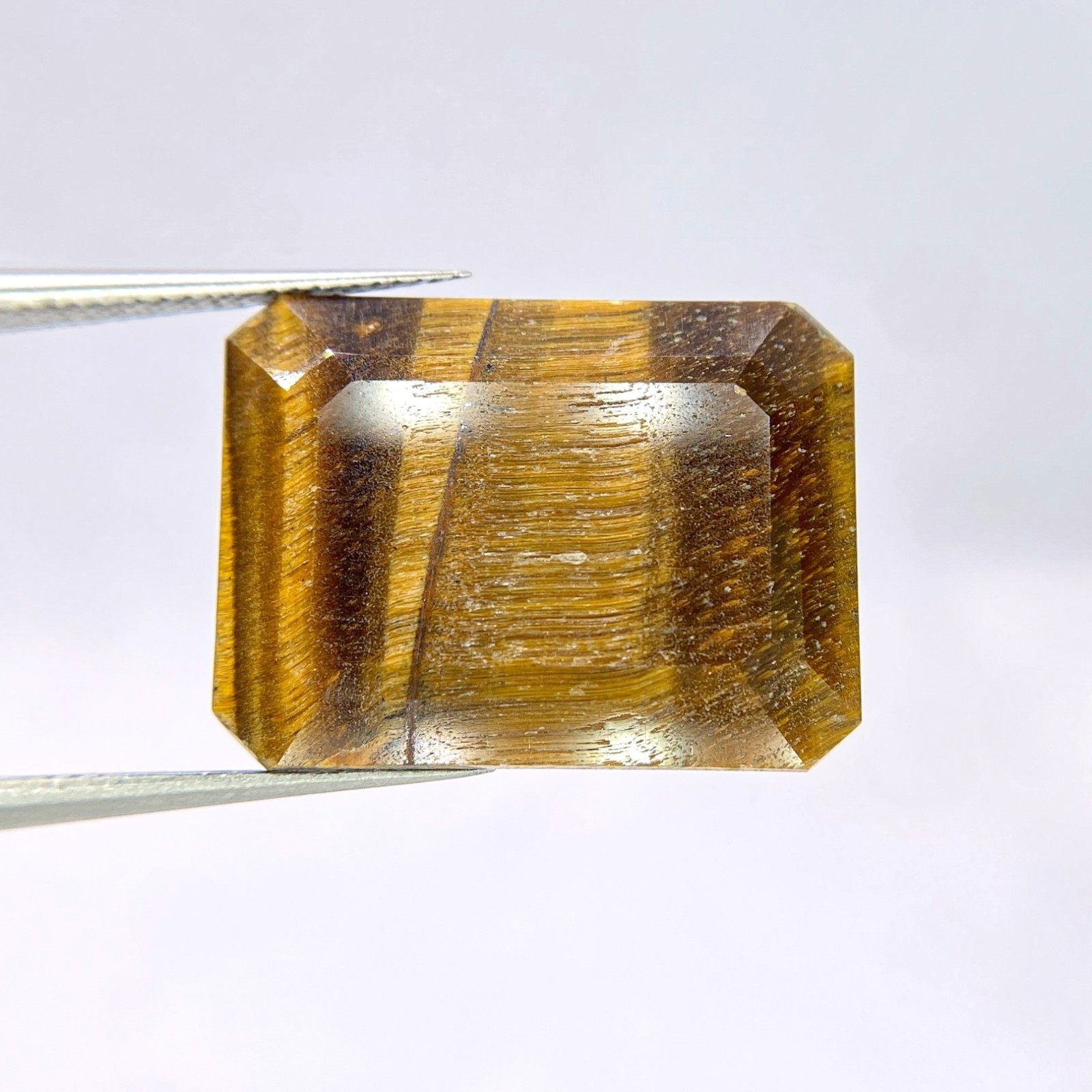
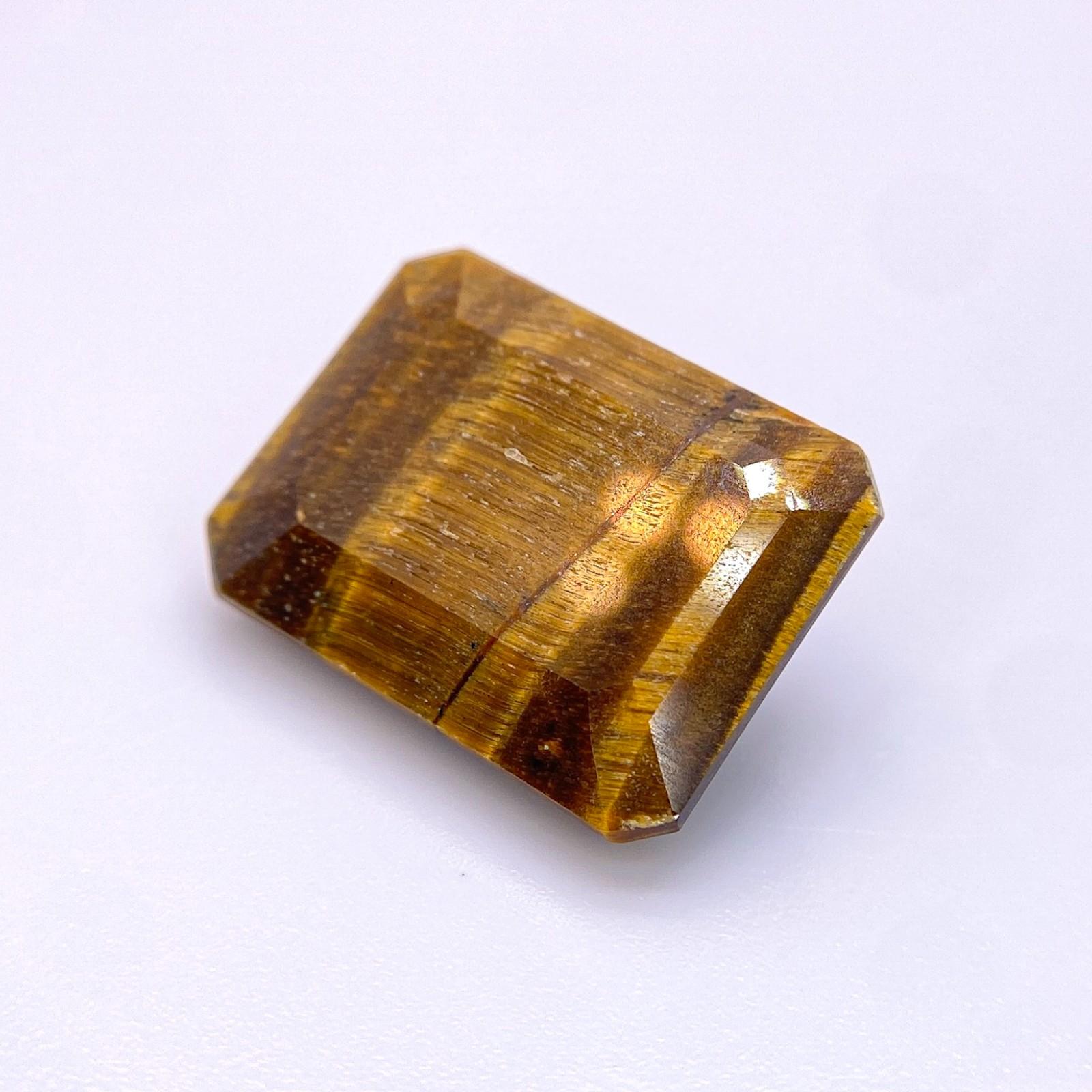
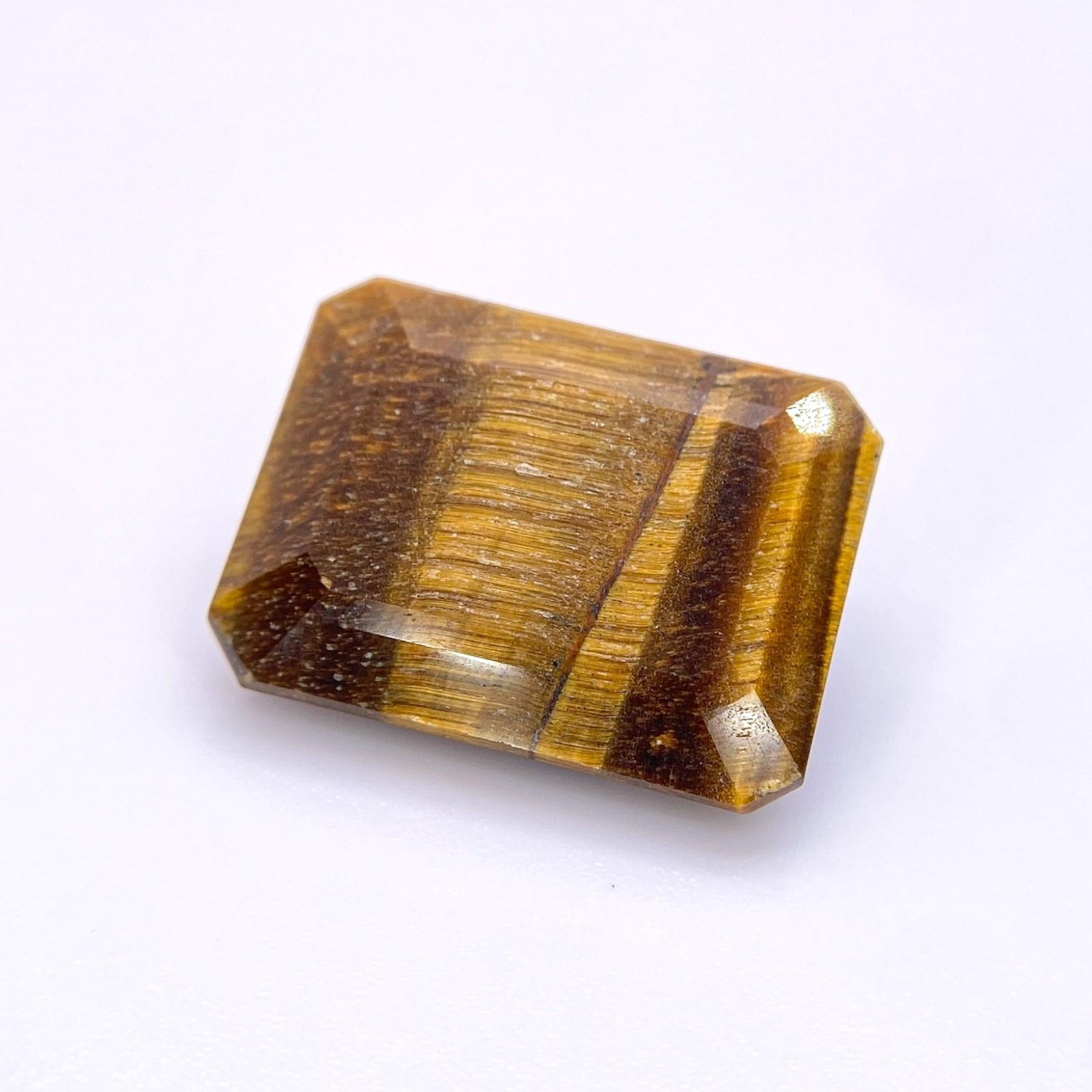
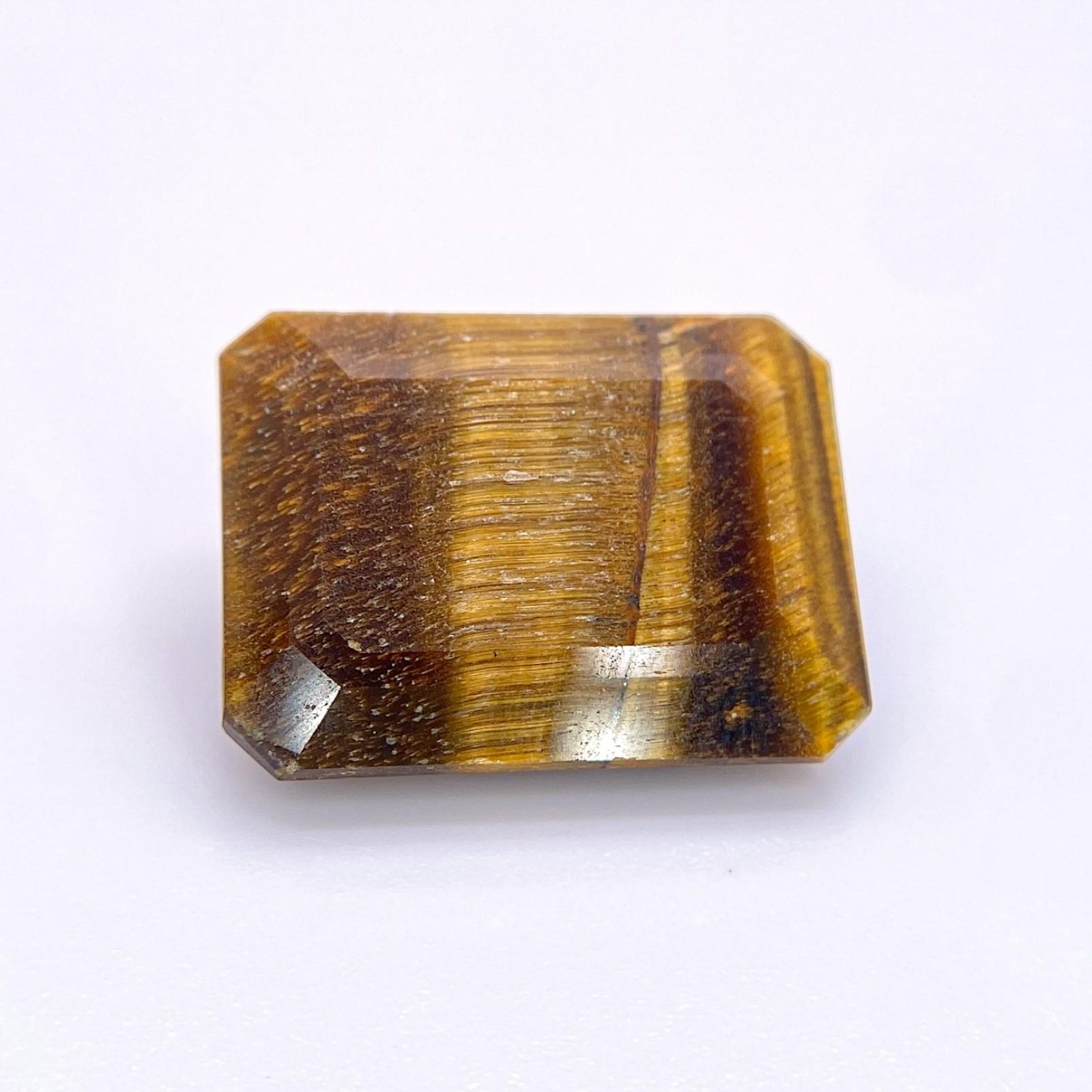
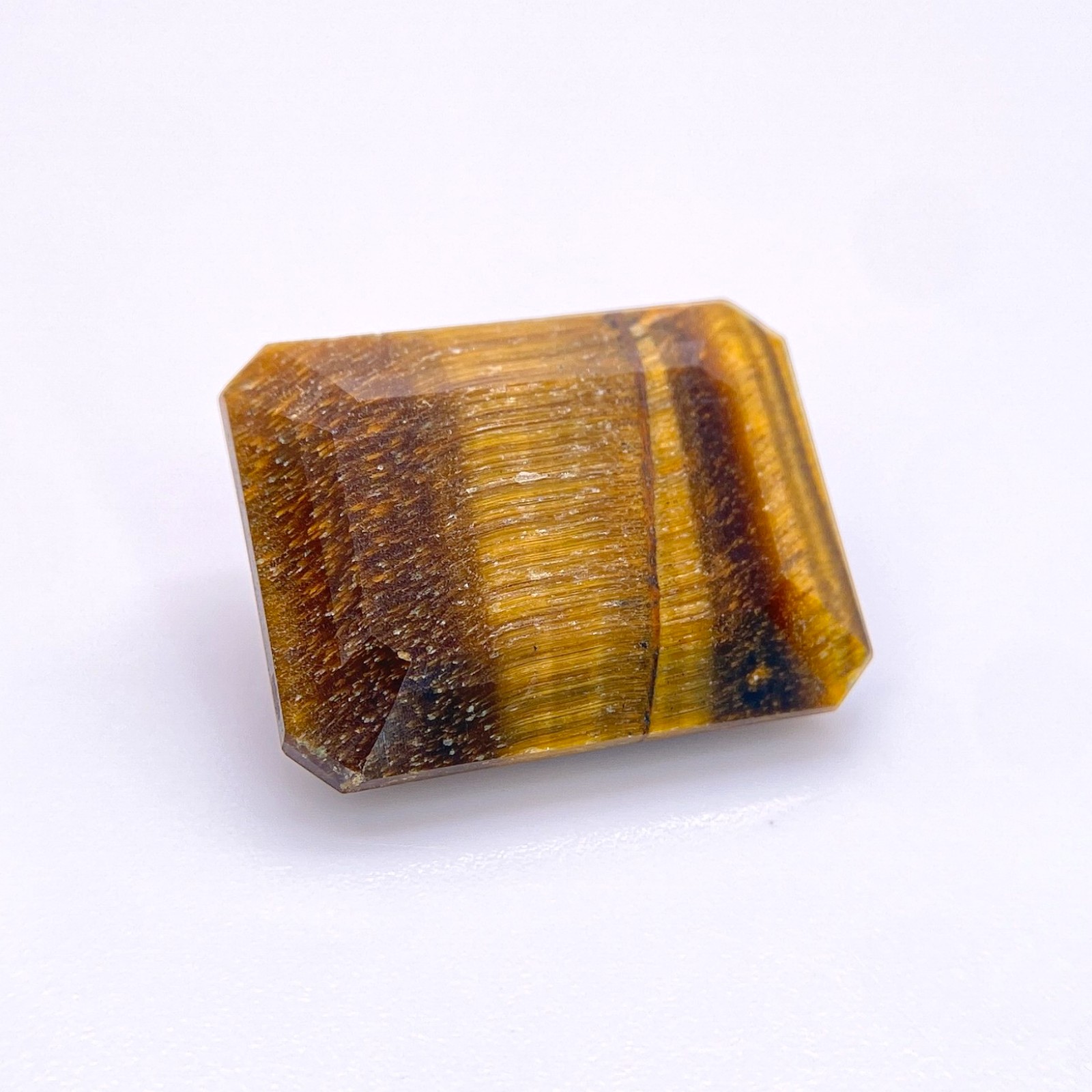
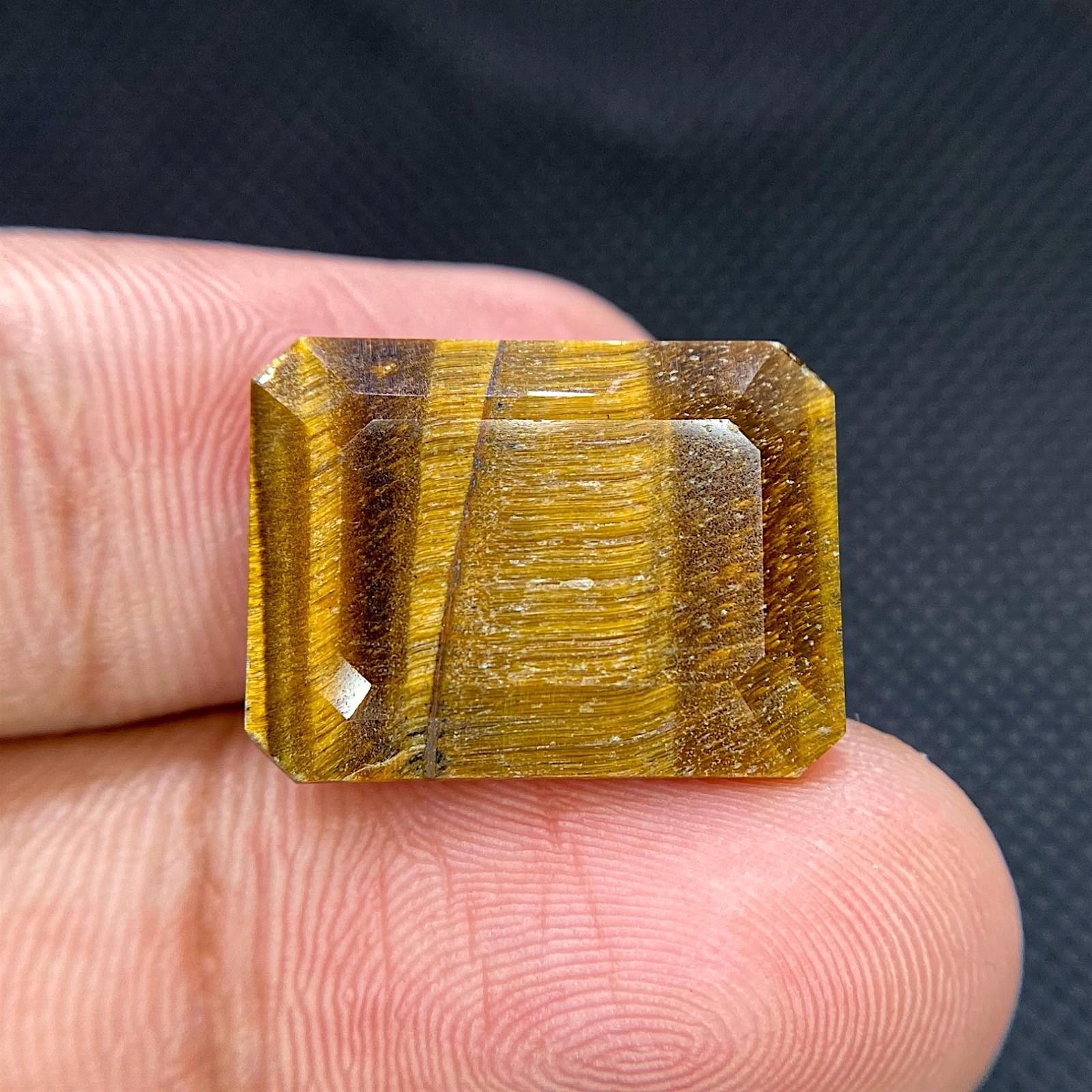
16.95 ct TIGER EYE – SOUTH AFRICA
EXPERT VERIFIED
- Expert Verified Gemstone
- Fast Handling & Shipping
- Secure Vault Packaging
$ 150
Offer amount Feild


Smart Collector Choice


Pay with Crypto & Get 10% Automatic Discount

Availability: 1 in stock


- Freakingcats Gemstone Database
Tiger’s Eye (South Africa)
Tiger’s Eye from the vast, ancient Banded Iron Formations of the Northern Cape Province in South Africa represents the undisputed international gold standard for dense, parallel-fibrous chatoyancy, rich golden-honey saturation, and quartz-mineral replacement architecture. A pseudomorphic metamorphic gemstone formed by the silicification of fibrous crocidolite amphibole, it is a material I have always respected for its “liquid-gold” to “warm-bronze-amber” optical rolling effect and its status as a textbook example of fibrous structural replacement. For the specialist, a top-tier South African Tiger’s Eye—whether presented as a high-domed, mirror-polished cabochon, an intricate lapidary carving, or a substantial rough seam embedded within banded hematite and jaspilite matrix—is a prized trophy of Paleoproterozoic fluid metasomatism; it offers a bright silky to vitreous surface luster and a dynamic, sweeping chatoyant eye that makes it an essential anchor for the systematic vault. As an artist, I find the mesmerizing, holographic light ribbon that glides effortlessly across its parallel golden-brown fiber bands under moving light to be one of nature’s most sophisticated and visually captivating optical performances.
The Heritage & Discovery
Historical Significance
Tiger’s Eye is an indispensable index gemstone for decoding the localized silica infiltration, iron oxidation gradients, and structural pseudomorphism that occurred within the massive early Earth iron basins over two billion years ago. Historically, South Africa has reigned as the premier global source for prime commercial and collector-grade tiger’s eye since the early 19th century. Discovered along the Orange River corridor by German explorer Martin Heinrich Lichtenstein between 1803 and 1806, the material quickly captured the attention of European lapidaries and mineralogists. Early scholars classified it as a classic mineralogical pseudomorph, standing today as an enduring symbol of South African geological heritage, extreme structural toughness, and fluid-rock harmony.
Discovery
The unearthing of extensive, stratified seams of fibrous golden quartz across the Griqualand West terrain revealed an extraordinary geological story written in Precambrian sediments. Scientifically, the genesis of Tiger’s Eye has generated deep geological discussion: classic models interpreted it as a strict pseudomorph where microcrystalline silica completely dissolved and replaced original asbestos-form crocidolite (riebeckite) fibers. Modern micro-structural studies show a more nuanced synchronous crystallization—a “crack-seal” vein-growth mechanism where columnar quartz and fibrous riebeckite grew together, followed by the oxidation of iron from its original blue-gray ferrous state into warm ferric iron hydroxides (limonite and goethite). My own respect for this material grew from analyzing its diagnostic optical physics under direct gallery spots; specifically, watching the razor-sharp band of light travel across the perfectly aligned, quartz-encased iron fibers—shifting instantly from dark chocolate-brown to blazing golden-amber—is a visual movement that remains deeply satisfying to the trained eye.
Important Mines
The undisputed international capital for world-class, seam-bearing expressions of this species is situated in the Northern Cape Province of South Africa, anchored within the Asbestos Mountains and the Kuruman Hills. The prolific iron-formation belt extending between Prieska, Griquatown (Griekwastad), Niekerkshoop, and Kuruman yields extensive underground and open-cast horizons of thick, gem-grade chatoyant seams. Within these stratified iron beds, tiger’s eye frequently grades into blue “Hawk’s Eye” (unoxidized crocidolite) or folds into complex, multi-colored brecciated “Pietersite” horizons. For the systematic vault, I prioritize specimens that exhibit sharp, unbroken chatoyant fiber bands, deep golden-honey to bronze color saturation free from dead non-reactive patches, mirror-bright surface polish, and clean structural integrity along natural seam boundaries.
Mineralogical Profile
Description
Tiger’s Eye is a silicified pseudomorph of quartz after fibrous crocidolite (riebeckite amphibole), falling under the macrocrystalline quartz group with dense, parallel fibrous inclusions. It sits at a hard, highly durable 7 on the Mohs scale, meaning its dense, quartz-dominated faces are resilient against scratching and exhibit tough tenacity without cleavage, requiring only standard archival care to protect its polished surfaces and natural seam contours from abrasive contact. It is characterized by its bright silky to vitreous surface luster and an unmistakable, warm color palette dominated by golden-yellow, honey-amber, bronze, caramel-brown, and rich mahogany-red.
One of its most identifying traits is its parallel fibrous chatoyancy, routinely forming stratified cross-fiber veins running perpendicular to banded sedimentary bedding planes. It possesses a standard quartz refractive index running from approximately 1.544 to 1.553, giving its polished faces a crisp, glassy clarity, paired with an average specific gravity ranging between 2.64 and 2.71 that closely matches macrocrystalline quartz with minor iron-oxide weight influence. Because it forms within folded banded iron formations and ferruginous cherts, it is commonly found in close association with Hematite, Magnetite, Limonite, Goethite, Jasper, Chert, and Riebeckite (Crocidolite). When I select an example for documentation, I look for tight, continuous fiber alignment, vivid contrast across the moving chatoyant band, and pure golden-amber color saturation, as these emphasize the sophisticated, ancient fluid chemistry of the mineral’s subterranean birth.
Chemical Formula SiO2 (with parallel fibrous Riebeckite / Goethite-Limonite inclusions)


