
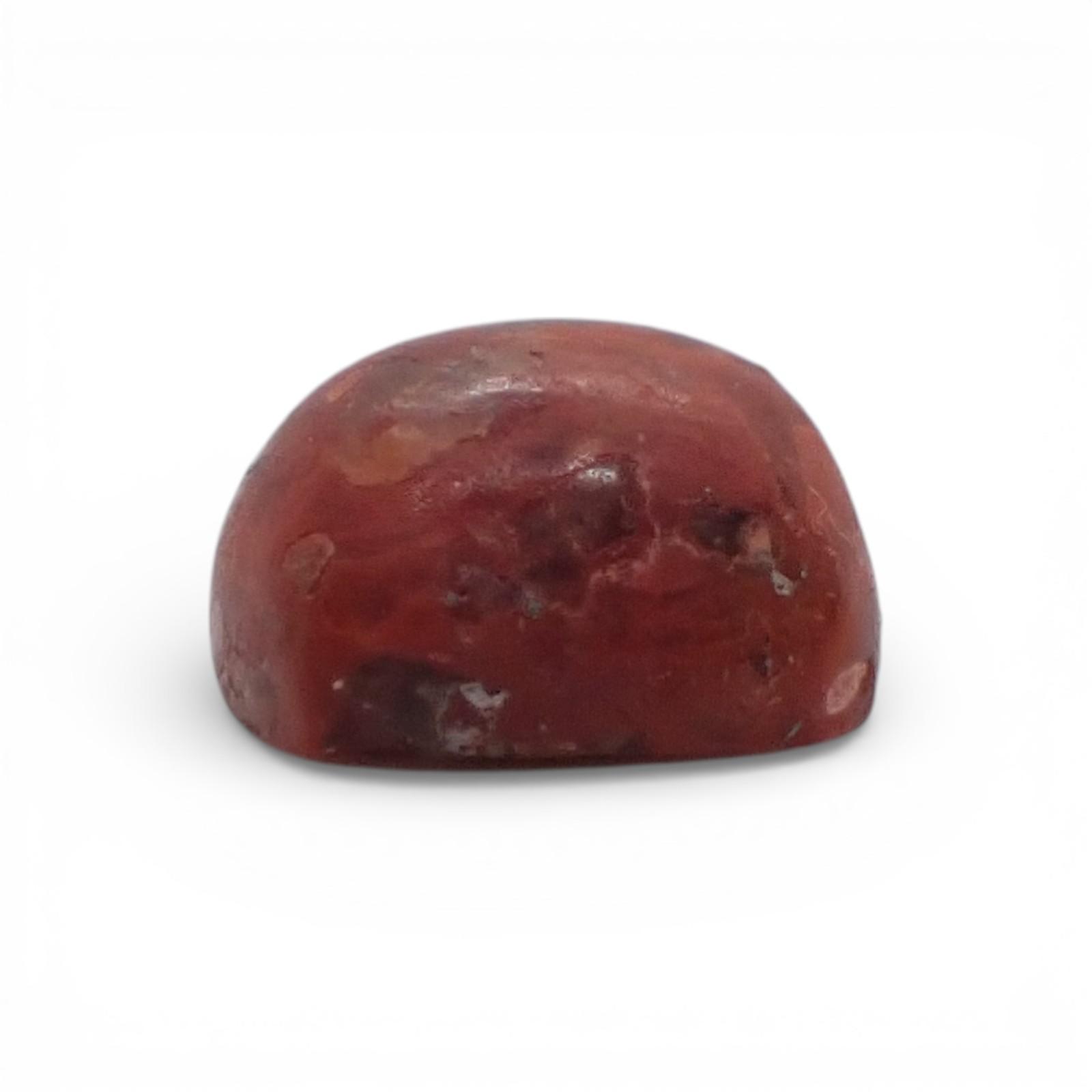
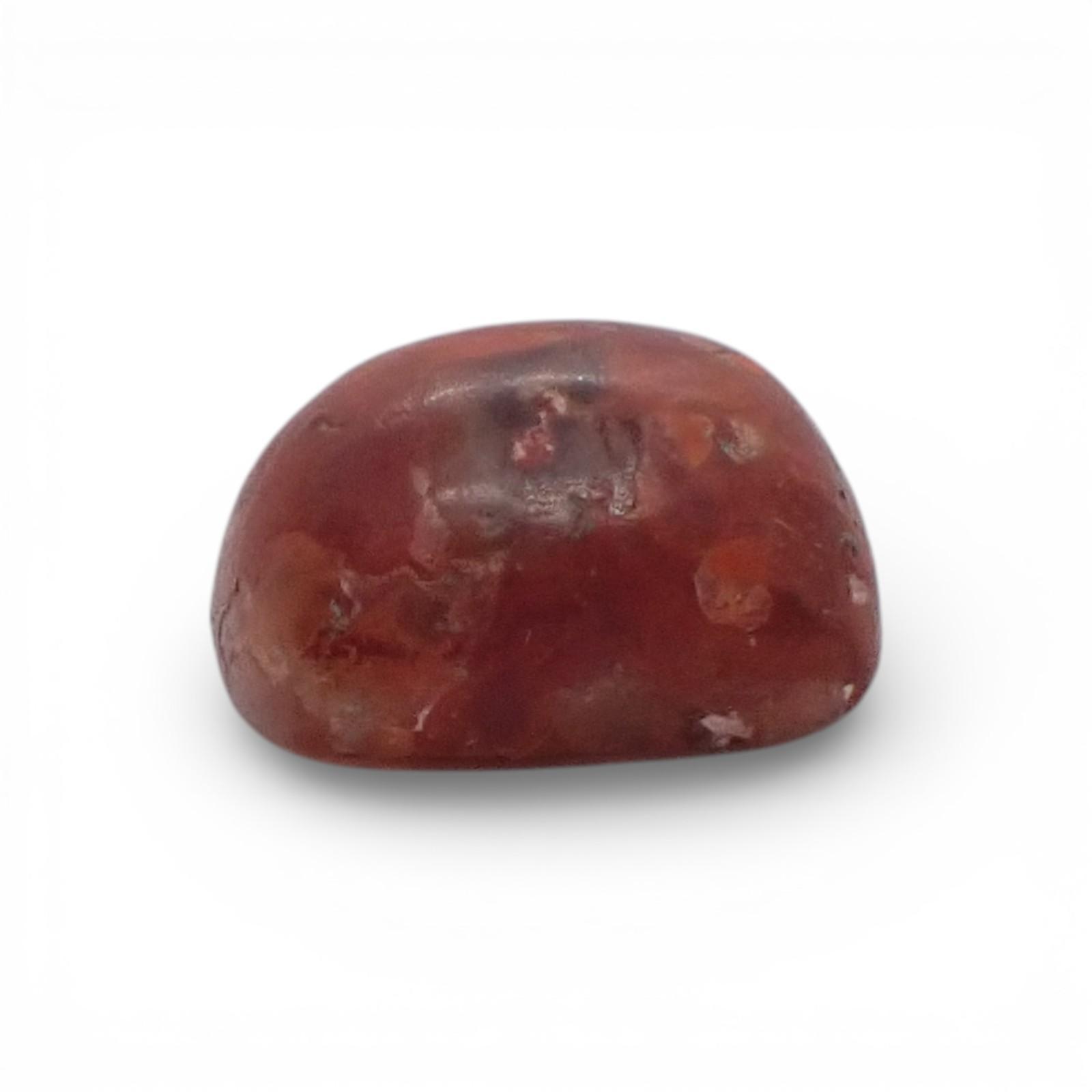
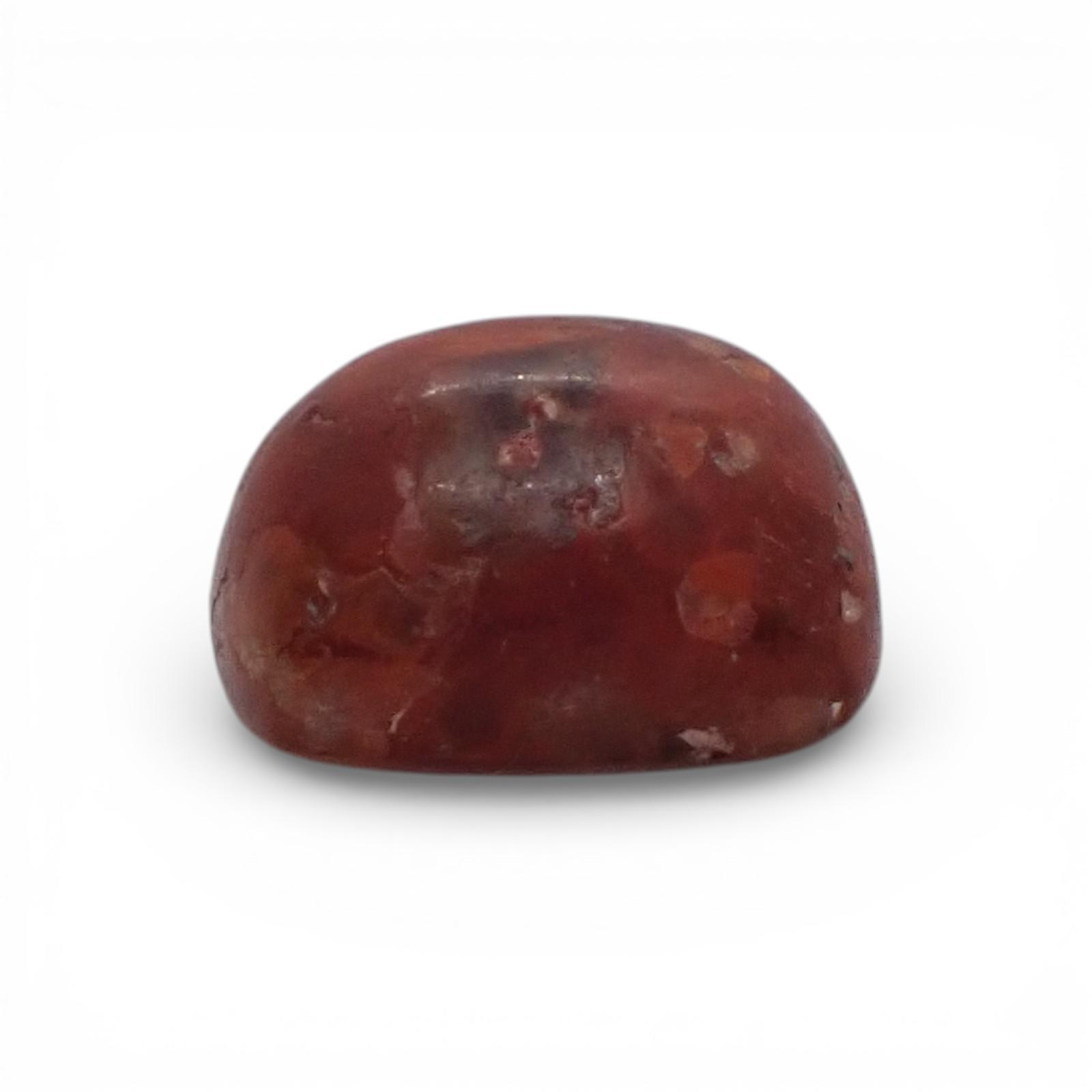
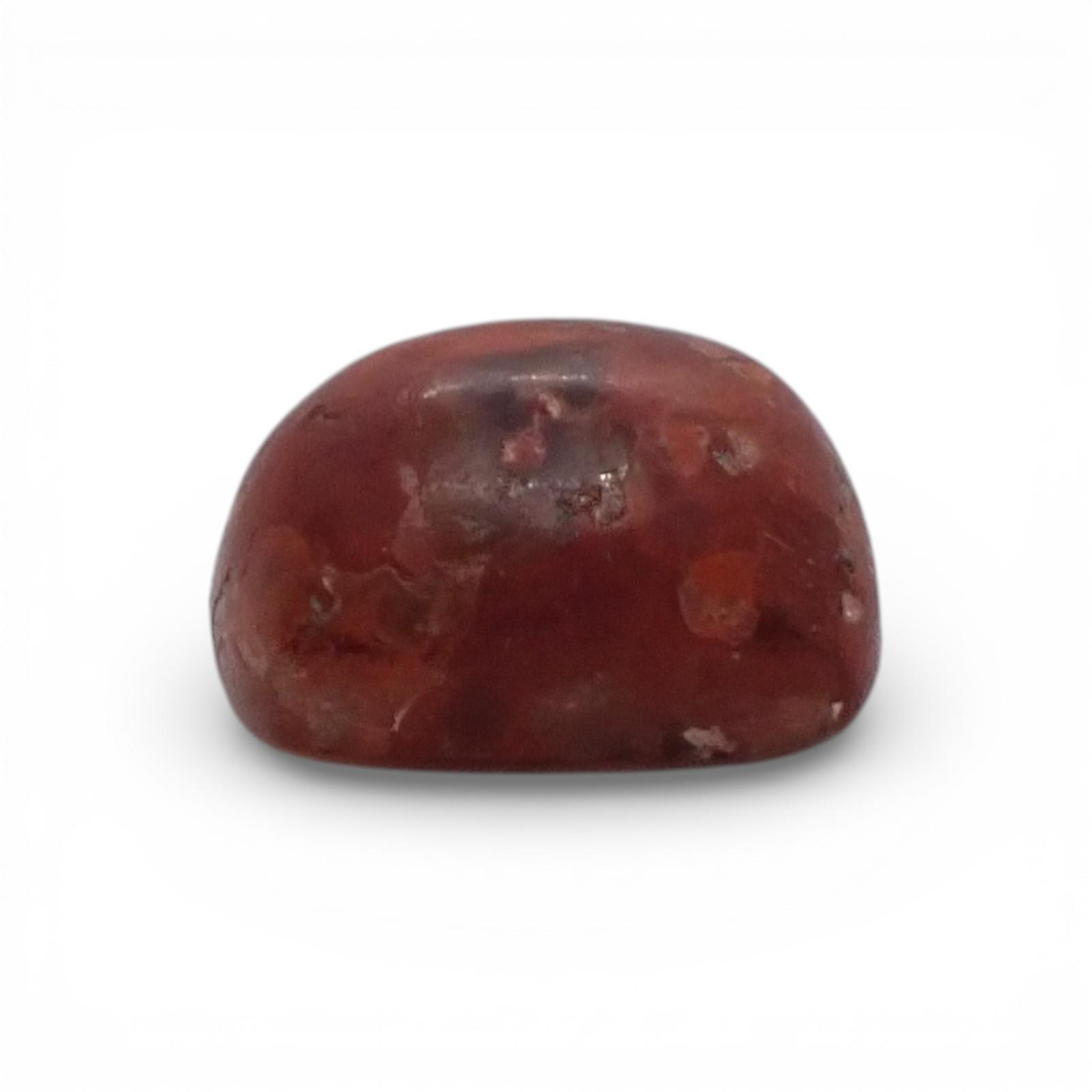
3.15 ct POLYHALITE – USA
EXPERT VERIFIED
- Expert Verified Gemstone
- Fast Handling & Shipping
- Secure Vault Packaging
$ 200
Offer amount Feild


Smart Collector Choice


Pay with Crypto & Get 10% Automatic Discount

Availability: 1 in stock


- Freakingcats Gemstone Database
Polyhalite
Polyhalite represents the “multi-salt” complexity of the evaporite world. A hydrated sulfate of potassium, calcium, and magnesium, it is a species I have always respected for its unique formation; unlike simpler salts, it requires a very specific “brine chemistry” to precipitate all three cations into a single, stable lattice. It typically presents in shades of “brick-red,” “flesh-pink,” or a soft “salmon-orange,” colors usually gifted by microscopic inclusions of iron oxide (hematite). For the specialist, Polyhalite is a prize of evaporitic discipline; it is a “heavy” salt that offers a waxy to vitreous luster and a dense, compact habit. It is a stone of “ancient oceans,” providing a sophisticated, “earth-tone” aesthetic that makes it a vital structural species for the systematic vault.
The Heritage & Discovery
Historical Significance: Polyhalite is a vital species for the global agricultural industry, serving as a high-value, multi-nutrient fertilizer (often marketed as “Polysulphate”). Historically, it was discovered as a massive component of the great Zechstein salt deposits of Europe. In the world of fine minerals, it is celebrated for its massive, “marbled” appearance and its rarity as well-defined crystals. It stands as a symbol of subterranean abundance, bridging the gap between industrial potash mining and the elite world of “rare-cation” sulfates. It serves as a reminder that the evaporation of ancient seas can create chemical masterpieces that are as functional for life as they are fascinating for the collector.
Discovery: The name is derived from the Greek polys (many) and hals (salt), a direct reference to the multiple metals (K, Ca, Mg) in its formula. It was formally named in 1818 based on specimens from its type-locality in Austria. Scientifically, it is a complex hydrated sulfate. Its discovery provided mineralogists with the first clear look at how triple-cation sulfates stabilize in the late stages of seawater evaporation. My own respect for this material is rooted in its “dense” presence; compared to the brittle “shattering” feel of Halite, Polyhalite has a much tougher, more “stone-like” consistency that reflects its complex internal bonding.
Important Mines: The undisputed world capital for the finest, most massive Polyhalite deposits is the Boulby Mine in North Yorkshire, England, which sits on the edge of the Zechstein Basin. I also have a high regard for the historic occurrences in Ischl, Austria, and the vast, “red-banded” deposits in the Permian Basin of Texas and New Mexico, USA. For the vault, I prioritize the English material for its high purity and the Austrian specimens for their historical pedigree as the type-locality.
Mineralogical Profile
Description: Polyhalite is a potassium magnesium calcium sulfate that crystallizes in the triclinic system, though it is almost exclusively found in massive, fibrous, or microcrystalline forms. It sits at a 3.5 on the Mohs scale, making it slightly harder than common Halite or Gypsum. Unlike many other evaporites, it is only slowly soluble in water, which gives it a superior stability in a collection. It is characterized by its waxy to vitreous luster and its characteristic “warm” color palette.
One of its most identifying traits is its bitter-salty taste (though less “sharp” than Halite) and its specific gravity ($SG \approx 2.78$), which makes it feel notably “solid” for a salt. It has a moderate refractive index ($n \approx 1.54$ to 1.56). Because it forms in marine evaporite sequences, it is often found in association with Halite, Anhydrite, and Sylvite. When I select a piece for the collection, I look for “vibrant” red coloration and a lack of “grey” anhydrite contamination, as these highlight the sophisticated, three-dimensional chemistry of the mineral’s formation. It is a dense, high-vibration mineral that offers a unique, “elemental-matrix” beauty unlike any other sulfate species.
Chemical Formula: K2Ca2Mg(SO4)4·2H2O


