

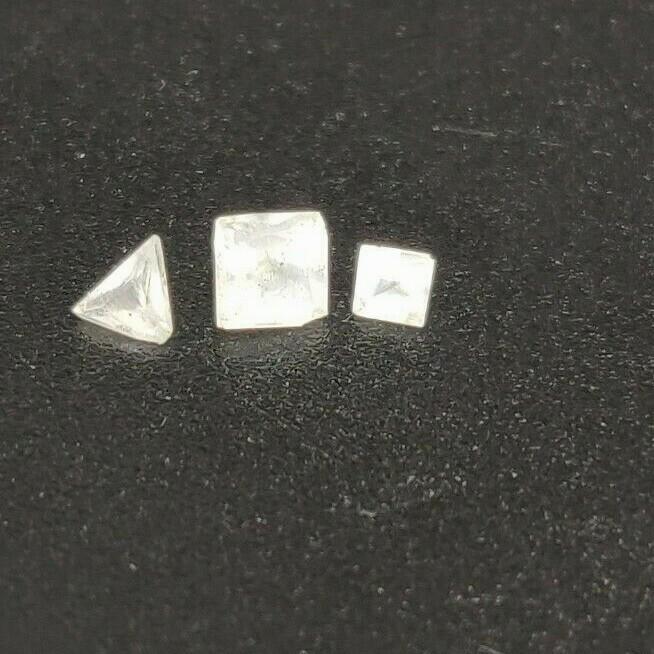
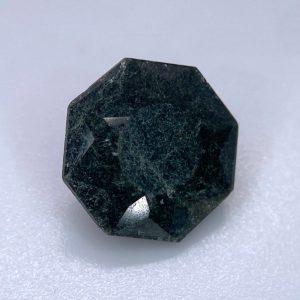
3 pc 0.20 ct SELENITE – USA
EXPERT VERIFIED
- Expert Verified Gemstone
- Fast Handling & Shipping
- Secure Vault Packaging
$ 40 Original price was: $ 40.$ 24Current price is: $ 24.
Offer amount Feild


Smart Collector Choice


Pay with Crypto & Get 10% Automatic Discount

Availability: 1 in stock
- Freakingcats Gemstone Database
Of course, Selenite dissolves in water and was long considered impossible to facet—but we did it. Faceting a mineral with a Mohs hardness of only 2, which can be scratched by a fingernail and is sensitive to almost every environmental factor, is the ultimate test of a lapidary’s patience. Named after the Greek goddess of the moon, Selene, it possesses a pearly, moonlike luster and a high, white-light energy that seems to glow from within. While most see it only as raw wands or "logs," a faceted Selenite is a revelation; it captures a soft, ethereal brilliance that looks like a drop of solidified moonlight. It is a fragile masterpiece that defies the traditional boundaries of the gem-cutter's art.
The Heritage & DiscoveryHistorical Significance: Selenite is the crystalline variety of Gypsum and has been used by humanity for centuries, from ancient windowpane material to ornate carvings. Historically, it is celebrated for its transparency and its ability to split into thin, clear sheets. In modern times, it has become a cornerstone of metaphysical practices, revered as a high-vibration stone used for cleansing and purifying energy. Because it is water-soluble, it serves as a physical reminder of the delicate balance of nature—a mineral that can be reclaimed by the very element that helped form it if not handled with absolute care.
Discovery: As a variety of Gypsum, Selenite has been known since antiquity. The name was officially popularized to distinguish these transparent, colorless crystals from the more fibrous "Satin Spar" or the massive "Alabaster." Its presence in the fossil record and in massive evaporite deposits has helped geologists understand the ancient drying of seas and the formation of the Earth's sedimentary crust.
Important Mines: Some of the most spectacular Selenite in the world comes from the Naica Mine in Chihuahua, Mexico, home to the "Cave of the Crystals," where giant Selenite beams reach over 11 meters in length. Major commercial and gem-grade deposits are also found in Morocco, Brazil, and the USA (notably Utah). I source the clearest, most inclusion-free material for our faceting projects, usually from the Moroccan or Mexican deposits, to ensure that the final gem has that signature "lunar" purity.
Mineralogical ProfileDescription: Selenite is a hydrous calcium sulfate and a variety of Gypsum, crystallizing in the monoclinic system. It sits at a 2 on the Mohs scale, making it one of the softest minerals ever to be faceted. It is characterized by its vitreous to pearly luster and its perfect cleavage in one direction.
One of its most unique traits is its solubility; it should never be soaked in water as it will eventually dissolve. When we facet Selenite, we must use specialized, water-free lubricants and extremely light pressure to avoid splintering the delicate crystal lattice. The result is a stone that is exceptionally clear, with a low refractive index that gives it a soft, "watery" brilliance. It is a high-maintenance gem that requires a dry, stable environment to preserve its polished faces.
Chemical Formula: CaSO4·2H2O
Related products
- Sale!Suggest a Price
![1.63 ct CATS EYE ALEXANDRITE - INDIA]()
- Sale!Suggest a Price
![14.30 ct 2 pc AERINITE - SPAIN]()
- Sale!Suggest a Price
![12.75 ct AMAZONITE - USA]()
- Sale!Suggest a Price
![5.35 ct AERINITE - SPAIN]()


