

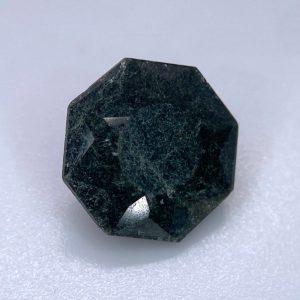
LOT 6 pc 13.15 ct KUTNOHORITE – USA
EXPERT VERIFIED
- Expert Verified Gemstone
- Fast Handling & Shipping
- Secure Vault Packaging
$ 240 Original price was: $ 240.$ 144Current price is: $ 144.
Offer amount Feild


Smart Collector Choice


Pay with Crypto & Get 10% Automatic Discount

Availability: 1 in stock
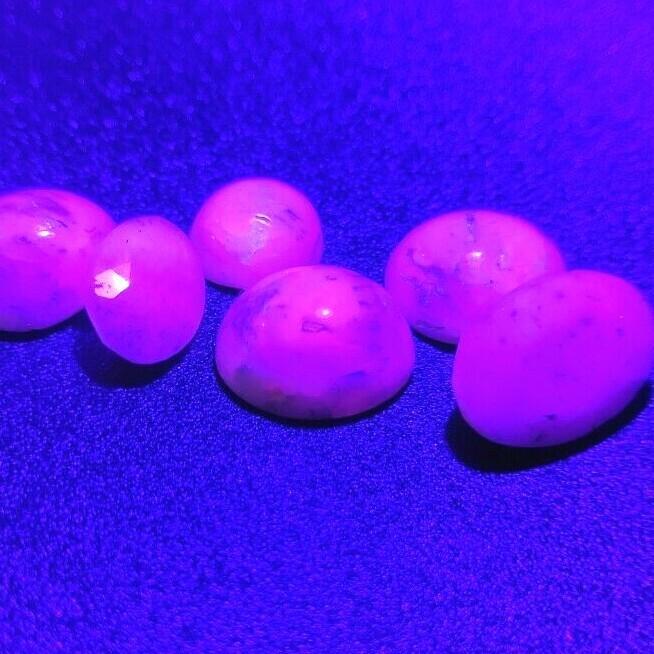
- Freakingcats Gemstone Database
Kutnohorite
Kutnohorite is a gemstone that represents the delicate, “blush-toned” side of the carbonate world. A member of the Dolomite group, it is a mineral I have always admired for its soft, pastel aesthetics and its unique, “flower-like” crystal habits. I am particularly drawn to its pale pink to “flesh-colored” hues, which are the result of its high manganese content. It typically forms as radiating, fan-like aggregates or as rounded, “cauliflower” masses with a vitreous to pearly luster. For the specialist collector, Kutnohorite is a prize of chemical transition—it sits between the calcium-rich Calcite and the manganese-rich Rhodochrosite. It is a stone of structural elegance, offering a “velvety” visual depth that makes it a standout for the systematic vault.
The Heritage & Discovery
Historical Significance: Kutnohorite is a vital mineral for understanding the complex “substitution” of manganese in carbonate systems. Historically, it was often confused with pink varieties of Dolomite or Ankerite until its distinct structural identity was mapped. In the world of fine minerals, it is celebrated for its rare, “acicular” (needle-like) sprays, which are far more elusive than the rhombohedral crystals of its cousins. It stands as a symbol of gentle transition and structural refinement, bridging the gap between common sedimentary rocks and the elite world of rare, Manganese-bearing minerals found in deep hydrothermal veins.
Discovery: The mineral was first described in 1901 and was named after its type-locality: Kutná Hora in the Czech Republic. Its discovery provided mineralogists with the first clear look at how manganese can order itself within the dolomite lattice. Since its naming, it has remained a sought-after rarity, especially when found in the “gemmy” radiating habits that made the historic European and modern South African mines famous.
Important Mines: The legendary and type-locality for Kutnohorite is Kutná Hora, Central Bohemia, Czech Republic. However, some of the most spectacular, “neon-pink” radiating sprays for the modern collector come from the Wessels Mine and the N’Chwaning Mines in the Kalahari Manganese Field, South Africa. I also have a high regard for the classic specimens from Franklin, New Jersey, USA. For the vault, I prioritize the South African material for its exceptional crystal definition and the Czech pieces for their unmatched historical pedigree.
Mineralogical Profile
Description: Kutnohorite is a calcium manganese magnesium iron carbonate that crystallizes in the trigonal system. It sits at a 3.5 to 4 on the Mohs scale, making it a delicate mineral that should be protected from physical shock and acids. It is characterized by its vitreous to pearly luster and its range of pink, white, and pale brown colors.
One of its most identifying traits is its habit—it almost always forms as radiating, “fan-like” aggregates of needle-like crystals or as rounded, botryoidal crusts. It has a moderate refractive index ($n \approx 1.51$ to $1.72$) and a characteristic “creamy” translucency. Because it is a carbonate, it will effervesce (fizz) in warm dilute hydrochloric acid. When I select a piece for the collection, I look for “sharp” radiating sprays and a vibrant pink color, as these represent the species in its most perfect and aesthetic form. It is a light, high-vibration mineral that offers a unique, “floral” beauty unlike any other carbonate species.
Chemical Formula: Ca(Mn2+,Mg,Fe2+)(CO3)2
Related products
- Sale!Suggest a Price
![1.05 ct ANHYDRITE - MEXICO]()
- Sale!Suggest a Price
![14.30 ct 2 pc AERINITE - SPAIN]()
- Sale!Suggest a Price
![3.90 ct AERINITE - SPAIN]()
- Sale!Suggest a Price
![5.35 ct AERINITE - SPAIN]()


