

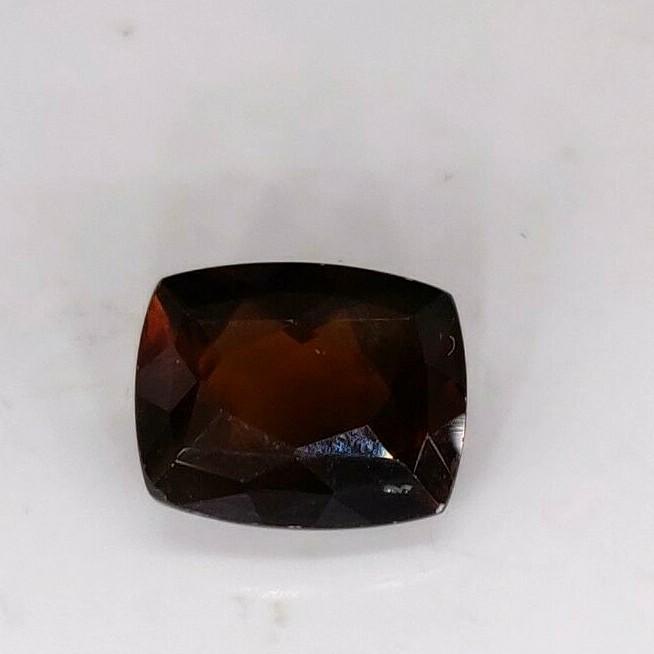
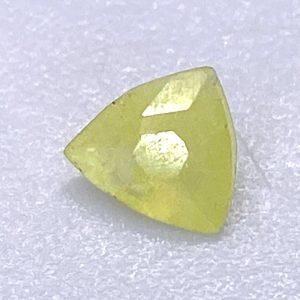
2.00 ct ENSTATITE – INDIA
EXPERT VERIFIED
- Expert Verified Gemstone
- Fast Handling & Shipping
- Secure Vault Packaging
$ 120 Original price was: $ 120.$ 72Current price is: $ 72.
Offer amount Feild


Smart Collector Choice


Pay with Crypto & Get 10% Automatic Discount

Availability: 1 in stock
Gemstone Details
Gem Variety:
Enstatite
Origin:
India
Carat Weight:
2.00
Length (mm):
8.7
Width (mm):
6.2
Depth (mm):
4.5
Shape:
Emerald
Color
Cognac
Treatment:
No Treatment
Certificate:
On Request
- Freakingcats Gemstone Database
Enstatite (India) Enstatite represents the "iron-tempered" heart of the orthopyroxene group. A magnesium silicate, it is a species I have always respected for its incredible structural resilience and its role as a fundamental building block of both the Earth's mantle and stony meteorites. While it can occur in "icy" clear or "soft" grey varieties, the definitive gem-grade Enstatite from the historic deposits of India is a rich, "bronze-green" or "deep-olive" that feels remarkably grounded. For the specialist, Indian Enstatite is a prize of metamorphic discipline; it offers a sub-vitreous to pearly luster and a "metallic" depth that makes it a true "warrior’s stone" for the systematic vault. The Heritage & Discovery Historical Significance: Enstatite is a vital species for understanding the high-pressure environments of the deep crust. Historically, it has been a staple of the Indian gemstone trade, emerging from the same legendary gravels that have produced fine Sapphires and Garnets for centuries. In the world of fine minerals, it is celebrated for its extraordinary heat resistance—a trait that earned the mineral its name. It stands as a symbol of endurance and structural focus, bridging the gap between common rock-forming silicates and the elite world of "earth-tone" precious gems. It serves as a reminder that the most "rugged" minerals in nature often harbor the most stable and balanced internal symmetries. Discovery: The mineral was formally named in 1855 by G.A. Kenngott. The name is derived from the Greek enstates, meaning "adversary" or "opponent," in reference to its refractory nature and its ability to withstand extreme temperatures without melting. Scientifically, it is the magnesium endmember of the enstatite-ferrosilite series. Its discovery in metamorphic skarns provided mineralogists with the first clear look at how magnesium silicates organize under intense thermal stress. My own respect for this material grew from observing its "velvety" pleochroism; in the best Indian specimens, the shift between "forest-green" and "golden-brown" adds a liquid depth that is unmistakable to the trained eye. Important Mines: While fine Enstatite is found in Myanmar and Tanzania, the undisputed world capital for the "bronze-hued" star and facet-grade material is South India, particularly the Tamil Nadu and Mysore regions. These Indian "alluvial" deposits set the global benchmark for color saturation and "silky" chatoyancy. I also have a high regard for the spectacular "chrome-rich" varieties from the Embilipitiya region in Sri Lanka. For the vault, I prioritize the Indian material for its unmatched "earthy" brilliance and its historical pedigree as a pillar of the subcontinent's mineral wealth. Mineralogical Profile Description: Enstatite is a magnesium silicate that crystallizes in the orthorhombic system. It sits at a 5.5 to 6 on the Mohs scale, making it a relatively durable mineral, though its perfect cleavage requires a master lapidary's touch when cutting. It is characterized by its vitreous to pearly luster and its unmistakable "olive-to-bronze" color palette. One of its most identifying traits is its perfect prismatic cleavage ({210}), which intersects at nearly 90 degrees. It has a moderate refractive index ($n \approx 1.65$ to 1.68) and a specific gravity ($SG \approx 3.2$ to 3.3). Because it is a primary rock-forming mineral, it is often found in association with Olivine, Phlogopite, and Diopside. When I select a piece for the collection, I look for "eye-clean" transparency and a lack of the "fibrous" inclusions that can lead to brittleness, as these highlight the sophisticated, three-dimensional geometry of the mineral's growth. It is a dense, high-vibration mineral that offers a unique, "tempered" beauty unlike any other pyroxene species. Chemical Formula: Mg2Si2O6
Related products
- Sale!Suggest a Price
![1.48 ct ANDALUSITE - BRAZIL]()
- Sale!Suggest a Price
![1.40 ct ANDALUSITE - BRAZIL]()
- Sale!Suggest a Price
![12.75 ct AMAZONITE - USA]()
- Sale!
![0.32 ct ADAMITE - MEXICO]()


