
16.24 ct TANZANITE – TANZANIA
EXPERT VERIFIED
- Expert Verified Gemstone
- Fast Handling & Shipping
- Secure Vault Packaging
$ 250
Offer amount Feild


Smart Collector Choice


Pay with Crypto & Get 10% Automatic Discount

Availability: 1 in stock
Gemstone Details
Gem Variety:
Tanzanite
Origin:
Tanzania
Carat Weight:
16.24
Length (mm):
17.50
Width (mm):
17.40
Depth (mm):
9.00
Shape:
Trillion
Color
Bi-Color/Multicolor
Treatment:
No Treatment
Certificate:
On Request
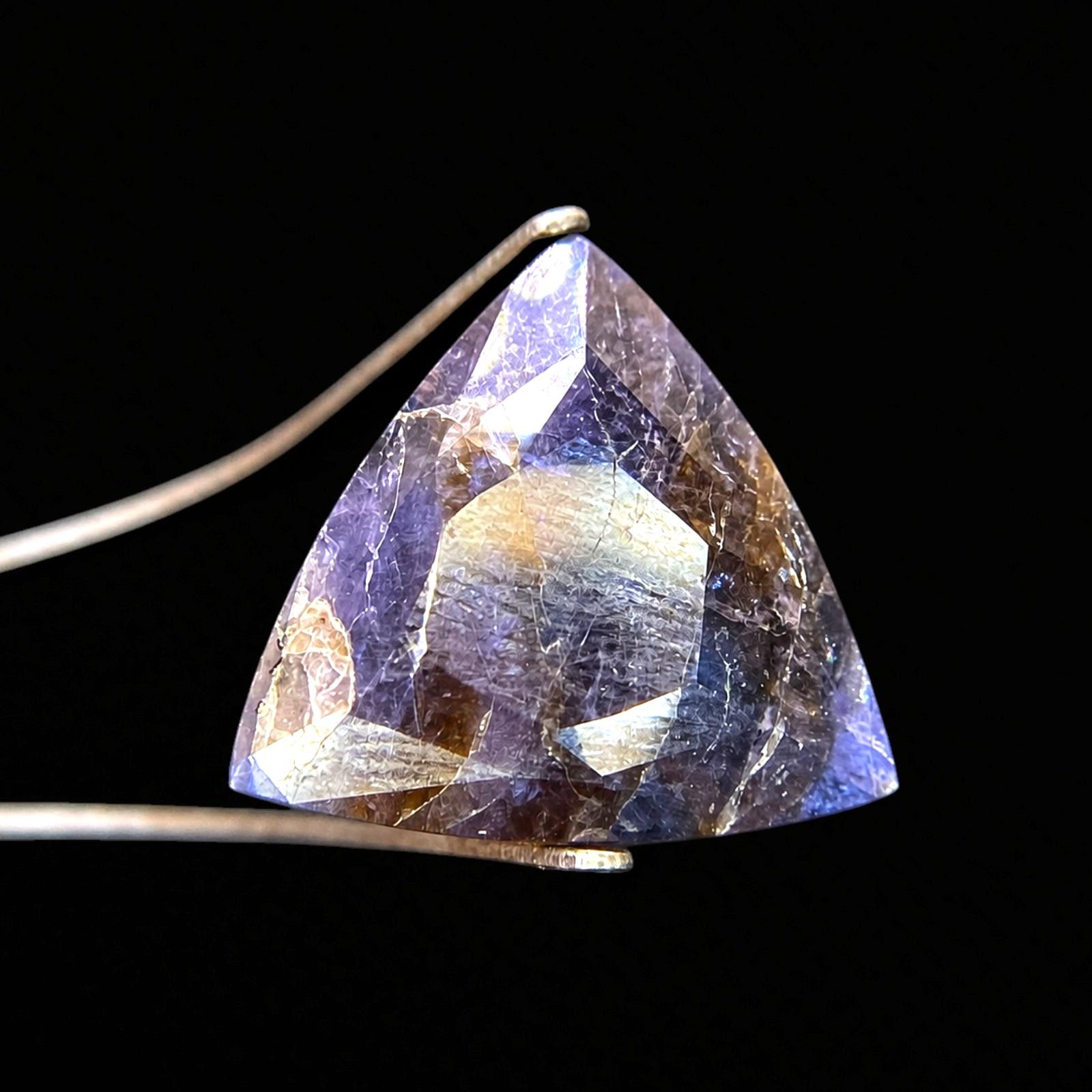
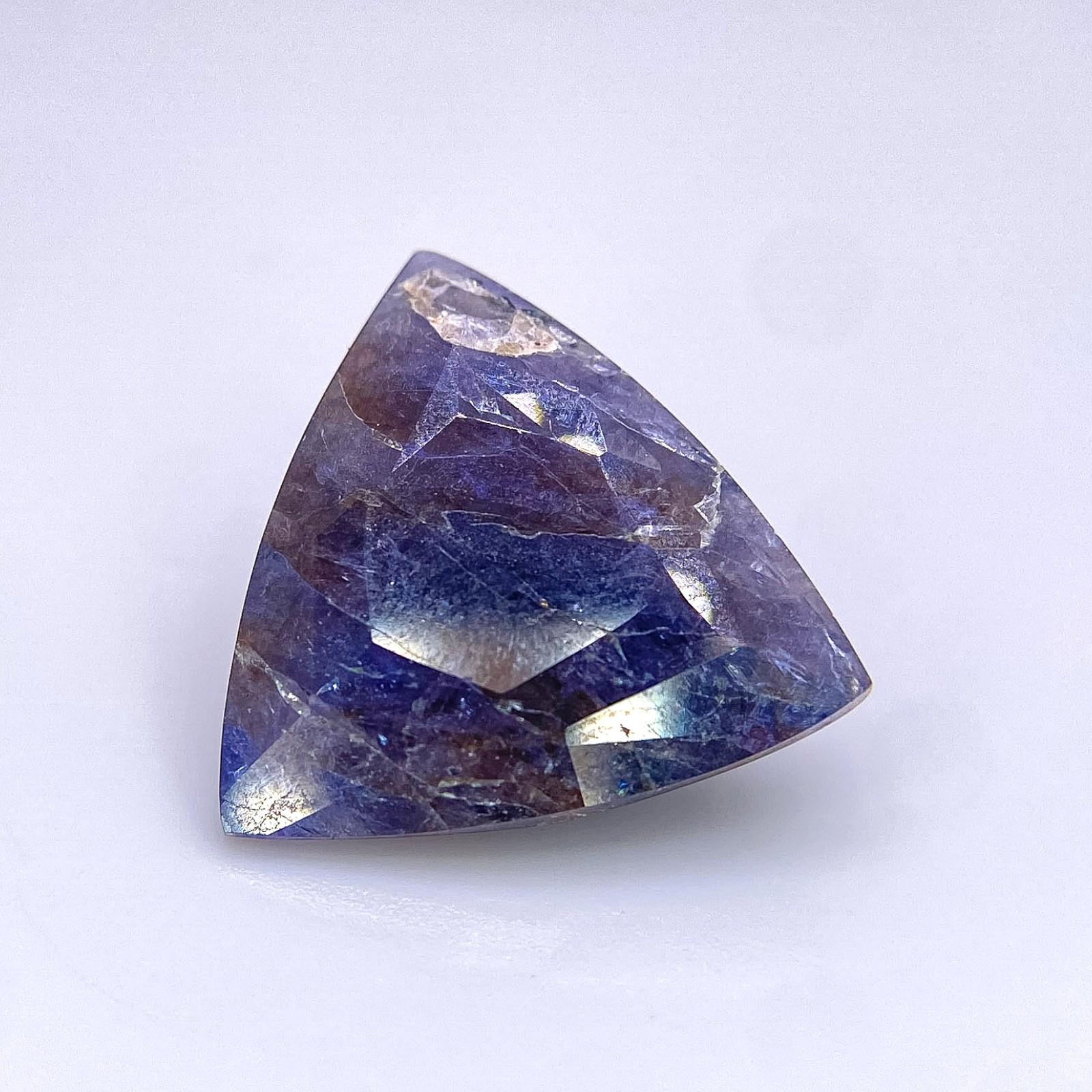
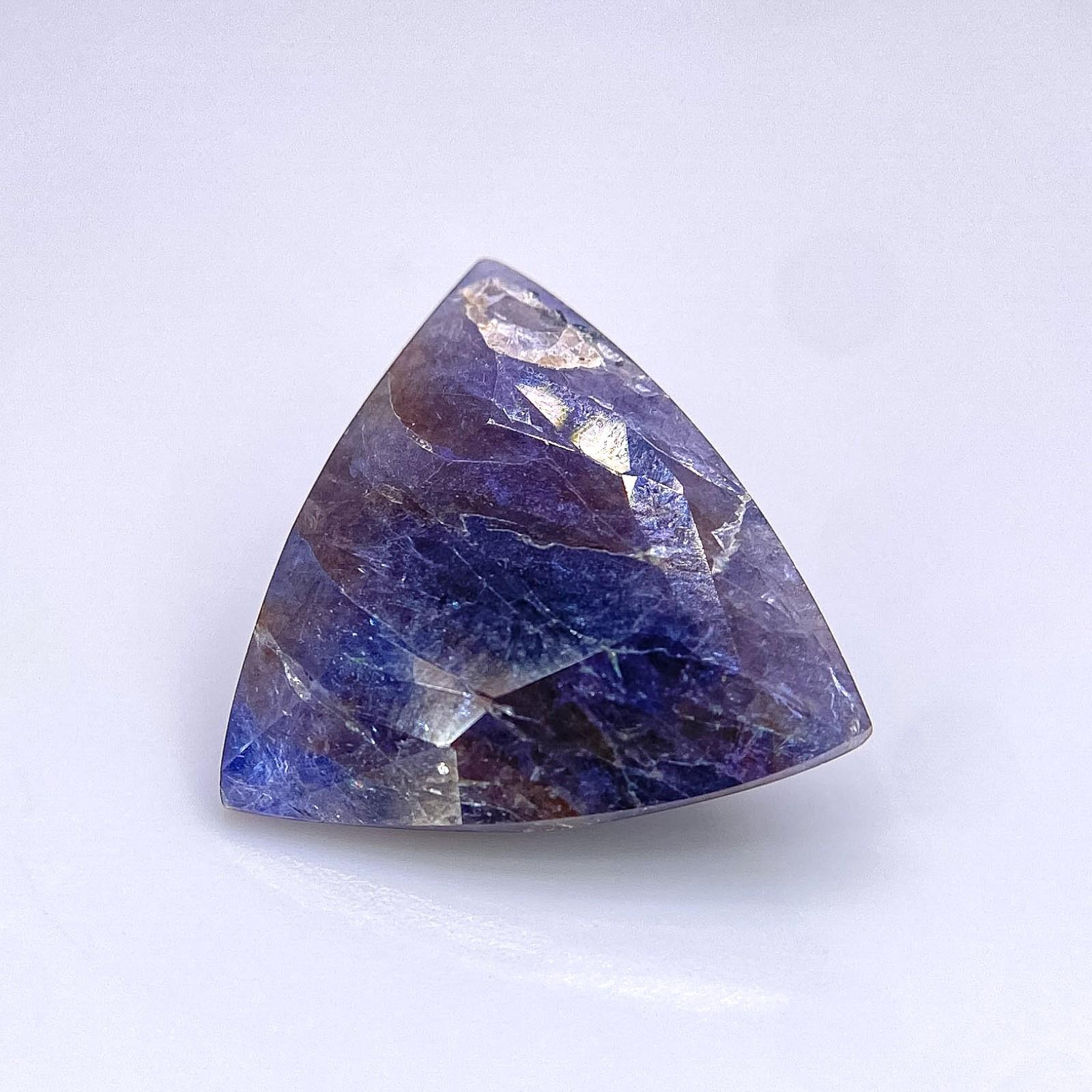
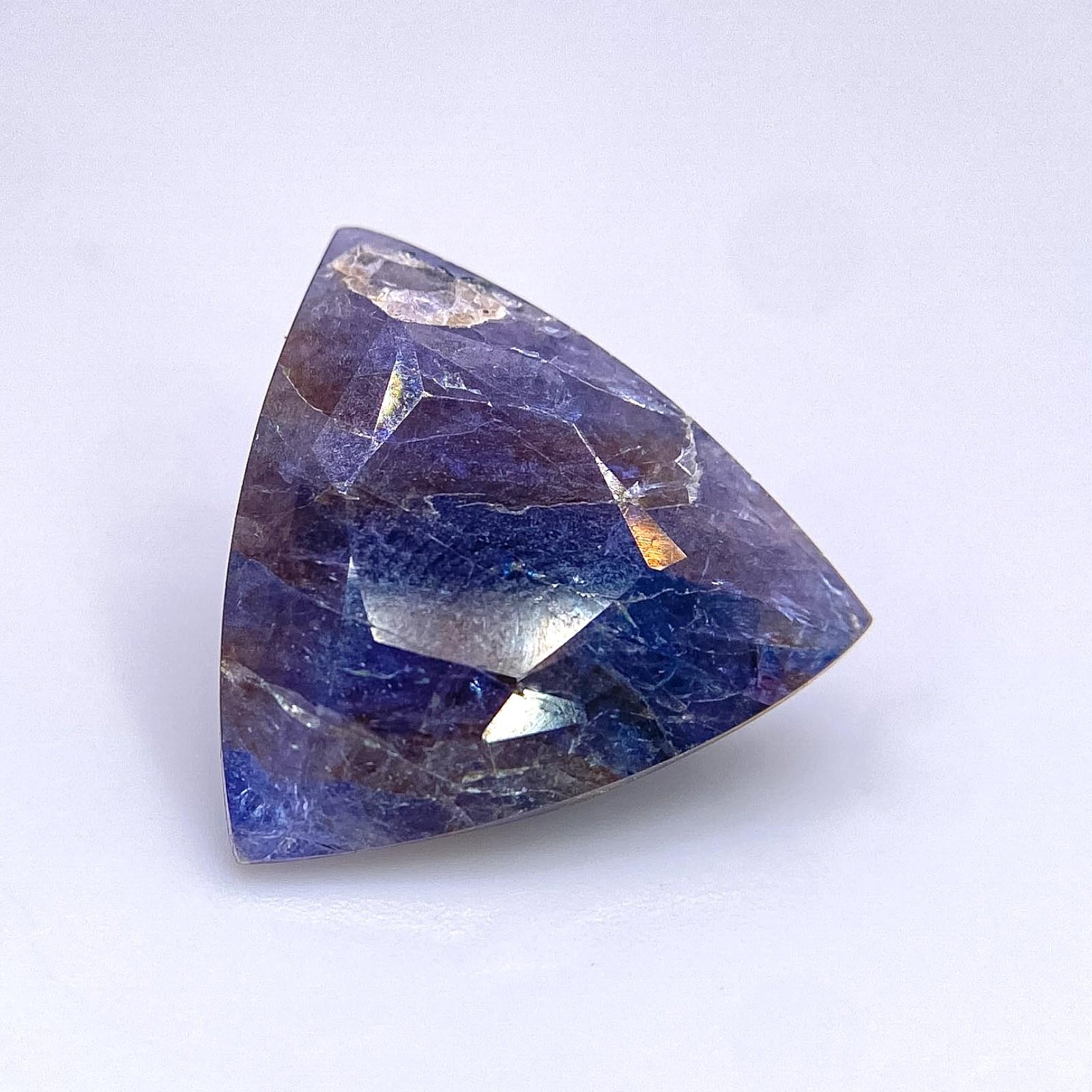
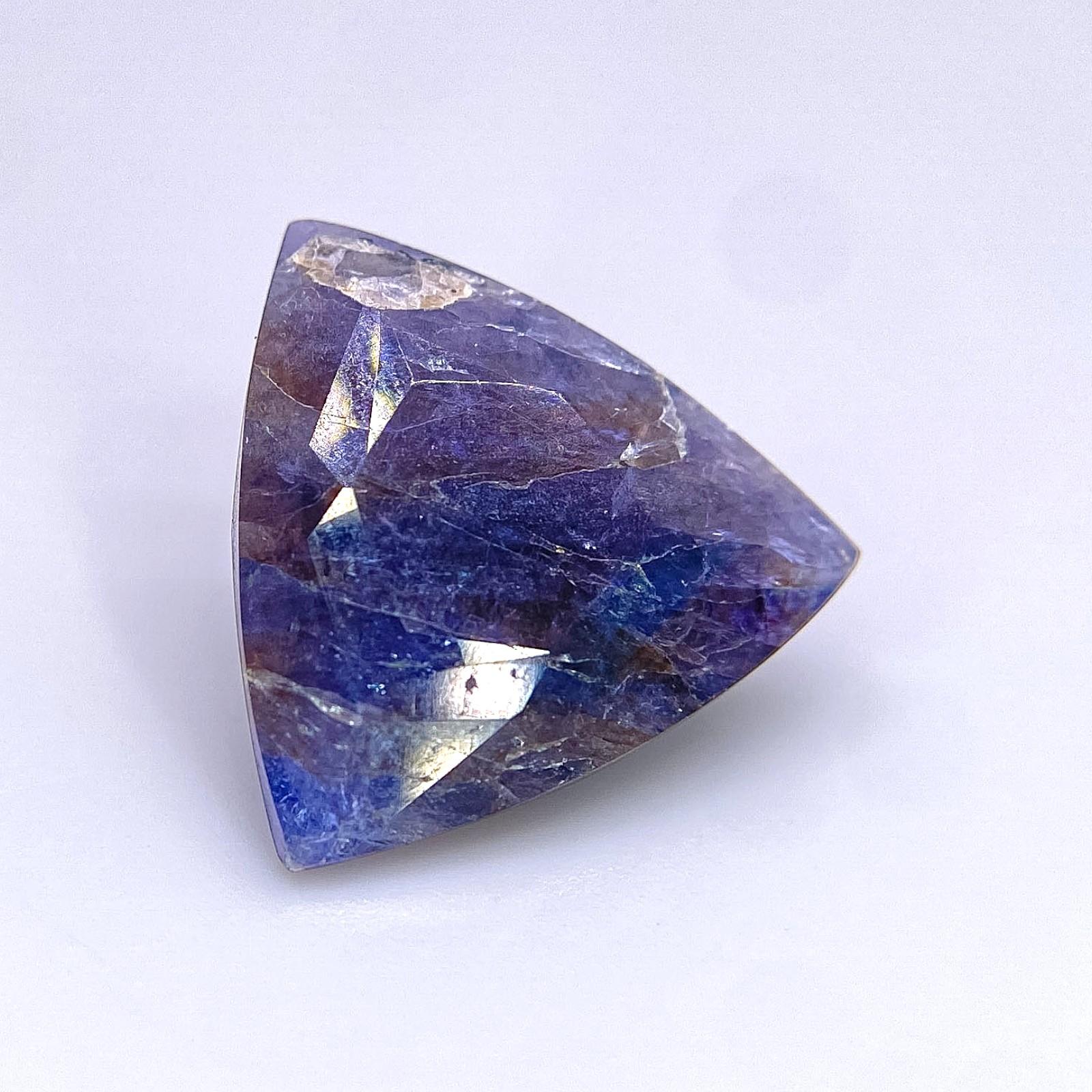
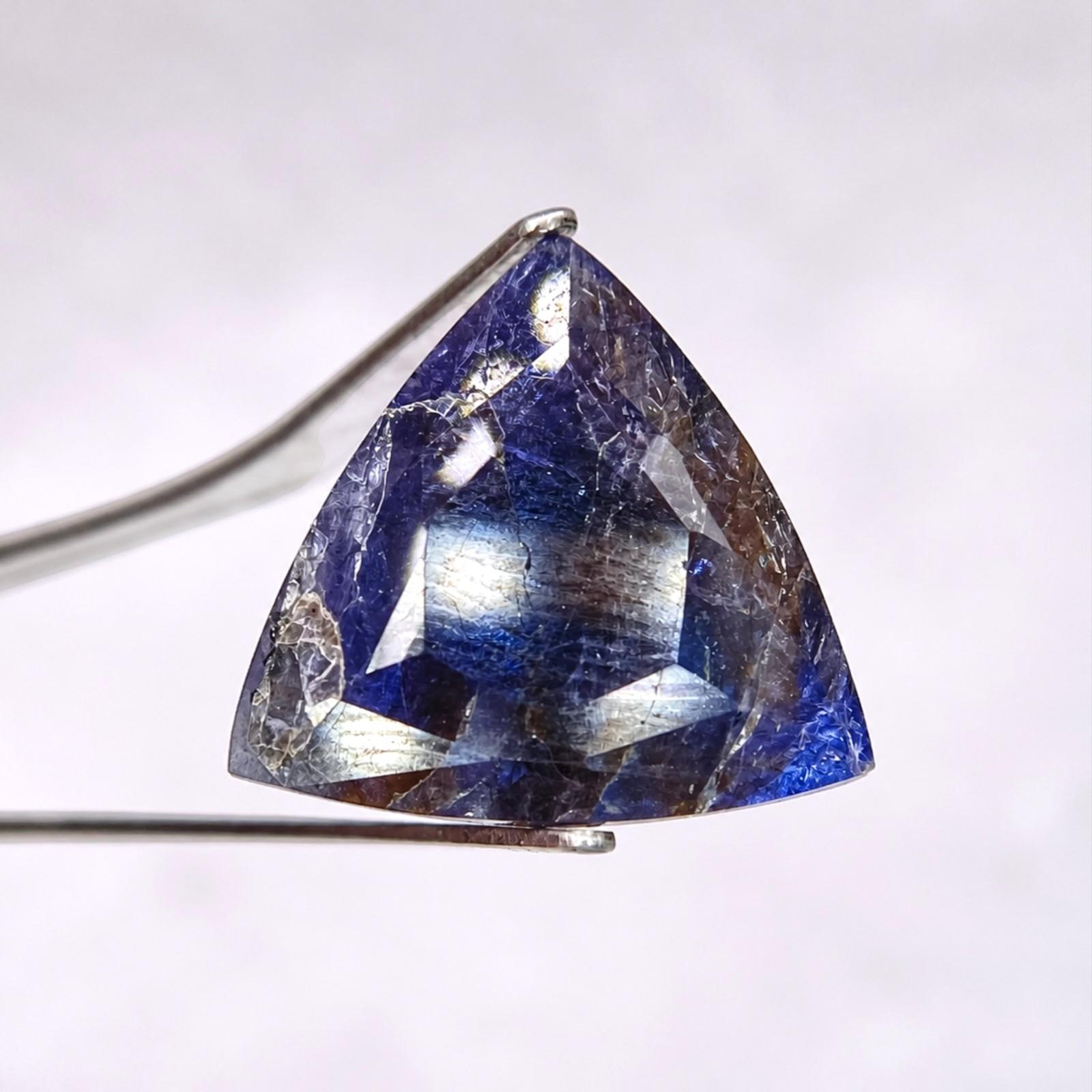
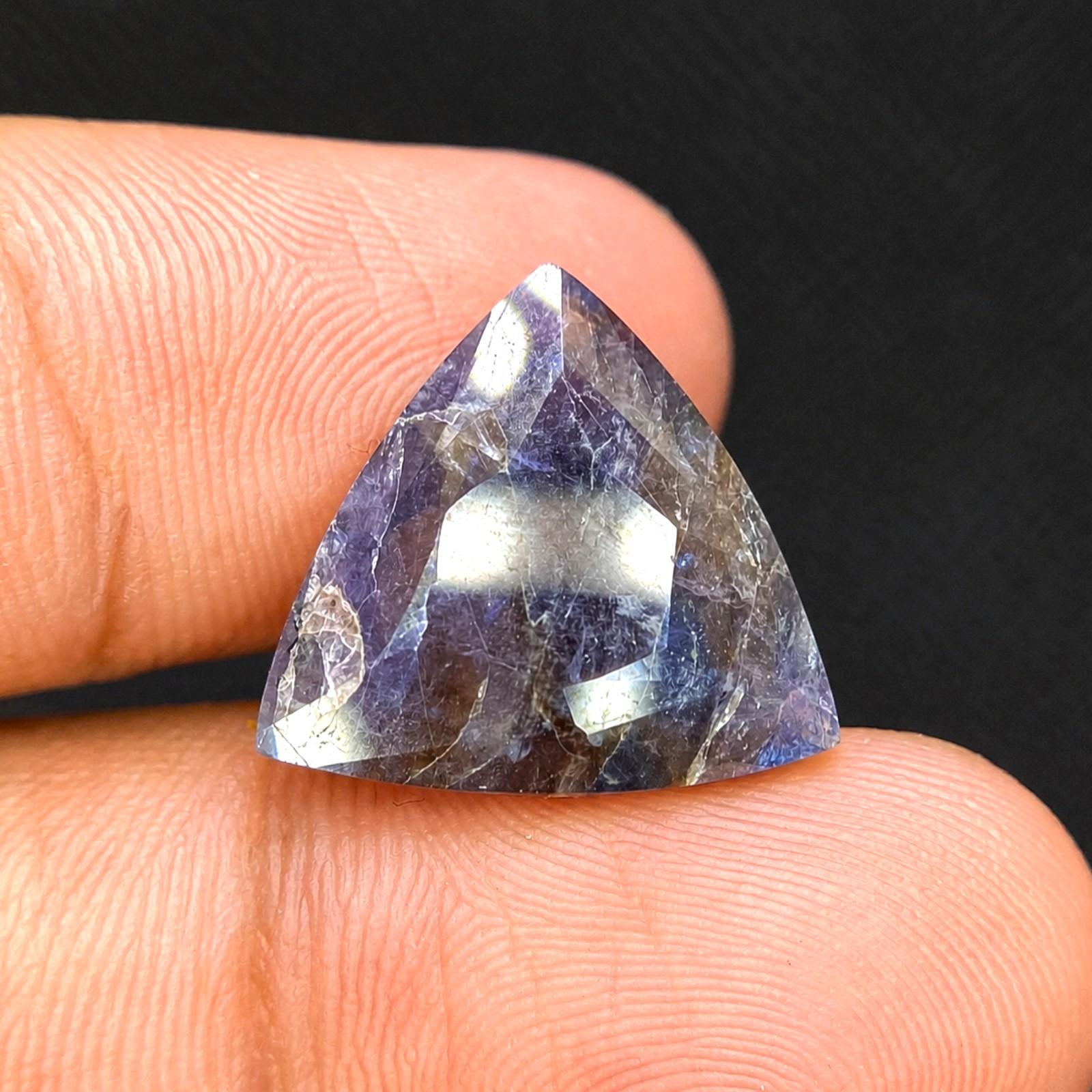


- Freakingcats Gemstone Database
Tanzanite (Tanzania)
Tanzanite—the legendary blue-to-violet zoisite from the Merelani Hills of Tanzania—represents the absolute global benchmark for pleochroic color saturation, structural vanadiferous chemistry, and single-source geological exclusivity. A complex calcium aluminum silicate, it is a mineral I have always respected for its “electric-cobalt” to “vivid-velvet-violet” optical transformation and its status as a masterpiece of “orthorhombic” structural discipline. For the specialist, a top-tier Tanzanite—whether presenting as an intensely saturated, loop-clean faceted stone or a sharply terminated, lustrous natural prism—is a prized trophy of deep-crustal metamorphic fluid activity; it offers a bright vitreous luster and a commanding, light-gathering presence that makes it an essential anchor for the systematic vault. As an artist, I find the breathtaking, three-dimensional color shift between royal blue, deep violet, and warm bronze-magenta under changing light angles to be one of nature’s most sophisticated and visually arresting canvases.
The Heritage & Discovery
Historical Significance
Tanzanite is a vital index species for decoding the specialized metamorphic pressures, temperatures, and vanadium-rich metasomatic fluid interactions that occurred during the Pan-African Orogeny. Historically, the species holds a unique and prestigious place in modern gemology: discovered in 1967 near the foot of Mount Kilimanjaro, it remains one of the most famous gemological finds of the 20th century. Named by Tiffany & Co. in honor of its sovereign homeland, Tanzanite stands as an enduring symbol of geological rarity, being sourced exclusively from a tiny, five-square-kilometer strip of land on the entire planet.
Discovery
The unearthing of vibrant violet-blue zoisite crystals in the shadow of Mount Kilimanjaro transformed our understanding of the epidote mineral group. Scientifically, Tanzanite owes its extraordinary color profile to trace substitutions of vanadium ($\text{V}^{3+}$) occupying aluminum sites within the zoisite crystal lattice. In its unheated natural state, the mineral exhibits extreme trichroism—simultaneously displaying blue, purple, and yellowish-bronze along its three primary crystallographic axes. Controlled, low-temperature thermal treatment (whether natural subterranean heat or careful bench heating) shifts the vanadium ions, eliminating the brown component to permanently concentrate its famous, electric cobalt-violet body color. My own respect for this material grew from analyzing its diagnostic optical traits; specifically, observing its intense pleochroism through a dichroscope—watching the stone shift cleanly from sapphire-blue to rich royal-violet with a slight shift in angle—is an optical phenomenon that is deeply captivating to the trained eye.
Important Mines
The world’s sole commercial capital for this species is the Merelani (Mirerani) Hills, located in the Simanjiro District of the Manyara Region in northern Tanzania. The mining zone is strictly divided into four primary blocks—Block A, Block B, Block C, and Block D—with the deepest underground shafts penetrating rich, folded graphite-calc-silicate schists and marble horizons. Block C and Block D are historically world-famous for producing the largest, most intensely saturated gem-quality crystals and complex metallic clusters associated with green tsavorite garnet and prehnite. For the vault, I prioritize specimens that exhibit high optical transparency, deep violet-blue saturation, sharp undamaged crystal faces, and verified structural integrity.
Mineralogical Profile
Description
Tanzanite is the blue-to-violet vanadiferous variety of Zoisite, a calcium aluminum silicate hydroxy-sorosilicate that crystallizes in the orthorhombic system. It sits at a 6.5 to 7 on the Mohs scale, featuring a relatively brittle tenacity and one direction of perfect pinacoidal cleavage, requiring careful archival handling and specialized lapidary orientation to safeguard its delicate crystal edges and cleavage planes from physical shock or stress. It is characterized by its exceptionally bright vitreous surface luster and an unmistakable, light-shifting color palette dominated by royal blue, rich indigo, neon violet, and deep velvet-purple.
One of its most identifying traits is its strong prismatic habit, routinely forming stout, vertically striated rectangular prisms with sharp dome or pinacoid terminations that cleanly map out historical fluid channels through metamorphic fold hinges. It possesses a high refractive index running from approximately 1.691 to 1.700, giving it a bright, lively surface polish, and a substantial average specific gravity ranging between 3.35 and 3.38. Because it forms in high-grade metamorphic calc-silicate rocks and hydrothermally altered marbles, it is commonly found in close association with Tsavorite Garnet, Diopside, Axinite, Graphite, Calcite, Quartz, and Tremolite. When I select an example for documentation, I look for sharp crystal boundaries, intense blue-violet saturation, and exceptional internal clarity, as these emphasize the sophisticated, deep-seated chemistry of the mineral’s rare metamorphic birth.
Chemical Formula
\text{Ca}_2\text{Al}_3(\text{SiO}_4)(\text{Si}_2\text{O}_7)\text{O}(\text{OH}) \quad \text{(with trace } \text{V}^{3+} \text{ substitutions)}


