
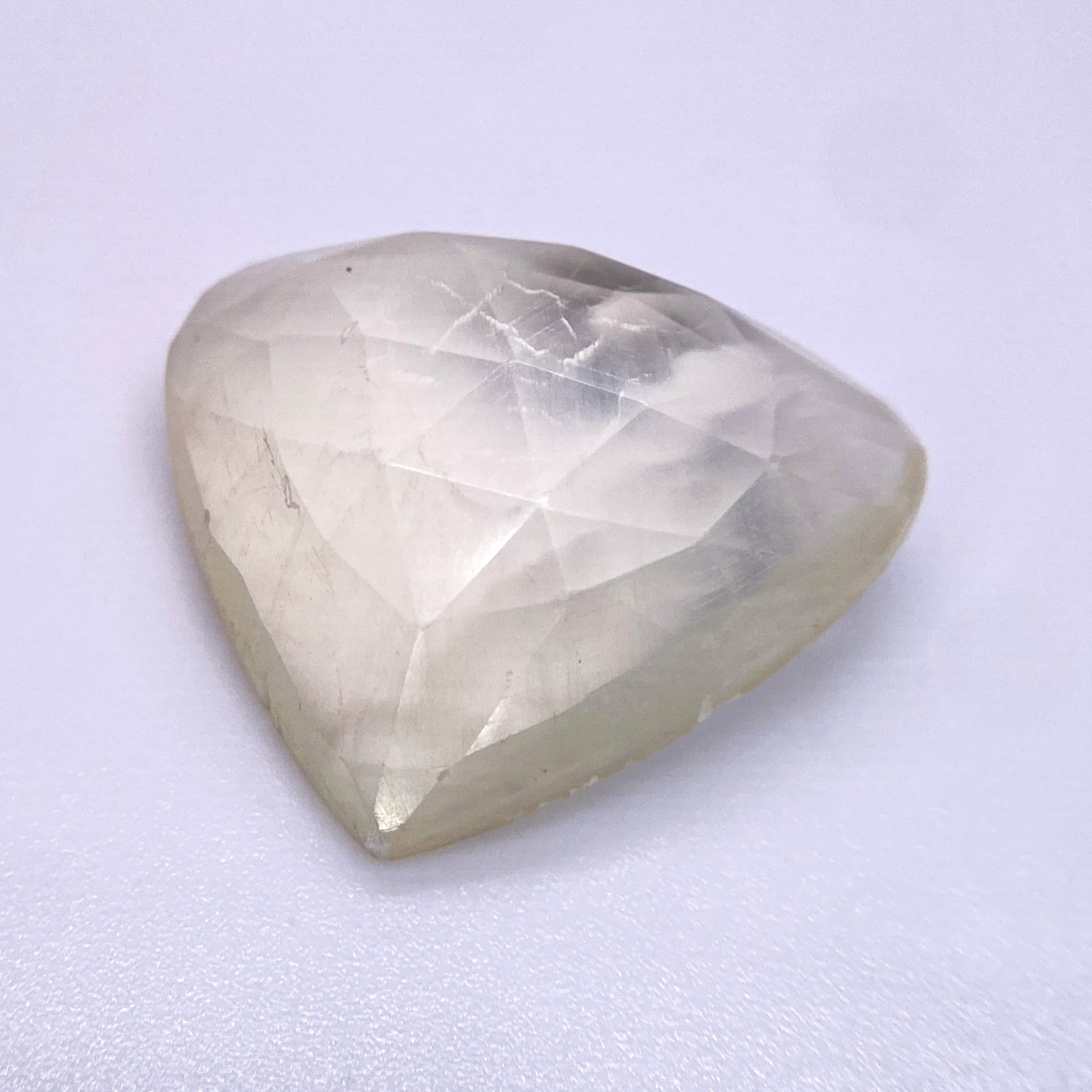
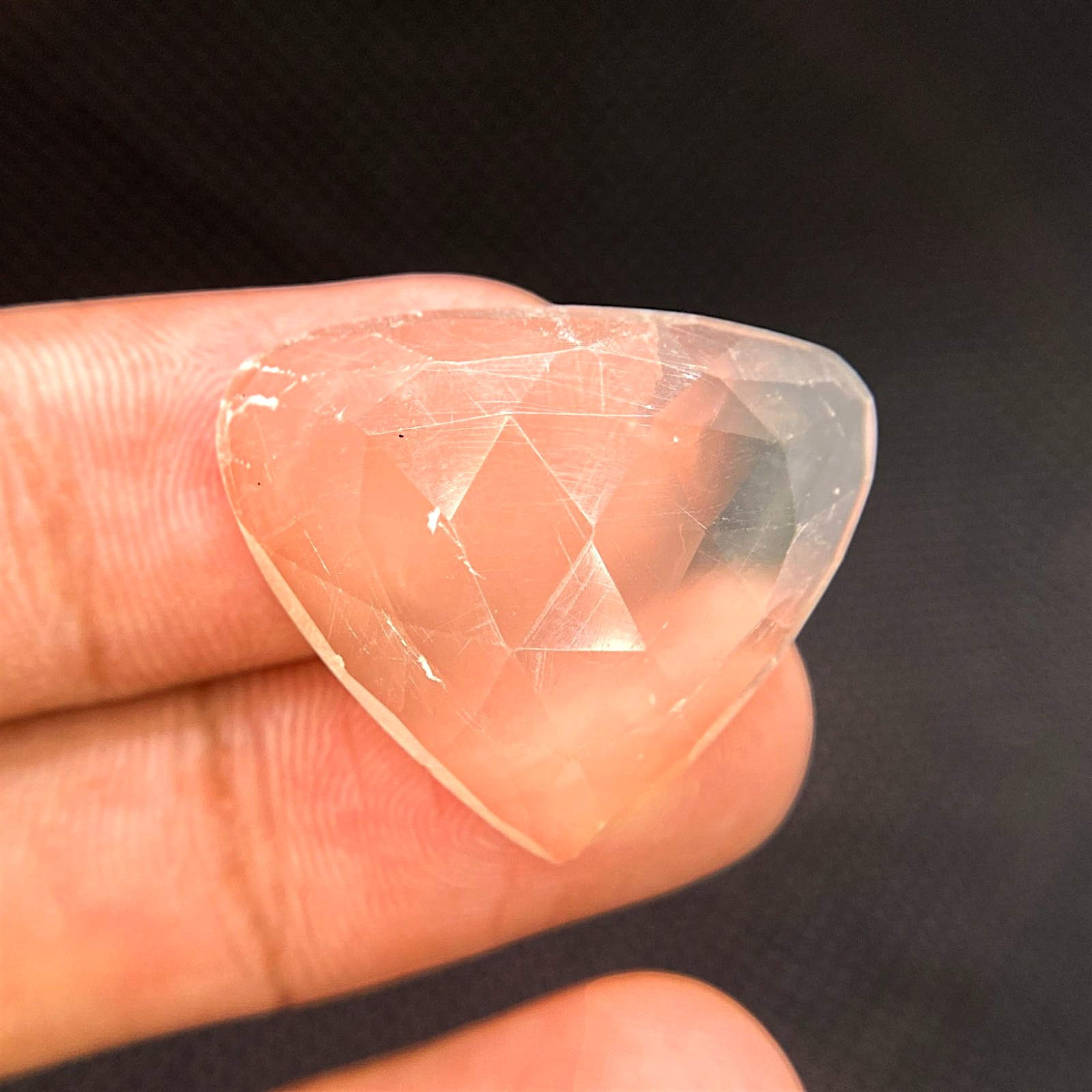
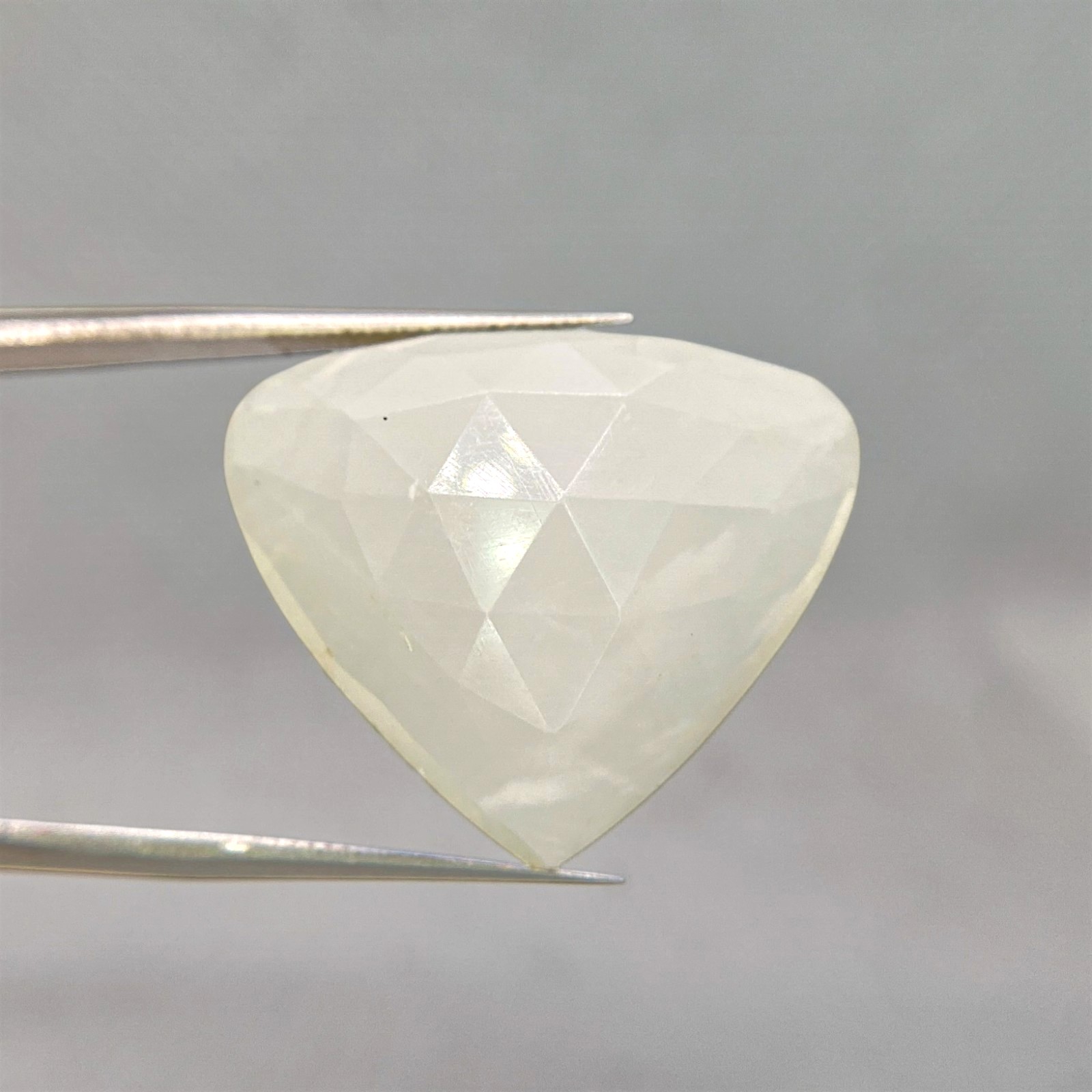
33.47 ct SELENITE – USA
EXPERT VERIFIED
- Expert Verified Gemstone
- Fast Handling & Shipping
- Secure Vault Packaging
$ 250
Offer amount Feild


Smart Collector Choice


Pay with Crypto & Get 10% Automatic Discount

Availability: 1 in stock
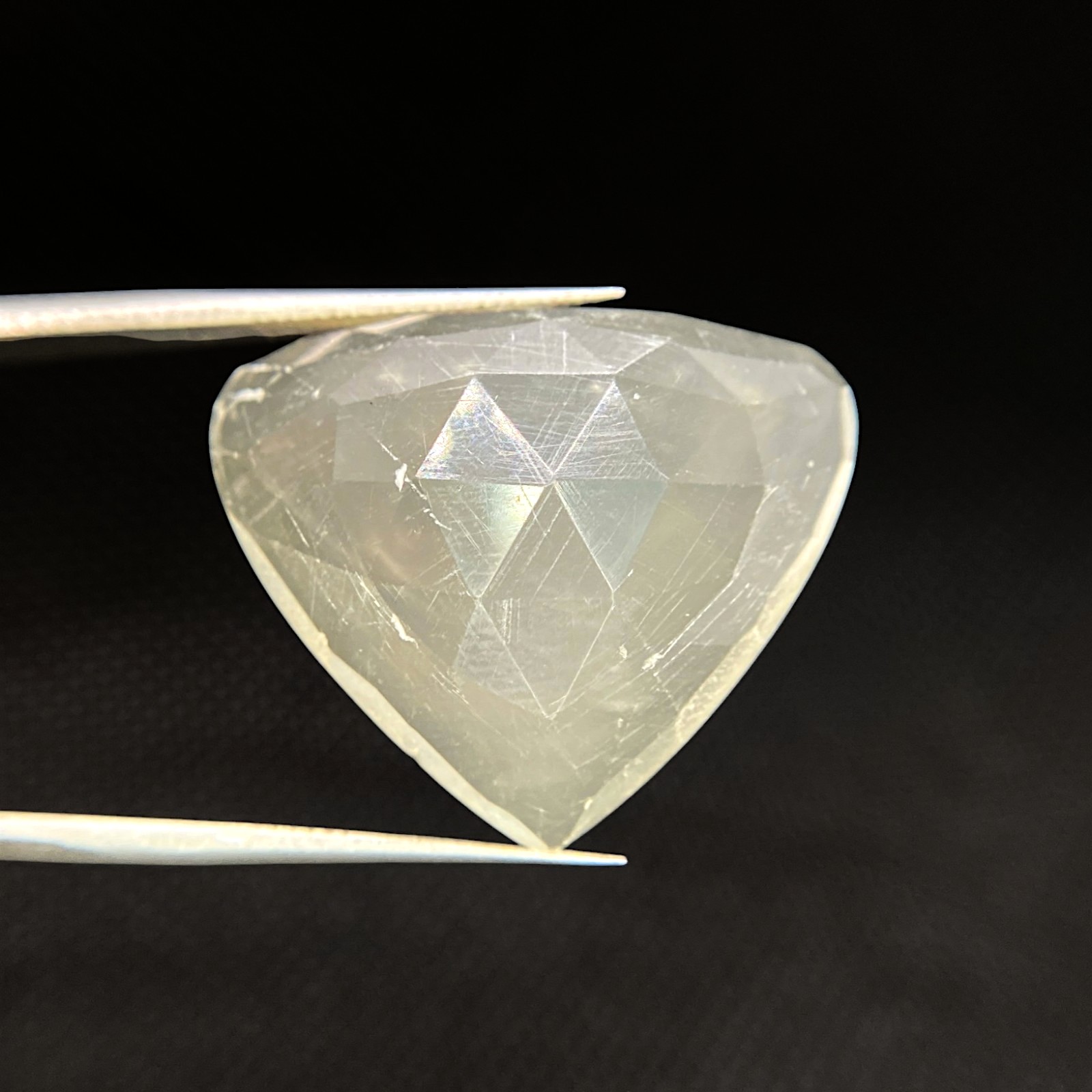
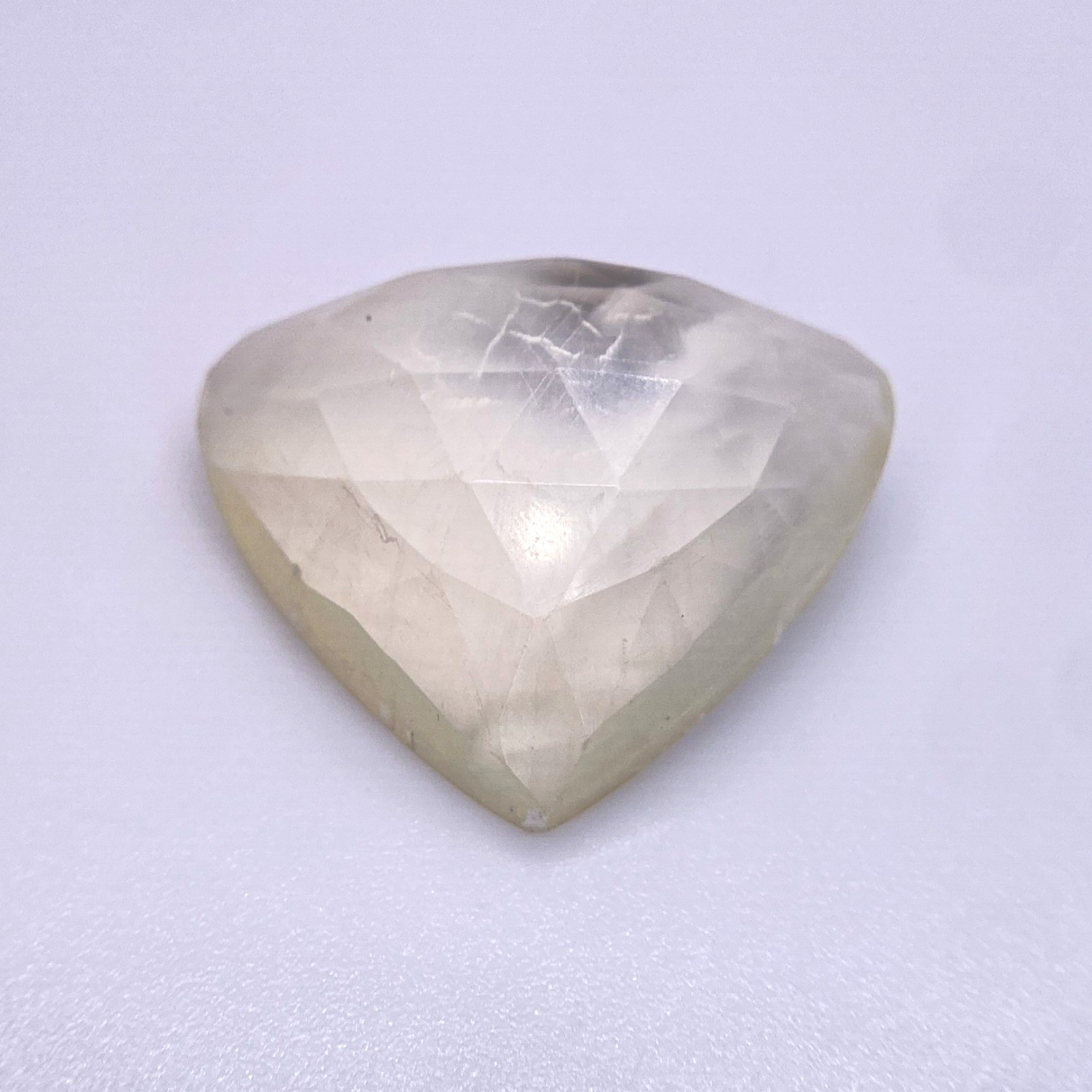
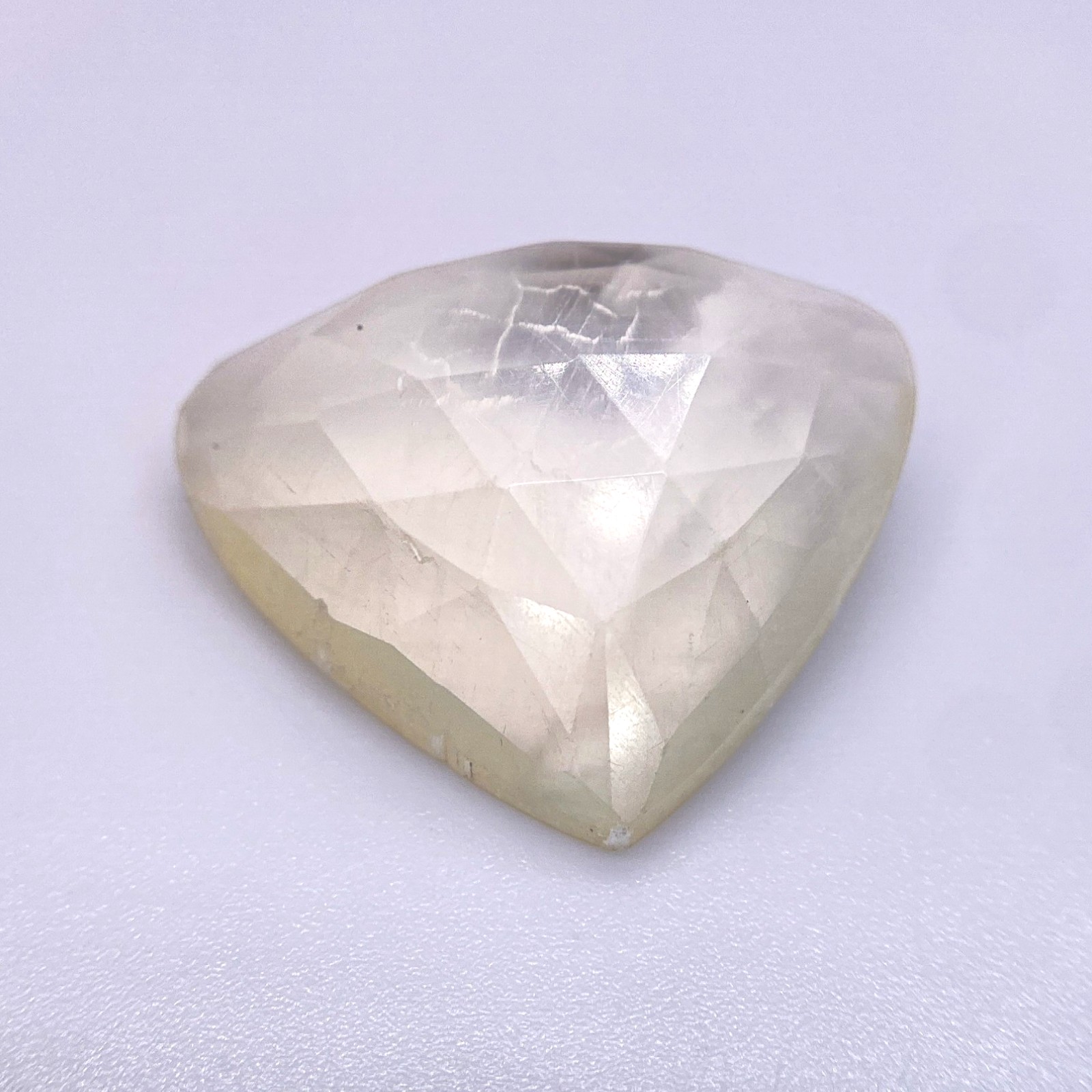
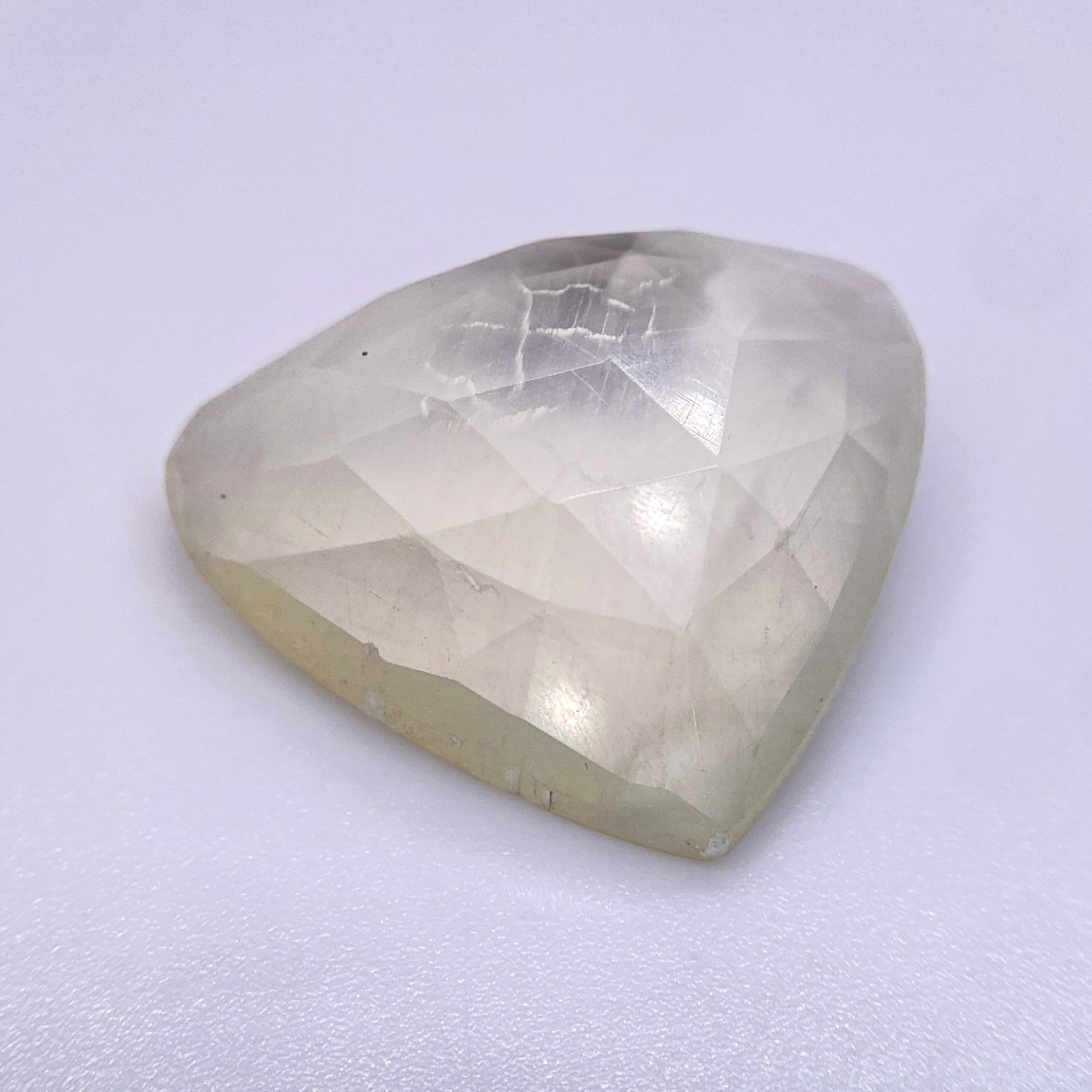
- Freakingcats Gemstone Database
Selenite (USA)
Selenite—the crystalline, transparent variety of Gypsum from the expansive evaporite basins, clay beds, and oxidized hydrothermal caves of the United States—represents one of the most structurally delicate and optically serene expressions of hydrated sulfate crystallization. A hydrated calcium sulfate, it is a mineral I have always respected for its “ice-sheet” to “liquid-glass” optical clarity and its status as a masterclass in “monoclinic” structural discipline. For the specialist, a fine American Selenite—whether presenting as an hour-glass sand-included crystal from Oklahoma, a golden “fishtail” twin from Utah, or an enormous, water-clear cleavage blade from Nevada—is a prized trophy of low-temperature evaporative and secondary groundwater chemistry; it offers a gentle vitreous to pearly luster and a luminous, serene presence that makes it an essential anchor for the systematic vault. As an artist, I find the stark, architectural purity of its light transmission—often guiding ambient illumination along its structural planes like a natural fiber-optic element—to be one of nature’s most soothing and visually elegant forms.
The Heritage & Discovery
Historical Significance
Selenite is an indispensable index mineral for decoding ancient marine regressions, saline lake chemistry, and late-stage supergene fluid percolation through sedimentary strata. Named from the Greek selēnitēs (stone of the moon) due to its soft, ethereal white-to-pearly light reflections, selenite has fascinated naturalists for centuries. Across North America, indigenous populations and early frontier geologists documented vast crystalline deposits weathering out of Permian and Cretaceous shale formations. In modern systematic mineralogy, classic American localities have supplied the collector world with unique structural varieties, including the famous hourglass inclusions of the Great Salt Plains, which remain globally distinct icons of evaporative crystal growth.
Discovery
The unearthing of macrocrystalline selenite throughout the United States occurred as geologists surveyed inland saline basins, desert playa lakes, and the oxidized zones of carbonate-hosted ore deposits. Scientifically, Selenite crystallizes in the monoclinic system, featuring sheets of calcium ions and sulfate tetrahedra separated by layers of water molecules (H2O). It is this fundamental layered architecture that gives selenite its exceptional micaceous cleavage parallel to the {010} pinacoid. In environments like the Great Salt Plains of Oklahoma, crystals grew directly within wet, saline sand and clay beds, engulfing sediment along interior growth sectors to generate iconic internal “hourglass” phantoms. My own respect for this material grew from analyzing its structural delicacy; handling a transparent, natural selenite blade reveals an organic lightness and an immaculate, silky smoothness along its cleavage planes that is deeply satisfying to the touch.
Important Locations
Outstanding expressions of collector-grade selenite within the United States are documented across several historic regions. The Great Salt Plains of Alfalfa County, Oklahoma, is globally renowned for producing sharp, brown-to-amber “hourglass” inclusion crystals and complex interpenetration clusters. The San Rafael Swell and Hanksville regions of Emery and Wayne Counties, Utah, yield spectacular golden-yellow to champagne prismatic crystals and large “fishtail” twins. Remarkable, water-clear tabular sheets and elongated prisms have also emerged from the Cretaceous Mancos Shale of Colorado, the desert playas of New Mexico, and the oxidized upper levels of mining districts such as the Santa Eulalia-style replacements extending into the American Southwest. For the systematic vault, I prioritize specimens that exhibit pristine edge integrity, high optical transparency, sharp twin boundaries, or defined internal sand inclusions.
Mineralogical Profile
Description
Selenite is the transparent, well-crystallized variety of Gypsum, a hydrated calcium sulfate mineral that crystallizes in the monoclinic system. It sits at a baseline 2 on the Mohs scale, serving as the universal benchmark mineral for that hardness level; its soft crystal surfaces can be scratched by a fingernail and possess one direction of perfect micaceous cleavage and two additional directions of distinct cleavage, requiring utmost archival care to protect its razor-thin edges, delicate terminations, and cleaved faces from physical abrasion, bending, or contact with water. It is characterized by its bright vitreous surface luster transitioning to a soft, silky-pearly sheen across cleavage faces, and an ethereal color palette dominated by water-clear, pale champagne, golden-amber, sandy-brown, and snow-white.
One of its most identifying traits is its tabular to prismatic habit, routinely forming elongated blades, diamond-shaped plates, complex rosette aggregates (“desert roses”), and classic contact twins (“swallowtail” or “fishtail” twins). It possesses a relatively low refractive index running from approximately 1.520 to 1.530, imparting a soft, liquid-like optical transmission, and a light average specific gravity of approximately 2.31 to 2.33 that reflects its internal water content (comprising over 20% bound H2O by weight). Because it forms through direct evaporation of saline water or through the action of sulfuric acid (from oxidizing sulfides) on nearby carbonate rocks, it is commonly found in close association with Halite, Calcite, Aragonite, Anhydrite, Sulfur, Dolomite, and Celestine. When I select an example for documentation, I look for sharp monoclinic geometry, complete freedom from cleavage bruising, and exceptional internal clarity, as these emphasize the gentle, evaporative chemistry of the mineral’s terrestrial birth.
Chemical Formula CaSO4 · 2H2O


