

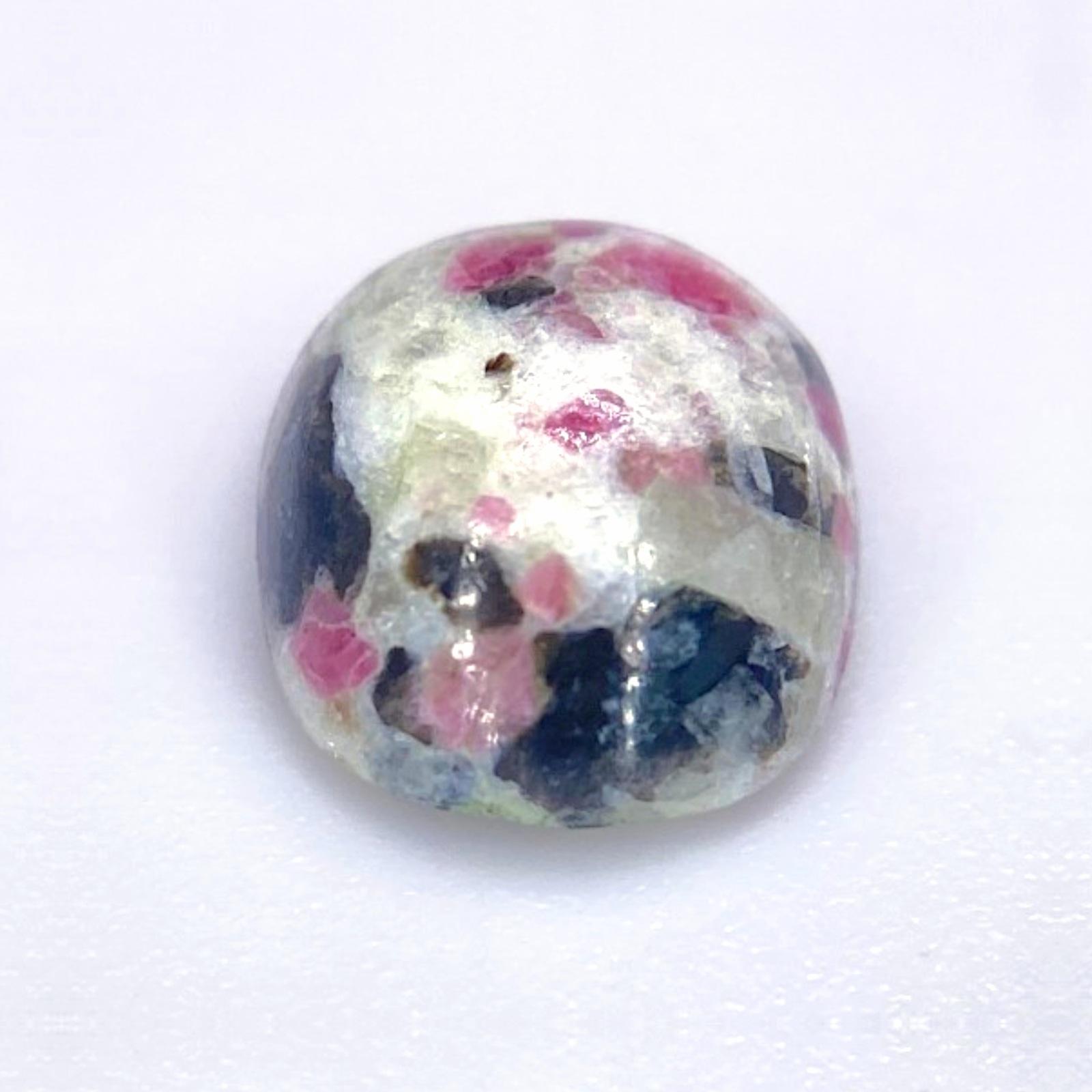
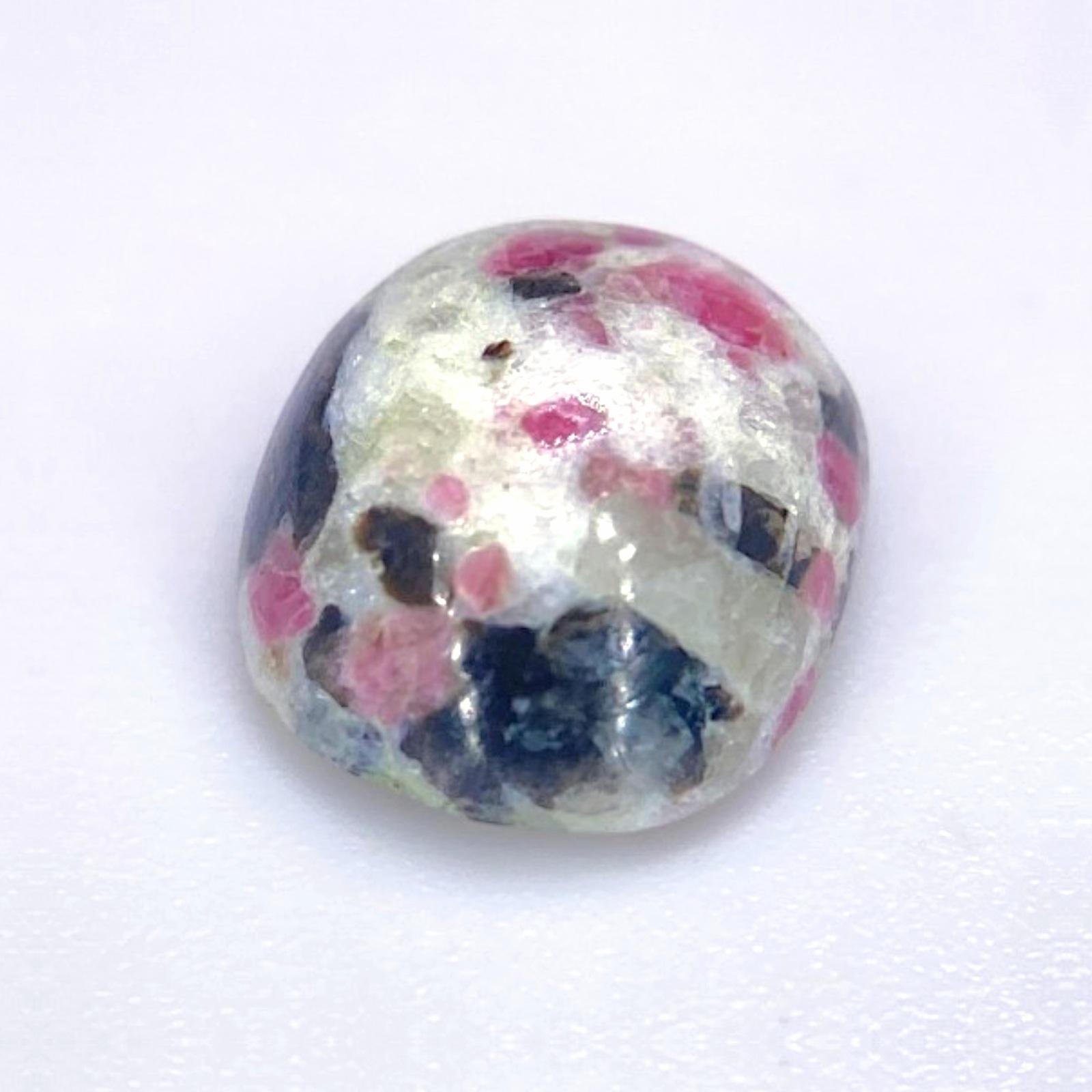
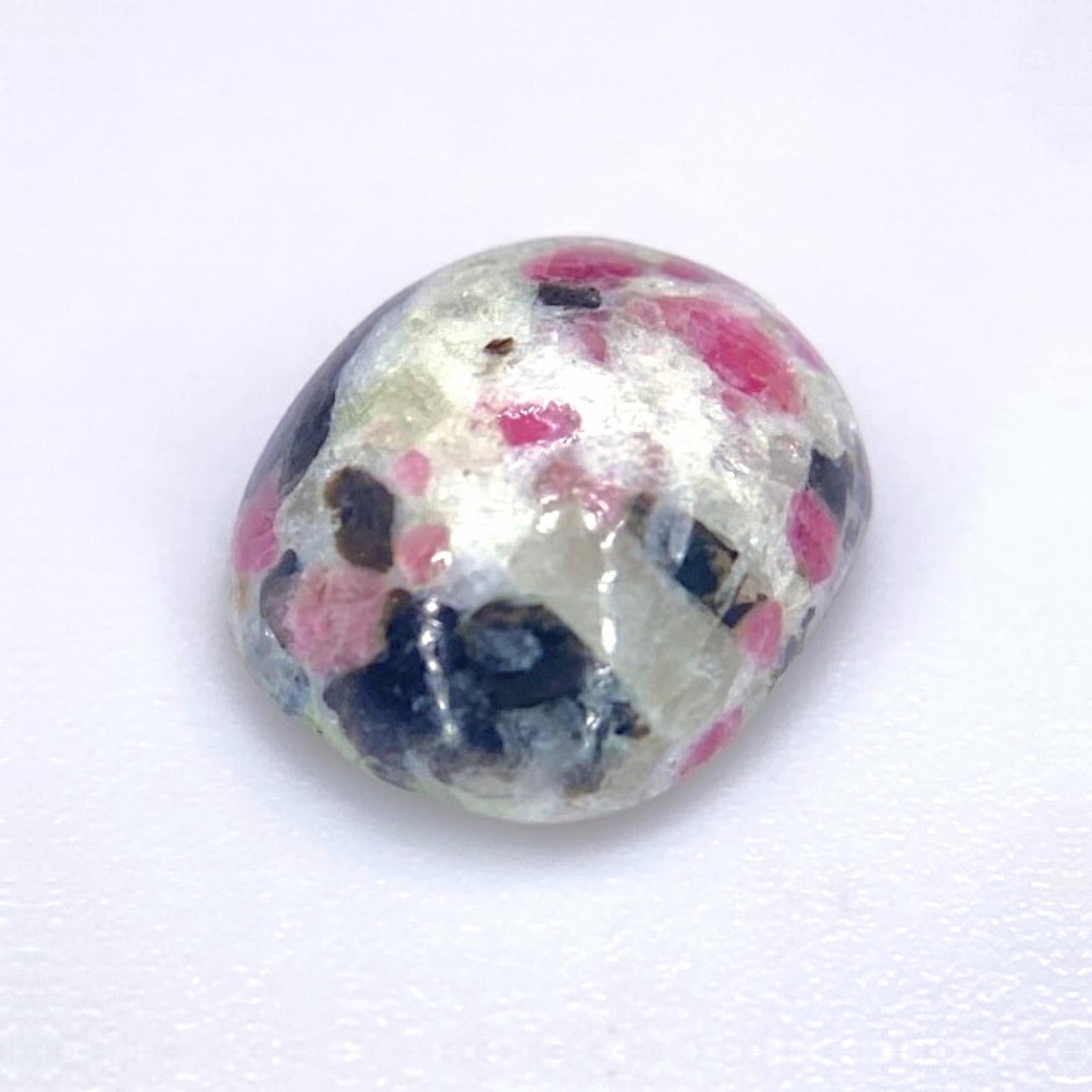
2.85 ct KAKORTOKITE – GREENLAND
EXPERT VERIFIED
- Expert Verified Gemstone
- Fast Handling & Shipping
- Secure Vault Packaging
$ 80 Original price was: $ 80.$ 60Current price is: $ 60.
Offer amount Feild


Smart Collector Choice


Pay with Crypto & Get 10% Automatic Discount

Availability: 1 in stock
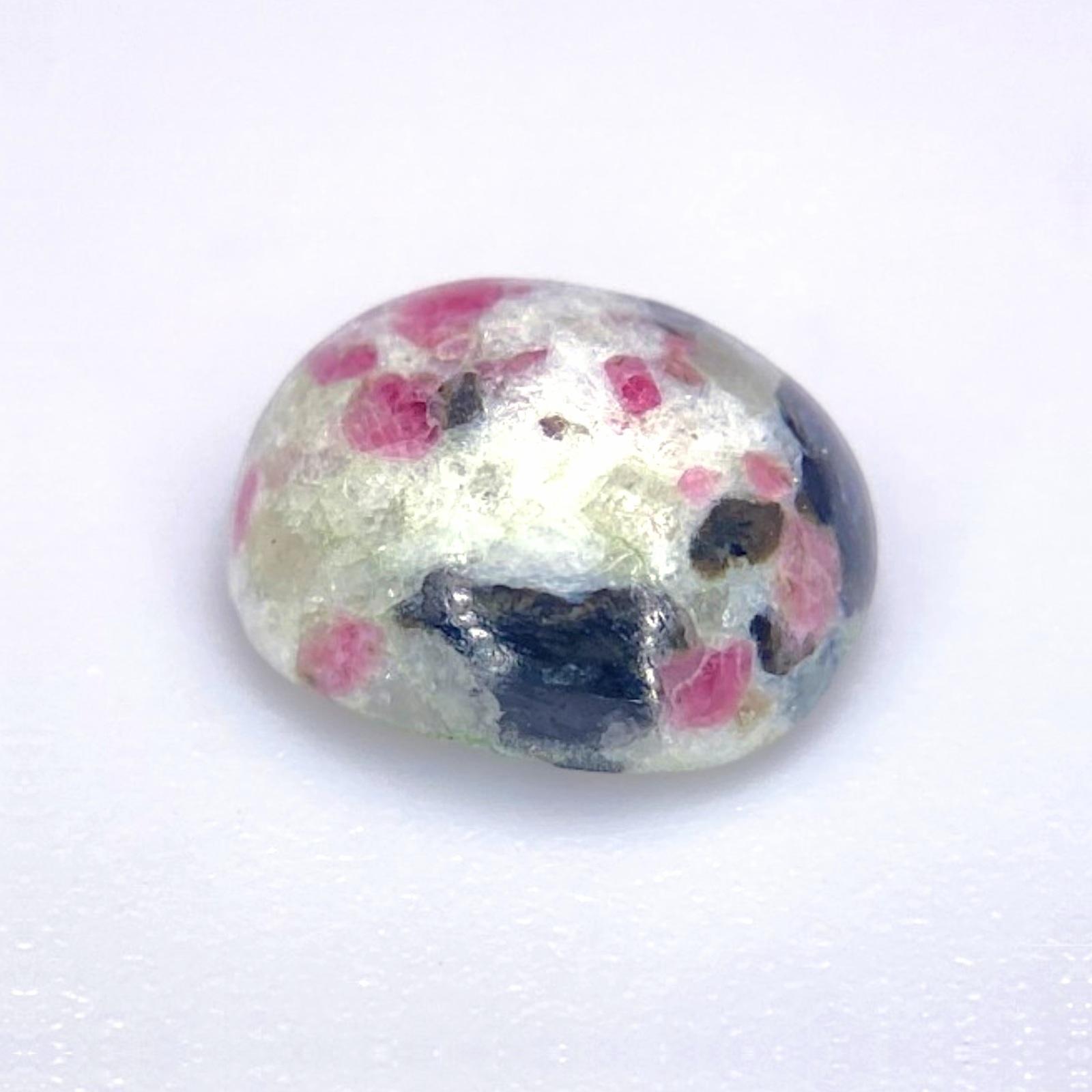
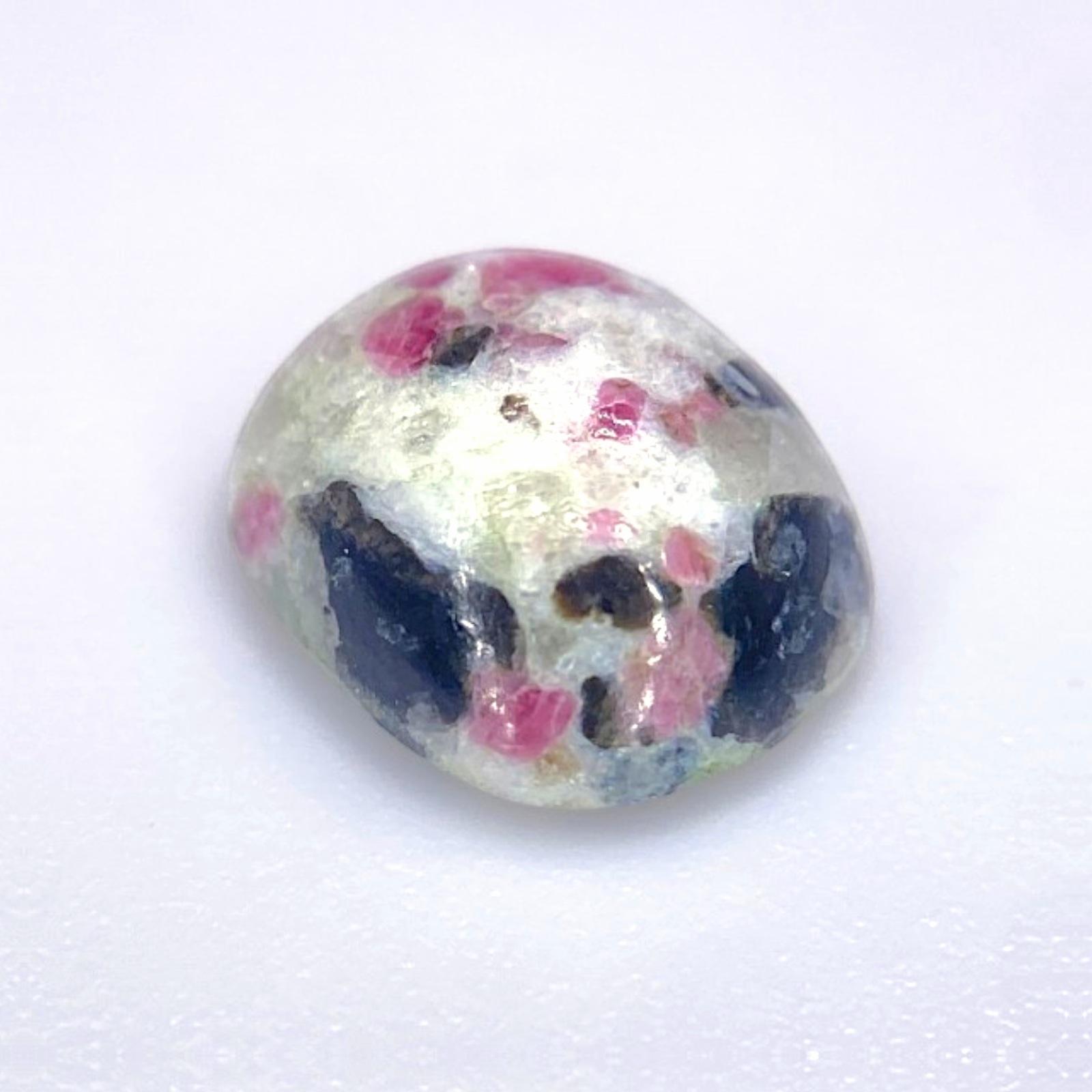
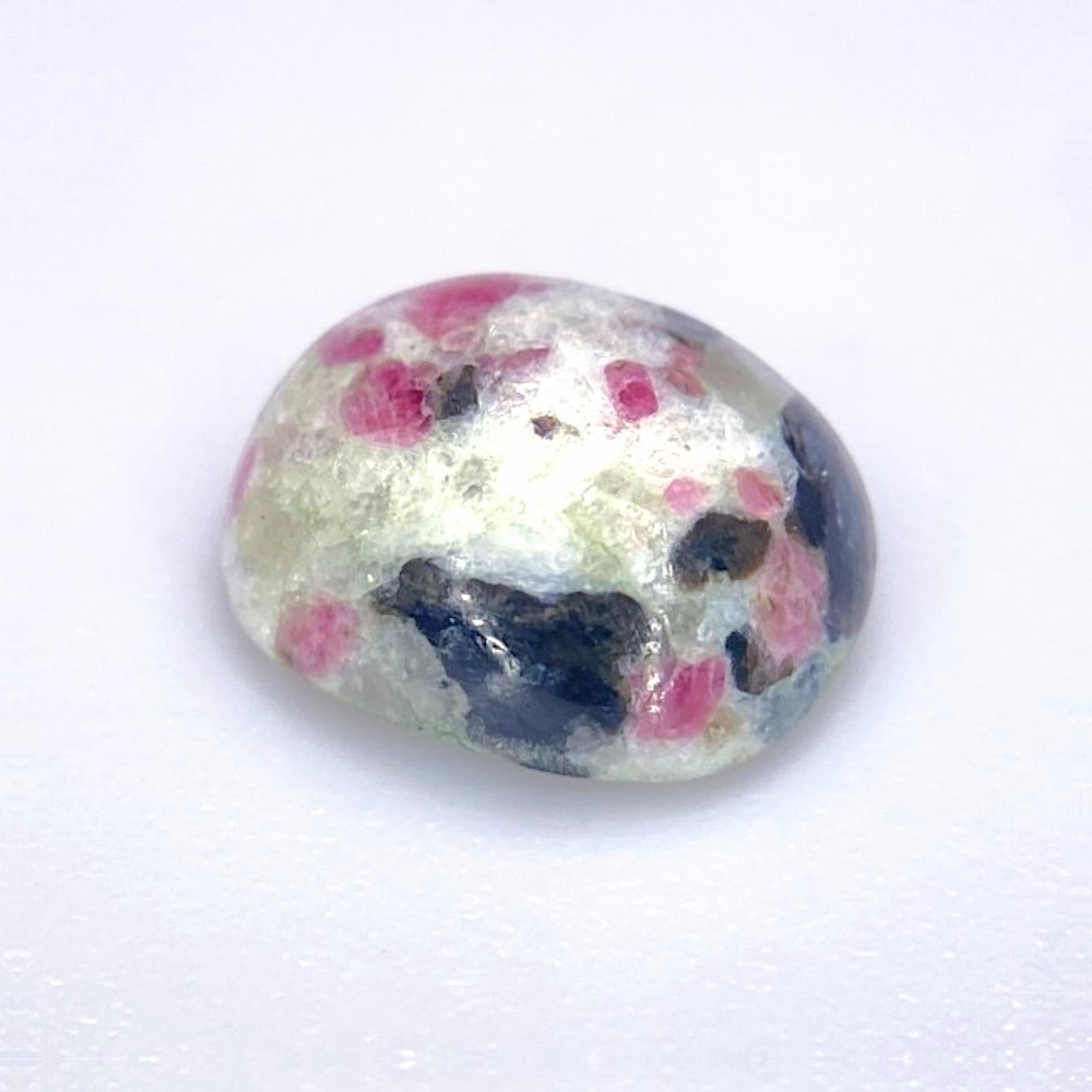
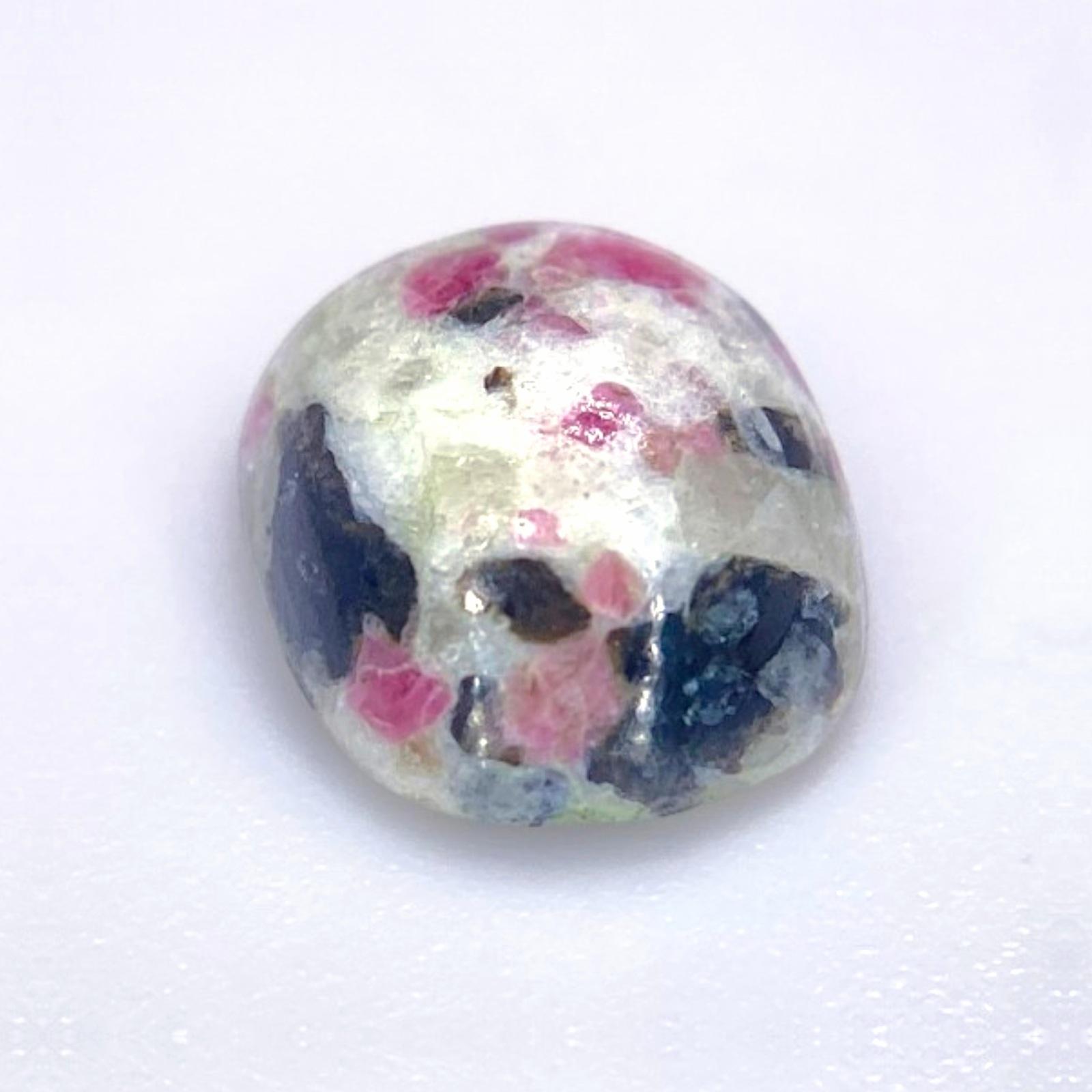


- Freakingcats Gemstone Database
Kakortokite
When my miner friend from Greenland sent me the first sample of Kakortokite rock, I was fascinated by its raw, rhythmic beauty. I waited patiently for months until the brief summer weeks, when the ice finally receded, allowed for this material to be mined. Kakortokite isn’t just a mineral; it is a spectacular igneous rock—a natural mosaic of black Arfvedsonite, white Feldspar, and red Eudialyte. I have always found its “layering” to be one of the most striking sights in the mineral world. It looks like a painting of the Arctic landscape itself: the snow, the dark sea, and the vibrant life hidden beneath. Working with this material is a privilege, as it represents a tiny window of time and a very specific place on our planet that is only accessible to those with the patience to wait for the thaw.
The Heritage & Discovery
Historical Significance: Kakortokite is a rare agpaitic igneous rock found within the Ilimaussaq intrusive complex. Historically, it is world-renowned among petrologists for its perfect “magmatic layering.” It represents a textbook example of fractional crystallization, where different minerals settled in distinct layers as a giant magma chamber cooled billions of years ago. In the world of fine gems, it is prized as a unique “landscape stone,” where every slice reveals a different arrangement of its three primary colors. It stands as a testament to the complex and exotic chemistry of the Greenlandic crust, where rare-earth elements and unusual silicates congregate in breathtaking harmony.
Discovery: The rock was named after Qaqortoq (formerly Julianehåb), the town near the type-locality in South Greenland where it was first identified and studied in the early 20th century. Its discovery was a milestone for alkaline mineralogy, as it provided a clear view into the internal workings of one of the most chemically diverse geological formations on Earth. For collectors, it remains a hallmark of “exotic” geology, impossible to find anywhere else with such distinct and beautiful banding.
Important Mines: The only authentic source for Kakortokite is the Ilimaussaq Complex, specifically the Kringlerne plateau in South Greenland. This is a remote and rugged environment where the mining season is restricted to just a few weeks of the Arctic summer. I prioritize material from this specific plateau because the contrast between the red Eudialyte and the dark Arfvedsonite is the most vivid, ensuring that every piece carries the true “spirit” of the Greenlandic wilderness.
Mineralogical Profile
Description: Kakortokite is a variety of nepheline syenite characterized by its striking tri-color layering. It is composed primarily of Arfvedsonite (black), Alkali Feldspar (white/grey), and Eudialyte (red/pink). It sits at a 5 to 6 on the Mohs scale, making it a durable rock for large cabochons, carvings, or polished display slabs. It is characterized by a vitreous to pearly luster.
One of its most identifying traits is the “cyclic layering,” where the minerals repeat in a specific order (black-red-white). This is caused by the gravity-settling of crystals in a cooling magma chamber. Because it contains Eudialyte, the red portions can be slightly radioactive and often show a beautiful pinkish-red translucency when sliced thin. When polished, the different hardnesses of the constituent minerals create a textured, “living” surface that captures the light in several ways at once. It is a dense, heavy rock that brings the ancient, frozen chemistry of the Arctic into a warm, polished form.
Chemical Composition: A complex rock matrix primarily consisting of $[Na_3(Fe^{2+},Mg)_4Fe^{3+}Si_8O_{22}(OH)_2]$ (Arfvedsonite), $[(Na,K)AlSi_3O_8]$ (Feldspar), and $[Na_{15}Ca_6Fe_3Zr_3Si(Si_{25}O_{73})(O,OH,H_2O)_3(Cl,OH)_2]$ (Eudialyte).
Related products
- Sale!Suggest a Price
![0.60 ct BI COLOR BLUE APATITE - BRAZIL]()
- Sale!Suggest a Price
![1.05 ct ANHYDRITE - MEXICO]()
- Sale!
![0.32 ct ADAMITE - MEXICO]()
- Sale!Suggest a Price
![5.85 ct AERINITE - SPAIN]()


