
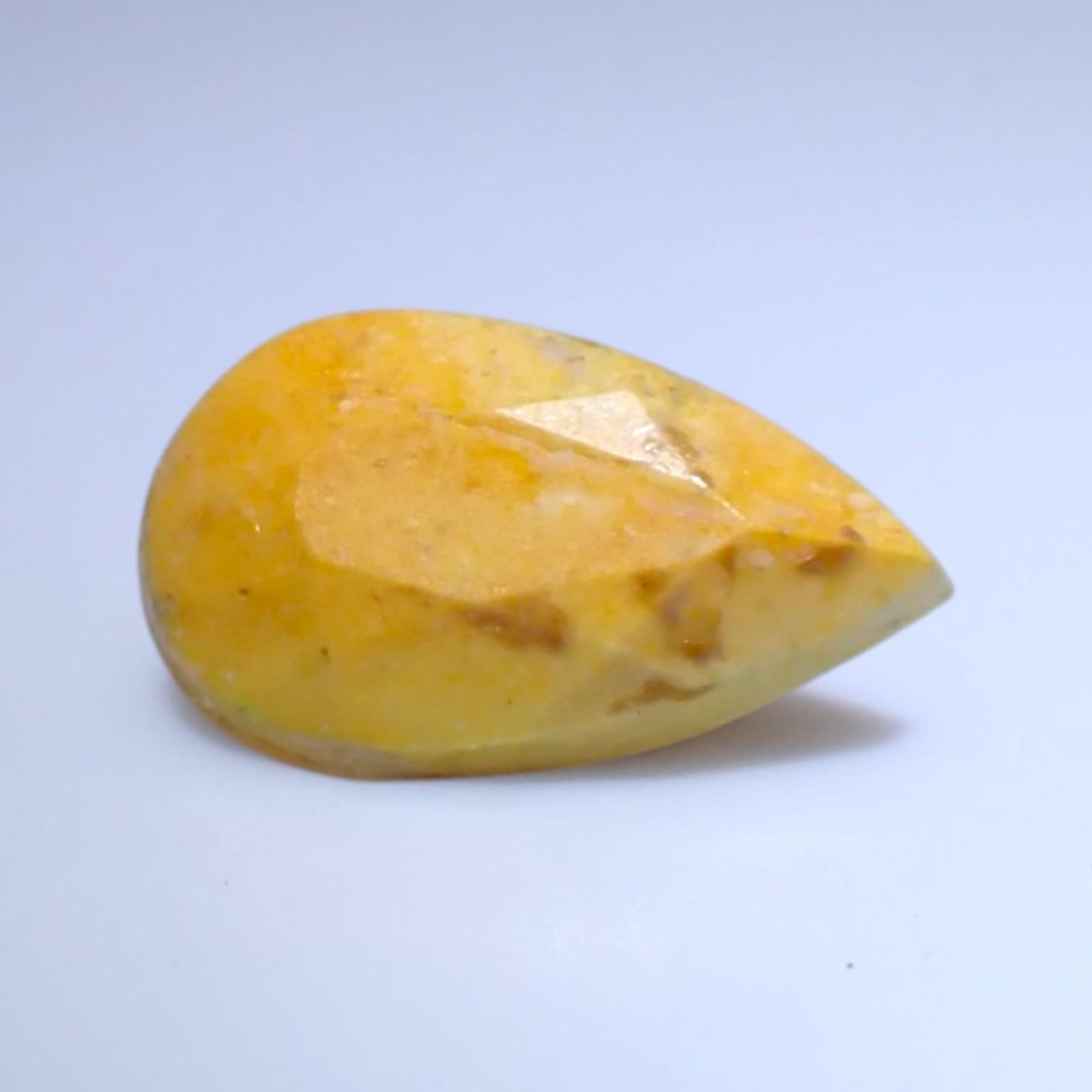
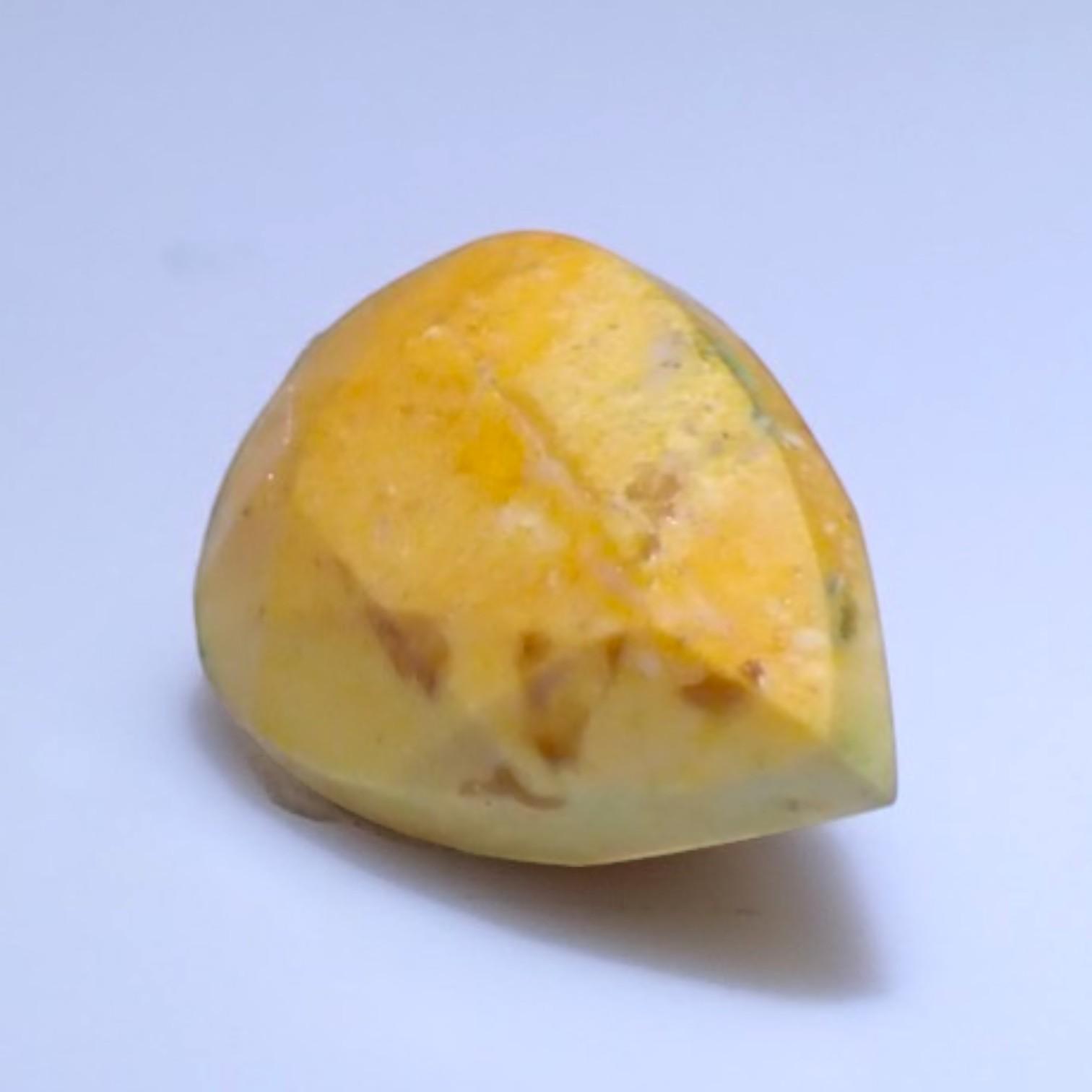
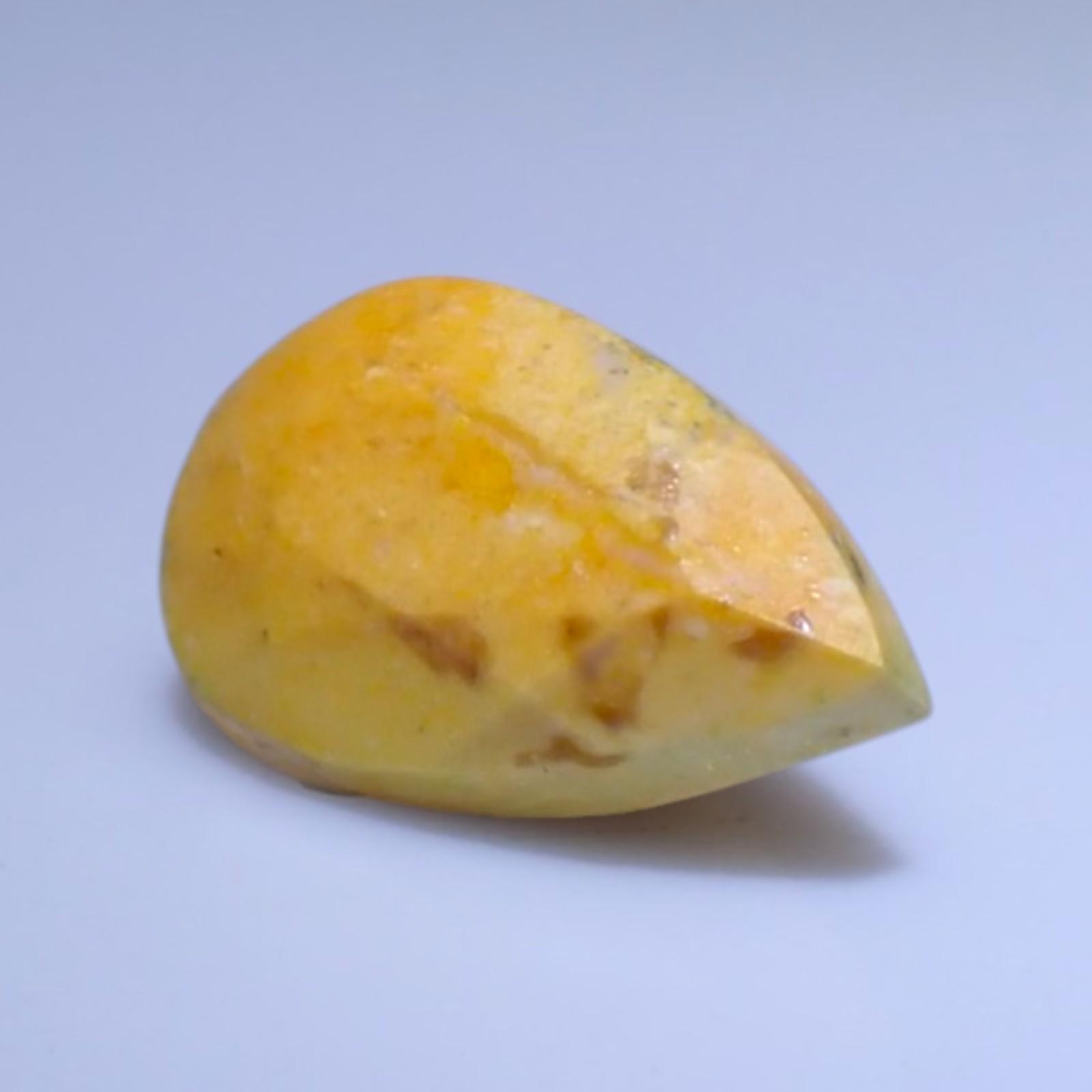
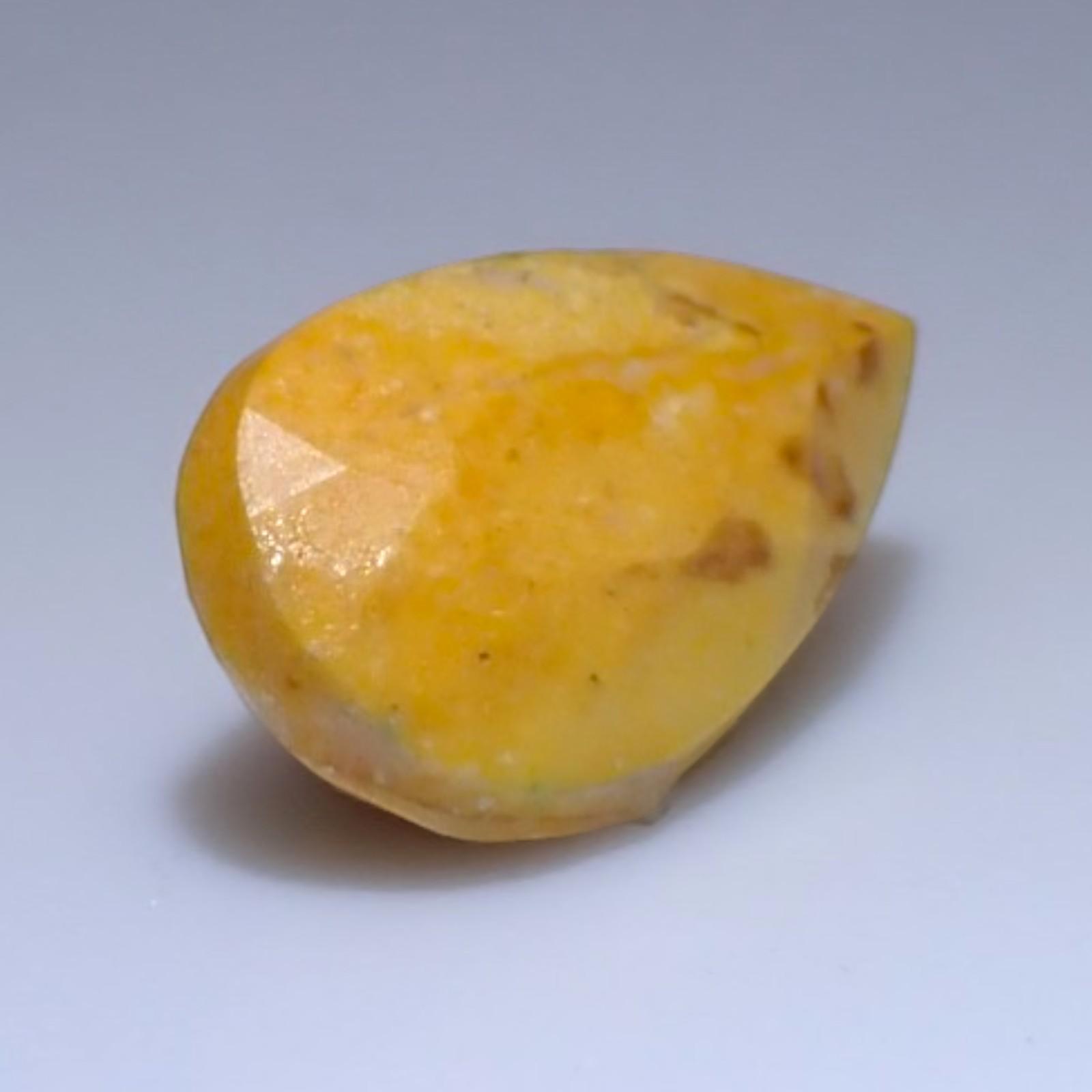
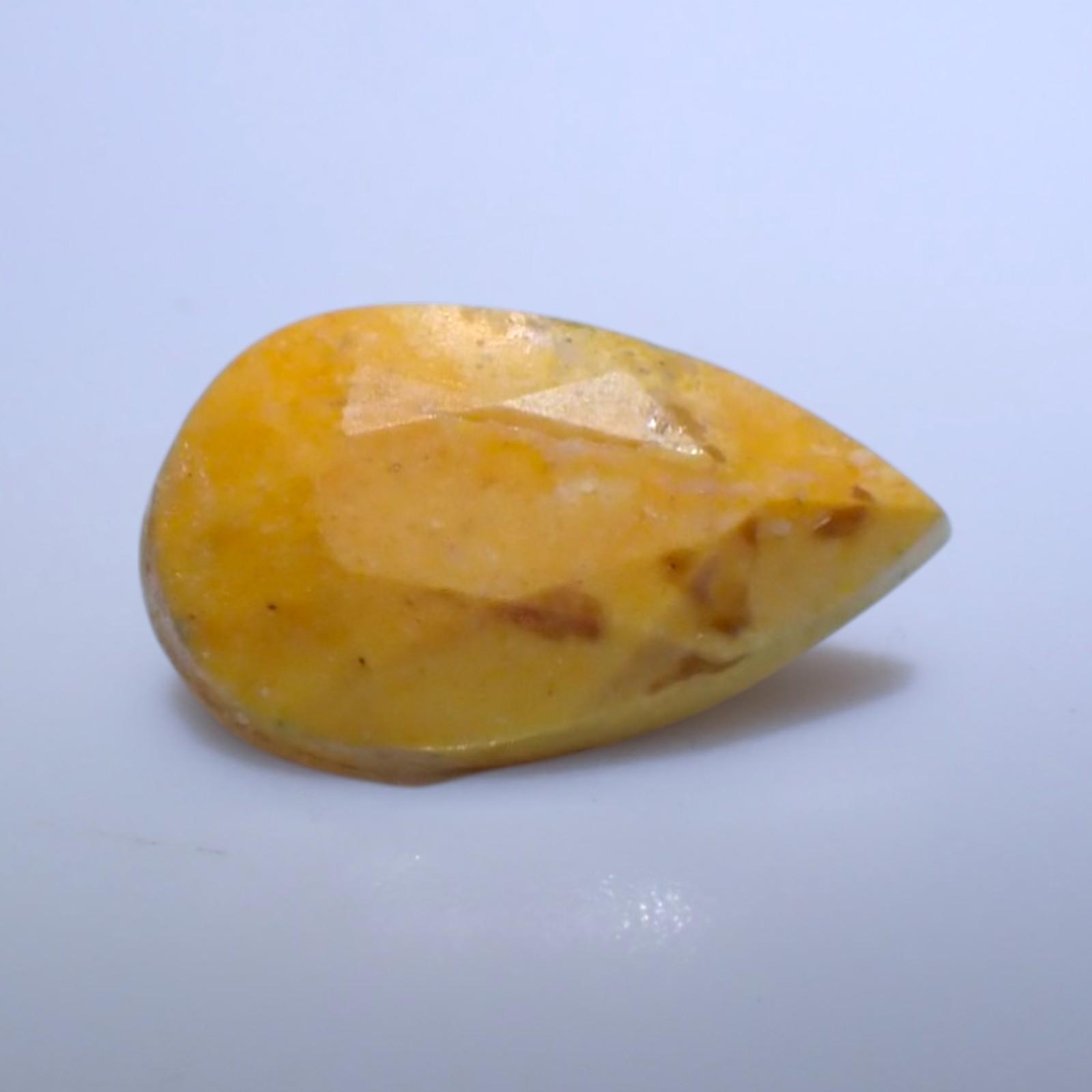
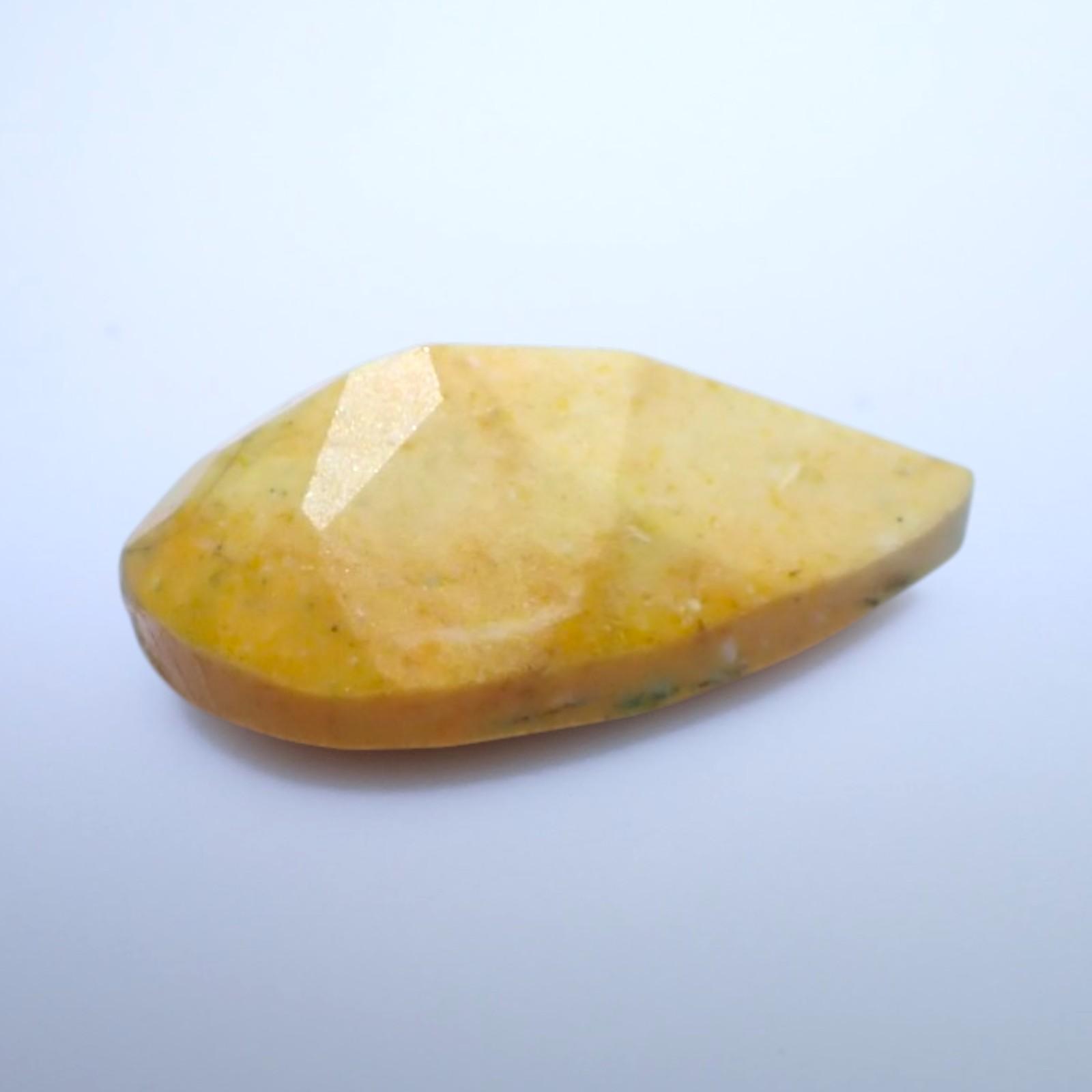
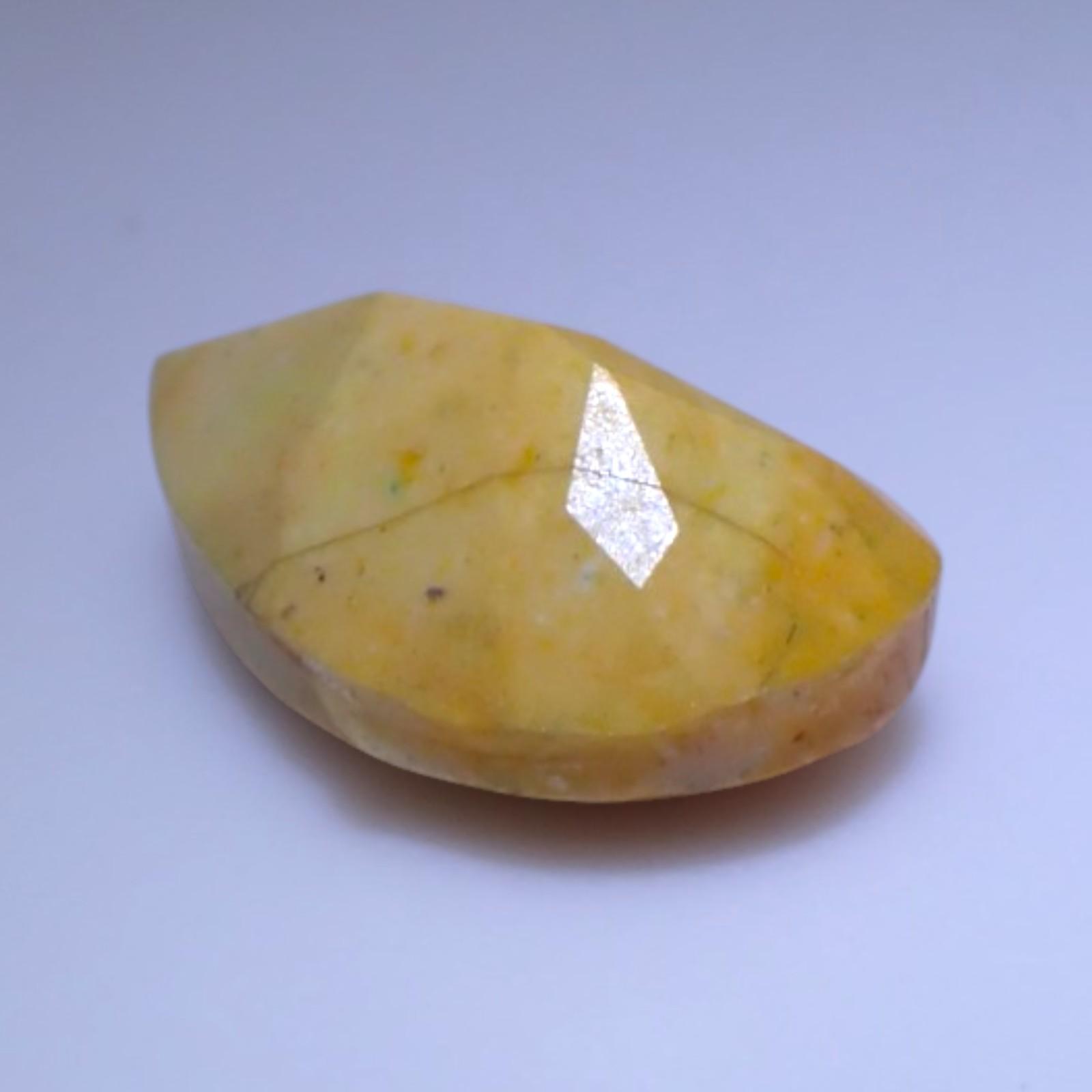
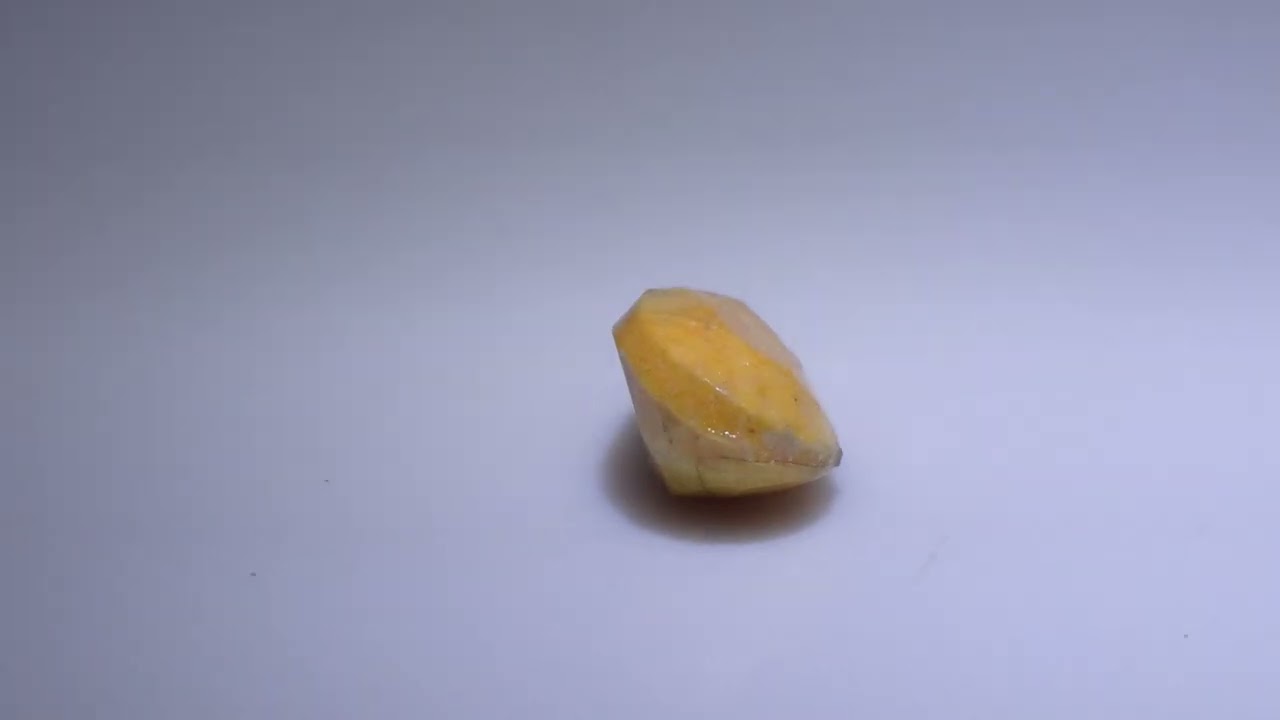
0.70 ct FORCHERITE OPAL – AUSTRIA
EXPERT VERIFIED
- Expert Verified Gemstone
- Fast Handling & Shipping
- Secure Vault Packaging
$ 440
Offer amount Feild


Smart Collector Choice


Pay with Crypto & Get 10% Automatic Discount

Availability: 1 in stock


- Freakingcats Gemstone Database
Forcherite
I remember the day like it was yesterday, when a friend in Austria called me, saying that when workers were digging a tunnel in Styria, a province of Austria, they discovered opal! I laughed at him, saying that’s not possible. He said it comes in big sizes and is bright yellow and orange. A few days later, he brought me some of the material and indeed, it was a very rare form of opal—Forcherite—previously unheard of in sizes like that. It is a spectacular material that owes its “sunset” hues to the presence of microscopic inclusions. There was only a small pocket discovered during that excavation, and I bought whatever I could. No new material has been found since, making these specimens true survivors of a one-time geological event.
The Heritage & Discovery
Historical Significance: Forcherite is a legendary rarity in European mineralogy. Historically, it was known only in tiny, almost microscopic amounts, making it a “holy grail” for Alpine collectors. It represents a very specific chemical interaction where silica-rich fluids encountered arsenic-bearing minerals during the metamorphic or hydrothermal history of the Eastern Alps. In the world of rare gems, Forcherite stands as a testament to the fact that even in well-mapped regions like Europe, the earth can still surprise us with a hidden pocket of something magnificent and entirely new in scale.
Discovery: The mineral variety was named in honor of J. Forcher, an Austrian clergyman and naturalist who first brought attention to the material in the 19th century. While it was long considered a mere mineralogical footnote, the discovery of the “tunnel pocket” in Styria, Austria, changed the perspective of the gem world. It moved Forcherite from the realm of thin-section slides into the hands of collectors who could finally appreciate its saturated colors in hand-sized specimens.
Important Mines: The primary and most famous locality for gem-grade Forcherite is Styria (Steiermark), Austria, specifically the area around the Knittelfeld and Ingering valley where the tunnel discovery occurred. While other occurrences of “orange opal” exist globally, true Forcherite is strictly defined by its Austrian heritage and its specific inclusion chemistry. Since the pocket was exhausted during the tunnel construction, no further material has been produced, ensuring that what was saved remains a finite treasure.
Mineralogical Profile
Description: Forcherite is a variety of common opal (amorphous hydrated silica) that is colored by fine, dispersed inclusions of Realgar and Orpiment. It sits at a 5.5 to 6.5 on the Mohs scale, typical for high-quality common opal. It is characterized by its vitreous to waxy luster and its striking yellow, orange, and reddish-orange body color.
One of its most identifying features is the intensity of its color, which is remarkably stable despite the light-sensitivity usually associated with its arsenic-sulfide inclusions. Unlike Mexican Fire Opal, which is colored by iron, Forcherite’s “neon” orange is driven by the presence of these rare sulfides. It is typically translucent to opaque, and when polished, it displays a deep, glowing warmth. As it is an opal, it contains water within its structure, meaning it should be kept away from extreme heat to prevent the loss of its vibrant, “juicy” appearance.
Chemical Formula: SiO2·nH2O + (As4S4 / As2S3 inclusions)


