
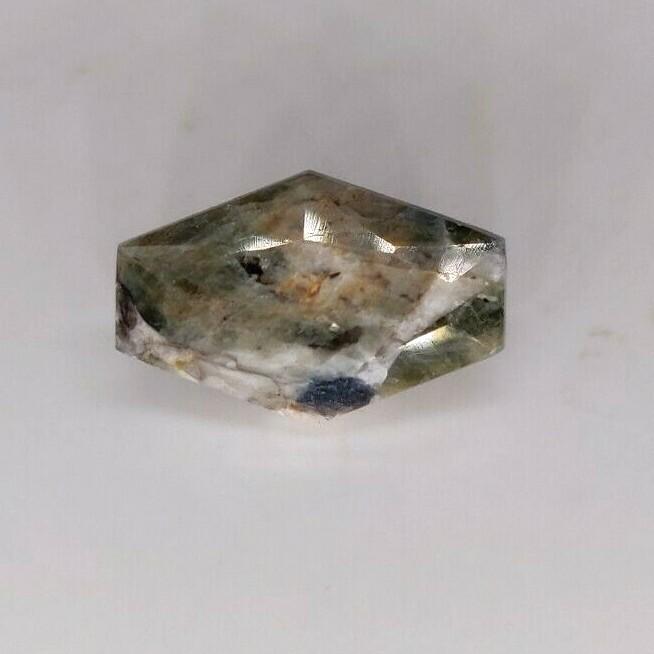
5.30 ct HYALITE OPAL – USA
EXPERT VERIFIED
- Expert Verified Gemstone
- Fast Handling & Shipping
- Secure Vault Packaging
$ 250
Offer amount Feild


Smart Collector Choice


Pay with Crypto & Get 10% Automatic Discount

Availability: 1 in stock
Gemstone Details
Gem Variety:
Hyalite in Matrix UV
Origin:
USA
Carat Weight:
5.30
Length (mm):
14.6
Width (mm):
9.5
Depth (mm):
5.9
Shape:
Marquise
Color
Green
Treatment:
No Treatment
Certificate:
On Request
- Freakingcats Gemstone Database
Hyalite (Opal-AN) Get your UV lights out! These "Kryptonite" green Hyalites are beyond this world! I have always been fascinated by Hyalite because it challenges everything people think they know about Opals. It doesn't show the traditional play-of-color; instead, it looks like a cluster of water droplets or melting glass frozen in time. But the real magic happens when you click on a UV lamp. Because of trace amounts of uranium, the most spectacular specimens from Mexico erupt into an electric, neon-green glow that is so intense it looks artificial. It is a stone that lives for the night, a "Wow!" gem that bridges the gap between a clear mountain spring and a futuristic neon landscape. Faceting these is a rare delight, as the clarity allows you to peer directly into the heart of the stone's radioactive glow. The Heritage & Discovery Historical Significance: Hyalite has historically been known as "Müller's Glass," named after its discoverer. Unlike other opals that form in sedimentary basins, Hyalite is typically a volcanic product, forming from gas clouds or hydrothermal fluids in the cavities of volcanic rocks. It represents the "cleanest" form of silica, known scientifically as Opal-AN (Amorphous-Network). Historically, it was a mineralogical curiosity, but the discovery of the vibrant green fluorescence has catapulted it into the high-end collector's market, where it is prized as one of the few gemstones that can be identified by its "atomic" signature. Discovery: The name Hyalite is derived from the Greek word hyalos, meaning "glass," which perfectly describes its natural, botryoidal appearance. While it has been documented for centuries, the specific "electric green" material from Mexico only gained significant gemological attention recently. Research by organizations like the GIA has confirmed that the spectacular fluorescence is caused by uranyl ions ($UO_2^{2+}$) trapped within the silica network, a discovery that added a layer of scientific wonder to its aesthetic appeal. Important Mines: The undisputed world champion for fluorescent gem-quality Hyalite is Zacatecas, Mexico. The material from this region is the gold standard, providing the clarity and uranium content necessary for that legendary "Kryptonite" effect. Significant mineralogical specimens also come from the Czech Republic and parts of the USA (notably Oregon and Washington). For our vault, I only select the Mexican material, as its reaction to UV light is so powerful it can often be seen even in indirect daylight—a phenomenon known as daylight fluorescence. Mineralogical Profile Description: Hyalite is a variety of common opal (amorphous silica) that crystallizes in botryoidal, glass-like masses. It sits at a 5.5 to 6 on the Mohs scale, making it a delicate stone that should be protected from harsh wear. It is characterized by its vitreous luster and its water-clear, transparent appearance. One of its most defining traits is the absence of the "play-of-color" found in precious opal; instead, it relies on its transparency and its reaction to short-wave and long-wave UV light. As a hydrous mineraloid, it contains a small amount of water, though it is more stable than many other opal varieties. When faceted, it has a low refractive index ($n \approx 1.45$), giving it a soft, watery brilliance. The "electric green" glow is an immutable fact of its chemistry—a natural, radioactive-driven light show that remains one of the most exciting sights in the gem world. Chemical Formula: SiO2·nH2O (with trace Uranyl ions)


