
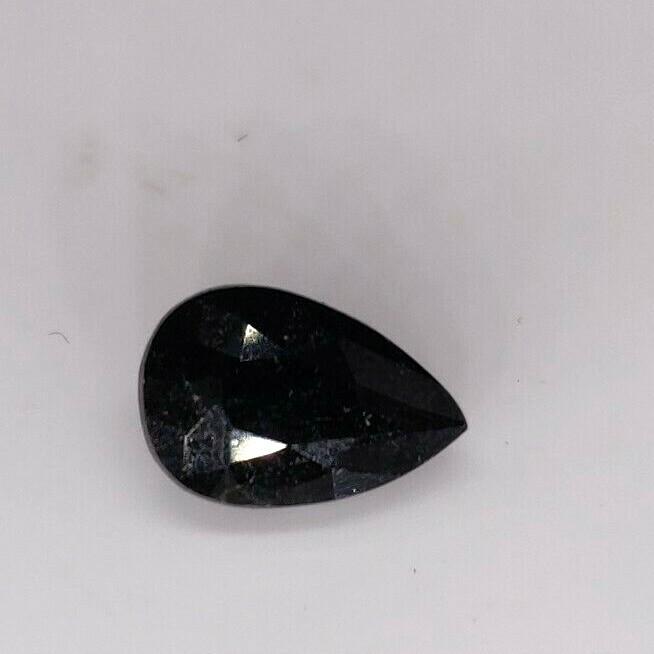
2.41 ct CLINTONITE – USA
EXPERT VERIFIED
- Expert Verified Gemstone
- Fast Handling & Shipping
- Secure Vault Packaging
$ 150
Offer amount Feild


Smart Collector Choice


Pay with Crypto & Get 10% Automatic Discount

Availability: 1 in stock
- Freakingcats Gemstone Database
Clintonite
Clintonite is a gemstone that occupies a unique and “tough” position within the Mica group. Known as a “brittle mica,” it is a mineral I have always respected for its structural defiance; unlike the flexible, elastic sheets of Muscovite or Phlogopite, Clintonite’s layers are rigid and snap under pressure. This is due to its high calcium content, which acts as a powerful chemical “glue” between its silicate layers. It typically presents in deep reddish-brown, copper-gold, or leek-green hues, often forming as thick, tabular “books” or radiating foliated masses. For the specialist, Clintonite is a stone of the high-temperature contact metamorphic zones, representing a specific geological moment where aluminum and calcium dominated the chemistry of the deep earth. It is a mineral of “stiff” elegance, offering a pearly luster that feels more substantial and metallic than its more common cousins.
The Heritage & Discovery
Historical Significance: Clintonite is a vital species for understanding the complex transitions within the phyllosilicate family. Historically, it was a significant discovery because it provided the first clear evidence of the “brittle mica” branch, where the substitution of calcium for potassium fundamentally changes the physical properties of the mineral. In the world of fine minerals, it is celebrated for its association with rare skarn minerals like Spinel and Grossular Garnet. It stands as a symbol of structural rigidity, bridging the gap between the soft, pliable micas and the harder, more resilient silicates. It serves as a reminder that even within a single mineral group, the Earth can produce radically different physical outcomes through subtle chemical shifts.
Discovery: The mineral was first described in 1843 and was named in honor of DeWitt Clinton (1769–1828), a celebrated statesman and Governor of New York who was an ardent supporter of the natural sciences. The type-locality is Amity, New York, USA. Naming this robust and “sturdy” mineral after a man who was instrumental in the construction of the Erie Canal was a fitting tribute to his legacy of building the structural foundations of a young nation. Since its formal identification, it has become a staple for those collecting the classic minerals of the American Northeast.
Important Mines: The undisputed world capital for historic Clintonite is the Amity/Edenville region in Orange County, New York, USA. I also have a high regard for the spectacular, leek-green crystals found in the Achmatovsk Mine in the Ural Mountains, Russia, and the copper-toned specimens from the Pargas region in Finland. For the vault, I prioritize the Russian material for its exceptional color saturation and the New York “old-stock” pieces for their unmatched historical pedigree and thick, tabular crystal definition.
Mineralogical Profile
Description: Clintonite is a calcium magnesium aluminum silicate hydroxide that crystallizes in the monoclinic system. It sits at a 4 to 5 on the Mohs scale, making it significantly harder than common micas. It is characterized by its vitreous to pearly luster on the cleavage faces and its range of earthy, metallic colors.
One of its most identifying traits is its perfect basal cleavage, though as noted, the flakes are brittle and lack the elasticity of other micas. It has a moderate to high refractive index (n \approx 1.64 to 1.66), which contributes to its rich, “inner” glow when light catches the broad faces of the crystal. Because it is a “brittle mica,” it often forms in close association with Chlorite and Vesuvianite. When I select a piece for the collection, I look for “fresh” books with sharp edges and a high-gloss pearly sheen, as these represent the species in its most perfect and stable form. It is a dense, grounding mineral that offers a window into the high-heat, calcium-rich chemistry of the Earth’s metamorphic contact zones.
Chemical Formula: Ca(Mg,Al)3(Al3Si)O10(OH)2


