
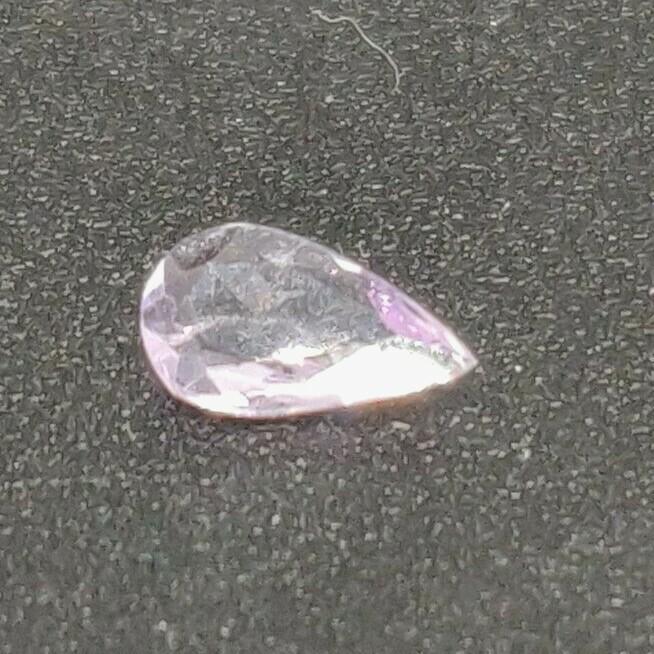
0.16 ct PURPLE SCAPOLITE – AFGHANISTAN
EXPERT VERIFIED
- Expert Verified Gemstone
- Fast Handling & Shipping
- Secure Vault Packaging
$ 40
Offer amount Feild


Smart Collector Choice


Pay with Crypto & Get 10% Automatic Discount

Out of stock
Gemstone Details
Gem Variety:
Scapolite
Origin:
Afghanistan
Carat Weight:
0.16
Length (mm):
5.8
Width (mm):
3.3
Depth (mm):
1.5
Shape:
Pear
Color
Purple
Treatment:
No Treatment
Certificate:
On Request
- Freakingcats Gemstone Database
Scapolite Scapolite is a gemstone that comes from many places and in a wide array of colors, from honey-yellows to soft violets, but there is one variety that is truly spectacular. Under UV light, it exhibits an extremely strong color change—another "Wow!" gem for the collection. I have always found Scapolite to be a bit of a "sleeper" in the gem world; it often looks like a beautiful Citrine or Amethyst at first glance, but its optical properties tell a far more complex story. When you find a piece with high transparency and that signature fluorescent "pop," it becomes a centerpiece. It is a mineral of incredible brilliance, and the way it reacts to light makes it a favorite for collectors who love stones with a secret life. The Heritage & Discovery Historical Significance: Scapolite is not a single mineral but a series between two end-members: sodium-rich Marialite and calcium-rich Meionite. Historically, it has been a fascinating subject for mineralogists studying the metamorphic transformation of calcium-rich rocks. It represents a specific "pressure-temperature" window in the Earth's crust. In the world of rare gems, it has gained a reputation for its remarkable fluorescence and, in some rare cases, tenebrescence (like Hackmanite), where it can temporarily change body color after exposure to UV light. It is a stone that bridges the gap between classic aesthetics and high-level optical physics. Discovery: The name Scapolite was first proposed in 1800 by José Bonifácio de Andrada e Silva (the same naturalist who identified Spodumene). It is derived from the Greek word skapos, meaning "rod" or "shaft," a direct reference to the long, prismatic, "stick-like" habit of its crystals. While the species has been known for over two centuries, the discovery of gem-quality, vibrantly fluorescent material in the last few decades has elevated its status from a mineralogical curiosity to a highly sought-after jewelry stone. Important Mines: While found in many metamorphic terrains, the most spectacular gem-quality Scapolite comes from the Badakhshan province of Afghanistan and the Mogok region of Myanmar. These areas produce the rare, water-clear crystals in vibrant yellows and purples. I also have a high regard for the material coming out of Tanzania (the Umba Valley) and Madagascar. For the vault, I prioritize the Afghan and Burmese specimens, as they tend to show the most intense fluorescence and the highest clarity for precision faceting. Mineralogical Profile Description: Scapolite is a group of aluminosilicate minerals crystallizing in the tetragonal system. It sits at a 5.5 to 6 on the Mohs scale, making it durable enough for most jewelry, though its distinct cleavage means it should be handled with care. It is characterized by its vitreous luster and a brilliance that can be quite piercing when properly cut. The "Wow!" factor you noticed—the intense UV reaction—is typically a bright yellow or orange fluorescence, caused by the presence of sulfur or other trace activators within the crystal lattice. Some rare specimens also exhibit chatoyancy (the cat's-eye effect) when the crystals are filled with parallel fibrous inclusions. It is a light to medium-density mineral that offers a crisp, clean look that is exceptionally rewarding on the lap. Chemical Formula: (Na,Ca)4[Al3Si9O24]Cl


