
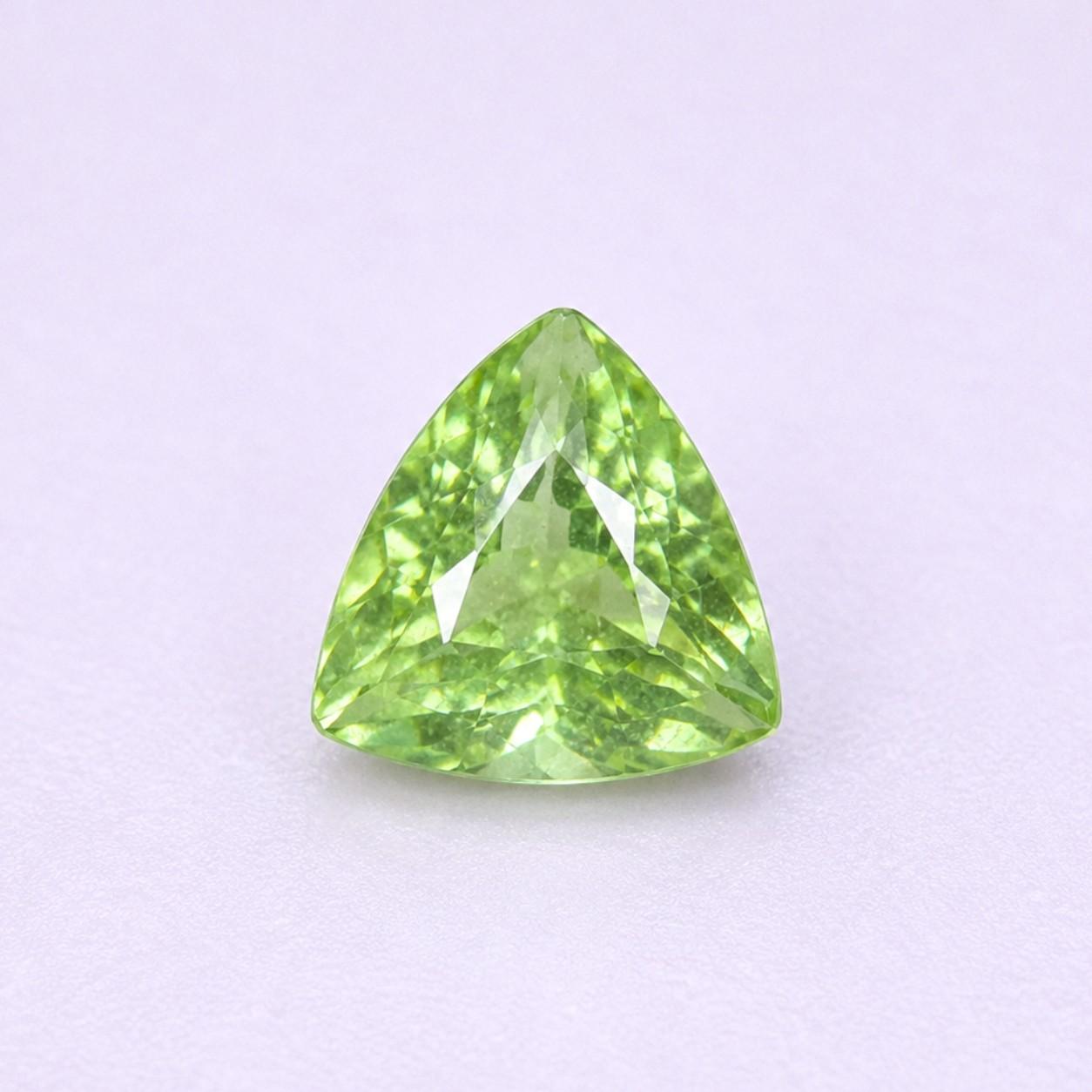
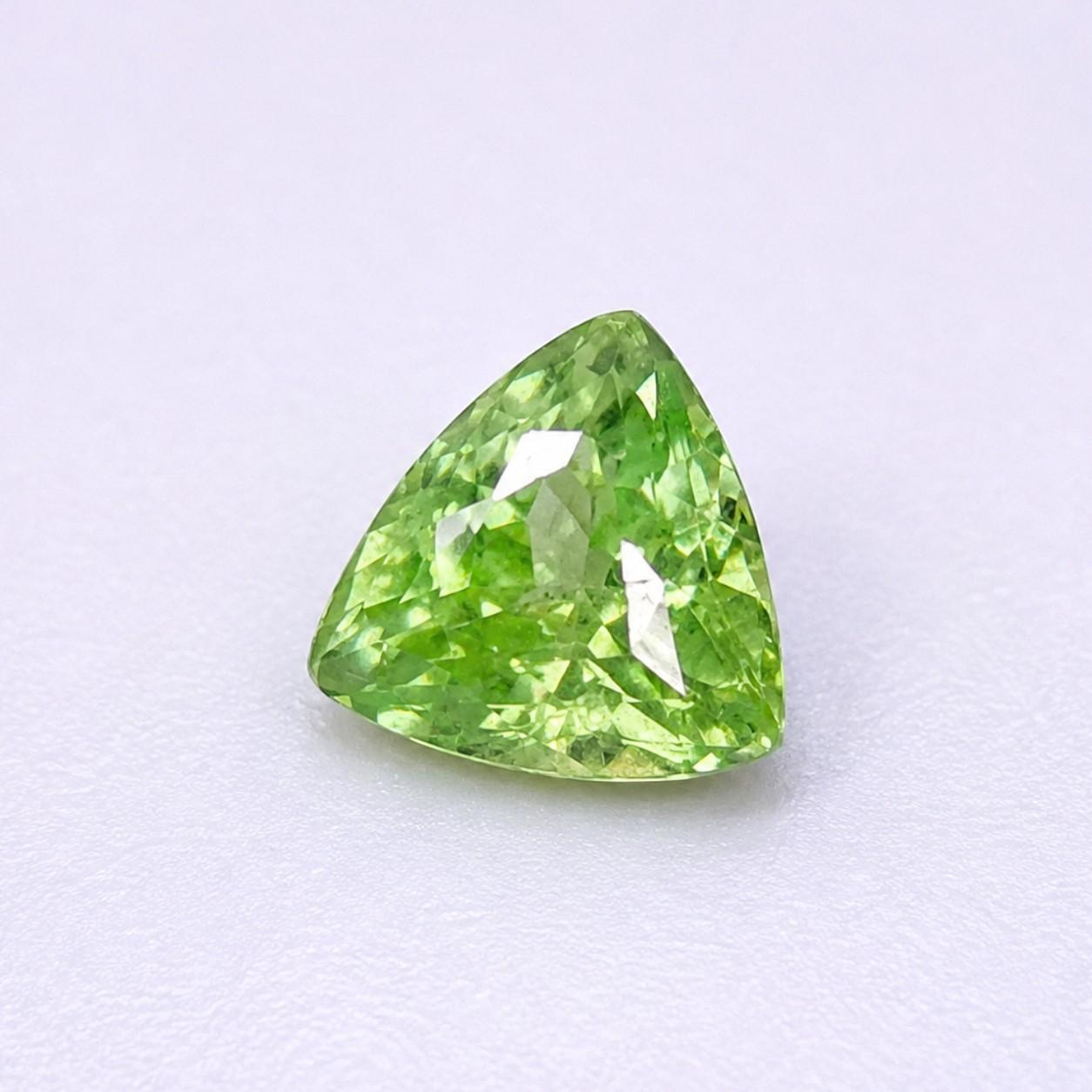
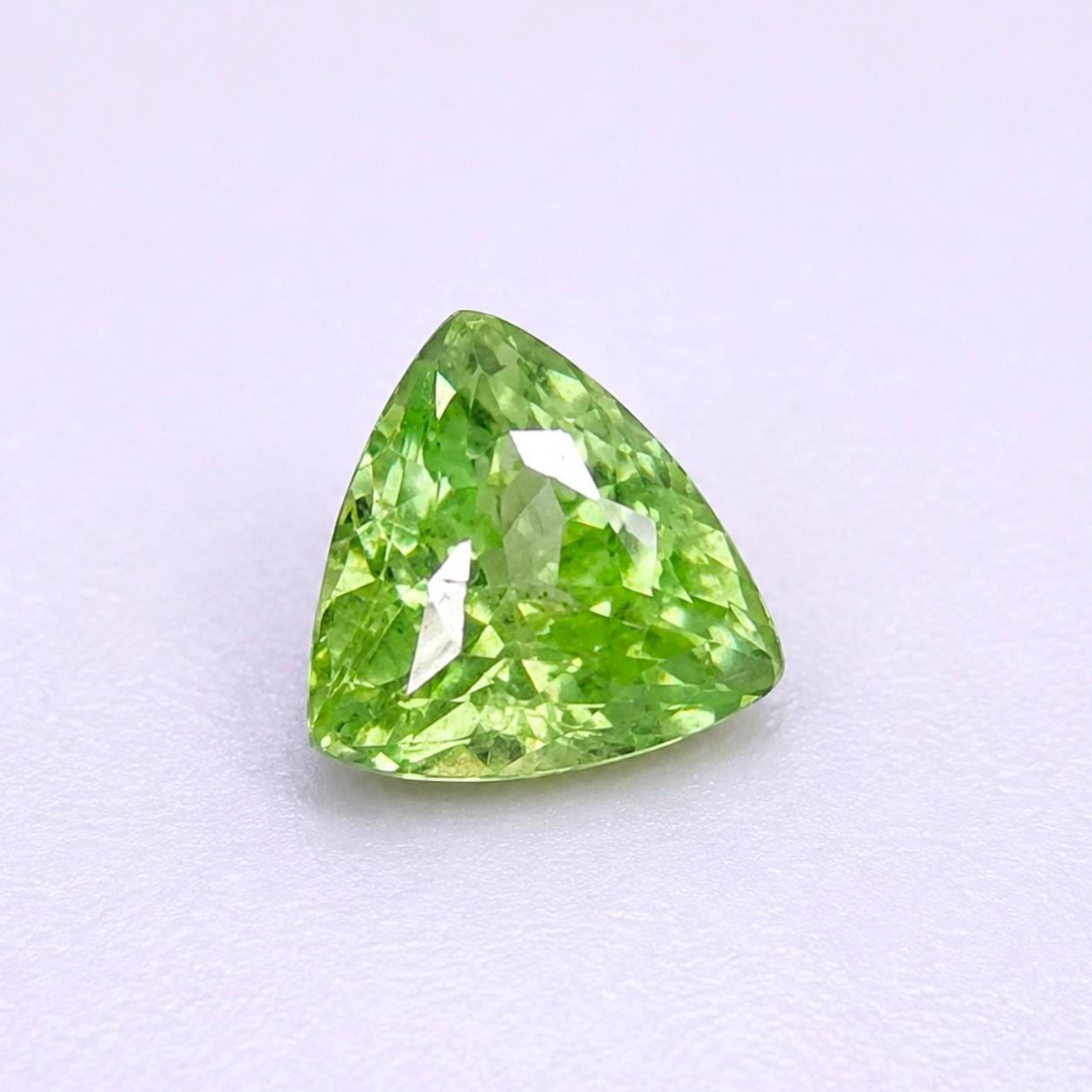
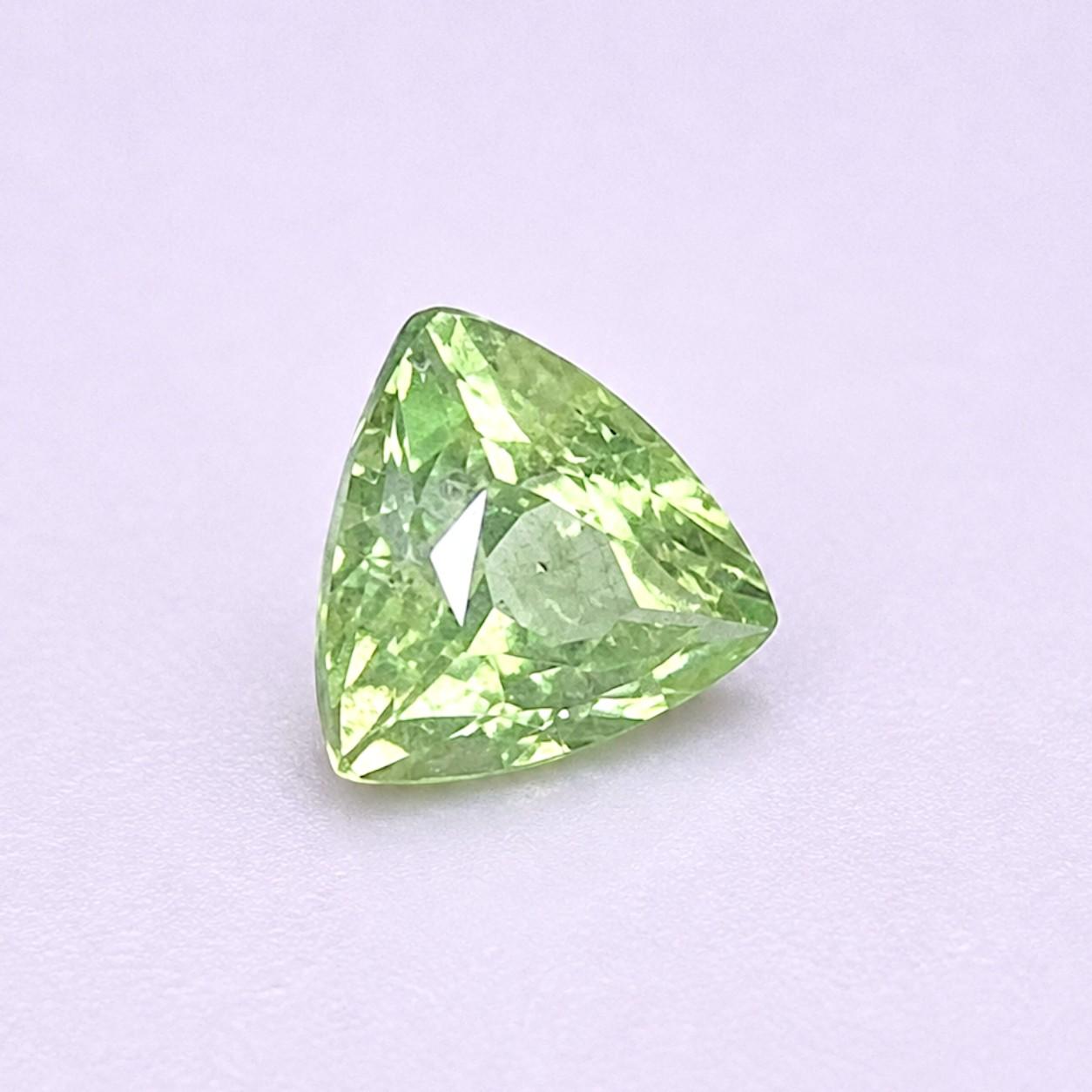
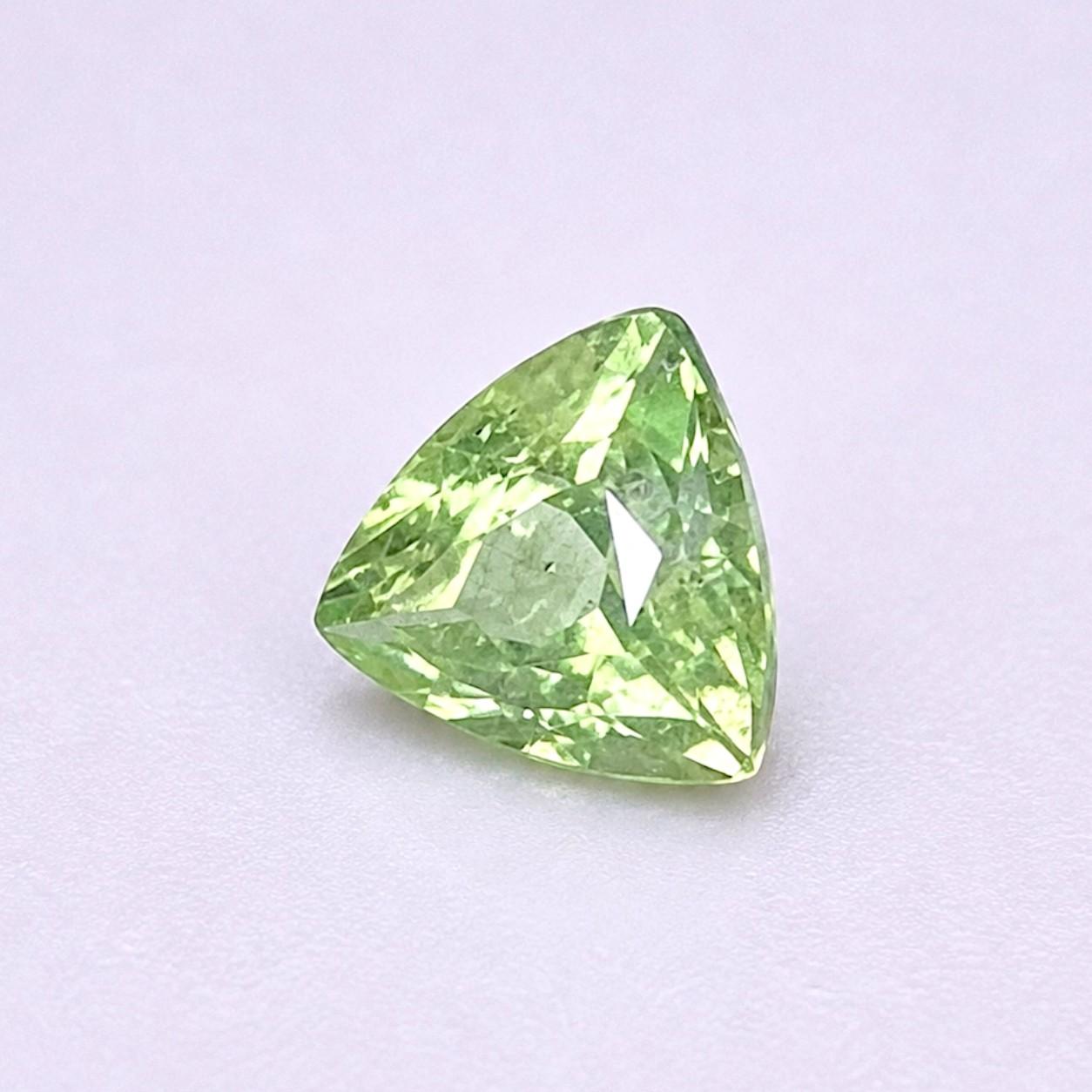
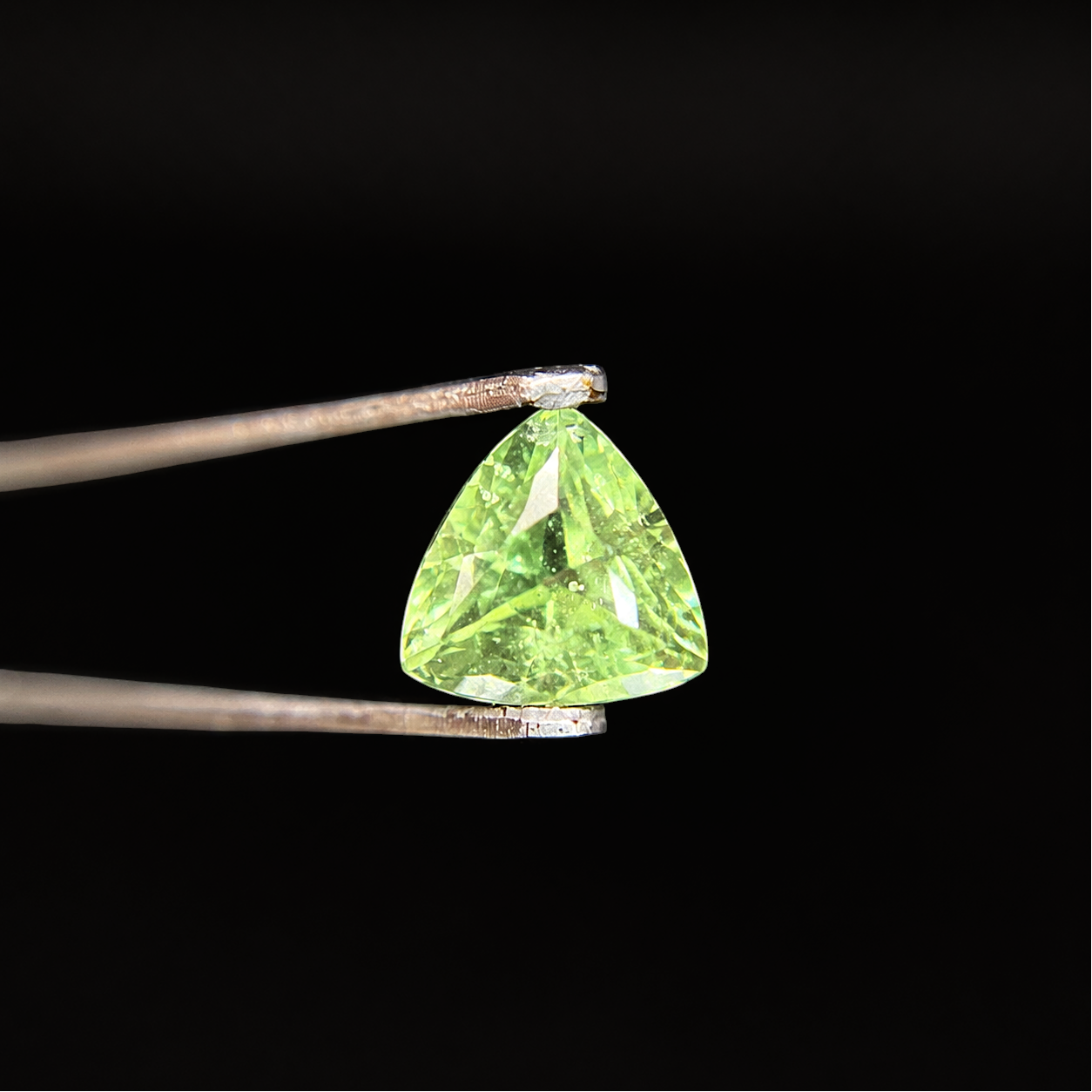
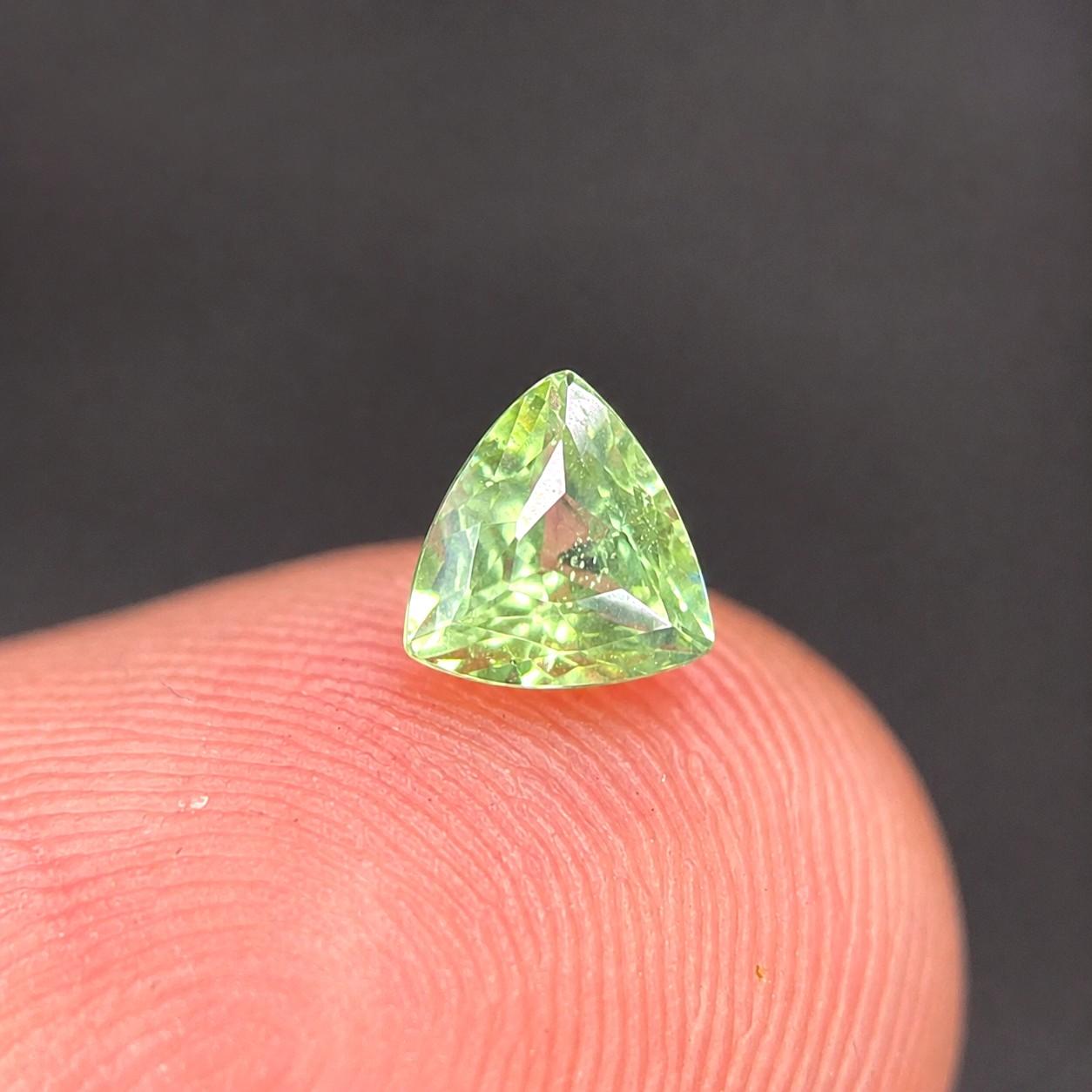
0.56 ct PERIDOT – MYANMAR
EXPERT VERIFIED
- Expert Verified Gemstone
- Fast Handling & Shipping
- Secure Vault Packaging
$ 100
Offer amount Feild


Smart Collector Choice


Pay with Crypto & Get 10% Automatic Discount

Availability: 1 in stock


- Freakingcats Gemstone Database
Peridot (Myanmar)
Peridot from the legendary high-grade metamorphic and mantle-derived terrains of Myanmar represents the absolute, unrivaled peak of pure olivine crystallization. A magnesium-iron silicate mineral, it is a species I have always respected for its “olivinoid-velvet” to “vivid-lime-neon” saturation and its status as a masterpiece of “orthorhombic” structural discipline. For the specialist, a top-tier Burmese Peridot is a prized trophy of deep-seated, high-temperature crystallization; it offers a magnificent vitreous to oily luster and a profoundly radiant, liquid presence that makes it a true “high-vibration” asset for the systematic vault. As an artist, I find the electrifying intensity of its crisp, dayglo-chartreuse bodies against any matrix to be one of nature’s most sophisticated, energetic, and clean palettes.
The Heritage & Discovery
Historical Significance
Peridot is an essential index species for decoding the intense thermodynamic dynamics, structural pressures, and iron-magnesium ratios that govern both the Earth’s upper mantle and high-grade contact metamorphic skarns. Historically, while the ancient island of Zabargad in the Red Sea provided antiquity with its first olivine treasures, it was the discovery of world-class, macrocrystalline giants in the highlands of Burma that completely elevated the species within fine mineralogy. In the world of fine minerals and collector gems, Burmese peridot stands entirely alone, celebrated for a natural, iron-activated pigment that possesses an unmatched visual depth and completely avoids the muddy, olive-brown undertones common to lesser deposits.
Discovery
While the extraction of fine corundum and spinels has dominated Southeast Asian history for centuries, the systematic mapping of the specialized ultramafic and marble contact zones in northern Myanmar completely redefined our global appreciation of this orthosilicate’s crystal limits. Scientifically, it sits as an intermediate member of the forsterite-fayalite solid-solution series, where a high magnesium dominance combined with trace structural iron creates the coveted neon-green signature. The discovery of these deep pocket networks provided mineralogists with spectacular, blocky prismatic crystals that showcase an exceptional, glass-like depth. My own respect for this material grew from observing its incredible optical properties; specifically, the way its high birefringence splits light—causing a distinct doubling of back facets when viewed through the crystal—is a visual impact that is unmistakable to the trained eye.
Important Mines
The undisputed historical and modern capital for the most aesthetic macrocrystalline expressions of this species remains the legendary mountainous region of Pyaung Gaung, situated within the Mogok Stone Tract of the Mandalay Region, Myanmar. Famed for its highly specialized, weathered ultra-mafic dykes and serpentinites, this specific alpine zone yields outstanding, freestanding crystals and gem-quality alluvial blocks that are meticulously secured from deep, vertical shafts. For the vault, I prioritize specimens that exhibit high internal optical transparency, well-defined edge geometry, and robust color purity on a solid, contrasting matrix, as they represent a highly active, pristine masterpiece of deep-crustal geology.
Mineralogical Profile
Description
Peridot is the gem-grade variety of the olivine series, a magnesium iron silicate that crystallizes in the orthorhombic system. It sits at a robust 6.5 to 7 on the Mohs scale, meaning its tough, durable surfaces are highly resistant to physical abrasion and require only standard archival handling to safeguard its brilliant vitreous to distinctly oily faces. It is characterized by its bright surface luster and its unmistakable, “vibrant lime-green to deep chartreuse-yellow” color palette.
One of its most identifying traits is its poor cleavage combined with a clean conchoidal fracture, frequently forming blocky, vertically striated prismatic crystals or smooth, waterworn crystal masses that trace ancient deep-seated fluid environments through host fractures. It possesses a moderate to high refractive index running from approximately 1.654 to 1.690, contributing to its strong internal color depth and exceptional brilliance, and an average specific gravity ranging between 3.27 and 3.37 that reflects its dense, magnesium-heavy architecture. Because it forms in specialized magnesium-rich metamorphic and igneous settings, it is commonly found in close association with Phlogopite, Diopside, Magnetite, Chromite, Serpentinite, and Calcite. When I select a piece for the collection, I look for well-defined, “crisp” prismatic columns or highly transparent, freestanding crystals, as these highlight the sophisticated, three-dimensional chemistry of the mineral’s deep-seated birth.
Chemical Formula
(Mg,Fe)2SiO4


