

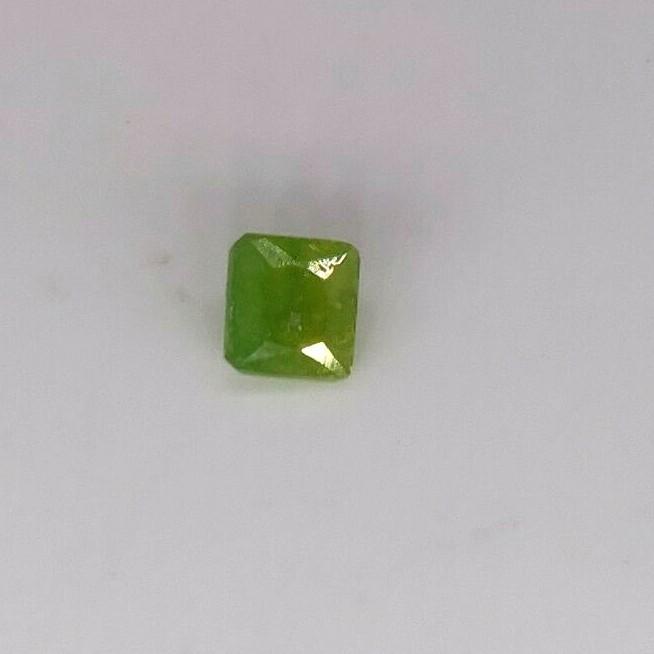
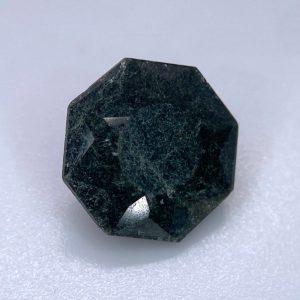
0.68 ct PYROMORPHITE – CHINA
EXPERT VERIFIED
- Expert Verified Gemstone
- Fast Handling & Shipping
- Secure Vault Packaging
$ 200 Original price was: $ 200.$ 120Current price is: $ 120.
Offer amount Feild


Smart Collector Choice


Pay with Crypto & Get 10% Automatic Discount

Out of stock
- Freakingcats Gemstone Database
Pyromorphite
Pyromorphite is the undisputed “green fire” of the mineral world. I have always been captivated by its intense, almost artificial-looking shades of lime, grass, and forest green. It is a lead phosphate that forms some of the most aesthetic crystal clusters in geology—often appearing as dense, “carpet-like” druses of hexagonal prisms or as curious, barrel-shaped “hopping” crystals. There is a sculptural quality to a top-tier Pyromorphite specimen that is hard to find elsewhere. When you see a plate of these sparkling, apple-green needles, it feels like looking into a miniature, alien forest. For the collector, it is the essential lead-based secondary mineral, providing a punch of color that can dominate any display shelf.
The Heritage & Discovery
Historical Significance: Pyromorphite has been a prized mineralogical staple for centuries. It belongs to the apatite group and represents a classic “secondary” mineral, formed through the oxidation of primary lead ores like Galena. Its name is derived from the Greek words pyr (fire) and morphe (form), referring to the fact that after being melted into a bead, it recrystallizes into a distinct crystalline shape upon cooling. Historically, it has been an indicator for miners searching for deep-seated lead and silver deposits, but its primary value today lies in its unmatched aesthetic appeal to mineral connoisseurs.
Discovery: The mineral was first identified in the 18th century, but it was officially named by Johann Friedrich Ludwig Hausmann in 1813. Before its current name, it was often referred to as “green lead ore.” Its systematic study helped early mineralogists understand how phosphate and arsenate groups can swap places within a crystal lattice, leading to its close relationship with Mimetite.
Important Mines: While found in many lead districts, the Les Farges Mine in France is legendary for producing some of the world’s most famous “apple-green” specimens. The Bunker Hill Mine in Idaho, USA, is equally renowned for its vibrant, saturated colors. I also have a deep appreciation for the material coming out of the Daoping Mine in China, which has redefined the market with its spectacular, lustrous, and thick hexagonal prisms. We source from these classic localities to ensure that every specimen holds that signature, high-intensity green that Pyromorphite is famous for.
Mineralogical Profile
Description: Pyromorphite is a lead phosphate chloride that crystallizes in the hexagonal system. It sits at a 3.5 to 4 on the Mohs scale, making it a relatively soft mineral that is best suited for display rather than jewelry. It is characterized by its brilliant resinous to adamantine luster, which gives it a sparkling, “wet” look.
The crystals are typically prismatic, but can also be globular or reniform. One of its most interesting habits is the “hopper” crystal, where the edges grow faster than the centers, creating hollowed-out hexagonal tubes. It is a very dense mineral due to its high lead content, which you can feel immediately when picking up a matrix specimen.
Chemical Formula: Pb5(PO4)3Cl
Related products
- Sale!Suggest a Price
![0.60 ct BI COLOR BLUE APATITE - BRAZIL]()
- Sale!Suggest a Price
![0.40 ct ANTHRACITE - USA]()
- Sale!Suggest a Price
![1.63 ct CATS EYE ALEXANDRITE - INDIA]()
- Sale!Suggest a Price
![5.35 ct AERINITE - SPAIN]()


