
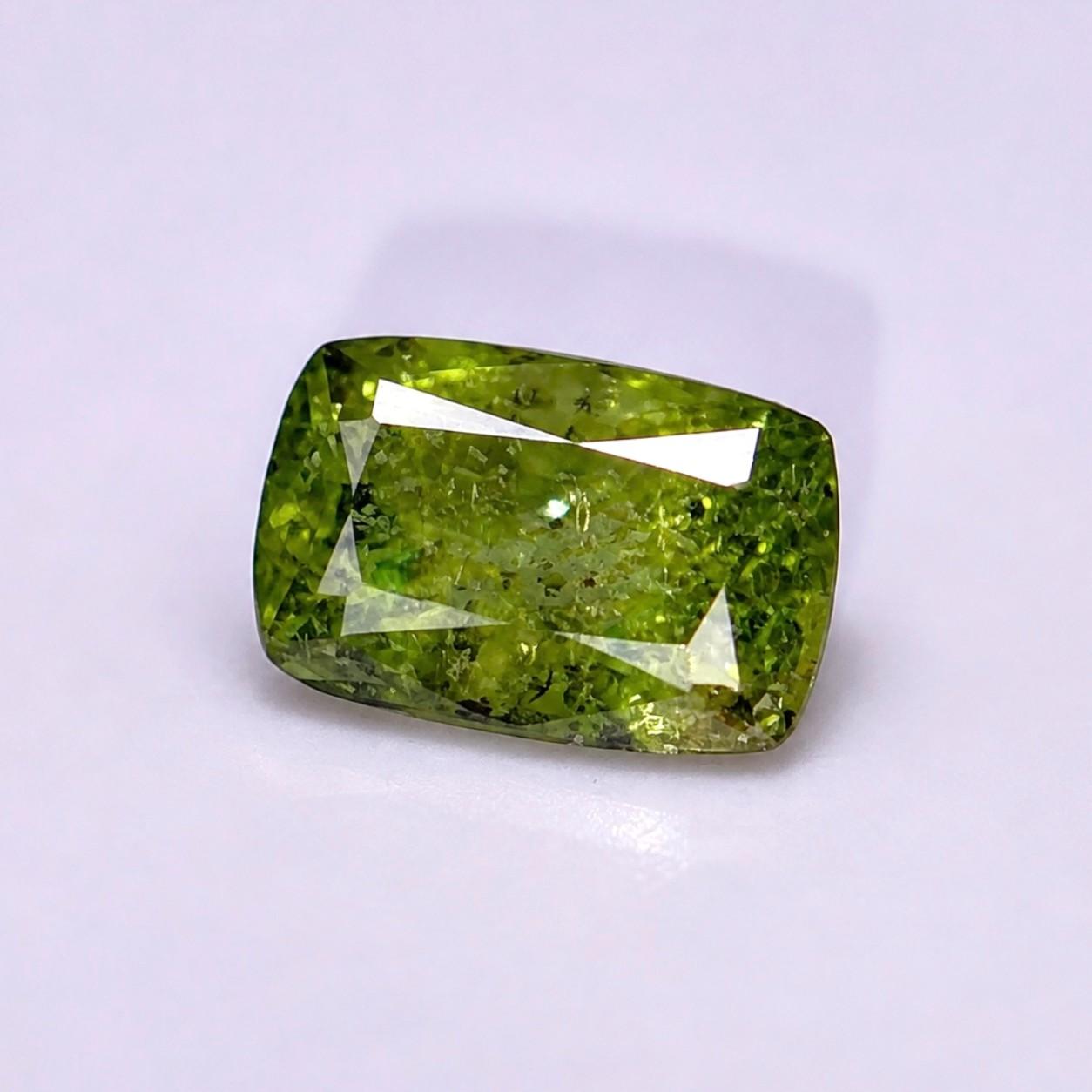
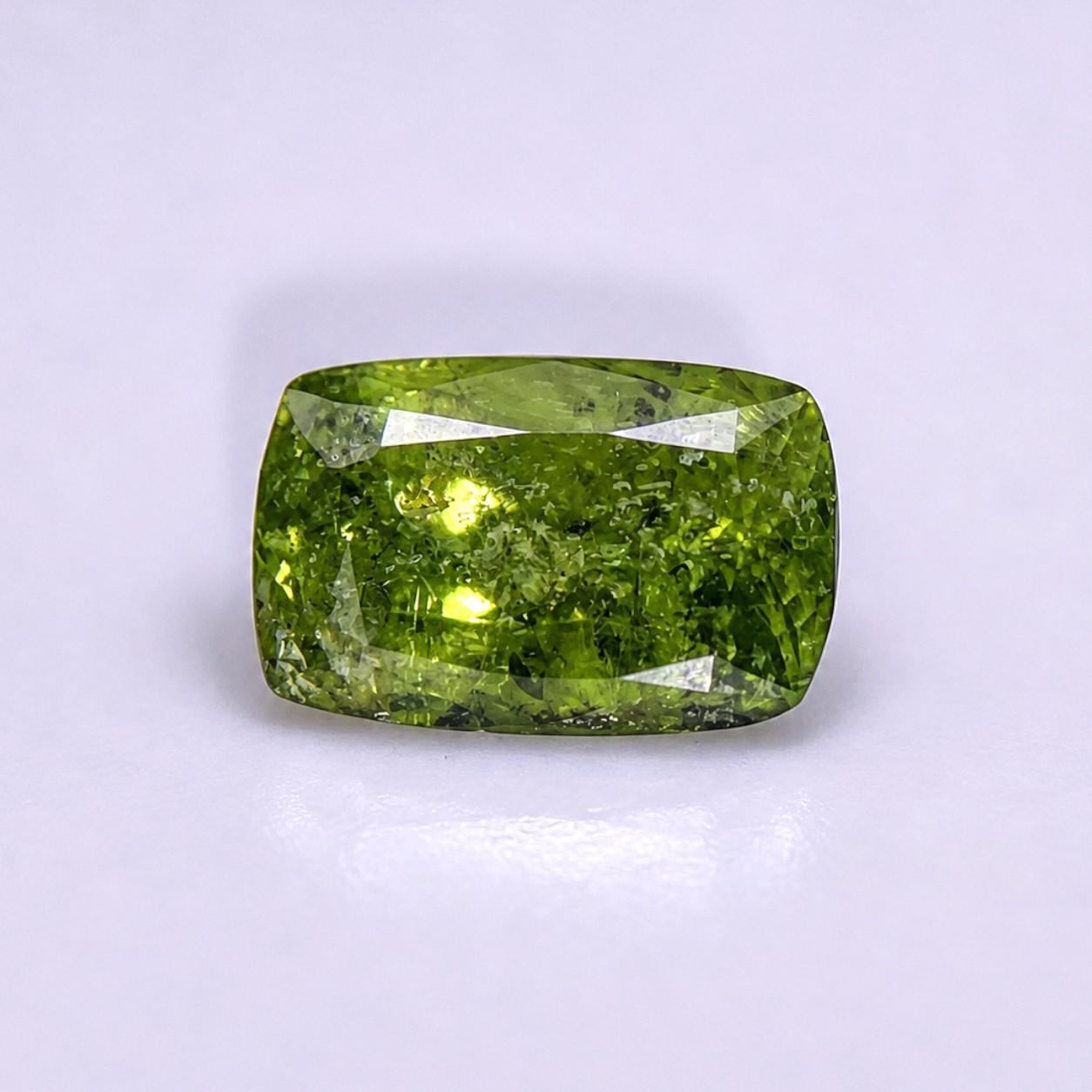
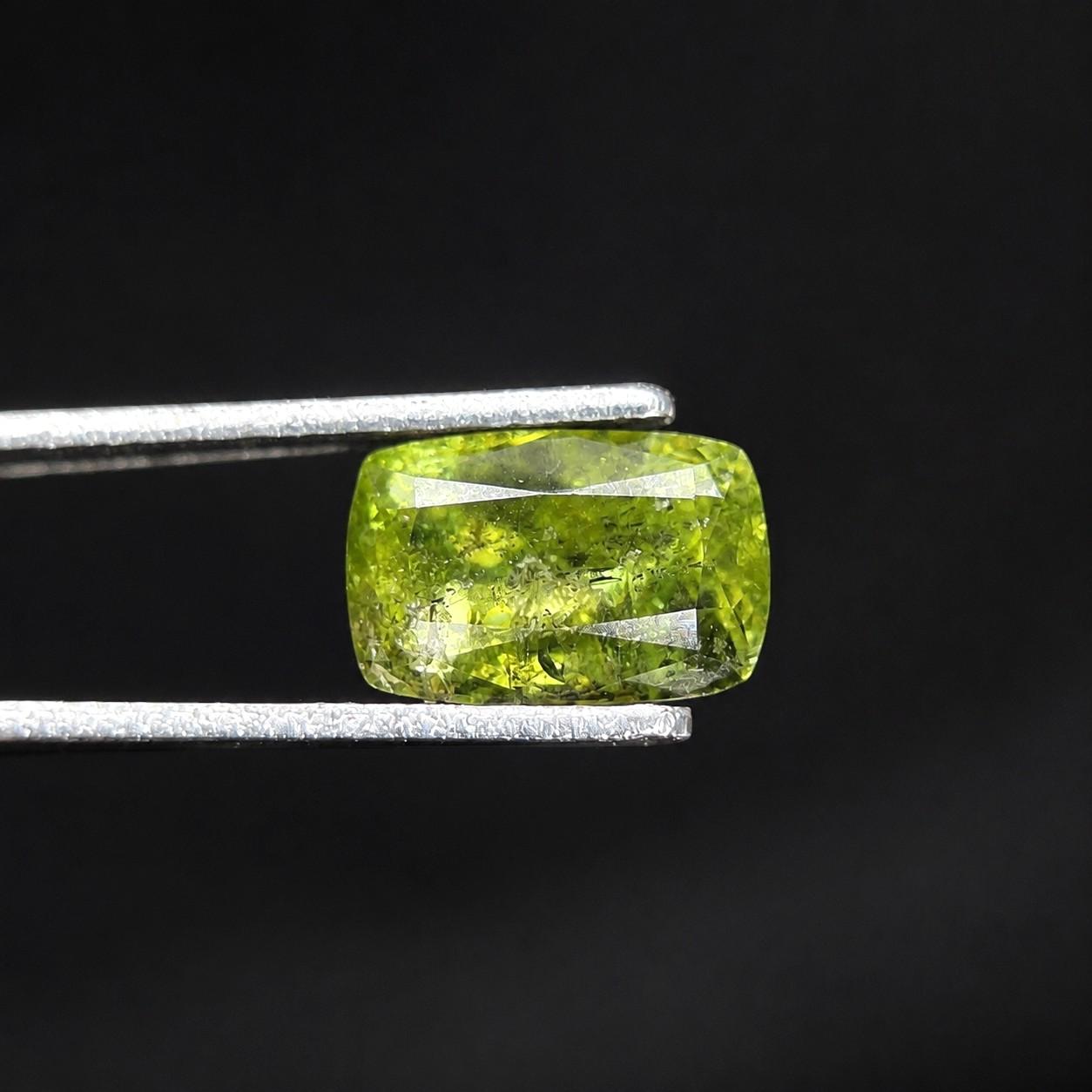
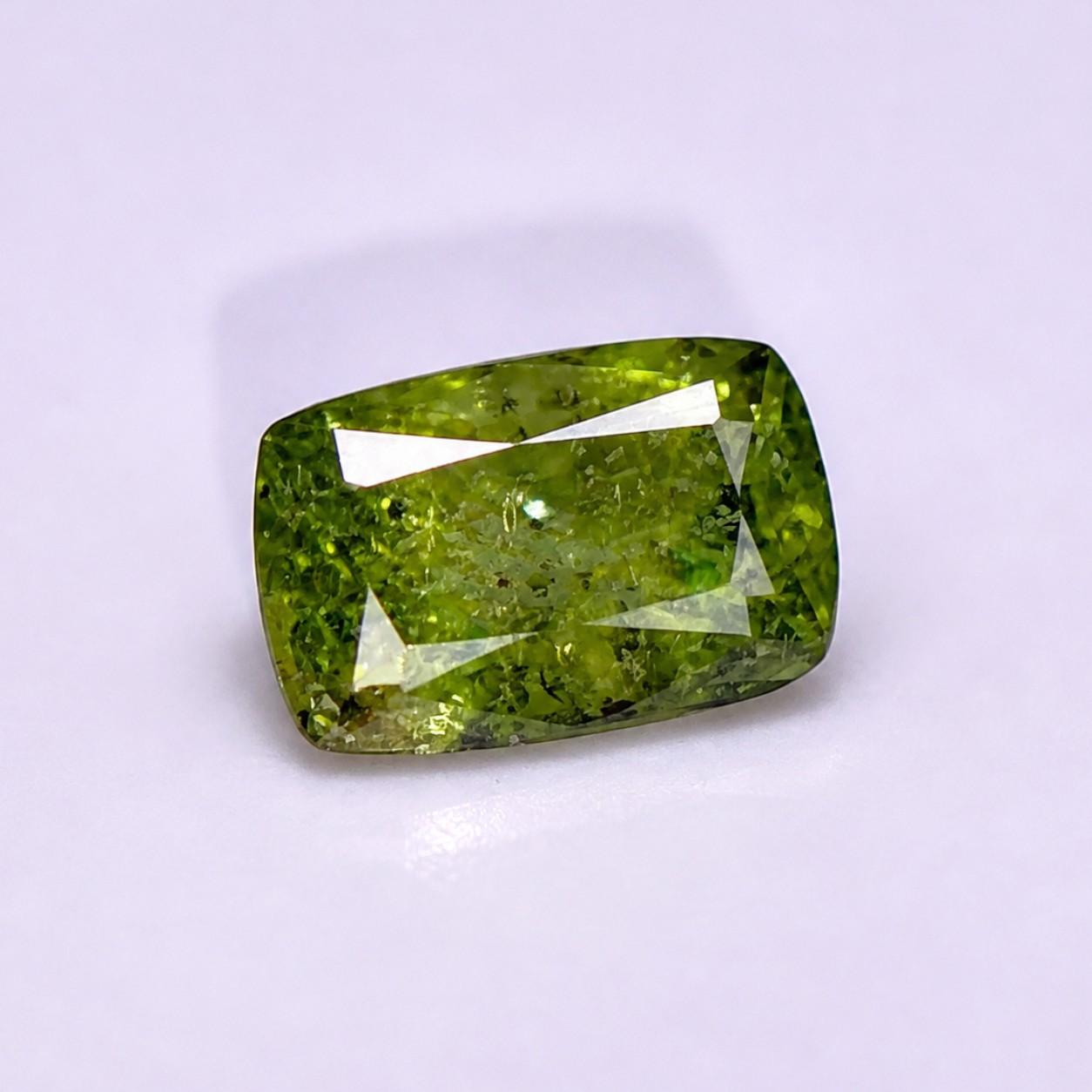
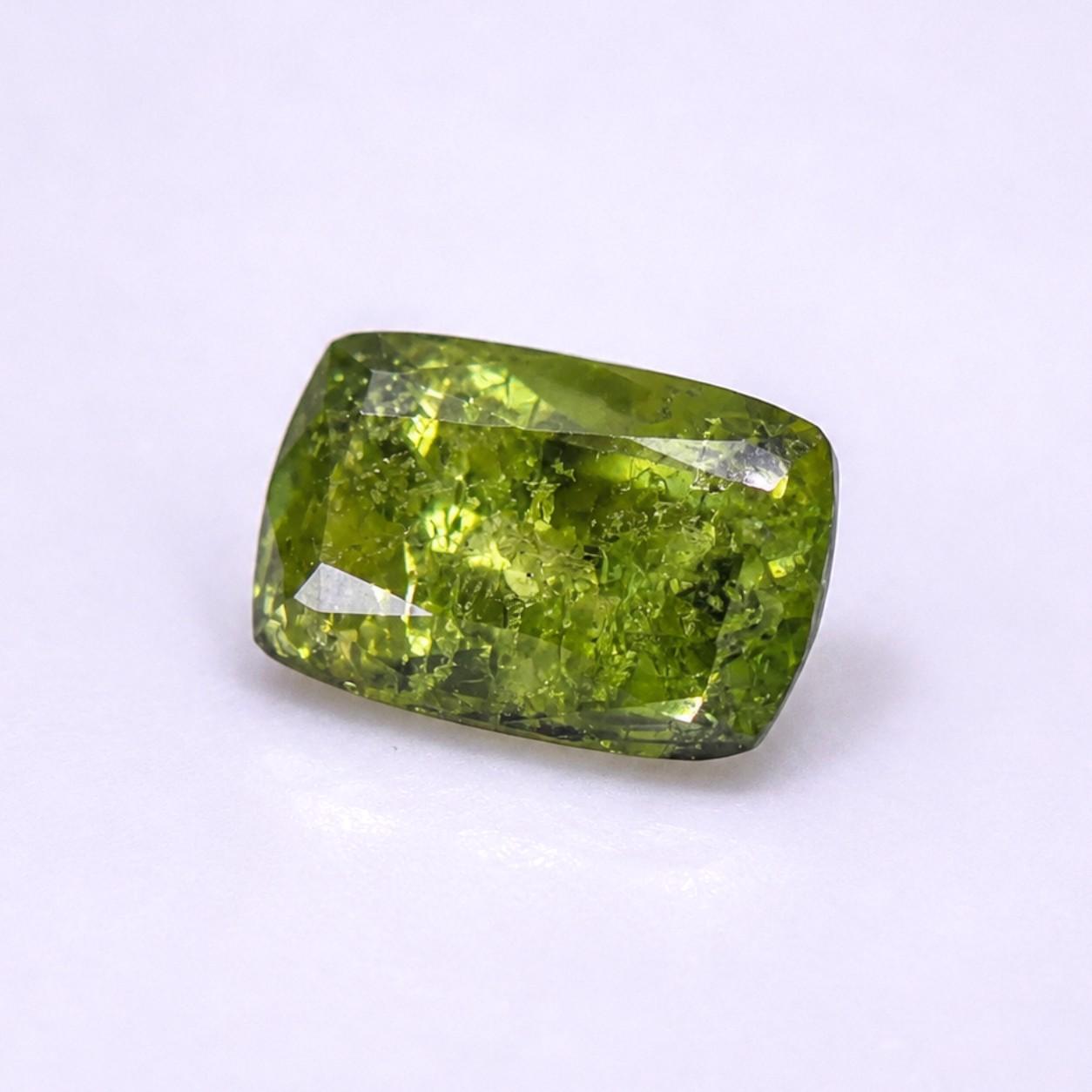
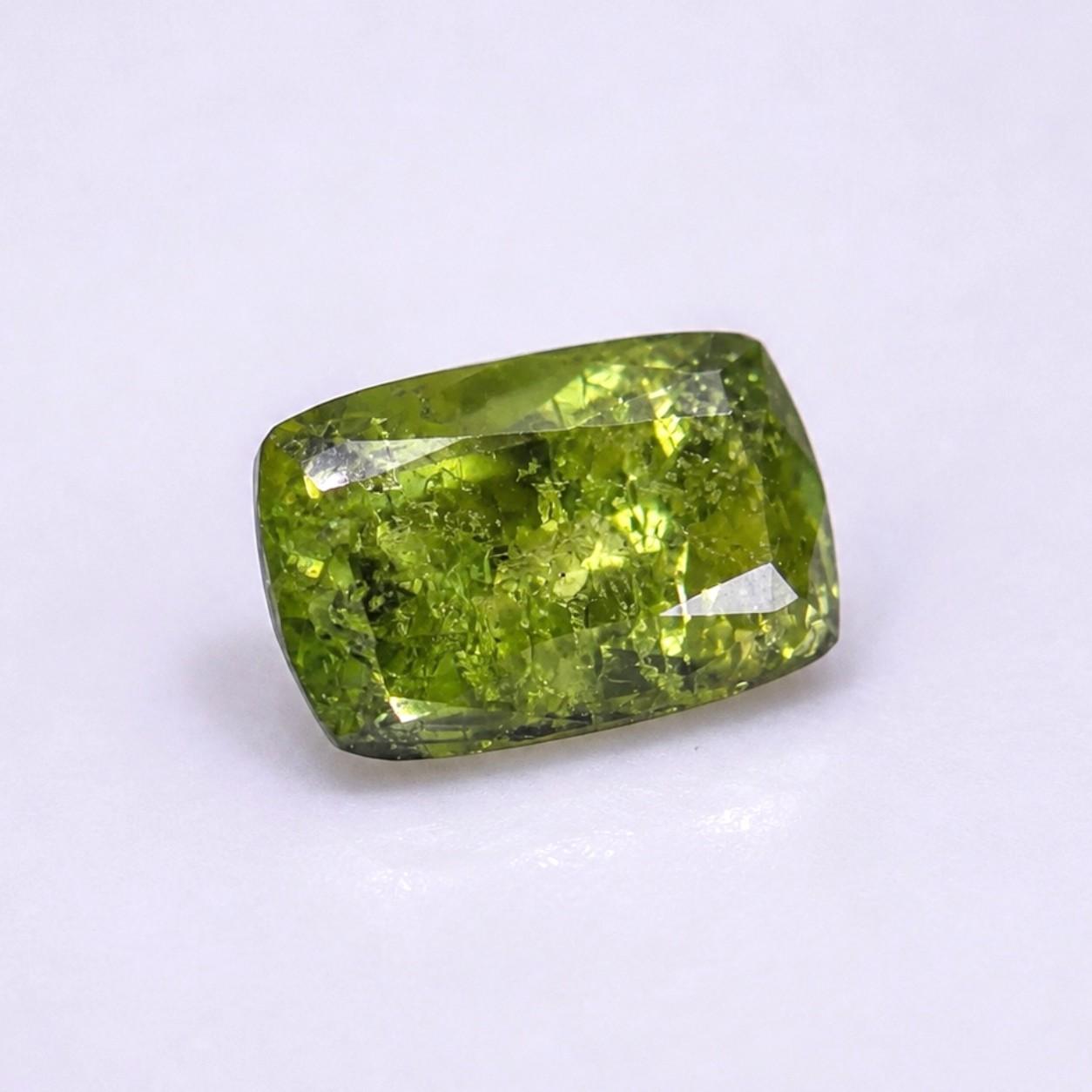
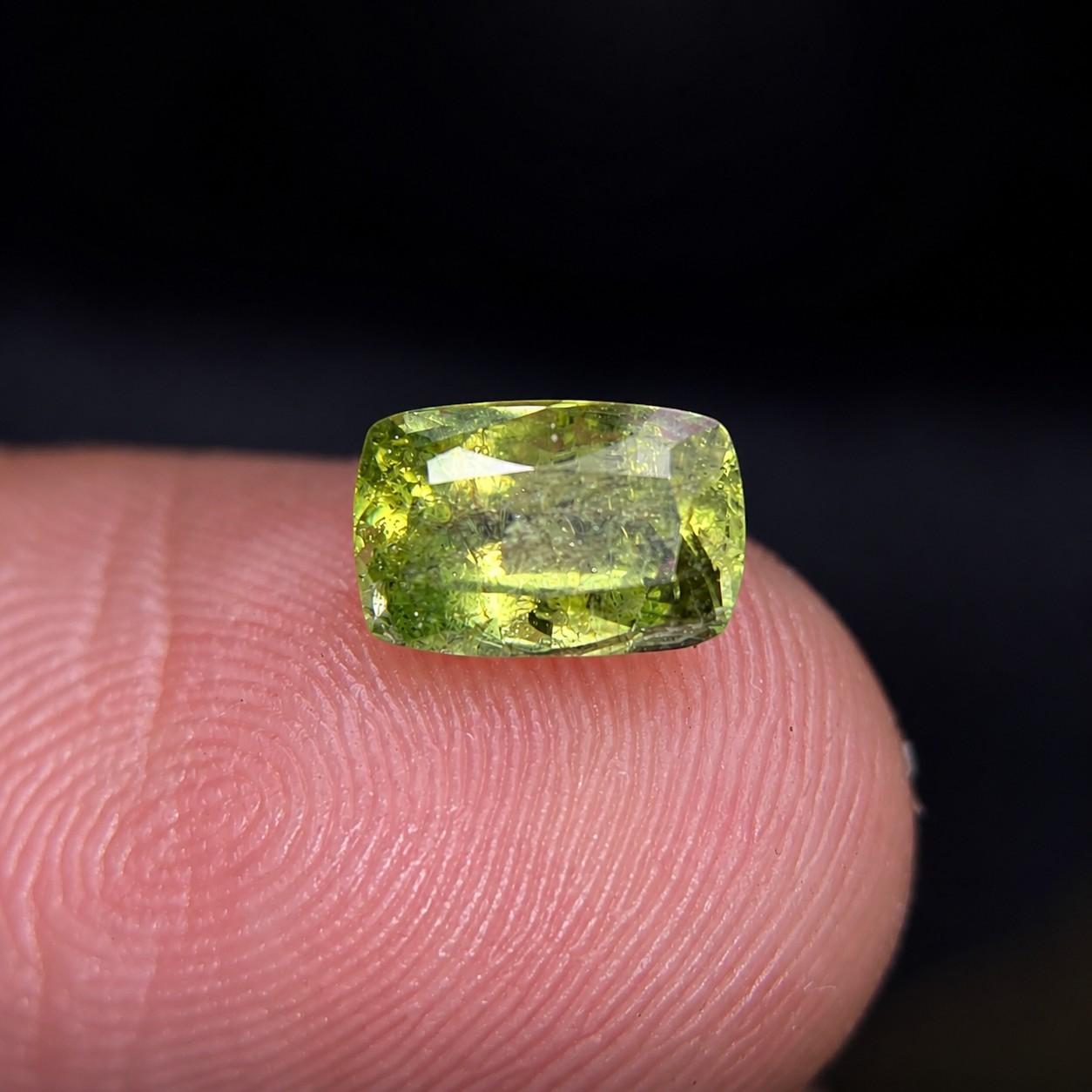
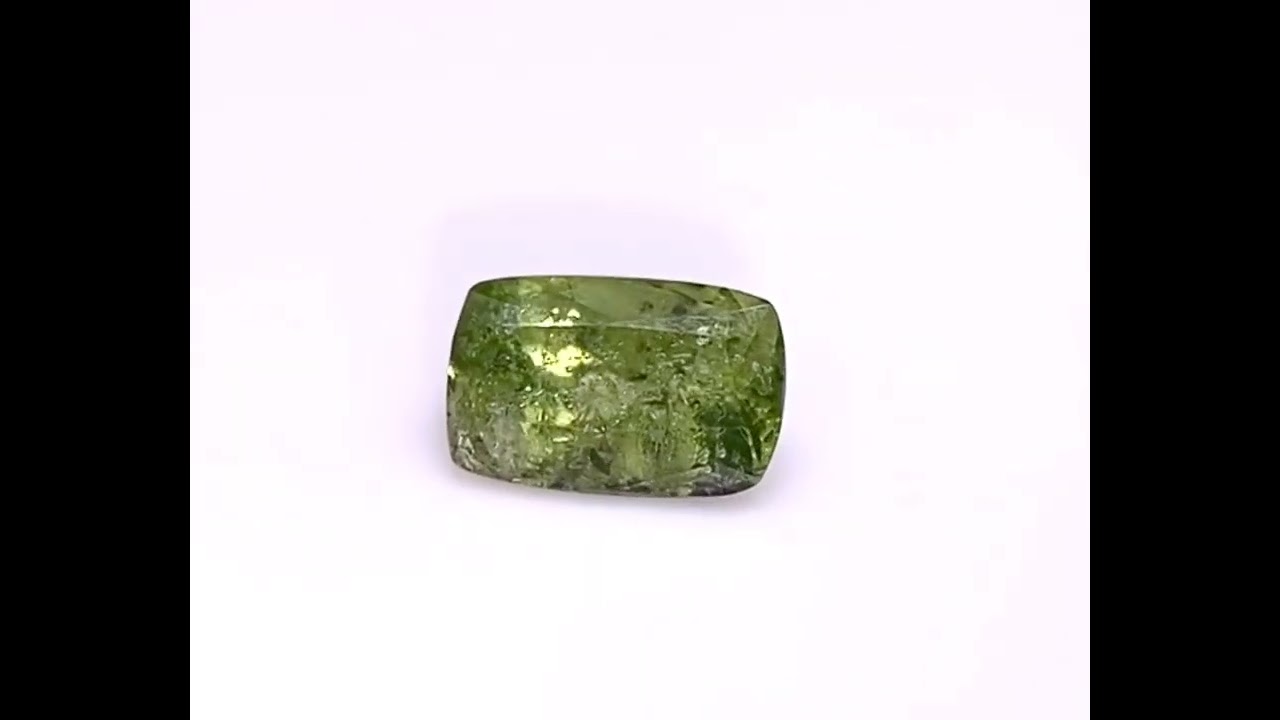
1.13 ct TASHMARINE – AFGHANISTAN
EXPERT VERIFIED
- Expert Verified Gemstone
- Fast Handling & Shipping
- Secure Vault Packaging
$ 150
Offer amount Feild


Smart Collector Choice


Pay with Crypto & Get 10% Automatic Discount

Availability: 1 in stock


- Freakingcats Gemstone Database
Tashmarine (Afghanistan)
Tashmarine from the remote high-altitude veins of Afghanistan represents the absolute peak of iron-colored, chromium-free pyroxene brilliance and understated tonal purity. A rare gem-quality variety of diopside, it is a species I have always respected for its “pistachio-mint” to “brilliant-yellowish-green-neon” saturation and its status as a masterpiece of “monoclinic” structural discipline. For the specialist, a top-tier Afghan Tashmarine is a coveted prize of undisturbed regional metamorphism, offering a bright vitreous luster and an exceptionally luminous presence that makes it a true “high-vibration” asset for the systematic vault. As an artist, I find the clean, natural depth of its pastel citrus hues and its ability to maintain high clarity even in large crystal volumes to be one of nature’s most sophisticated and refreshing palettes.
The Heritage & Discovery
Historical Significance
Tashmarine is a critical material for understanding how iron-driven color centers operate within pyroxene group minerals when chromium is entirely absent from the parent matrix. Historically, the trade name was introduced to the gem world in the early 2000s, derived from the Central Asian word Tash (meaning stone) paired with marine (evoking the sea), paying homage to the ancient trade hubs along the legendary Old Silk Road. While commercial branding initially focused on specific finds across Central Asia and western China, the subsequent unearthing of fine crystals within the ancient borders of Afghanistan elevated the material among connoisseurs, standing as a modern symbol of natural, unenhanced beauty and crystal focus.
Discovery
While classic chrome diopside has long been appreciated for its deep forest-green tones, it suffers from a well-known optical limitation—darkening significantly as crystal mass increases until larger stones appear nearly black. The discovery of the Tashmarine variety completely redefined the gemological potential of the species; because its palette is dictated purely by iron rather than chromium, it preserves its remarkable brightness and electric pistachio saturation even in specimens exceeding forty carats. The opening of specialized metamorphic pockets within the Hindu Kush mountains provided mineralogists with spectacular, well-formed prismatic crystals. My own respect for this material grew from observing its behavior under light; specifically, the way its lighter body allows a clean, liquid fire to dance across its structural lines without being choked out by over-saturation is a visual impact that is unmistakable to the trained eye.
Important Mines
The primary capital for the finest Afghan expressions of this material remains the legendary Badakhshan Province in northeastern Afghanistan, a region revered since antiquity for its deep-seated gemstone wealth. These rugged, high-altitude pegmatite and metamorphic fields yield outstanding, freestanding prismatic crystals and highly transparent alluvial sections that are secured through painstaking manual labor along steep mountain slopes. For the vault, I prioritize specimens that exhibit high internal optical transparency, clean terminations, and that classic, vivid yellowish-green color purity, as they represent a highly active, pristine masterpiece of primary geological crystallization.
Mineralogical Profile
Description
Tashmarine is an iron-bearing variety of diopside, a calcium magnesium silicate belonging to the clinopyroxene group that crystallizes in the monoclinic system. It sits at a moderate 5.5 to 6 on the Mohs scale, sharing a similar structural durability to tanzanite; this means its highly lustrous faces must be handled with deliberate care, shielded from physical impact, and preserved within stable archival conditions. It is characterized by its bright vitreous luster and an unmistakable, “pistachio-green, pale olive, to yellowish-mint” color palette.
One of its most identifying traits is its two directions of perfect prismatic cleavage intersecting at nearly ninety degrees, frequently forming blocky, flat-faced prismatic columns or elongated crystals with distinct vertical striations tracing historical growth layers. It possesses a moderate refractive index running from approximately 1.664 to 1.730, contributing to its excellent surface fire and internal color depth, and an average specific gravity ranging between 3.22 and 3.38. Because it forms in specialized metamorphic skarns and calcium-rich altered rocks, it is commonly found in close association with Calcite, Quartz, Grossular Garnet, Tremolite, and Phlogopite. When I select an example for the collection, I look for well-terminated, “crisp” prismatic architecture or flawless, facet-grade crystalline masses, as these maximize the sophisticated, three-dimensional chemistry of the mineral’s fluid-driven birth.
Chemical Formula
CaMgSi2O6


