
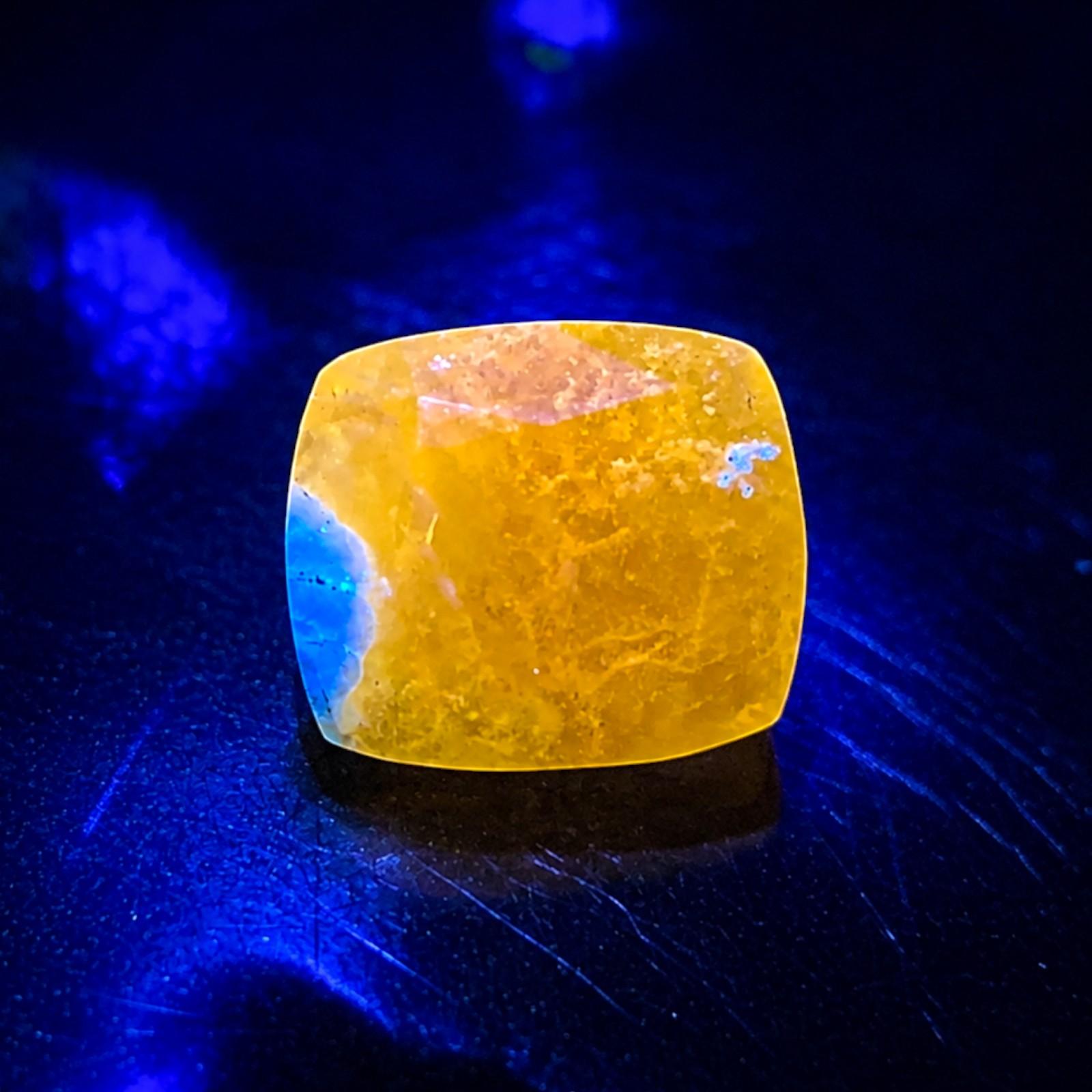
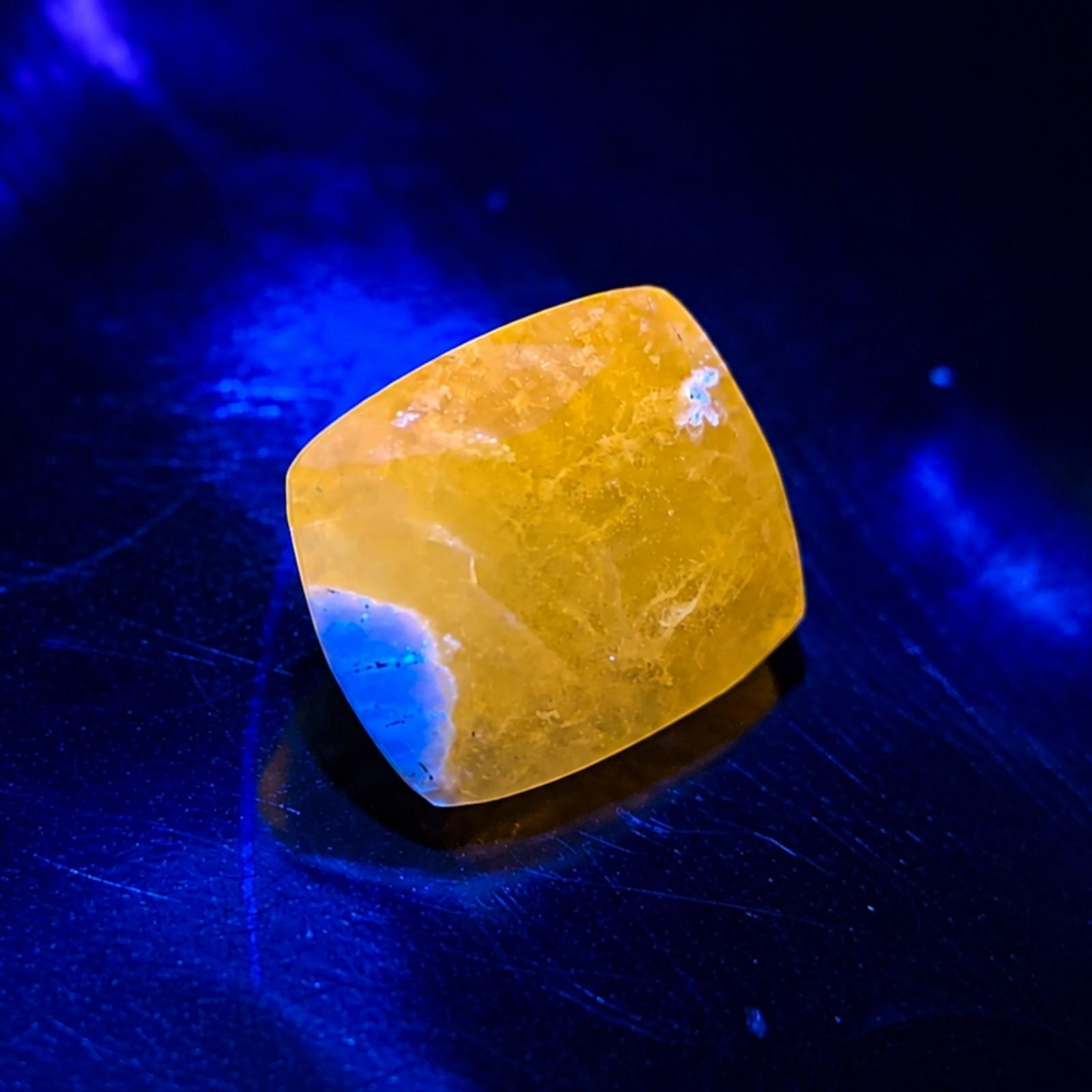
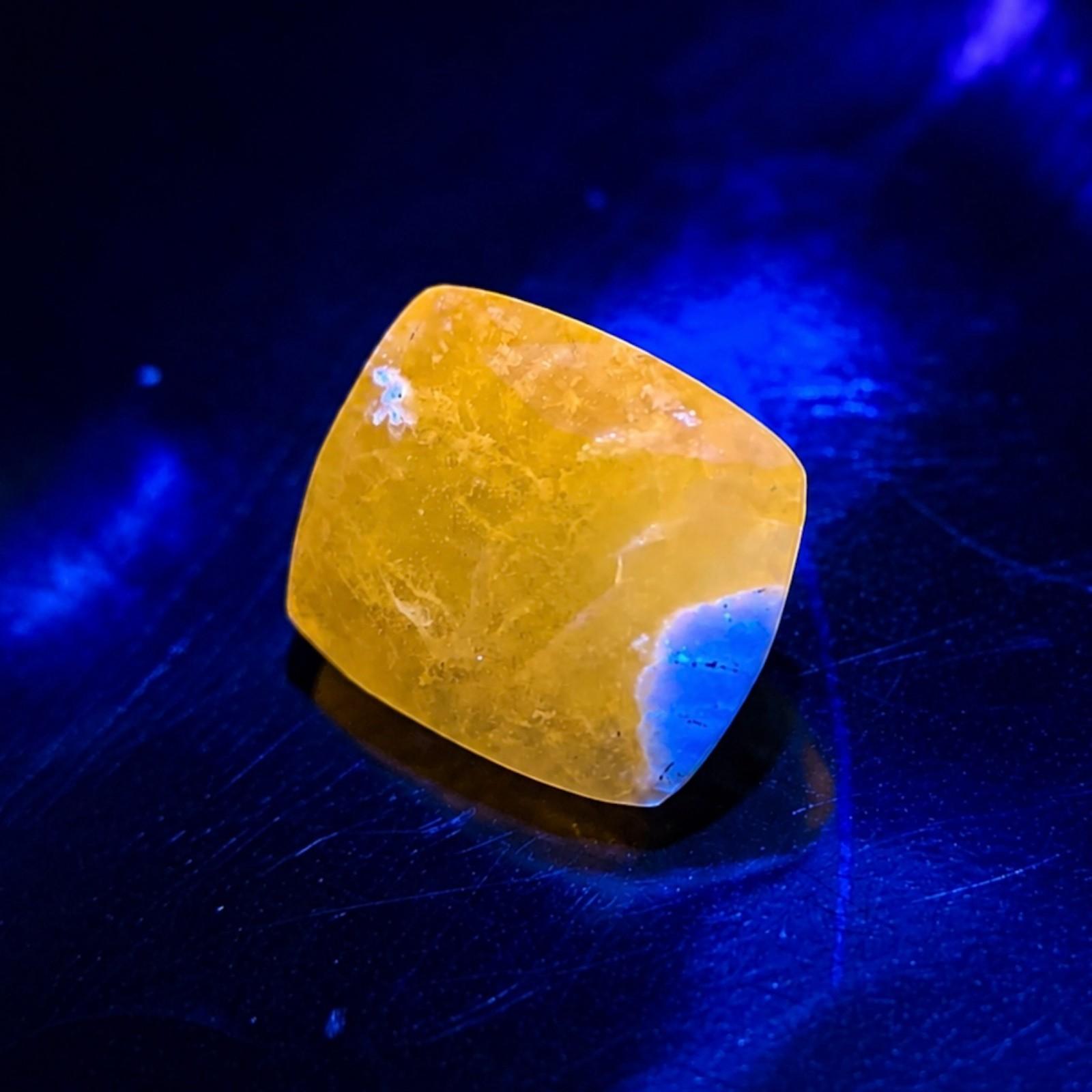
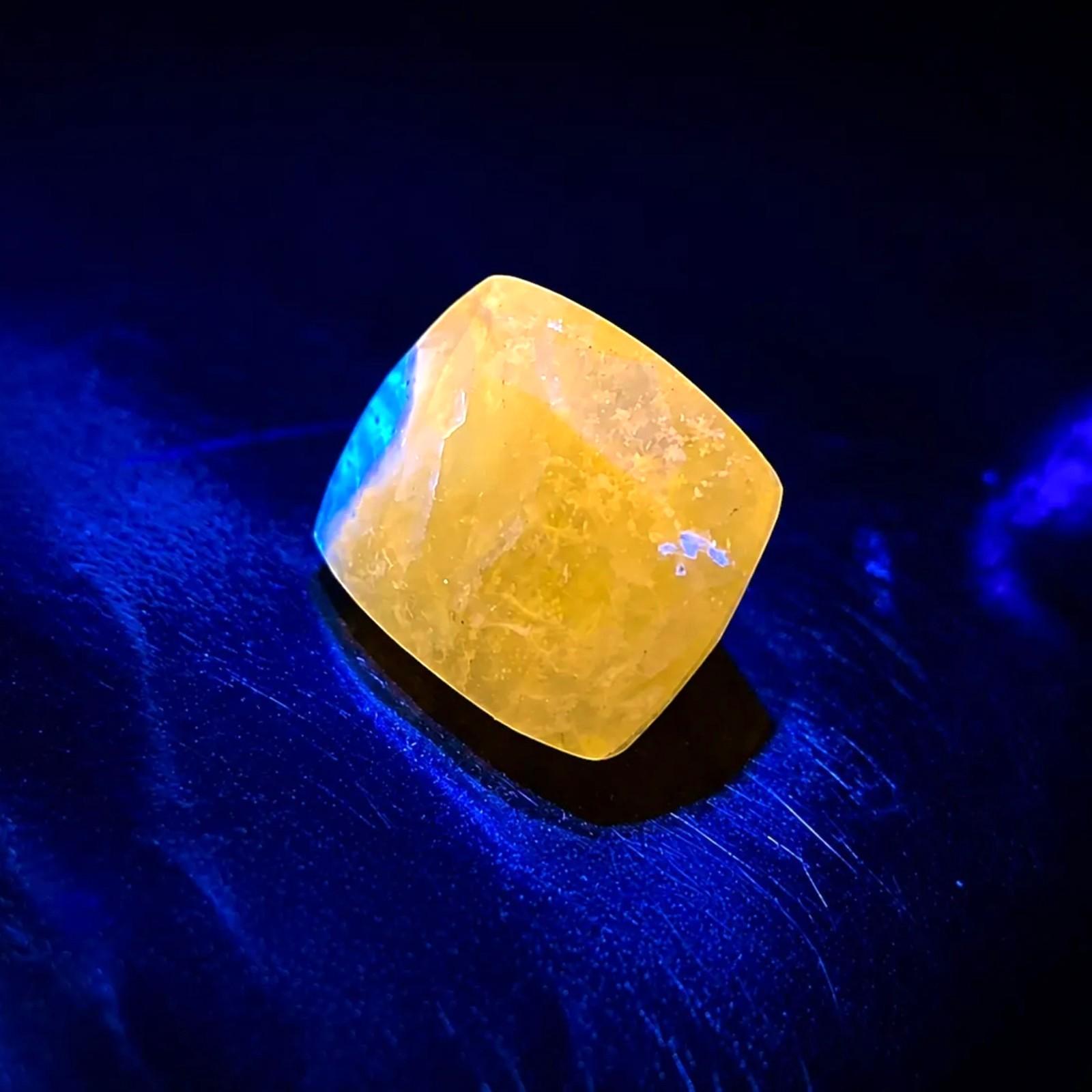
1.37 ct HAUYNE – Sar-e-Sang – AFGHANISTAN
EXPERT VERIFIED
- Expert Verified Gemstone
- Fast Handling & Shipping
- Secure Vault Packaging
$ 320
Offer amount Feild


Smart Collector Choice


Pay with Crypto & Get 10% Automatic Discount

Availability: 1 in stock
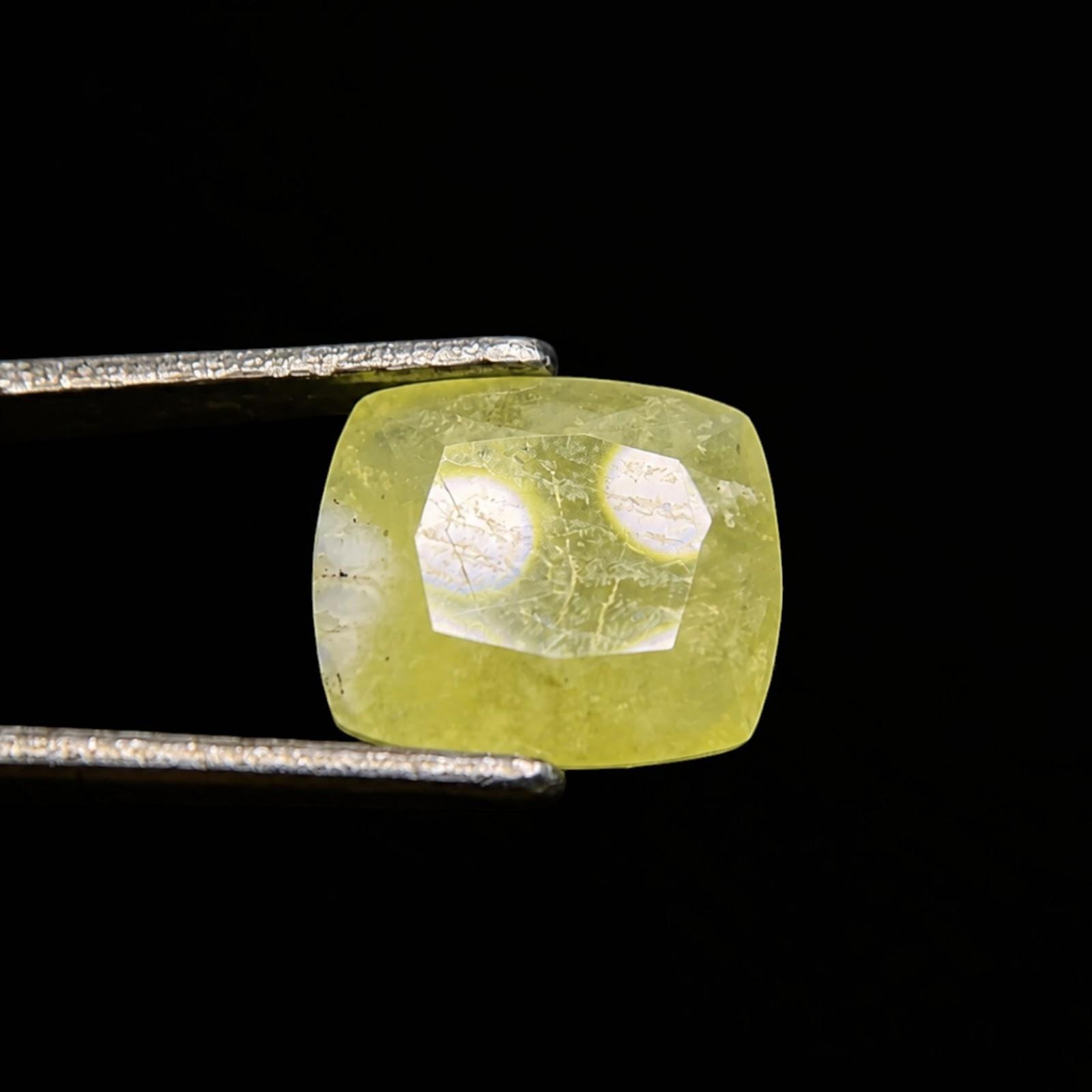
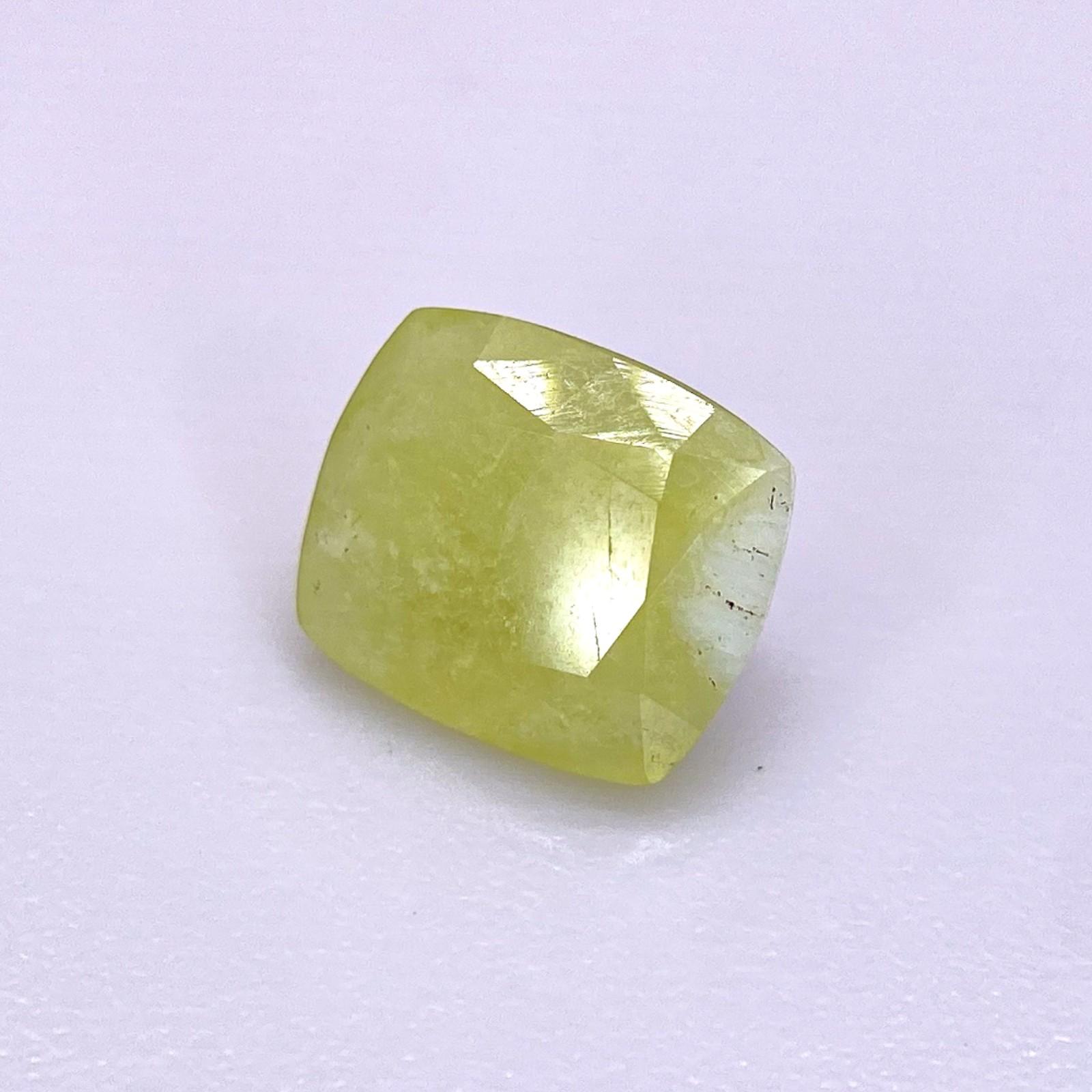
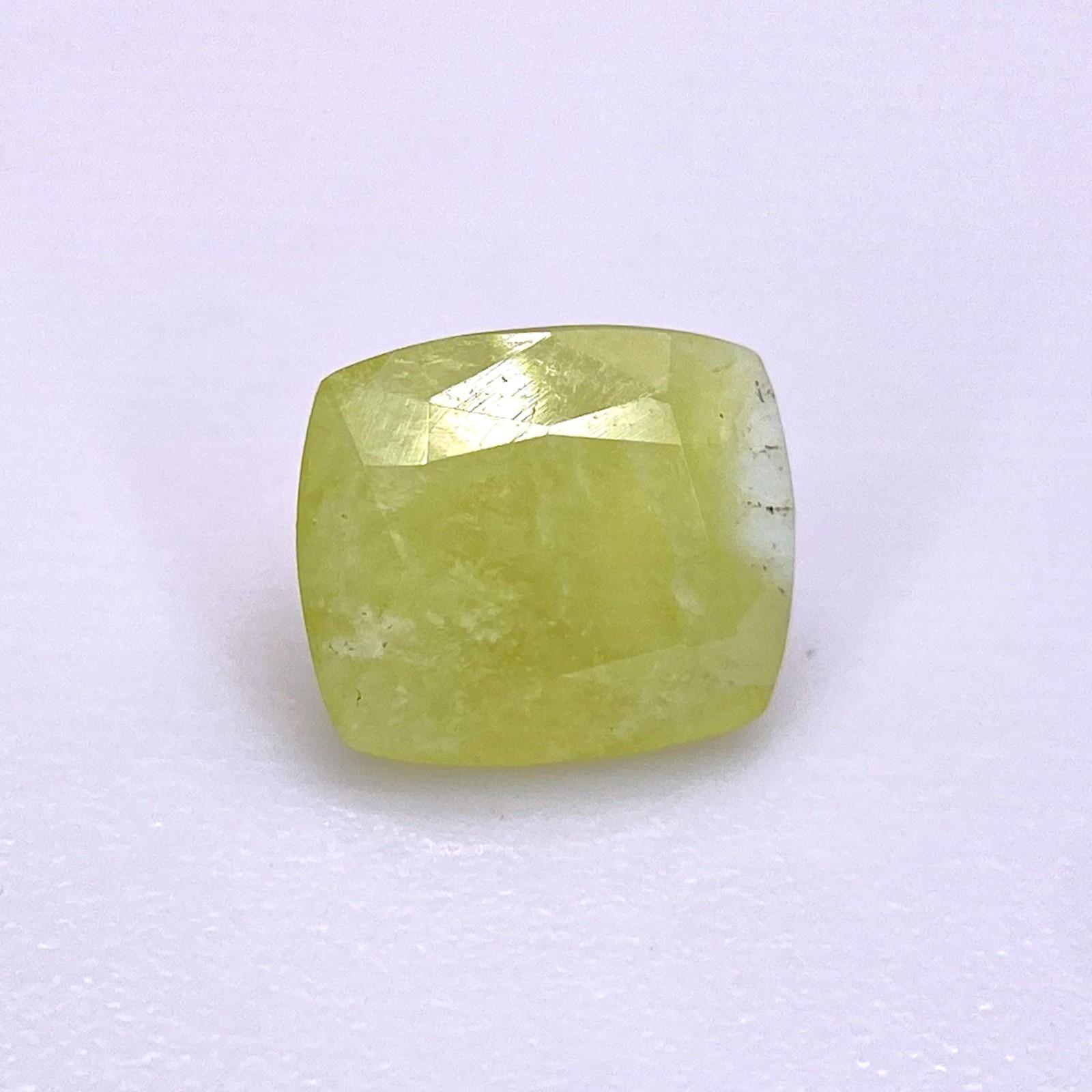


- Freakingcats Gemstone Database
Yellow Haüyne (Sar-e-Sang, Afghanistan)
Yellow Haüyne from the historic, high-altitude metamorphic marble horizons of Sar-e-Sang, Afghanistan, represents one of the most remarkable and unexpected color anomalies within the sodalite group. While the species is internationally famed for its deep, electrifying lapis-cobalt blue, the ultra-rare yellow variant stands as an extreme prize of specialized sulfur-center chemistry and iron-depleted metamorphic conditions. A complex sodium-calcium sulfate-bearing tectosilicate, it is a mineral I have always respected for its “canary-sunburst” to “vivid-lemon-neon” saturation and its status as a masterpiece of “isometric” structural discipline. For the specialist, a verified Afghan Yellow Haüyne—particularly when displaying distinct, translucent dodecahedral crystal habit embedded in stark white marble—is a coveted trophy of ancient regional skarn dynamics; it offers a bright vitreous to greasy luster and a highly luminous, ethereal presence that makes it an essential asset for the systematic vault. As an artist, I find the electrifying, warm yellow glow of its gemmy crystals contrasting against milky calcite or dark phlogopite to be one of nature’s most sophisticated and visually surprising palettes.
The Heritage & Discovery
Historical Significance Haüyne is a crucial index species for decoding the complex, volatile-rich fluid movements, high-temperature metamorphism, and sulfur fugacity parameters that govern the famous lapis lazuli deposits of the Hindu Kush. Named in 1807 by Karl Caesar von Leonhard in honor of the pioneering French crystallographer René Just Haüy, the species is historically associated with volcanic ejecta in Europe. However, the deep metamorphic skarn beds of Badakhshan, Afghanistan—mined continuously for over 6,000 years—provide a completely unique geological environment where Haüyne co-precipitates within ancient marble horizons rather than volcanic lavas, yielding specimens of extraordinary structural stability and color diversity.
Discovery While deep royal-blue haüyne is a recognized component of Afghan lapis lazuli, the discovery of isolated, gem-quality, bright yellow macro-crystals within the Sar-e-Sang valley sent shockwaves through the mineralogical community. Scientifically, Haüyne contains large structural cages within its sodalite-type framework that accommodate sulfate (SO42−) anions along with variable sodium and calcium. In the yellow Afghan material, specific structural oxidation states and trace sulfide or polysulfide color centers—devoid of the typical iron-quenched blue charge transfers—allow the crystal to absorb blue-violet wavelengths, transmitting a brilliant, saturated yellow body color. The opening of these pristine, high-altitude marble pockets provided mineralogists with rare, freestanding or matrix-anchored dodecahedral crystals. My own respect for this material grew from analyzing its optical purity; specifically, the way a clean, yellow Afghan Haüyne gathers ambient light and projects a fiery, warm internal reflection is a visual impact that is unmistakable to the trained eye.
Important Mines The undisputed capital for this ultra-rare variety remains the legendary Sar-e-Sang Mine, located in the Koksha Valley of the Kuran wa Munjan District, Badakhshan Province, Afghanistan. Situated in rugged, high-altitude alpine terrain, these ancient mines yield world-class specimens from contact metamorphic marble beds where granitic pegmatites intruded into ancient evaporite-bearing limestones. For the vault, I prioritize specimens that exhibit sharp, unblemished dodecahedral faces, high internal optical transparency, and a clean, contrasting position within a protective matrix of white calcite or light-colored phlogopite.
Mineralogical Profile
Description Haüyne is a complex sodium calcium aluminum silicate sulfate mineral belonging to the feldspathoid group that crystallizes in the isometric system. It sits at a moderate 5.5 to 6 on the Mohs scale, meaning its highly lustrous crystal faces are tough but somewhat brittle, possessing distinct dodecahedral cleavage that demands careful archival handling to protect its crisp crystal edges and terminations from physical impact. It is characterized by its bright vitreous to greasy surface luster and a warm, vivid color palette ranging from bright lemon-yellow and rich honey-amber to saturated canary-gold.
One of its most identifying traits is its isometric crystal habit, routinely forming small dodecahedrons, octahedrons, or rounded contact grains embedded within marble matrices. It possesses a relatively low refractive index running from approximately 1.496 to 1.505, giving it a soft, liquid-like glass appearance, and a light average specific gravity ranging between 2.40 and 2.50 that reflects its hollow, cage-like framework. Because it forms exclusively in volatile-rich, silica-undersaturated metamorphic and skarn environments, it is commonly found in close association with Calcite, Diopside, Phlogopite, Sodalite, Afghanite, and Lazurite. When I select an example for documentation, I look for sharp, “crisp” crystal geometry or freestanding, highly translucent groups, as these highlight the sophisticated, fluid-driven chemistry of the mineral’s subterranean birth.
Chemical Formula


