
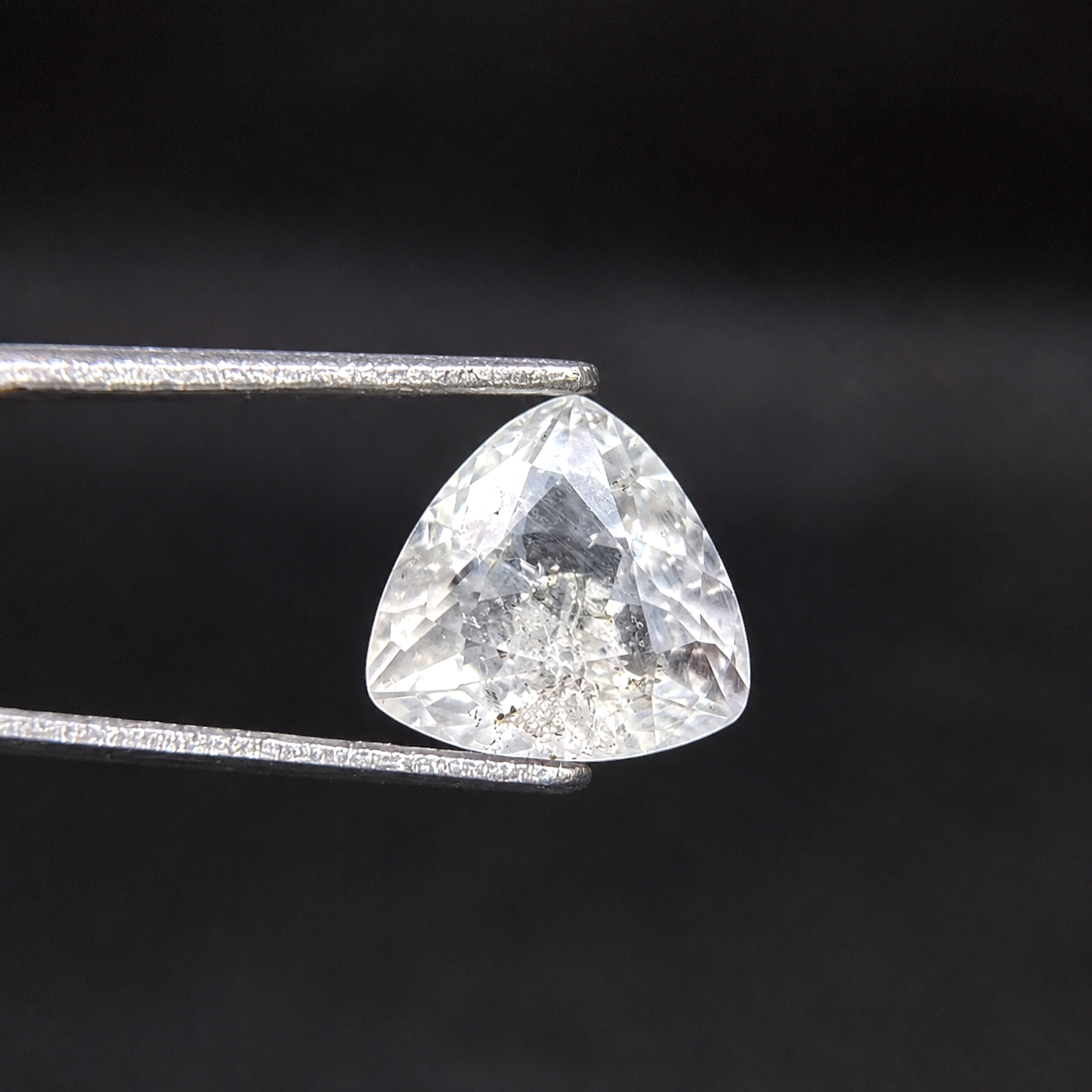
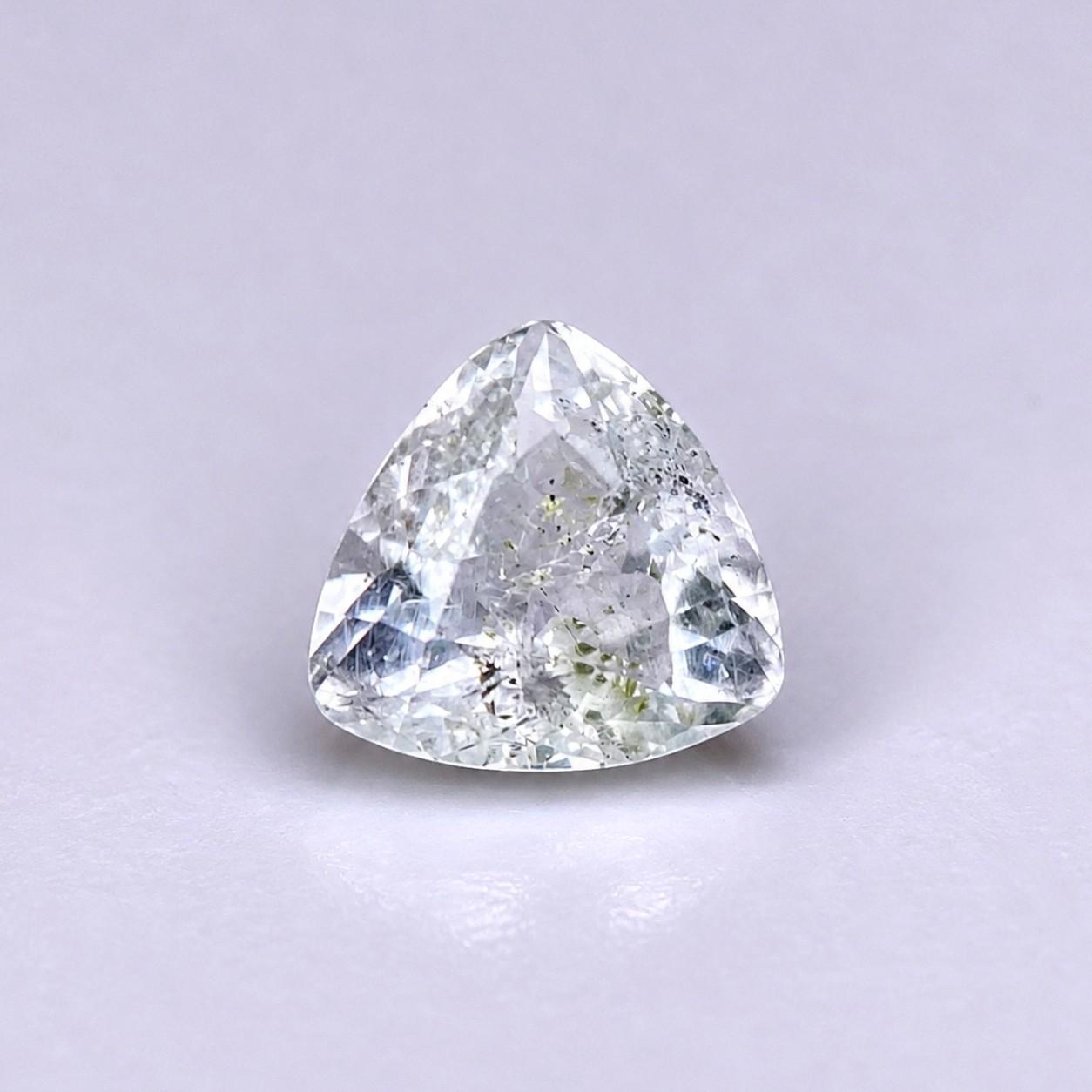
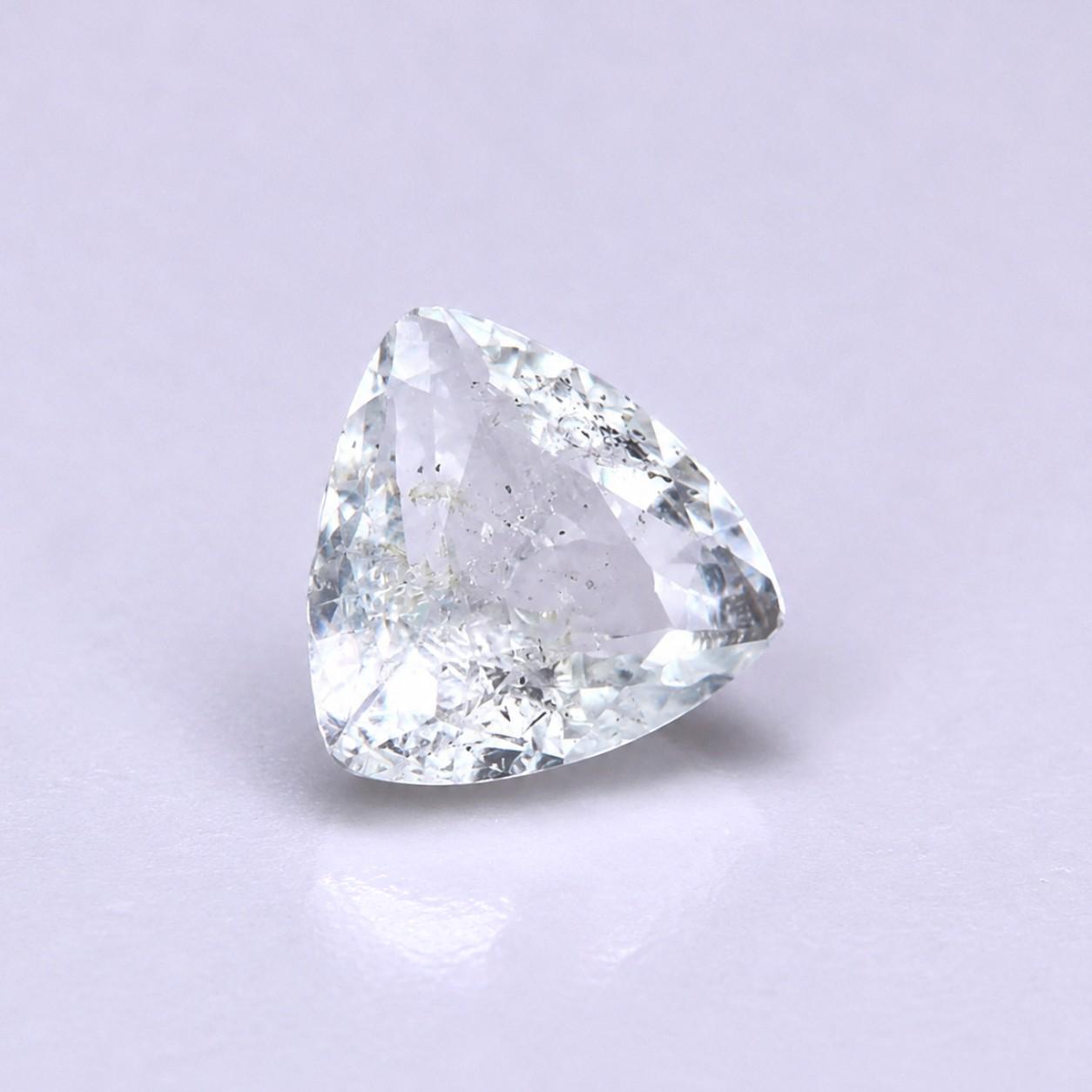
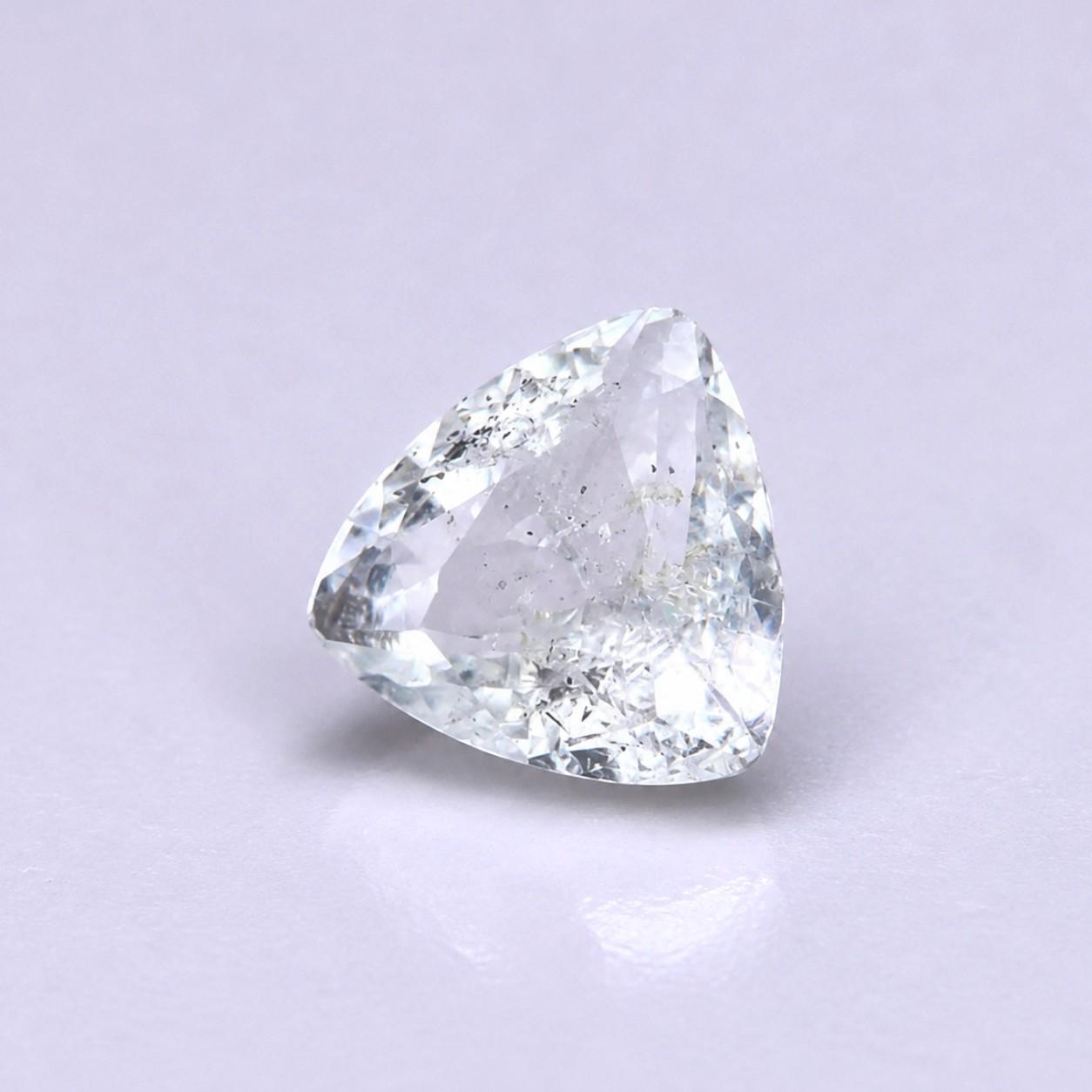
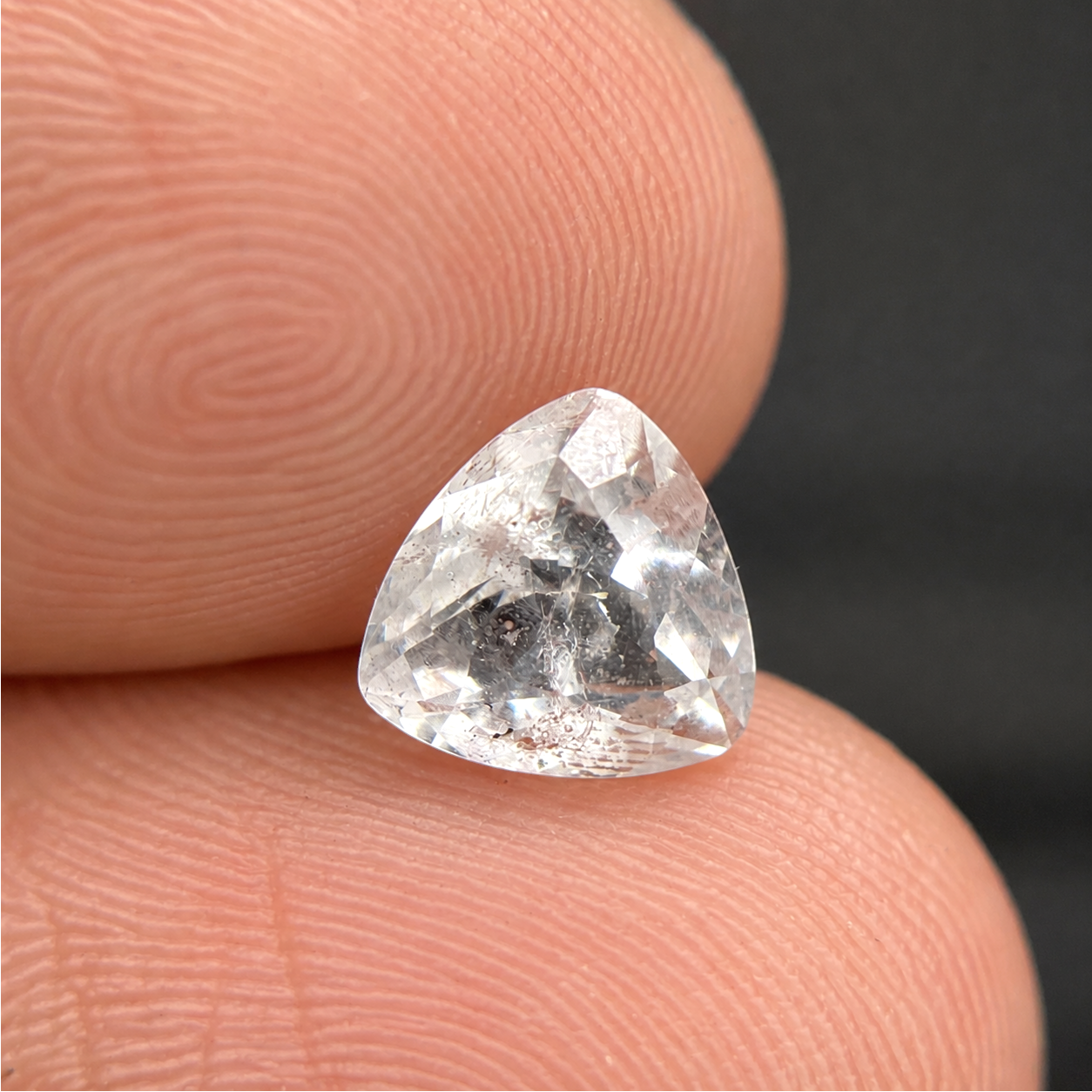
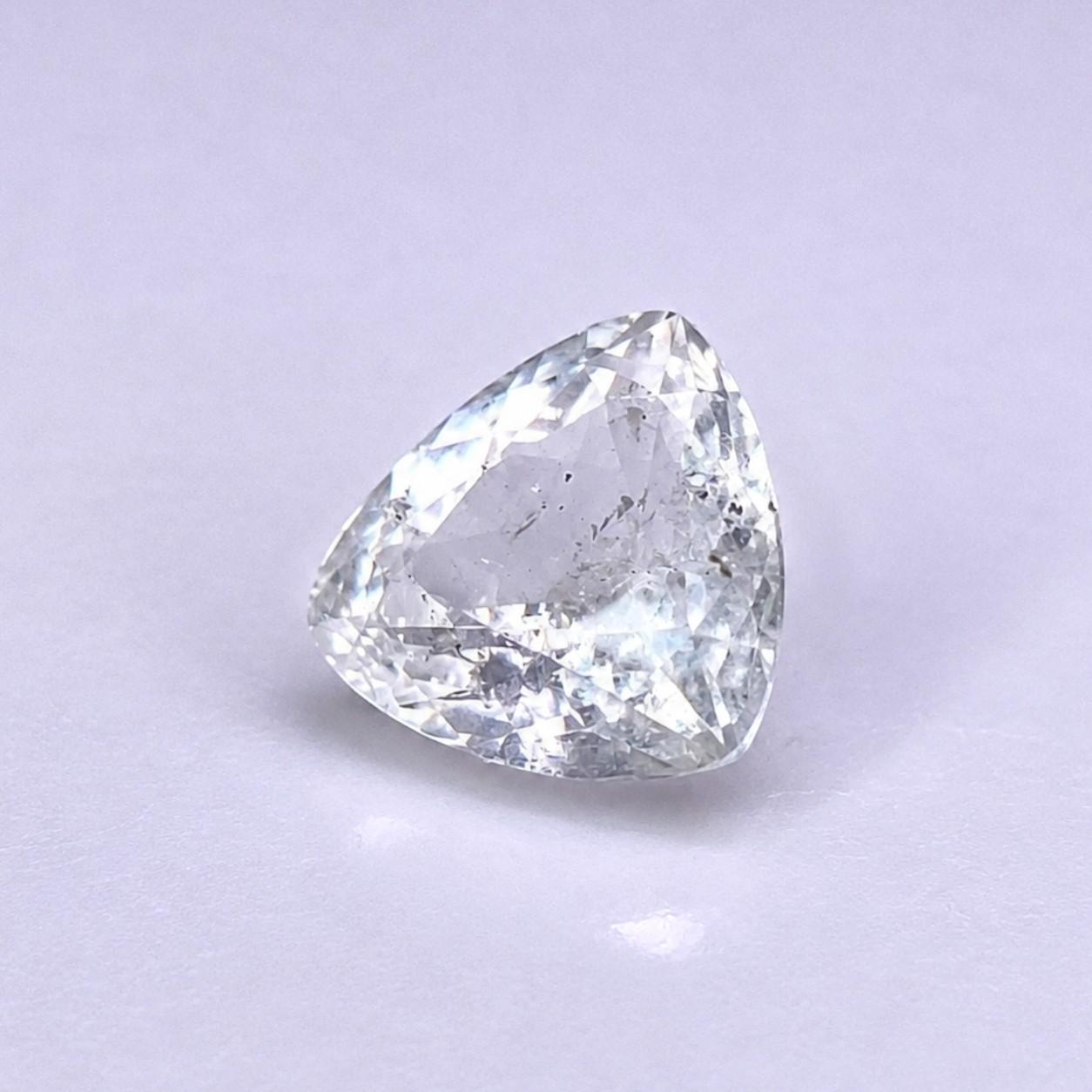
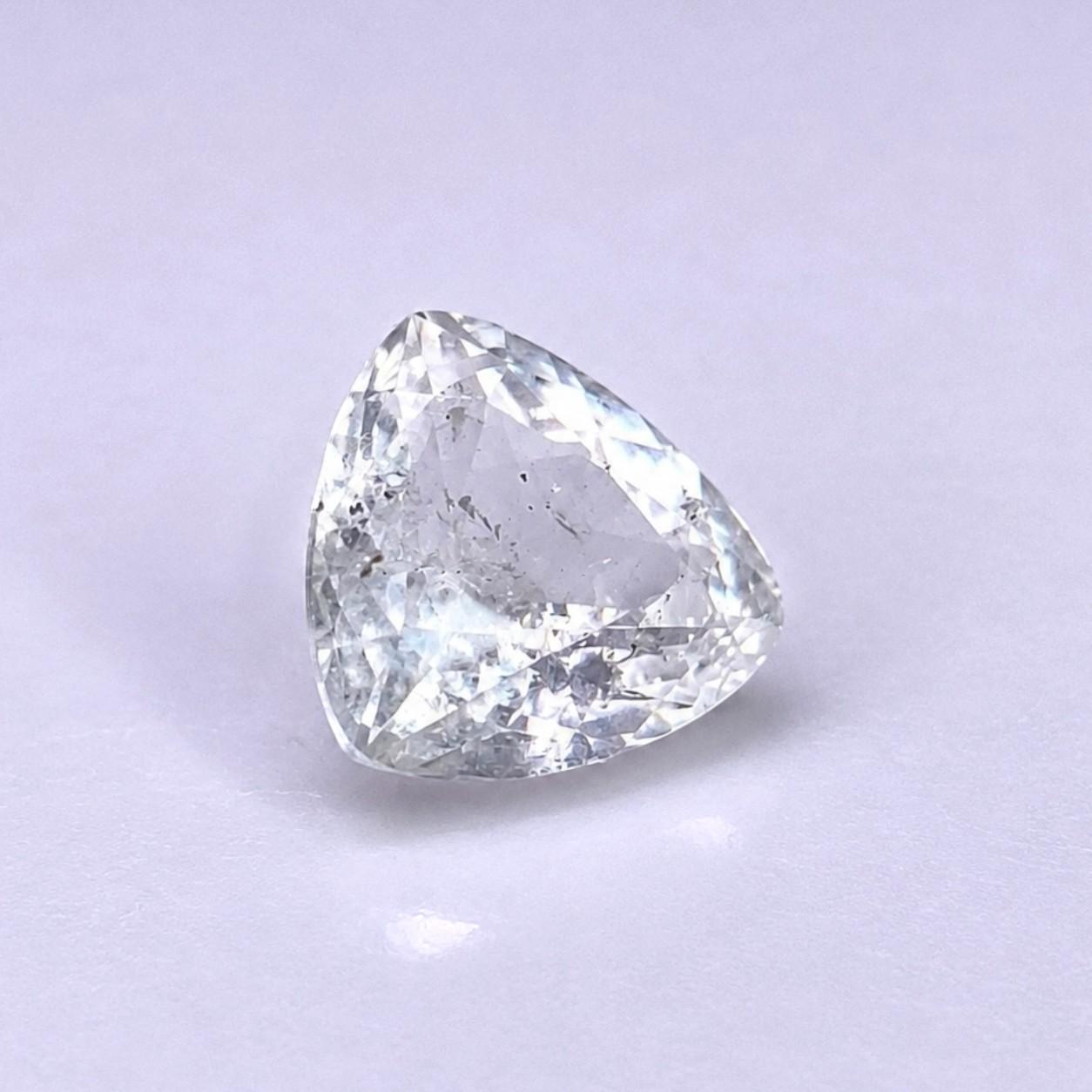
1.82 ct POLLUCITE – AFGHANISTAN
EXPERT VERIFIED
- Expert Verified Gemstone
- Fast Handling & Shipping
- Secure Vault Packaging
$ 120
Offer amount Feild


Smart Collector Choice


Pay with Crypto & Get 10% Automatic Discount

Availability: 1 in stock


- Freakingcats Gemstone Database
Pollucite (Afghanistan)
Pollucite from the legendary, highly fractionalized lithium pegmatite zones of Afghanistan represents the absolute, high-vibration peak of cesium enrichment in the mineral world. A rare cesium aluminum silicate mineral belonging to the zeolite group, it is a species I have always respected for its “frost-white” to “water-clear-neon” transparency and its status as a masterpiece of “isometric” structural discipline. For the specialist, a top-tier Afghan Pollucite—particularly when displaying rare, defined crystal faces rather than its typical massive form—is a coveted prize of extreme magmatic differentiation; it offers a bright vitreous to greasy luster and a highly luminous, ethereal presence that makes it an essential asset for the systematic vault. As an artist, I find the icy, glass-like purity of its structures and its subtle, high-clarity contrast against vibrant associated pegmatite species like pink tourmaline or blue cleavelandite to be one of nature’s most sophisticated and balancing palettes.
The Heritage & Discovery
Historical Significance
Pollucite is a critical index species for decoding the final, highly evolved stages of rare-element granitic pegmatites, serving as the primary global reservoir for the rare alkali metal cesium. Historically, the species holds a fascinating place in classical mineralogy, discovered in 1846 on the island of Elba, Italy, and named by August Breithaupt alongside castorite (now petalite) after the mythological twin brothers Castor and Pollux due to their constant geological association. In the world of fine collectibles, specimens emerging from the deep valleys of Afghanistan are celebrated for their unmatched structural clarity and scale, standing as a permanent symbol of elemental isolation and crystallization focus.
Discovery
While known mostly as dense, nondescript massive blocks from western deposits for over a century, the discovery of world-class, macrocrystalline and highly transparent gem-quality specimens throughout the Hindu Kush mountains completely redefined our global appreciation of this rare zeolite’s optical limits. Scientifically, it forms a solid-solution series with analcime, where the dominance of cesium over sodium dictates its dense molecular weight and exceptional thermal stability. The opening of these remote, high-altitude pockets provided mineralogists with spectacular, sharply etched or rounded isometric crystal forms that showcase a unique, light-gathering beauty. My own respect for this material grew from observing its deceptive optical depth; specifically, the way its near-flawless, water-clear interior can easily be mistaken for common quartz until its high specific gravity and isotropic optical behavior reveal its true cesium-rich identity is a visual impact that is unmistakable to the trained eye.
Important Mines
The undisputed modern capital for collector-grade and facet-grade expressions of this species within Afghanistan remains the prolific lithium-rich pegmatite fields of the Kunar, Laghman, and Nuristan provinces. Outstanding macrocrystalline groups and water-clear blocks have historically been secured from the famous gem veins of the Paprok, Mawi, and Nilaw-Pech districts, where they develop in protected cavities alongside world-class spodumene and tourmaline. For the vault, I prioritize specimens that exhibit high internal optical transparency, distinctive natural etched faces, or clean contact boundaries with colorful accessory minerals, as they represent a highly active, pristine masterpiece of advanced magmatic geology.
Mineralogical Profile
Description
Pollucite is a cesium sodium aluminum silicate hydroxy-mineral that crystallizes in the isometric system. It sits at a robust 6.5 on the Mohs scale, meaning its tough, durable surfaces are highly resistant to physical abrasion and require only standard archival handling to safeguard its brilliant vitreous to waxy faces. It is characterized by its exceptionally bright surface luster and a delicate color palette ranging from entirely colorless and water-clear to soft milky-white or pale pinkish-gray.
One of its most identifying traits is its complete lack of cleavage combined with a clean conchoidal fracture, frequently forming rounded, massive blocks or complexly etched, un-twinned trapezohedral crystals that trace the very last fluid movements through cooling pegmatite cavities. It possesses a relatively low refractive index running at approximately 1.510 to 1.525, which gives it a soft, liquid-like glass appearance, and a substantial average specific gravity ranging between 2.86 and 3.00 that reflects its dense, cesium-heavy framework. Because it forms exclusively in highly fractionalized, lithium-rich granitic pegmatites, it is commonly found in close association with Quartz, Albite (variety Cleavelandite), Spodumene (Kunzite and Hiddenite), Lepidolite, Petalite, and Tourmaline. When I select an example for documentation, I look for highly transparent, glass-like crystalline masses or rare, freestanding crystals on a contrasting matrix, as these highlight the sophisticated, heavy-alkali chemistry of the mineral’s deep-seated birth.
Chemical Formula
(Cs,Na)2(Al2Si4)O12 · 2H2O


