
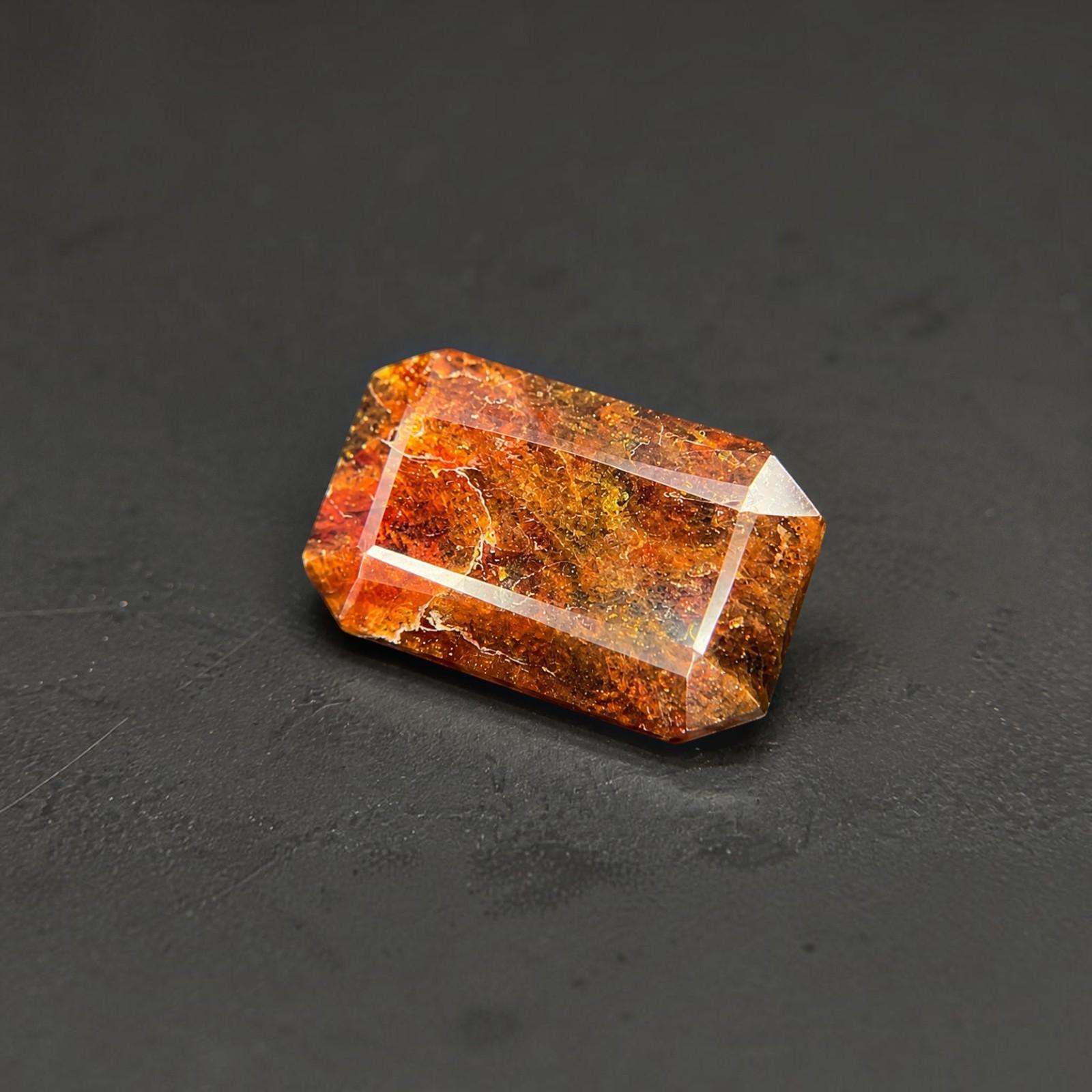
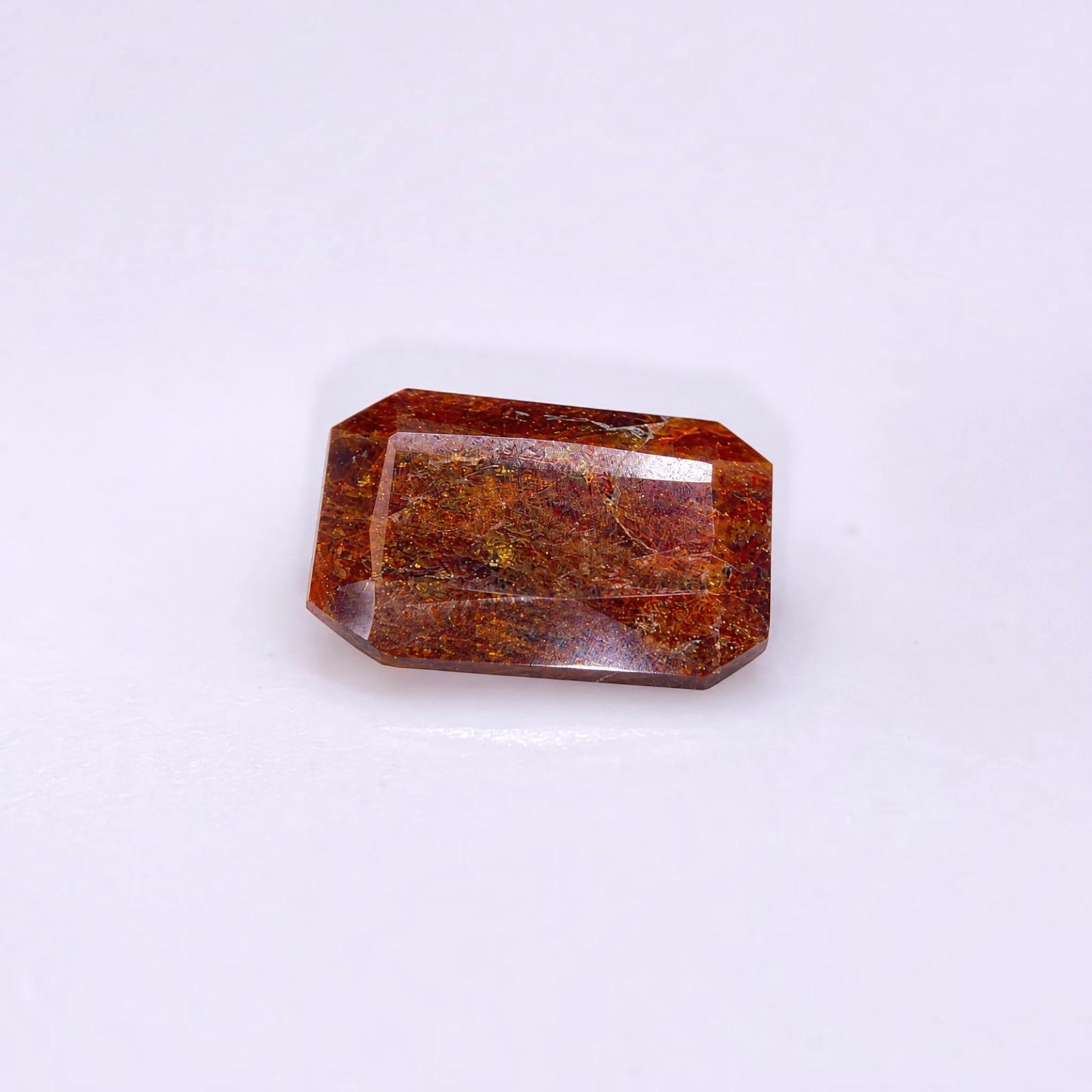
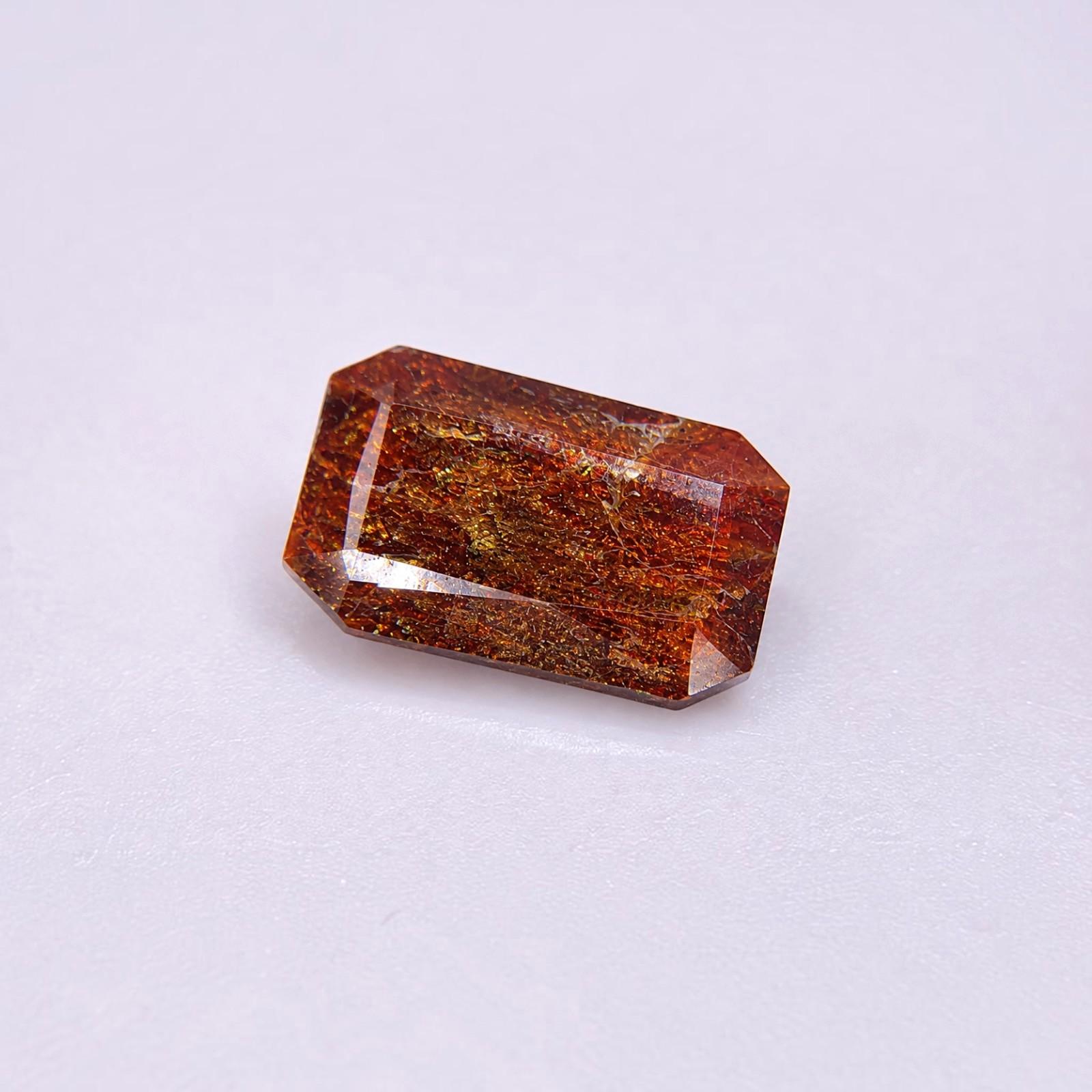
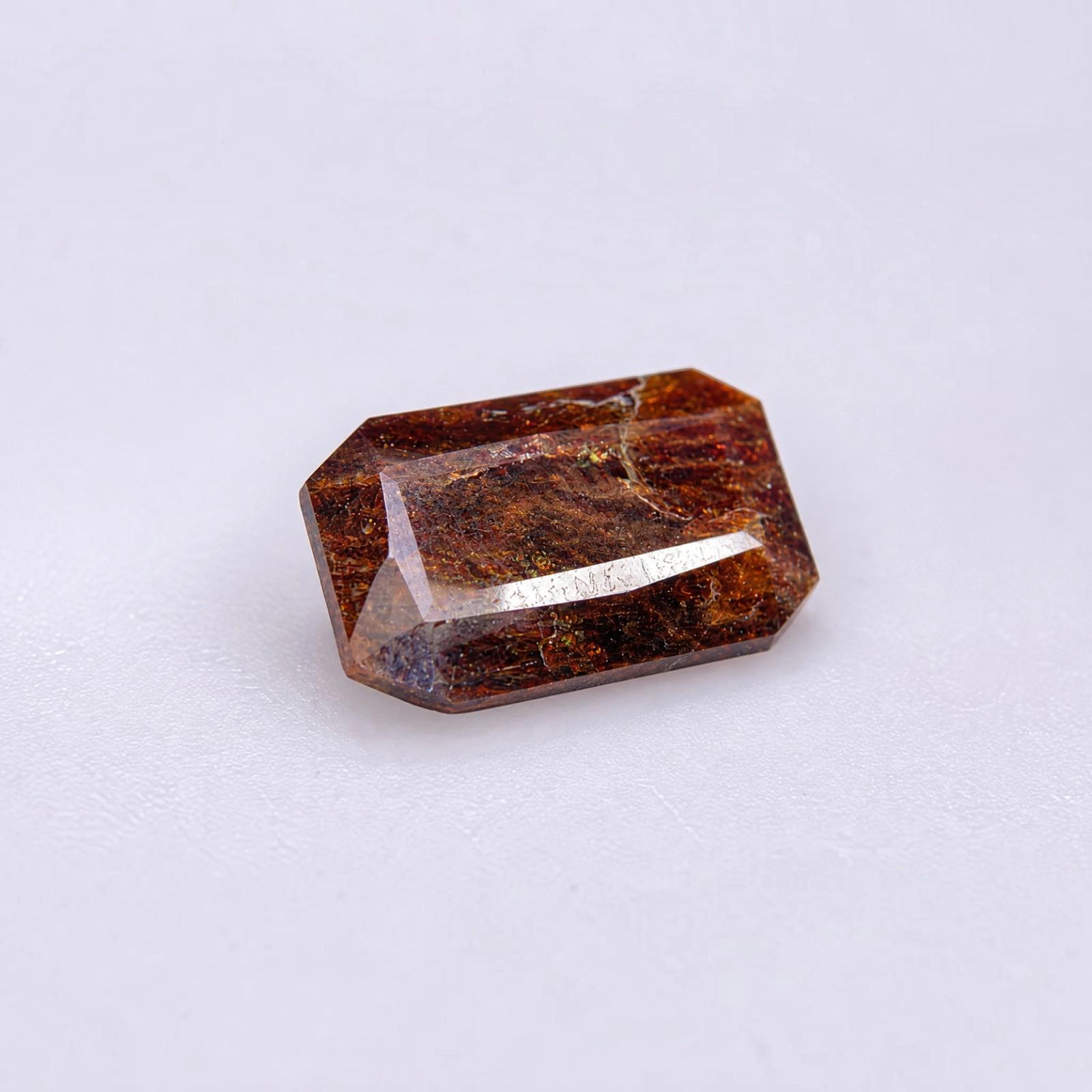
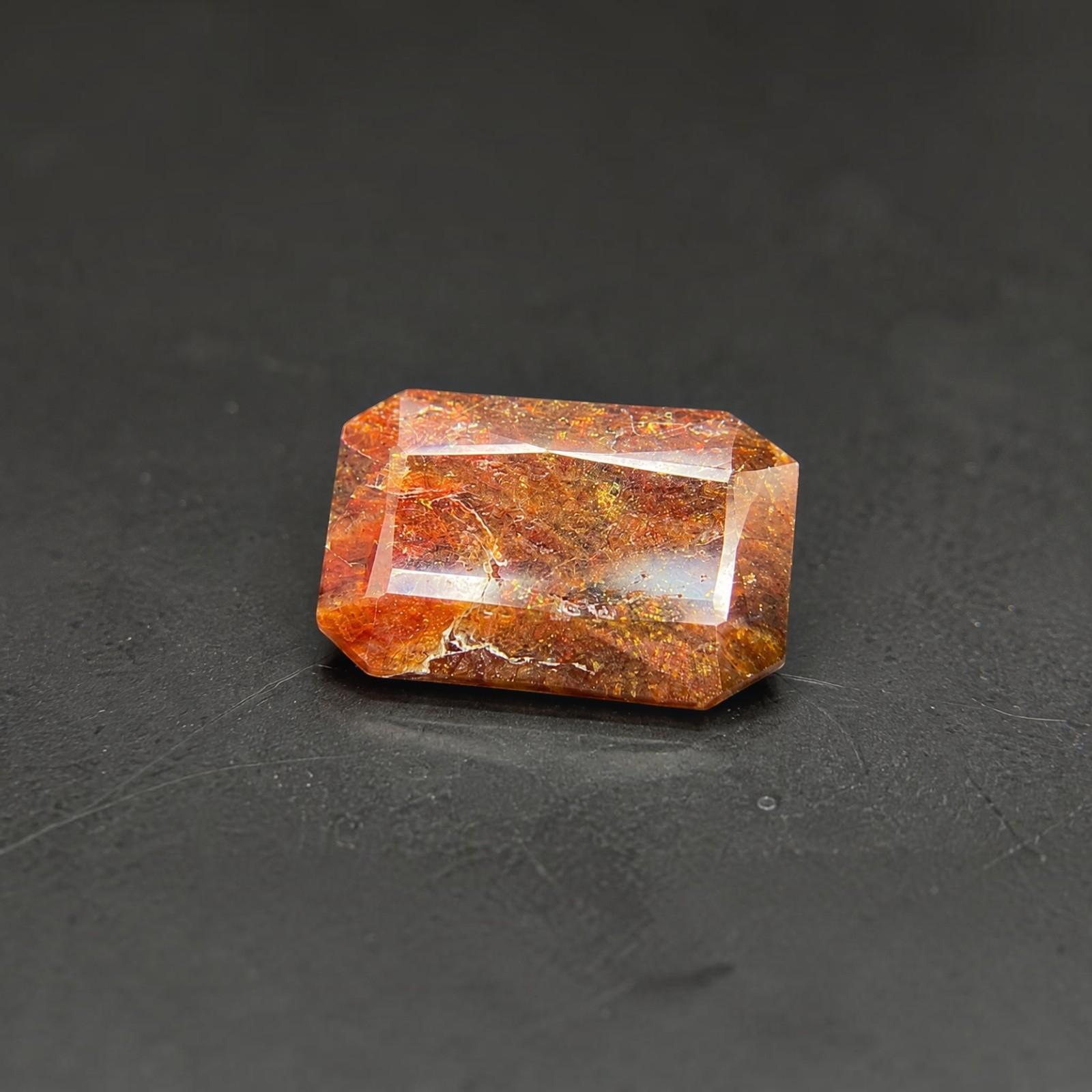
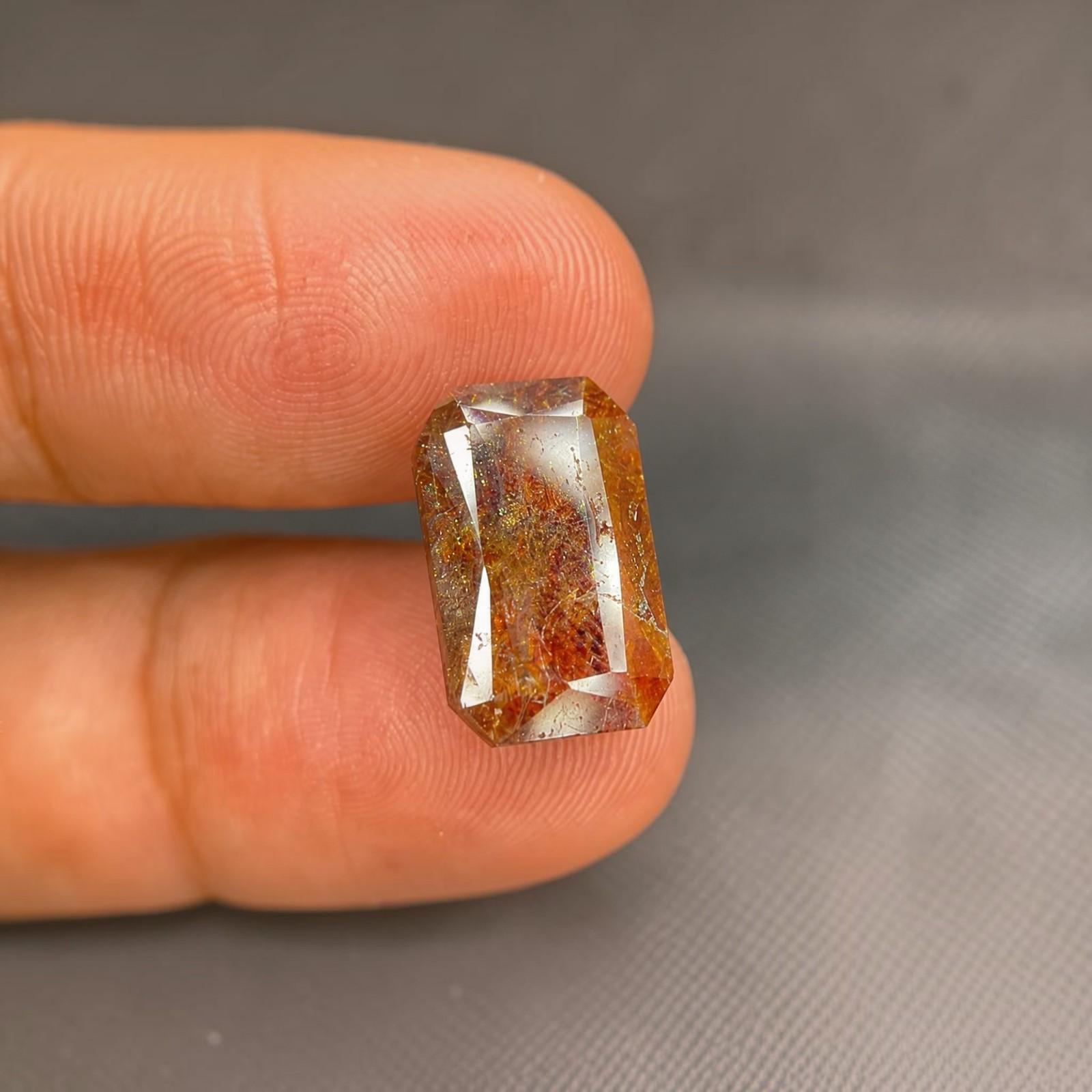
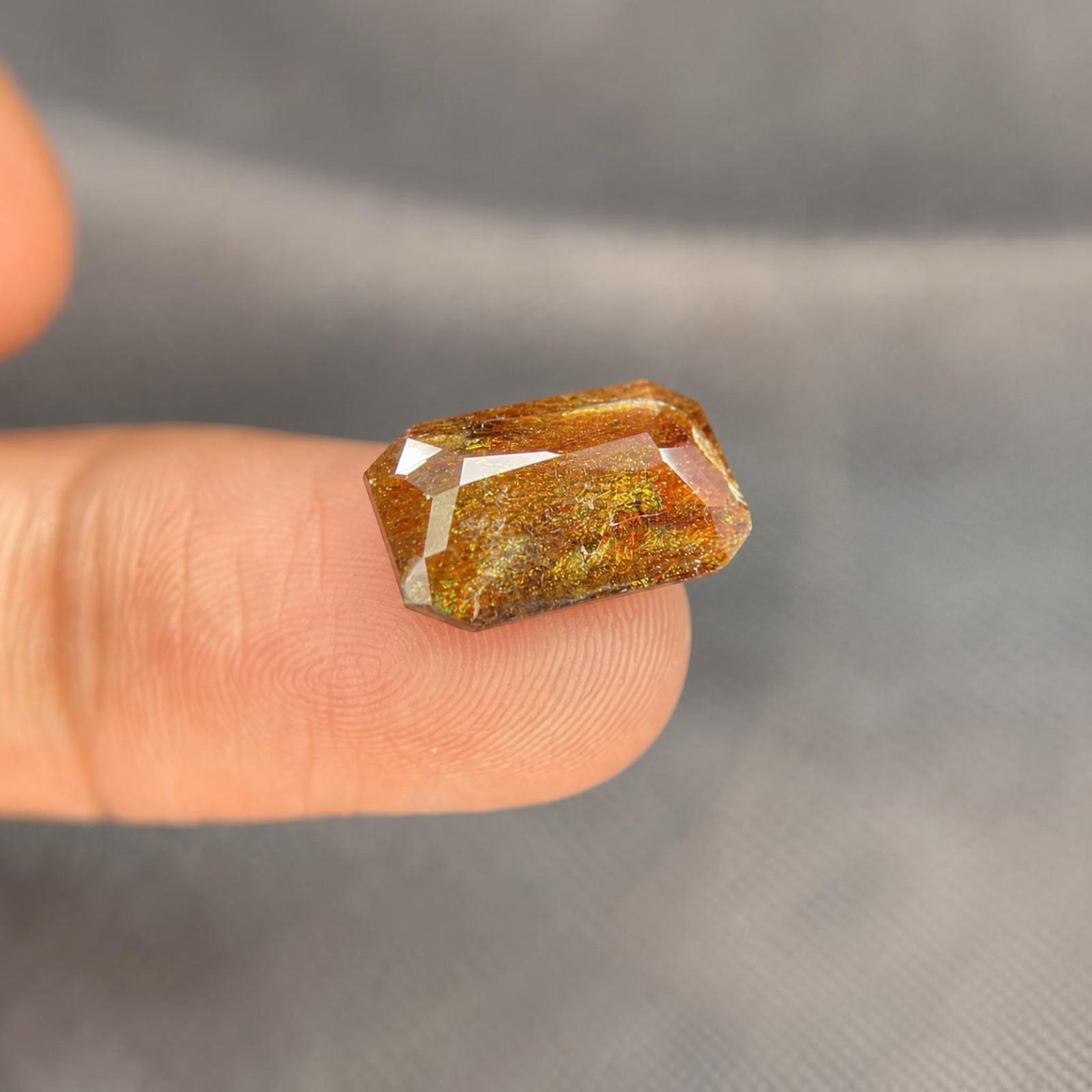
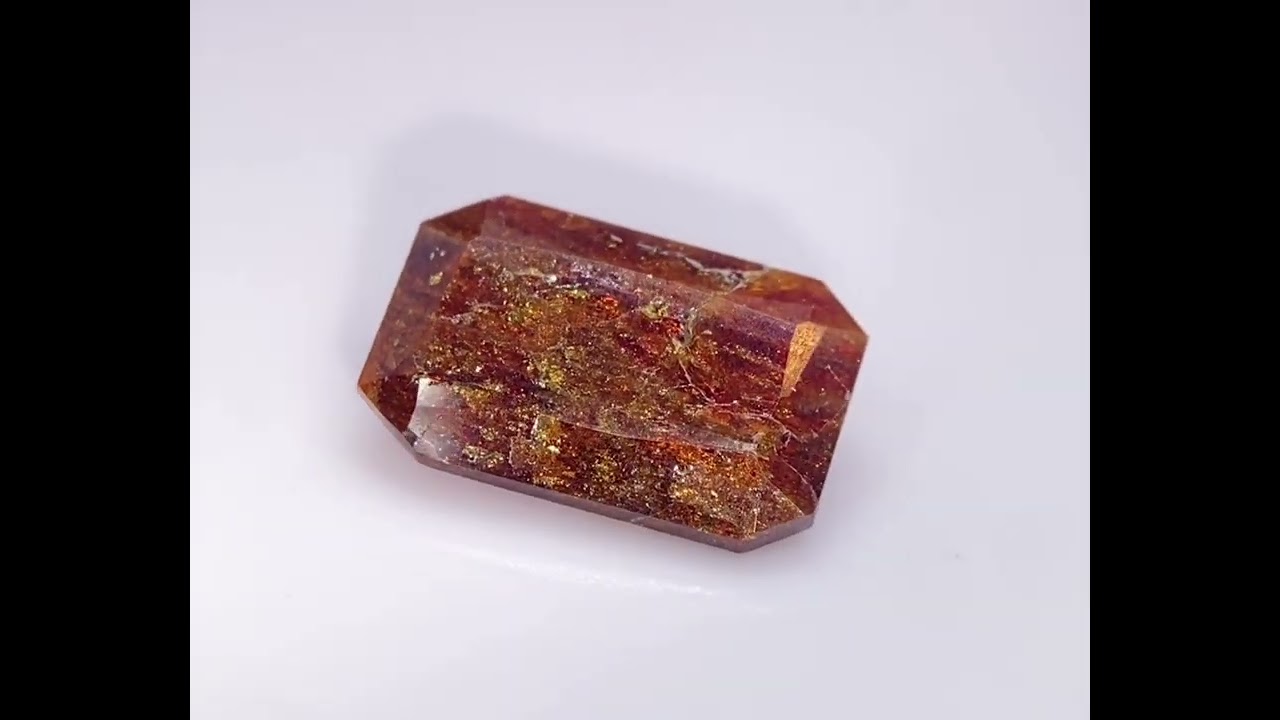
10.55 ct MONAZITE – NAMIBIA
EXPERT VERIFIED
- Expert Verified Gemstone
- Fast Handling & Shipping
- Secure Vault Packaging
$ 425
Offer amount Feild


Smart Collector Choice


Pay with Crypto & Get 10% Automatic Discount

Availability: 1 in stock


- Freakingcats Gemstone Database
Monazite-(Ce)
Monazite-(Ce) is a mineral that commands immediate respect, not only for its incredible density but for the complex “heavy” chemistry it carries. It is a rare-earth phosphate, and I have always found it to be one of the most intellectually fascinating minerals in the vault. Often appearing in shades of reddish-brown, honey-yellow, or even a deep, translucent orange, it possesses a resinous to adamantine luster that gives it a glowing, waxy appearance. Like Samarskite, it is often radioactive due to traces of Thorium, which can lead to metamictization over time. Faceting Monazite-(Ce) is a rare feat; it is a heavy, “sleepy” stone that captures the light in a unique way, providing a sense of primordial weight and chemical mystery that is unmatched by more common gemstones.
The Heritage & Discovery
Historical Significance: Monazite-(Ce) is perhaps the most important industrial source of rare-earth elements like Cerium, Lanthanum, and Neodymium, as well as Thorium. Historically, it has been a cornerstone of the world’s rare-earth industry. For geologists, it is a vital “timekeeper,” as its radioactive components allow for precise dating of the rocks in which it is found. In the gem world, it represents the “heavy hitters” of the phosphate group—a mineral that is as much a scientific archive as it is a beautiful, lustrous crystal. It stands as the quintessential rare-earth mineral, bridging the gap between heavy industry and high-end mineral collecting.
Discovery: The mineral was officially named in 1829 by August Breithaupt. The name is derived from the Greek word monazein, meaning “to be solitary,” a reference to its typical occurrence as rare, isolated crystals rather than massive clusters. Its scientific classification was crucial in helping early chemists isolate the rare-earth elements, forever changing our understanding of the periodic table and the hidden complexity of the Earth’s crust.
Important Mines: While found in alluvial sands globally, the most spectacular gem-quality crystals come from the pegmatites of Minas Gerais, Brazil and the Madagascar highlands. I also have a deep appreciation for the classic, sharp crystals from the Alpine regions of Switzerland and the Ural Mountains in Russia. For the vault, I prioritize the Brazilian and Madagascan material, as these localities often produce crystals with the size and “honey-like” transparency required for the rare opportunity to facet this heavy silicate.
Mineralogical Profile
Description: Monazite-(Ce) is a rare-earth phosphate that crystallizes in the monoclinic system. It sits at a 5 to 5.5 on the Mohs scale, making it relatively soft and brittle, necessitating a very gentle touch on the lap. It is characterized by its resinous to sub-adamantine luster and its typically brownish-orange color.
One of its most identifying features is its high density (5.0 to 5.3 g/cm³), which gives even small faceted stones a surprising “heaviness” in the hand. Because it often hosts Thorium, it is frequently radioactive, which can cause its internal structure to become disordered over millions of years. When faceted, its high refractive index (n \approx 1.78 to 1.84) gives it a brilliance that is much sharper than most other phosphates, offering a warm, glowing “fire” that makes it a standout in any collection of rare-element gems.
Chemical Formula: (Ce,La,Nd,Th)PO4


