
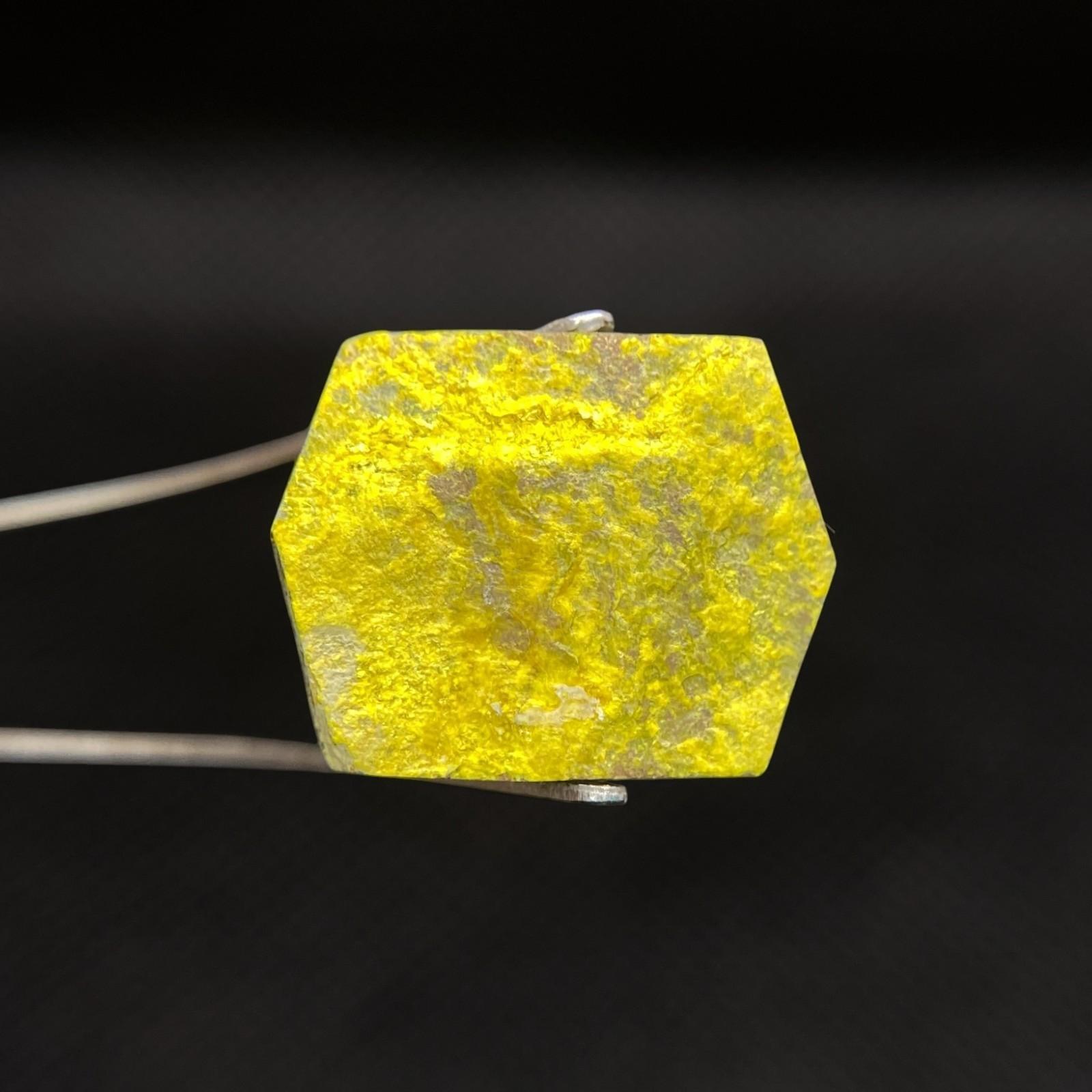
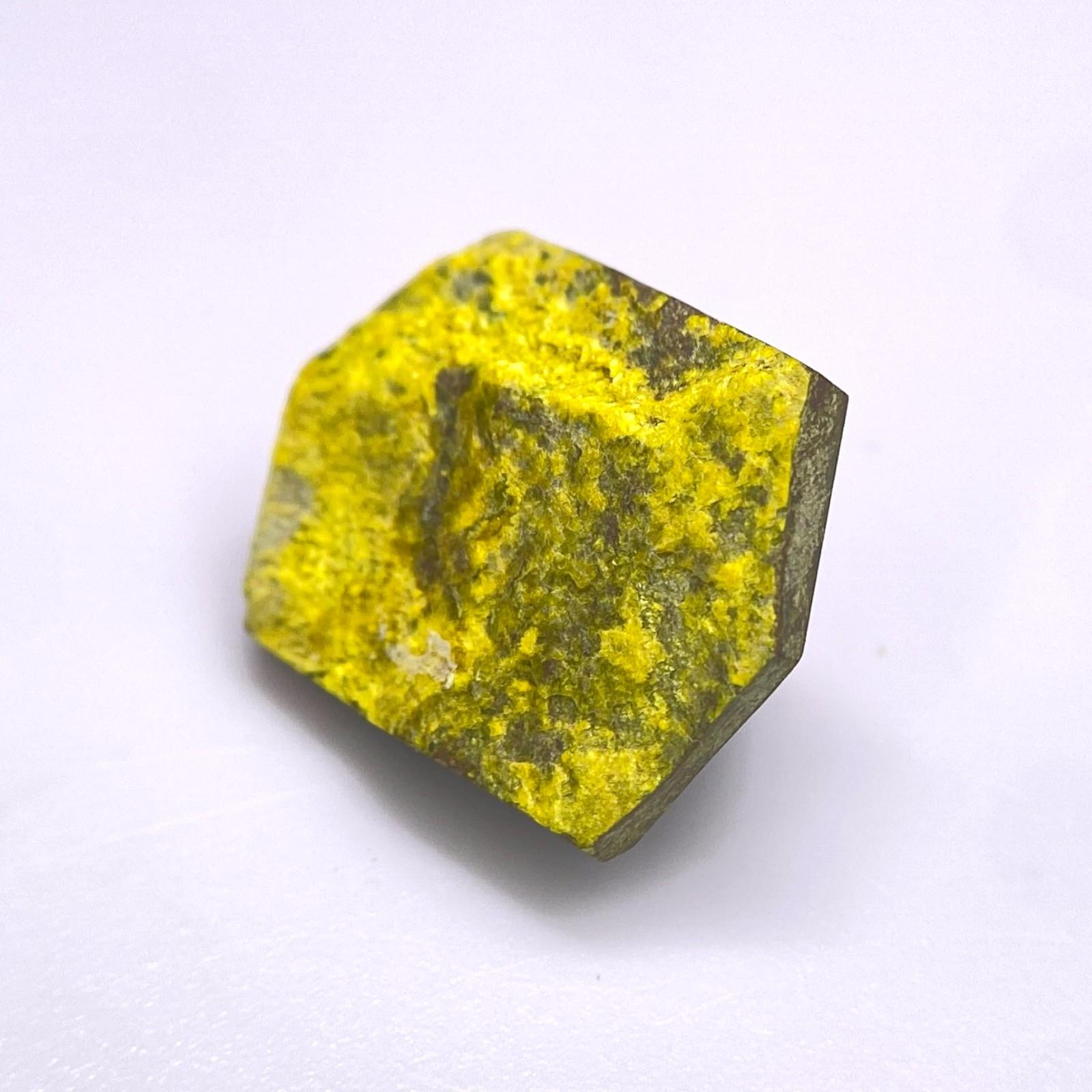
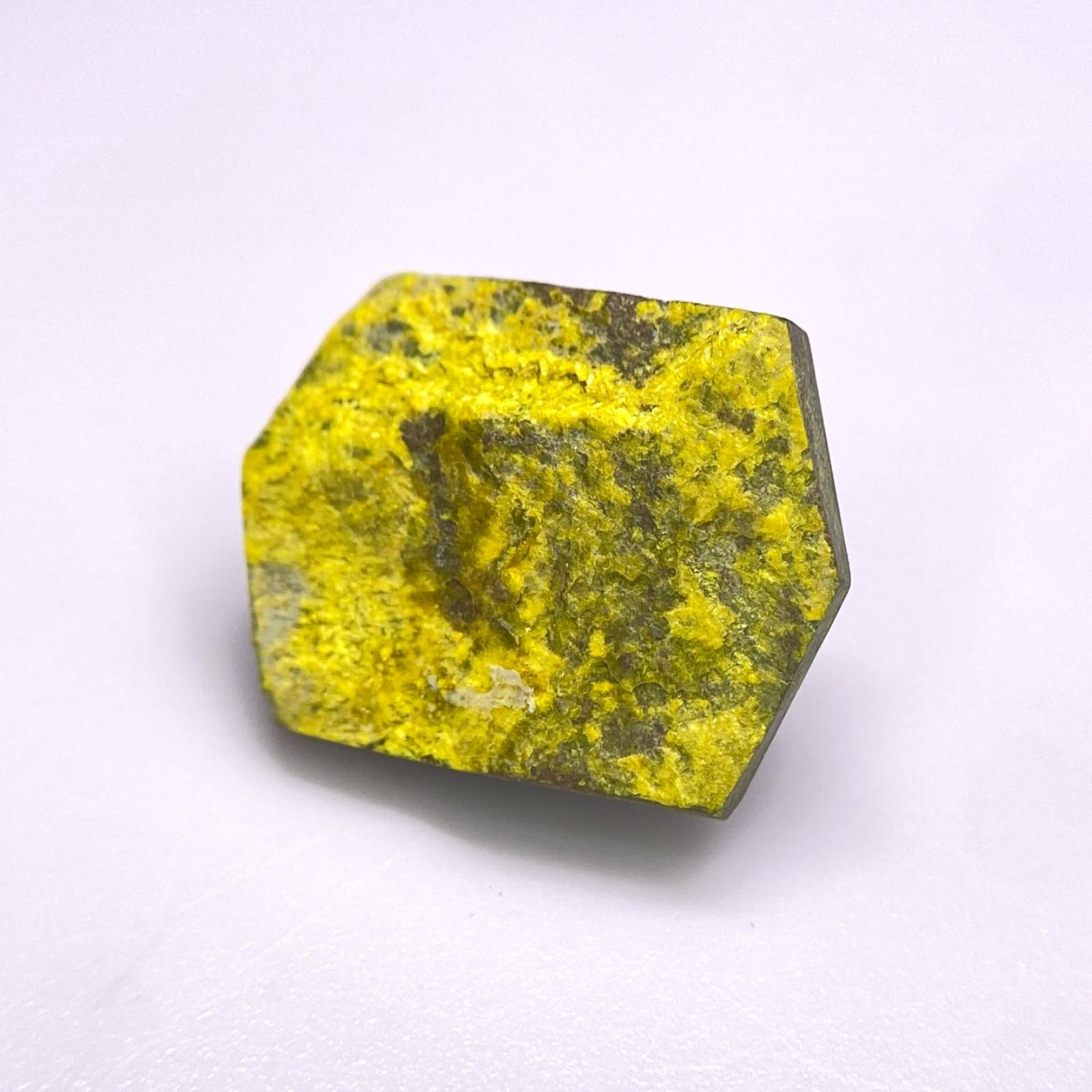
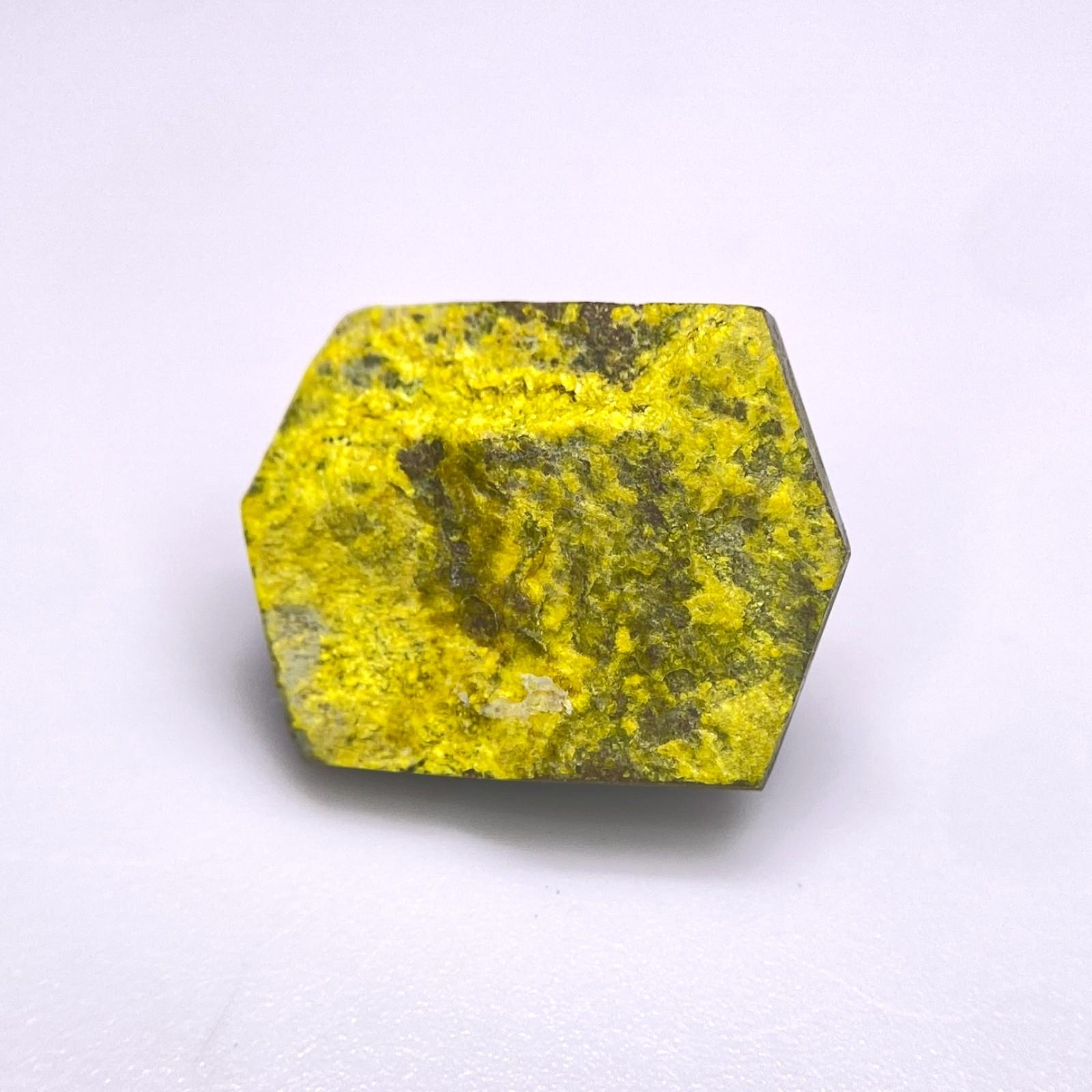
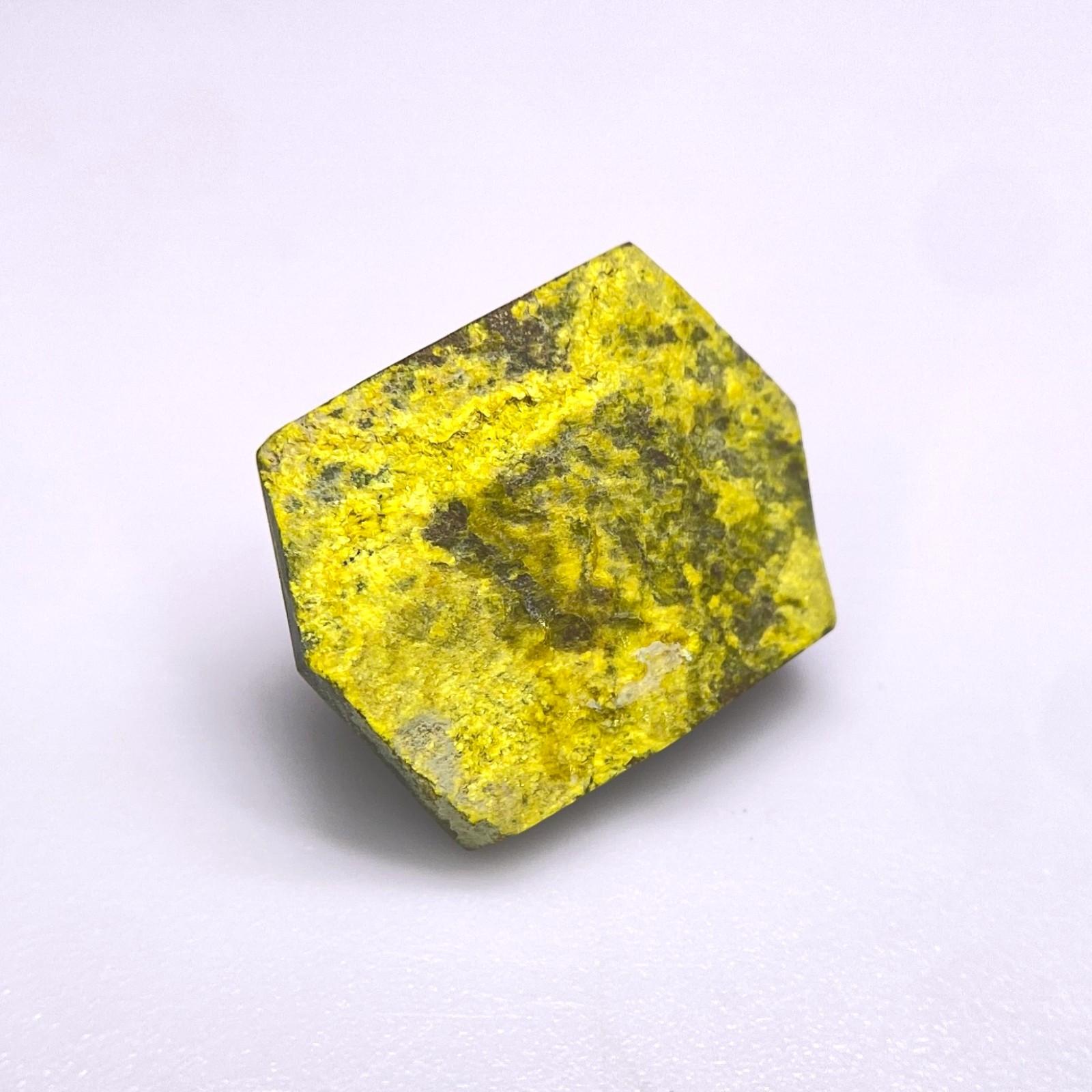
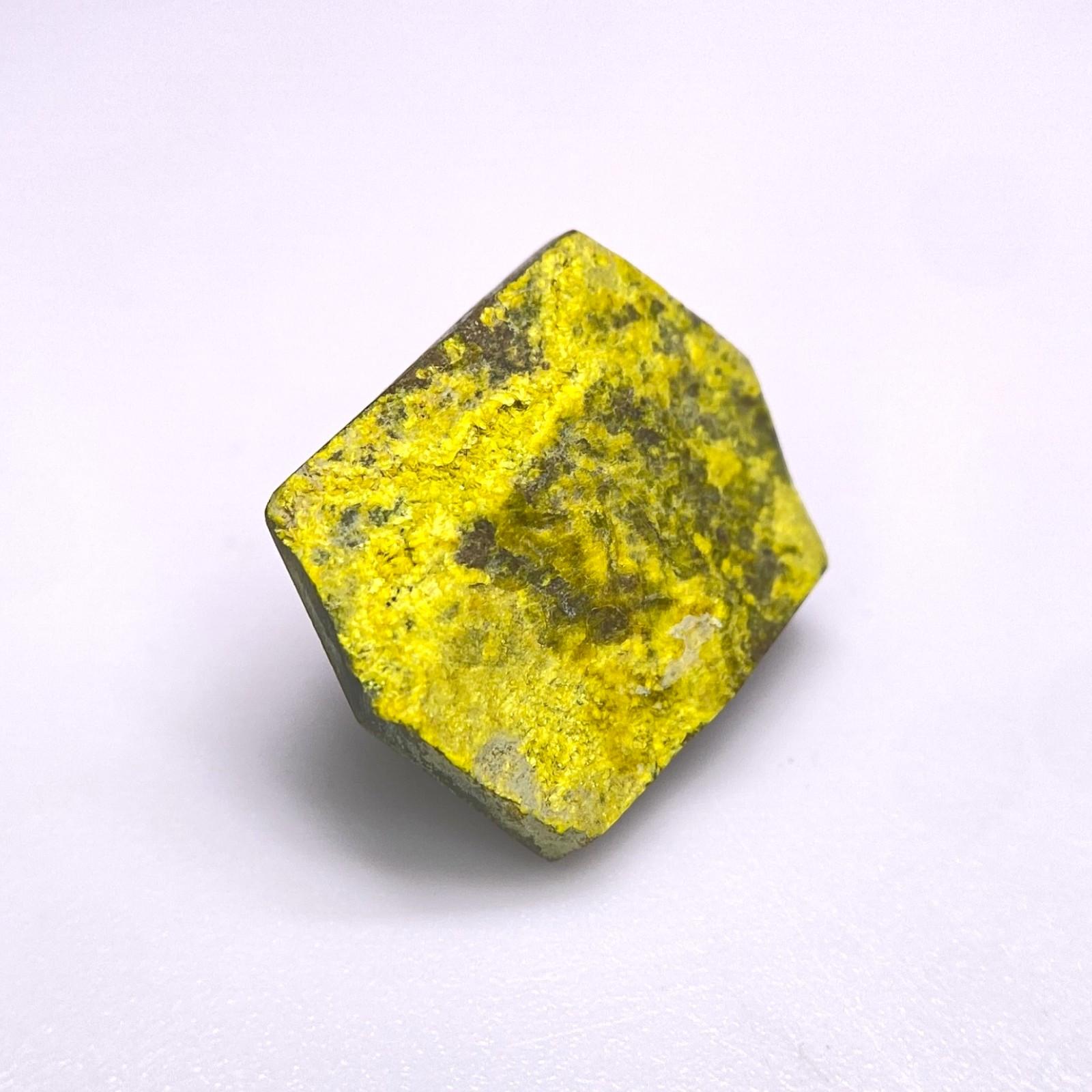
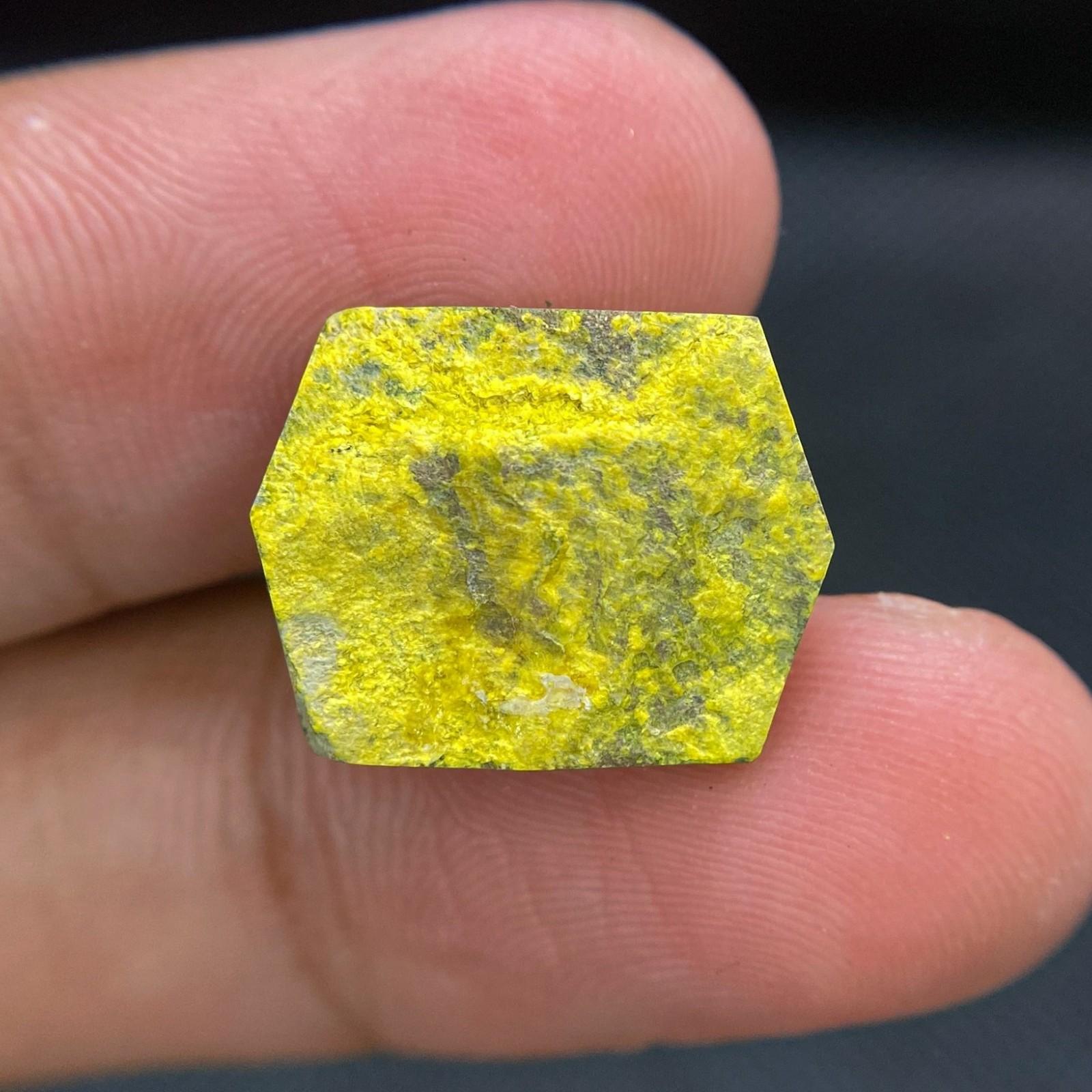
16.30 ct FLUORELLESTADITE IN MATRIX – USA
EXPERT VERIFIED
- Expert Verified Gemstone
- Fast Handling & Shipping
- Secure Vault Packaging
$ 300
Offer amount Feild


Smart Collector Choice


Pay with Crypto & Get 10% Automatic Discount

Availability: 1 in stock


- Freakingcats Gemstone Database
Fluorellestadite
Fluorellestadite is a gemstone that represents the rare “reactive” chemistry of the apatite supergroup. A calcium silicate-sulfate-phosphate, it is a mineral I have always respected for its unique role in the mineralogy of “combustion Metamorphism.” It typically presents in its natural matrix as small, needle-like crystals or granular masses, often exhibiting shades of soft yellow, pale green, or even “ashen” grey. For the specialist, Fluorellestadite is a prize of chemical complexity; it is a “bridge” mineral where silicon and sulfur atoms replace the phosphorus usually found in standard Apatite. It is a stone of “transformation,” often forming in the extreme environments of burning coal seams or volcanic vents, offering a sophisticated, industrial-organic aesthetic that makes it a true “scientist’s gem” for the systematic vault.
The Heritage & Discovery
Historical Significance: Fluorellestadite is a vital species for understanding how extreme heat can reorganize the mineralogy of the Earth’s surface. Historically, it gained fame among collectors of “anthropogenic” and “pyrometallurgical” minerals. In the world of fine minerals, it is celebrated for its rare chemistry and its association with other “high-temperature” exotics. It stands as a symbol of resilience and structural adaptation, bridging the gap between common phosphate minerals and the elite world of “metasomatic” rarities. It serves as a reminder that even the most destructive forces, like subterranean fires, can leave behind a crystalline legacy of immense complexity.
Discovery: The mineral was formally described in 1982 and was named for its relationship to the Ellestadite group, which honors the American analytical chemist Reuben B. Ellestad. Scientifically, it is a calcium silicate-sulfate fluoride. Its discovery in the “baked” rocks of coal-fire zones provided mineralogists with the first clear look at a fluoride-dominant member of this specific series. My own fascination with this species grew from seeing it in its original matrix, where the contrast between the pale crystals and the dark, thermally altered rock creates a narrative of the geological “fire” that birthed it.
Important Mines: The undisputed world capital for the finest Fluorellestadite specimens is the Kopeysk region in the Chelyabinsk Oblast, Russia, particularly within the burnt coal dumps of the Southern Urals. I also have a high regard for the occurrences in Hesse, Germany, and the Somma-Vesuvius Complex in Italy. For the vault, I prioritize the Russian material for its well-defined crystal clusters and the “charred” matrix that provides an authentic geological context for its formation.
Mineralogical Profile
Description: Fluorellestadite is a complex calcium mineral that crystallizes in the hexagonal system. It sits at a 4.5 to 5 on the Mohs scale, making it similar in hardness to Apatite and requiring careful handling to preserve its delicate crystal faces. It is characterized by its vitreous to resinous luster and its typically pale, “elemental” coloration.
One of its most identifying traits is its geological context—it is rarely found as large, isolated crystals and is almost always presented in its host matrix of scoria or baked shale. It has a moderate refractive index (n \approx 1.63) and a characteristic “lightness” in its visual appearance. Because it is a product of high-temperature alteration, it is often found in association with Anhydrite, Magnesioferrite, and various silicates. When I select a piece for the collection, I look for “sharp” hexagonal prismatic shapes and a high-contrast matrix, as these highlight the sophisticated, three-dimensional geometry of the mineral’s growth. It is a dense, high-vibration mineral that offers a unique, “elemental” beauty unlike any other member of the apatite group.
Chemical Formula: Ca5(SiO4)1.5(SO4)1.5F


