
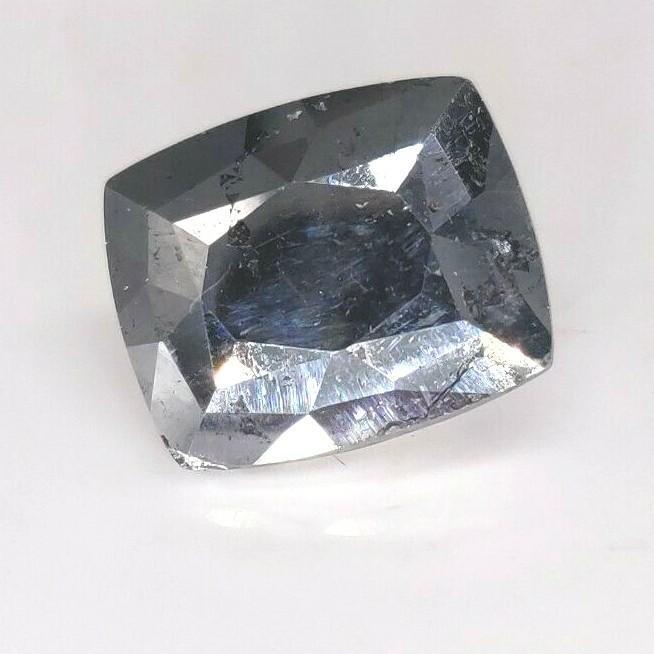
22.85 ct COBALTITE – CANADA
EXPERT VERIFIED
- Expert Verified Gemstone
- Fast Handling & Shipping
- Secure Vault Packaging
$ 150
Offer amount Feild


Smart Collector Choice


Pay with Crypto & Get 10% Automatic Discount

Out of stock
- Freakingcats Gemstone Database
Cobaltite
Cobaltite represents the “metallic-mirror” peak of the sulfide world. A cobalt arsenic sulfide, it is a species I have always respected for its high-vibration “steel-grey” luster and its incredible cubic to pyritohedral symmetry. For the specialist, a top-tier Cobaltite is a prize of elemental concentration; it offers a metallic luster and a “solid” presence that makes it a true “high-density” asset for the systematic vault. As an artist, I find the way Cobaltite mimics the geometry of Pyrite but with a sophisticated, “cool-toned” silver-pink hue to be a masterpiece of natural alchemy.
The Heritage & Discovery
Historical Significance: Cobaltite is a vital species for understanding the primary mineralization of hydrothermal veins and contact metamorphic deposits. Historically, it was a major ore of cobalt—the “goblin” element named by miners who found its arsenic-rich fumes difficult to process. In the world of fine minerals, it is celebrated for its natural, “sculptural” perfection. It stands as a symbol of structural integrity, bridging the gap between heavy industrial ores and the elite world of “sharp-edged” collector crystals. It serves as a reminder that the most “formidable” chemical combinations can yield the most “precise” geometric results.
Discovery: The mineral was formally named in 1797 by Martin Heinrich Klaproth, derived from the German Kobold, referring to the “underground spirits” or goblins of medieval mining lore. Scientifically, it is a member of the cobaltite group and is closely related to Gersdorffite and Pyrite. Its discovery in the Håkansboda and Tunaberg regions of Sweden provided mineralogists with the first clear look at the species’ potential for “mirror-bright” pyritohedrons. My own respect for this material grew from observing its “steely” brilliance; specifically, when the faces are untarnished, they reflect light with a “crispness” that is unmistakable to the trained eye.
Important Mines: The undisputed world capitals for the finest, “pyritohedral” Cobaltite are the Håkansboda and Tunaberg mines in Sweden. These classic European specimens set the global benchmark for crystal size and luster. I also have a high regard for the spectacular “massive-to-crystalline” finds from the Cobalt District in Ontario, Canada, and the rare, “sharp” cubes from the Bou Azzer district in Morocco. For the vault, I prioritize the Swedish material for its unmatched “mirror-finish” and its legendary status in historical mineralogy.
Mineralogical Profile
Description: Cobaltite is a cobalt arsenic sulfide that crystallizes in the orthorhombic system (though it frequently appears isometric/cubic due to pseudomorphism or twinning). It sits at a 5.5 on the Mohs scale, making it a relatively hard and durable mineral, though its arsenic content requires handled with professional care. It is characterized by its metallic luster and its unmistakable, “silver-white” to “reddish-grey” color palette.
One of its most identifying traits is its perfect cubic cleavage and its high specific gravity SG approx 6.33, making it feel remarkably “heavy” for its size. It has an opaque diaphaneity and a “grey-black” streak. Because it forms in high-temperature hydrothermal environments, it is often found in association with Chalcopyrite, Arsenopyrite, and Erythrite (its “cobalt-bloom” oxidation product). When I select a piece for the collection, I look for “razor-sharp” edges and a lack of surface oxidation, as these highlight the sophisticated, three-dimensional geometry of the mineral’s growth. It is a dense, high-vibration mineral that offers a unique, “steely-neon” beauty unlike any other sulfide species.
Chemical Formula: CoAsS


