
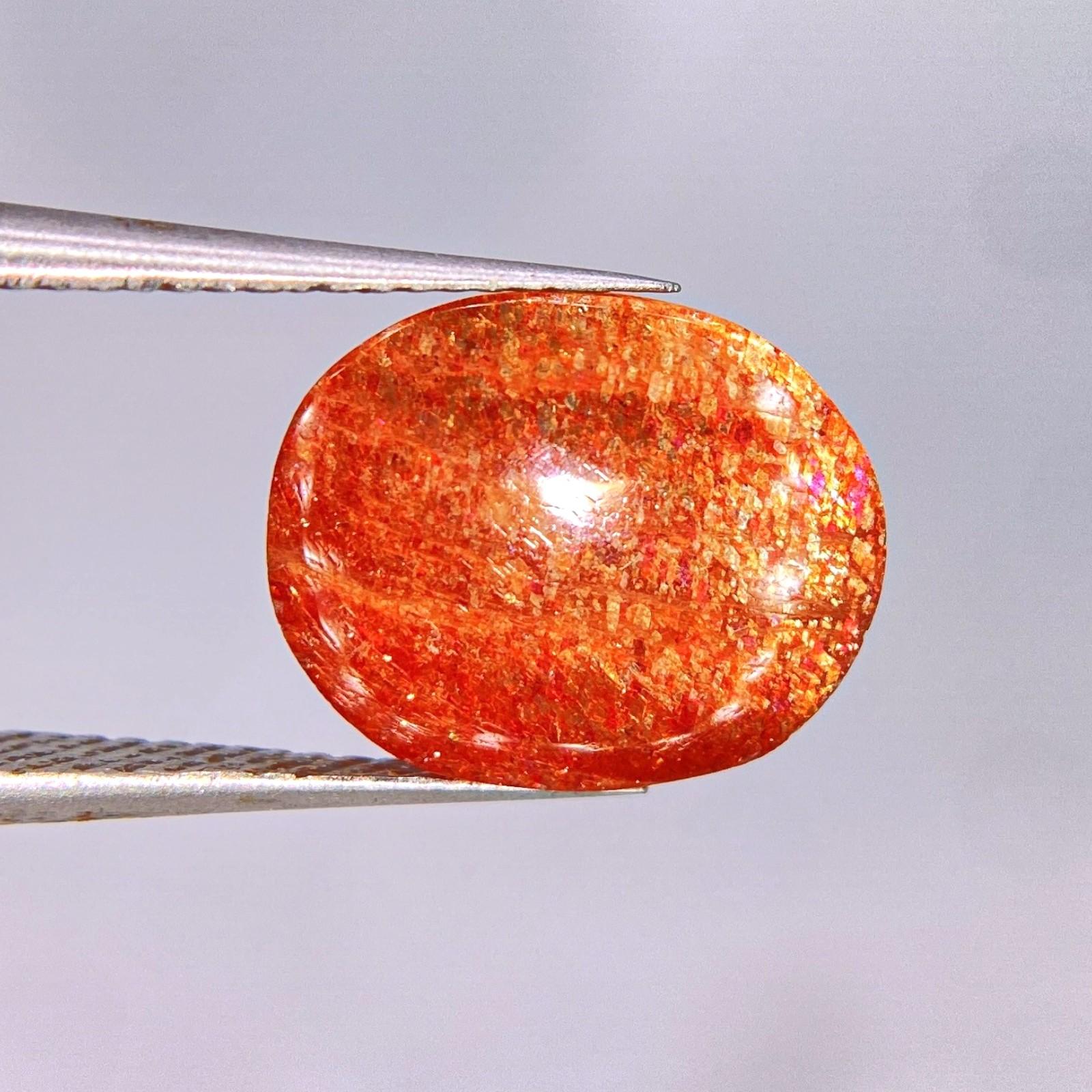
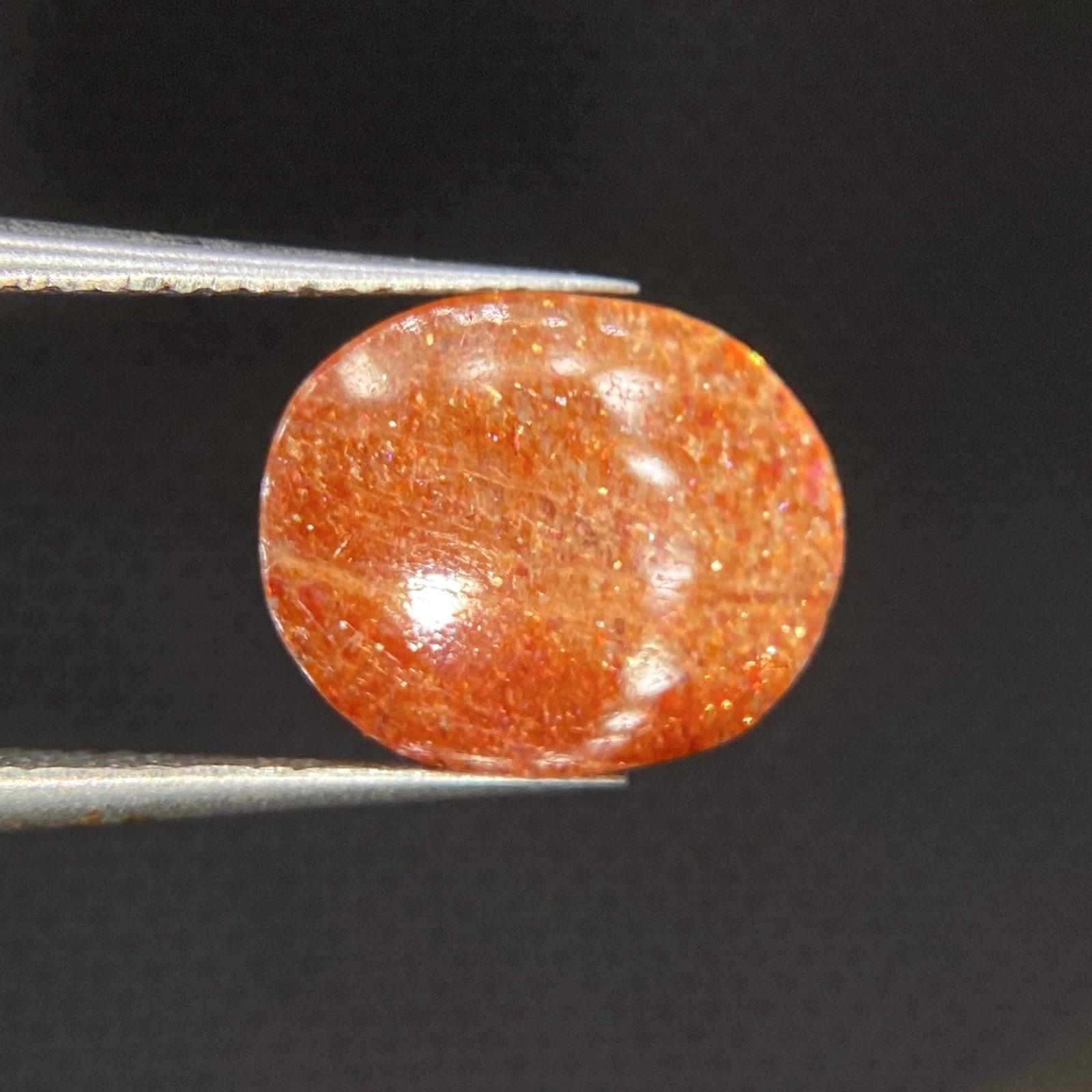
3.42 ct SUNSTONE – INDIA
EXPERT VERIFIED
- Expert Verified Gemstone
- Fast Handling & Shipping
- Secure Vault Packaging
$ 100
Offer amount Feild


Smart Collector Choice


Pay with Crypto & Get 10% Automatic Discount

Availability: 1 in stock
Gemstone Details
Gem Variety:
Sunstone
Origin:
India
Carat Weight:
3.42
Length (mm):
10.70
Width (mm):
8.80
Depth (mm):
4.80
Shape:
Oval
Color
Red
Treatment:
No Treatment
Certificate:
On Request
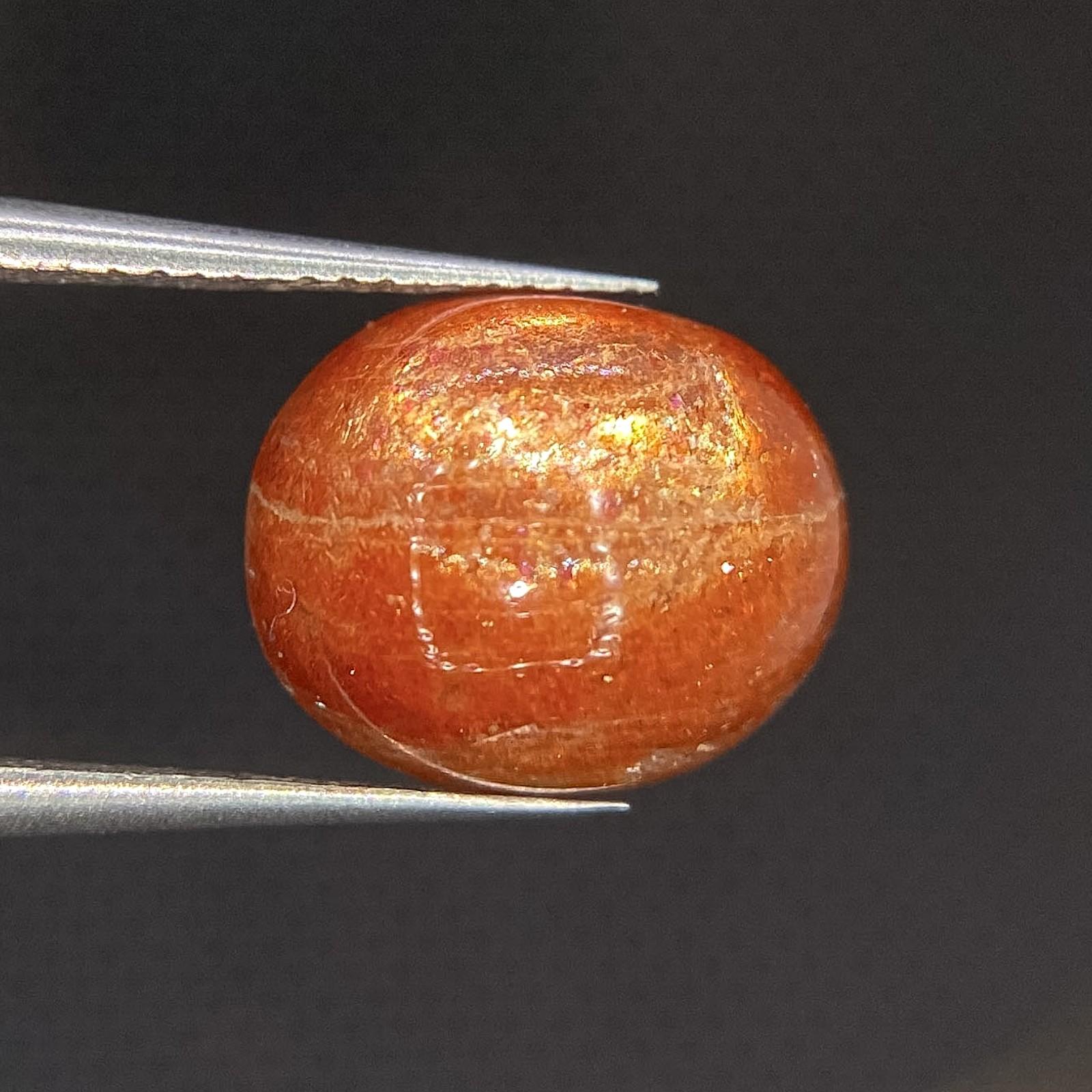
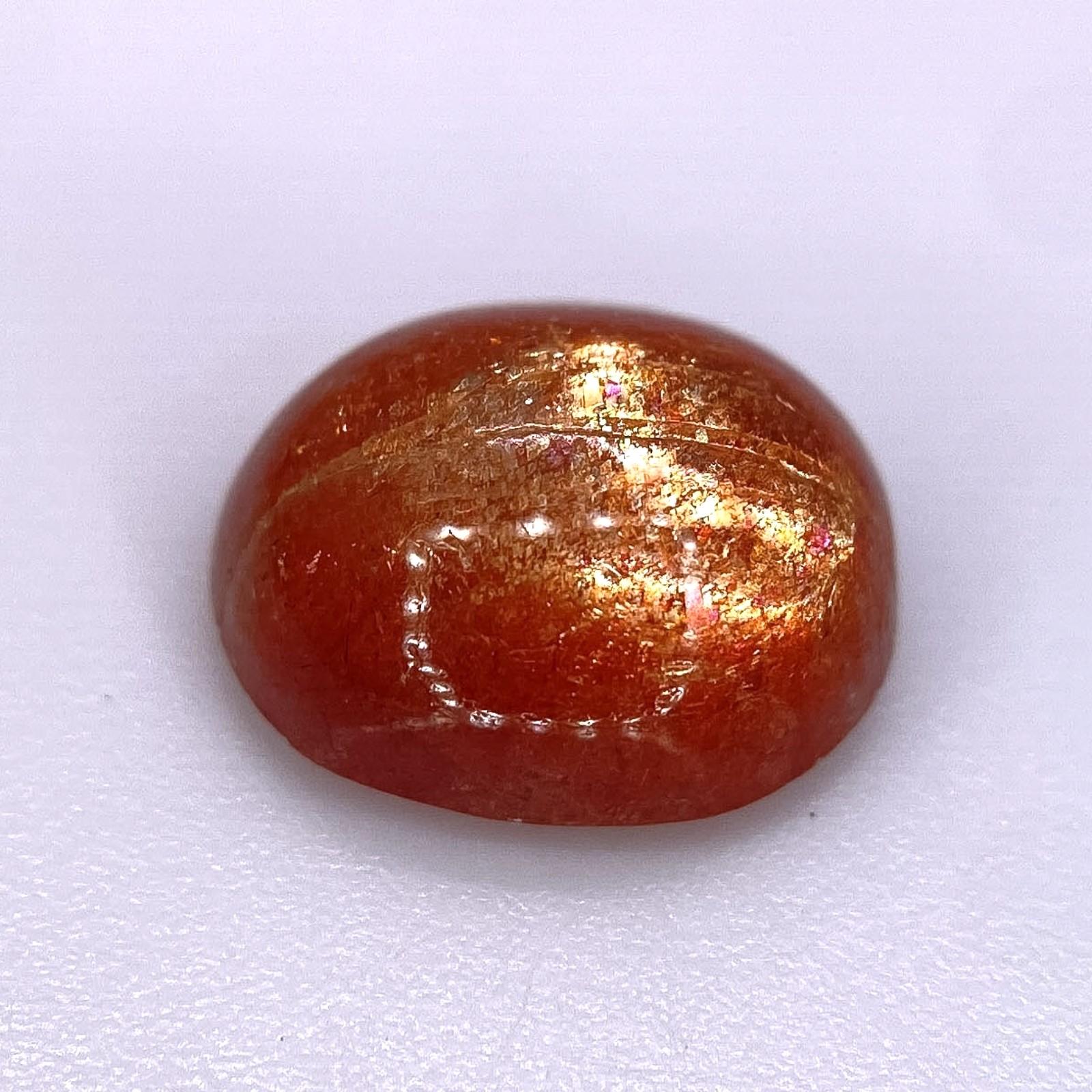
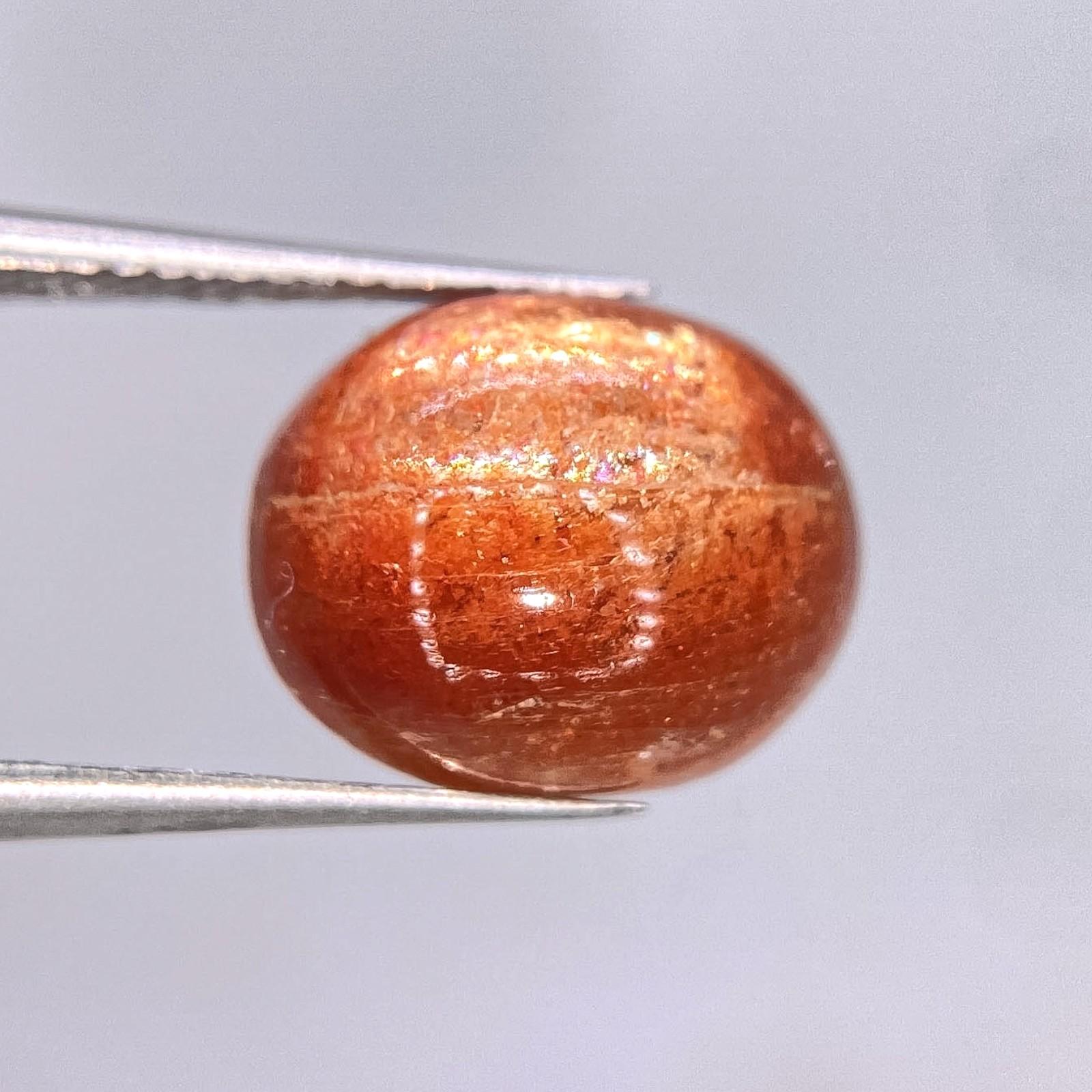
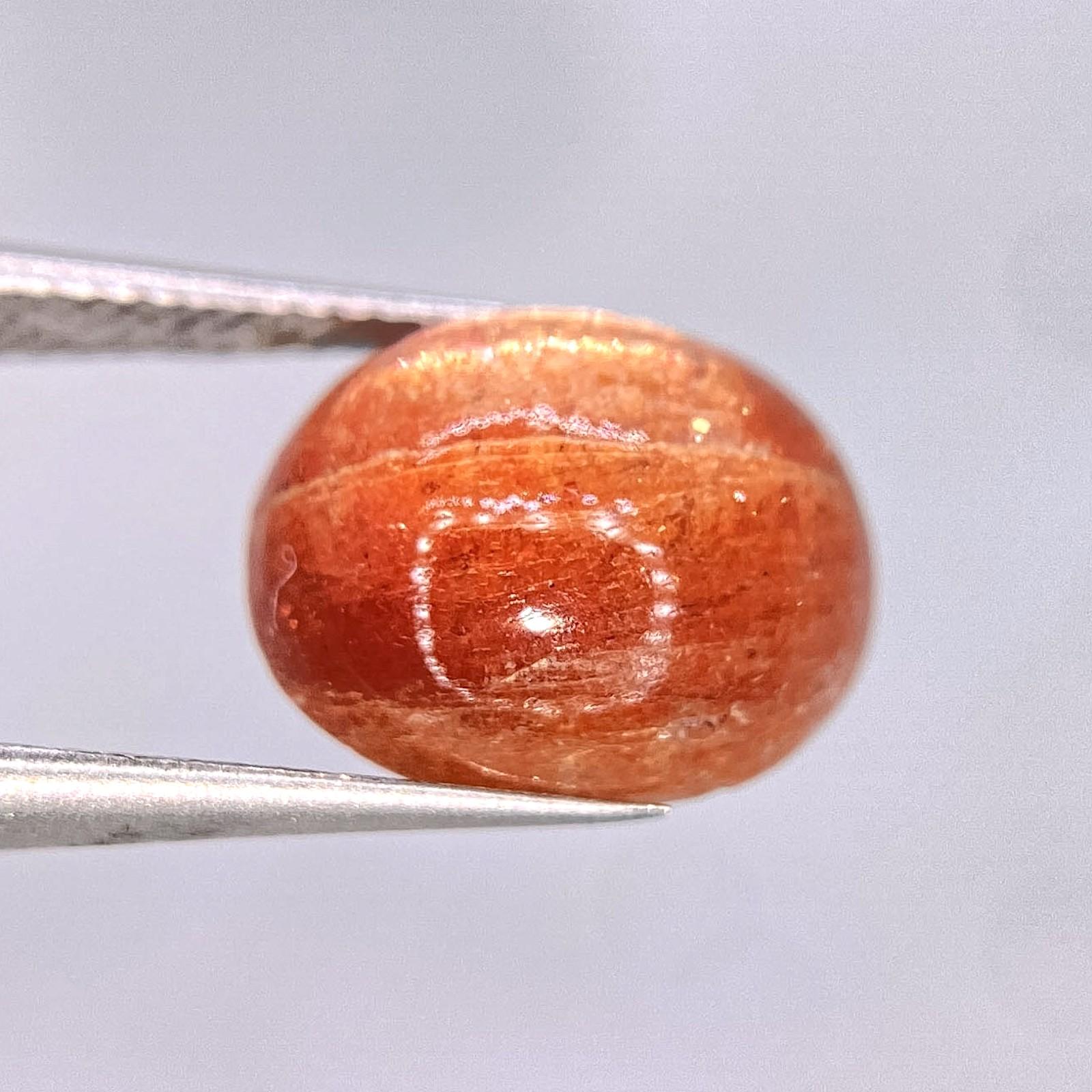


- Freakingcats Gemstone Database
Sunstone (India)
Sunstone from the ancient pegmatitic fields and weathered alluvial gemstone gravels of India—most notably the traditional mining centers of southern India, including Tamil Nadu—represents one of the most vibrant and optically thrilling varieties of the feldspar group, celebrated for its glittering, metallic aventurescence. An alkali feldspar mineral of profound gemological significance, it is a species I have always respected for its warm daylight body clarity, shimmering internal copper platelets, and its status as a classic benchmark of optical light scattering. For the specialist, a fine Indian Sunstone—whether presenting as a high-domed cabochon that captures and reflects a fiery, golden spangled sheen across its surface or preserved as an untouched, blocky crystal cluster—is a prized acquisition; it offers a gentle vitreous to pearly luster and a mesmerizing, energetic presence that anchors any systematic vault. As an artist, I find the brilliant light play within these stones—where microscopic, oriented metallic inclusions catch incoming rays to create a sparkling solar glow—to be one of nature’s most sophisticated and joyful demonstrations of crystal optics.
The Heritage & Discovery
Historical Significance
Sunstone holds a celebrated place in human history and lapidary lore, long revered for its warm, life-affirming appearance and optical charm. Historically, while classic sources in Norway and later Oregon established benchmarks for specialized feldspar varieties, India emerged as a preeminent global supplier of commercial and collector-grade sunstone, deeply intertwined with traditional artisan cutting centers and international gemstone markets. Sourced from ancient geological formations throughout the Indian subcontinent, these feldspars set an enduring standard for sheer volume, visual warmth, and accessibility, standing as a celebrated testament to South Asia’s mineral wealth.
Discovery
The systematic unearthing of gem-grade sunstone across India accompanied the exploration of alkali-rich pegmatites, granitic intrusions, and secondary eluvial-alluvial gravels. Scientifically, Indian sunstone is predominantly an oligoclase or microcline feldspar whose distinctive aventurescence is governed entirely by internal micro-inclusions. As the mineral crystallizes in cooling pegmatitic environments, tiny platelets of metallic minerals—such as hematite, goethite, or copper—exsolve and align along specific crystallographic planes. When light enters the stone, it reflects off these microscopic mirrors, producing the characteristic sparkling spangle that defines the gem. My own respect for this material grew from analyzing its structural inclusions and optical response; examining a well-cut Indian cabochon that exhibits an even, dense distribution of shimmering fire against a warm body demonstrates a micro-structural perfection that is deeply satisfying to the trained eye.
Important Mines
The primary historical and modern capital for collector-grade sunstone within India is the southern region of Tamil Nadu (including districts surrounding Coimbatore and Karur), as well as select pegmatite provinces in Rajasthan and Bihar. In these deposits, feldspar crystals weather out from parent pegmatitic dikes and accumulate in alluvial riverbeds and surface soils. For the systematic vault, I prioritize specimens that exhibit high transparency, absence of internal structural fracturing, a smooth high-domed polish, and an intense, evenly distributed aventurescent shimmer that covers the entire face of the stone.
Mineralogical Profile
Description
Sunstone is an alkali or plagioclase feldspar (most commonly oligoclase), crystallizing in the triclinic system. It sits at 6.0 to 6.5 on the Mohs hardness scale, making it well-suited for cabochons and protected pieces while requiring care to avoid sharp impacts; it possesses two directions of good cleavage intersecting near 90 degrees and an uneven to conchoidal fracture. It is characterized by a vitreous to pearly luster, with a natural daylight body color ranging from warm peach, golden yellow, and orange-brown to silvery-white and translucent water-clear.
Morphologically, it forms blocky, tabular crystals and cleaved masses. It possesses a low refractive index running from approximately 1.525 to 1.540, a low birefringence, and a light specific gravity averaging 2.62 to 2.65. The aventurescence effect is caused by the reflection of light off microscopic, oriented platelets of hematite or other metal oxides embedded within the host feldspar matrix. Because it forms during the cooling of late-stage pegmatitic fluids, it is commonly found in close association with Quartz, Tourmaline, Muscovite, and Albite. When I select an example for documentation, I look for clean structural integrity, balanced proportions, and an intense, sparkling glitter that showcases the unique phase separation of its subterranean birth.
Chemical Formula
(Na,Ca)(Al,Si)AlSi2O8 (plagioclase feldspar series with microscopic metallic platelet inclusions)


