
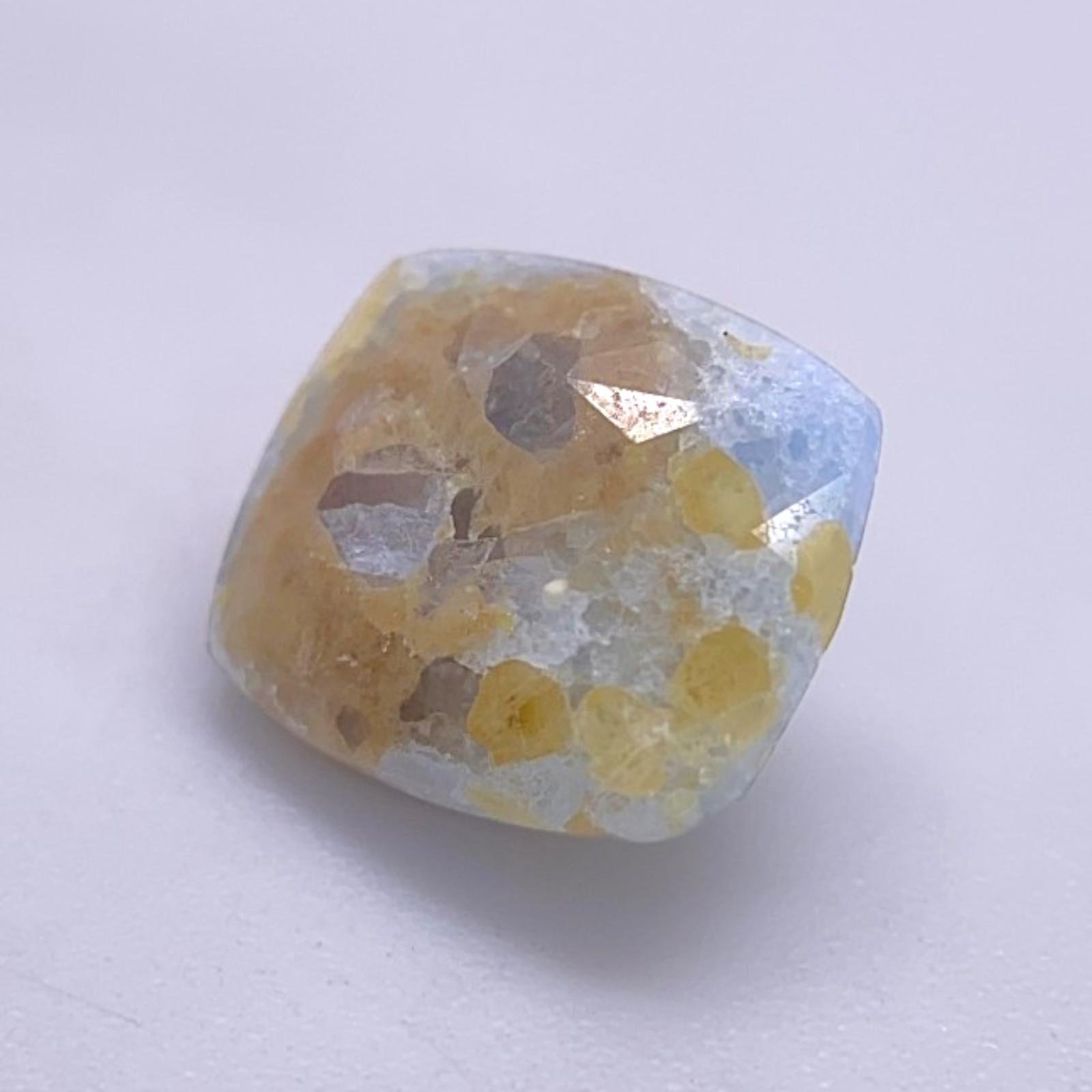
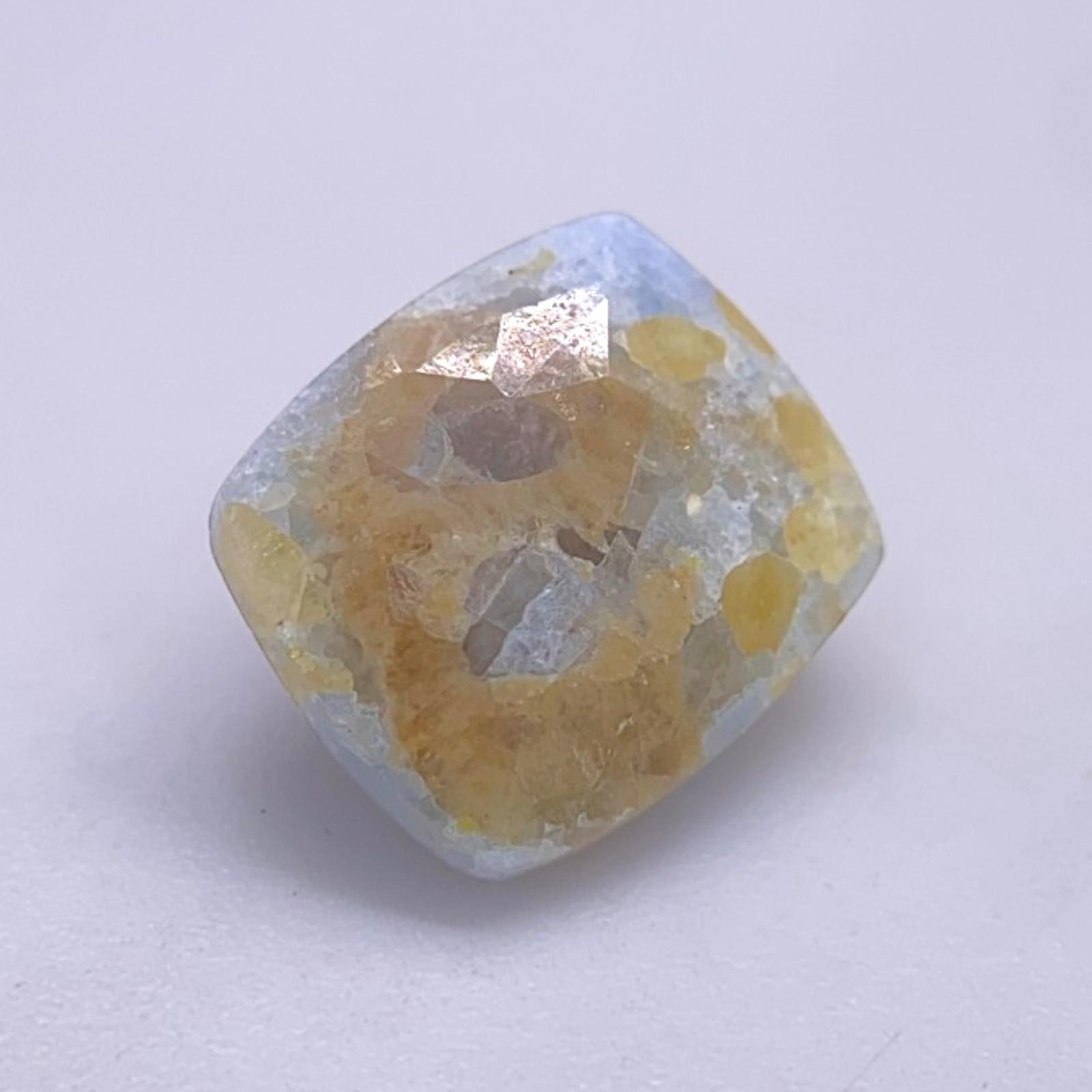
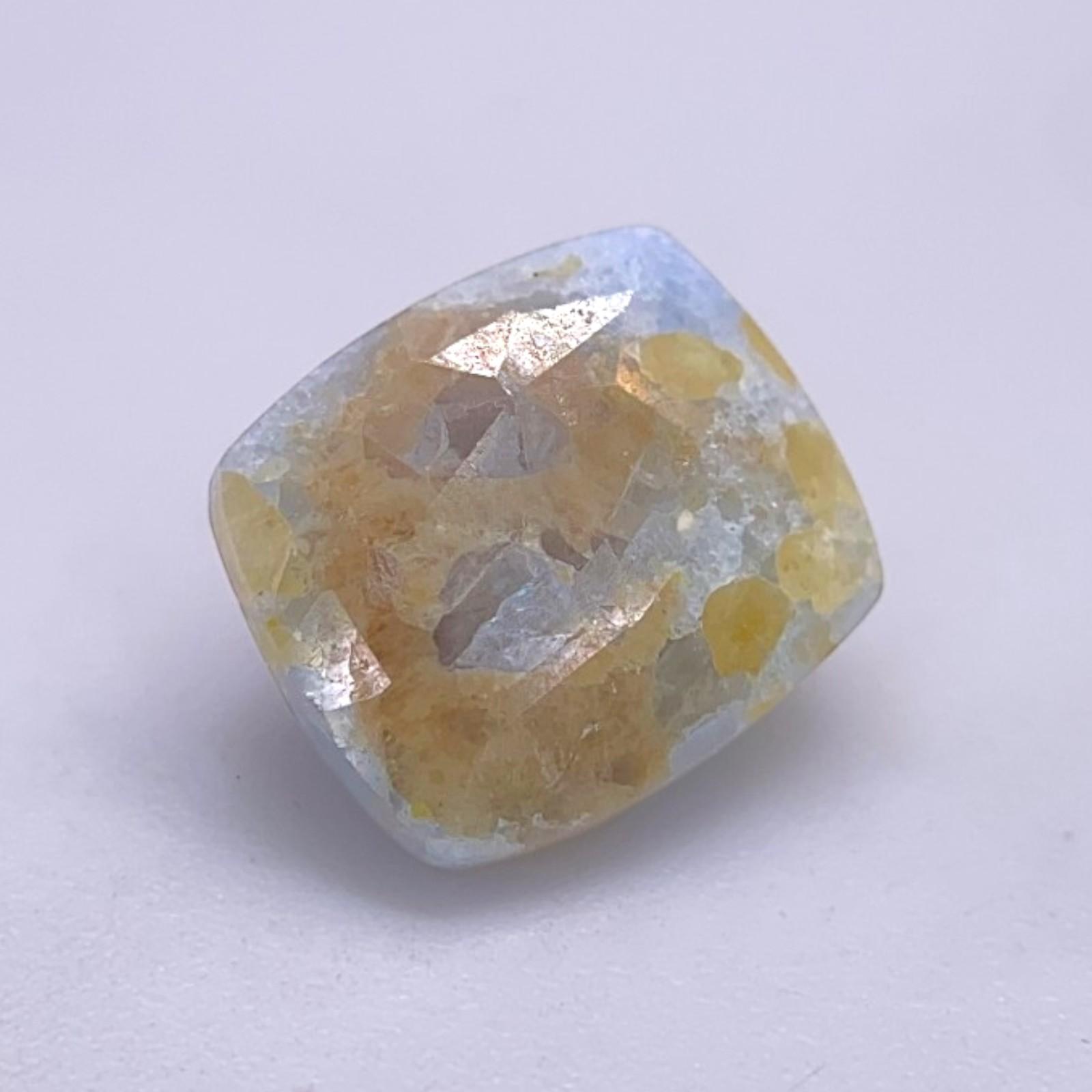
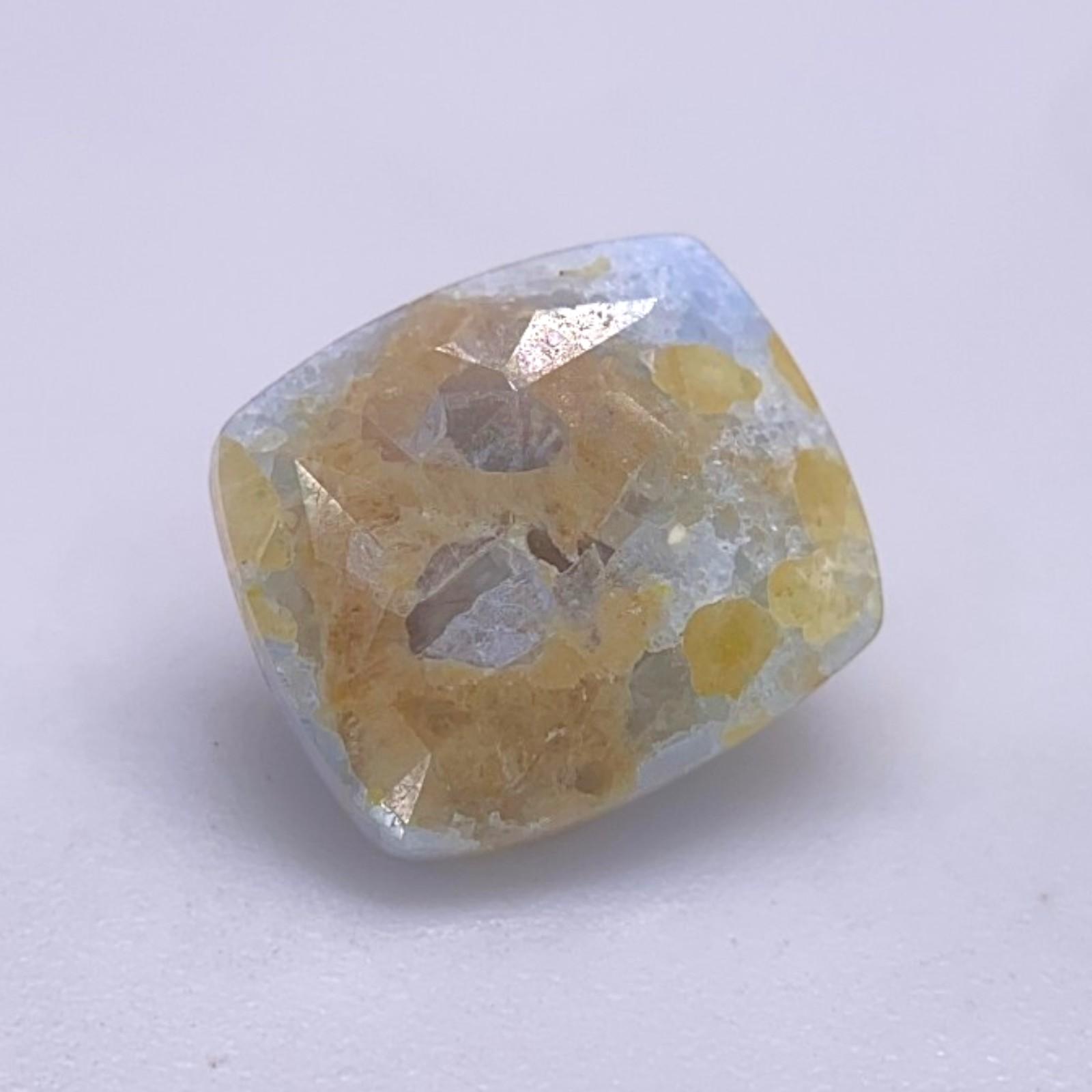
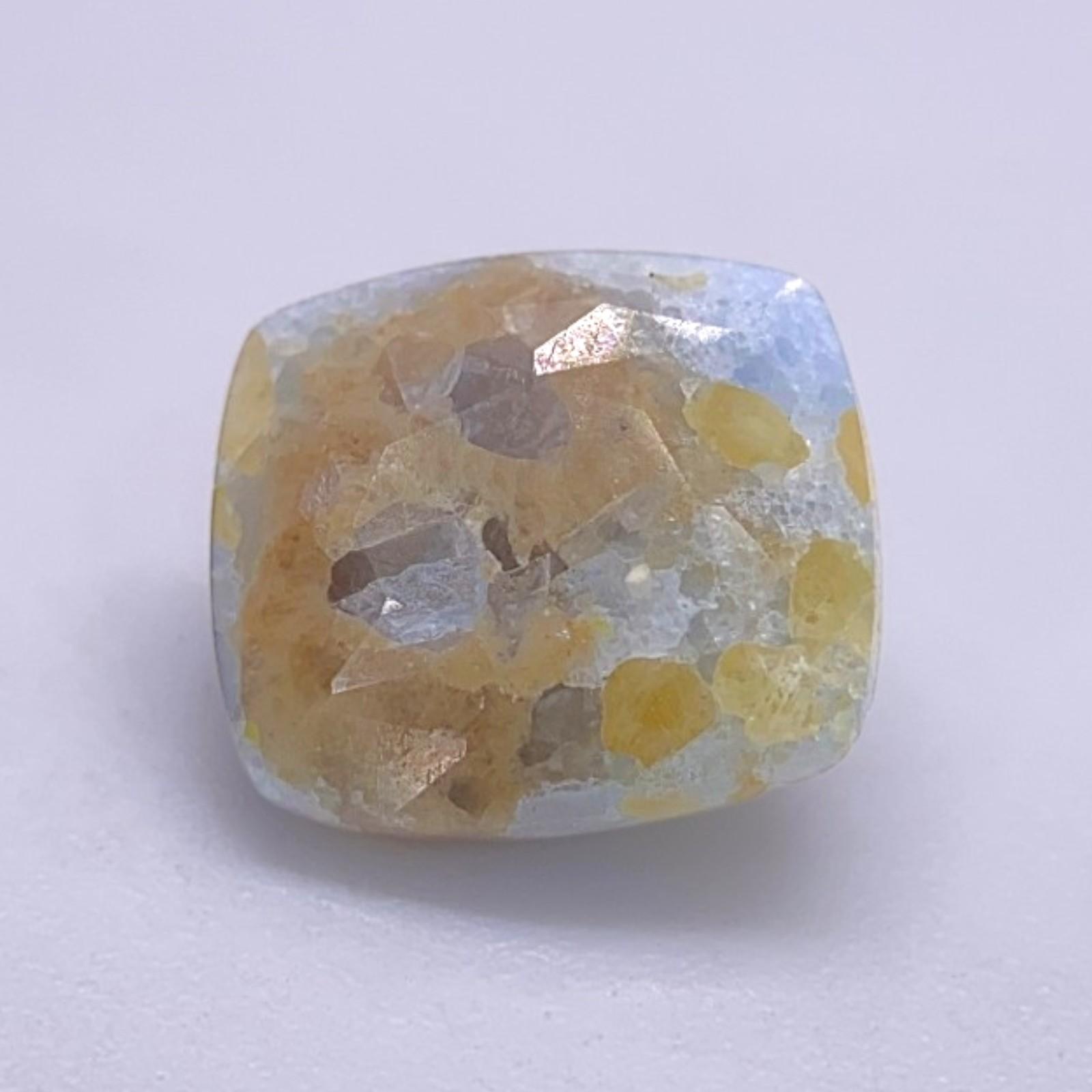
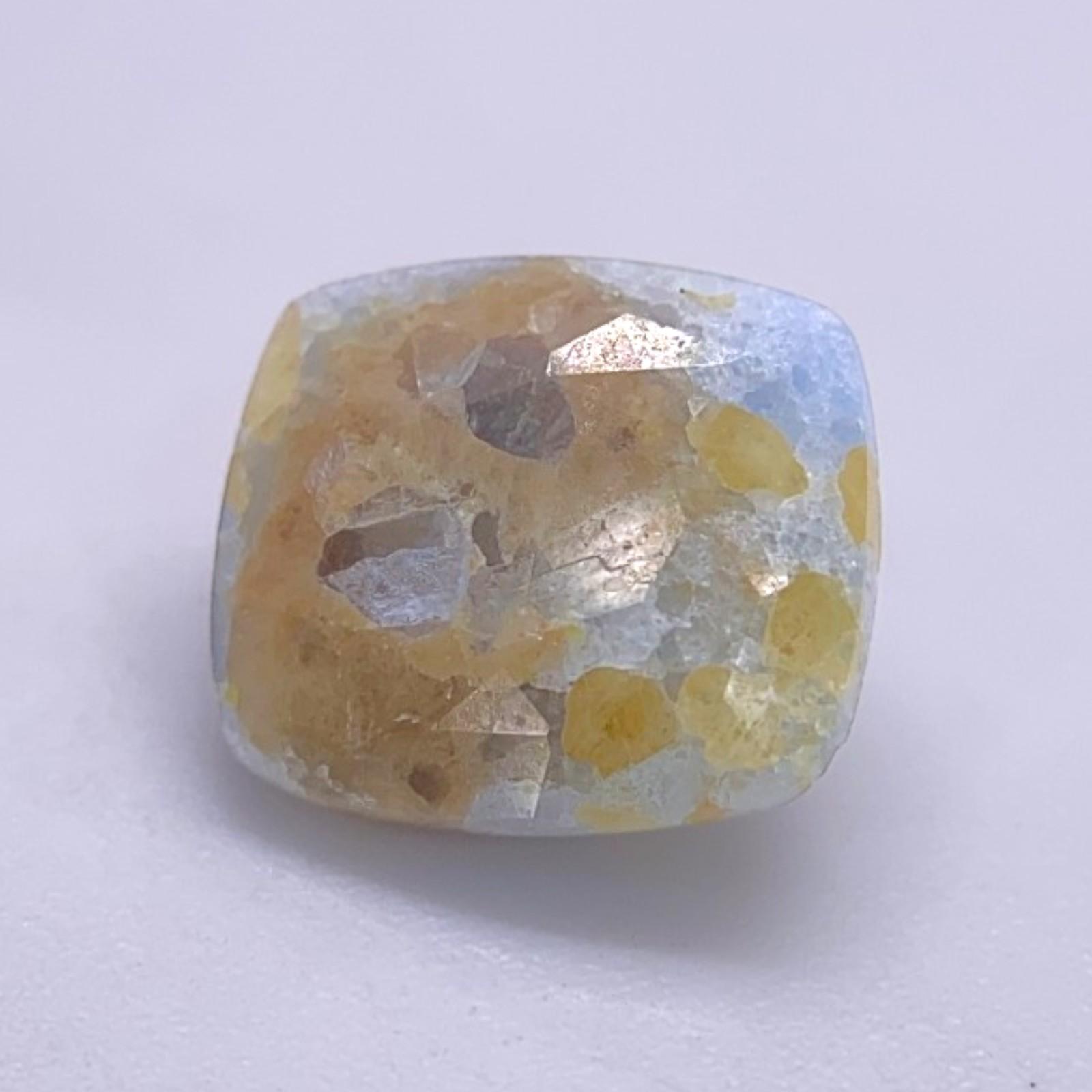
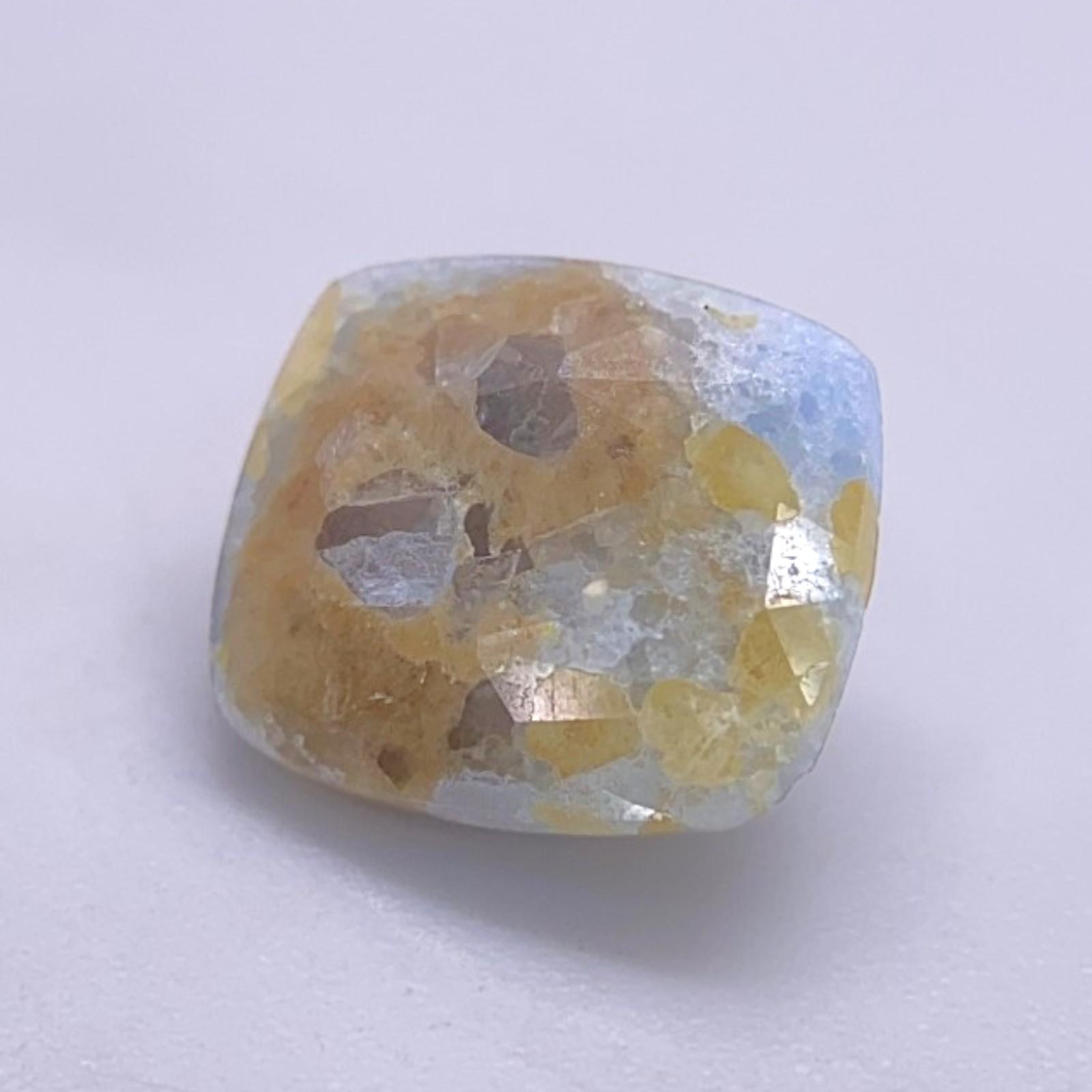
3.98 ct ELASTADITE IN BLUE MARBLE – MADAGASCAR
EXPERT VERIFIED
- Expert Verified Gemstone
- Fast Handling & Shipping
- Secure Vault Packaging
$ 300
Offer amount Feild


Smart Collector Choice


Pay with Crypto & Get 10% Automatic Discount

Availability: 1 in stock


- Freakingcats Gemstone Database
Ellestadite in Blue Marble
Ellestadite in Blue Marble represents a rare and breathtaking “tectonic” marriage of high-temperature chemistry and metamorphic beauty. While the Ellestadite group (specifically Fluorellestadite) is often associated with charred, industrial-looking coal dumps, the occurrences within the crystalline blue marbles of the Russian Far East are a mineralogical masterpiece I have always held in high regard. In this setting, the delicate, pale-to-yellowish crystals are “frozen” within a sea of crystalline, sky-blue calcite. For the specialist, this material is a prize of geochemical contrast; it is a “skarn” mineral that captures the moment when hot, silica-rich fluids met the ancient limestone. It is a stone of “serenity and fire,” offering a sophisticated, aquatic aesthetic that makes it a true “museum-grade” specimen for the systematic vault.
The Heritage & Discovery
Historical Significance: Ellestadite within blue marble is a vital species for understanding the complex silicate-sulfate exchange in contact metamorphic zones. Historically, while the blue marbles of the Baikal region were prized as ornamental stones, the discovery of well-formed Ellestadite crystals within them was a significant event for rare-mineral collectors. In the world of fine minerals, it is celebrated for its rare geological context. It stands as a symbol of elegance and extreme conditions, bridging the gap between common marble and the elite world of rare-element silicates. It serves as a beautiful reminder that the most “industrial” chemical structures can occasionally be housed in the most “artistic” natural matrices.
Discovery: The name honors the American analytical chemist Reuben B. Ellestad. Scientifically, it is a calcium silicate-sulfate. Its discovery within the blue marbles provided mineralogists with the first clear look at how the Ellestadite structure behaves in a “clean” metamorphic environment, far removed from the impurities of burning coal seams. My own respect for this material grew from the visual poetry of the piece—the “electric” blue of the marble provides a perfect, high-contrast background for the subtle, architectural crystals. Since its identification in this matrix, it has become a staple for connoisseurs of Russian rarities.
Important Mines: The undisputed world capital for the finest Ellestadite in Blue Marble is the Pereval Marble Quarry in Slyudyanka, near Lake Baikal, Irkutsk Oblast, Russia. This legendary site is world-famous for its unique blue calcite and the complex skarn minerals it hosts. I also have a high regard for similar skarn occurrences in Sweden. For the vault, I prioritize the Slyudyanka material for its unmatched “sky-blue” matrix and the sharp definition of the guest crystals.
Mineralogical Profile
Description: Ellestadite is a complex calcium mineral that crystallizes in the hexagonal system. It sits at a 4.5 to 5 on the Mohs scale, while the surrounding Blue Marble (Calcite) sits at a 3. This difference in hardness means the specimen must be handled with extreme care to avoid bruising the soft marble matrix. It is characterized by its vitreous luster and its pale, translucent crystals that stand in stark contrast to the opaque, crystalline blue host.
One of its most identifying traits is its hexagonal prismatic habit—when well-formed, the crystals appear as sharp, six-sided needles or rods. It has a moderate refractive index (n approx 1.63) and, when hosted in blue marble, it often shows a subtle “translucency” that captures the light. Because it is a skarn mineral, it is often found in association with Diopside, Phlogopite, and Apatite. When I select a piece for the collection, I look for “clear” crystal boundaries and a deep, vivid blue in the calcite, as these highlight the sophisticated, three-dimensional geometry of the mineral’s formation. It is a dense, high-vibration mineral that offers a unique, “glacial” beauty unlike any other silicate-sulfate species.
Chemical Formula: Ca5(SiO4,SO4,PO4)3(F,OH,Cl)


