

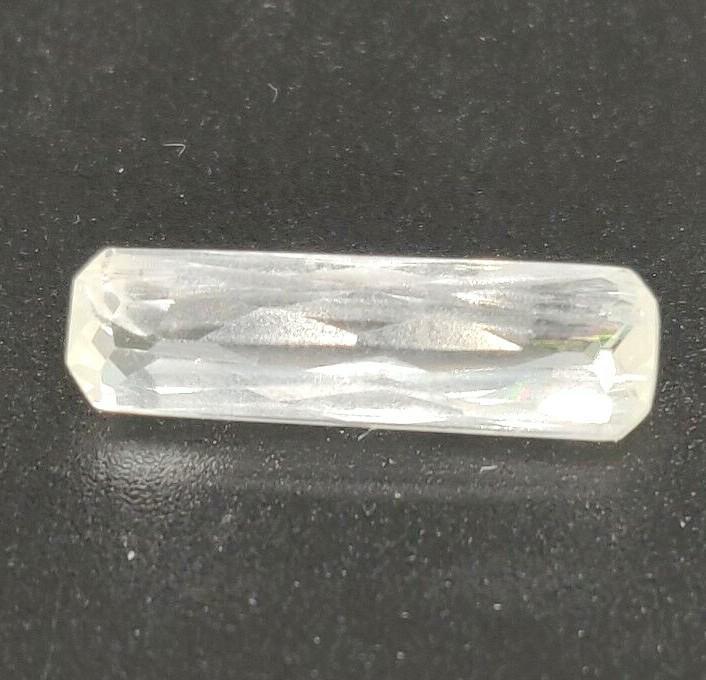
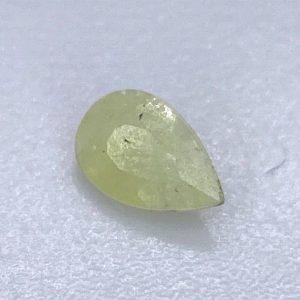
4.05 ct TREMOLITE – USA
EXPERT VERIFIED
- Expert Verified Gemstone
- Fast Handling & Shipping
- Secure Vault Packaging
$ 600 Original price was: $ 600.$ 280Current price is: $ 280.
Offer amount Feild


Smart Collector Choice


Pay with Crypto & Get 10% Automatic Discount

Availability: 1 in stock
- Freakingcats Gemstone Database
Tremolite is a gemstone that often hides its true beauty behind a rugged, industrial reputation. A member of the amphibole group, it is a calcium magnesium silicate that typically forms in elongated, needle-like crystals or dense, fibrous masses. I have always been fascinated by the "transformation" of Tremolite; it can range from a simple, snowy white to a deep, forest green, but the rare, transparent "chrome-tremolite" or the "hexagonite" variety (tinted pink by manganese) are the real prizes. To facet a clean Tremolite crystal is a study in precision, as its fibrous nature and perfect cleavage demand a respectful approach. It is a stone of structural integrity and subtle elegance, representing the quiet strength of metamorphic rocks like marble and dolomite.
The Heritage & DiscoveryHistorical Significance: Tremolite plays a vital role in our understanding of high-pressure metamorphism. Historically, it was one of the first minerals to be identified as a key component of "nephrite jade"—one of the two minerals that make up true Jade. In its fibrous form, it has been used for centuries in industrial applications, but for the collector, its crystalline form is the real treasure. It represents a specific geochemical "moment" where magnesium-rich rocks are subjected to the intense heat and pressure of the Earth’s crust. In the world of fine minerals, it stands as a sophisticated representative of the silicate family, bridging the gap between common rock-formers and high-end collector gems.
Discovery: The mineral was first described in 1789 by Johann Georg Albrecht Höpfner. He named it after the Tremola Valley in the Central Alps of Switzerland, where he believed the first specimens were found (though modern analysis suggests they actually came from nearby Campolungo). Its discovery was a major step in the early classification of the amphibole group, providing a clear chemical definition for this calcium-magnesium end-member.
Important Mines: While found globally, the most spectacular, gem-quality crystals often come from the Badakhshan province of Afghanistan and the Merelani Hills in Tanzania (where it is sometimes found in beautiful greens). I also have a high regard for the pink "Hexagonite" variety from St. Lawrence County, New York, and the classic Swiss specimens from Campolungo. For the vault, I prioritize the transparent, chrome-rich greens for their "neon" snap and the rare New York pinks for their unique mineralogical pedigree.
Mineralogical ProfileDescription: Tremolite is a calcium magnesium silicate hydroxide that crystallizes in the monoclinic system. It sits at a 5 to 6 on the Mohs scale, making it a durable stone for specialized jewelry and a staple for any serious mineral collection. It is characterized by its vitreous to silky luster and its wide range of colors, including white, grey, green, and pink.
One of its most identifying traits is its habit—it almost always forms as elongated, bladed, or acicular (needle-like) crystals. Like all amphiboles, it features two directions of perfect cleavage that intersect at approximately 56° and 124°, which gives the stone its characteristic "diamond" cross-section. It has a moderate refractive index ($n \approx 1.60$ to $1.63$), providing a clean, glassy brilliance. Because it belongs to a solid-solution series with Actinolite and Ferro-actinolite, its color darkens as the magnesium is replaced by iron. When I facet Tremolite, I look for the highest clarity to allow its internal "glow" to shine through the long facets, highlighting the sophisticated geometry of the amphibole structure.
Chemical Formula: Ca2Mg5Si8O22(OH)2
Related products
- Sale!Suggest a Price
![LOT 6.90 ct AFGHANITE - UV Colorchange]()
LOT 6.90 ct AFGHANITE – UV Colorchange
$ 240Original price was: $ 240.$ 144Current price is: $ 144. - Sale!Suggest a Price
![2.52 ct AMAZONITE - USA]()
- Sale!Suggest a Price
![12.90 ct AMAZONITE - USA]()
- Sale!Suggest a Price
![0.31 ct ADAMITE - MEXICO]()


