
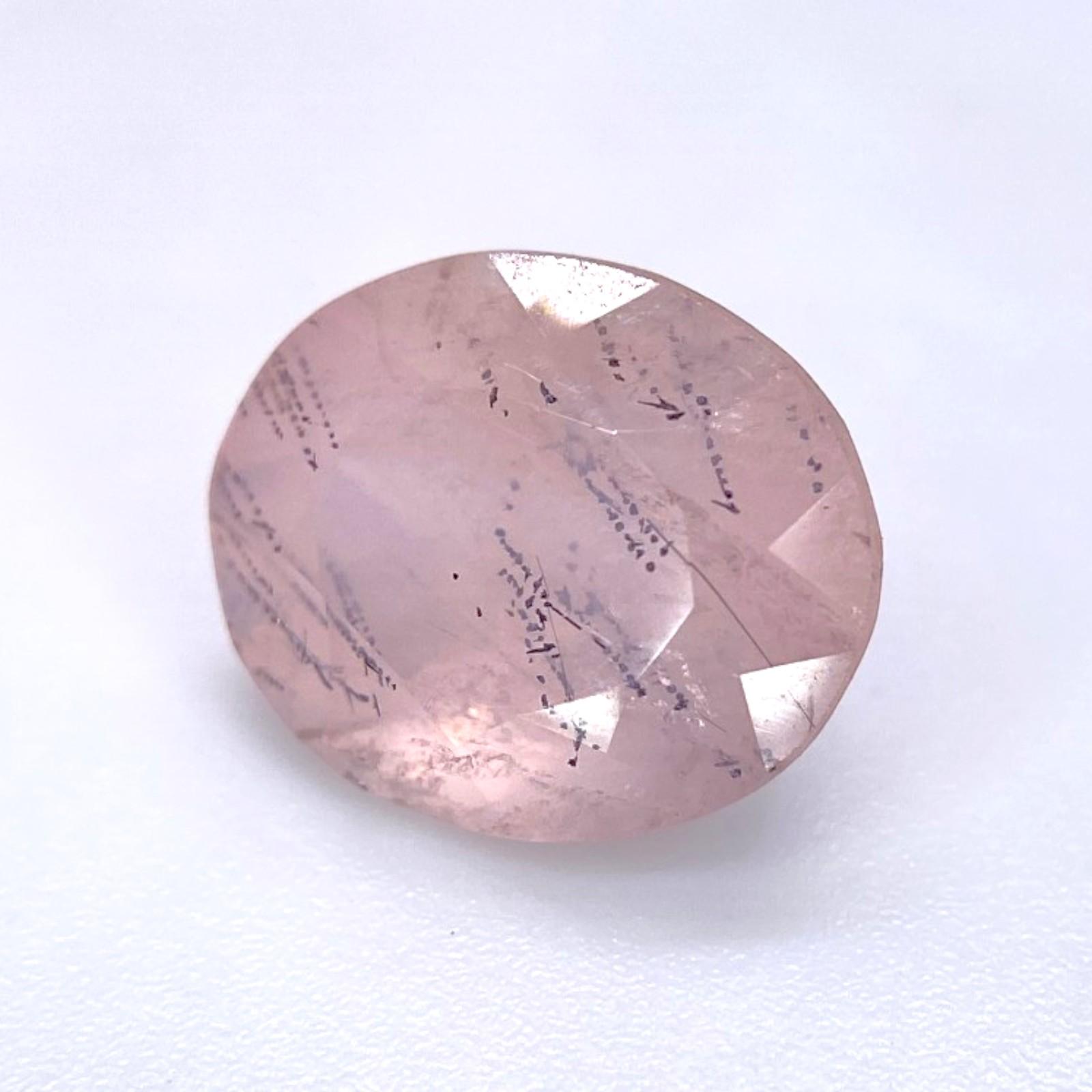
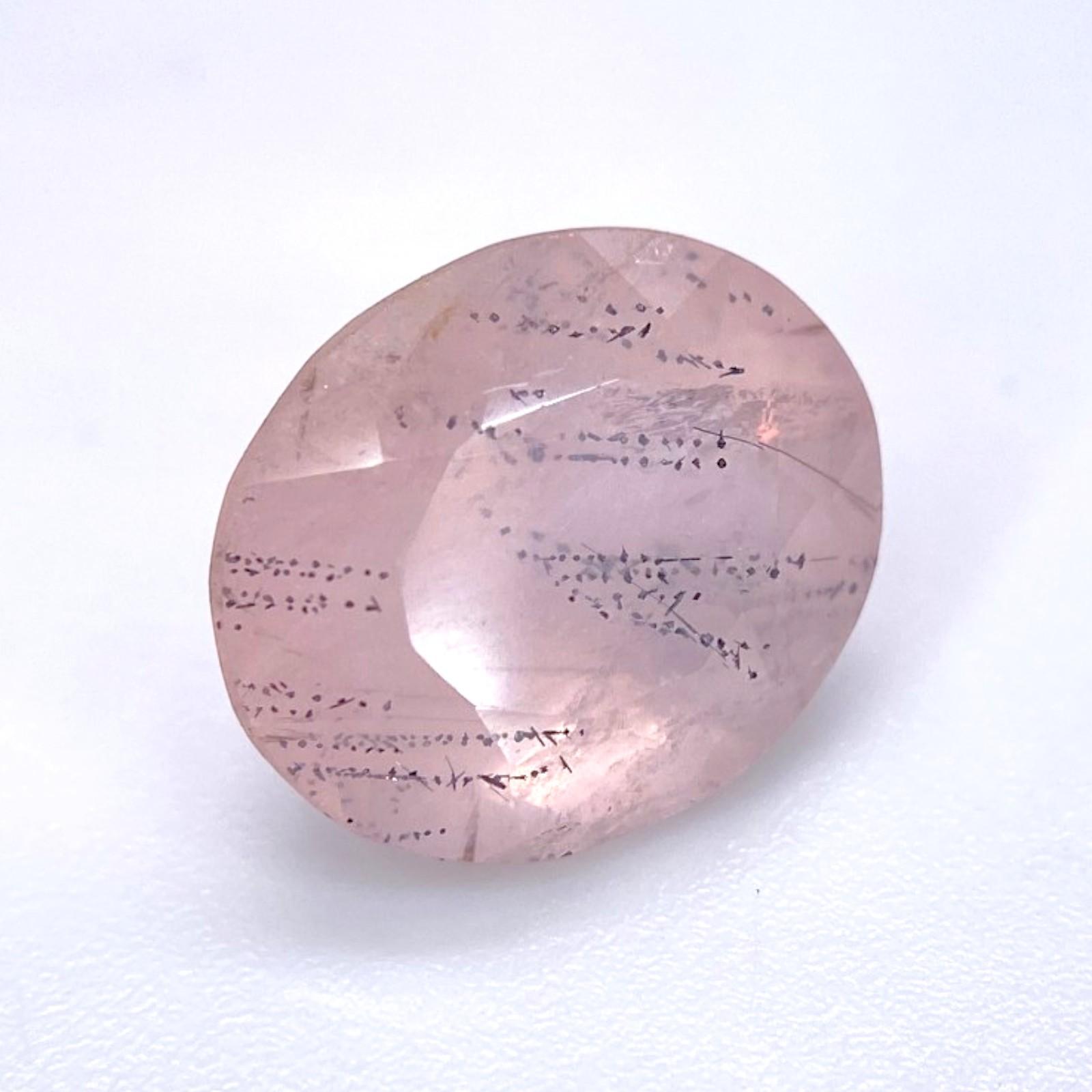
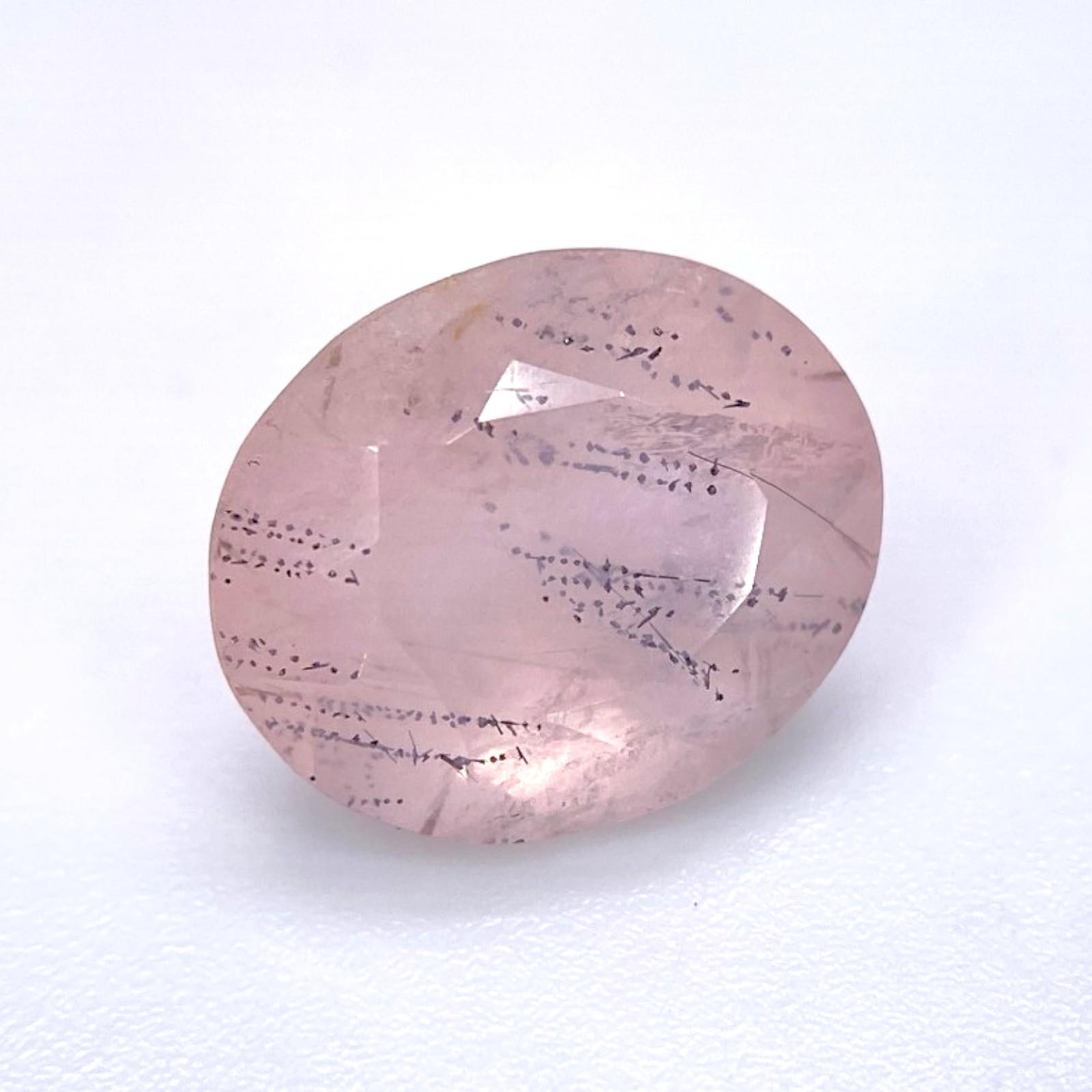
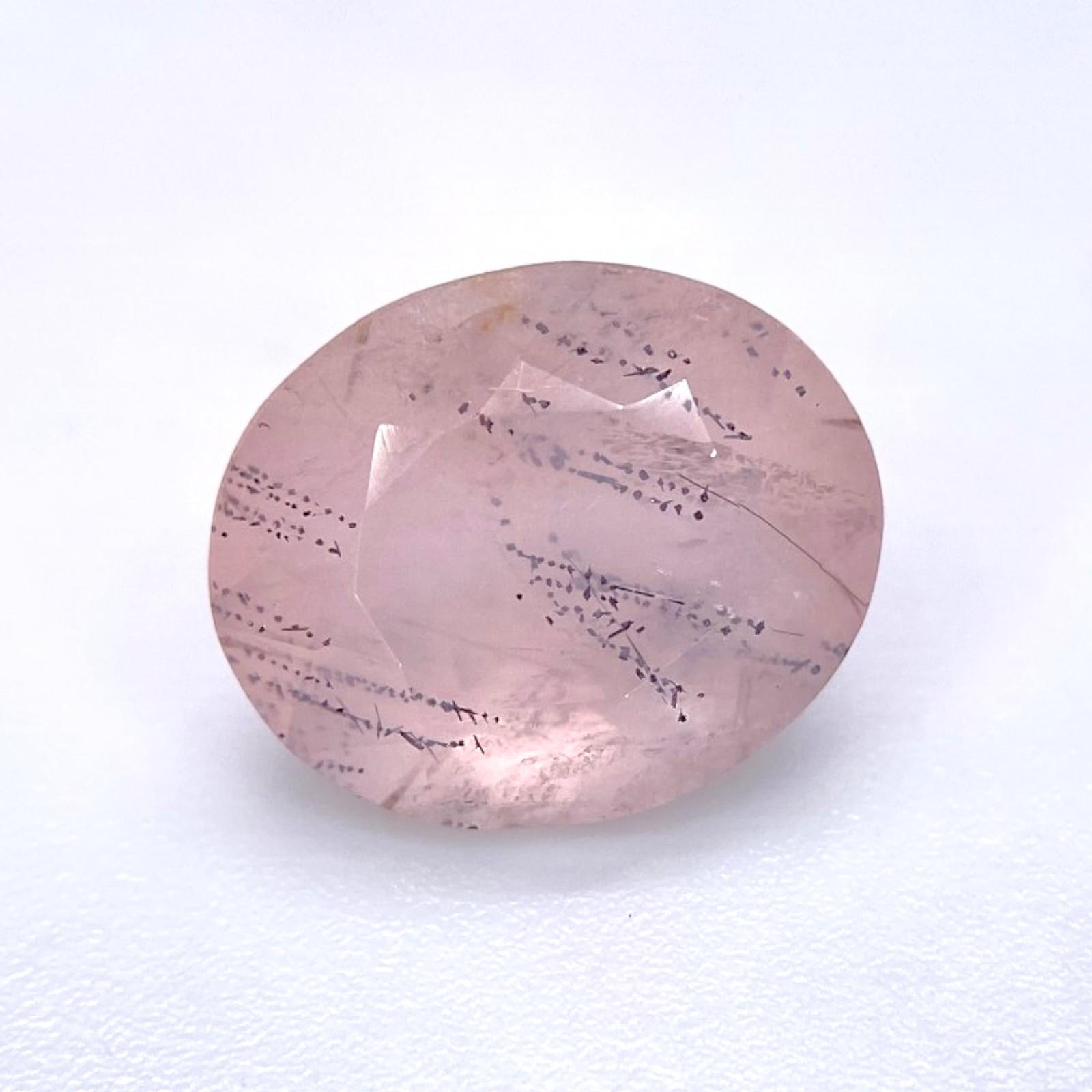
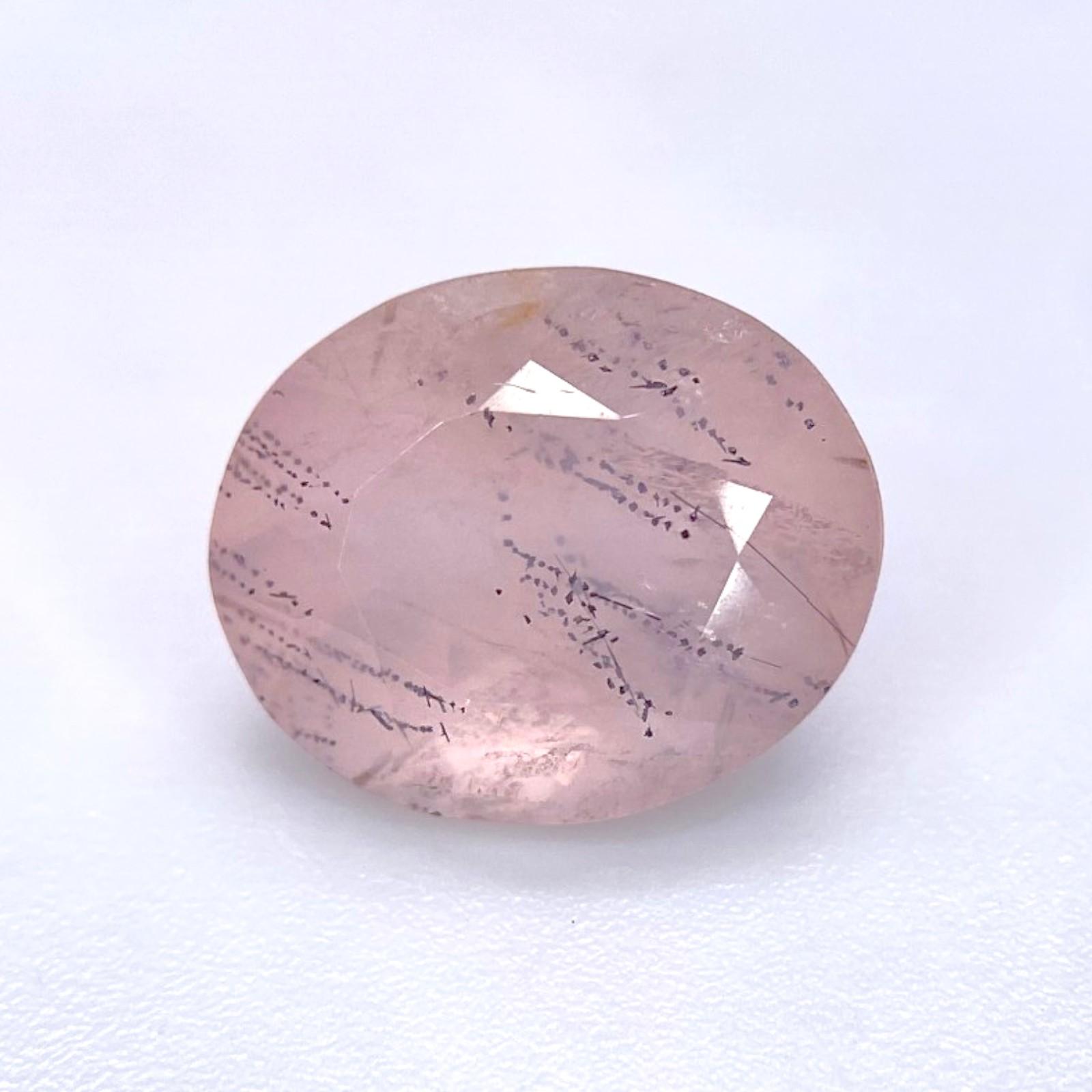
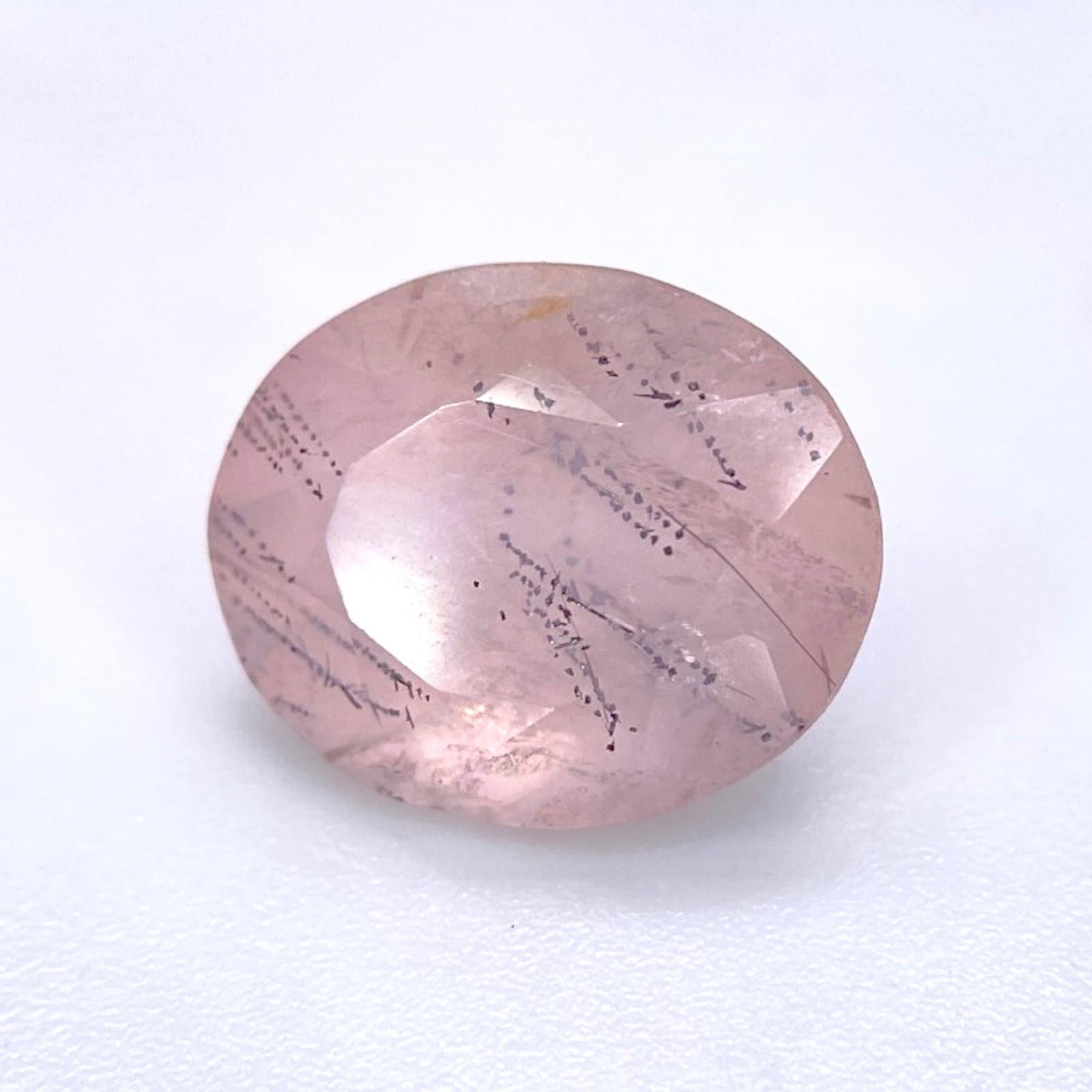
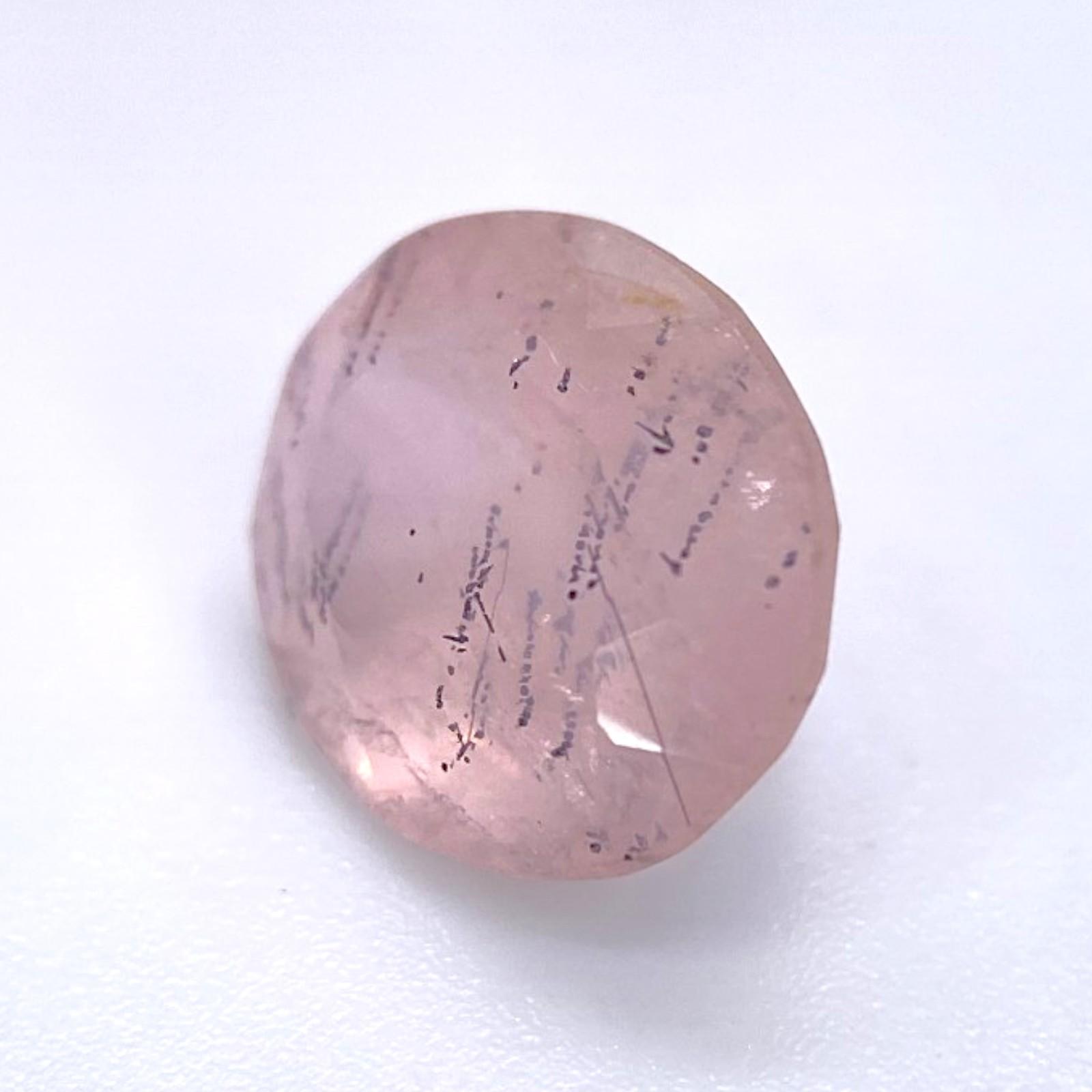
4.45 ct ROSEQUARTZ W. BISMUTITE INCLUSIONS – MADAGASCAR
EXPERT VERIFIED
- Expert Verified Gemstone
- Fast Handling & Shipping
- Secure Vault Packaging
$ 180
Offer amount Feild


Smart Collector Choice


Pay with Crypto & Get 10% Automatic Discount

Availability: 1 in stock


- Freakingcats Gemstone Database
Rosequartz with Bismutite Inclusions
Rose Quartz featuring rare Bismutite inclusions from the evolved pegmatites of Madagascar represents the “titanium-bismuth-phosphate-silicate” peak of the quartz world. A macrocrystalline variety of silicon dioxide hosting a rare bismuth carbonate mineral, it is a combination I have always respected for its “soft-blush” to “translucent-pink” matrix and its status as a masterpiece of “inclusion-driven” structural discipline. For the specialist, a top-tier Malagasy Rose Quartz with verified Bismutite is a prize of extreme pegmatitic fractionation; it offers a vitreous to greasy luster and a “radiant” presence that makes it a true “high-vibration” asset for the systematic vault. As an artist, I find the contrast between the “aqueous-pink” background and the “earthy-yellowish” or “metallic-ghost” pseudomorphs of the Bismutite to be one of nature’s most sophisticated and “complexly layered” palettes.
The Heritage & Discovery
Historical Significance Rose Quartz is a vital species for understanding the trace-element chemistry of granitic pegmatites, where its classic pink hue is typically derived from microscopic inclusions of a fibrous dumortierite-like mineral or trace titanium. Historically, Madagascar has been celebrated for producing some of the world’s finest macrocrystalline and crystalline rose quartz block material. In the world of fine minerals, the addition of Bismutite inclusions elevates a standard specimen to a natural, “mineralogical-anomaly” brilliance, which stands as a symbol of intersection and structural integrity. It serves as a reminder that the highly evolved pegmatite pockets of the Malagasy shield can trap extraordinary heavy-metal combinations when bismuth fluids interact with late-stage silica crystallization.
Discovery While Rose Quartz is found globally, the unique paragenesis of heavy-metal bismuth minerals within the quartz pockets of Madagascar redefined the mineralogical benchmark for inclusion collectors. Scientifically, Bismutite is a bismuth subcarbonate formed typically as an alteration product of bismuthinite. Its discovery as stable, encapsulated inclusions within the Antananarivo and Vakinankaratra pegmatite fields provided mineralogists with a rare look at the species’ potential to preserve delicate internal matrix chemistry. My own respect for this material grew from observing its “internal” depth; specifically, the way the cloudy, phantom-like structures of the Bismutite break up the surrounding pink light is a visual impact that is unmistakable to the trained eye.
Important Mines The undisputed world capital for the finest “aesthetic” inclusion-bearing Rose Quartz is the Ambatofinandrahana and Miarinarivo districts within the Central Highlands of Madagascar. These specimens set the global benchmark for color purity and “sharp” inclusion definition, often found in deep pegmatitic zones alongside exotic phosphates and tantalates. I also have a high regard for the classic finds from the Mahaiza area. For the vault, I prioritize the Central Highland material for its unmatched “color-contrast” depth and its status as a rare-association masterpiece of Malagasy pegmatite mineralogy.
Mineralogical Profile
Description Rose Quartz is a silicon dioxide that crystallizes in the trigonal system, while the enclosed Bismutite is a bismuth subcarbonate that typically occurs in amorphous or earthy masses within the quartz host. The quartz matrix sits at a 7 on the Mohs scale, providing a durable defensive shield around the much softer Bismutite (which sits at a 2.5 to 3.5), meaning the specimen can be handled easily while preserving the delicate, “trapped” internal structures safely beneath vitreous surfaces. It is characterized by its vitreous luster and its unmistakable, “blush-pink to lavender-pink” color palette punctuated by yellow, green, or grey inclusion phantoms.
One of its most identifying traits is its turbid transparency combined with the distinct, metallic-to-earthy yellow-green signatures of the altered bismuth. It has a standard quartz refractive index (n approx 1.54) but the specific gravity can vary slightly based on the density of the heavy bismuth inclusions (pure quartz is SG 2.65, while Bismutite is highly dense at SG approx 6.7 to 8.2). Because it forms in highly fractional granitic pegmatites, it is often found in association with Feldspar, Schorl, and Beryl. When I select a piece for the collection, I look for “clear” internal zoning and the most “defined” inclusion pathways, as these highlight the sophisticated, three-dimensional geometry of the mineral’s growth. It is a dense, high-vibration mineral combo that offers a unique, “aqueous-neon” structural beauty unlike any other quartz variety.
Chemical Formula SiO2 hosting Bi2(CO3)O2


