
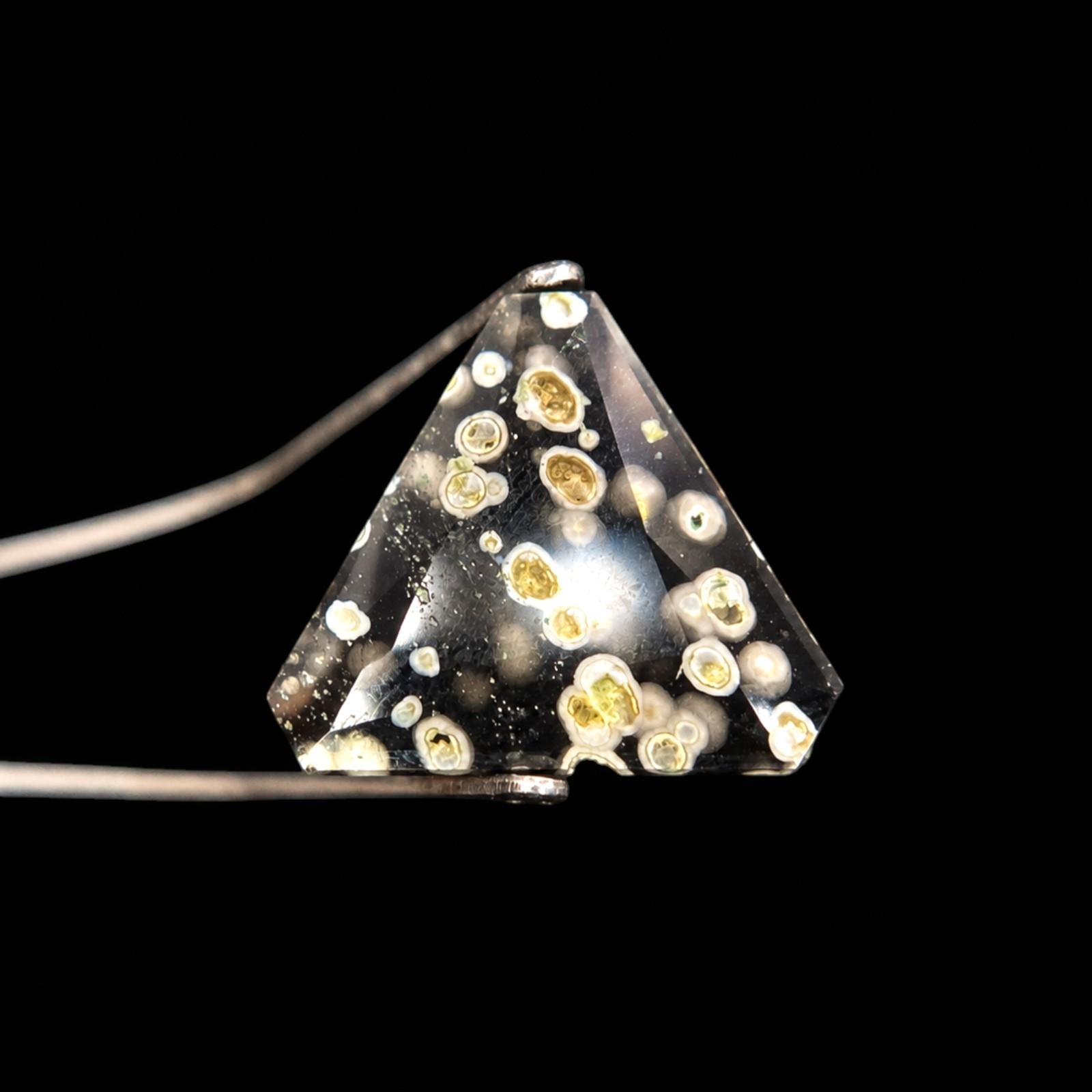
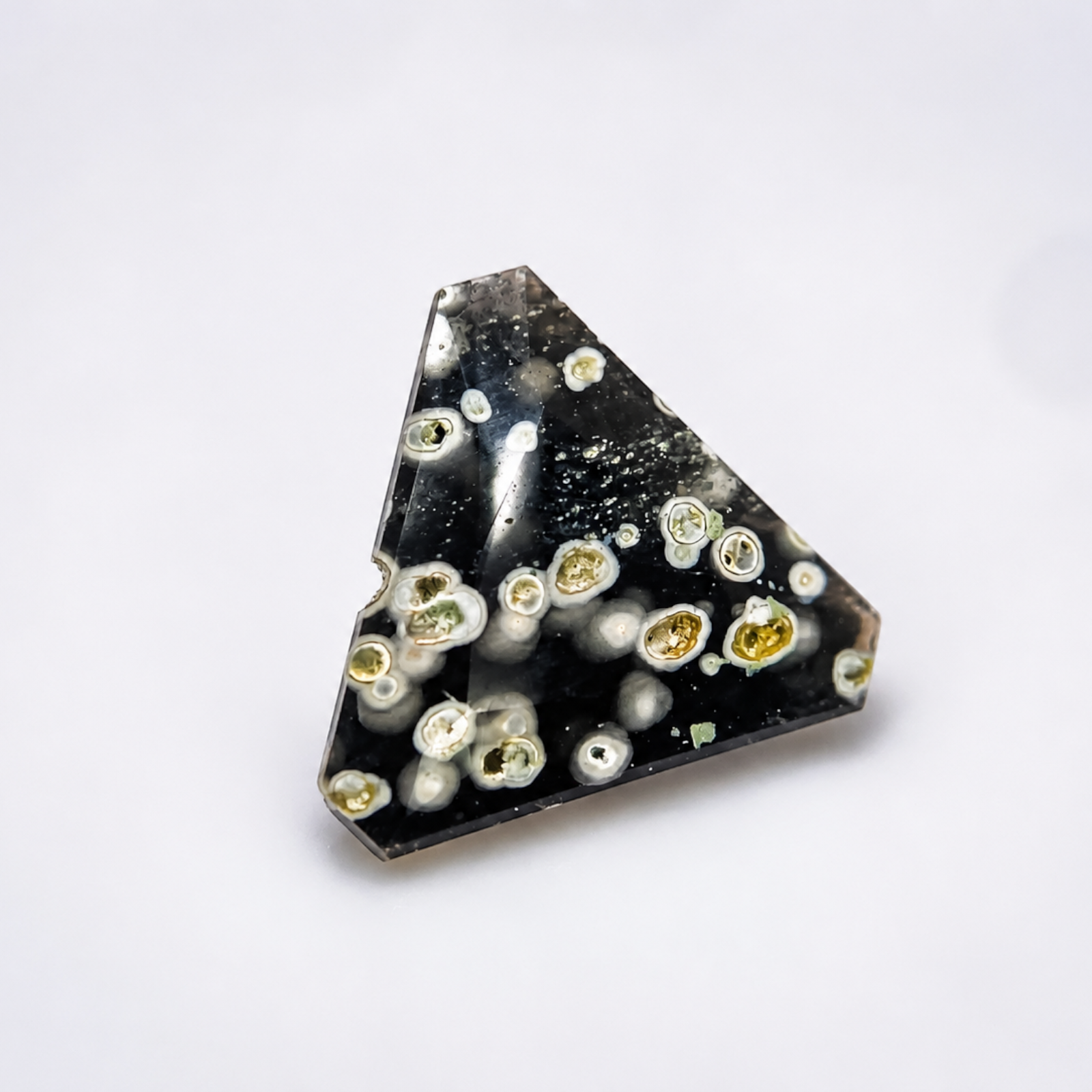
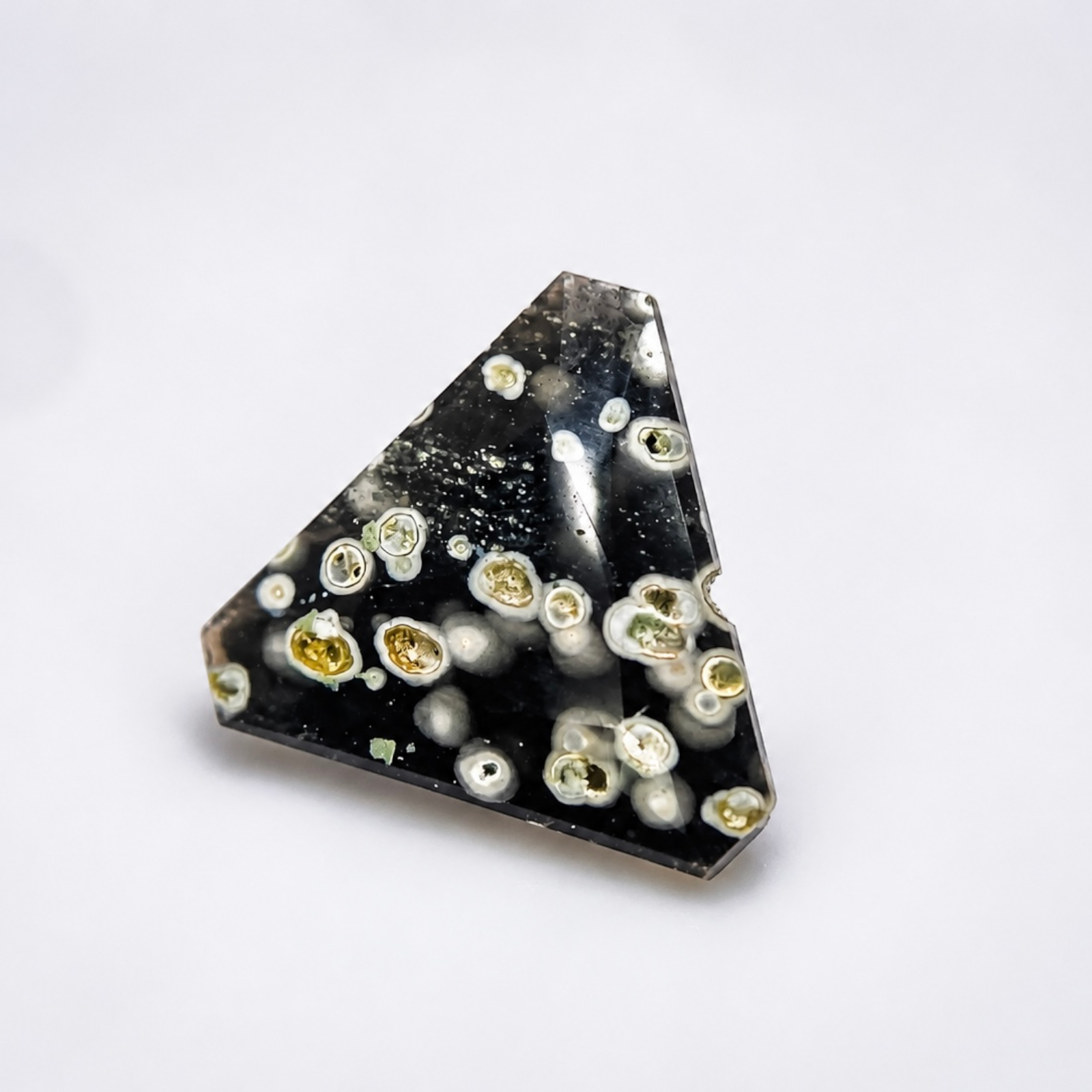
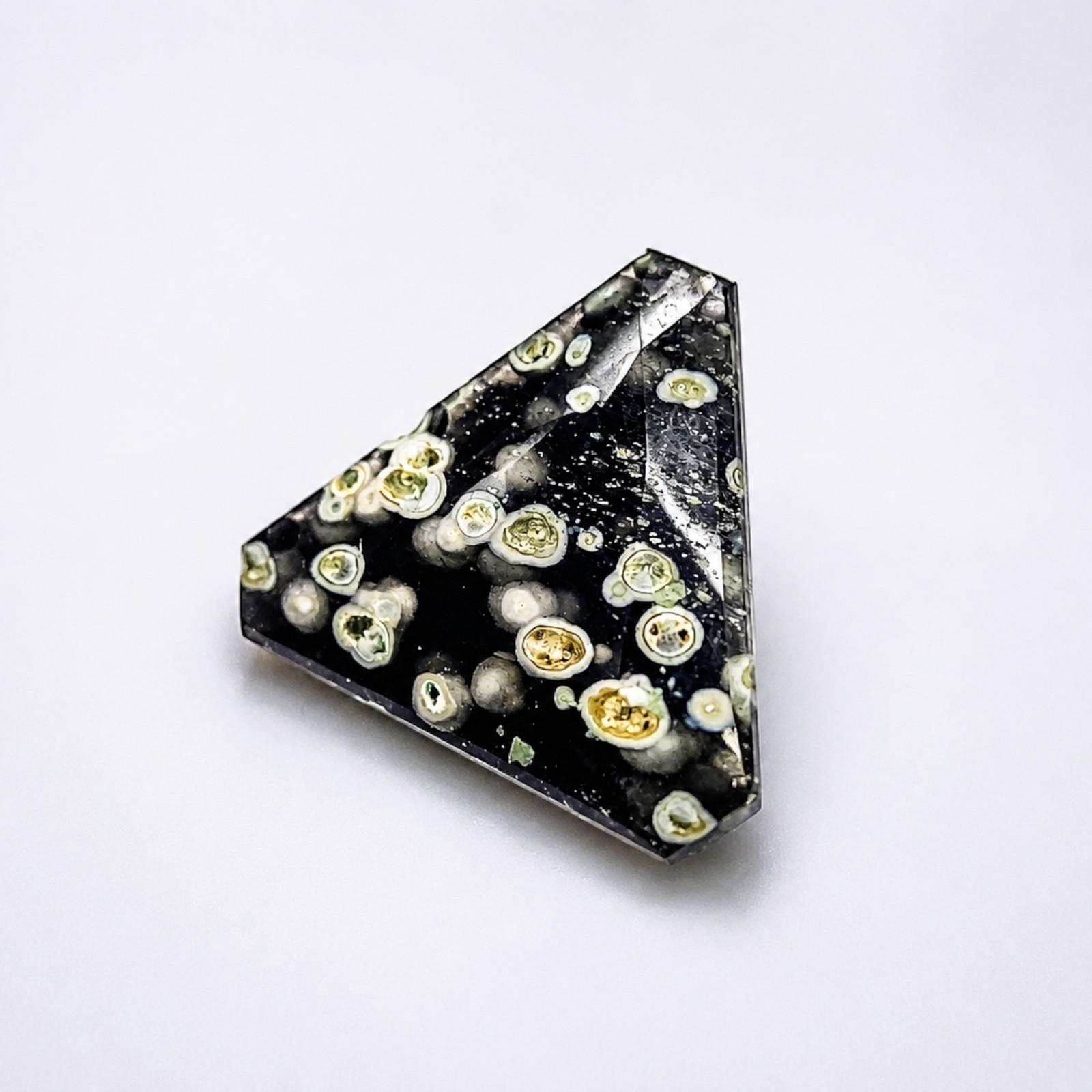
4.55 ct OBSIDIAN WITH ULVOSPINEL – ITALY
EXPERT VERIFIED
- Expert Verified Gemstone
- Fast Handling & Shipping
- Secure Vault Packaging
$ 150
Offer amount Feild


Smart Collector Choice


Pay with Crypto & Get 10% Automatic Discount

Availability: 1 in stock
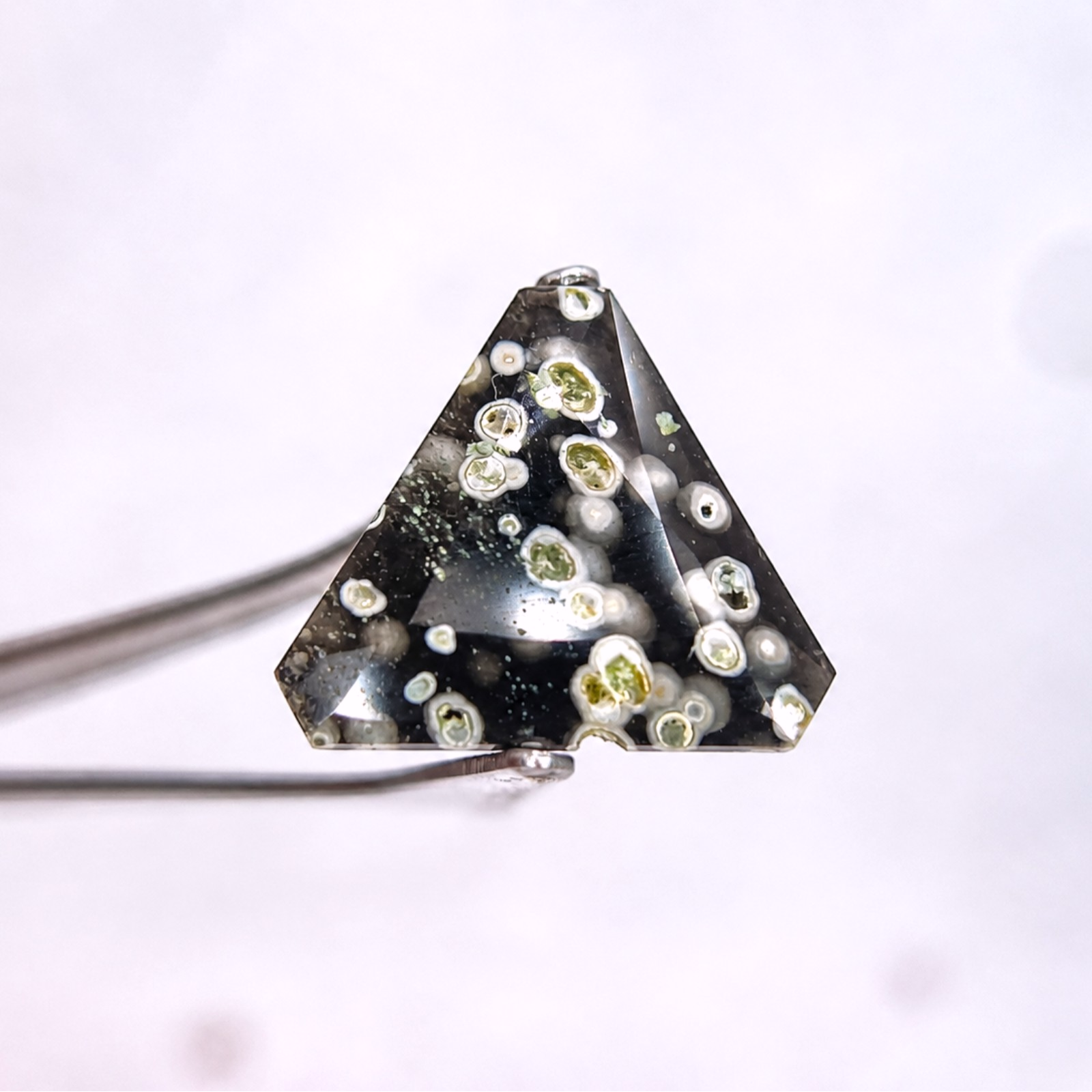
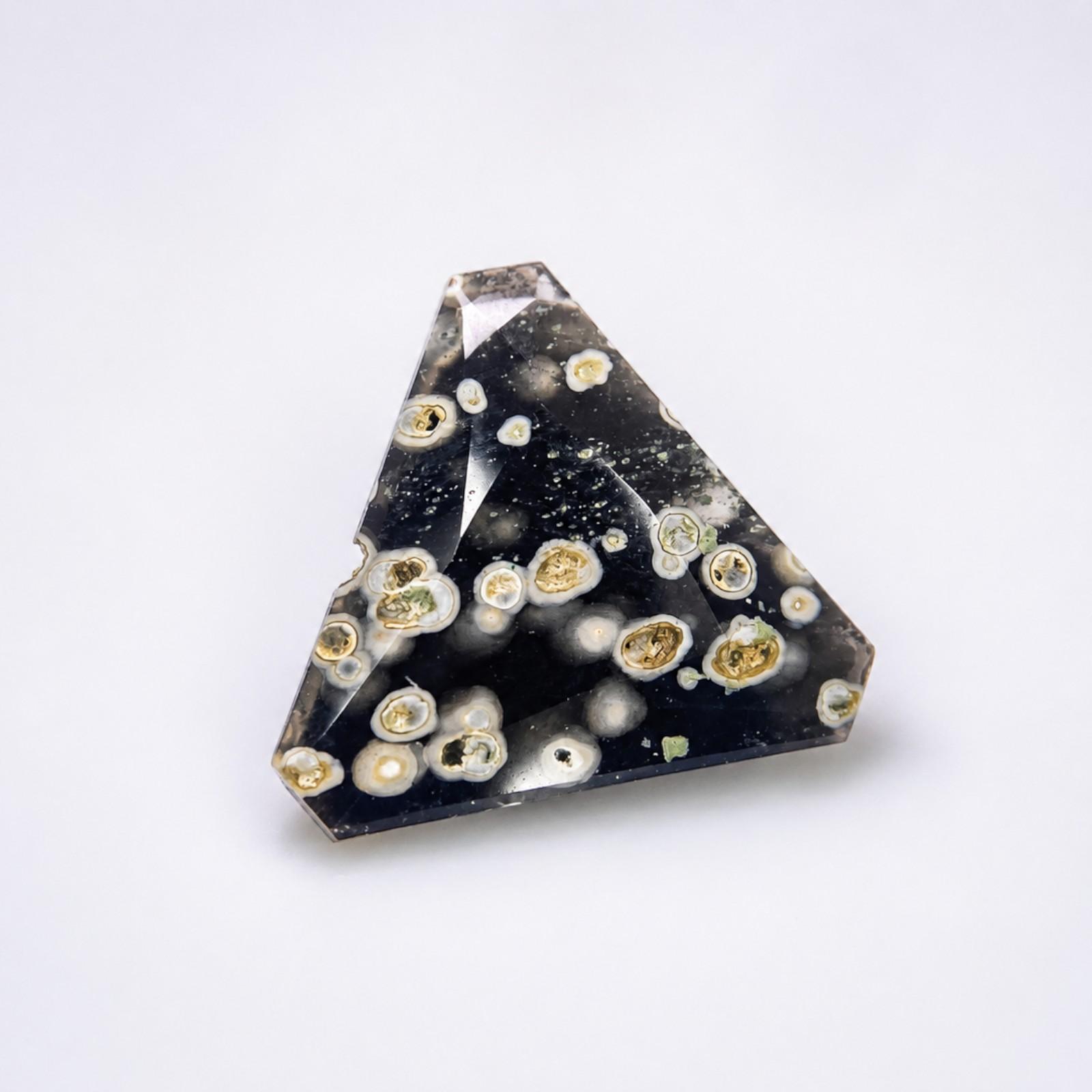
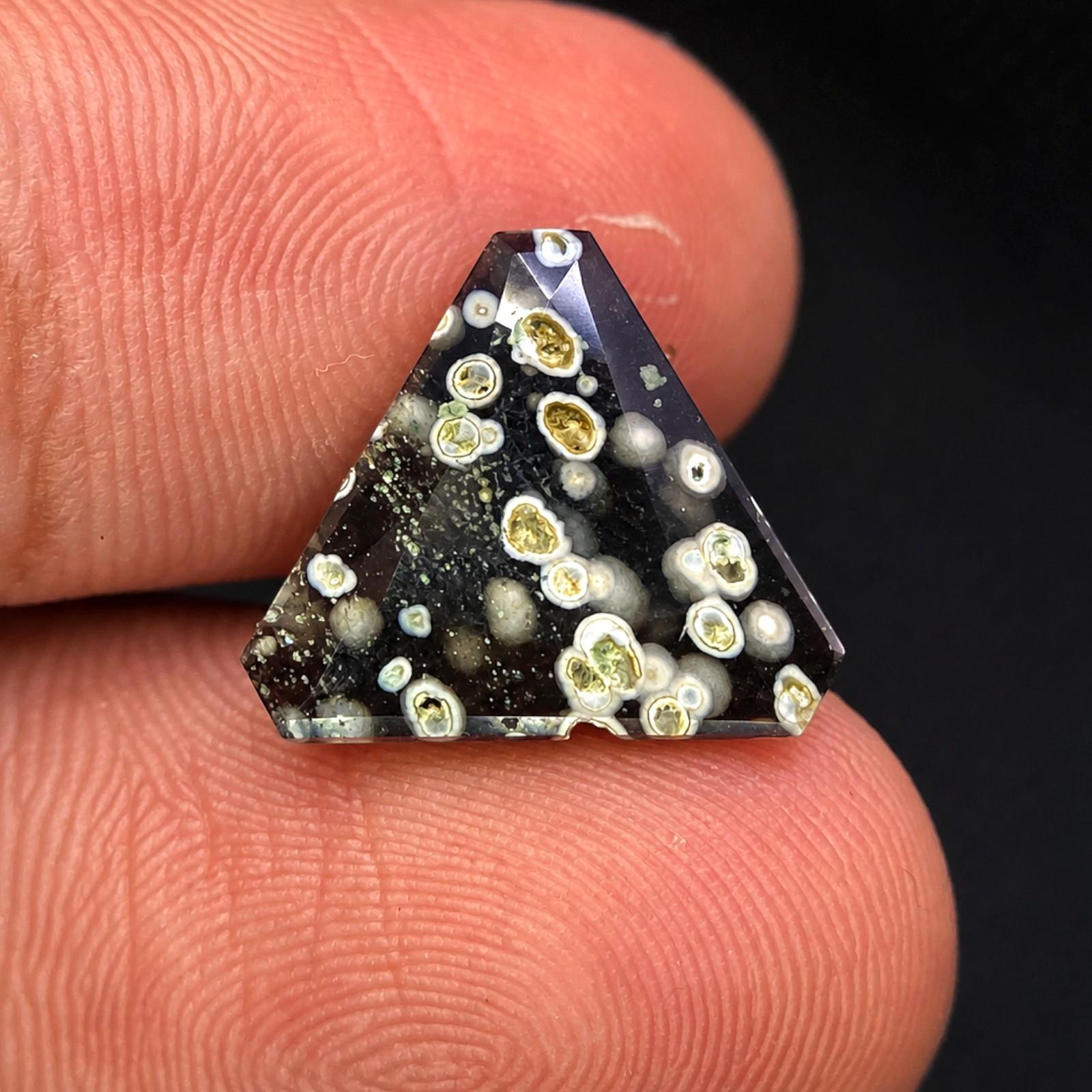


- Freakingcats Gemstone Database
Obsidian with Ulvospinel (Italy)
Obsidian featuring microcrystalline inclusions of Ulvospinel from classic Italian volcanic fields represents a highly advanced, specialized intersection of amorphous silicate cooling and iron-titanium oxide segregation. A complex paragenesis where a rapidly quenched volcanic glass serves as the host matrix for an exotic, inverse spinel mineral, it is an occurrence I have always respected for its “pitch-black-midnight” glass backdrop contrasted against microscopic, “metallic-charcoal” crystal triggers. For the specialist, an Italian matrix specimen showing verified ulvospinel exsolution or skeletal micro-phenocrysts is a rare prize of sudden volcanic depressurization; it offers a high, glassy vitreous luster across its conchoidal fields and a technically profound, “high-vibration” presence for the advanced systematic vault. As an artist, I find the absolute, light-swallowing darkness of the obsidian glass fields contrasting with the hidden, microtessellated metallic weight of its internal oxide seeds to be one of nature’s most sophisticated and geometrically secretive palettes.
The Heritage & Discovery
Historical Significance
Obsidian with ulvospinel inclusions is a vital material for understanding the rapid quenching, trace-element partitioning, and specialized oxygen fugacity parameters of highly active, sub-volcanic magma chambers. Historically, Italian volcanic systems—stretching from the classic islands of the Tyrrhenian Sea to the historic slopes of Mount Vesuvius and Mount Etna—have provided the foundation for modern volcanology and igneous petrology. Within these world-famous volcanic matrix zones, the microscopic crystallization of ulvospinel serves as an indispensable indicator of high-temperature, late-stage oxide separation right before the surrounding liquid silica freezes into a glass state. In the world of systematic collectibles, this material stands as a symbol of deep volcanic force, structural focus, and sudden crystal arrestment.
Discovery
While classic obsidian has been utilized since prehistoric antiquity for tools and ornamentation, the discovery of micro-phenocrystic ulvospinel within specific Italian volcanic glass matrices completely redefined the petrological study of volcanic oxide mechanics in the 20th century. Scientifically, Ulvospinel is an iron titanium oxide that typically forms dense solid solutions with magnetite at high temperatures, but separates into independent microscopic grids or skeletal crystals as the system cools. The discovery of these microcrystalline structures within pristine, glass-locked chambers provided mineralogists with spectacular insights into how rapidly moving lava traps early-stage metallic minerals. My own respect for this material grew from analyzing its structural complexity under strong light; specifically, the way its deep, glassy conchoidal fractures hold these microscopic, high-density titanium-iron targets in permanent, unaltered suspension is a physical phenomenon that is unmistakable to the trained eye.
Important Locations
The undisputed capital for fine, research-grade expressions of this material within Italy remains the historic volcanic complexes of the Campania region and the specialized rhyolitic matrices found on the volcanic island of Lipari in the Aeolian Archipelago. Prolific fields surrounding Mount Somma and the ancient, silica-rich obsidian flows of the Mediterranean islands have historically yielded the most significant matrix profiles studied by specialists. For the vault, I prioritize specimens that exhibit intense, flawless black glass surfaces that show high diagnostic conchoidal sharpness alongside verified, microcrystalline oxide concentrations, as they represent a highly active, structurally frozen masterpiece of primary volcanic geology.
Mineralogical Profile
Description
Obsidian with Ulvospinel represents an association between an amorphous, silica-rich volcanic glass (Obsidian) and an iron titanium oxide mineral (Ulvospinel) that crystallizes in the isometric system. Because obsidian is a glass rather than a true mineral, it lacks an internal crystal lattice and sits at a sharp 5 to 5.5 on the Mohs scale, while the embedded ulvospinel inclusions are slightly harder at 5.5 to 6; this means the smooth, mirror-like surfaces must be protected from direct physical abrasion and sudden thermal shocks to maintain their sharp edges. It is characterized by its brilliant vitreous to sub-metallic surface luster and an intense, “midnight-black to dark gunmetal-gray” color palette.
One of its most identifying traits is the complete absence of cleavage in the host glass, breaking along beautifully developed conchoidal fractures, which can expose microscopic, skeletal octahedrons or cubic grids of the internal oxide tracers that mapped the old flow paths of the magma. The host obsidian possesses a moderate refractive index running around 1.48 to 1.51, contributing to its liquid-like reflection, while the aggregate specific gravity ranges between 2.4 for pure glass and over 4.7 for zones dense with titanium-iron oxides. Because it forms exclusively during the rapid surface cooling of highly evolved rhyolitic or trachytic lavas, it is commonly found in close association with Cristobalite, Magnetite, Ilmenite, Sanidine, and Biotite. When I select an example for documentation, I look for highly lustrous, structurally sound hand specimens that demonstrate intense internal saturation and clean flow bands, as these highlight the sophisticated, fast-quenched chemistry of the mineral’s dramatic volcanic birth.
Chemical Formula
As an association of an amorphous volcanic glass matrix dominated by Silicon Dioxide hosting discrete crystalline particles of titanium-iron oxide, its architecture is represented by: SiO2 (Glass Matrix) + Fe2+2TiO4 (Crystalline Inclusions)


