

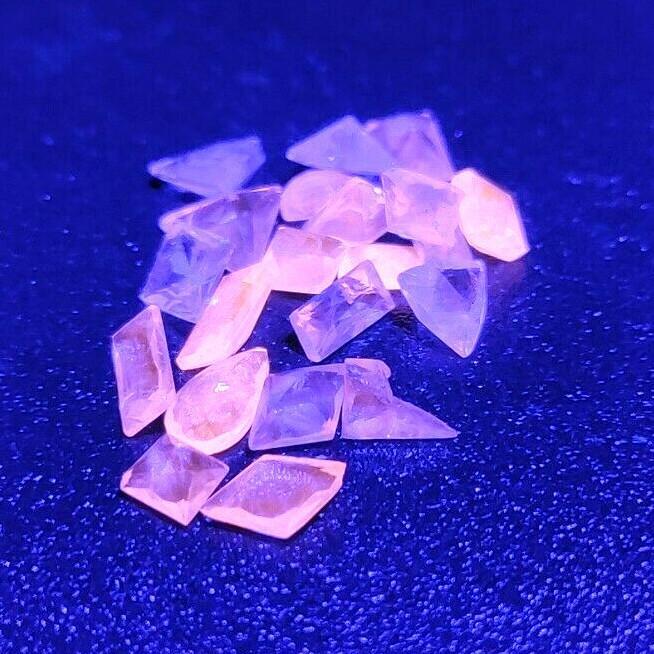
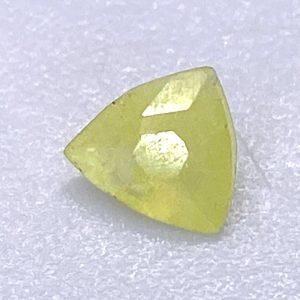
50 pc 3.20 ct SODALITE – AFGHANISTAN
EXPERT VERIFIED
- Expert Verified Gemstone
- Fast Handling & Shipping
- Secure Vault Packaging
$ 600 Original price was: $ 600.$ 140Current price is: $ 140.
Offer amount Feild


Smart Collector Choice


Pay with Crypto & Get 10% Automatic Discount

Availability: 1 in stock
- Freakingcats Gemstone Database
Sodalite is a mineral that most people recognize for its deep, royal blue color, often marbled with white veins of Calcite. However, for the true connoisseur, there is a hidden, almost supernatural side to this species known as Hackmanite. I have always been mesmerized by Hackmanite because it is one of the few minerals that exhibits "tenebrescence"—the ability to change color when exposed to light. You can take a pale, almost colorless crystal, place it under UV light, and watch it "bloom" into a saturated violet or pink. It is a living gemstone that reacts to its environment, a piece of the earth that breathes with light. While standard Sodalite is a beautiful staple, Hackmanite is the "soul" of the species, offering a rare glimpse into the complex optical mysteries of the silicate world.
The Heritage & DiscoveryHistorical Significance: Sodalite was first discovered in Greenland in 1811, but it didn't gain widespread popularity until the early 20th century when it was chosen as a decorative stone for Marlborough House in London. Hackmanite, the tenebrescent variety, represents a higher level of mineralogical complexity. Historically, it has been a "scientific darling" because it perfectly demonstrates how sulfur atoms trapped within a crystal lattice can create temporary color centers. It bridges the gap between traditional mineralogy and the study of advanced optical physics, representing the earth's natural "chameleon."
Naming Differences: It is important to distinguish between the two. Sodalite is the overarching species name, derived from its high sodium content ("soda-lithos" or sodium-stone). Hackmanite is the specific trade and variety name given to the sulfur-rich, tenebrescent version of Sodalite. You may also see the name Moorite used for certain light-blue varieties, but in the collector's market, "Hackmanite" is the term that commands respect and indicates that the stone possesses the rare ability to change color when "charged" by UV radiation.
Discovery: Hackmanite was first described by the Finnish geologist Victor Hackman in the late 19th century during his explorations of the Kola Peninsula in Russia. Since then, the most significant gemological discovery occurred in Badakhshan, Afghanistan, and later in Myanmar, which changed the market by providing transparent, facetable crystals that were previously thought impossible for the species.
Important Mines: While the Bancroft area in Ontario, Canada, is the world's premier source for decorative blue Sodalite (often called "Princess Blue"), the rare Hackmanite variety is primarily sourced from the Sar-e-Sang mines in Afghanistan and the Mogok region of Myanmar. I also keep a close eye on specimens from the Khibiny Massif in Russia, where the original type-material was found. I favor the Afghan material for its incredible transparency and its dramatic, rapid color shift from white to deep violet.
Mineralogical ProfileDescription: Sodalite is a sodium aluminum silicate chloride, and a member of the feldspathoid group, crystallizing in the isometric system. It sits at a 5.5 to 6 on the Mohs scale, making it suitable for carvings and jewelry that is handled with care. It is characterized by its vitreous to greasy luster.
In Hackmanite, the addition of sulfur within the "cages" of the crystal structure creates the tenebrescent effect. When exposed to short-wave UV light, electrons are displaced, creating color centers that turn the stone pink or violet; exposure to sunlight or white light "pushes" the electrons back, causing the color to fade. This process can be repeated indefinitely. Faceted Hackmanite is a true rarity, as the material is often translucent at best; a water-clear, color-changing piece is a crown jewel for any collection.
Chemical Formula: Na8(Al6Si6O24)Cl2 (Hackmanite includes S as a trace substituent)
Related products
- Sale!Suggest a Price
![0.40 ct ANTHRACITE - USA]()
- Sale!Suggest a Price
![12.75 ct AMAZONITE - USA]()
- Sale!Suggest a Price
![0.31 ct ADAMITE - MEXICO]()
- Sale!
![0.32 ct ADAMITE - MEXICO]()


