

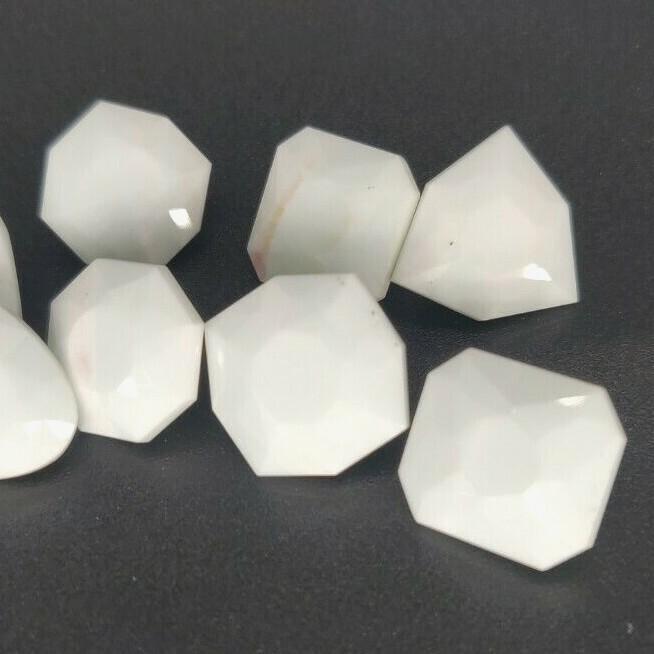
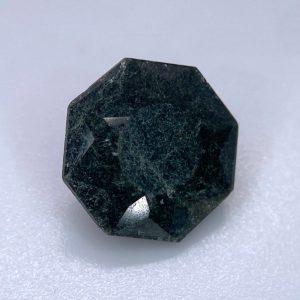
GREAT VALUE LOT 73.5 ct 10 pc PRICEITE – USA
EXPERT VERIFIED
- Expert Verified Gemstone
- Fast Handling & Shipping
- Secure Vault Packaging
$ 400 Original price was: $ 400.$ 180Current price is: $ 180.
Offer amount Feild


Smart Collector Choice


Pay with Crypto & Get 10% Automatic Discount

Availability: 1 in stock
Gemstone Details
Gem Variety:
Origin:
Carat Weight:
Length (mm):
Width (mm):
Depth (mm):
Shape:
Round
Color
Multicolor
Treatment:
Certificate:
- Freakingcats Gemstone Database
Priceite Priceite is a gemstone that represents the "purest snow" of the borate family. A hydrated calcium borate, it is a mineral I have always admired for its dense, porcelain-like texture and its stark, brilliant whiteness. It typically forms as massive, "chalky" nodules or as delicate, micro-crystalline aggregates that possess a dull to waxy luster. For the specialist, Priceite is a prize of chemical concentration; it is one of the more elusive calcium borates, often occurring in the same arid environments as its more famous relatives, yet maintaining a distinct "weighted" presence. It is a stone of the "hidden" deserts, offering a smooth, opaque elegance that feels like a fragment of ancient, sun-bleached bone or the finest white marble. The Heritage & Discovery Historical Significance: Priceite is a vital species for understanding the complex evolution of boron-rich "evaporite" deposits. Historically, it was a valuable ore of borax before larger and more accessible deposits were uncovered. In the world of fine minerals, it is celebrated for its massive habit and its role in the "borate wars" of the late 19th century. It stands as a symbol of structural purity and resilience, bridging the gap between common desert salts and the elite world of rare, "porcelain" collector specimens. It serves as a reminder that the desert's most beautiful treasures are often found as unassuming nodules hidden beneath the alkaline crust. Discovery: The mineral was first described in 1873 and was named in honor of Thomas Price (1837–1912), a Welsh-American metallurgist who first recognized the mineral's unique properties. The type-locality is Chetco, Curry County, Oregon, USA. Scientifically, it is a calcium borate. Its discovery provided mineralogists with the first clear look at a "compact" borate structure, helping to map the chemical diversity of the high-boron systems in the American West and Turkey. Since its identification, it has become a "must-have" for collectors of rare evaporite species. Important Mines: The undisputed world capital for the finest, most aesthetic Priceite is the Sultançayır Mine in Balıkesir Province, Turkey. This site has produced the largest and most "pure" white nodules ever documented. I also have a high regard for the historic specimens from Death Valley, California, and the type-locality in Oregon. For the vault, I prioritize the Turkish material for its incredible density and its ability to take a high-gloss, waxy polish that highlights its porcelain-like nature. Mineralogical Profile Description: Priceite is a hydrated calcium borate that crystallizes in the monoclinic system, though it is almost exclusively found in its massive form. It sits at a 3 to 3.5 on the Mohs scale, making it a relatively soft mineral that should be protected from physical shock and harsh chemicals. It is characterized by its dull to earthy luster in its raw state, which transforms into a soft, waxy sheen when polished. One of its most identifying traits is its extreme whiteness and its "bone-dry" feel. Unlike many other borates that can be translucent, Priceite is stubbornly opaque. It has a moderate refractive index ($n \approx 1.57$ to $1.59$), but its beauty lies in its surface texture rather than its internal light. Because it is a borate, it is often found in association with Colemanite and Howlite. When I select a piece for the collection, I look for "pure" white coloration and a lack of earthy staining, as these represent the species in its most perfect and high-contrast form. It is a dense, grounding mineral that offers a unique, "architectural" depth unlike any other borate species. Chemical Formula: Ca4B10O19·7H2O
Related products
- Sale!Suggest a Price
![1.05 ct ANHYDRITE - MEXICO]()
- Sale!Suggest a Price
![1.63 ct CATS EYE ALEXANDRITE - INDIA]()
- Sale!
![0.32 ct ADAMITE - MEXICO]()
- Sale!Suggest a Price
![5.35 ct AERINITE - SPAIN]()


