

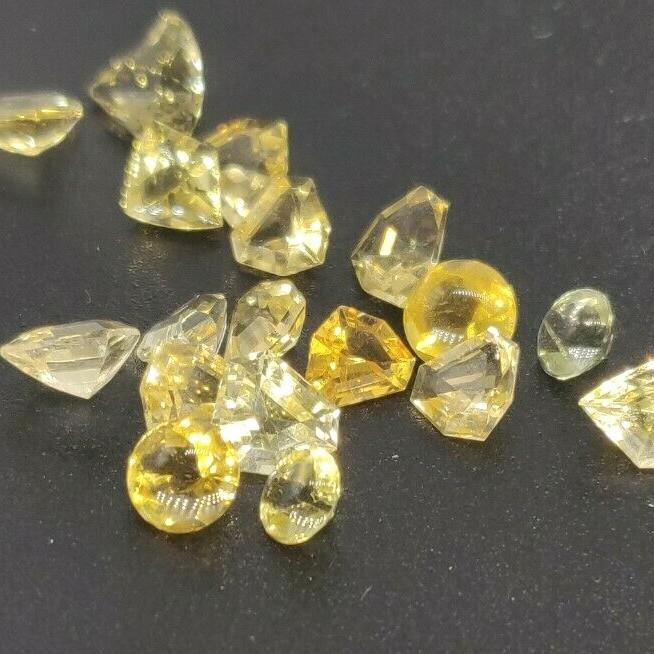
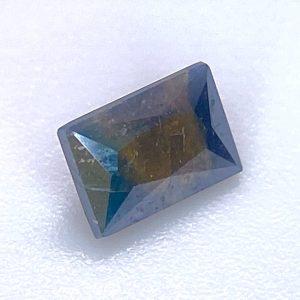
LOT 18 pcs 12.60 ct GOLDEN BERYL – BRAZIL
EXPERT VERIFIED
- Expert Verified Gemstone
- Fast Handling & Shipping
- Secure Vault Packaging
$ 180 Original price was: $ 180.$ 108Current price is: $ 108.
Offer amount Feild


Smart Collector Choice


Pay with Crypto & Get 10% Automatic Discount

Availability: 1 in stock
- Freakingcats Gemstone Database
Beryl
Beryl represents the “hexagonal pillar” of the silicate world. A beryllium aluminum silicate, it is a species I have always respected for its structural discipline and its ability to host some of the most legendary varieties in gemology. From the “deep-green” of Emerald to the “sea-blue” of Aquamarine, Beryl is a prize of pure crystallographic architecture; it offers a vitreous luster and a “solid” presence that makes it a true “high-vibration” foundation for the systematic vault. As an artist, I find the “perfect” six-sided symmetry of a Beryl prism to be one of nature’s most sophisticated designs.
The Heritage & Discovery
Historical Significance: Beryl is a vital species for understanding the concentration of rare elements like Beryllium in pegmatites and metamorphic schists. Historically, it has been prized for millennia; the first eyeglasses were made from clear Beryl (giving us the German word Brille). In the world of fine minerals, it is celebrated for its natural, “monumental” scale, with some crystals reaching several meters in length. It stands as a symbol of growth and clarity, bridging the gap between common rock-forming minerals and the elite world of “world-class” precious gems. It serves as a reminder that even the most “industrial” elements can produce ethereal perfection when crystallized over millions of years.
Discovery: The name is derived from the Greek beryllos, referring to a “precious blue-green color-of-sea-water stone.” Scientifically, it defines 7.5 to 8 on the Mohs scale. Its discovery in the Muzo region of Colombia and the Minas Gerais of Brazil provided mineralogists with the first clear look at the species’ potential for “neon” and “water-clear” varieties. My own respect for this material grew from observing its “trace-element” sensitivity; specifically, how a tiny fraction of Chromium ($Cr$) creates a “royal-green” Emerald, while Iron ($Fe$) produces the “cool-blue” Aquamarine.
Important Mines: The undisputed world capitals for Beryl varieties are the Muzo and Chivor Mines in Colombia (for Emerald), the Marambaia region in Brazil (for Aquamarine), and the Sahatany Valley in Madagascar (for “neon-pink” Morganite). I also have a high regard for the “golden” Heliodor from Ukraine and the rare, “strawberry-red” Beryl from the Wah Wah Mountains in Utah, USA. For the vault, I prioritize material that exhibits “sharp” terminal faces and “liquid” transparency, as these highlight the mineral’s sophisticated, three-dimensional growth history.
Mineralogical Profile
Description: Beryl is a beryllium aluminum silicate that crystallizes in the hexagonal system. It sits at a 7.5 to 8 on the Mohs scale, making it a durable and “tough” gemstone, though its internal inclusions (especially in Emerald) can make it sensitive to pressure. It is characterized by its vitreous luster and its unmistakable “six-sided” prismatic habit.
One of its most identifying traits is its cyclosilicate structure, where rings of silicate tetrahedra create “channels” that can host water molecules or alkali ions. It has a moderate refractive index. Because it forms in pegmatites and schists, it is often found in association with Quartz, Feldspar, Muscovite, and Tourmaline. When I select a piece for the collection, I look for “razor-sharp” prism edges and “even” color saturation, as these highlight the sophisticated, three-dimensional geometry of the mineral’s growth. It is a dense, high-vibration mineral that offers a unique, “architectural” beauty unlike any other silicate species.
Chemical Formula: Be3Al2(SiO3)6
Related products
- Sale!Suggest a Price
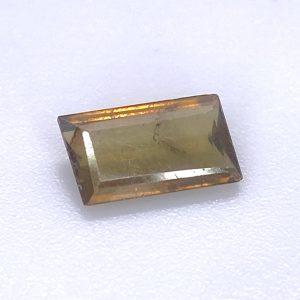
![1.48 ct ANDALUSITE - BRAZIL]()
- Sale!Suggest a Price
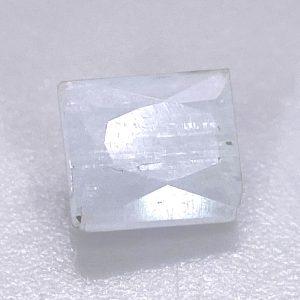
![1.05 ct ANHYDRITE - MEXICO]()
- Sale!Suggest a Price
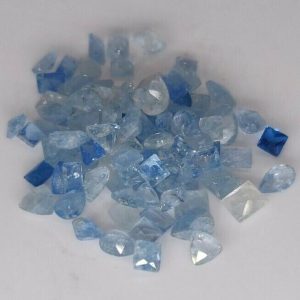
![LOT 6.90 ct AFGHANITE - UV Colorchange]()
LOT 6.90 ct AFGHANITE – UV Colorchange
$ 240Original price was: $ 240.$ 144Current price is: $ 144. - Sale!Suggest a Price
![0.60 ct ANATASE - AUSTRALIA]()


