
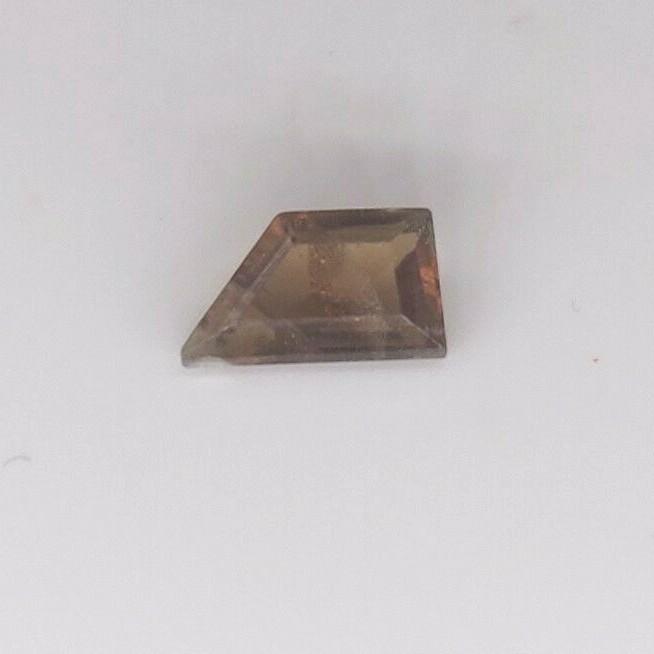
0.50 ct TRIPHYLITE – AFGHANISTAN
EXPERT VERIFIED
- Expert Verified Gemstone
- Fast Handling & Shipping
- Secure Vault Packaging
$ 150
Offer amount Feild


Smart Collector Choice


Pay with Crypto & Get 10% Automatic Discount

Availability: 1 in stock
- Freakingcats Gemstone Database
Triphylite
Triphylite is a gemstone that carries the subtle, earthy tones of the deep pegmatite. A lithium iron phosphate, it forms a continuous series with its manganese-rich cousin, Lithiophilite. I have always been drawn to its “antique” palette—usually appearing in shades of bluish-grey, greenish-grey, or a sophisticated clove-brown. While often found as massive blocks in the core of a pegmatite, finding a transparent crystal suitable for faceting is a true collector’s victory. When polished, it possesses a vitreous to resinous luster that feels substantial and classic. It is a stone for those who appreciate the complex chemistry of lithium minerals; it is a quiet rarity that doesn’t need flash to prove its worth, standing instead on its unique structure and its role in the grand evolution of mineral systems.
The Heritage & Discovery
Historical Significance: Triphylite is a cornerstone mineral for understanding the internal zoning of granitic pegmatites. Historically, it has been a primary source of lithium, an element that has moved from a chemical curiosity to a vital component of modern technology. It represents a specific stage of crystallization where phosphorus and lithium become concentrated. In the world of fine minerals, it is celebrated for its transformation; as it weathers, it alters into a variety of secondary phosphates like Ferrisicklerite and Heterosite, creating a “family tree” of minerals within a single specimen. It stands as a testament to the dynamic, ever-changing nature of the Earth’s chemical crust.
Discovery: The mineral was first described in 1834 by the German mineralogist Johann Nepomuk von Fuchs. He derived the name from the Greek words tri (three) and phylon (family), in the mistaken belief that it contained three different phosphates (lithium, iron, and manganese). Though the original reasoning was slightly off, the name remained, perfectly capturing the complex “family” nature of this mineral and its many associated species.
Important Mines: While it is found in pegmatite districts worldwide, the most legendary specimens come from the Hagendorf-Süd pegmatite in Bavaria, Germany. I also have a high regard for the massive and occasionally gemmy material found in the Black Hills of South Dakota, USA, and the Varuträsk pegmatite in Sweden. For the vault, I prioritize the Hagendorf material for its historical pedigree and the rare, transparent crystals from Brazil which offer the best potential for a clean, faceted finish.
Mineralogical Profile
Description: Triphylite is a lithium iron phosphate that crystallizes in the orthorhombic system. It sits at a 4 to 5 on the Mohs scale, making it a delicate stone that should be handled with care and kept away from harsh chemicals. It is characterized by its vitreous to sub-resinous luster and its muted, grey-blue to brownish hues.
One of its most identifying traits is its cleavage—it features two directions of nearly perfect cleavage, which can give the stone a “shimmery” internal appearance but makes it a challenge on the lap. It has a moderate to high refractive index (n approx 1.67 to 1.69), which provides a soft, deep brilliance when light catches its interior. Because it contains iron in a Fe^2+ state, it is susceptible to oxidation; over time, the stone may develop a dark, brownish-black coating of secondary iron-manganese oxides. When I facet these, I look for the freshest, unweathered material to ensure the “blue-grey” soul of the stone is perfectly preserved. It is a dense, stable phosphate that offers a window into the final, cooling breaths of a giant pegmatite.
Chemical Formula: LiFe2+PO4


