

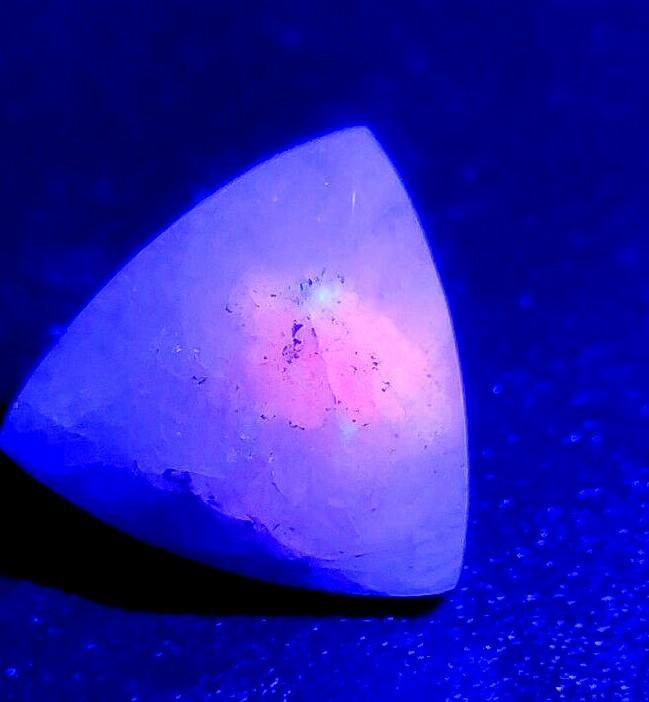
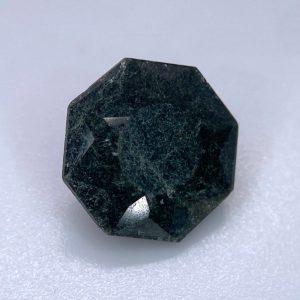
3.55 ct TUGTUPITE – GREENLAND
EXPERT VERIFIED
- Expert Verified Gemstone
- Fast Handling & Shipping
- Secure Vault Packaging
$ 200 Original price was: $ 200.$ 120Current price is: $ 120.
Offer amount Feild


Smart Collector Choice


Pay with Crypto & Get 10% Automatic Discount

Availability: 1 in stock
- Freakingcats Gemstone Database
Tugtupite
Tugtupite is a gemstone that captures the heart of Greenland’s exotic mineralogy. It is a rare beryllium aluminum tectosilicate that I find completely mesmerizing due to its “living” color. In its natural state, it often appears as a pale, unassuming pink or white, but when exposed to UV light or even direct sunlight, it deepens into a vivid, saturated raspberry red. This phenomenon—tenebrescence—is one of the most dramatic in the gem world. I have always felt that Tugtupite is a stone of the deep Arctic winter, holding a hidden fire that only reveals itself when “awakened.” It is rare, beautiful, and carries a high-voltage energy that makes it a centerpiece for any collector who specializes in the rare and the unusual.
The Heritage & Discovery
Historical Significance: Tugtupite is deeply tied to the Inuit culture of South Greenland. The name is derived from the Greenlandic word Tuttu, meaning “reindeer,” and legend tells that the stone was formed from the lifeblood of “Tuttu the Reindeer Girl,” bestowing the stone with a romantic and mythical aura. Historically, it was a mineralogical secret of the Ilimaussaq complex until it gained international attention in the 1960s as a premium gemstone. In the world of fine minerals, it is the “big brother” of Sodalite, prized for its extreme rarity and its status as one of the few gemstones in the world that exhibits a reversible color change through light exposure.
Discovery: The mineral was first discovered in 1957 at Tugtup Agtakôrfia in the Ilimaussaq intrusive complex, South Greenland. It was initially mistaken for a variety of Sodalite, but further study revealed its unique beryllium-rich chemistry. Its formal recognition as a new species was a major event for alkaline mineralogy, marking Greenland as the world’s primary source for this vibrant, “photo-sensitive” treasure.
Important Mines: The undisputed and only commercial source for gem-quality Tugtupite is the Ilimaussaq Intrusive Complex near Narsaq, South Greenland. It is found in hydrothermal veins and pegmatites within this unique geological formation. I prioritize material from the Taseq slope, as these specimens tend to show the most intense tenebrescence—shifting from a soft pink to a deep “electric” crimson that remains stable for a significant time after UV exposure.
Mineralogical Profile
Description: Tugtupite is a beryllium aluminum sodium silicate with chlorine, crystallizing in the tetragonal system. It sits at a 4 to 6 on the Mohs scale, meaning it requires care and is best suited for pendants, earrings, or protected collector displays. It is characterized by its vitreous to pearly luster and its white, pink, or deep red color.
One of its most identifying traits is its tenebrescence (or reversible photochromism). When kept in the dark, the color fades; when exposed to short-wave UV light, it “charges” into a brilliant red. Furthermore, it possesses some of the strongest fluorescence in the mineral kingdom, glowing a fierce, fiery red under UV. It has a relatively low refractive index ($n \approx 1.49$), giving it a soft, waxy glow when polished as a cabochon. Because it is a member of the Sodalite group, it often features white inclusions of Feldspar or black Arfvedsonite, which I find adds a beautiful “landscape” character to the stone. It is a dense, chemically complex mineral that represents the absolute peak of Greenlandic gem treasures.
Chemical Formula: Na8Al2Be2Si8O24(Cl,S)2
Related products
- Sale!Suggest a Price
![7.06 ct ANHYDRITE - PERU]()
- Sale!Suggest a Price
![1.25 ct ANDALUSITE - BRAZIL]()
- Sale!Suggest a Price
![4.05 ct ANHYDRITE - MEXICO]()
- Sale!Suggest a Price
![5.35 ct AERINITE - SPAIN]()


