
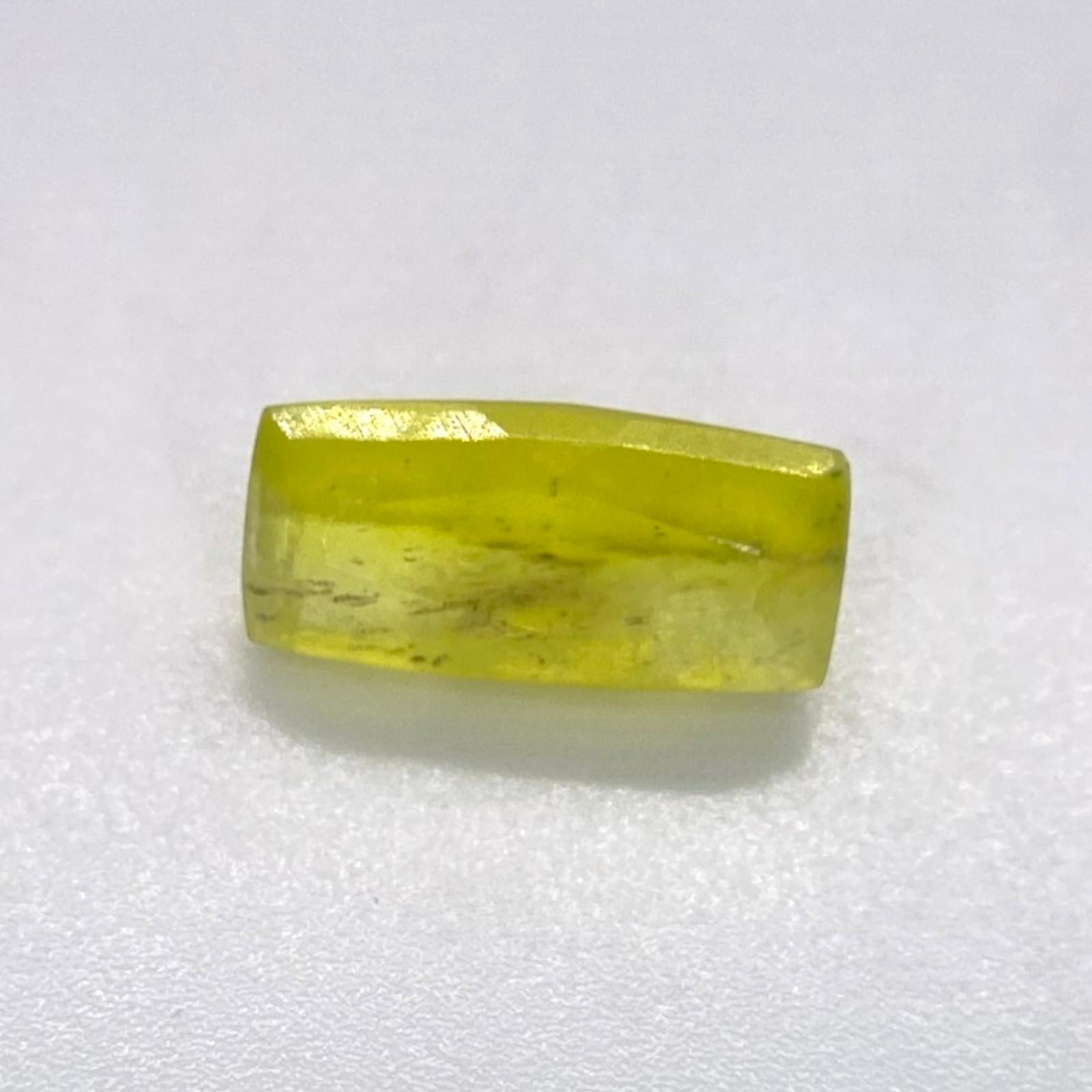
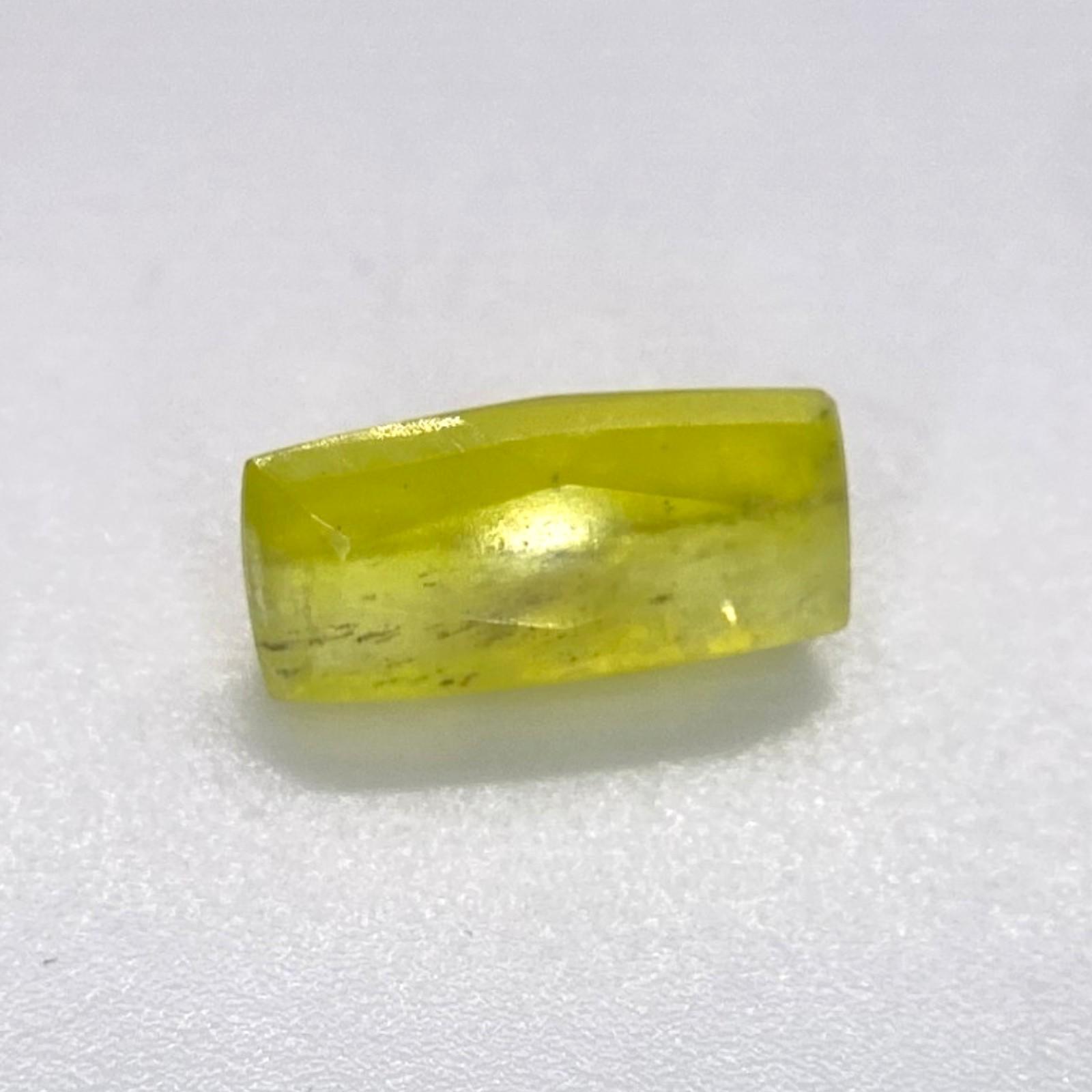
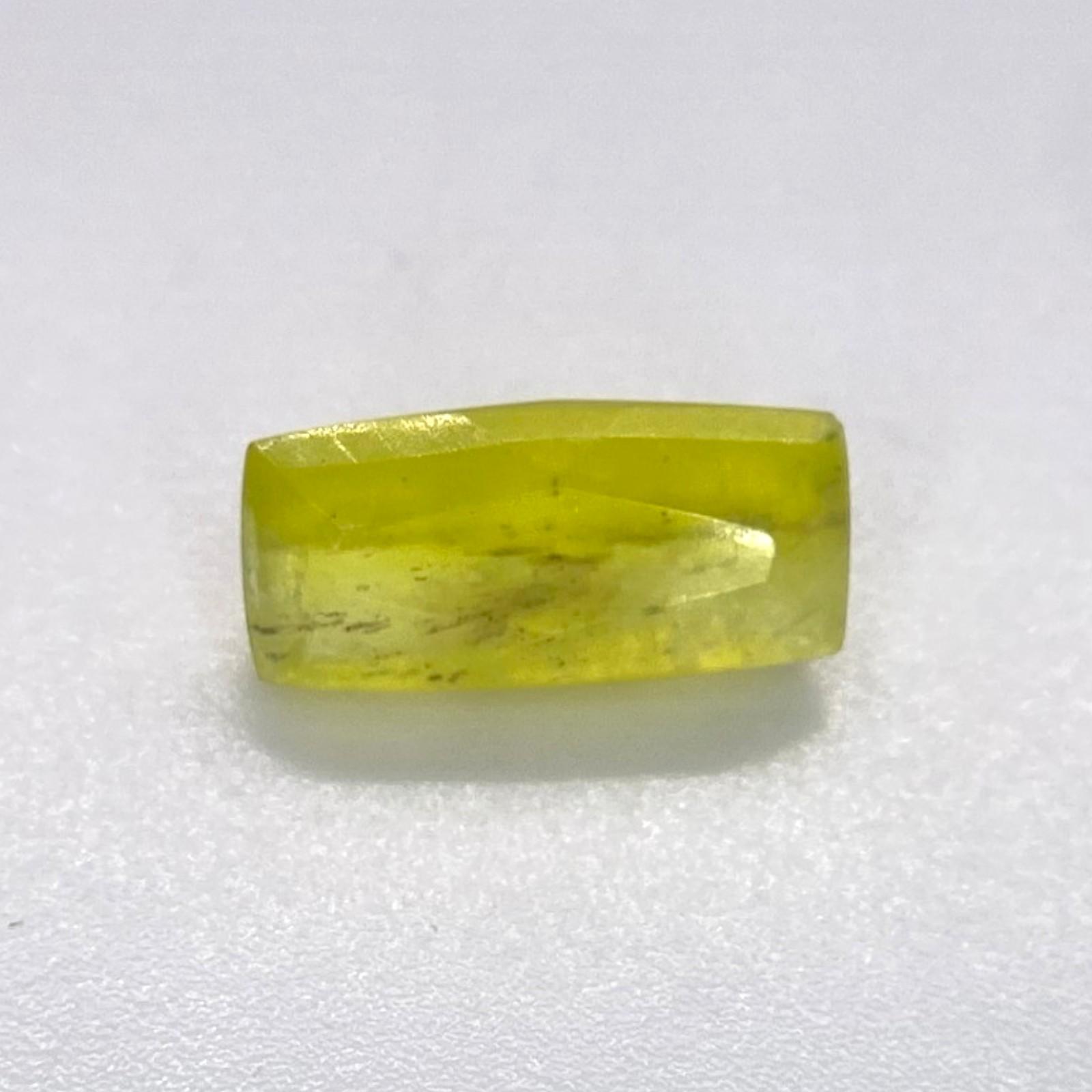
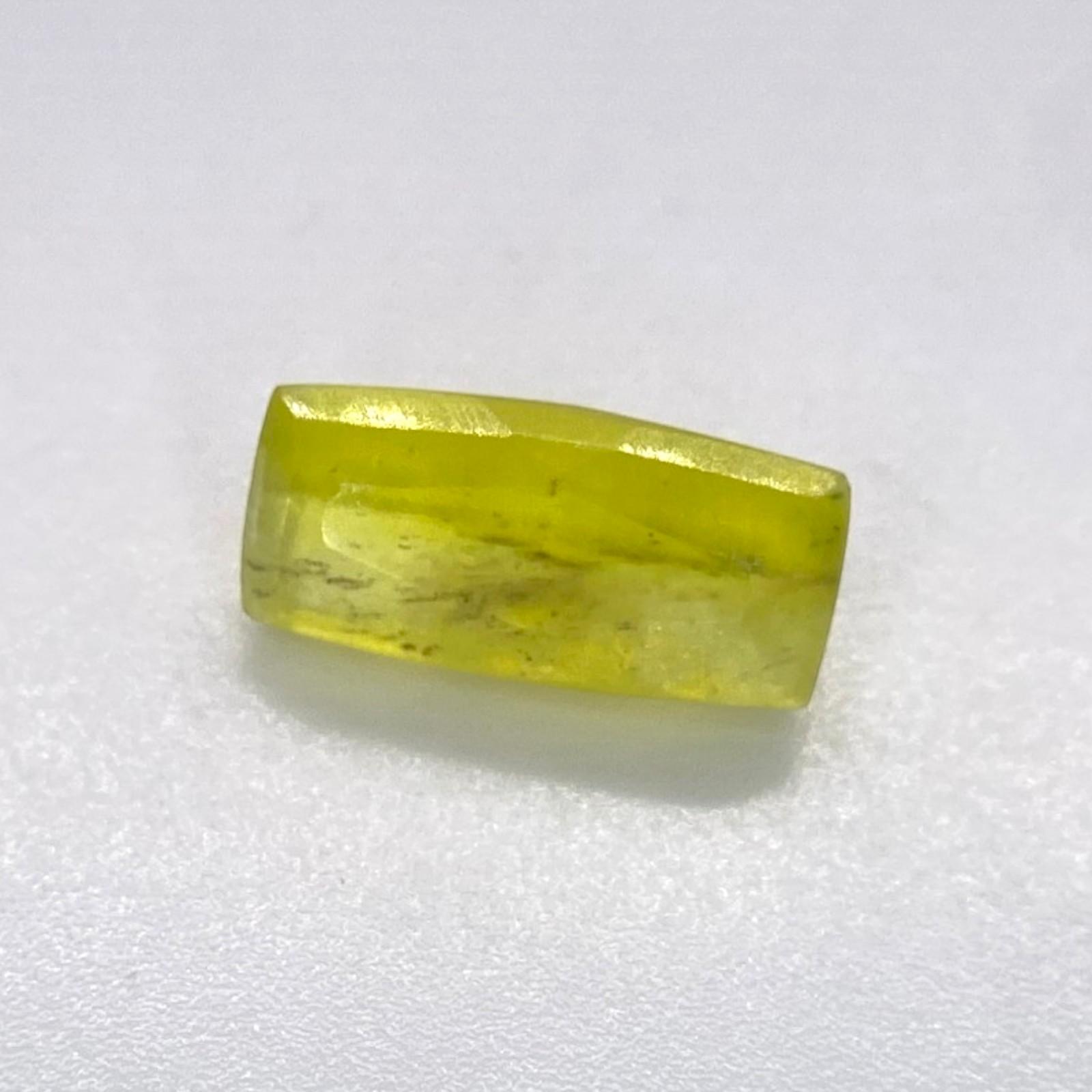
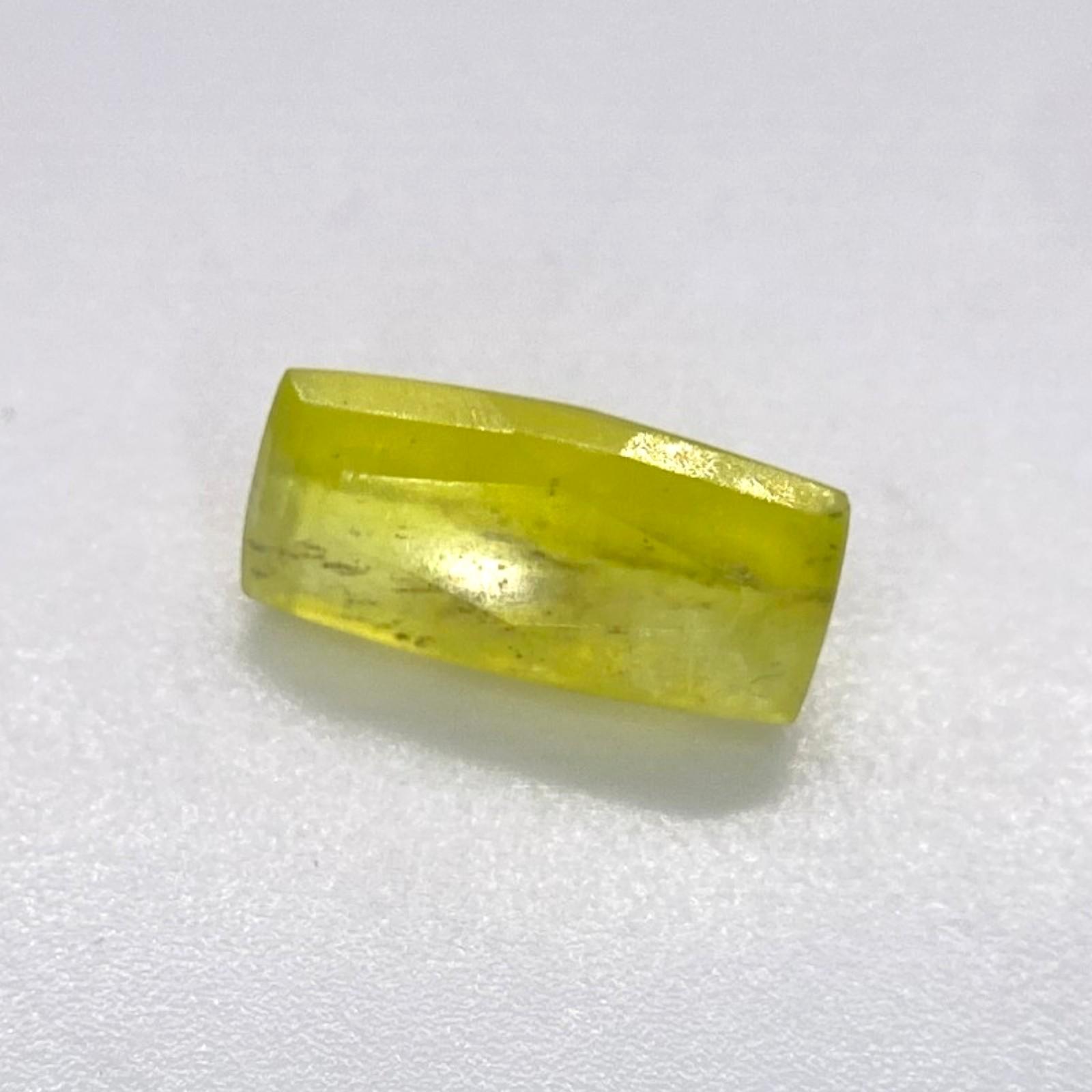
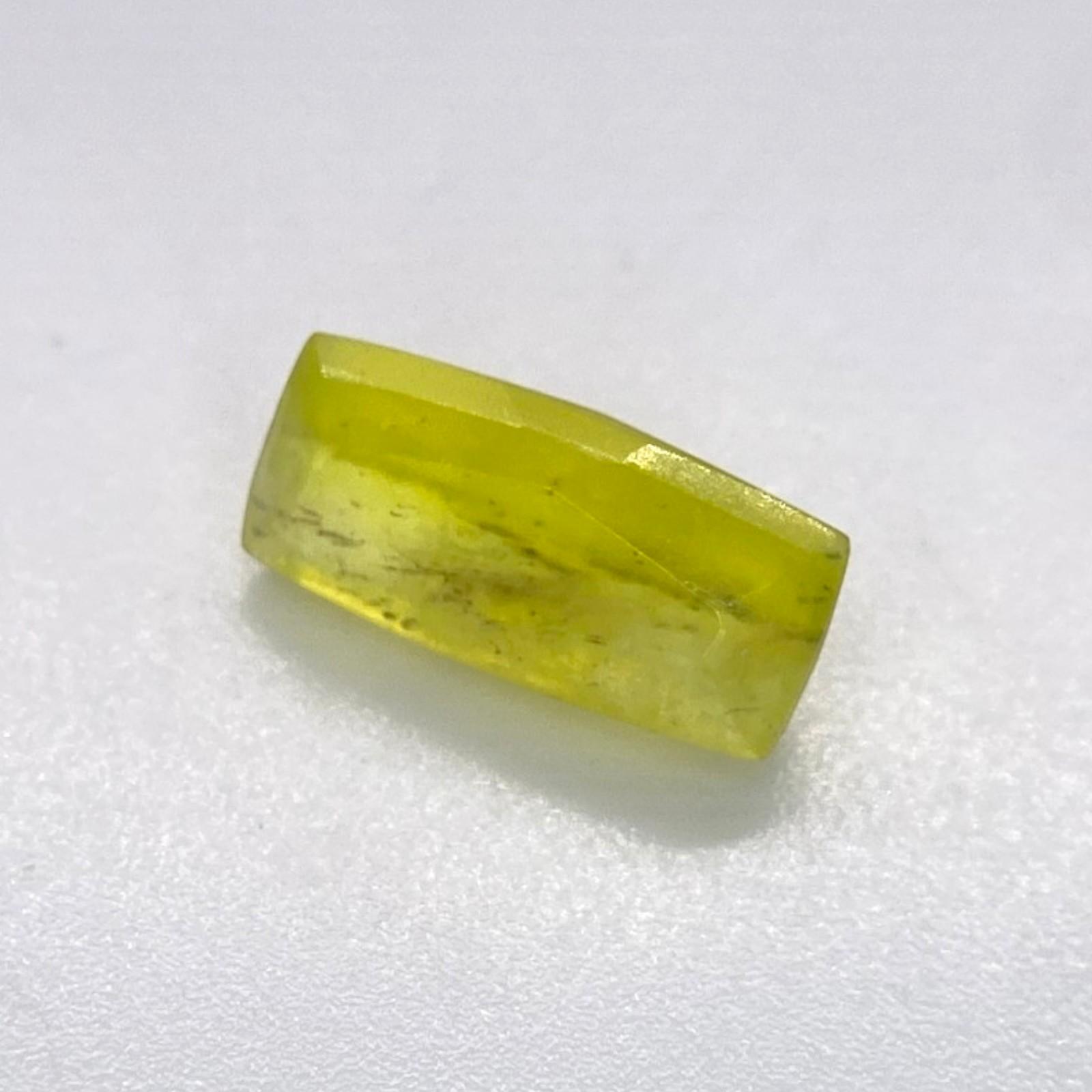
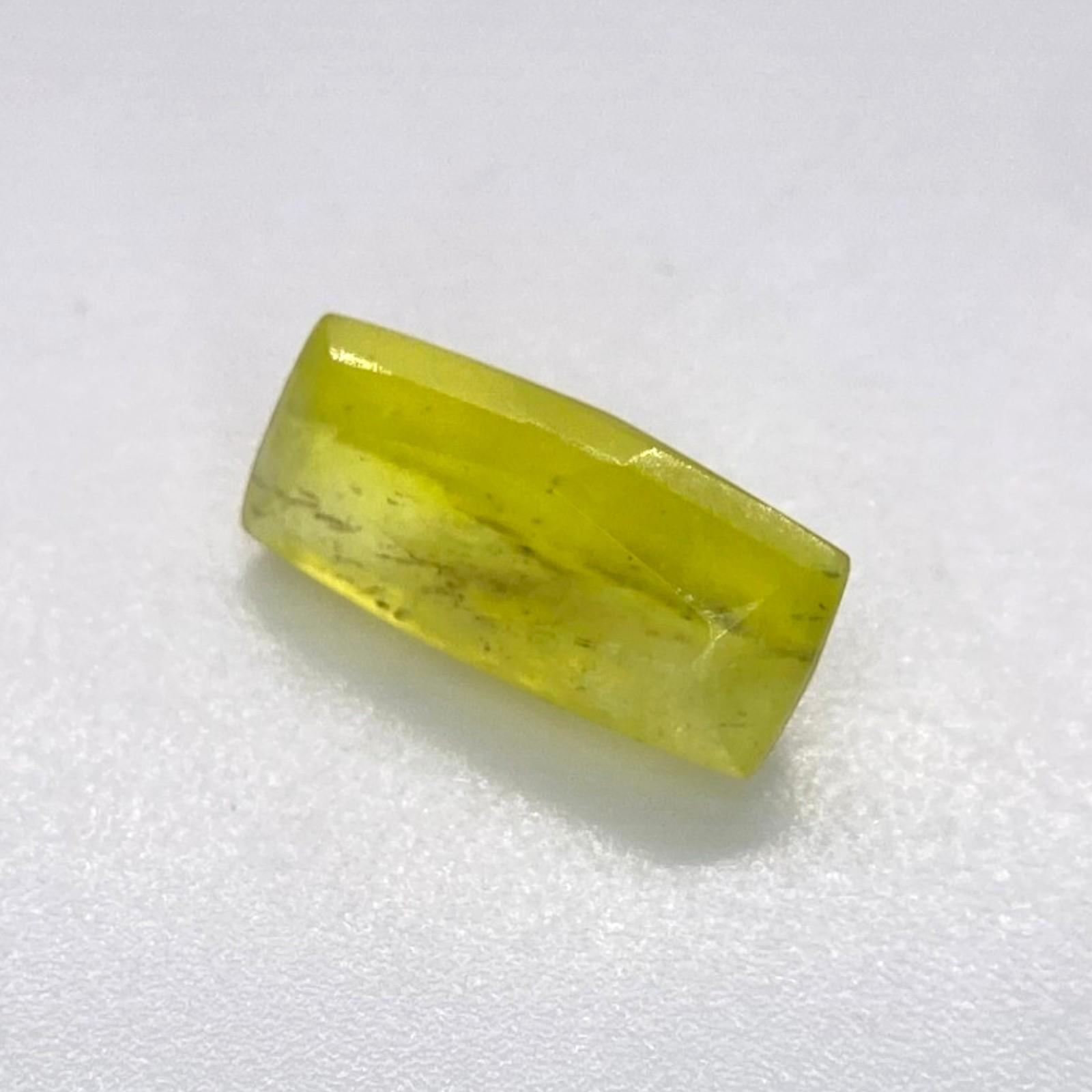
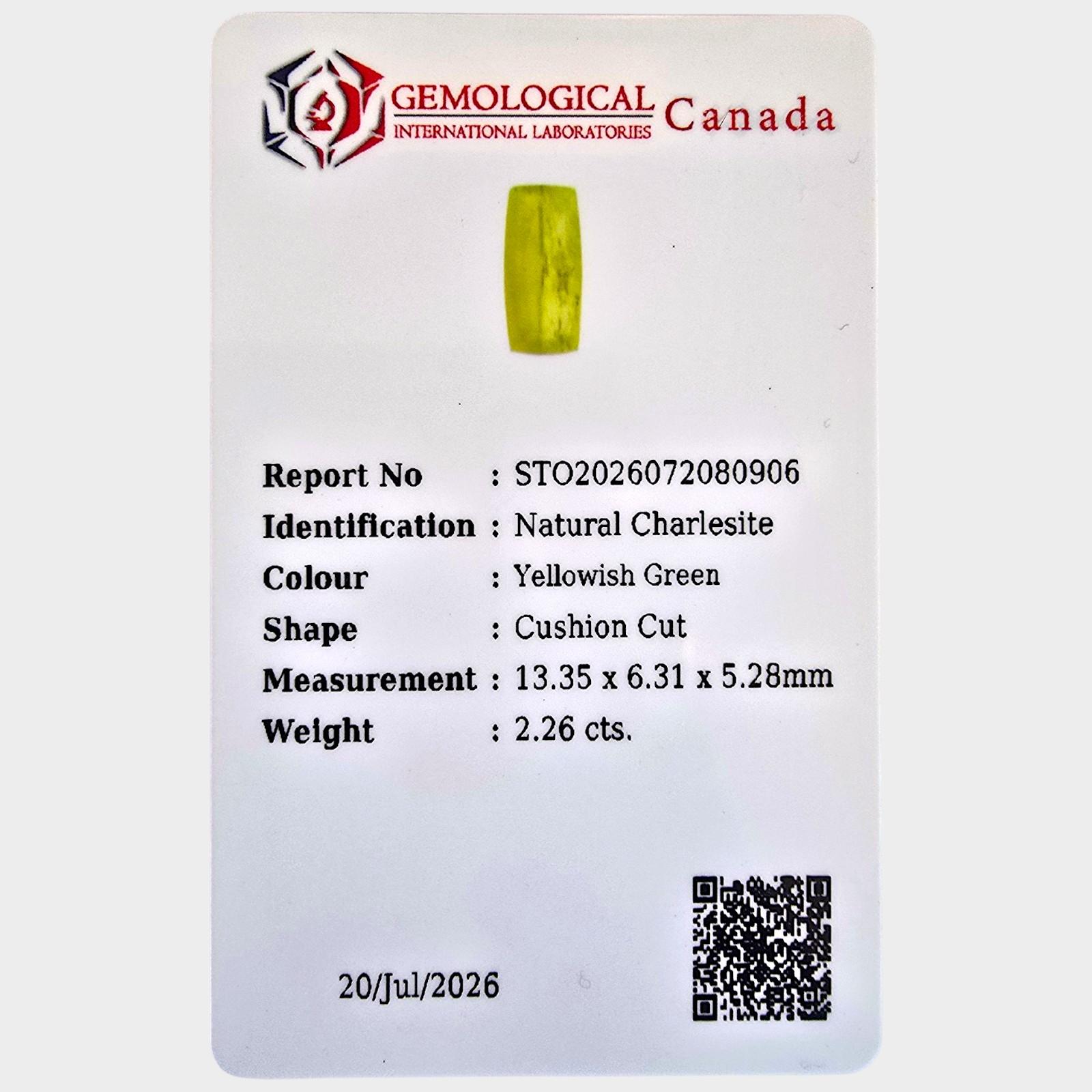
2.26 ct CHARLESITE – SOUTH AFRICA – CERTIFIED
EXPERT VERIFIED
- Expert Verified Gemstone
- Fast Handling & Shipping
- Secure Vault Packaging
$ 700
Offer amount Feild


Smart Collector Choice


Pay with Crypto & Get 10% Automatic Discount

Availability: 1 in stock


- Freakingcats Gemstone Database
Charlesite
Certified on 20/07/26 by GIL Lab Bangkok
Charlesite is a gemstone that exists at the edge of mineralogical rarity, a complex sulfate-silicate that belongs to the Ettringite group. I have always been moved by its “ethereal” appearance; it typically forms as elongated, hexagonal prisms that are water-clear to a delicate, ghostly white or pale yellow. It is a mineral born from the rare and intense chemical environment of metamorphosed limestone and zinc deposits. To see a clean, well-formed Charlesite crystal is to witness a fragile, geometric miracle—its glassy luster and needle-like structure make it look more like a splinter of frozen light than a product of the Earth’s crust. It is a stone for the specialist who values transparency and the elusive beauty of the “ettringite-type” minerals.
The Heritage & Discovery
Historical Significance: Charlesite is a vital species for understanding the high-calcium, low-temperature hydrothermal processes in complex ore bodies. Historically, it was a significant discovery because it represents the aluminum-rich end-member of its group, distinct from its better-known cousin, Ettringite. In the world of fine minerals, it is celebrated for its incredible clarity and its association with some of the world’s most famous “fluorescent” mines. It stands as a symbol of the structural precision of the sulfate family, where aluminum, silicon, and boron can all find a place in a singular, crystalline architecture.
Discovery: The mineral was first described in 1983 and was named in honor of Charles Palache (1869–1954), a legendary professor of mineralogy at Harvard University and one of the most important figures in the history of American mineralogy. Palache spent much of his life documenting the minerals of Franklin, New Jersey, and naming this rare, elegant species after him was a fitting tribute to his exhaustive work in the field. Since its formal identification, it has become a “must-have” for any serious systematic collector.
Important Mines: The undisputed world capital for Charlesite is the Franklin Mine in New Jersey, USA. This site has produced the largest and most well-defined crystals ever found. I also have a high regard for specimens coming from the Fuka mine in Japan and the N’Chwaning Mines in the Kalahari Manganese Field, South Africa. For the vault, I prioritize the Franklin material for its historical pedigree and the N’Chwaning pieces for their occasional, spectacular transparency and “icy” luster.
Mineralogical Profile
Description: Charlesite is a complex calcium aluminum sulfate silicate hydroxide that crystallizes in the hexagonal system. It sits at a 2.5 on the Mohs scale, making it an exceptionally soft and delicate mineral that must be protected from physical shock and kept in a stable, dry environment. It is characterized by its vitreous (glassy) luster and its colorless to pale-toned appearance.
One of its most identifying traits is its habit—it almost always forms as long, hexagonal prisms, often with flat or slightly domed terminations. It has a relatively low refractive index (n approx 1.47 to 1.49), which contributes to its “watery” or “ice-like” appearance when clear. Because it is highly hydrated, it is chemically sensitive; if exposed to extreme heat or very low humidity, it can lose its structural water and become cloudy. When I select a piece for the collection, I look for “water-clear” crystals with sharp, un-etched faces, as these represent the species in its most perfect and stable form. It is a light, sophisticated mineral that offers a window into the delicate chemistry of the world’s great metamorphic deposits.
Chemical Formula: Ca6(Al,Si)2(SO4)2B(OH)4(OH,O)12·26H2O


