
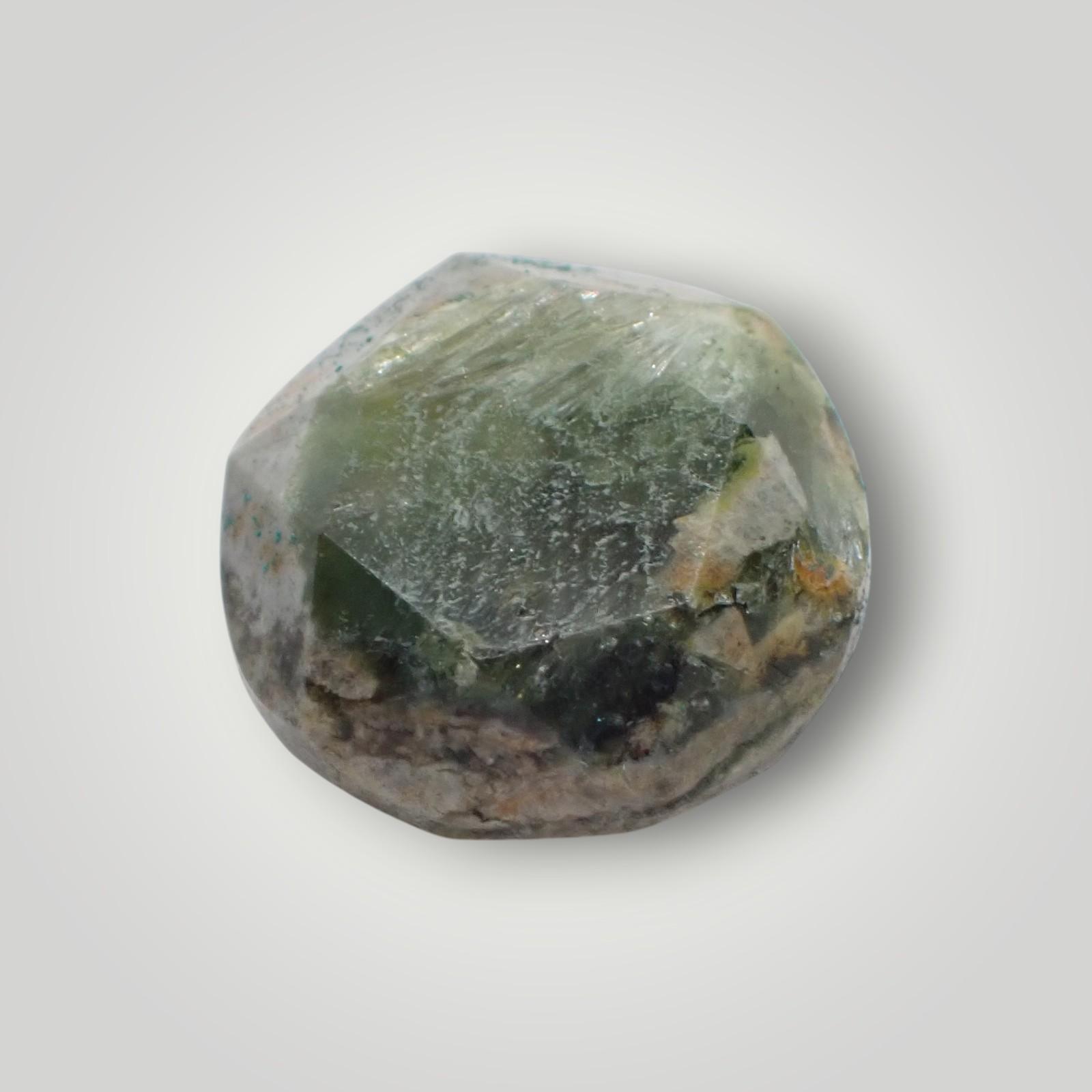
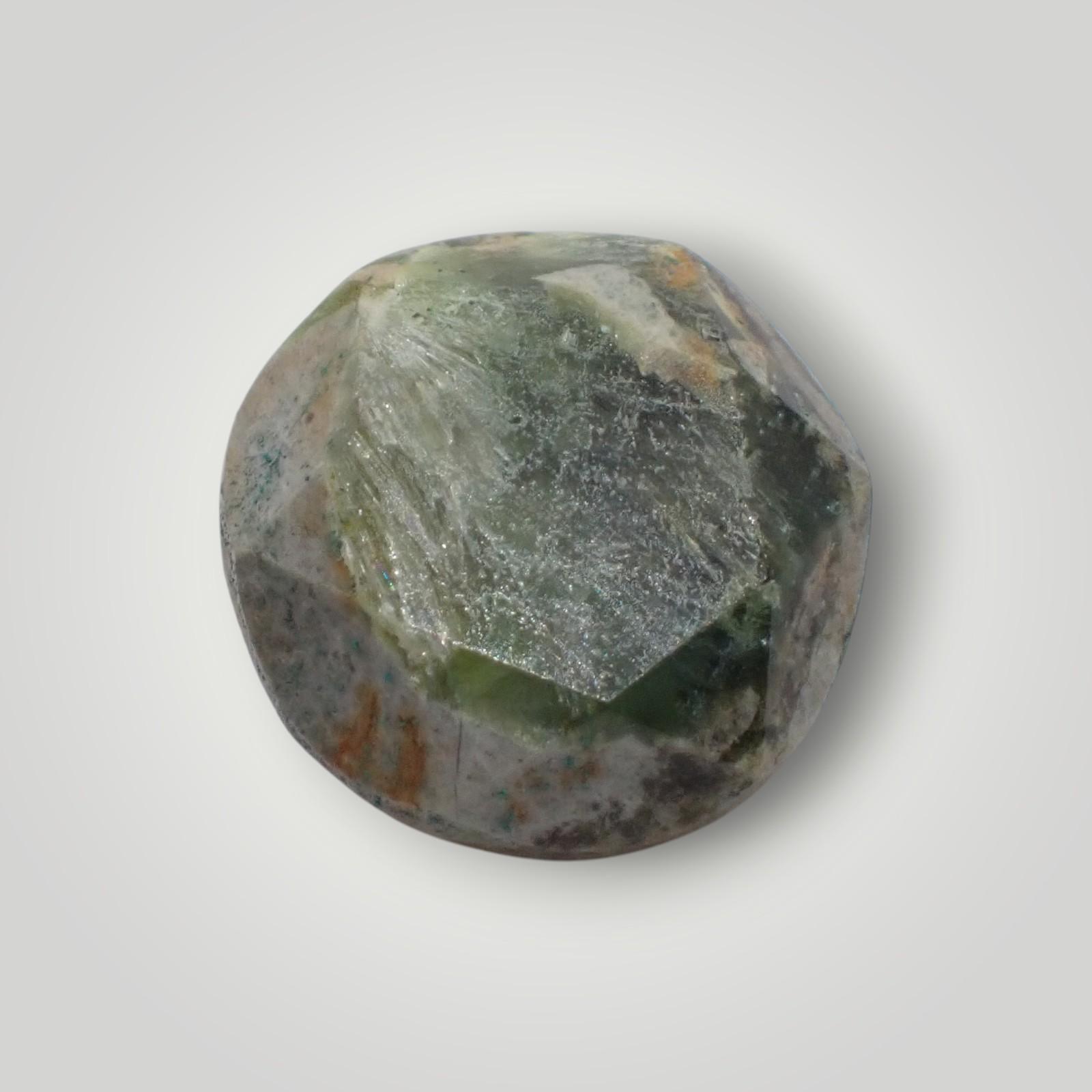
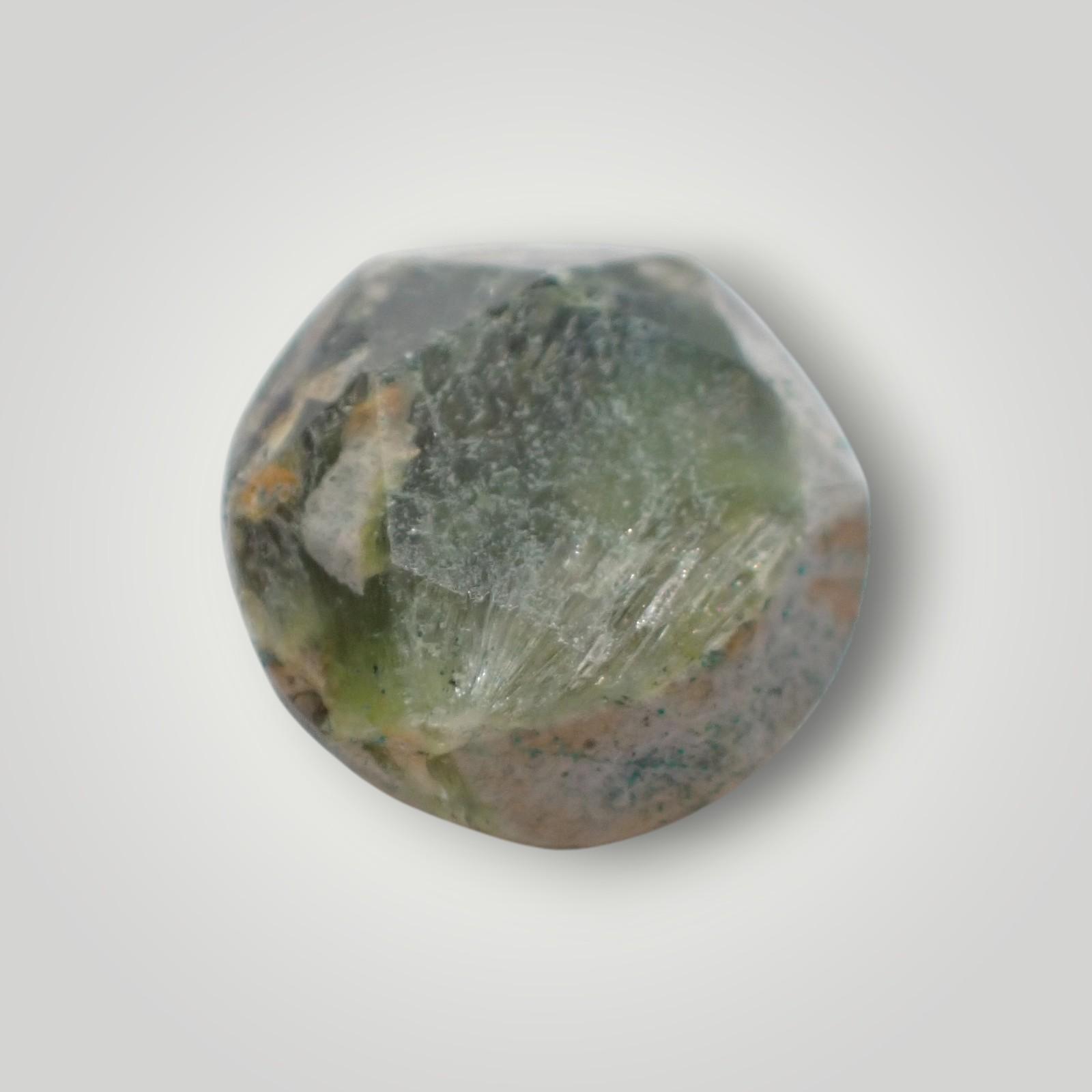
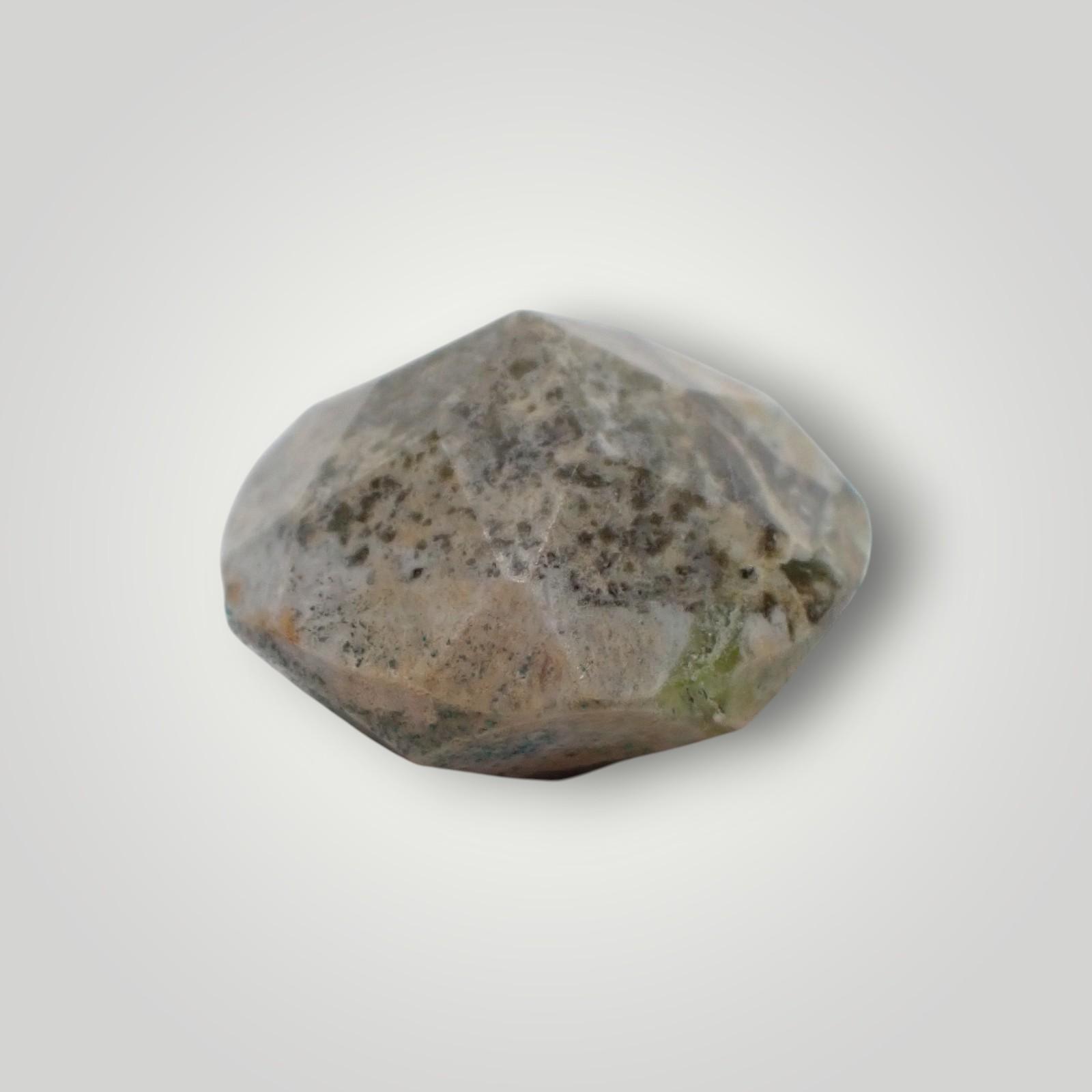
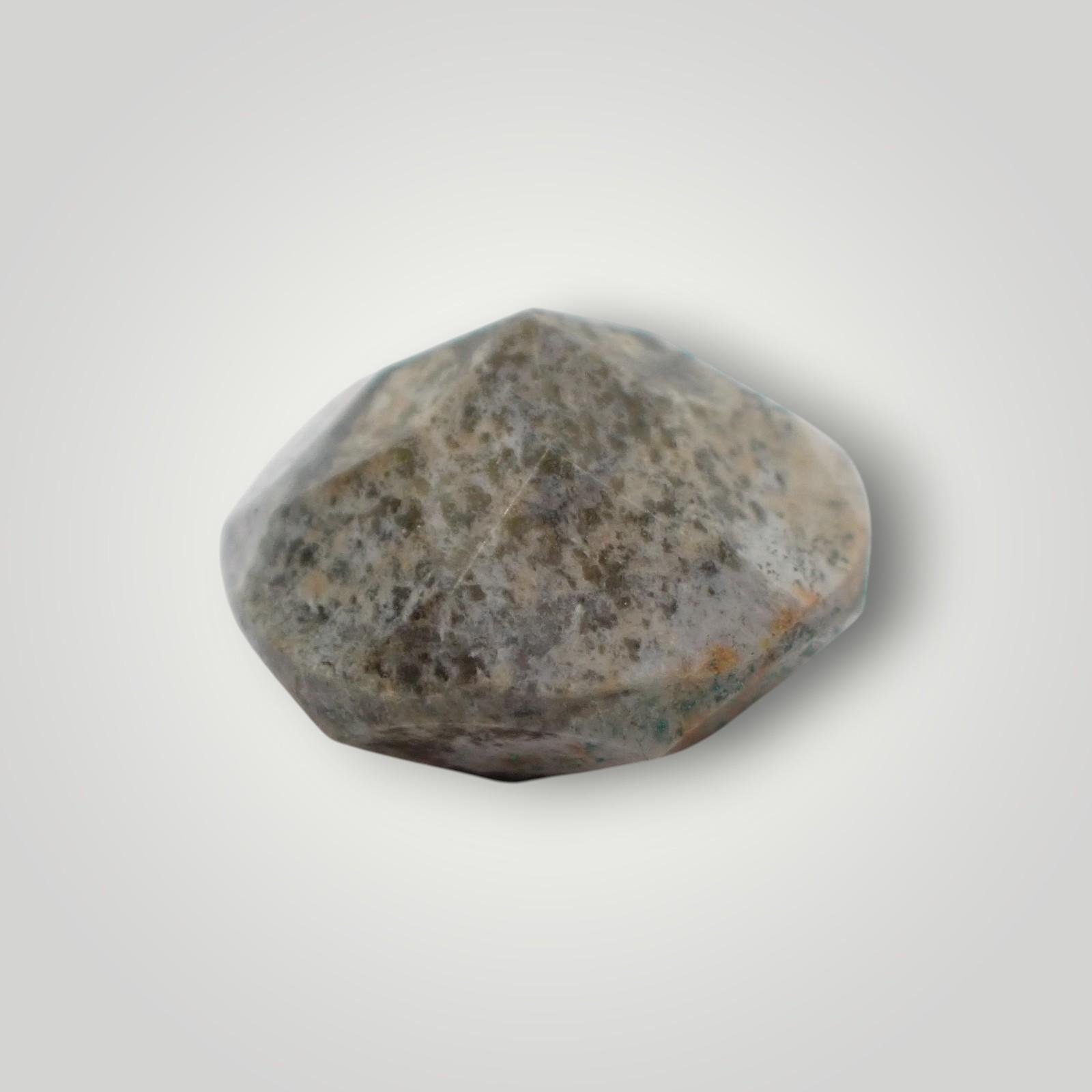
2.85 ct WAVELLITE – ARIZONA, USA
EXPERT VERIFIED
- Expert Verified Gemstone
- Fast Handling & Shipping
- Secure Vault Packaging
$ 100
Offer amount Feild


Smart Collector Choice


Pay with Crypto & Get 10% Automatic Discount

Availability: 1 in stock


- Freakingcats Gemstone Database
Wavellite
Wavellite represents the “radial architecture” of the phosphate world. A hydrated aluminum phosphate, it is a species I have always respected for its extraordinary internal geometry; while many minerals form blocky crystals, Wavellite prioritizes the spherical “sunburst” habit. When a specimen is fractured, it reveals a breathtaking, “silky” interior of radiating acicular needles that catch the light like a starburst. For the specialist, Wavellite is a prize of structural elegance; it offers a range of “apple-green,” “seafoam,” and “lemon-yellow” hues with a vitreous to pearly luster. It is a stone of “expanding clarity,” providing a sophisticated, “neon-botryoidal” aesthetic that makes it a true “structural masterpiece” for the systematic vault.
The Heritage & Discovery
Historical Significance: Wavellite is a vital species for understanding the secondary enrichment of aluminum-rich sedimentary rocks. Historically, it has been a favorite of European and American collectors since the early 19th century. In the world of fine minerals, it is celebrated for its iconic “cat’s-eye” chatoyancy when found in its most fibrous forms. It stands as a symbol of growth and radial symmetry, bridging the gap between common phosphate minerals and the elite world of “architectural” collector silicates. It serves as a reminder that nature can pack thousands of microscopic “needles” into a single, perfect sphere of light.
Discovery: The mineral was formally named in 1805 in honor of Dr. William Wavell, a physician and botanist from Devon, England, who discovered the first specimens. Scientifically, it is a hydrated aluminum phosphate. Its discovery in the Barnstaple area provided mineralogists with the first clear look at how aluminum and phosphorus can co-precipitate into radiating, orthorhombic clusters. My own respect for this material is rooted in its “shattered” beauty; unlike most gems where a break is a flaw, a broken Wavellite sphere is the only way to truly appreciate the sophisticated, three-dimensional radial geometry that defines the species.
Important Mines: The undisputed world capital for the finest “electric-green” Wavellite is the Mauldin Mountain area near Mount Ida, Arkansas, USA. These specimens set the global standard for color and “puff-ball” size. I also have a high regard for the historic, “sea-green” rosettes from the High Down Quarry in Devon, England, and the spectacular, multi-colored finds from Lana Barka, Czech Republic. For the vault, I prioritize the Arkansas material for its unmatched “neon-green” saturation and its characteristic high-gloss luster.
Mineralogical Profile
Description: Wavellite is an aluminum phosphate hydroxide hydrate that crystallizes in the orthorhombic system. It sits at a 3.5 to 4 on the Mohs scale, making it a relatively soft and delicate mineral that must be protected from physical abrasion. It is characterized by its vitreous luster on crystal faces and its unmistakable “spherulitic” to “radial” color palette.
One of its most identifying traits is its perfect cleavage ({110} and {101}) and its specific gravity ($SG \approx 2.36$), which makes it feel notably light and “airy” in the hand. It has a moderate refractive index ($n \approx 1.52$ to 1.55) and exhibits a characteristic pearly luster on its internal cleavage surfaces. Because it forms through the alteration of aluminum-rich rocks, it is often found in association with Crandallite, Varicite, and Limonite. When I select a piece for the collection, I look for “complete” un-broken spheres as well as “cleanly-halved” ones to show the internal geometry, as these highlight the sophisticated, three-dimensional geometry of the mineral’s growth. It is a light, high-vibration mineral that offers a unique, “organic-neon” beauty unlike any other phosphate species.
Chemical Formula: Al3(PO4)2(OH,F)3·5H2O


