
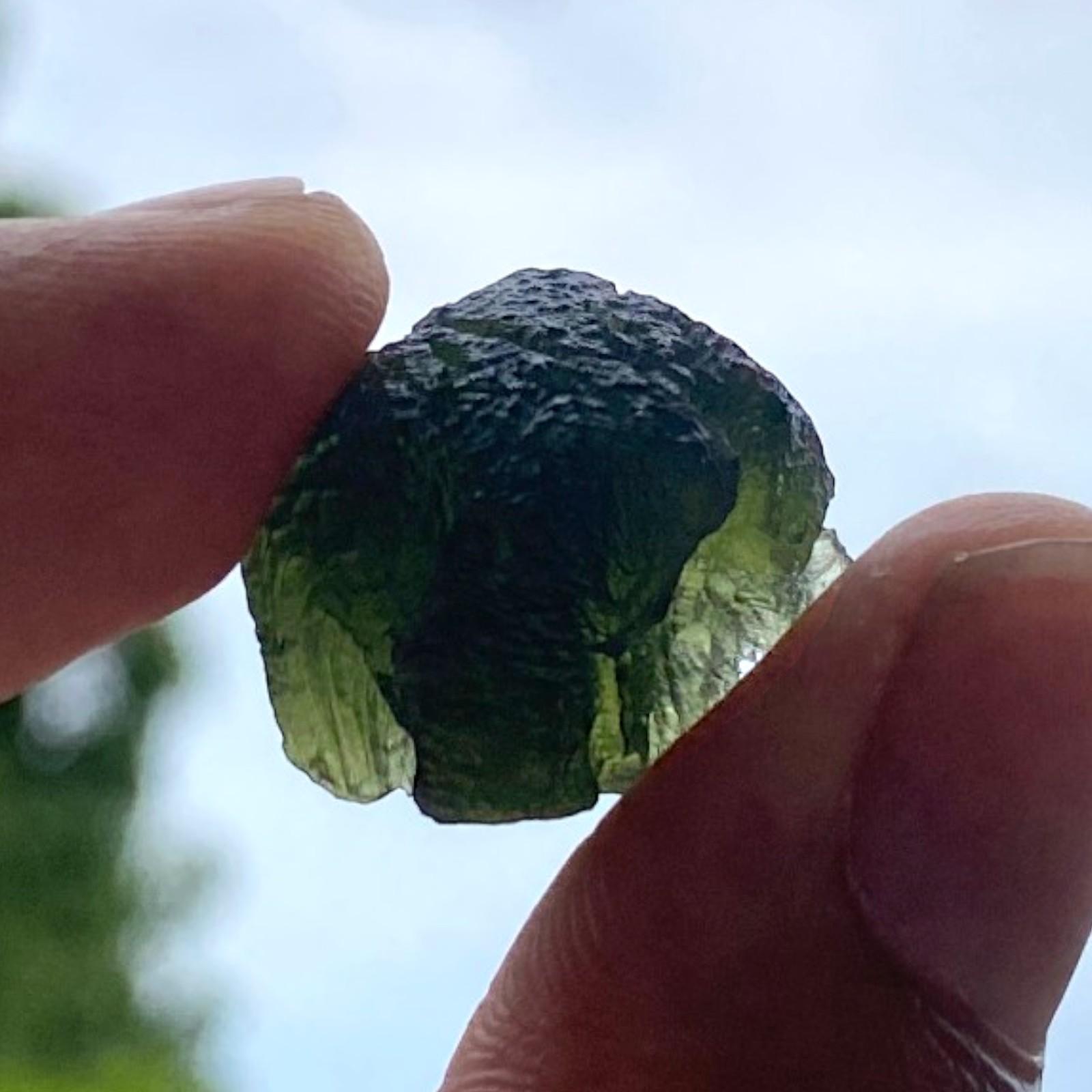
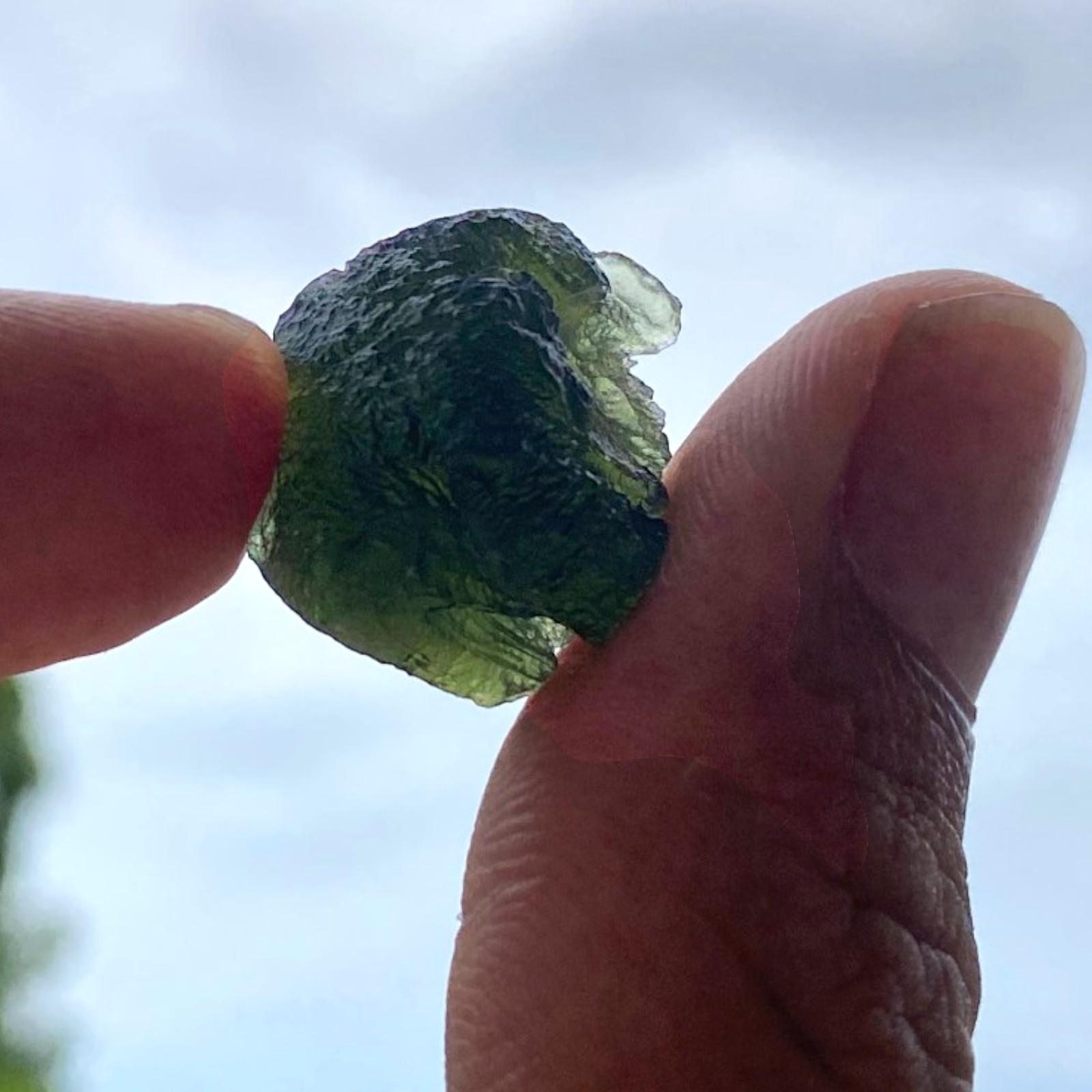
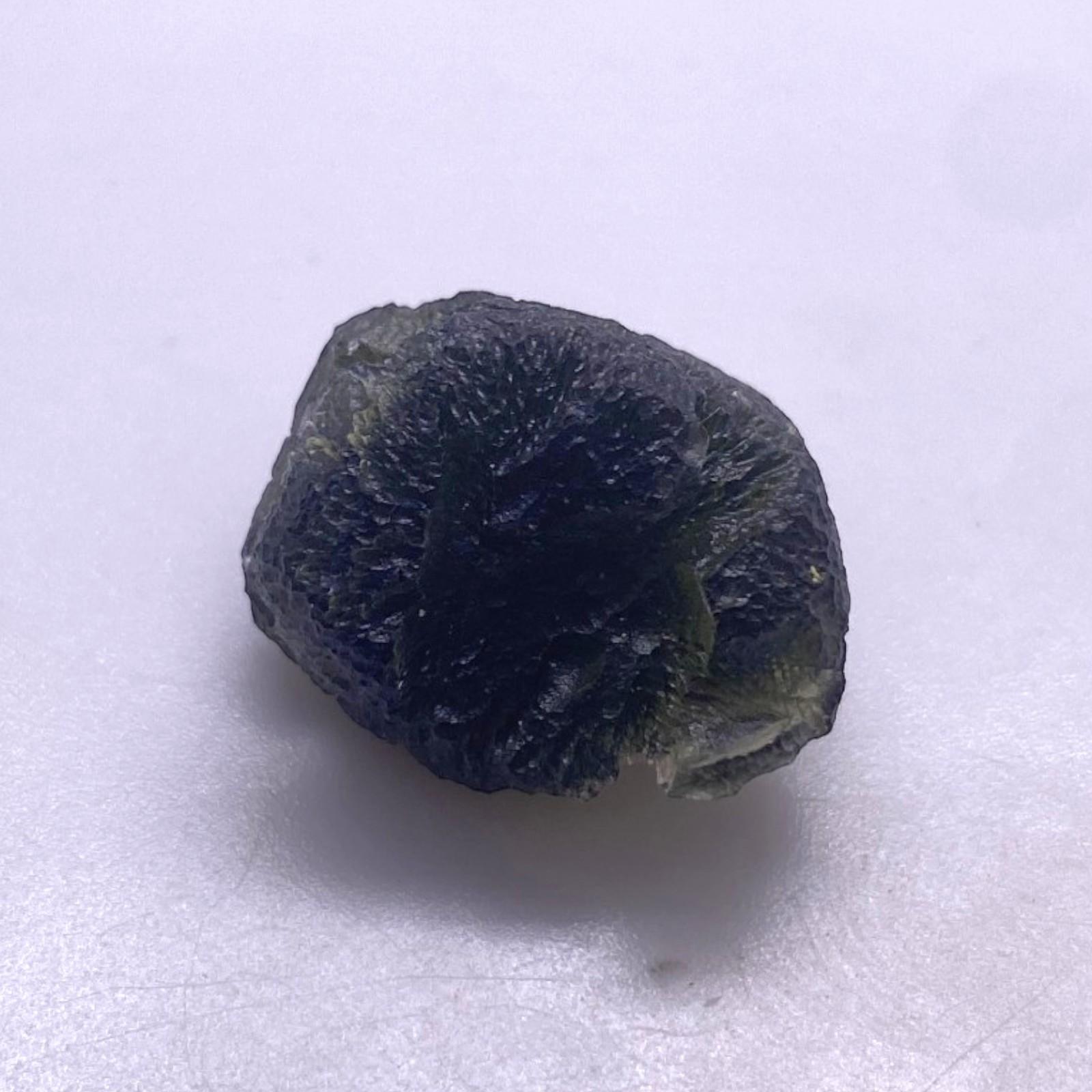
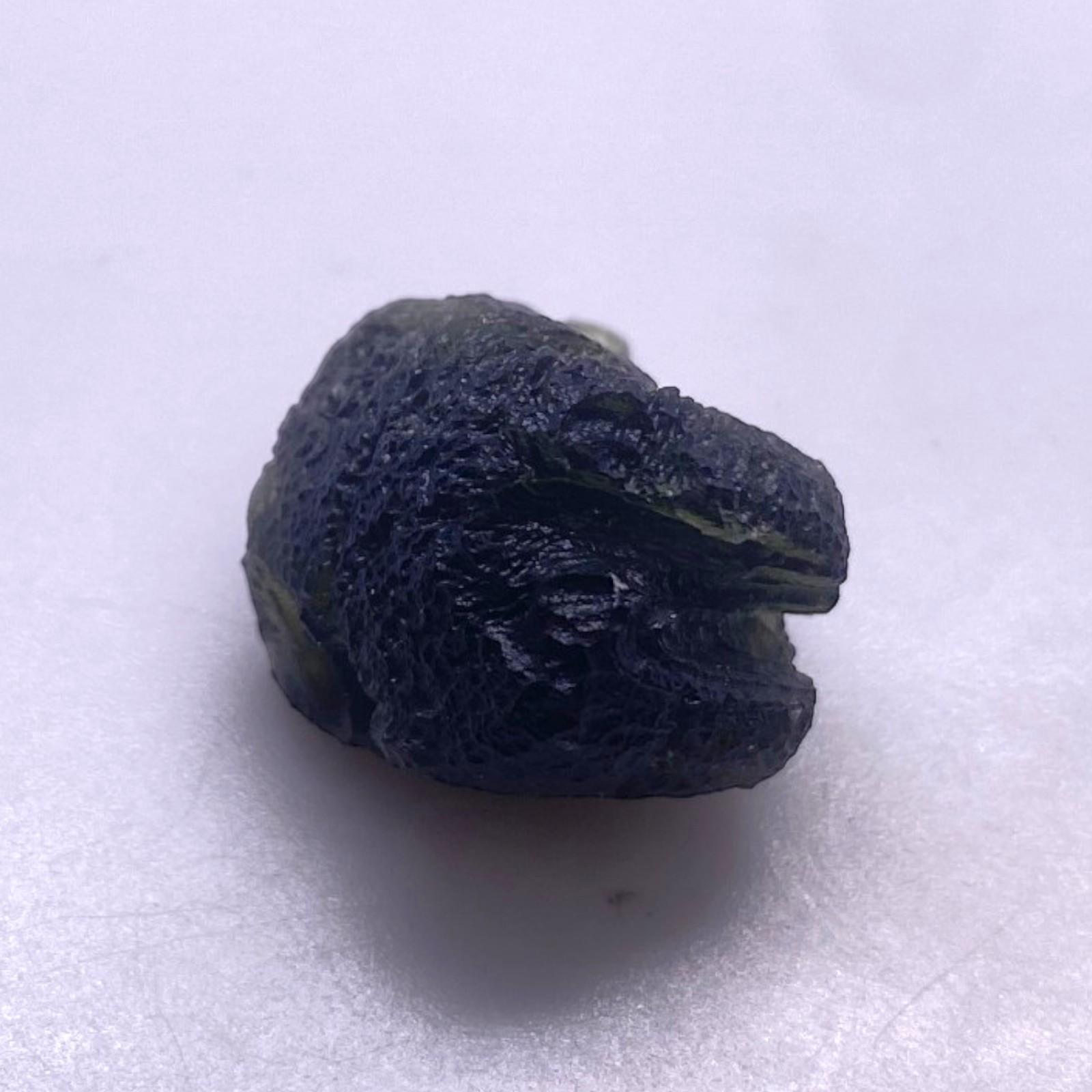
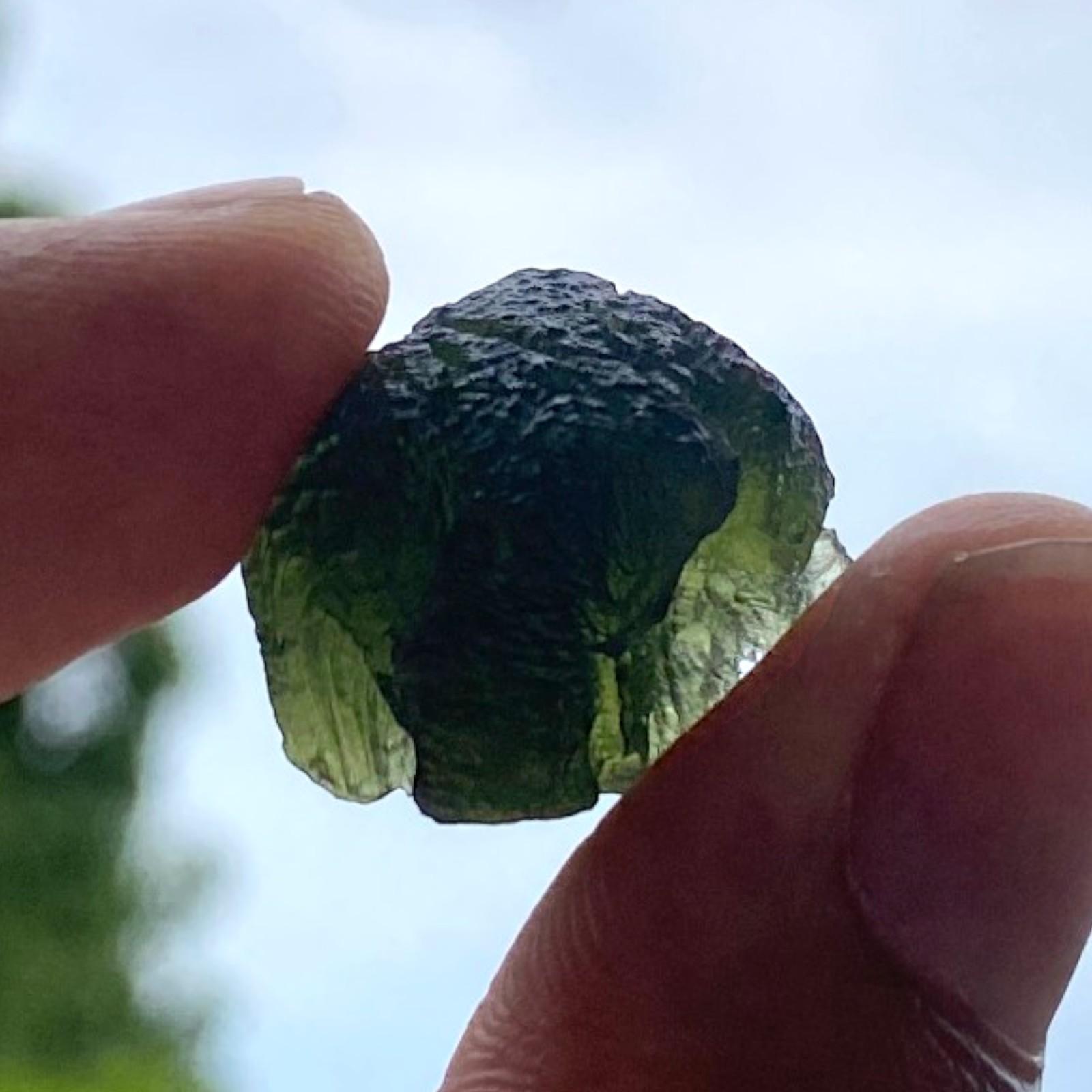
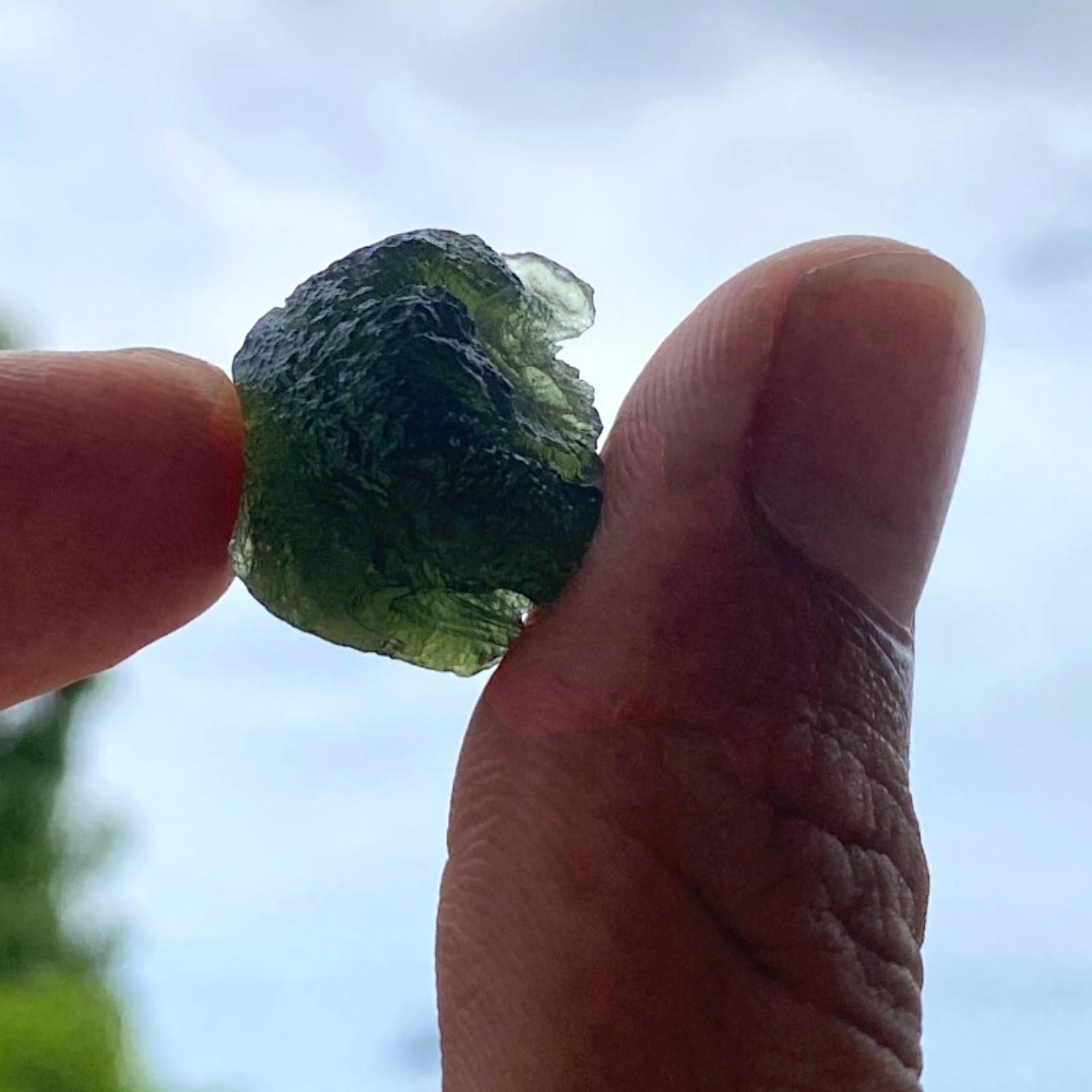
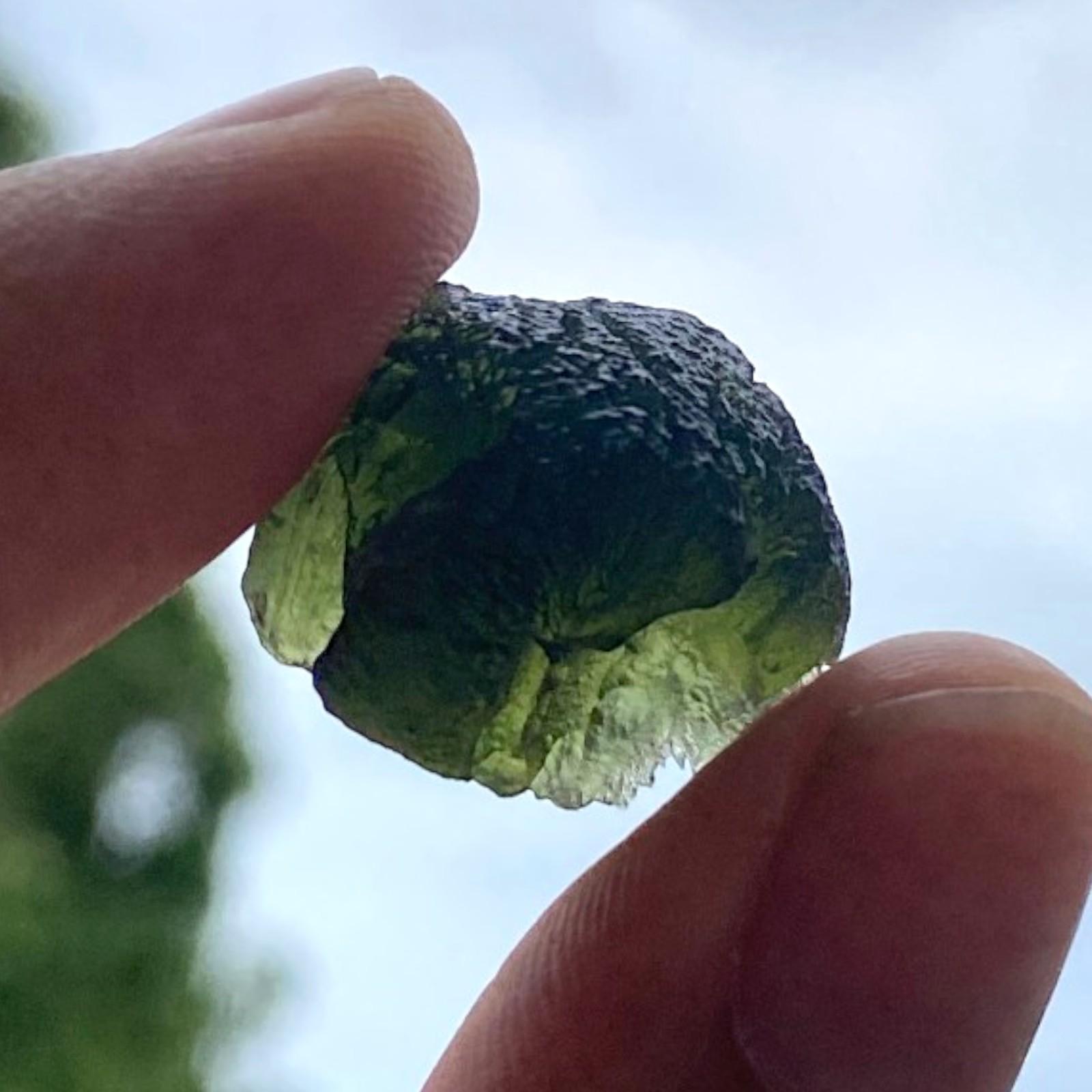
21.42 ct 4.28 gr MOLDAVITE – CZECH REPUBLIC
EXPERT VERIFIED
- Expert Verified Gemstone
- Fast Handling & Shipping
- Secure Vault Packaging
$ 600
Offer amount Feild


Smart Collector Choice


Pay with Crypto & Get 10% Automatic Discount

Availability: 1 in stock


- Freakingcats Gemstone Database
Moldavite (Czech Republic)
In 1989 immediately after the fall of the Iron Curtain I jumped in my car and drove from Austria to Czech Republic, to Bohemia to hunt for the legendary Moldavites. I was very lucky and could purchase a wonderful collection from locals. Now I have only a few moldavites remaining. They are 100% genuine. With huge shock I saw that some sellers on eBay are selling glass imitations from China. Moldavites have become incredible rare and are virtually impossible to be found any longer in any reasonable sizes.
A glass formed by the impact of a massive meteorite approximately 14.8 million years ago, it is a species I have always respected for its “electric-forest-green” to “olive-neon” saturation and its status as a masterpiece of “fluid-dynamic” structural discipline. For the specialist, a top-tier Bohemian Moldavite—especially one sourced during the historic 1989 era—is a prize of extreme kinetic focus; it offers a vitreous luster and a “radiant” presence that makes it a true “high-vibration” asset for the systematic vault. As an artist, I find the “hidden-spectrum” depth and the “razor-sharp” aerodynamic etching of these natural forms to be one of nature’s most sophisticated and “cosmic” palettes.
The Heritage & Discovery
Historical Significance Moldavite is a vital species for understanding the catastrophic energy release of meteorite impacts on terrestrial silica. Historically, it was named in 1836 after the Moldau River (Vltava) in Bohemia. In the world of fine minerals, it is celebrated for its natural, “bottle-green” pigment, which stands as a symbol of transformation and structural integrity.
Discovery & Provenance While tektites are found in several “strewn fields” globally, the discoveries in the Czech Republic set the absolute mineralogical benchmark for transparency and “sculptural” surface texture. Scientifically, it is a silica-rich impact glass. This specific material is natural and real, verified by its direct-source history from the 1989 Bohemian transition. Such provenance is critical for the collector, as it distinguishes these pieces from the fakes frequently seen on platforms like eBay. My own respect for this material grew from observing its “optical” depth; specifically, the way its lechatelierite inclusions (melted quartz) handle light—exhibiting a “sharp” internal movement that is unmistakable to the trained eye.
Important Locations The undisputed world capitals for the finest “aesthetic” Moldavite are the Besednice, Chlum, and Slavče localities in the South Bohemian Region. These specimens set the global benchmark for color purity and “sharp” aerodynamic architecture. I also have a high regard for the “poison-green” finds from the Moravian strewn field. For the vault, I prioritize the Bohemian material for its unmatched “neon-forest” depth and its status as a rare-history masterpiece of the European impact event.
Mineralogical Profile
Description Moldavite is an impact glass (tektite) that is amorphous, lacking a crystal lattice. It sits at a 5.5 to 6.5 on the Mohs scale, making it a durable glass, though its “brittle” nature and intricate surface “sculpting” mean it must be handled with care to preserve its “razor-sharp” edges and vitreous surfaces. It is characterized by its vitreous luster and its unmistakable, “moss-green to translucent-olive” color palette.
One of its most identifying traits is its deeply etched or “channeled” surface, caused by millions of years of contact with acidic groundwater. It has a refractive index (n approx 1.48 to 1.50) and a specific gravity (SG approx 2.3) that reflects its high-silica, low-water content. Because it forms during a cosmic collision, it is often found as “isolated” splash forms within alluvial sands. When I select a piece for the collection, I look for “pure” transparency and the rarest “neon-green” highlights, as these highlight the sophisticated, three-dimensional geometry of the glass’s violent, aerial birth. It is a light, high-vibration material that offers a unique, “aqueous-neon” beauty unlike any other tektite variety.
Chemical Formula SiO2 (+ Al2O3) — A high-silica glass with variable amounts of aluminum, potassium, and iron.


