
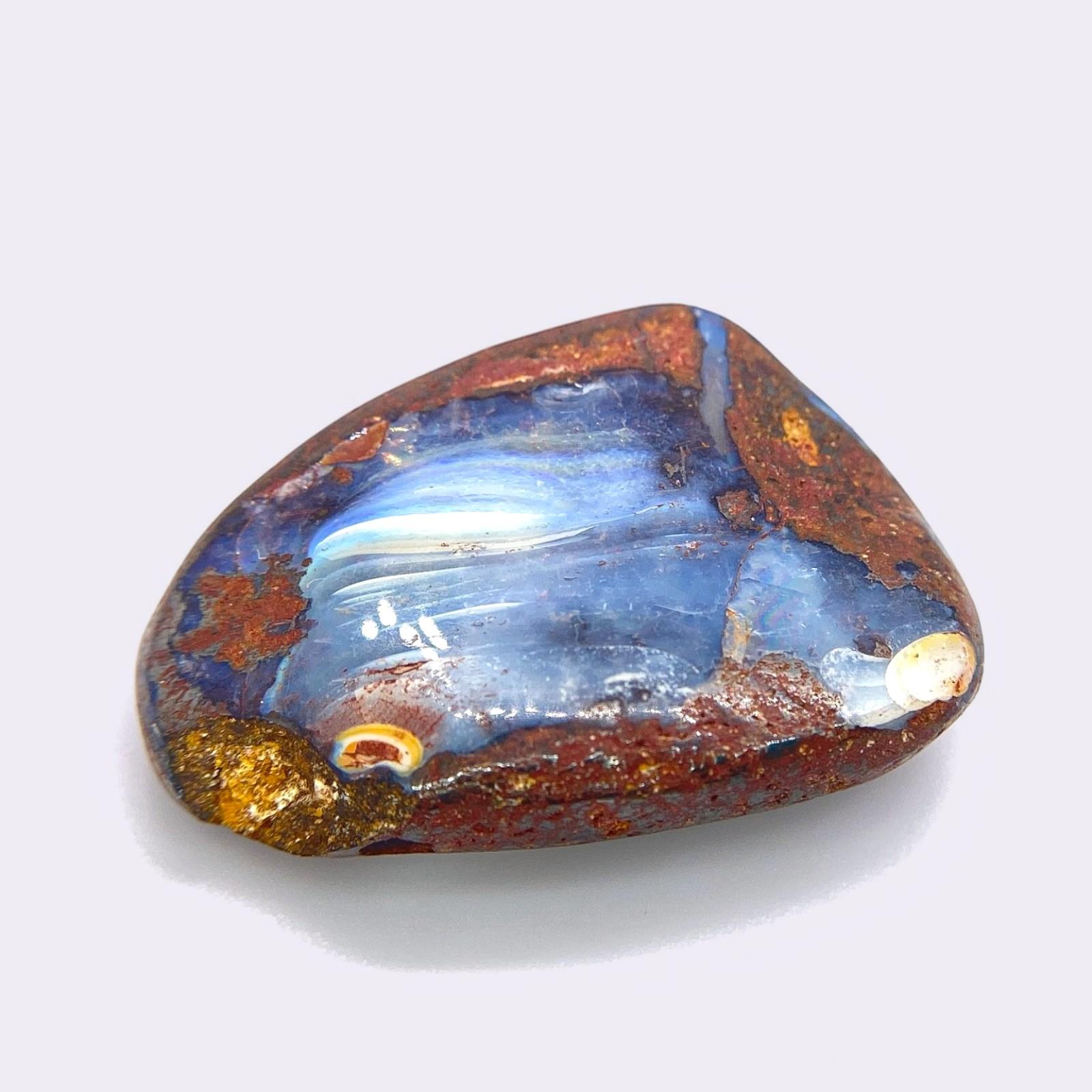
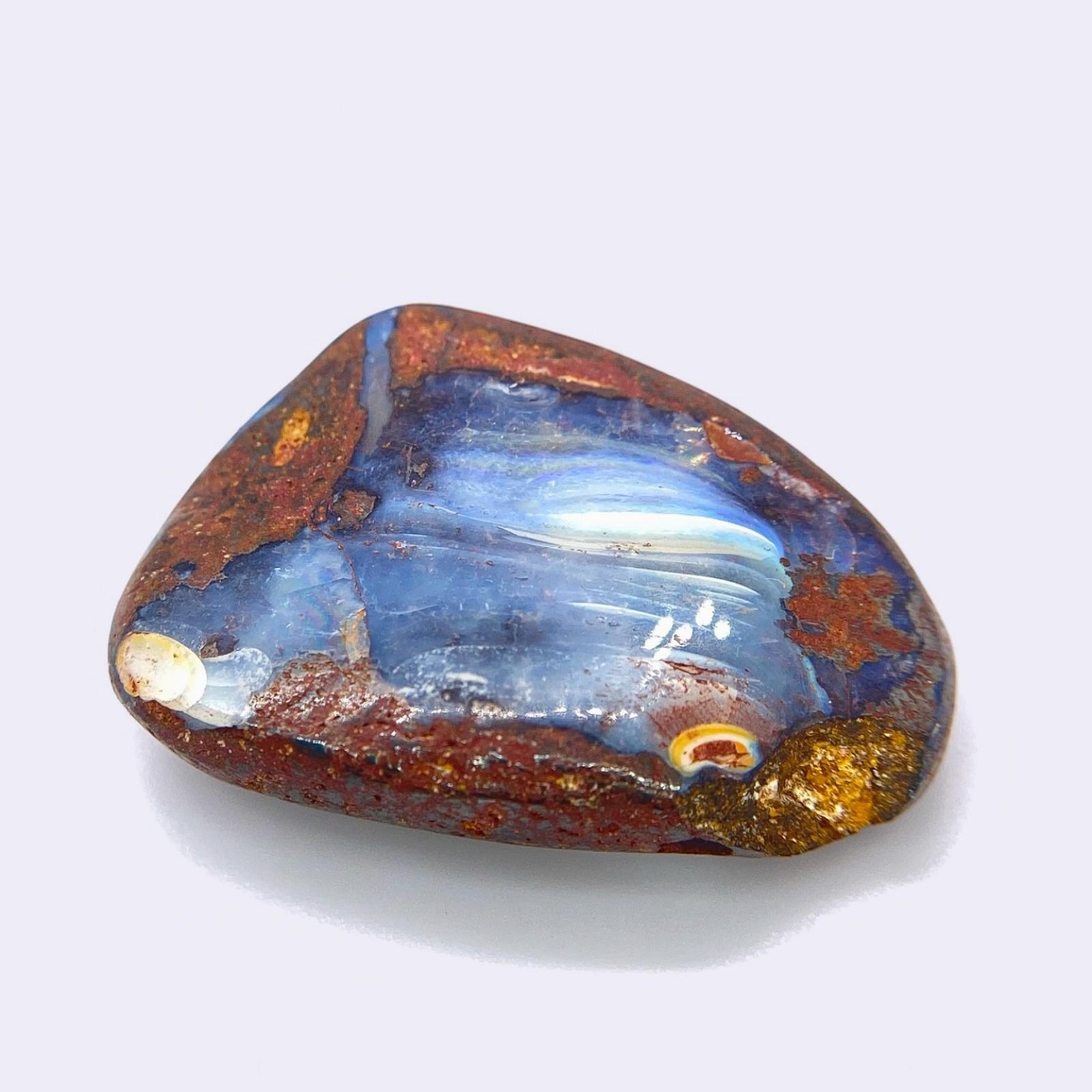
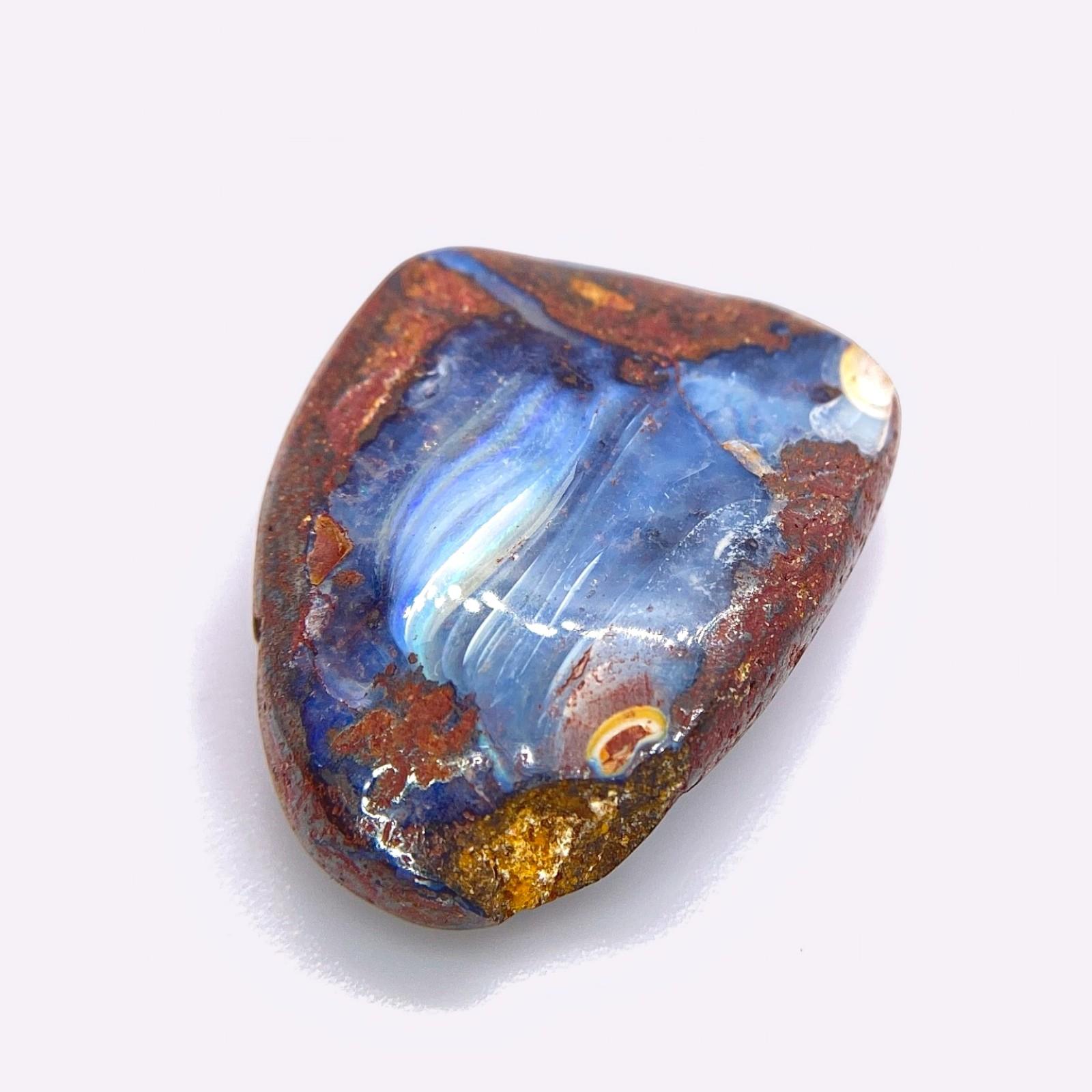
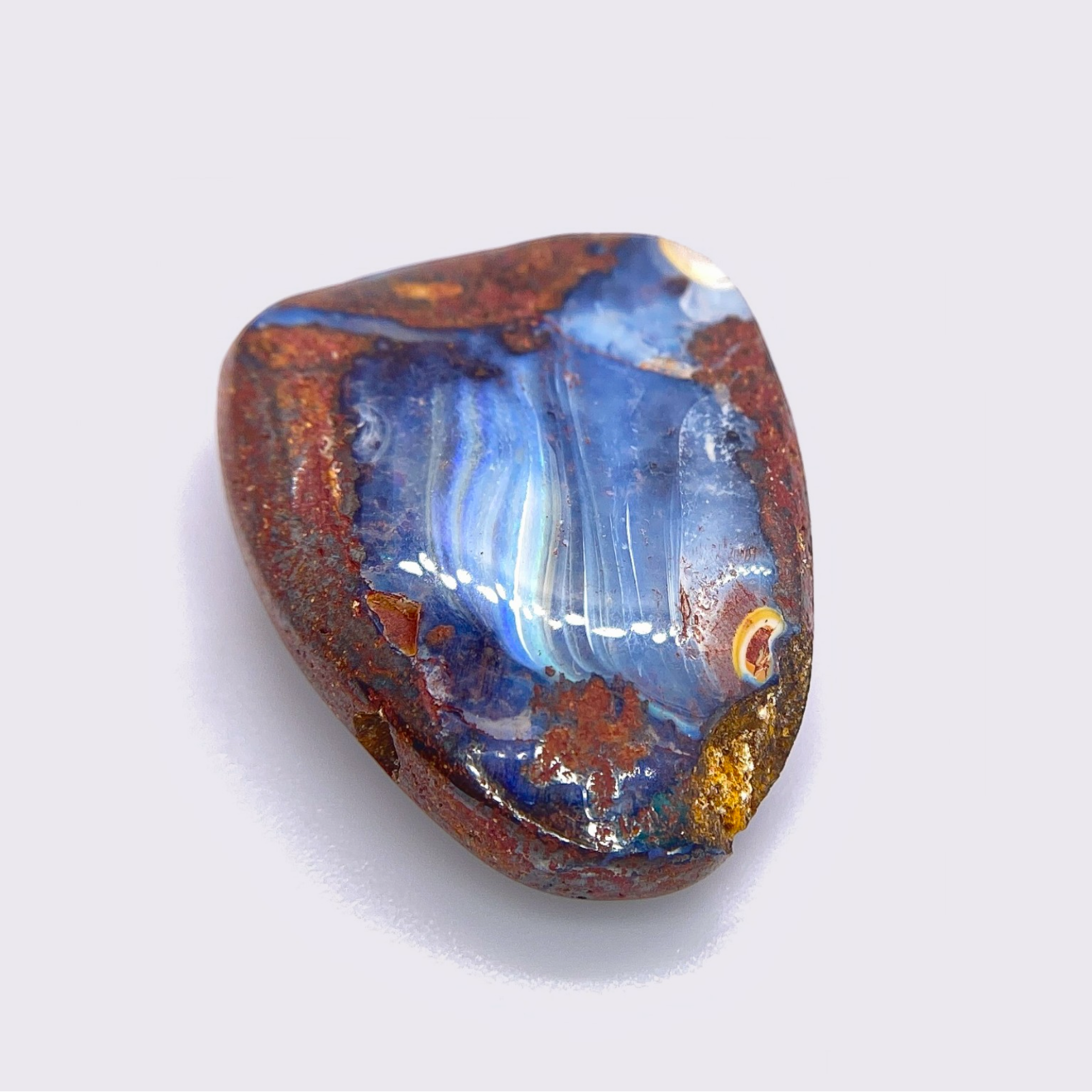
31.94 ct KOROIT OPAL – AUSTRALIA
EXPERT VERIFIED
- Expert Verified Gemstone
- Fast Handling & Shipping
- Secure Vault Packaging
$ 120
Offer amount Feild


Smart Collector Choice


Pay with Crypto & Get 10% Automatic Discount

Availability: 1 in stock
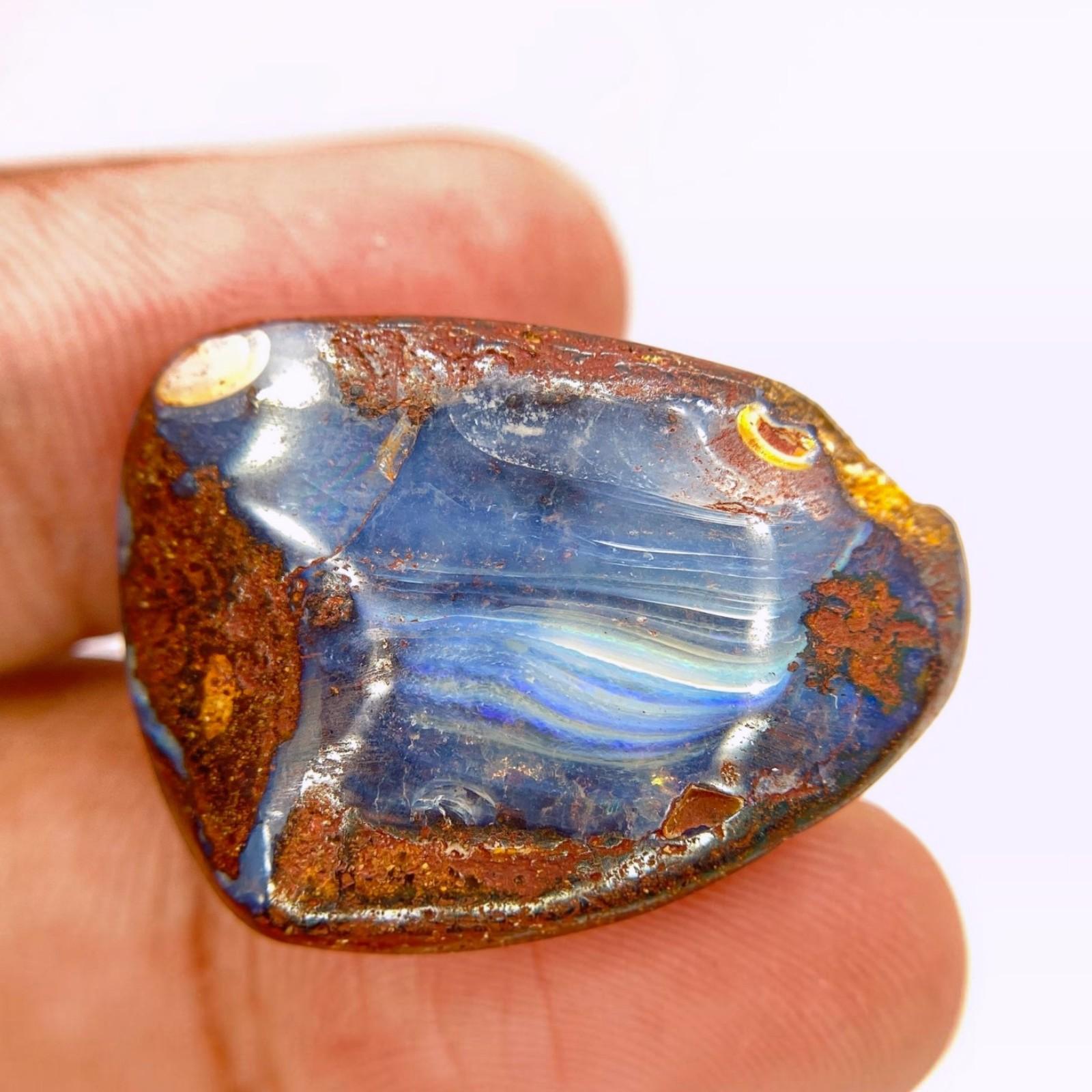
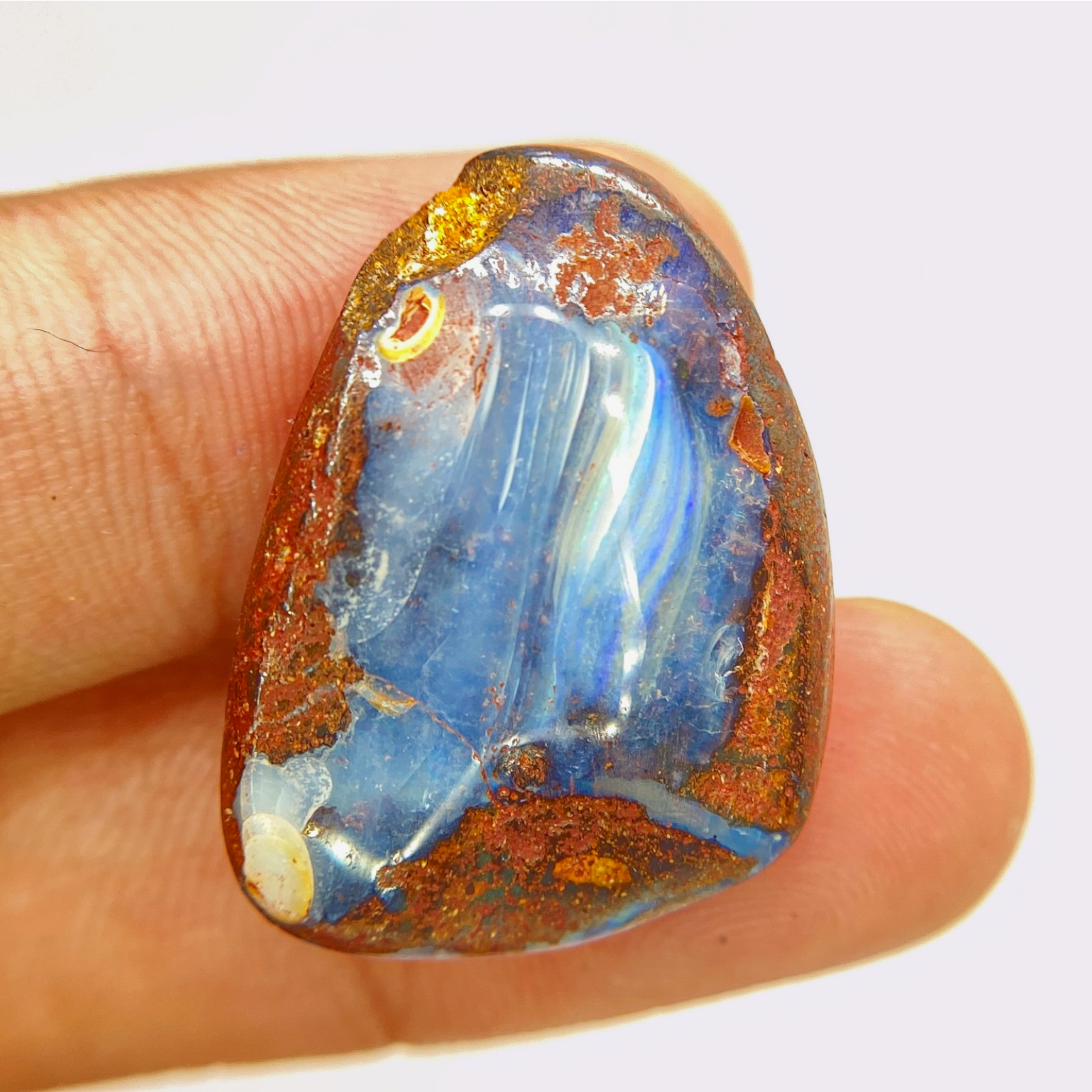
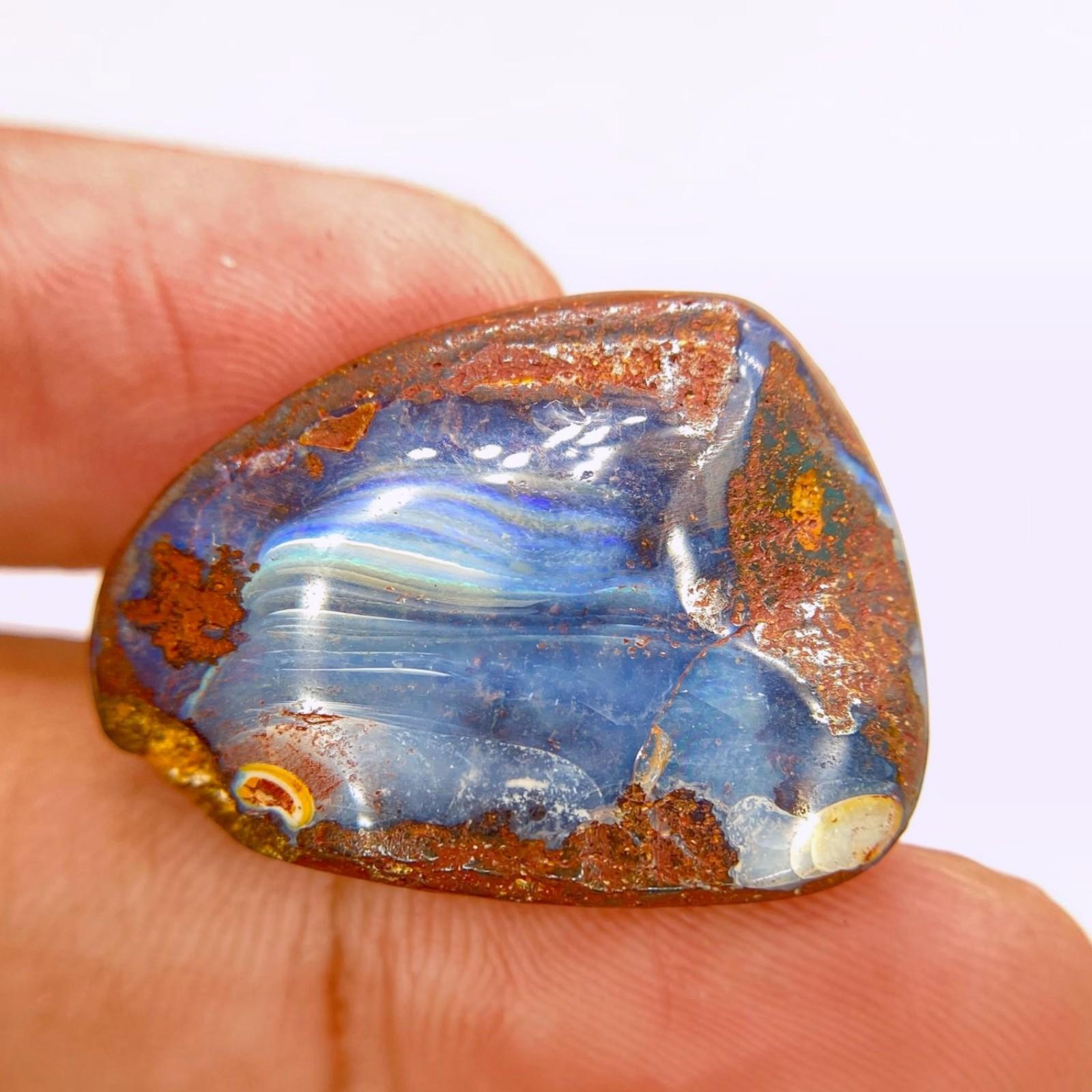


- Freakingcats Gemstone Database
Koroit Opal (Australia)
Koroit Opal from the remote, arid outback fields of southwest Queensland, Australia, represents the absolute global apex of organic, subterranean mosaic geometry and electrifying precious flash locked inside ancient ironstone. A precious variety of amorphous hydrated silicon dioxide, it is a species I have always respected for its “electric-peacock-blue” to “vivid-crimson-neon” play-of-color and its status as a masterpiece of natural gel-sedimentation discipline. For the specialist, a top-tier Koroit Boulder Opal—where precious silica veins weave intricate, labyrinthine patterns through dark, chocolate-brown ironstone matrix—is a prized trophy of deep-weathering hydrology; it offers a brilliant vitreous to resinous surface luster and an exceptionally rich, contrasting presence that makes it an essential anchor for the systematic vault. As an artist, I find the stark, rhythmic contrast between its dark, earthy ironstone background and the brilliant, swirling veins of spectral color to be one of nature’s most sophisticated and visually captivating canvases.
The Heritage & Discovery
Historical Significance
Koroit Opal is a vital index species for understanding the complex weathering, silification, and low-temperature fluid dynamics that occurred across Australia’s Great Artesian Basin during the Cretaceous period. Historically, the Koroit opal field holds a legendary position as one of the oldest mining districts in Queensland, first discovered in 1897 by Lawrence Rostron. In the world of fine collectibles and loose gems, Koroit stands completely distinct from light or white opals, celebrated for its unique “matrix” and “picture” patterns where precious opal fills thin, intricate fractures, voids, and concentric bands within dense ironstone concretions, creating natural abstract paintings trapped in stone.
Discovery
The unearthing of the Koroit fields provided gemology with a entirely unique expression of precious opal. Scientifically, opal consists of microscopic spheres of amorphous silica arranged in a rigid, three-dimensional grid. When water carrying dissolved silica percolates into the cracks and cavities of ferruginous sandstone and ironstone septarian nodules, it slowly evaporates over millions of years, leaving behind densely packed silica spheres. The diffraction of light passing through these uniform sphere lattices creates the dramatic play-of-color. My own respect for this material grew from observing its extraordinary visual depth; specifically, the way the dark, iron-rich host rock naturally intensifies the spectral flash of the thin opal veins—producing a deep, high-contrast glow—is an optical impact that is unmistakable to the trained eye.
Important Mines
The primary capital for this distinctive material is the Koroit opal field, located in the Paroo Shire of southwestern Queensland, roughly 80 kilometers northwest of Cunnamulla. Operating within the vast Eromanga Basin formation, this isolated mining locality is famous for producing compact ironstone “boulders” and “nuts” that conceal intricate, brightly colored opal veins within their cores. For the vault, I prioritize specimens that exhibit high contrast, strong structural integrity, multi-spectral play-of-color (including rare reds and violets), and a well-balanced, artistic distribution of opal matrix throughout the dark ironstone.
Mineralogical Profile
Description
Koroit Opal is a hydrated amorphous silicon dioxide embedded within a ferruginous (iron-rich) claystone or sandstone matrix. The precious opal itself sits at a moderate 5.5 to 6.5 on the Mohs scale, while the surrounding ironstone matrix provides strong structural support, making boulder opal exceptionally durable compared to solid opal bodies. It is characterized by its bright vitreous luster across the precious opal seams, contrasting against the dull to waxy finish of the host ironstone, and a remarkably diverse color palette featuring deep chocolate-brown and rust-red matrix hosting flashes of electric green, royal blue, fiery orange, and magenta.
One of its most identifying traits is its lack of crystal structure (amorphous), forming as thin veinlets, concentric rings, or intricate web-like networks that map out old fluid pathways through fractured ironstone nodules. It possesses a relatively low refractive index ranging from 1.44 to 1.46 within the precious opal zones, and an average specific gravity ranging between 2.10 and 2.30 for the opal itself, though hand specimens carry significant density due to the heavy ironstone matrix (specific gravity 3.0+). Because it forms in shallow, weathered sedimentary basins, it is commonly associated with Limonite, Goethite, Kaolinite, and Quartz. When I select an example for documentation, I look for crisp, vibrant play-of-color displaying strong directional flash and intricate, web-like matrix patterns, as these emphasize the sophisticated, slow-precipitated chemistry of the mineral’s subterranean birth.
Chemical Formula SiO2 · nH2O (Hydrated Silicon Dioxide Matrix hosted in Fe2O3 / Goethite Ironstone)


