
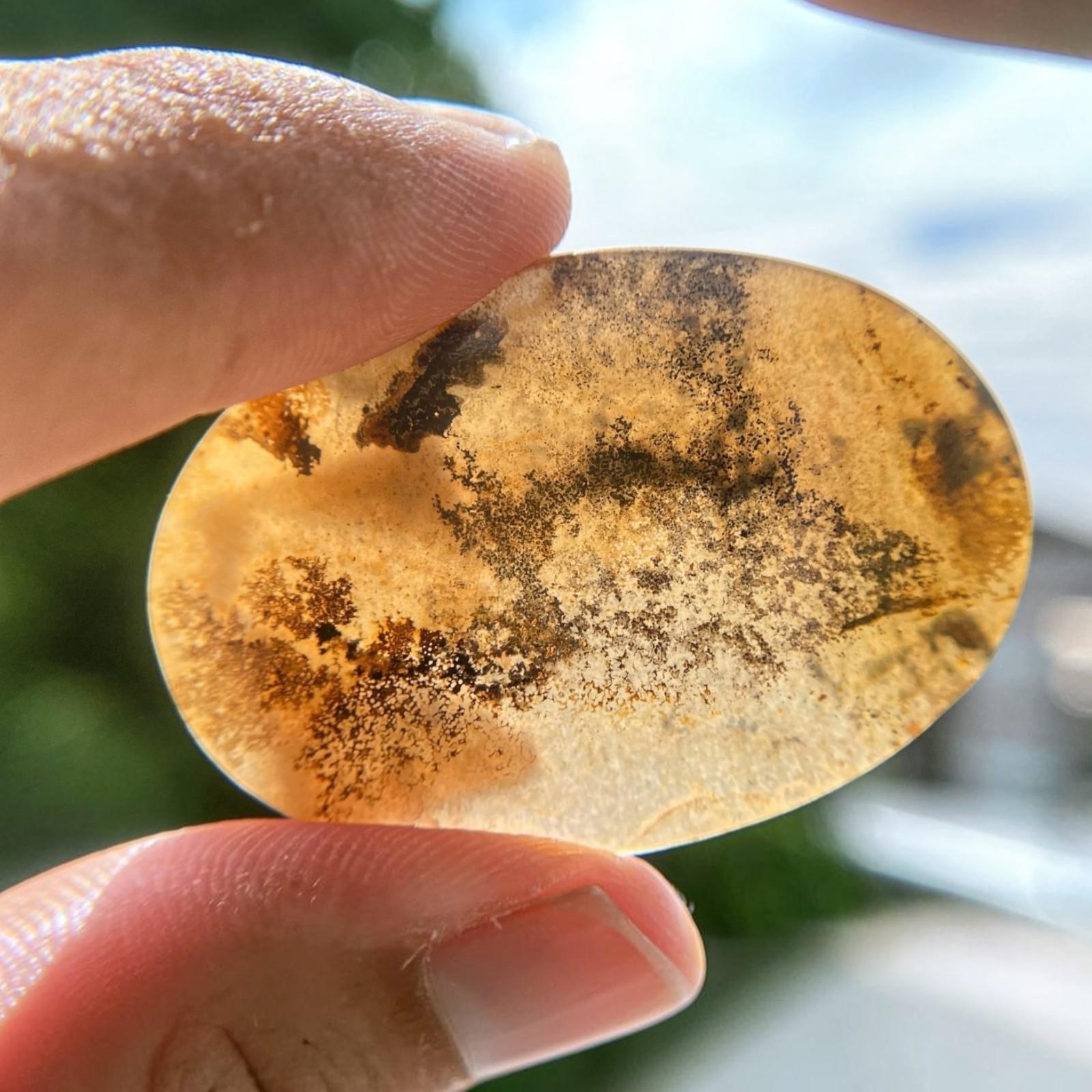
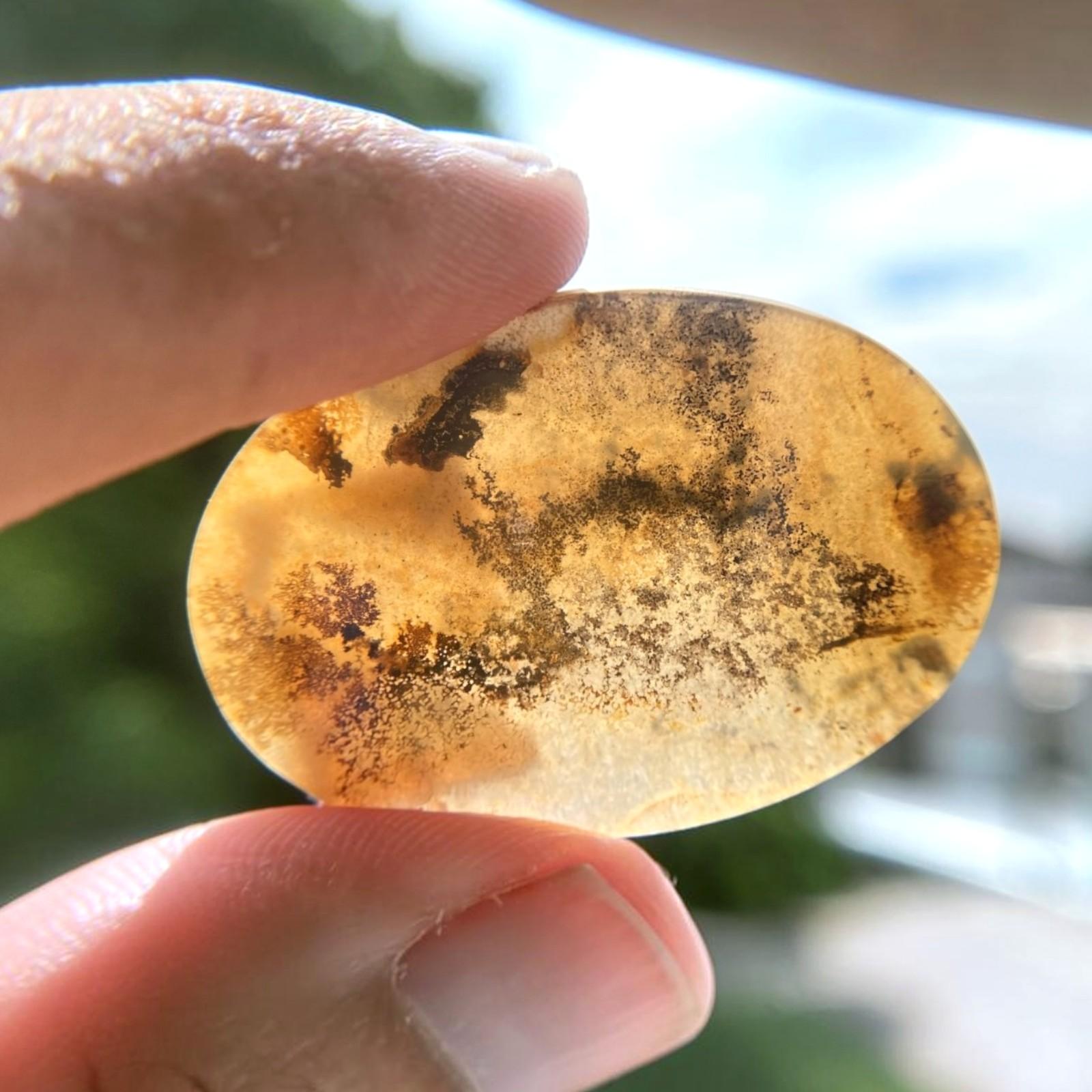
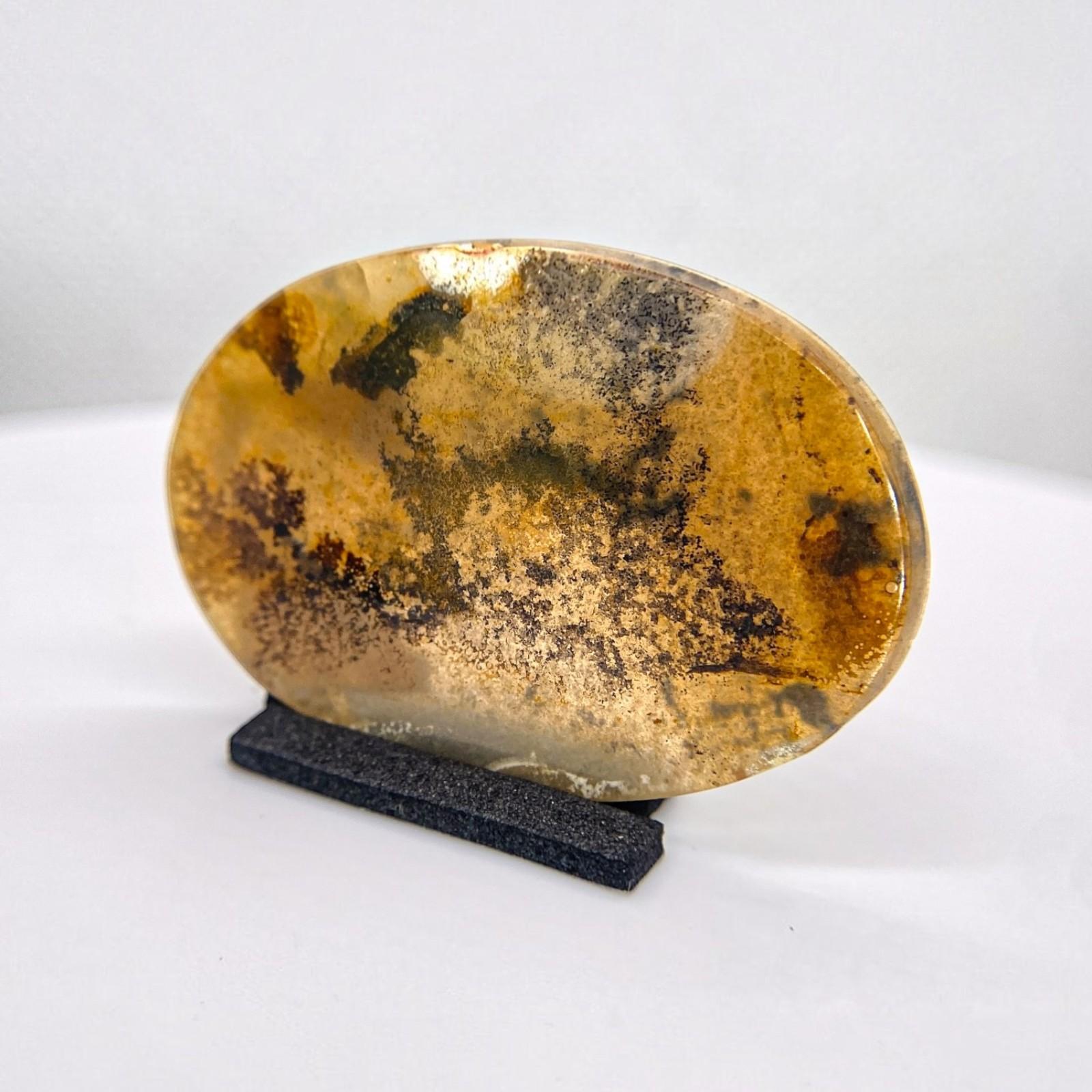
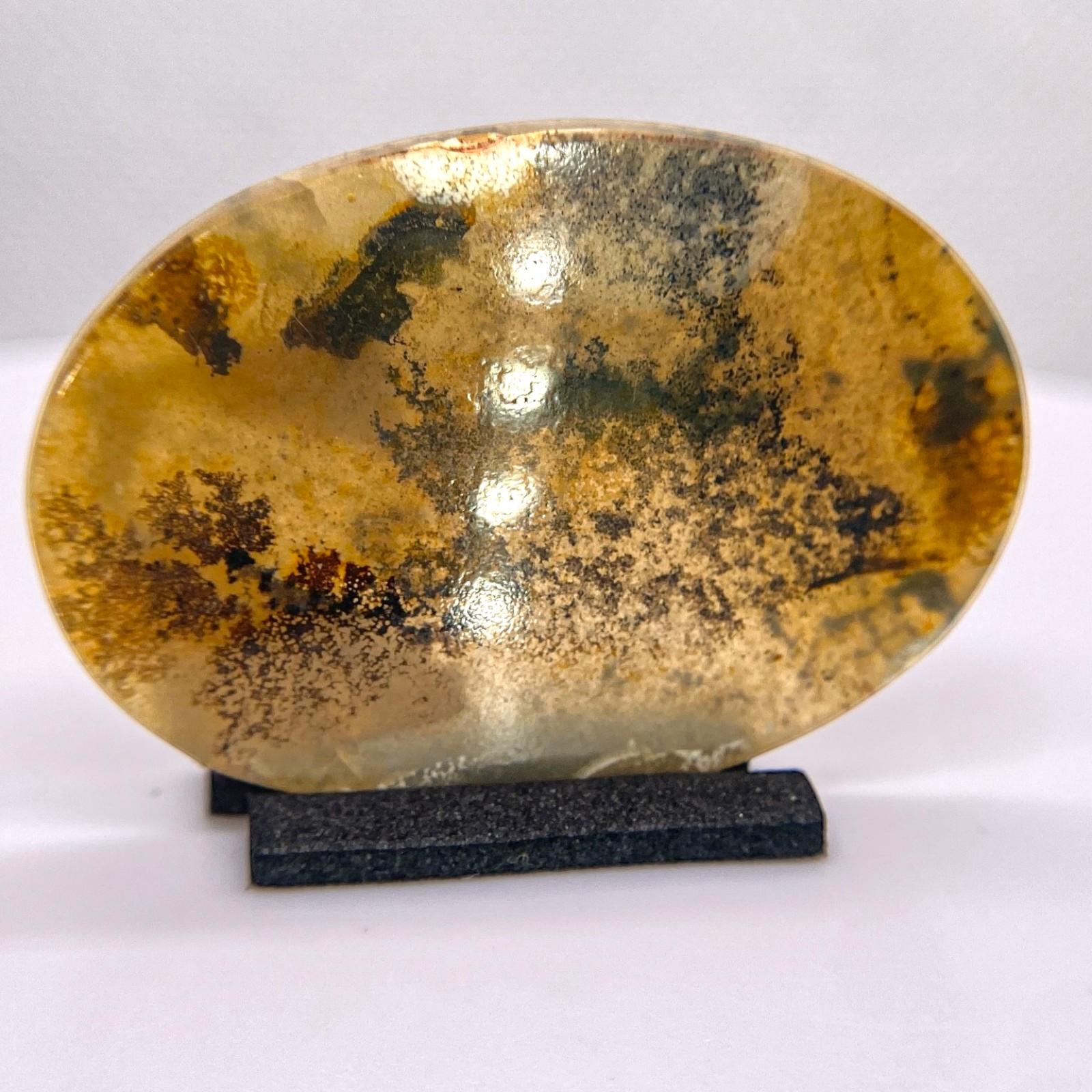
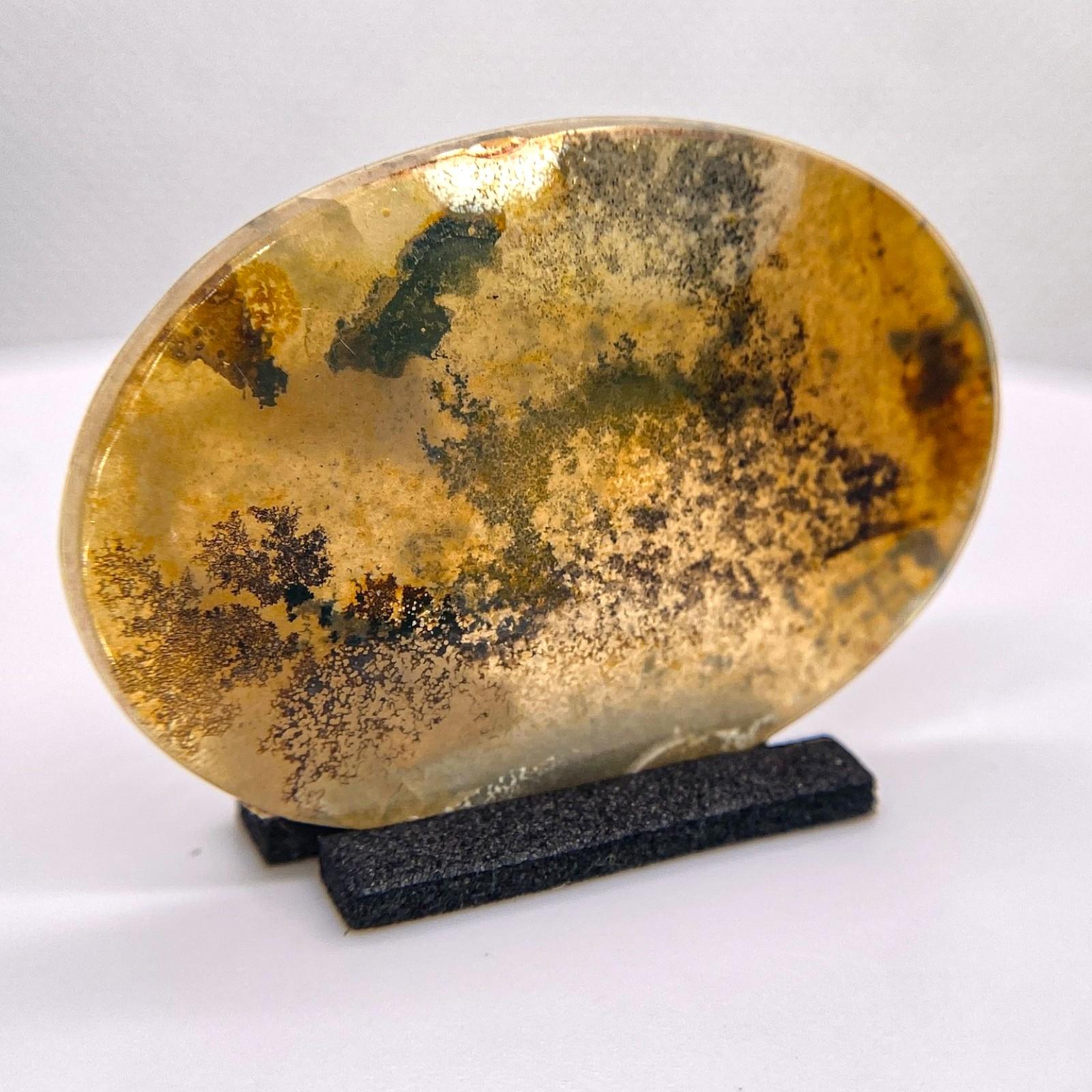
31.94 ct MOSS AGATE – BRAZIL
EXPERT VERIFIED
- Expert Verified Gemstone
- Fast Handling & Shipping
- Secure Vault Packaging
$ 150
Offer amount Feild


Smart Collector Choice


Pay with Crypto & Get 10% Automatic Discount

Availability: 1 in stock


- Freakingcats Gemstone Database
Moss Agate (Brazil)
Moss Agate from the ancient volcanic flood basalts and rich alluvial deposits of Brazil represents one of the most structurally intriguing and visually organic expressions of cryptocrystalline quartz. A microcrystalline variety of chalcedony containing branching, shrub-like inclusions of chlorite, hornblende, or iron oxides, it is a species I have always respected for its “forest-moss” to “deep-emerald-neon” organic depth and its status as a masterpiece of colloidal silica precipitation. For the specialist, a top-tier Brazilian Moss Agate—featuring translucent, water-clear to milky chalcedony holding sharply defined, three-dimensional filament networks—is a prized trophy of low-temperature hydrothermal fluid tension; it offers a bright vitreous to waxy surface luster and a serene, deeply grounding presence that makes it an essential anchor for the systematic vault. As an artist, I find the breathtaking, landscape-like imagery trapped within its translucent silica host—evoking ancient mossy forests or suspended underwater gardens—to be one of nature’s most delicate and captivating canvases.
The Heritage & Discovery
Historical Significance
Moss Agate is an indispensable index material for decoding the precise temperature, silica-gel concentration, and trace-metal oxidation parameters that occur during late-stage hydrothermal infilling of volcanic gas cavities. Historically, while moss agate has been cherished across civilizations for centuries as a stone of agriculture and natural harmony, the unearthing of massive, high-grade deposits across Brazil in the 19th and 20th centuries established the country as the premier global source for large, clean, gem-grade material. In the world of fine collectibles and loose stones, Brazilian moss agate stands out for its high structural purity and the vivid, high-contrast three-dimensionality of its internal dendrites and filaments.
Discovery
The discovery of extensive basaltic flows across southern Brazil unveiled vast pockets of agate geode formations containing rich chalcedonic varieties. Scientifically, despite its name, Moss Agate contains no organic plant material whatsoever; its diagnostic “moss” patterns are formed by the growth of iron, manganese, or green chlorite minerals that crystallize in branching, fractal-like patterns within a cooling silica gel before the host completely solidifies. The extraction of these rich geodes provided mineralogists and lapidaries with spectacular, translucent nodules that showcase an astonishing depth of field. My own respect for this material grew from observing its structural layout under direct backlighting; specifically, the way its three-dimensional green chlorite threads appear to float freely inside a water-clear or milky silica field creates a subtle sense of depth that is unmistakable to the trained eye.
Important Locations
The primary capital for world-class, aesthetic expressions of moss agate within Brazil is concentrated in the southern state of Rio Grande do Sul, world-famous for its massive basaltic agate fields. Outstanding, highly translucent material is also consistently recovered from the weathered volcanic gravels and alluvial river beds of Minas Gerais, Bahia, and Goiás. For the vault, I prioritize specimens that exhibit high optical transparency in the chalcedony host, intense forest-green filament saturation, crisp three-dimensional separation of the inclusions, and complete freedom from fractures.
Mineralogical Profile
Description
Moss Agate is a microcrystalline variety of Chalcedony (a form of Quartz) containing mineral inclusions of chlorite, hornblende, manganese, or iron oxides that crystallizes in the trigonal system (microscopic sub-grains). It sits at a hard, durable 6.5 to 7 on the Mohs scale, meaning its smooth, waxy surfaces are highly resistant to physical scratching and require only standard archival handling to safeguard its polished faces. It is characterized by its bright vitreous to waxy surface luster and a soothing color palette dominated by water-clear, milky-white, or pale blue-gray chalcedony holding internal threads of dark forest-green, mossy lime, rust-red, and charcoal-black.
One of its most identifying traits is its lack of classic concentric banding typical of true agates, forming instead as botryoidal cavity fillings or dense nodules where mineral filaments branch freely through the host silica. It possesses a moderate refractive index of approximately 1.544 to 1.553, giving it a soft, liquid-like depth, and a light average specific gravity ranging between 2.58 and 2.64. Because it forms in low-temperature volcanic gas vesicles and weathered fault zones, it is commonly found in close association with Quartz, Chlorite, Celadonite, Iron Oxides, Calcite, and Zeolites. When I select an example for documentation, I look for crisp, well-defined “moss” geometry suspended within a highly transparent silica matrix, as these emphasize the sophisticated, slow-precipitated chemistry of the mineral’s volcanic birth.
Chemical Formula SiO2 (Microcrystalline Quartz Host Matrix) with inclusions of Fe, Mn, Mg silicates/oxides (Chlorite/Hornblende)


