

SKU: GARN0006
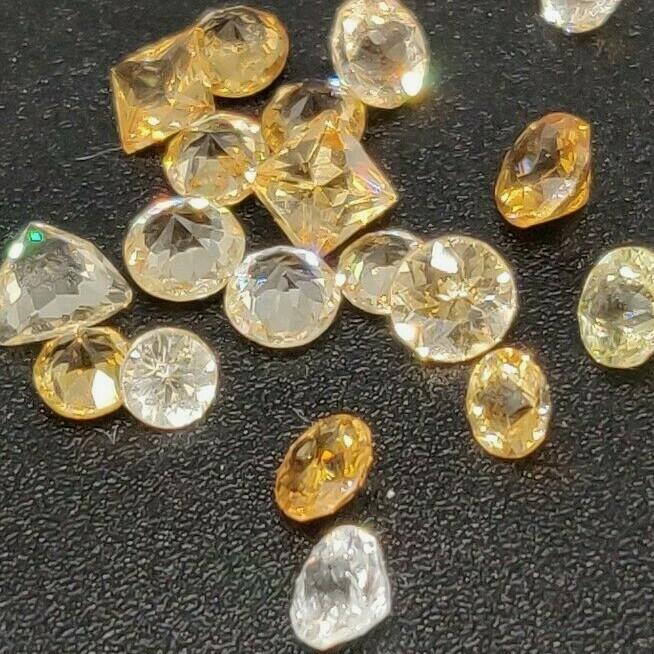
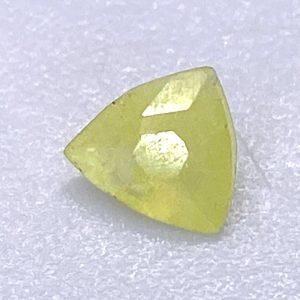
GREAT VALUE LOT 18 pc 4.05 ct GROSSULAR GARNET – BRAZIL
EXPERT VERIFIED
- Expert Verified Gemstone
- Fast Handling & Shipping
- Secure Vault Packaging
$ 200 Original price was: $ 200.$ 120Current price is: $ 120.
Offer amount Feild


Smart Collector Choice


Pay with Crypto & Get 10% Automatic Discount

Availability: 1 in stock
Gemstone Details
Gem Variety:
Origin:
Carat Weight:
Length (mm):
Width (mm):
Depth (mm):
Shape:
Round
Color
Multicolor
Treatment:
Certificate:
- Freakingcats Gemstone Database
Grossular Garnet Grossular Garnet represents the "verdant and varied" heart of the calcium-aluminum garnet series. It is a mineral I have always respected for its incredible range of expressions, from the "honey-like" warmth of Hessonite to the "neon-emerald" brilliance of Tsavorite. The name is derived from the Latin grossularia, meaning "gooseberry," in reference to the translucent green color of the first specimens discovered. For the specialist, Grossular is a prize of geochemical purity; while many garnets are dark and iron-rich, a top-tier Grossular is often remarkably "open" and bright, offering a vitreous luster that feels both organic and high-frequency. It is a stone of "abundant growth," providing a sophisticated, multi-dimensional aesthetic that makes it a cornerstone of the systematic vault. The Heritage & Discovery Historical Significance: Grossular has been a staple of the mineral world for centuries, though its many varieties were often mistaken for other gems like Jade or Zircon. Historically, the "Hessonite" variety was highly prized in Vedic astrology as "Gomed." In the world of fine minerals, the species reached a new peak of global fame with the 1967 discovery of Tsavorite in the borderlands of Kenya and Tanzania. It stands as a symbol of versatility and hidden potential, bridging the gap between common metamorphic "rock-forming" minerals and the elite world of "investment-grade" precious stones. It serves as a reminder that within a single species, nature can transition from an earthy, "cinnamon" orange to a green that rivals the finest Emerald. Discovery: The mineral was formally named in 1808 by Abraham Gottlob Werner. Scientifically, it is the calcium-dominant member of the ugrandite garnet group. Its discovery in contact metamorphic environments (skarns) provided mineralogists with the first clear look at how calcium-rich rocks like limestone can be "upgraded" into complex silicates by hydrothermal fluids. My own respect for this material grew from observing its "roiling" internal texture in Hessonite (often called the "whiskey-in-water" effect), a unique optical trait that helps specialists identify the species instantly. Since the late 20th century, it has become the definitive "connoisseur's green" for those who value brilliance over the "sleepy" depth of an Emerald. Important Mines: The undisputed world capital for the "neon-green" Tsavorite variety is the Tsavo National Park region in Kenya and the Merelani Hills in Tanzania. I also have a high regard for the spectacular "cinnamon" Hessonites from Sri Lanka and the rare, "mint" or "raspberry" Grossulars from the Jeffrey Mine in Quebec, Canada. For the vault, I prioritize the Kenyan material for its unmatched color saturation and the Canadian pieces for their world-class crystal morphology and "gemmy" transparency. Mineralogical Profile Description: Grossular is a calcium aluminum silicate that crystallizes in the isometric (cubic) system. It sits at a 6.5 to 7.5 on the Mohs scale, making it a very durable gemstone suitable for all forms of high-end jewelry. It is characterized by its vitreous luster and its vast color range, including "gooseberry" green, "honey" yellow, "cinnamon" orange (Hessonite), and "emerald" green (Tsavorite). One of its most identifying traits is its low iron content in the green varieties, which allows for exceptional light transmission and "sparkle." It has a high refractive index ($n \approx 1.73$ to $1.75$) and a specific gravity ($SG \approx 3.5$ to 3.7). Because it is a skarn and regional metamorphic mineral, it is often found in association with Diopside, Wollastonite, and Vesuvianite. When I select a piece for the collection, I look for "even" color distribution and the absence of "cloudiness," as these highlight the sophisticated, three-dimensional geometry that makes Grossular a standout for the systematic specialist. It is a dense, high-vibration mineral that offers a unique, "architectural" beauty unlike any other garnet variety. Chemical Formula: Ca3Al2(SiO4)3
Related products
- Sale!Suggest a Price
![0.60 ct ANATASE - AUSTRALIA]()
- Sale!Suggest a Price
![0.42 ct ANATASE - AUSTRALIA]()
- Sale!Suggest a Price
![12.90 ct AMAZONITE - USA]()
- Sale!
![0.32 ct ADAMITE - MEXICO]()


